Can Low Oil Cause Engine Overheating?

Contents
- 1 Key Takeaways
- 2 📑 Table of Contents
- 3 The Great Misconception: Overheating is Just a Coolant Problem
- 4 How Engine Oil Actually Cools Your Engine (It’s Not Just for Slippery Parts)
- 5 The Symptoms: How to Recognize Oil-Related Overheating Before It’s Too Late
- 6 The Chain Reaction: How Low Oil and Overheating Feed Each Other
- 7 Prevention and Immediate Action: Your Oil is Your Engine’s Lifeline
- 8 It’s Not Always the Only Culprit: Differentiating Oil Failure from True Coolant Overheating
- 9 Conclusion: Respect the Oil, Respect the Engine
- 10 Frequently Asked Questions


Yes, low oil can absolutely cause engine overheating. While most drivers associate overheating with coolant issues, engine oil plays a vital second role in managing heat by reducing friction and carrying heat away from components. When oil levels drop too low, increased metal-on-metal friction generates excessive heat, and the remaining oil can’t dissipate it effectively. This creates a dangerous cycle that can lead to severe engine damage, including seized parts and catastrophic failure, long before the temperature gauge even spikes. Regular oil checks are non-negotiable for preventing this silent killer.
Key Takeaways
- Oil is a Primary Coolant: Beyond lubrication, engine oil absorbs and carries away significant heat from critical components like pistons, cylinders, and bearings, working in tandem with the coolant system.
- Low Oil = Friction = Heat: Insufficient oil means metal parts contact each other directly, creating immense frictional heat that the cooling system wasn’t designed to handle alone.
- Damage Happens Fast: Engine seizure or catastrophic failure from low oil can occur in minutes under load, often without a classic “overheating” warning light, making it a silent threat.
- Check Oil Cold & Level: The only reliable way to know your oil level is to check the dipstick on a level surface with the engine cold (or slightly warm, per manual). Don’t guess.
- Low Oil Can Trigger Overheat Lights: Some modern cars link oil pressure sensors to the engine management system, which may trigger a check engine light or reduced power mode before total failure.
- It’s a Cycle of Destruction: Overheating thins the remaining oil, reducing its effectiveness and pressure, which causes more friction and more heat, accelerating the failure process rapidly.
- Prevention is Simple: Consistent oil checks, timely changes, and fixing leaks immediately are the absolute best defenses against oil-related overheating and engine death.
📑 Table of Contents
- The Great Misconception: Overheating is Just a Coolant Problem
- How Engine Oil Actually Cools Your Engine (It’s Not Just for Slippery Parts)
- The Symptoms: How to Recognize Oil-Related Overheating Before It’s Too Late
- The Chain Reaction: How Low Oil and Overheating Feed Each Other
- Prevention and Immediate Action: Your Oil is Your Engine’s Lifeline
- It’s Not Always the Only Culprit: Differentiating Oil Failure from True Coolant Overheating
- Conclusion: Respect the Oil, Respect the Engine
The Great Misconception: Overheating is Just a Coolant Problem
Pop the hood of any car with an overheating problem, and the first thought for most mechanics and DIYers is the same: check the coolant. Is the radiator full? Is the thermostat stuck? Is the water pump working? These are all critical questions, but they focus on just one half of the engine’s cooling system. The other half, the one that operates silently in the background, is your engine oil. The question “Can low oil cause engine overheating?” deserves a resounding, unequivocal yes. Understanding why is key to preventing one of the most swift and destructive forms of engine failure.
We’ve been conditioned to look at the temperature gauge and think “coolant.” But your engine is a complex, high-stress machine where thousands of metal parts move at incredible speeds and under immense pressure. Friction is the enemy, and heat is its byproduct. While coolant flows through water jackets to absorb heat from the cylinder walls and cylinder head, engine oil is tasked with a different, equally vital job: it forms a hydrodynamic film between moving parts to prevent metal-on-metal contact, and it absorbs and carries away the heat generated in those precise areas—places coolant can’t reach. When oil level drops below the minimum mark, this entire secondary cooling and lubrication system collapses.
How Engine Oil Actually Cools Your Engine (It’s Not Just for Slippery Parts)
The Dual Role of Oil: Lubricant and Heat Transfer Fluid
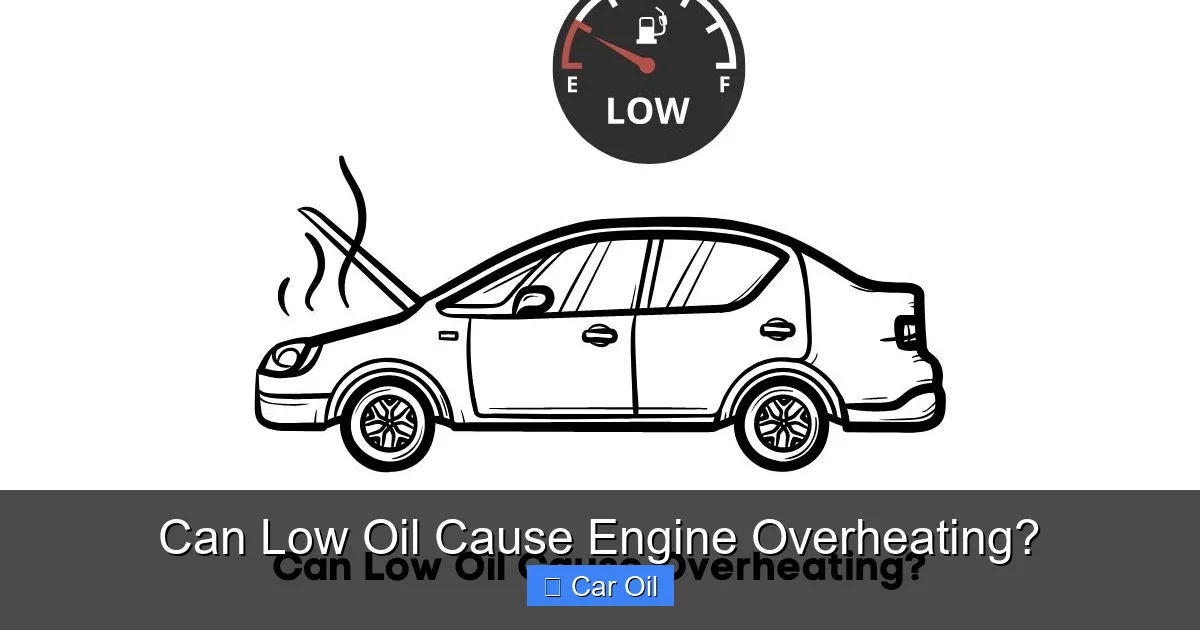
To grasp how low oil leads to overheating, we must first demystify what oil does besides make things slippery. Think of your engine’s internal geography. The coolant system is like the central HVAC for the building, cooling the main structural walls (cylinder block and head). Oil is the local cooling system for every individual room and piece of machinery inside. It’s sprayed onto the underside of pistons to cool them, it lubricates and cools the connecting rod bearings and main bearings, and it bathes the camshaft and valve train. The heat from these friction points is absorbed directly by the oil.
Visual guide about Can Low Oil Cause Engine Overheating?
Image source: vehiclechef.com
This oil, now hot, is pumped back to the oil pan or, in many modern engines, through an oil cooler (a small radiator for oil) where it sheds its heat before being recirculated. In this way, oil is a working fluid in the thermal management system. A significant portion of the waste heat in an engine—estimates often range from 10-30%—is handled by the oil system. Remove that participant from the equation, and the remaining coolant system is suddenly overloaded with more heat than it was designed to dissipate.
What Happens When Oil Level Drops: The Friction Cascade
The dipstick has “Add” and “Full” marks for a reason. That range is the safe operating zone. When oil falls below the “Add” mark, especially by a quart or more, the physics changes dramatically.
- Oil Pump Starvation: The oil pump, usually located in the oil pan, sucks oil through a pickup tube. If the oil level is too low, the pickup tube can start to draw in air along with oil, causing aeration (foamy oil). Aerated oil cannot be pumped effectively, leading to a severe drop in oil pressure and flow.
- Loss of Hydrodynamic Film: In bearings (main, rod, cam), oil operates under extreme pressure. A thick, continuous film of oil keeps the metal surfaces separated. Low volume and pressure mean this film becomes intermittent or collapses entirely. This is called boundary lubrication, where metal asperities (microscopic peaks) touch, generating immense localized heat and wear.
- Direct Metal Contact: The worst-case scenario is catastrophic failure. A connecting rod bearing, starved of oil, welds itself to the crankshaft journal (a “spun bearing”). The piston, no longer cooled by oil spray, expands from heat and friction, scoring the cylinder wall and seizing. This process generates so much heat, so quickly, that it can warp components and melt parts before the coolant even has a chance to boil over. The engine effectively grinds itself to a halt in a matter of seconds or minutes under load.
This is the core reason why low oil causes engine overheating: it introduces a massive, unmanaged source of heat directly into the engine’s heart. The coolant system, trying to do its job, is now fighting a fire it wasn’t sized to extinguish.
The Symptoms: How to Recognize Oil-Related Overheating Before It’s Too Late
The terrifying thing about low-oil failure is its speed and lack of obvious early warnings. Unlike a slow coolant leak that might give you a whiff of sweet smell or a puddle, low oil can be invisible until it’s too late. However, there are signs if you know what to listen for, feel for, and look for.
Visual guide about Can Low Oil Cause Engine Overheating?
Image source: carnewscast.com
Warning Lights and Gauges
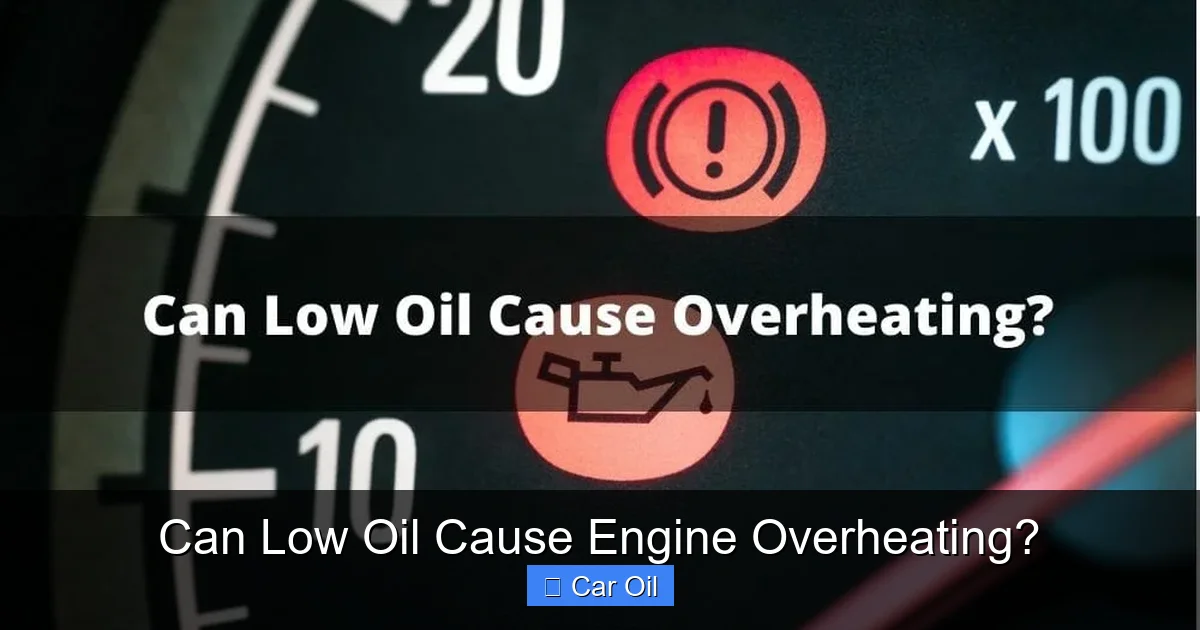
The most direct indicator is the oil pressure warning light. This light is not an “oil level” light; it’s a pressure light. But chronically low oil is the most common cause of low oil pressure. If this light comes on—especially at idle or under acceleration—shut the engine off immediately. Do not “drive it to a safe place.” You have seconds to minutes before destruction. Some vehicles also have an oil level sensor that will illuminate a separate “Oil Level Low” message; heed it absolutely.
The check engine light can also come on. Modern engine control units (ECUs) monitor oil pressure sensors. A critically low pressure reading can trigger a diagnostic trouble code (DTC) and the MIL (Malfunction Indicator Lamp). The car might also go into “limp mode,” reducing power to try and save the engine.
Physical and Auditory Symptoms
Before lights, your senses might pick up clues:
- Unusual Engine Noise: A persistent, deep knocking or ticking from the top end (valve train) or a lower, heavier thumping from the crankcase area are classic signs of inadequate lubrication. This is metal hitting metal. As discussed in our article on can low oil cause car to make noise, these sounds are urgent distress calls.
- Excessive Exhaust Smoke: Blueish or grayish smoke from the tailpipe can indicate oil is being burned because piston rings are compromised due to heat and wear from lack of lubrication. This is a later-stage symptom.
- Seized or Sticking Components: You might feel the engine struggle to turn over (a “hard start”) if internal components have already begun to gall or seize from previous heat/friction events. This connects directly to the symptom explored in can low oil cause car not to start.
- Smell of Burning Oil: A distinct, acrid smell of burning oil (different from coolant’s sweet smell) can mean oil is dripping onto hot exhaust manifolds or turbochargers due to leaks exacerbated by high pressure, or that it’s vaporizing inside the combustion chamber.
The Deceptive Temperature Gauge
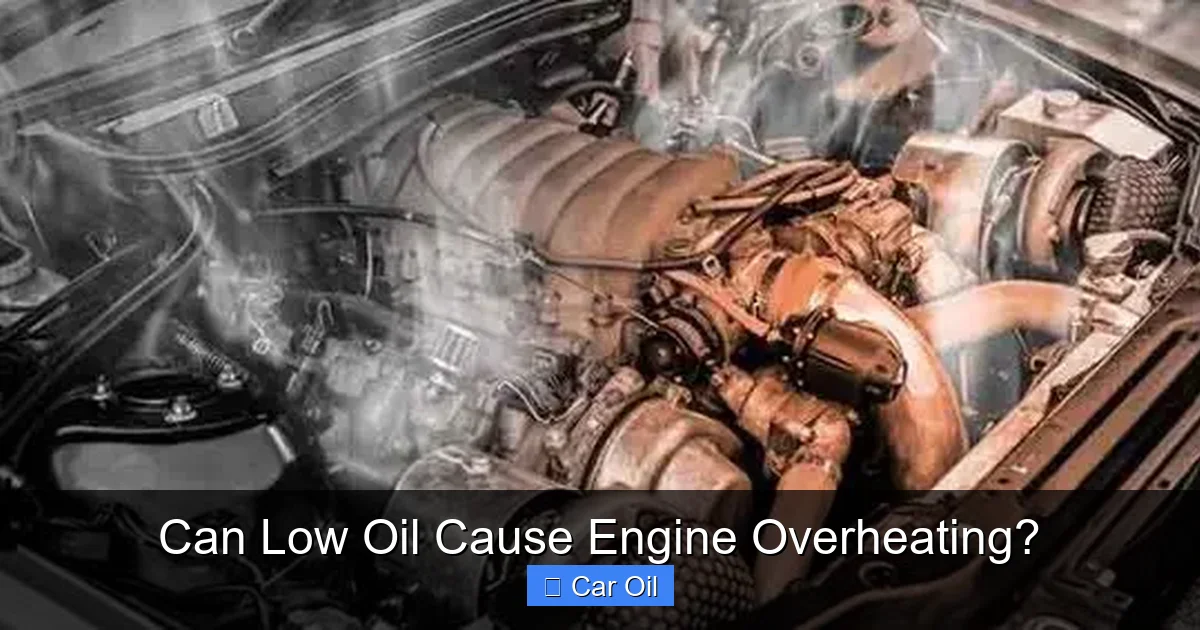
Here’s the critical nuance: the temperature gauge might not move into the red zone until it’s far too late. The coolant temperature sensor is in the coolant jacket. The heat from a failing bearing or a seizing piston is intensely localized. That heat takes time to conduct through the metal to the coolant jacket. By the time the coolant temperature actually rises, the internal engine damage from the friction point may already be catastrophic. You could have a perfectly normal coolant temperature reading while a connecting rod is in the final seconds of melting. This is why the oil pressure light and unusual noises are far more reliable indicators of imminent oil-related disaster.
The Chain Reaction: How Low Oil and Overheating Feed Each Other
The relationship between low oil and overheating isn’t always a straight line. It’s often a vicious, accelerating cycle that turns a minor problem into a total loss in no time.
Visual guide about Can Low Oil Cause Engine Overheating?
Image source: fubex.net
Step 1: The Initial Low Oil State
It starts with a slow leak, neglected maintenance, or an oil consumption issue (common in some high-mileage or turbocharged engines). The oil level gradually drops.
Step 2: Reduced Flow and Pressure
The oil pump begins to suck air. Oil pressure drops. The protective film in bearings thins. Friction increases, generating localized heat at those specific points.
Step 3: Heat Breaks Down Remaining Oil
The oil that is present gets hotter than normal. Heat is the enemy of oil. It causes oxidation and thermal breakdown, thinning the oil’s viscosity (making it runnier) and reducing its ability to form a protective film. The oil’s additives, which neutralize acids and keep the engine clean, are depleted faster. The oil itself becomes less effective at cooling because its heat capacity is reduced when it’s degraded.
Step 4: The Cycle Accelerates
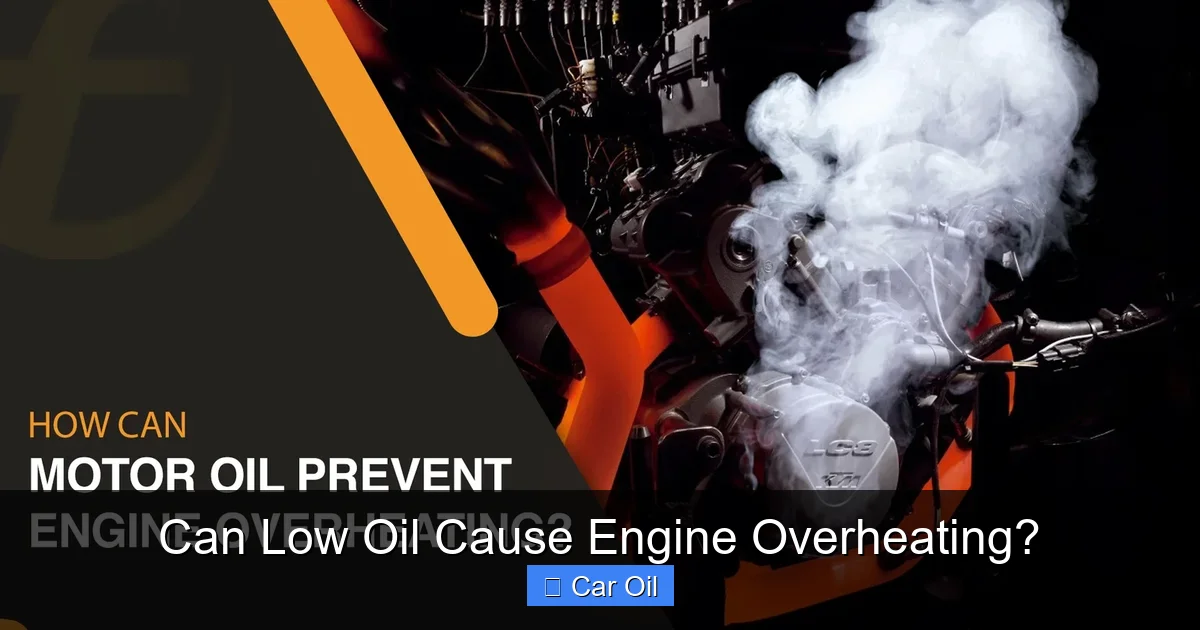
Thinner, broken-down oil provides even less protection. Friction and heat spike further. This cycle happens rapidly under load—during highway driving, towing, or even hard city acceleration. The engine’s overall thermal load increases dramatically because this new, massive source of frictional heat is now dumping energy directly into the engine block and sump.
Step 5: Coolant System Overwhelmed (Finally)
Eventually, the sheer amount of excess heat conducted into the coolant from the overheated block and heads overwhelms the radiator’s ability to shed it. The coolant temperature finally rises. You might see steam, smell coolant, and the gauge goes into the red. But by this point, the internal damage from the oil starvation is likely already done. The overheating is now a symptom of the deeper, earlier problem. This is why addressing a low oil condition is an absolute emergency, even if the temperature gauge looks fine.
Prevention and Immediate Action: Your Oil is Your Engine’s Lifeline
Given the speed and severity of failure, prevention is not just better than cure—it’s the only cure that matters.
Make Checking Oil a Non-Negotiable Habit
This is the single most important thing you can do. Check your oil at least once a month, and more often if you have an older car or known leak. How to check properly: Park on level ground. With the engine off and cold (or after shutting it off and waiting 5-10 minutes for oil to drain back), pull the dipstick, wipe it clean, reinsert it fully, then pull it out again. Read the level at the end of the stick. It must be between the MIN/LOW and MAX/FULL marks. If it’s at or below MIN, add oil immediately. Use the oil grade specified in your owner’s manual. This simple habit is your first and last line of defense against a low oil cause engine overheating scenario.
Understand and Address Oil Consumption
Some engines “use” a little oil between changes (a quart every 1,000-1,500 miles can be “normal” for some high-performance or older designs). But if you’re topping up more than a quart between scheduled changes, you have a problem. Causes range from worn piston rings and valve seals to leaking gaskets or turbocharger seals. Ignoring consumption is just a slower version of running low. Diagnosing and fixing the source of the leak or consumption is crucial. For more on this, see our guide on what can cause a car to leak oil.
Never Skip an Oil Change
Degraded oil loses its viscosity and additive package. It doesn’t lubricate as well and breaks down faster under heat. Sticking to your manufacturer’s recommended oil change interval (or using a more frequent schedule for severe driving conditions) ensures the oil in your engine is capable of doing its job—both as a lubricant and a coolant. Skipping changes sets you up for a perfect storm of sludge, varnish, and reduced protection. The connection between neglected maintenance and thermal failure is clear, as explored in can skipping oil changes cause overheating.
What to Do If You Suspect Low Oil While Driving
- DO NOT IGNORE THE OIL LIGHT OR UNUSUAL NOISES.
- Safely pull over and shut off the engine immediately.
- Wait 5-10 minutes for oil to settle.
- Check the dipstick. If low, add the correct oil to bring it to the FULL mark.
- If the light went out and noises stopped, you may have averted a disaster. Drive cautiously to a mechanic. Do not speed or rev the engine.
- If the light stays on, noises persist, or the oil was extremely low (below the add mark by more than a quart), call for a tow. Driving even a short distance could destroy the engine.
- Have a mechanic find and fix the cause of the low oil (leak, consumption, etc.) before further operation.
It’s Not Always the Only Culprit: Differentiating Oil Failure from True Coolant Overheating
A wise mechanic once said: “The temperature gauge lies.” Well, not exactly, but it only tells part of the story. To properly diagnose, you must understand the different failure modes.
The Classic Coolant System Overheat
This is what most people picture: a radiator leak, failed water pump, stuck thermostat, broken fan, or clogged heater core. Symptoms often include:
- Temperature gauge steadily climbing into the red.
- Steam from the engine bay (often sweet-smelling).
- Heater blowing hot air (or no heat if coolant is too low).
- Low coolant level in the reservoir or radiator (after engine cools).
- Possible white smoke from exhaust (if head gasket is blown).
In this case, oil level is likely normal (unless the engine has already been severely damaged by the heat). The oil itself might be contaminated with coolant (a milky sludge on the dipstick or under the oil cap), indicating a serious head gasket breach, but that’s a result of overheating, not the initial cause.
The Oil-Starvation Overheat
As detailed above, this is the scenario where oil is the primary failure point. Key differentiators:
- Primary symptom is oil pressure light or severe engine noise (knocking, ticking), before or without a major temperature gauge rise.
- Oil level on dipstick is low.
- Temperature rise may be late and rapid once the friction-generated heat overwhelms the block.
- No visible coolant leaks, and coolant level in reservoir may be fine.
- Damage is often internal, catastrophic, and sudden (spun bearings, scored cylinders, melted pistons).
Sometimes, the two systems fail together. A severe coolant leak can cause overheating, which then causes oil to break down and pressure to drop, leading to a compounded failure. But the root cause must be identified. For more on pure coolant issues, see can low antifreeze cause overheating.
Conclusion: Respect the Oil, Respect the Engine
So, can low oil cause engine overheating? The evidence is overwhelming and the mechanism is sound. Engine oil is not a passive participant; it is an active, essential component of your engine’s thermal management system. By reducing friction, it prevents the generation of excess heat at its source. By carrying heat away, it acts as a vital cooling fluid for components the coolant cannot touch.
The danger lies in its silence. Low oil doesn’t always scream; it often whispers with a faint knock or a momentarily flickering light. By the time the temperature gauge reacts, the silent work of destruction inside the crankcase may be complete. The financial cost of neglecting oil levels is staggering—a new or rebuilt engine versus a $5 quart of oil and five minutes of your time.
The protocol is simple and powerful: Check the oil. Every month. Without fail. Treat that dipstick like the vital health monitor it is. Change your oil on schedule, fix leaks immediately, and never, ever ignore an oil pressure warning. Your engine’s life—and its temperature—depends on it. In the battle against engine heat, you have two primary weapons: coolant and oil. Never let one run low.
Frequently Asked Questions
Can low oil cause a car to overheat without the oil light coming on?
Yes, it’s possible. The oil pressure warning light typically illuminates when pressure drops below a critical threshold (often around 5-10 PSI). If your oil level is low but not critically low, pressure might remain in the “normal” range at idle but drop dangerously during high-speed driving or high RPMs when demand is greatest. You might not get a warning light until it’s too late, which is why manual dipstick checks are irreplaceable.
If I add oil, will the overheating problem go away?
It might, if the overheating was solely caused by low oil and no permanent damage has occurred yet. Adding oil restores lubrication and cooling flow. However, if the engine has already suffered damage (e.g., a scored bearing or warped component), adding oil will stop the active destruction but the engine will still be damaged, noisy, and may fail soon. You must also find and fix why the oil was low (leak, consumption) to prevent a repeat.
Can too much oil cause overheating?
Yes, surprisingly. Too much oil can cause overheating because the spinning crankshaft can aerate the oil, whipping it into a frothy foam. This aerated oil cannot be pumped effectively, leading to a loss of oil pressure and flow—similar to running low. It also creates excessive windage and drag, increasing parasitic losses and heat. The correct level is absolutely critical. For more, see our article on can too much oil cause your car to overheat.
Is there a link between low oil and a shaking car?
Yes. Severe engine shaking or vibration can be a symptom of low oil. If a bearing is failing due to oil starvation, it can cause a rhythmic thump or shake that is felt throughout the car, especially at certain RPMs. Similarly, if a piston is seizing due to heat and lack of lubrication, it can cause a misfire and rough running. This is detailed in our piece on can low oil make your car shake.
My car has an “oil life” monitor. Do I still need to check the dipstick?
Absolutely yes. The oil life monitor calculates when to change oil based on algorithms (engine revolutions, temperature, drive time). It does not monitor the actual oil level in your engine. It tells you when the oil’s additives are likely depleted, not whether you have a leak or are burning oil. You must still manually check the dipstick regularly to ensure the oil level is safe. Relying solely on the oil life monitor while ignoring the dipstick is a guaranteed path to running low.
Can a bad oil pressure sensor cause overheating warnings?
A faulty oil pressure sensor might give a false low-pressure reading, triggering a warning light. However, it will not directly cause the engine to overheat. The danger is that a real low-oil condition might be ignored if the sensor is thought to be faulty. A bad sensor is a separate electrical issue, but you must always verify the actual oil level with the dipstick before dismissing any oil pressure warning. A real low-pressure condition is an immediate, life-threatening emergency for the engine, regardless of the sensor’s status.