
Can I Just Sign a Car Title Over to Someone?

Signing over a car title isn’t as simple as just writing a name on the back. It involves legal steps, paperwork, and potential pitfalls that vary by state. Doing it wrong could leave you liable or cause problems for the buyer.
So, you’ve decided it’s time to part ways with your car. Maybe you’re upgrading to something newer, downsizing, or helping a family member get their first set of wheels. You’ve found a buyer—or maybe it’s a friend or relative—and now you’re wondering: *Can I just sign a car title over to someone?*
At first glance, it seems straightforward. You’ve seen movies where someone scribbles their name on the back of a title and hands over the keys. But real life isn’t a Hollywood script. Transferring a car title involves legal responsibilities, state-specific rules, and potential risks if done incorrectly. While signing the title is a key step, it’s far from the only one. Missing a single detail—like failing to report the sale to the DMV or skipping the odometer reading—can lead to headaches down the road.
This guide will walk you through everything you need to know about transferring a car title, from the basics of what a title is to the exact steps you should follow. Whether you’re selling privately, gifting a vehicle, or transferring ownership within the family, we’ll cover the legal requirements, common mistakes, and pro tips to make the process smooth and stress-free. By the end, you’ll know exactly what “signing over a title” really means—and how to do it the right way.
Key Takeaways
- Signing a title transfers ownership legally: But only if done correctly with proper documentation and state compliance.
- Odometer disclosure is required: Federal law mandates accurate mileage reporting when transferring a vehicle title.
- Notarization may be necessary: Some states require signatures to be notarized to prevent fraud.
- Release of liability is critical: Filing this form protects you from future tickets, accidents, or fines tied to the car.
- Gift transfers have special rules: Transferring a car as a gift may involve tax forms and different procedures.
- Selling to family isn’t always simpler: Even close relatives must follow state-specific transfer protocols.
- Online services can help: Many DMVs now allow digital submissions, but in-person visits may still be required.
📑 Table of Contents
- What Is a Car Title and Why Does It Matter?
- Can You Just Sign the Title and Be Done?
- Step-by-Step Guide to Transferring a Car Title
- Special Cases: Gifting a Car or Selling to Family
- Common Mistakes to Avoid When Signing Over a Title
- State-Specific Variations: What to Watch For
- Conclusion: Yes, You Can Sign a Title—But Do It Right
What Is a Car Title and Why Does It Matter?
Before you even think about signing anything, it’s important to understand what a car title actually is. A car title—also known as a certificate of title—is a legal document issued by your state’s Department of Motor Vehicles (DMV) that proves ownership of a vehicle. It lists key details like the vehicle identification number (VIN), make, model, year, and the name(s) of the registered owner(s). Think of it as the car’s birth certificate and deed rolled into one.
When you buy a car, the title is transferred to your name. When you sell it, you must transfer that title to the new owner. This transfer is what legally changes ownership. Without a properly signed and submitted title, the buyer doesn’t officially own the car—even if they’ve paid you and driven it off the lot. That means you could still be held responsible for parking tickets, toll violations, or even accidents if the car is involved in one after the sale.
Key Information on a Car Title
Every car title contains several critical pieces of information that must be accurate during a transfer:
- Vehicle Identification Number (VIN): A 17-character code unique to your car. It’s used to track the vehicle’s history, including accidents, recalls, and ownership changes.
- Owner Name(s): The legal owner(s) as listed on the title. If there are multiple owners, all must sign unless one has power of attorney.
- Lienholder Information: If you still owe money on the car, the lender (like a bank or credit union) will be listed as a lienholder. You can’t transfer the title until the loan is paid off and the lien is released.
- Odometer Reading: Required by federal law for vehicles under 10 years old. This helps prevent odometer fraud.
- Title Brand: Indicates if the car has been salvaged, rebuilt, or declared a total loss. This affects resale value and buyer trust.
Why the Title Transfer Process Matters
Skipping or botching the title transfer can lead to serious consequences. For example, if you sell your car but don’t file a release of liability, you might still get traffic tickets in the mail—even months later. In some states, the original owner can be held liable for accidents caused by the new owner if the title wasn’t properly transferred.
Additionally, if the buyer doesn’t register the car in their name within a certain timeframe (usually 10–30 days, depending on the state), they may face fines or penalties. And if they try to sell the car later without a clean title, they could run into legal trouble.
So while it might seem easier to just hand over the keys and a signed title, taking the extra steps ensures everyone is protected—and that the transfer is legally binding.
Can You Just Sign the Title and Be Done?

Visual guide about Can I Just Sign a Car Title Over to Someone?
Image source: images.squarespace-cdn.com
Now to the million-dollar question: *Can I just sign a car title over to someone?* The short answer is: **yes, but with major caveats.** Signing the title is a necessary step, but it’s not the only one. Think of it like signing a contract—it’s important, but you still need witnesses, notarization, or filing with the proper authority to make it official.
When you sign the back of the title, you’re essentially saying, “I transfer ownership of this vehicle to [buyer’s name].” But that signature alone doesn’t complete the transfer. The buyer must also take steps to register the car in their name, pay sales tax (if applicable), and get new license plates. And in many cases, the DMV needs to be notified of the sale.
What Happens If You Only Sign the Title?
If you sign the title and hand it over without completing the rest of the process, several things can go wrong:
- You remain legally responsible: Until the DMV processes the transfer, you’re still the registered owner. That means you could be liable for fines, towing fees, or even criminal charges if the car is used in a crime.
- The buyer can’t register the car: Most DMVs won’t allow registration without a properly completed title, bill of sale, and other documents.
- No proof of sale: Without a bill of sale or release of liability, you have no record that you sold the car. This can be a problem if the buyer claims they never received the title or if there’s a dispute.
Real-Life Example: The $2,000 Parking Ticket
Imagine you sell your car to a friend and just sign the title. Two months later, you get a notice for $2,000 in unpaid parking tickets—all issued after the sale. The city says the car is still registered in your name. Even though you “sold” it, you didn’t file a release of liability, so legally, you’re still on the hook.
This isn’t a rare scenario. It happens more often than you’d think, especially in states with slow DMV processing times. The lesson? Don’t assume signing the title is enough. Always follow up to ensure the transfer is complete.
Step-by-Step Guide to Transferring a Car Title
Visual guide about Can I Just Sign a Car Title Over to Someone?
Image source: lh7-us.googleusercontent.com
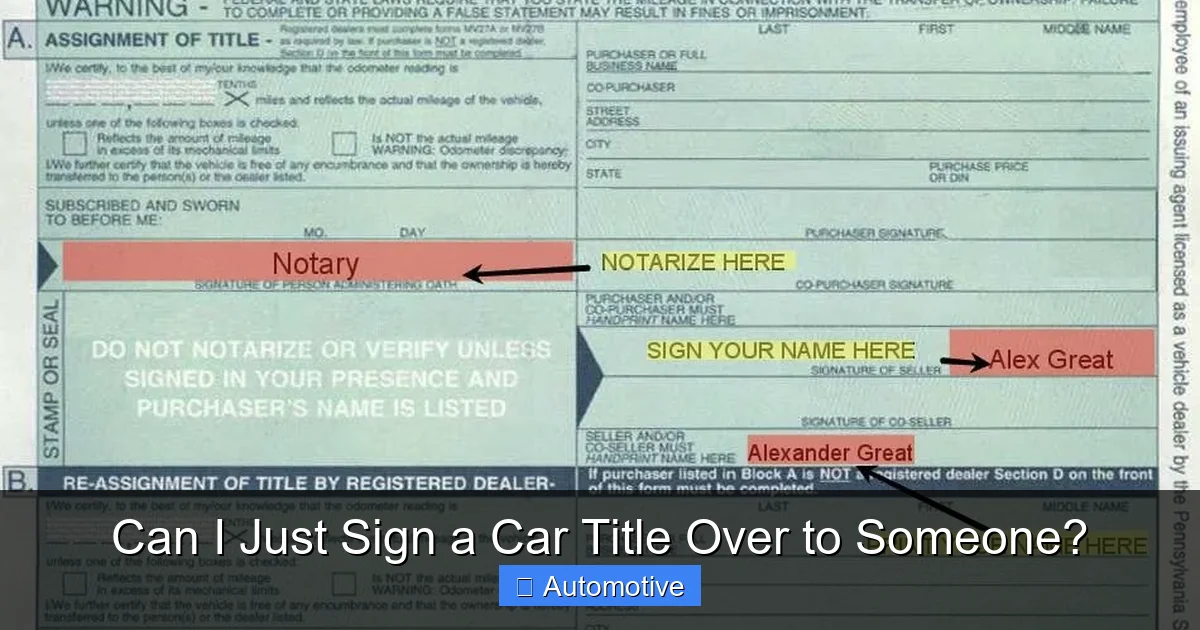
Now that we’ve established that signing the title is just one piece of the puzzle, let’s walk through the full process. While requirements vary slightly by state, the core steps are similar across the U.S. Here’s what you need to do to transfer a car title legally and safely.
Step 1: Prepare the Title for Transfer
Start by locating your car title. If it’s lost, you’ll need to request a duplicate from your state’s DMV before you can transfer it. Once you have it, check for any liens. If there’s a lienholder listed, you must pay off the loan and get a lien release before transferring ownership.
Next, fill out the seller section on the back of the title. This usually includes:
– Your signature
– The buyer’s name and address
– The sale price
– The date of sale
– Odometer reading (required for vehicles under 10 years old)
Make sure all information is accurate. Errors can delay the transfer or cause the DMV to reject the paperwork.
Step 2: Complete a Bill of Sale
A bill of sale is a legal document that records the details of the transaction. While not always required, it’s highly recommended—and often needed by the DMV. It should include:
– Names and addresses of buyer and seller
– Vehicle details (VIN, make, model, year)
– Sale price
– Date of sale
– Signatures of both parties
Some states provide free bill of sale templates on their DMV websites. You can also find reliable ones from legal websites or automotive organizations.
Step 3: File a Release of Liability
This is one of the most important steps—and one many people forget. A release of liability (also called a notice of transfer) informs the DMV that you’ve sold the vehicle and are no longer responsible for it.
You can usually file this online, by mail, or in person. In California, for example, you can submit it online through the DMV website. In Texas, you must mail Form VTR-34 to the Texas DMV.
Filing this form protects you from future liabilities. Without it, you could be stuck with fines, towing fees, or even lawsuits.
Step 4: Provide the Buyer with Necessary Documents
Hand over the signed title, bill of sale, and any other required documents (like a smog certificate, if applicable). Make sure the buyer understands they need to register the car in their name within the state’s deadline—usually 10 to 30 days.
If the car is being sold “as-is,” include a written statement to that effect. This limits your liability if the buyer later claims the car had hidden problems.
Step 5: Remove License Plates and Cancel Insurance
In most states, you must remove the license plates before handing over the car. Some states allow the buyer to reuse them, but you’ll need to transfer registration.
Also, cancel or transfer your auto insurance policy. Don’t just assume the buyer will insure the car immediately—there could be a gap in coverage.
Step 6: Confirm the Transfer with the DMV
After the sale, check with your state’s DMV to confirm the title has been transferred. Some states allow you to look up vehicle records online. If the transfer hasn’t gone through after a few weeks, contact the buyer to ensure they’ve completed their part.
Special Cases: Gifting a Car or Selling to Family
Visual guide about Can I Just Sign a Car Title Over to Someone?
Image source: lh7-us.googleusercontent.com
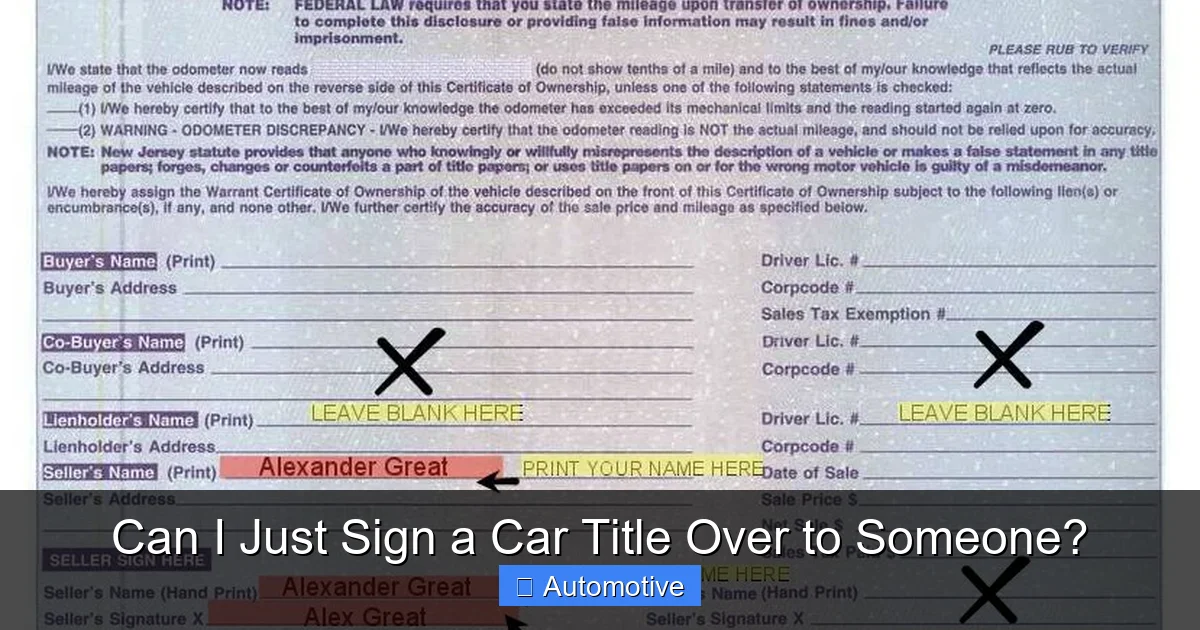
Transferring a car to a family member or as a gift isn’t always simpler—it often comes with its own set of rules. While you might think, “It’s just my kid,” the DMV doesn’t make exceptions based on relationships.
Gifting a Car: What You Need to Know
When you gift a car, the process is similar to a sale, but the sale price is usually listed as $0 or “gift.” However, this can trigger tax implications.
In many states, the recipient may have to pay use tax or gift tax based on the car’s fair market value. For example, in New York, gifts over $500 are subject to use tax. Check your state’s rules to avoid surprises.
You’ll still need to:
– Sign the title
– Complete a bill of sale
– File a release of liability
– Provide the recipient with all necessary documents
Some states also require a notarized affidavit stating the transfer is a gift.
Selling to a Family Member: Is It Different?
Selling to a spouse, child, or parent follows the same basic process as selling to a stranger. However, some states offer reduced or waived registration fees for family transfers.
For example, in Florida, transfers between spouses are exempt from sales tax. In Illinois, parent-to-child transfers may qualify for a tax exemption if the car is used for personal use.
But don’t assume you can skip steps. Even within families, the DMV requires proper documentation to prevent fraud and ensure accurate records.
Common Mistakes to Avoid When Signing Over a Title
Even with the best intentions, people make mistakes during title transfers. Here are the most common—and how to avoid them.
Mistake 1: Forgetting the Odometer Disclosure
Federal law requires you to report the vehicle’s mileage when transferring a title for cars less than 10 years old. If the odometer is broken or the car has over 999,999 miles, you must check the appropriate box and explain the situation.
Failing to do this can result in fines or a rejected title transfer.
Mistake 2: Not Checking for Liens
If your car has a loan, the lender holds a lien on the title. You can’t transfer ownership until the loan is paid off and the lien is released. Contact your lender to get a lien release letter before selling.
Mistake 3: Skipping the Bill of Sale
Even if your state doesn’t require a bill of sale, it’s a smart move. It protects both parties and provides proof of the transaction. Keep a copy for your records.
Mistake 4: Not Filing a Release of Liability
This is the #1 mistake sellers make. Without it, you’re still legally tied to the car. Always file this form as soon as the sale is complete.
Mistake 5: Assuming the Buyer Will Handle Everything
Don’t assume the buyer knows what to do. Provide clear instructions and follow up to ensure the transfer is complete. A little extra effort now can save you big problems later.
State-Specific Variations: What to Watch For
While the general process is similar nationwide, each state has its own rules. Here are a few key differences to be aware of:
- California: Requires a smog check within 90 days of sale. The buyer must pay use tax based on the purchase price or fair market value.
- Texas: Allows online title transfers for some transactions. Notarization is required for private sales.
- New York: Requires a bill of sale and proof of insurance for registration. Gifts over $500 are taxed.
- Florida: No state sales tax on private sales, but registration fees apply. Spouses are exempt from use tax.
- Illinois: Parent-to-child transfers may be tax-exempt. Odometer disclosure is required for vehicles under 10 years old.
Always check your state’s DMV website for the most up-to-date requirements. Rules can change, and what worked last year might not apply today.
Conclusion: Yes, You Can Sign a Title—But Do It Right
So, can you just sign a car title over to someone? Technically, yes—but that single signature is only the beginning. Transferring a car title legally and safely involves multiple steps: preparing the title, completing a bill of sale, filing a release of liability, and ensuring the buyer registers the vehicle.
Skipping any of these steps can leave you exposed to liability, fines, or legal trouble. Whether you’re selling to a stranger, gifting to a family member, or helping a friend, taking the time to do it right protects everyone involved.
Remember, the goal isn’t just to hand over the keys—it’s to transfer ownership cleanly and completely. By following your state’s guidelines and staying organized, you can make the process smooth, legal, and stress-free.
When in doubt, consult your local DMV or a legal professional. A little extra effort upfront can save you a lot of headaches down the road.
Frequently Asked Questions
Do I need a notary to sign over a car title?
Not always, but some states require notarization for private vehicle sales. Check your state’s DMV website to confirm. Even if it’s not required, having signatures notarized can add an extra layer of protection against fraud.
Can I transfer a car title if I still owe money on it?
No. If there’s a lien on the title, you must pay off the loan first. Contact your lender to get a lien release before transferring ownership.
What if I lost my car title?
You’ll need to request a duplicate title from your state’s DMV before you can transfer ownership. There’s usually a small fee and processing time involved.
How long do I have to file a release of liability?
Most states require you to file it within 5 to 10 days of the sale. Filing sooner protects you from future liabilities.
Can I transfer a car title online?
Some states allow online title transfers, especially for gifts or family sales. Others require in-person visits. Check your DMV’s website for options.
What happens if the buyer doesn’t register the car?
The car remains legally registered in your name, meaning you could be liable for fines, tickets, or accidents. Always follow up to ensure the transfer is complete.