
Can I Carry a Gun in My Car in Ohio?

Yes, you can carry a gun in your car in Ohio—but only if you follow specific state laws. Whether you have a concealed handgun license (CHL) or are transporting an unloaded firearm, knowing the rules is essential to stay legal and safe.
Key Takeaways
- Ohio allows open and concealed carry in vehicles with a valid CHL: If you have a concealed handgun license, you can legally carry a loaded handgun in your car, either openly or concealed.
- Unloaded firearms can be transported without a license: You don’t need a CHL to transport an unloaded handgun in your vehicle, as long as it’s secured and inaccessible.
- Firearms must be stored properly when not carried: If you’re not carrying the gun on your person, it should be in a closed compartment, trunk, or locked container.
- Private property and employer rules still apply: Even with a CHL, you cannot bring a gun onto private property where the owner prohibits it, including some workplaces.
- Federal laws may override state rules in certain areas: Schools, federal buildings, and airports have stricter regulations—carrying a gun there can lead to federal charges.
- Always carry your CHL and ID when armed: Law enforcement may ask to see your license and identification if you’re carrying a concealed weapon.
- Stay updated on law changes: Ohio’s gun laws have evolved recently, so regular review of current statutes is wise.
📑 Table of Contents
Can I Carry a Gun in My Car in Ohio?
If you’re a gun owner in Ohio, you’ve probably asked yourself: *Can I carry a gun in my car in Ohio?* The short answer is yes—but it depends on your license status, how you’re carrying the firearm, and where you’re going. Ohio has some of the most gun-friendly laws in the country, but that doesn’t mean you can ignore the rules. A little knowledge goes a long way in keeping you safe, legal, and confident on the road.
Whether you’re commuting to work, running errands, or taking a road trip across the state, understanding your rights and responsibilities is crucial. Ohio law treats firearms in vehicles differently depending on whether the gun is loaded, concealed, or openly carried. And while the state allows both open and concealed carry under certain conditions, there are important exceptions—especially when it comes to private property, federal zones, and interactions with law enforcement.
In this guide, we’ll walk you through everything you need to know about carrying a gun in your car in Ohio. From licensing requirements to storage rules, we’ll break down the legal landscape in plain language. No legalese, no confusion—just clear, practical advice to help you stay on the right side of the law.
Ohio’s Concealed Handgun License (CHL) and Vehicle Carry
Visual guide about Can I Carry a Gun in My Car in Ohio?
Image source: thegunlaws.com
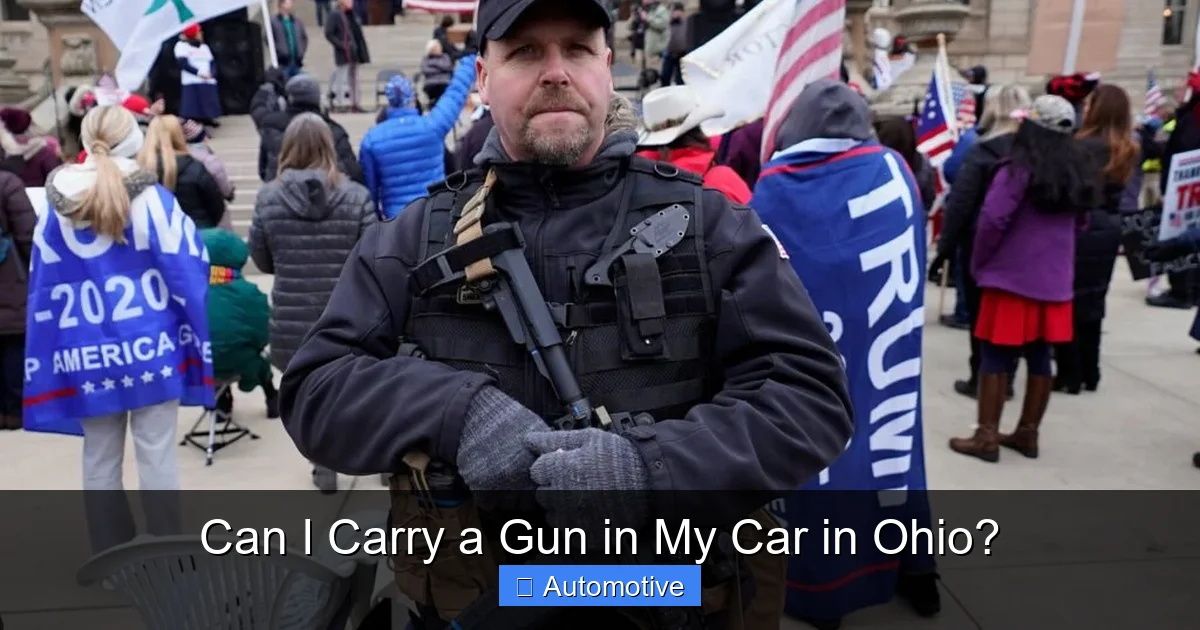
One of the most important things to understand is the role of the Concealed Handgun License (CHL) in Ohio. If you have a valid CHL, you’re allowed to carry a loaded handgun in your vehicle—either openly or concealed. This is a big deal, because it means you can have your firearm readily accessible while driving, as long as you follow the rules.
To get a CHL in Ohio, you must be at least 21 years old, a legal resident of the state, and pass a background check. You’ll also need to complete a firearms safety course approved by the Ohio Peace Officer Training Commission. Once issued, your CHL is valid for five years and allows you to carry in most public places, including your car.
But here’s the key: your CHL must be on you whenever you’re carrying a concealed handgun. If a police officer stops you and you have a loaded gun in your car, they may ask to see your license. Failing to present it can lead to serious legal trouble, even if you’re otherwise compliant.
Let’s say you’re driving to the grocery store with your handgun tucked in your waistband. As long as you have your CHL and the gun is concealed, you’re in the clear. But if you don’t have your license with you—even if it’s valid—you could be charged with carrying a concealed weapon without a license. That’s a misdemeanor in Ohio, and it’s not worth the risk.
What If I Don’t Have a CHL?
If you don’t have a concealed handgun license, you can still transport a handgun in your car—but only under strict conditions. The firearm must be unloaded and stored in a way that makes it inaccessible while driving. This usually means placing it in the trunk, a locked glove compartment, or a secure container.
For example, if you’re driving to a shooting range or returning from a hunting trip, you can legally transport your unloaded handgun in the trunk of your car—even without a CHL. But if the gun is loaded or easily reachable (like on the passenger seat), you could be in violation of Ohio law.
It’s also important to note that long guns (like rifles and shotguns) have different rules. You can transport an unloaded long gun in your vehicle without a license, as long as it’s not concealed on your person. But again, storage matters—keeping it in a case or rack in the back seat is usually fine, but don’t leave it where it’s easily accessible.
Open Carry vs. Concealed Carry in Vehicles
Visual guide about Can I Carry a Gun in My Car in Ohio?
Image source: outdoorspree.com
Ohio allows both open carry and concealed carry, but the rules differ depending on how you’re carrying the firearm and whether you have a CHL.
Open carry means the handgun is visible—perhaps in a holster on your hip or resting on the seat next to you. In Ohio, you can openly carry a loaded handgun in your vehicle if you have a valid CHL. However, some people choose to openly carry without a license, which is legal in many situations—but not in a vehicle.
Here’s the catch: if you’re openly carrying a loaded handgun in your car without a CHL, you could be breaking the law. Ohio law considers a firearm in a vehicle to be “concealed” if it’s not in plain view and readily accessible. So even if the gun is on the seat, if it’s not clearly visible, it may be treated as concealed—and that requires a license.
On the other hand, if you have a CHL, you can choose to carry openly or concealed. Some people prefer open carry for quick access, while others opt for concealment for privacy or safety. Either way, as long as you’re licensed, you’re protected under Ohio law.
Practical Example: Commuting with a Handgun
Imagine you’re a teacher who lives in Cleveland and drives to work every day. You have a CHL and keep your handgun in a holster on your belt. During your commute, you pass through several neighborhoods, a school zone, and a busy downtown area. Are you legal?
Yes—as long as you’re not entering a prohibited area (like a school building or federal facility), and you have your CHL and ID with you. Your open carry is legal because you’re licensed, and you’re not violating any local ordinances (Ohio has statewide preemption, meaning local governments can’t impose stricter gun laws).
But what if you decide to hide the gun under your jacket? That’s still legal with a CHL. The key is consistency: if you’re carrying concealed, make sure your license is on you. And always be prepared to show it if asked by law enforcement.
Transporting Firearms Without a CHL
Visual guide about Can I Carry a Gun in My Car in Ohio?
Image source: freerangeamerican.us
Not everyone wants or needs a concealed handgun license. Maybe you only shoot at the range, or you inherited a family firearm and want to move it safely. In those cases, you can still transport a handgun in your car—just not in a way that allows immediate access.
Ohio law requires that any handgun transported without a CHL must be unloaded and stored in a closed compartment, trunk, or locked container. The goal is to prevent unauthorized access, especially by children or thieves.
For example, if you’re driving to a gun show with a handgun in the back seat, it should be unloaded and placed in a locked case. If you’re transporting multiple firearms, each should be secured separately. And never leave a firearm unattended in an unlocked vehicle—this not only risks theft but could also lead to legal issues if someone else accesses it.
Best Practices for Safe Transport
Here are a few tips to keep in mind when transporting a firearm without a CHL:
– Always unload the gun before placing it in the vehicle.
– Use a hard-sided, lockable case or gun safe.
– Store the case in the trunk or a locked compartment.
– Keep ammunition separate from the firearm.
– Avoid leaving the vehicle unattended with the firearm inside.
These steps not only keep you legal but also promote responsible gun ownership. Remember, even if you’re not carrying the gun on your person, you’re still responsible for its safe handling and storage.
Restricted Areas and Private Property
Even with a valid CHL, there are places where you cannot carry a gun—even in your car. These include:
– Schools and school zones (under federal law)
– Federal buildings and courthouses
– Airports (beyond security checkpoints)
– Private property where the owner prohibits firearms
Let’s say you work at a private company that has a “no guns” policy. Even if you have a CHL, you cannot bring your handgun onto the property—including in your car in the parking lot. Some employers have challenged this rule, but courts have generally upheld property rights over gun rights in these cases.
Similarly, if you’re visiting a friend’s home and they don’t allow firearms, you must leave your gun at home or store it legally off-site. Carrying it in your car on their property could be considered trespassing with a weapon.
School Zones and Federal Law
The Gun-Free School Zones Act (GFSZA) is a federal law that prohibits carrying a firearm within 1,000 feet of a school. However, there’s an exception: if you have a valid state-issued license (like Ohio’s CHL) and the firearm is unloaded and stored in your vehicle, you may be protected.
But this is a gray area. Federal law can be stricter than state law, and enforcement varies. To stay safe, it’s best to avoid school zones entirely when transporting a firearm—even if you think you’re compliant.
Interacting with Law Enforcement
If you’re pulled over by a police officer while carrying a gun in your car, knowing what to do can prevent misunderstandings—and potential legal trouble.
First, keep your hands visible on the steering wheel. Don’t reach for anything unless instructed. If you have a CHL and are carrying a concealed handgun, you are required by Ohio law to inform the officer immediately.
You don’t need to shout it out, but a calm, clear statement like, “Officer, I have a concealed handgun license and I am carrying a firearm,” can go a long way. Have your license and ID ready to present when asked.
What Not to Do
– Don’t reach for your gun or your license without telling the officer first.
– Don’t argue or become confrontational.
– Don’t assume the officer knows Ohio’s gun laws.
Most officers are trained to handle these situations, but your cooperation makes the process smoother for everyone. Remember, the goal is safety—not confrontation.
Recent Changes to Ohio Gun Laws
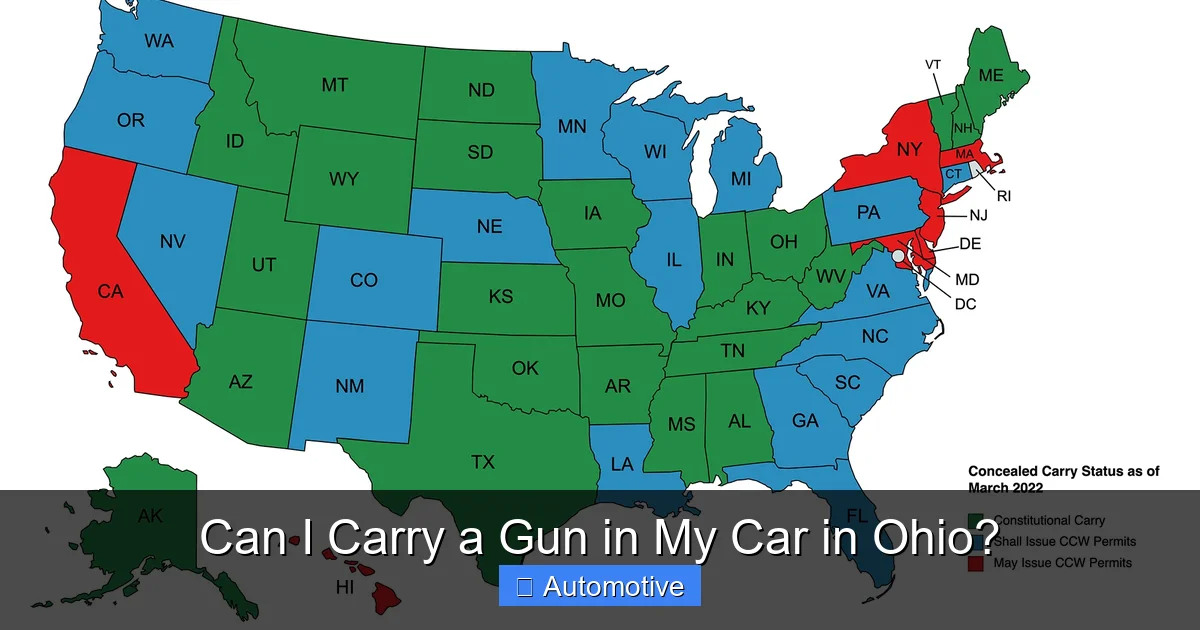
Ohio has made several updates to its firearm laws in recent years, so it’s important to stay informed. One major change is the move toward “constitutional carry” for certain individuals.
As of 2023, Ohio allows eligible individuals aged 21 and older to carry a concealed handgun without a license in most public places—including vehicles. This doesn’t mean you should skip getting a CHL, though. A license still offers legal protection, reciprocity with other states, and faster processing at gun ranges and events.
Additionally, Ohio has strengthened penalties for illegal gun possession and expanded background check requirements for private sales. These changes reflect a broader trend toward balancing gun rights with public safety.
Why a CHL Still Matters
Even with constitutional carry, having a CHL is smart. It proves you’ve been trained, passed a background check, and understand the law. It also allows you to carry in more places and travel to states that recognize Ohio’s license.
Think of it like a driver’s license: you can drive without one in some situations, but having it opens more doors and offers protection.
Conclusion
So, can you carry a gun in your car in Ohio? The answer is yes—but only if you follow the rules. Whether you have a concealed handgun license or are transporting an unloaded firearm, understanding Ohio’s laws is essential.
With a CHL, you can carry a loaded handgun in your vehicle, openly or concealed, in most public areas. Without a license, you can still transport an unloaded firearm, as long as it’s stored securely and out of reach. But always be aware of restricted zones, private property rules, and federal regulations.
The key to staying legal is preparation: carry your license, store your gun properly, and know your rights. And when in doubt, consult a qualified attorney or review the latest guidelines from the Ohio Attorney General’s office.
Gun ownership comes with great responsibility. By following the law and practicing safe habits, you can protect yourself, your family, and your rights—all while staying safe on the road.
Frequently Asked Questions
Can I carry a loaded gun in my car without a license in Ohio?
No, you cannot carry a loaded handgun in your car without a concealed handgun license (CHL) in Ohio. Doing so could result in misdemeanor charges. However, you can transport an unloaded handgun if it’s stored in a locked container or trunk.
Do I need to tell a police officer if I’m carrying a gun in my car?
Yes, if you have a CHL and are carrying a concealed handgun, Ohio law requires you to inform the officer during any traffic stop. You should do so calmly and clearly, and have your license and ID ready.
Can I leave my gun in my car at work?
It depends on your employer’s policy. Even with a CHL, you cannot bring a firearm onto private property where the owner prohibits it. Some workplaces allow guns in vehicles, but others do not—check your company’s rules.
Is it legal to carry a gun in my car in a school zone?
Generally, no. Federal law prohibits carrying firearms within 1,000 feet of a school. Even with a CHL, you should avoid school zones when transporting a gun to prevent legal complications.
Can I transport a rifle in my car without a license?
Yes, you can transport an unloaded rifle or shotgun in your vehicle without a license, as long as it’s not concealed on your person. Store it securely in the back seat, trunk, or a gun rack.
What happens if I get pulled over and don’t have my CHL?
If you’re carrying a concealed handgun without your CHL, you could be charged with a misdemeanor—even if the license is valid. Always carry your license and ID when armed.