
Can I Buy a Car with a Learner’s Permit?

Yes, you can legally purchase a car with just a learner’s permit, but you cannot drive it alone. You’ll need a licensed driver to operate the vehicle until you earn your full driver’s license. This guide covers financing, insurance, registration, and practical tips for new drivers.
Key Takeaways
- You can buy a car with a learner’s permit: There’s no law preventing someone with a learner’s permit from purchasing a vehicle.
- You cannot drive alone: A licensed adult (usually 21+) must be in the car with you at all times while operating the vehicle.
- Insurance is required: The car must be insured, and you’ll typically be listed as a permitted driver under a parent or guardian’s policy.
- Financing may require a co-signer: Most lenders require a co-signer if you’re under 18 or lack credit history.
- Registration and title can be in your name: You can register the car in your name even with just a learner’s permit.
- Practice driving legally: Use the car to gain experience under supervision, following all state-specific learner’s permit rules.
- Plan for the future: Consider how this purchase fits into your long-term goals, including insurance costs and maintenance.
📑 Table of Contents
- Can I Buy a Car with a Learner’s Permit?
- Understanding What a Learner’s Permit Allows
- Can You Legally Purchase a Car with Just a Permit?
- Financing a Car with a Learner’s Permit
- Insurance Requirements for Permit Holders
- Registering and Titling the Car in Your Name
- Practical Tips for New Car Owners with a Permit
- Conclusion
Can I Buy a Car with a Learner’s Permit?
So, you’ve just gotten your learner’s permit—congratulations! You’re one step closer to the freedom of the open road. Now, you’re probably wondering: Can I buy a car with a learner’s permit? The short answer is yes. But before you rush to the dealership, there are some important things to understand.
Having a learner’s permit means you’re legally allowed to practice driving, but only under the supervision of a licensed adult. That doesn’t stop you from owning a car, though. In fact, many teens and young adults buy their first vehicle while still on a permit. Whether it’s a used compact for commuting or a reliable sedan for family trips, owning a car early can teach responsibility, build credit, and prepare you for life after getting your license.
But here’s the catch: just because you can buy a car doesn’t mean you can drive it solo. The rules around driving, insurance, and registration are strict—and vary by state. This guide will walk you through everything you need to know, from financing options to insurance requirements, so you can make a smart, legal, and safe decision.
Understanding What a Learner’s Permit Allows
Visual guide about Can I Buy a Car with a Learner’s Permit?
Image source: nessan.ie
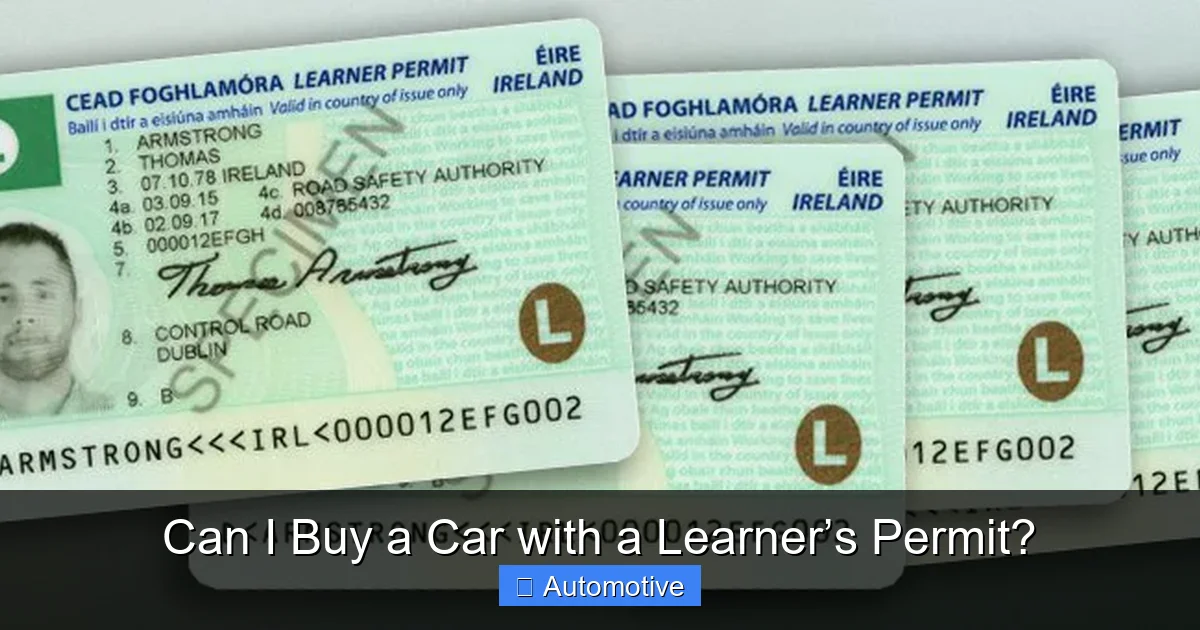
Before diving into car ownership, it’s important to understand exactly what a learner’s permit does—and doesn’t—allow.
A learner’s permit, also known as a provisional or instruction permit, is the first step in most states’ graduated driver licensing (GDL) programs. It allows new drivers to practice driving under controlled conditions. The goal is to build experience and confidence before earning a full driver’s license.
Key Restrictions of a Learner’s Permit
Most states impose several rules on permit holders:
- Supervised driving only: You must have a licensed adult (usually 21 or older) in the front passenger seat at all times.
- No nighttime driving: Many states prohibit driving between certain hours (e.g., 10 p.m. to 5 a.m.) unless accompanied by a parent or guardian.
- No passengers under 18: Some states limit the number of young passengers you can carry to reduce distractions.
- Zero tolerance for alcohol: Even a small amount of alcohol in your system can result in penalties.
- Cell phone ban: Most states prohibit the use of handheld devices while driving, even for permit holders.
These rules are in place for your safety—and the safety of others on the road. Violating them can delay your ability to get a full license, so it’s crucial to follow them closely.
State-by-State Variations
Every state has slightly different rules for learner’s permits. For example:
- In California, drivers under 18 must hold a permit for at least six months and complete 50 hours of supervised driving (10 at night).
- In Texas, permit holders under 18 must be accompanied by a licensed adult who is at least 21 years old.
- In New York, drivers with a learner’s permit cannot drive on highways with a speed limit over 55 mph unless supervised by a driving instructor.
Always check your state’s Department of Motor Vehicles (DMV) website for the most up-to-date rules. Ignorance isn’t an excuse—and breaking the rules can cost you time, money, and even your permit.
Can You Legally Purchase a Car with Just a Permit?
Visual guide about Can I Buy a Car with a Learner’s Permit?
Image source: permittestpractice.com
Now for the big question: Can you actually buy a car with only a learner’s permit? The answer is a clear and confident yes.
There is no federal or state law that prohibits someone with a learner’s permit from purchasing a vehicle. You can walk into a dealership or private seller, negotiate a price, sign a contract, and take ownership of a car—even if you can’t drive it alone.
Why People Buy Cars Early
Many teens and young adults choose to buy a car while still on a permit for several practical reasons:
- Convenience: Having your own car makes it easier to get to school, work, or practice sessions.
- Responsibility: Owning a car teaches budgeting, maintenance, and time management.
- Building credit: If you finance the car and make payments on time, it can help establish a positive credit history.
- Family support: Parents or guardians may help with insurance and maintenance, making ownership more affordable.
- Preparation: You’ll be ready to drive solo the moment you get your license.
For example, Sarah, a 17-year-old in Ohio, bought a used Honda Civic with her learner’s permit. Her dad helped her with the paperwork and insurance, and she practiced driving with him every weekend. By the time she turned 18 and got her license, she was already comfortable behind the wheel and had saved money on gas and repairs.
What You Can and Can’t Do After Purchase
Once you own the car, here’s what’s allowed:
- Register the vehicle in your name: Most states allow you to register a car under your name even with a permit.
- Insure the car: You can be listed as a driver on an insurance policy, usually under a parent or guardian.
- Drive with a supervisor: You can operate the car as long as a licensed adult is present.
What you can’t do:
- Drive alone: No solo trips, even to the grocery store or school.
- Let others drive unsupervised: Only licensed drivers can operate the car without supervision.
- Ignore insurance or registration: The car must be legally registered and insured, just like any other vehicle.
In short, ownership is allowed—but operation is restricted. Think of it like owning a bicycle: you can buy it, but you still need training wheels until you’re ready.
Financing a Car with a Learner’s Permit
Visual guide about Can I Buy a Car with a Learner’s Permit?
Image source: i.ytimg.com
If you’re not paying cash, you’ll likely need to finance your car purchase. But can you get a car loan with just a learner’s permit? The answer depends on your age, credit history, and whether you have a co-signer.
Can You Get a Loan on Your Own?
Most lenders require borrowers to be at least 18 years old to sign a legally binding contract. If you’re under 18, you typically cannot take out a loan in your name alone. Even if you’re 18 or older, a limited credit history may make it difficult to qualify for financing without a co-signer.
The Role of a Co-Signer
A co-signer is someone who agrees to take responsibility for the loan if you can’t make payments. This person is usually a parent or guardian. Having a co-signer with good credit can significantly improve your chances of approval and help you secure a lower interest rate.
For example, 19-year-old Jake wanted to buy a used Toyota Corolla. He had a learner’s permit and a part-time job, but no credit history. His mom co-signed the loan, and they qualified for a 5.9% APR. Jake made all his payments on time, and after two years, he was able to refinance the loan in his name only.
Tips for Financing Success
- Shop around: Compare rates from banks, credit unions, and online lenders.
- Get pre-approved: This helps you know your budget before visiting a dealership.
- Consider a shorter loan term: While monthly payments are higher, you’ll pay less in interest over time.
- Read the fine print: Watch out for prepayment penalties or hidden fees.
- Make payments on time: This builds credit and avoids repossession.
Even if you’re not the primary borrower, being listed on the loan can help you start building credit—especially if the lender reports payments to credit bureaus.
Insurance Requirements for Permit Holders
Insurance is not optional—it’s the law. Every state requires at least liability coverage, and most require uninsured motorist protection and personal injury protection as well.
Can You Be Insured with a Learner’s Permit?
Yes, but you’ll typically be added as a “permitted driver” under someone else’s policy—usually a parent or guardian. Insurance companies understand that new drivers need to practice, and they offer coverage for permit holders.
How Insurance Works for Young Drivers
When you’re added to a family policy, the insurance company assesses the risk of having a new driver on the road. This often leads to higher premiums, especially if you’re under 25. However, some insurers offer discounts for good grades, driver’s education courses, or low annual mileage.
For instance, Maria, a 16-year-old in Florida, was added to her parents’ policy after buying a used Ford Focus. The premium increased by about $1,200 per year, but they saved $300 by completing a state-approved driver’s education course.
Types of Coverage to Consider
- Liability coverage: Covers damage or injuries you cause to others. Required in all states.
- Collision coverage: Pays for damage to your car in an accident, regardless of fault.
- Comprehensive coverage: Covers theft, vandalism, weather damage, and other non-collision events.
- Uninsured/underinsured motorist coverage: Protects you if you’re hit by a driver with no or insufficient insurance.
- Medical payments or PIP: Covers medical expenses for you and your passengers.
Even though you can’t drive alone, the car still needs full coverage if it’s financed. Lenders require comprehensive and collision insurance to protect their investment.
Tips to Lower Insurance Costs
- Maintain good grades: Many insurers offer a “good student discount” for B averages or higher.
- Take a driver’s education course: Approved courses can reduce premiums by 10–20%.
- Choose a safe, low-cost vehicle: Sports cars and luxury vehicles cost more to insure.
- Limit mileage: Drive fewer miles per year to qualify for low-mileage discounts.
- Bundle policies: Combine auto insurance with home or renters insurance for a discount.
Remember, insurance is a long-term commitment. Even after you get your license, rates may remain high for several years. Planning ahead can save you hundreds.
Registering and Titling the Car in Your Name
Once you’ve bought the car, you’ll need to register it and get a title. The good news? You can do this with just a learner’s permit.
Can You Register a Car with a Permit?
Yes. Most states allow you to register a vehicle in your name regardless of your license status. You’ll need to provide:
- Proof of ownership (title or bill of sale)
- Proof of insurance
- Valid ID (your learner’s permit counts)
- Completed registration application
- Payment for registration fees and taxes
Some states may require a parent or guardian to sign as a co-registrant, especially if you’re under 18. This adds their name to the title and registration, giving them legal authority over the vehicle.
What About the Title?
The title proves ownership of the car. You can have the title issued in your name alone, or jointly with a parent. If you’re financing the car, the lender will usually hold the title until the loan is paid off.
For example, 17-year-old Alex bought a used Subaru with his learner’s permit. He registered the car in his name and listed his mom as a co-owner on the title. This gave her legal standing to help with insurance and registration, while still allowing Alex to build credit and responsibility.
State-Specific Requirements
Registration rules vary by state. In some places, you may need a safety inspection or emissions test before registering. Others require a VIN verification. Always check your local DMV website for exact requirements.
Practical Tips for New Car Owners with a Permit
Owning a car is exciting, but it comes with responsibilities. Here are some practical tips to help you make the most of your purchase.
Use the Car to Practice Driving
Your car is a tool for learning. Schedule regular practice sessions with your supervisor. Focus on:
- Parking (parallel, perpendicular, and angle)
- Highway driving
- Night driving (when allowed)
- Defensive driving techniques
- Handling different weather conditions
Keep a driving log to track your progress. Many states require a minimum number of supervised hours before you can take the road test.
Learn Basic Maintenance
You don’t need to be a mechanic, but knowing the basics can save you money and prevent breakdowns. Learn how to:
- Check oil, coolant, and tire pressure
- Replace windshield wipers
- Jump-start a dead battery
- Change a flat tire
- Recognize warning lights on the dashboard
Regular maintenance—like oil changes and tire rotations—should be done according to the manufacturer’s schedule.
Budget for Ongoing Costs
Owning a car isn’t just about the purchase price. You’ll also need to budget for:
- Insurance premiums
- Fuel
- Maintenance and repairs
- Registration and inspection fees
- Parking and tolls
A good rule of thumb is to spend no more than 10–15% of your income on car-related expenses.
Stay Legal and Safe
Always follow the rules of your learner’s permit. Keep your supervisor’s license and your permit with you when driving. Never let an unlicensed friend drive your car—even for a quick errand.
Also, avoid distractions. Put your phone away, limit passengers, and focus on the road.
Conclusion
So, can you buy a car with a learner’s permit? Absolutely. It’s a smart, legal, and responsible choice for many new drivers. While you can’t drive alone, owning a car gives you the chance to practice, build credit, and prepare for life on the road.
Just remember: ownership comes with obligations. You’ll need insurance, registration, and a plan for financing and maintenance. Work with a parent or guardian, follow your state’s rules, and use the car to gain experience safely.
With the right preparation, your first car can be more than just a vehicle—it can be a stepping stone to independence, responsibility, and confidence behind the wheel.
Frequently Asked Questions
Can I buy a car with just a learner’s permit?
Yes, you can legally purchase a car with a learner’s permit. There are no laws preventing permit holders from owning a vehicle.
Can I drive the car alone after buying it?
No, you cannot drive the car alone. A licensed adult must be in the front seat with you at all times while operating the vehicle.
Do I need insurance if I have a learner’s permit?
Yes, the car must be insured. You’ll typically be listed as a permitted driver under a parent or guardian’s policy.
Can I register a car in my name with a permit?
Yes, most states allow you to register a vehicle in your name even with just a learner’s permit. Some may require a co-registrant if you’re under 18.
Will buying a car help me build credit?
Yes, if you finance the car and make on-time payments, it can help establish a positive credit history—especially if the lender reports to credit bureaus.
What happens if I violate my permit rules?
Violating permit restrictions can delay your ability to get a full license, result in fines, or even lead to permit suspension. Always follow your state’s guidelines.