
Can Bad Tires Make Your Car Shake

Yes, bad tires can absolutely make your car shake. Worn tread, imbalance, misalignment, or internal damage often cause vibrations at certain speeds. Ignoring these signs can lead to unsafe driving conditions and costly repairs.
Key Takeaways
- Bad tires are a common cause of car shaking: Worn, unbalanced, or damaged tires can create noticeable vibrations, especially at highway speeds.
- Tire imbalance leads to steering wheel wobble: When weight isn’t evenly distributed, your steering wheel may shake between 50–70 mph.
- Uneven tread wear affects ride smoothness: Tires with cupping, feathering, or bald spots cause rhythmic shaking and reduce traction.
- Internal tire damage may not be visible: Sidewall bulges, separated belts, or punctures can cause shaking even if the tire looks fine.
- Proper maintenance prevents vibration issues: Regular rotations, alignments, and pressure checks help keep tires in good condition.
- Ignoring shaking can worsen problems: Delaying repairs may damage suspension, steering, and braking systems over time.
- Professional inspection is key: If your car shakes, have a trusted mechanic or tire specialist diagnose the issue quickly.
📑 Table of Contents
Can Bad Tires Make Your Car Shake? The Surprising Truth
You’re cruising down the highway, hands relaxed on the wheel, music playing softly in the background. Then it happens—your steering wheel starts to vibrate. At first, it’s subtle, like a phone buzzing in your pocket. But as you speed up, the shaking gets worse. Your whole car feels like it’s trembling. You slow down, and the vibration fades. What’s going on?
If this sounds familiar, you’re not alone. Thousands of drivers experience this unsettling sensation every day. And while it’s easy to blame the road, the engine, or even bad luck, the real culprit is often much simpler: your tires.
Yes, bad tires can make your car shake. In fact, tire-related issues are one of the most common—and most overlooked—causes of vehicle vibration. Whether it’s worn tread, imbalance, misalignment, or hidden internal damage, your tires play a bigger role in ride comfort than you might think.
But here’s the good news: most tire-related shaking is preventable and fixable. With a little knowledge and regular maintenance, you can keep your ride smooth, safe, and enjoyable. In this article, we’ll dive deep into how bad tires cause shaking, what signs to look for, and what you can do to stop it before it gets worse.
Why Do Tires Cause Car Shaking?

Visual guide about Can Bad Tires Make Your Car Shake
Image source: thedailyautomotive.com
To understand why bad tires make your car shake, it helps to know a little about how tires work. Your tires are the only part of your vehicle that touches the road. They support the weight of your car, absorb bumps, and provide traction for braking and turning. When they’re in good condition, they do all this quietly and smoothly.
But when something goes wrong—like uneven wear, imbalance, or damage—the tire can’t perform properly. This leads to vibrations that travel through the wheels, suspension, and steering system, eventually reaching your hands and seat.
Think of it like a wobbly ceiling fan. If one blade is bent or missing a screw, the whole fan shakes. Your tires are like those blades—each one needs to be balanced and in good shape for the system to run smoothly.
There are several ways bad tires can cause shaking, and they often work together. For example, a tire with uneven wear might also be out of balance, making the vibration worse. The key is to identify the root cause early, before it leads to more serious problems.
How Tire Imbalance Causes Vibration
One of the most common reasons for car shaking is tire imbalance. This happens when the weight of the tire and wheel isn’t evenly distributed around the axle. Even a small difference—like a missing wheel weight or a bent rim—can throw things off.
When a tire is unbalanced, it doesn’t spin smoothly. Instead, it wobbles slightly as it rotates. At low speeds, you might not notice it. But once you hit around 50–70 mph, the wobble becomes fast enough to create a noticeable vibration. You’ll usually feel it in the steering wheel, but sometimes it spreads to the floorboards or seats.
Imagine spinning a basketball on your finger. If it’s perfectly balanced, it spins cleanly. But if one side is heavier—say, because of a sticker or dent—it wobbles and eventually falls. Your tires work the same way.
Tire imbalance can happen for several reasons:
– Wheel weights falling off over time
– Mounting errors during tire installation
– Bent or damaged rims
– Uneven tire wear
The good news? Imbalance is easy to fix. A tire technician can spin your wheels on a balancing machine and add small weights to correct the imbalance. Most shops can do this in under an hour, and it’s usually affordable.
The Role of Tread Wear in Car Shaking
Another major cause of shaking is uneven tread wear. Tires are designed to wear down evenly over time. But if your alignment is off, your suspension is worn, or you don’t rotate your tires regularly, certain parts of the tread can wear down faster than others.
This creates patterns like:
– **Cupping:** Scalloped dips around the tire’s edge
– **Feathering:** Tread blocks that are smooth on one side and sharp on the other
– **Center wear:** Excessive wear in the middle of the tread
– **Edge wear:** Wear on the outer shoulders
These patterns disrupt the tire’s contact with the road. Instead of a smooth, continuous surface, you get bumps and dips that cause rhythmic shaking. You might feel a pulsing sensation in the steering wheel or seat, especially at higher speeds.
For example, if your front tires have cupping, you might feel a “thumping” every few seconds as the dips hit the road. This isn’t just annoying—it can also reduce traction and increase stopping distance.
Uneven wear is often a sign of other issues, like misalignment or worn shocks. So while replacing the tires might stop the shaking temporarily, it won’t fix the underlying problem. That’s why it’s important to have a full inspection when you notice unusual wear.
Internal Tire Damage You Can’t Always See
Sometimes, the cause of shaking isn’t visible on the surface. Internal damage—like a separated belt, sidewall bulge, or puncture—can make a tire vibrate even if it looks fine.
Tires are made of layers: tread, belts, carcass, and inner liner. If one of these layers separates or shifts, the tire loses its shape and balance. This can happen due to impact (like hitting a pothole), overloading, or manufacturing defects.
A common sign of internal damage is a bulge on the sidewall. This looks like a soft, balloon-like spot and indicates that the internal structure has been compromised. Driving on a tire with a bulge is dangerous—it can blow out without warning.
Even without a visible bulge, internal damage can cause shaking. For instance, a belt separation might create a slight wobble that gets worse with speed. You might also notice a change in how the car handles—like pulling to one side or feeling “mushy” in the steering.
Because internal damage isn’t always obvious, it’s important to have your tires inspected regularly. A professional can check for hidden issues and recommend replacement if needed.
Other Causes of Car Shaking (And How to Tell If It’s the Tires)
Visual guide about Can Bad Tires Make Your Car Shake
Image source: i.ytimg.com
While bad tires are a leading cause of car shaking, they’re not the only one. Other issues—like brake problems, suspension wear, or engine misfires—can also cause vibrations. So how do you know if your tires are to blame?
The key is to pay attention to when and where you feel the shaking.
Steering Wheel Shaking: A Tire Clue
If the shaking is mostly in the steering wheel, especially at higher speeds, it’s likely a tire or wheel issue. This is because the front tires are directly connected to the steering system. Any imbalance or uneven wear will be felt right in your hands.
For example, if your steering wheel vibrates between 60–70 mph but smooths out at lower or higher speeds, that’s a classic sign of tire imbalance. If it’s a rhythmic thumping that matches your speed, it could be uneven tread wear.
Shaking in the Seat or Floorboards
If the vibration is more noticeable in your seat or floor, it might be coming from the rear tires. Rear tire problems can still affect the whole car, but they’re less directly connected to the steering. You might feel a general “buzzing” or “shimmy” through the chassis.
This could indicate:
– Imbalanced rear tires
– Uneven rear tread wear
– A damaged rear tire
It could also point to suspension issues, like worn shocks or bushings. But since tires are the first point of contact, they should always be checked first.
Shaking When Braking
If your car shakes only when you hit the brakes, the problem is likely with your brake rotors—not your tires. Warped rotors can cause a pulsating sensation in the pedal and steering wheel.
However, tire issues can sometimes mimic brake problems. For example, a severely unbalanced tire might shake more when braking due to increased friction. So it’s still worth checking your tires, but don’t rule out the brakes.
Engine or Drivetrain Vibration
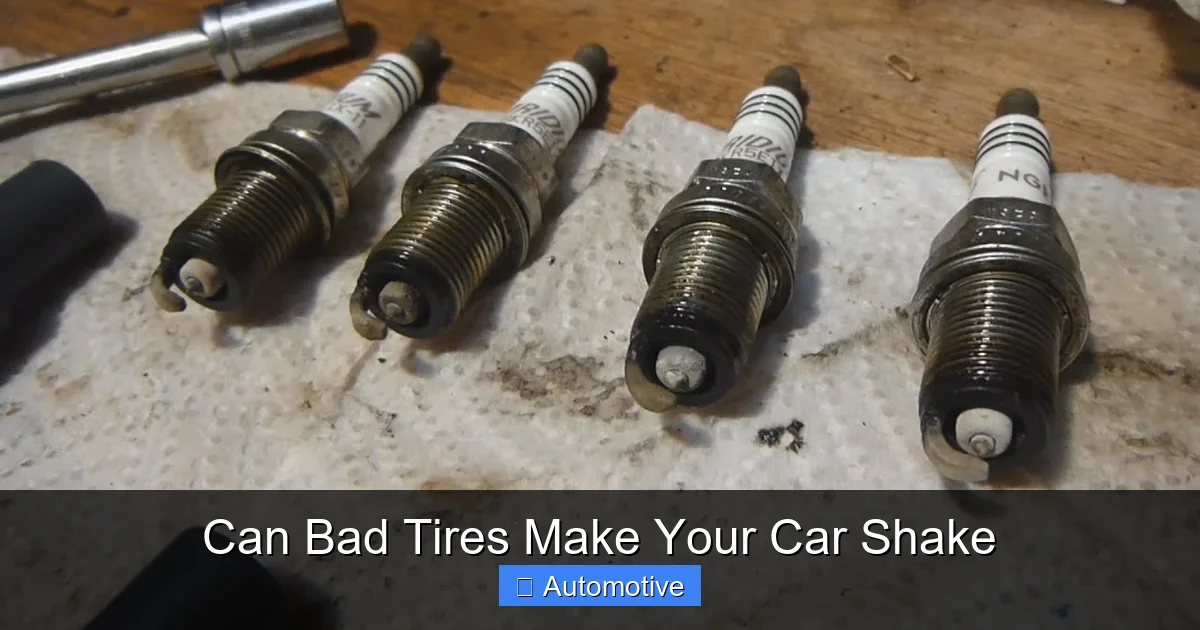
If the shaking happens at idle or low speeds and feels more like a rough engine, it could be an engine or drivetrain issue. Things like misfiring spark plugs, worn motor mounts, or transmission problems can cause vibrations.
But again, tires should be ruled out first. A simple tire balance or rotation can sometimes eliminate shaking that seems engine-related.
How to Diagnose and Fix Tire-Related Shaking

Visual guide about Can Bad Tires Make Your Car Shake
Image source: stocktonwheel.com
If you suspect your tires are causing your car to shake, the first step is diagnosis. Here’s how to tell what’s going on—and what to do about it.
Step 1: Check Tire Pressure
Start with the basics. Incorrect tire pressure can cause uneven wear and imbalance. Overinflated tires wear more in the center; underinflated tires wear on the edges.
Check your tire pressure monthly with a reliable gauge. Compare it to the recommended PSI in your owner’s manual or on the sticker inside the driver’s door. Adjust as needed.
Step 2: Inspect Tread Wear
Look closely at your tires. Use a tread depth gauge or the “penny test” (insert a penny into the tread with Lincoln’s head upside down—if you can see the top of his head, it’s time to replace the tire).
Check for:
– Uneven wear patterns
– Cracks or dry rot
– Bulges or cuts
– Foreign objects (like nails or screws)
If you see any of these, it’s time for a professional inspection.
Step 3: Test Drive and Note Symptoms
Take your car for a drive and pay attention to:
– When the shaking starts (speed, braking, turning)
– Where you feel it (steering wheel, seat, floor)
– How it changes with speed
This information will help your mechanic pinpoint the issue.
Step 4: Visit a Tire Specialist
Take your car to a trusted tire shop or mechanic. They can:
– Check wheel balance and alignment
– Inspect for internal damage
– Rotate or replace tires if needed
– Diagnose suspension or brake issues
Most shops offer free inspections, so there’s no harm in getting a second opinion.
Step 5: Prevent Future Problems
Once the shaking is fixed, keep it that way with regular maintenance:
– Rotate tires every 5,000–7,000 miles
– Align wheels annually or after hitting a pothole
– Check pressure monthly
– Replace tires when tread is below 4/32 inch
These simple habits can save you money and keep your ride smooth.
Real-Life Examples: When Bad Tires Caused Shaking
Let’s look at a few real-world scenarios where bad tires were the hidden cause of car shaking.
Case 1: The Highway Shaker
Sarah noticed her steering wheel vibrating every time she drove on the highway. It started around 65 mph and got worse as she sped up. She assumed it was the road or her suspension.
After a tire inspection, the technician found that one of her front tires was severely unbalanced. A wheel weight had fallen off, causing a wobble. A quick rebalance fixed the issue, and the shaking disappeared.
Case 2: The Thumping Commuter
Mike felt a rhythmic thumping in his seat every morning on his commute. It was worse on rough roads but didn’t go away on smooth pavement.
His mechanic discovered cupping on both rear tires—likely caused by worn shocks. Replacing the tires and shocks eliminated the vibration and improved his ride quality.
Case 3: The Silent Bulge
Lisa didn’t notice any shaking at first. But after a long road trip, her car started pulling to the right and felt unstable.
A tire inspection revealed a small bulge on the right rear tire—a sign of internal belt separation. The tire was replaced, and the handling returned to normal.
These stories show how common and fixable tire-related shaking can be—if you know what to look for.
Conclusion: Don’t Ignore the Shake
So, can bad tires make your car shake? Absolutely. From imbalance and uneven wear to hidden internal damage, tires are a frequent—and often overlooked—cause of vehicle vibration.
But shaking isn’t just annoying. It’s a warning sign. Ignoring it can lead to worse problems: reduced traction, longer stopping distances, and damage to your suspension and steering systems.
The good news? Most tire-related shaking is preventable and fixable. With regular maintenance, proper inflation, and timely inspections, you can keep your tires in top shape and your ride smooth.
If your car is shaking, don’t wait. Check your tires, get them inspected, and address the issue quickly. Your safety, comfort, and wallet will thank you.
Remember: smooth roads start with smooth tires. Take care of them, and they’ll take care of you.
Frequently Asked Questions
Can bad tires make your car shake at low speeds?
Yes, but it’s less common. Most tire-related shaking occurs at higher speeds (50–70 mph). Low-speed shaking is more likely due to engine, brake, or suspension issues.
How do I know if my tires are unbalanced?
Look for steering wheel vibration at highway speeds. If it smooths out at lower or higher speeds, imbalance is likely. A tire shop can confirm with a balance test.
Can I drive with a shaking car?
It’s not recommended. Shaking can worsen over time and lead to unsafe driving conditions. Have your car inspected as soon as possible.
How often should I rotate my tires?
Every 5,000 to 7,000 miles, or as recommended in your owner’s manual. Regular rotation helps prevent uneven wear and extends tire life.
Will new tires stop my car from shaking?
Not always. If the shaking is due to alignment, suspension, or brake issues, new tires alone won’t fix it. A full inspection is needed to find the root cause.
Can tire pressure cause shaking?
Yes, especially if one tire is significantly underinflated. Incorrect pressure can lead to uneven wear and imbalance, both of which cause vibrations.