
Can a Car Run on Water?

Can a car run on water? The short answer is no—not directly. While water itself isn’t a fuel, some systems use it to boost efficiency or assist combustion. This article breaks down the science, debunks myths, and explains what’s actually possible today.
Key Takeaways
- Water cannot power a car on its own: Water (H₂O) is a stable compound and doesn’t contain usable energy like gasoline or diesel.
- Hydrogen from water can fuel vehicles: Through electrolysis, water can be split into hydrogen and oxygen, and hydrogen can power fuel cell cars.
- Water injection systems exist: Some high-performance and diesel engines use water to cool combustion and reduce emissions.
- “Water-powered” scams are common: Many online claims about cars running purely on water are misleading or outright fraudulent.
- Hydrogen fuel cell vehicles are real: Cars like the Toyota Mirai run on hydrogen, which can be produced from water, but require infrastructure.
- Efficiency matters more than magic: Real gains come from better engine design, hybrid tech, and clean energy—not gimmicks.
- Future tech may change the game: Research into solar-powered electrolysis and green hydrogen could make water-derived fuel more viable.
📑 Table of Contents
- Can a Car Run on Water? The Truth Behind the Myth
- The Science of Water and Combustion
- Water Injection: A Real (But Limited) Technology
- The Rise and Fall of “Water-Powered” Scams
- Hydrogen Fuel Cell Vehicles: The Real Water Connection
- The Future: Can Water Play a Bigger Role?
- Conclusion: Water Isn’t Fuel—But It’s Part of the Solution
Can a Car Run on Water? The Truth Behind the Myth
You’ve probably seen the viral videos: a car chugging along on nothing but a bottle of water, the driver grinning as they wave a jug of H₂O out the window. Or maybe you’ve read wild claims online about “revolutionary water-powered engines” that promise to end our dependence on fossil fuels overnight. It sounds too good to be true—and that’s because it is.
The idea of a car running on water taps into a deep human desire: freedom from high gas prices, pollution, and foreign oil. But while the dream is powerful, the science tells a more complicated story. So, can a car actually run on water? The honest answer is no—not in the way most people imagine. Water itself isn’t a fuel. It’s the end product of combustion, not the source of energy. But that doesn’t mean water has no role in future transportation. In fact, water might be part of the solution—just not as a direct replacement for gasoline.
In this article, we’ll explore the science behind water and engines, debunk popular myths, and look at real technologies that use water to improve efficiency or generate clean fuel. Whether you’re a car enthusiast, an eco-conscious driver, or just curious about the next big thing in automotive tech, this guide will give you the facts—no hype, no fluff.
The Science of Water and Combustion
Visual guide about Can a Car Run on Water?
Image source: image.slidesharecdn.com
To understand why a car can’t run on water alone, we need to look at what water is and how engines work. Water is made of two hydrogen atoms and one oxygen atom (H₂O). It’s a stable, neutral molecule that forms when hydrogen burns in oxygen—essentially, it’s the ash of hydrogen combustion. Because it’s already “burned,” water doesn’t release energy when it reacts. In fact, breaking water apart into hydrogen and oxygen requires energy—more than you’d get back if you burned the hydrogen.
Internal combustion engines, like the ones in most cars today, work by igniting a fuel-air mixture to create controlled explosions that push pistons and turn the crankshaft. Gasoline, diesel, and other fuels store chemical energy in their molecular bonds. When those bonds break during combustion, energy is released as heat and pressure. Water, on the other hand, has no such stored energy. Pouring water into a gas tank won’t make the engine run—it’ll likely ruin it.
Why Water Can’t Be a Fuel
Think of fuel like a battery. It stores energy that can be released when needed. Water is more like a discharged battery—it’s the leftover after the energy has been used. To get energy from water, you’d first need to split it into hydrogen and oxygen using electricity, a process called electrolysis. That takes energy—often more than the hydrogen will later produce when burned or used in a fuel cell.
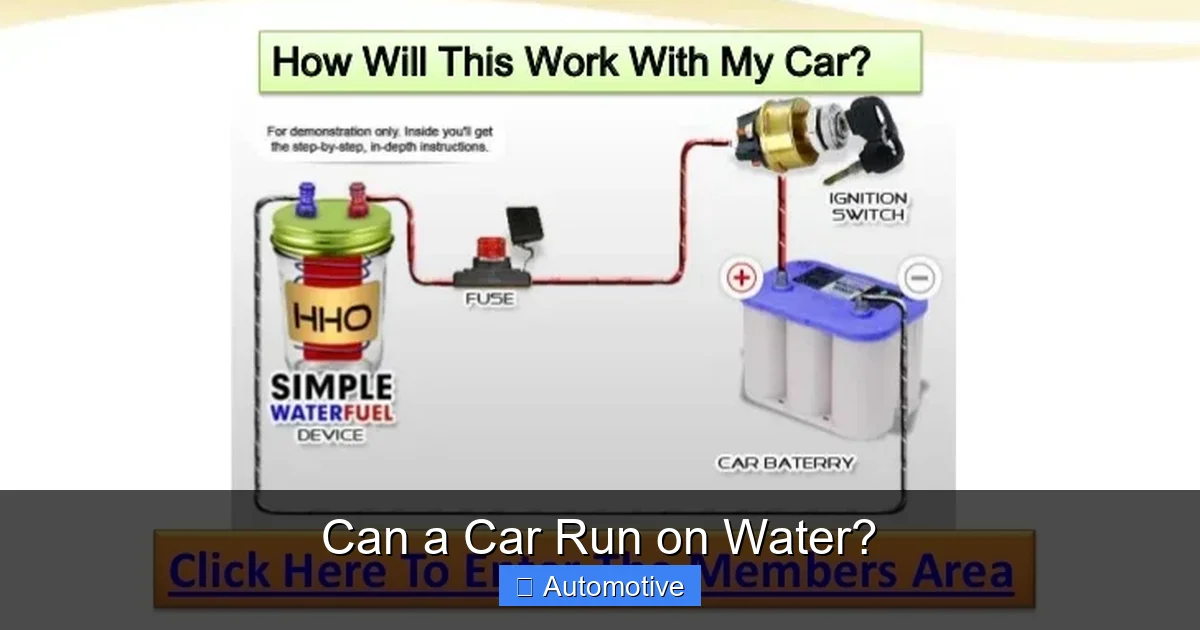
For example, if you use a car’s alternator to power an electrolyzer that splits water into hydrogen, you’re drawing energy from the engine itself. The tiny bit of hydrogen you produce might slightly improve combustion, but the net energy gain is negative. You’re using more energy to make the hydrogen than you get back from burning it. It’s like trying to fill a bucket with a hole in the bottom—you’re always losing more than you gain.
The Role of Hydrogen
So if water isn’t the fuel, what about hydrogen? Hydrogen is a clean-burning fuel that produces only water as a byproduct. When used in a fuel cell, it generates electricity to power an electric motor—no emissions, just water vapor. That’s the principle behind hydrogen fuel cell vehicles (FCVs) like the Toyota Mirai or Hyundai Nexo.
But here’s the catch: hydrogen doesn’t occur naturally in large quantities on Earth. It has to be produced, and most of it today comes from natural gas through a process called steam methane reforming, which releases carbon dioxide. The cleanest way to make hydrogen is by using renewable electricity to split water via electrolysis—this is called “green hydrogen.” But that requires a lot of clean power and expensive equipment.
So while hydrogen can power a car, and that hydrogen can come from water, the water itself isn’t the energy source. It’s the raw material, like iron ore is for steel. You still need energy to process it.
Water Injection: A Real (But Limited) Technology
Visual guide about Can a Car Run on Water?
Image source: cdn.motor1.com
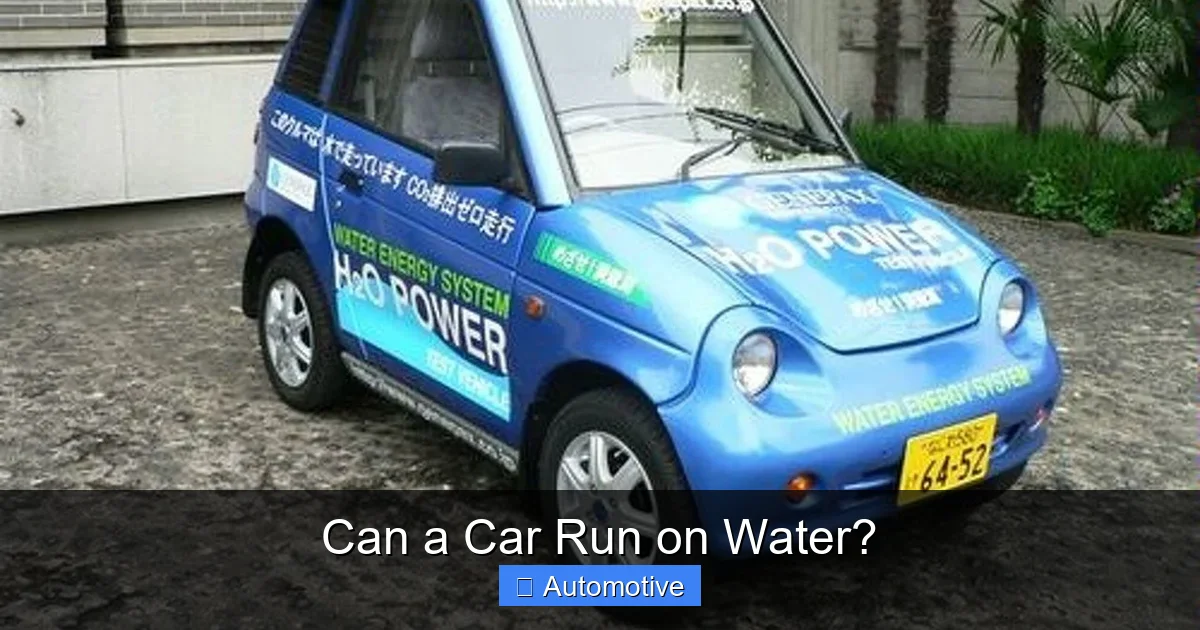
While a car can’t run on water alone, water does have a legitimate role in some engines—through a system called water injection. This isn’t a new idea. In fact, it was used in World War II fighter planes to boost engine power during dogfights.
Water injection works by spraying a fine mist of water (sometimes mixed with methanol) into the engine’s intake or combustion chamber. The water evaporates under high heat, cooling the air-fuel mixture. Cooler air is denser, which allows more fuel to be burned efficiently. This can increase power, reduce knocking (pre-ignition), and lower emissions.
How Water Injection Works
When water enters the combustion chamber, it absorbs heat as it turns to steam. This lowers the peak temperature inside the cylinder. High temperatures can cause premature ignition of the fuel, leading to knocking—a knocking or pinging sound that can damage engines over time. By cooling the mixture, water injection allows engineers to run higher compression ratios or advanced ignition timing, both of which can improve performance and efficiency.
Modern water injection systems are computer-controlled and use sensors to determine when to inject water—usually under high load or high RPM conditions. Some high-performance cars, like the BMW M4 GTS and the Ford Mustang Shelby GT500, use water injection to squeeze more power from turbocharged engines.
Benefits and Limitations
The benefits of water injection include:
– Increased horsepower and torque
– Reduced engine knock
– Lower combustion temperatures
– Improved fuel efficiency under certain conditions
– Reduced emissions of nitrogen oxides (NOx)
But there are downsides:
– The system adds weight and complexity
– You need to carry a separate water tank and refill it regularly
– Water can freeze in cold climates
– Impurities in water can cause corrosion or clog injectors
– The gains are modest—usually 5% to 15% more power, not a revolution
Water injection is a useful tool for performance enthusiasts and racing teams, but it’s not a magic bullet. It doesn’t replace gasoline—it just helps the engine use it more efficiently.
The Rise and Fall of “Water-Powered” Scams
Visual guide about Can a Car Run on Water?
Image source: thumbs.dreamstime.com
Over the years, countless inventors and entrepreneurs have claimed to have cracked the code on water-powered cars. These claims often go viral, promising free fuel, zero emissions, and energy independence. But time and again, they’ve been exposed as scams or misunderstandings of basic physics.
One famous example is Stanley Meyer, who in the 1980s claimed to have built a “water fuel cell” that could power a car using only water and a special electrolysis unit. He demonstrated a dune buggy that supposedly ran on water, but independent tests showed the vehicle was actually powered by a hidden battery. Meyer was later convicted of fraud.
More recently, online ads and YouTube videos have promoted “hydrogen generators” that attach to your car’s engine and produce hydrogen from water to boost mileage. These devices typically use the car’s alternator to power electrolysis, splitting water into hydrogen and oxygen, which is then fed into the intake manifold.
Why These Devices Don’t Work
The problem is simple: energy in, energy out. The alternator draws power from the engine to generate electricity. That electricity powers the electrolyzer, which splits water into hydrogen and oxygen. The hydrogen is then burned in the engine, releasing some energy. But the process is inefficient. You lose energy at every step—electrical resistance, heat loss, incomplete combustion. The result is a net loss of power and fuel economy.
In fact, studies by organizations like the U.S. Department of Energy and independent researchers have consistently shown that these devices either do nothing or actually reduce fuel efficiency. Some may even damage the engine by introducing moisture or altering the air-fuel ratio.
Red Flags to Watch For
If you see a product claiming your car can run on water, watch for these warning signs:
– Vague or pseudoscientific explanations (“quantum resonance,” “vortex energy”)
– No peer-reviewed testing or third-party verification
– Claims of “free energy” or “over-unity” devices
– High-pressure sales tactics or “limited-time offers”
– Testimonials instead of data
Real automotive innovations are tested, published, and refined over years. If it sounds too good to be true, it probably is.
Hydrogen Fuel Cell Vehicles: The Real Water Connection
While water can’t power a car directly, it’s a key player in the future of clean transportation—through hydrogen fuel cell vehicles (FCVs). These cars use hydrogen gas to generate electricity in a fuel cell, which powers an electric motor. The only emission is water vapor.
The connection to water? Hydrogen can be produced by splitting water molecules using electricity. If that electricity comes from renewable sources like wind or solar, the entire process is clean and sustainable.
How Fuel Cell Cars Work
A hydrogen fuel cell car has three main parts:
1. A hydrogen tank that stores compressed gas
2. A fuel cell stack that combines hydrogen and oxygen to produce electricity
3. An electric motor that drives the wheels
Inside the fuel cell, hydrogen atoms are split into protons and electrons. The protons pass through a membrane, while the electrons travel through an external circuit, creating an electric current. At the other end, the electrons and protons reunite with oxygen from the air to form water (H₂O)—which drips out of the exhaust as clean vapor.
This process is quiet, efficient, and emission-free. FCVs can travel 300–400 miles on a tank of hydrogen and refuel in 3–5 minutes—similar to gasoline cars.
Challenges and Progress
Despite the promise, hydrogen cars face big hurdles:
– **Infrastructure:** There are fewer than 100 hydrogen refueling stations in the U.S., mostly in California.
– **Cost:** Fuel cells use expensive materials like platinum, and hydrogen production and transport are costly.
– **Efficiency:** It takes more energy to produce, compress, and transport hydrogen than to charge a battery directly.
Still, progress is being made. Countries like Japan, South Korea, and Germany are investing heavily in hydrogen infrastructure. Automakers like Toyota, Hyundai, and Honda continue to develop FCVs. And new methods of producing green hydrogen—using solar or wind power to split water—are becoming more efficient and affordable.
The Role of Water in Green Hydrogen
The future of hydrogen cars depends on green hydrogen—hydrogen made from water using renewable energy. Imagine solar panels on a garage roof powering an electrolyzer that splits water into hydrogen during the day. That hydrogen is stored and used to fuel a car at night. It’s a closed loop: water in, water out, with zero emissions.
This vision is still in its early stages, but it’s technically possible. The challenge is scaling it up and making it cost-competitive with batteries and fossil fuels.
The Future: Can Water Play a Bigger Role?
So, can a car run on water? Not directly. But water could be part of a broader clean energy ecosystem. Here’s how:
Solar-Powered Electrolysis
Researchers are working on more efficient ways to split water using sunlight. Photoelectrochemical cells (PEC) use special materials that absorb sunlight and directly produce hydrogen from water—no electricity needed. While still in the lab, this tech could one day allow homes or gas stations to generate hydrogen on-site using only sunlight and water.
Hybrid Systems
Some experimental vehicles combine water injection, hydrogen generation, and battery power. For example, a car might use a small internal combustion engine to generate electricity, with water injection to improve efficiency and a supplemental hydrogen boost during acceleration. These systems are complex but could offer incremental gains.
Policy and Innovation
Governments and companies are investing in hydrogen infrastructure. The U.S. Department of Energy’s “Hydrogen Shot” initiative aims to reduce the cost of clean hydrogen by 80% in a decade. If successful, hydrogen could become a viable fuel for cars, trucks, ships, and even airplanes.
But for now, battery electric vehicles (EVs) are leading the clean transportation revolution. They’re more efficient, cheaper to operate, and supported by growing charging networks. Hydrogen may have a role—especially for long-haul trucks or remote areas—but it’s not replacing gasoline overnight.
Conclusion: Water Isn’t Fuel—But It’s Part of the Solution
So, can a car run on water? The answer is clear: no, not by itself. Water doesn’t contain energy, and you can’t pour it into a gas tank and expect the engine to roar to life. But that doesn’t mean water is irrelevant.
Water plays a vital role in emerging clean technologies. It’s the source of hydrogen, which can power fuel cell vehicles. It’s used in water injection systems to boost performance and reduce emissions. And it’s the end product of clean combustion—something we can all feel good about.
The dream of a water-powered car reflects a deeper desire: a world with clean air, affordable energy, and freedom from pollution. That dream is worth pursuing. But we need to chase it with science, not scams. Real progress comes from innovation, testing, and patience—not viral videos or miracle gadgets.
As drivers, we can support the transition by choosing efficient vehicles, reducing our carbon footprint, and staying informed. The future of transportation won’t be powered by water alone—but water, in its many forms, will be part of the journey.
Frequently Asked Questions
Can a car engine run on pure water?
No, a car engine cannot run on pure water. Water (H₂O) is not a fuel and contains no usable energy. It’s the byproduct of combustion, not a source of power.
Is there such a thing as a water-powered car?
There are no legitimate water-powered cars. Some scams claim otherwise, but real vehicles that use water either inject it to improve efficiency or use it to produce hydrogen—requiring external energy.
How do hydrogen fuel cell cars relate to water?
Hydrogen fuel cell cars use hydrogen gas to generate electricity, producing only water as a byproduct. The hydrogen can be made by splitting water with electricity, linking water to clean transportation.
Do water injection systems actually work?
Yes, water injection systems can improve engine performance and reduce emissions by cooling combustion. However, they don’t replace gasoline and require regular refilling of the water tank.
Why do some people believe cars can run on water?
Misleading videos, pseudoscience, and fraudulent claims have spread the idea. These often misuse terms like “hydrogen from water” without explaining the energy required to produce it.
Will water ever be a mainstream fuel for cars?
Water itself won’t be a fuel, but it could play a role in producing green hydrogen. If renewable energy makes hydrogen production cheap and scalable, water-derived fuel may become more common in the future.