Can a Bad Temperature Sensor Cause Overheating?

Contents
- 1 Key Takeaways
- 2 📑 Table of Contents
- 3 Can a Bad Temperature Sensor Cause Overheating?
- 4 How the Engine Coolant Temperature Sensor Works
- 5 How a Faulty Sensor Can Lead to Overheating
- 6 Signs Your Temperature Sensor Might Be Failing
- 7 Diagnosing a Faulty Temperature Sensor
- 8 Preventing Sensor Failure and Overheating
- 9 Real-World Example: The $2,000 Lesson
- 10 Conclusion
- 11 Frequently Asked Questions



A bad temperature sensor can absolutely cause overheating—even if your engine isn’t actually hot. It sends false readings to your car’s computer, leading to improper cooling responses like delayed fan activation or incorrect fuel mixtures. This creates a dangerous cycle where your engine overheats while the dashboard shows everything is normal.
Key Takeaways
- Faulty sensors send false temperature readings: A malfunctioning sensor may report normal temps even when the engine is dangerously hot, preventing timely cooling responses.
- Engine control unit (ECU) relies on accurate data: The ECU uses sensor input to manage fans, fuel injection, and ignition timing—wrong data leads to poor decisions.
- Overheating can occur without warning lights: If the sensor fails “closed” or “open,” it might not trigger the check engine light, leaving you unaware of rising temperatures.
- Cooling fan failure is a common result: Many fans only activate based on sensor signals—if the signal is wrong, the fan won’t turn on when needed.
- Long-term damage is possible: Persistent overheating from undetected issues can warp cylinder heads, blow head gaskets, or crack engine blocks.
- Diagnosis requires more than just scanning codes: A sensor may appear functional on a scan tool but still give inaccurate readings under real driving conditions.
- Regular maintenance helps prevent sensor failure: Cleaning connections, checking wiring, and replacing sensors at recommended intervals reduces risk.
📑 Table of Contents
- Can a Bad Temperature Sensor Cause Overheating?
- How the Engine Coolant Temperature Sensor Works
- How a Faulty Sensor Can Lead to Overheating
- Signs Your Temperature Sensor Might Be Failing
- Diagnosing a Faulty Temperature Sensor
- Preventing Sensor Failure and Overheating
- Real-World Example: The $2,000 Lesson
- Conclusion
Can a Bad Temperature Sensor Cause Overheating?
You’re cruising down the highway, AC blasting, music playing—everything feels fine. But under the hood, your engine is quietly climbing toward dangerous temperatures. The temperature gauge? It’s sitting calmly in the “normal” zone. No warning lights. No alarms. Just silence… until it’s too late.
Sound familiar? This scenario isn’t just a nightmare—it’s a real risk caused by a seemingly small component: the engine coolant temperature (ECT) sensor. While it’s easy to overlook, this tiny sensor plays a massive role in keeping your engine cool and running smoothly. When it fails, it doesn’t just misreport temperatures—it can actively contribute to overheating, even when everything else in your cooling system is working perfectly.
In this article, we’ll dive deep into how a bad temperature sensor can cause overheating, why it happens, what signs to watch for, and how to fix it before serious damage occurs. Whether you’re a weekend mechanic or just trying to keep your daily driver reliable, understanding this hidden culprit could save you thousands in repairs.
How the Engine Coolant Temperature Sensor Works
Visual guide about Can a Bad Temperature Sensor Cause Overheating?
Image source: automotivian.com
Before we explore how a faulty sensor causes overheating, let’s first understand what it does—and why it matters.
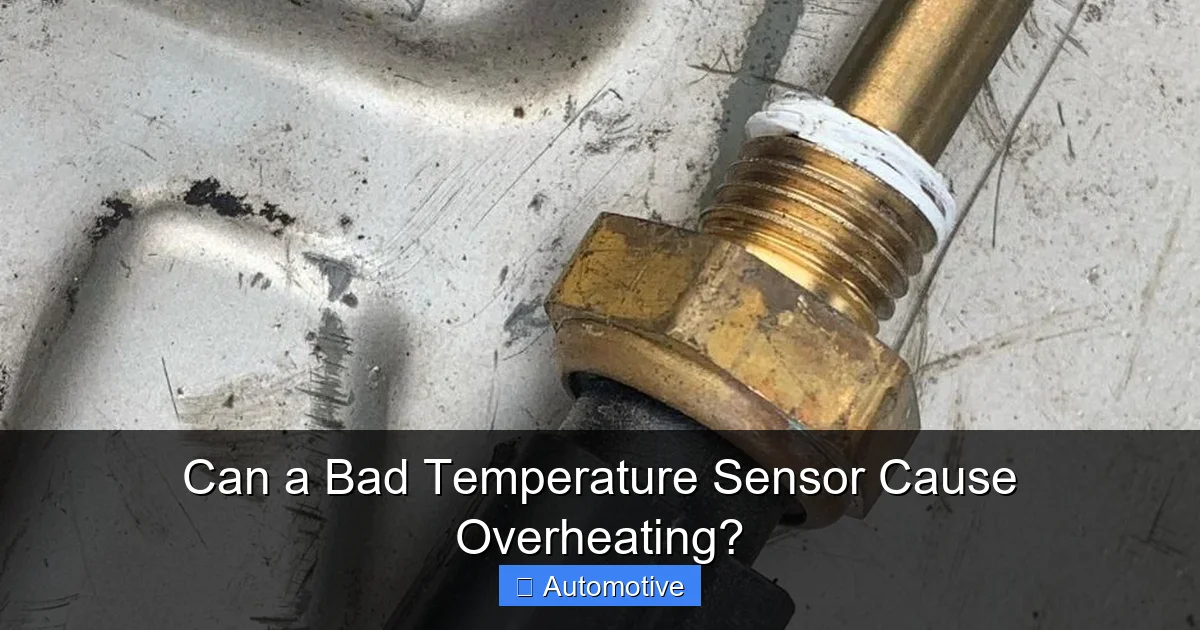
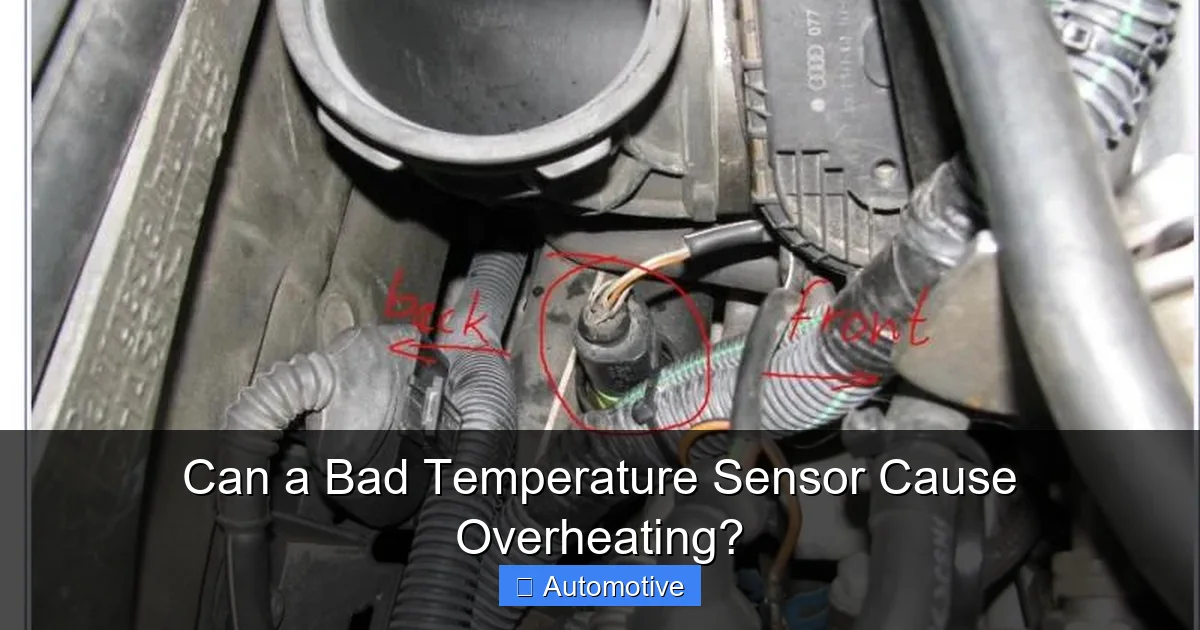
The engine coolant temperature (ECT) sensor is a small, threaded device typically mounted near the thermostat housing or cylinder head. Its job is simple but critical: measure the temperature of the coolant circulating through the engine and send that data to the engine control unit (ECU), also known as the engine computer.
Sensor Design and Function
Most modern ECT sensors are thermistors—electronic components whose resistance changes with temperature. As coolant heats up, the sensor’s internal resistance drops, allowing more current to flow. The ECU interprets this change as a temperature reading. When the engine is cold, resistance is high; when hot, it’s low.
This real-time feedback allows the ECU to make smart decisions. For example:
– It enriches the fuel mixture during cold starts to help the engine warm up faster.
– It adjusts ignition timing for optimal performance and emissions.
– It triggers the cooling fan when temperatures rise.
– It activates warning lights or limp mode if overheating is detected.
Without accurate input from the ECT sensor, the ECU is essentially driving blind. It can’t respond properly to changing conditions, which opens the door to problems—including overheating.
Where the Sensor Is Located
The exact location varies by make and model, but you’ll usually find the ECT sensor:
– Near the thermostat housing on the engine block.
– In the cylinder head, close to where coolant exits.
– Sometimes integrated with the intake air temperature (IAT) sensor in newer vehicles.
Because it’s constantly exposed to hot coolant, vibration, and electrical currents, the sensor is prone to wear over time. Corrosion, cracked insulation, or internal degradation can all lead to inaccurate readings—or complete failure.
How a Faulty Sensor Can Lead to Overheating
Visual guide about Can a Bad Temperature Sensor Cause Overheating?
Image source: audiworld.com
Now for the million-dollar question: Can a bad temperature sensor actually cause overheating? The short answer is yes—but not in the way you might think.
A failing ECT sensor doesn’t physically block coolant flow or damage the radiator. Instead, it misleads the engine management system, causing it to respond incorrectly (or not at all) to rising temperatures. This creates a dangerous feedback loop where the engine gets hotter while the system thinks everything is fine.
False “Normal” Readings During Overheating
One of the most common failure modes is when the sensor stops reporting accurate high temperatures. Imagine your engine is running at 230°F—well into the overheating zone—but the sensor only reports 190°F. The ECU sees “normal” and takes no action. The cooling fan doesn’t turn on. The fuel mixture isn’t adjusted. The driver sees a calm gauge and assumes all is well.
This is especially dangerous during stop-and-go traffic or hot weather, when airflow through the radiator is limited and the engine relies heavily on the cooling fan. If the fan never activates because the sensor says it’s not needed, temperatures can spike rapidly.
Delayed or No Fan Activation
In many vehicles, the cooling fan is controlled directly by the ECT sensor signal. When coolant reaches a certain threshold (often around 210–220°F), the sensor tells the ECU to turn on the fan. If the sensor is stuck reporting a lower temperature, the fan may never activate—even when the engine is dangerously hot.
For example, a 2015 Honda Civic with a failing ECT sensor might idle smoothly in traffic with the AC on, but the fan stays off. The driver notices the AC blowing warm air and the engine starting to smell hot, but the temperature gauge remains steady. Within minutes, the engine could overheat, potentially warping the cylinder head.
Incorrect Fuel and Ignition Timing
The ECU uses temperature data to fine-tune engine performance. When the sensor reports a colder temperature than reality, the ECU may:
– Enrich the fuel mixture unnecessarily, reducing fuel efficiency and increasing emissions.
– Retard ignition timing, which can reduce power and increase exhaust gas temperatures.
– Fail to activate closed-loop fuel control, leading to poor combustion.
While these issues don’t directly cause overheating, they can contribute to higher operating temperatures. A rich fuel mixture, for instance, can increase combustion chamber temperatures, putting extra stress on the cooling system.
Failure to Trigger Warning Systems
Modern cars are designed to alert drivers when something goes wrong. But if the ECT sensor fails in a way that doesn’t trigger a diagnostic trouble code (DTC), the check engine light may never come on. Some sensors fail “gracefully,” giving readings that are plausible but incorrect—just enough to fool the ECU.
This means you could be driving with a malfunctioning sensor for weeks or months, unaware that your engine is at risk every time you hit heavy traffic or climb a steep hill.
Signs Your Temperature Sensor Might Be Failing
Visual guide about Can a Bad Temperature Sensor Cause Overheating?
Image source: i.ytimg.com
Because a bad sensor can cause overheating without obvious warnings, it’s crucial to recognize the subtle signs early. Here’s what to watch for:
Erratic or Stuck Temperature Gauge
If your temperature gauge jumps around, stays pegged in the cold zone even after a long drive, or refuses to move from “normal” during hot weather, the sensor may be faulty. A healthy sensor should show a gradual rise to normal operating temperature (usually around 195–220°F) and stay steady.
Check Engine Light with Related Codes
Common trouble codes linked to ECT sensor issues include:
– P0115: Engine Coolant Temperature Circuit Malfunction
– P0116: Engine Coolant Temperature Circuit Range/Performance
– P0117: Engine Coolant Temperature Circuit Low Input
– P0118: Engine Coolant Temperature Circuit High Input
These codes indicate the ECU has detected an abnormal signal from the sensor. However, not all failures trigger a code—so don’t rely solely on the check engine light.
Poor Fuel Economy
If your gas mileage suddenly drops without explanation, a faulty ECT sensor could be the culprit. When the sensor reports a cold engine, the ECU enriches the fuel mixture, burning more gas than necessary. Over time, this can cost you hundreds in wasted fuel.
Hard Starting or Rough Idle
A sensor that reports incorrect temperatures can confuse the ECU during startup. If it thinks the engine is cold when it’s actually warm, it may flood the engine with fuel, causing hard starts, rough idling, or even stalling.
Overheating in Traffic but Not on the Highway
This is a classic red flag. At highway speeds, airflow through the radiator is sufficient to keep the engine cool—even without the fan. But in stop-and-go traffic, the fan is essential. If your car overheats only when idling or crawling through traffic, but runs fine on the freeway, suspect the cooling fan—and the sensor that controls it.
AC Blowing Warm Air
The AC system relies on the cooling fan to dissipate heat from the condenser. If the fan isn’t turning on due to a bad sensor, the AC compressor may cycle off or blow warm air, especially when the engine is hot.
Diagnosing a Faulty Temperature Sensor
So how do you confirm whether your ECT sensor is the problem? Diagnosis requires a mix of observation, testing, and sometimes a little detective work.
Visual Inspection
Start with a simple visual check. Locate the sensor (refer to your vehicle’s service manual if needed) and inspect it for:
– Corrosion or rust on the connector
– Cracked or damaged housing
– Coolant leaks around the sensor base
– Loose or frayed wiring
Even minor corrosion can interfere with the electrical signal, leading to inaccurate readings.
Using a Multimeter
A multimeter is your best friend for testing the sensor. Here’s how:
1. Disconnect the sensor electrical connector.
2. Set the multimeter to measure resistance (ohms).
3. Probe the two terminals on the sensor.
4. Compare the reading to your vehicle’s specifications at different temperatures.
For example, a typical ECT sensor might read:
– 3,000–4,000 ohms at 68°F (20°C)
– 200–300 ohms at 200°F (93°C)
If the resistance doesn’t change with temperature or is way out of range, the sensor is likely bad.
Scan Tool Analysis
Use an OBD2 scan tool to read live data from the ECT sensor. With the engine cold, start it and monitor the temperature reading. It should rise steadily as the engine warms up. If it jumps erratically, stays flat, or reports impossible values (like -40°F or 300°F), the sensor is faulty.
Compare the ECT reading to the intake air temperature (IAT) sensor. At startup, both should be close to ambient temperature. A large discrepancy suggests a problem.
Swap Test (If Possible)
If you have access to a known-good sensor, try swapping it in temporarily. If the symptoms disappear, you’ve found the issue. This is especially useful when the sensor passes basic tests but still behaves oddly under load.
Preventing Sensor Failure and Overheating
The best defense against sensor-related overheating is proactive maintenance. Here’s how to keep your ECT sensor—and your engine—in top shape.
Follow the Maintenance Schedule
Most manufacturers recommend inspecting or replacing the ECT sensor every 100,000 miles, or sooner if symptoms appear. Check your owner’s manual for specific guidance.
Use Quality Coolant
Low-quality or contaminated coolant can accelerate sensor corrosion. Always use the manufacturer-recommended coolant type and change it at the specified intervals (usually every 30,000–50,000 miles).
Inspect Wiring and Connectors
Vibration and heat can loosen connections over time. Periodically check the sensor’s wiring harness for damage, chafing, or loose pins. Clean connectors with electrical contact cleaner if needed.
Address Overheating Immediately
If your engine overheats for any reason—low coolant, thermostat failure, water pump issue—don’t ignore it. Prolonged overheating can damage the ECT sensor and other components. Fix the root cause and inspect the sensor afterward.
Upgrade to a High-Quality Replacement
When replacing a faulty sensor, avoid cheap aftermarket parts. OEM (original equipment manufacturer) or reputable brands like Bosch, Denso, or ACDelco offer better accuracy and longevity.
Real-World Example: The $2,000 Lesson
Let’s look at a real case to illustrate the stakes.
Mark, a 45-year-old teacher from Ohio, noticed his 2012 Toyota Camry was running a little sluggish and the AC wasn’t as cold as usual. The temperature gauge looked normal, so he shrugged it off. A week later, while stuck in rush-hour traffic, he smelled burning coolant and saw steam rising from under the hood. He pulled over just in time—the engine had overheated so badly that the head gasket blew.
The repair? Over $2,000 for a new head gasket, machining the cylinder head, and replacing warped components.
The root cause? A failing ECT sensor that reported normal temperatures even as the engine climbed past 240°F. The cooling fan never turned on, and Mark never saw a warning.
After the repair, Mark replaced the sensor as a preventive measure. Six months later, he says, “I can’t believe such a small part caused so much damage. Now I check my sensors during every oil change.”
Conclusion
So, can a bad temperature sensor cause overheating? Absolutely. While it doesn’t physically block coolant or damage the radiator, a faulty ECT sensor misleads your car’s computer, preventing it from taking critical cooling actions. This can lead to silent overheating, costly engine damage, and dangerous driving conditions.
The key takeaway? Don’t ignore subtle signs like erratic gauges, poor fuel economy, or AC issues. A failing sensor often gives clues long before disaster strikes. Regular inspection, proper maintenance, and timely replacement can keep your engine running cool—and your wallet intact.
Remember: your car’s temperature sensor is a silent guardian. When it fails, the consequences can be loud, expensive, and irreversible. Stay alert, stay informed, and keep that little sensor in check.
Frequently Asked Questions
Can a bad temperature sensor cause the engine to overheat even if the cooling system is fine?
Yes. Even with a fully functional radiator, water pump, and thermostat, a faulty ECT sensor can prevent the cooling fan from activating or mislead the ECU into improper engine management, leading to overheating.
Will a bad temperature sensor always trigger the check engine light?
Not always. Some sensor failures produce readings that are plausible but inaccurate, so the ECU doesn’t detect an error. This means the check engine light may stay off even as the engine overheats.
How often should I replace my engine coolant temperature sensor?
Most manufacturers recommend inspection or replacement every 100,000 miles, but it depends on driving conditions. Replace it sooner if you notice symptoms like erratic gauges or poor fuel economy.
Can I drive with a bad temperature sensor?
It’s not recommended. While the car may run, you risk overheating, engine damage, and safety hazards. Have it diagnosed and replaced as soon as possible.
How much does it cost to replace a temperature sensor?
Typically $50–$150 for the part, plus $50–$100 in labor if done by a mechanic. Many DIYers can replace it in under an hour with basic tools.
What’s the difference between an ECT sensor and a coolant temperature switch?
The ECT sensor sends continuous temperature data to the ECU, while a coolant temperature switch is a simpler device that only turns the cooling fan on or off at set temperatures. Some vehicles use both.