
Can a Bad Temperature Sensor Cause a Car to Overheat

A bad temperature sensor can trick your car’s computer into thinking the engine is cooler than it really is, leading to poor cooling decisions and potential overheating. While the sensor itself doesn’t directly cause overheating, it can prevent the cooling system from responding properly, putting your engine at serious risk.
Key Takeaways
- A faulty temperature sensor can send incorrect data to the engine control unit (ECU), disrupting the cooling system’s operation. This may delay fan activation or prevent proper fuel mixture adjustments, increasing the risk of overheating.
- The sensor doesn’t directly cause overheating but can mask or worsen an existing cooling problem. It’s often a symptom of a larger issue rather than the root cause.
- Modern vehicles rely heavily on accurate temperature readings for engine management. Even small errors in sensor data can lead to inefficient cooling and performance issues.
- Symptoms of a bad sensor include erratic temperature gauge readings, check engine light, and poor fuel economy. These signs should not be ignored, especially during hot weather or heavy driving.
- Regular maintenance and diagnostic checks can catch sensor problems early. Replacing a faulty sensor is usually inexpensive and prevents costly engine damage.
- Overheating due to sensor failure is preventable with timely repairs. Always address warning signs promptly and consult a mechanic if you suspect sensor issues.
📑 Table of Contents
Can a Bad Temperature Sensor Cause a Car to Overheat?
You’re cruising down the highway on a hot summer day when suddenly, your temperature gauge starts climbing into the red zone. Your heart skips a beat—could this be overheating? You pull over, pop the hood, and wonder: is it the radiator? The water pump? Or could it be something as small as a temperature sensor?
It’s a question many drivers ask, especially when their car starts acting up without obvious mechanical failure. The truth is, while a bad temperature sensor doesn’t *directly* cause your engine to overheat, it can play a sneaky and dangerous role in creating conditions where overheating becomes likely. Think of it like a faulty smoke detector—it won’t start a fire, but if it fails to alert you, the consequences can be severe.
In modern vehicles, the engine control unit (ECU) relies on a network of sensors to monitor everything from air intake to exhaust emissions. The coolant temperature sensor (CTS), also known as the engine coolant temperature (ECT) sensor, is one of the most critical. It constantly feeds data about the engine’s temperature to the ECU, which then adjusts fuel delivery, ignition timing, and cooling fan operation. If this sensor gives false readings—say, reporting that the engine is cold when it’s actually hot—the ECU might delay turning on the cooling fan or fail to enrich the fuel mixture to protect the engine. The result? Your engine could be cooking while the system thinks everything is fine.
So, while the sensor itself isn’t the root cause of overheating, it can absolutely contribute to it by disabling or delaying essential cooling responses. Understanding how this small but vital component works—and what happens when it fails—can save you from expensive repairs and roadside breakdowns.
How the Coolant Temperature Sensor Works
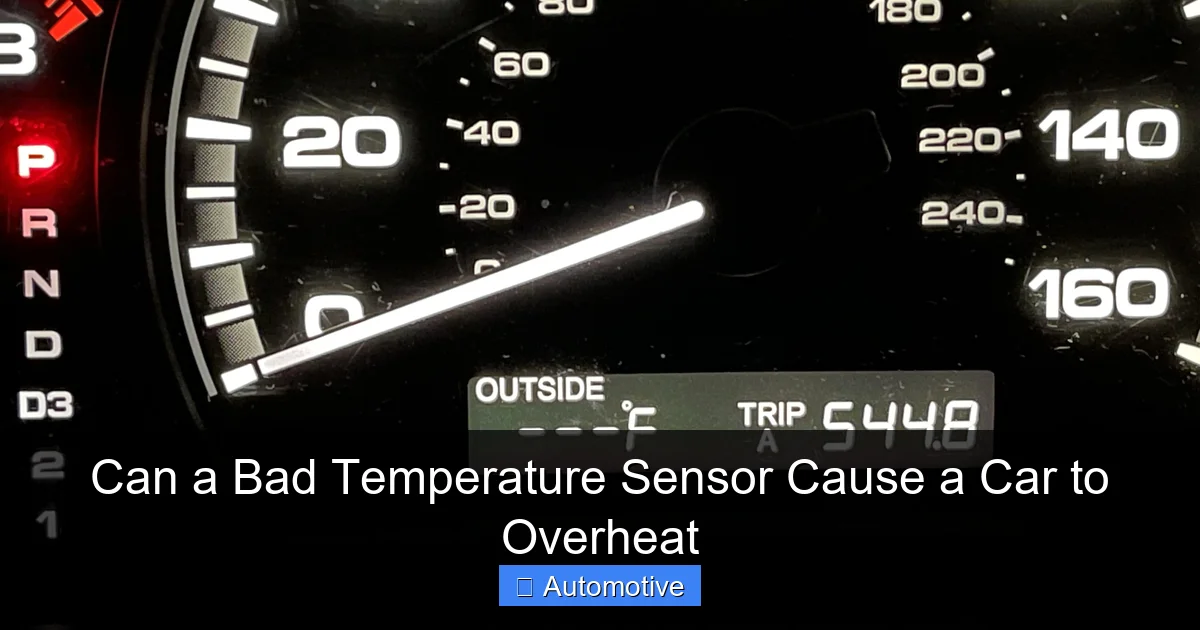
Visual guide about Can a Bad Temperature Sensor Cause a Car to Overheat
Image source: i.redd.it
To understand how a bad temperature sensor can lead to overheating, it helps to know what this sensor actually does and how it fits into your car’s cooling system.
The coolant temperature sensor is a small electronic device typically threaded into the engine block or cylinder head, submerged in engine coolant. Its job is simple but crucial: measure the temperature of the coolant and send that information to the engine control unit (ECU). The ECU uses this data to make real-time adjustments to keep the engine running efficiently and safely.
Sensor Design and Function
Most modern coolant temperature sensors are thermistors—resistors whose electrical resistance changes with temperature. As the engine warms up, the resistance in the sensor decreases, allowing more current to flow. The ECU interprets this change as a rise in temperature. When the engine is cold, resistance is high, and the signal tells the ECU the engine needs a richer fuel mixture for smooth startup.
This feedback loop is essential for optimal engine performance. For example, during a cold start, the ECU enriches the air-fuel mixture to help the engine warm up faster. Once the engine reaches operating temperature (usually around 195°F to 220°F), the mixture leans out for better fuel economy and lower emissions.
Role in the Cooling System
The temperature sensor doesn’t control the cooling system directly, but it informs the ECU when to activate key components. One of the most important is the electric cooling fan. When the engine gets hot—especially in stop-and-go traffic or during heavy loads—the ECU uses the sensor’s input to turn on the fan, pulling air through the radiator to cool the coolant.
If the sensor is faulty and reports a lower temperature than actual, the ECU may delay or completely skip turning on the fan. This means the radiator isn’t getting the airflow it needs, and coolant temperatures can climb rapidly. In extreme cases, this delay can lead to engine overheating, even if all other cooling components are working perfectly.
Impact on Engine Management
Beyond fan control, the temperature sensor affects other engine functions. For instance, the ECU uses temperature data to adjust ignition timing. A cold engine needs advanced timing for smooth combustion, while a hot engine may require retarded timing to prevent knocking. If the sensor says the engine is cold when it’s actually hot, the ECU might advance timing too much, increasing the risk of detonation and heat buildup.
Additionally, the sensor influences the operation of the thermostat and water pump in some vehicles. While these components are mechanical, their performance is monitored and sometimes adjusted based on sensor feedback. A bad sensor can throw off this balance, leading to inefficient coolant flow and localized hot spots in the engine.
In short, the coolant temperature sensor is like the nervous system of your engine’s thermal management. When it sends the wrong signals, the entire system can go haywire—even if nothing else is broken.
Symptoms of a Faulty Temperature Sensor
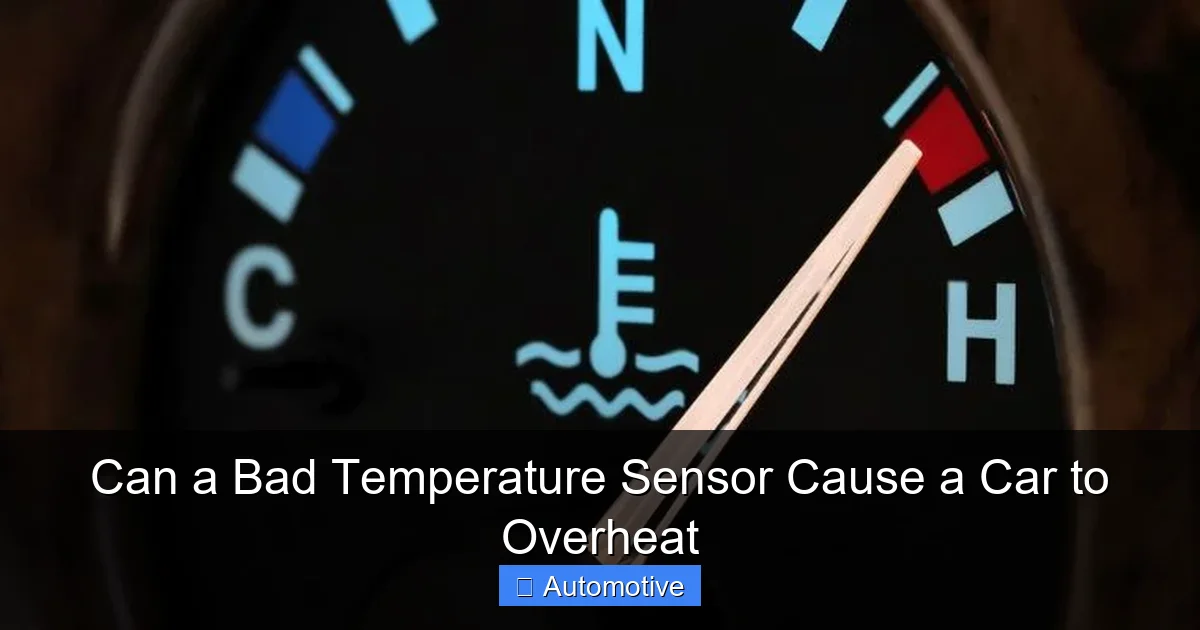
Visual guide about Can a Bad Temperature Sensor Cause a Car to Overheat
Image source: autovibes.info
Recognizing the signs of a bad temperature sensor early can prevent a minor issue from turning into a major repair. Because the sensor affects so many engine functions, its failure often shows up in subtle but telling ways.
Erratic Temperature Gauge Readings
One of the most obvious signs is an inconsistent or jumping temperature gauge on your dashboard. You might notice the needle fluctuating between cold and hot, or staying stuck in the cold position even after the engine has been running for a while. In some cases, the gauge may spike into the red zone unexpectedly, even if the engine doesn’t feel hot to the touch.
This happens because the sensor is sending erratic or incorrect signals to the ECU, which then relays that information to the gauge. If the sensor is intermittently failing, the readings can jump around, making it hard to know what’s really happening under the hood.
Check Engine Light and Diagnostic Trouble Codes
A malfunctioning temperature sensor often triggers the check engine light. Modern vehicles are equipped with onboard diagnostics (OBD-II) that monitor sensor performance. If the ECU detects a signal that’s out of range—too high, too low, or inconsistent—it will store a diagnostic trouble code (DTC).
Common codes related to the coolant temperature sensor include:
– P0115: Engine Coolant Temperature Circuit Malfunction
– P0116: Engine Coolant Temperature Circuit Range/Performance Problem
– P0117: Engine Coolant Temperature Circuit Low Input
– P0118: Engine Coolant Temperature Circuit High Input
Using an OBD-II scanner, you or a mechanic can read these codes and pinpoint the issue. However, keep in mind that other problems—like a stuck thermostat or low coolant—can also trigger similar codes, so further diagnosis is usually needed.
Poor Fuel Economy
A bad temperature sensor can cause your car to run rich—meaning it burns more fuel than necessary. If the sensor incorrectly reports a cold engine, the ECU will keep the fuel mixture enriched long after the engine has warmed up. This not only wastes gas but can also lead to carbon buildup in the engine and increased emissions.
You might notice your fuel efficiency dropping suddenly, especially if you’ve been getting consistent mileage before. This is a common but often overlooked symptom of sensor failure.
Rough Idling or Stalling
When the engine is cold, it needs a richer fuel mixture to run smoothly. But if the sensor tells the ECU the engine is cold when it’s actually warm, the mixture can become too rich, causing rough idling, hesitation, or even stalling—especially when you first start the car or come to a stop.
Conversely, if the sensor reports a hot engine when it’s actually cold, the mixture may be too lean, leading to misfires and poor performance during startup.
Delayed or Non-Functioning Cooling Fan
As mentioned earlier, the cooling fan relies on accurate temperature data to activate. If the sensor is faulty and underreports engine temperature, the fan may not turn on when it should. This is especially dangerous in traffic or during hot weather, when the engine generates more heat and needs active cooling.
You might notice the fan doesn’t kick in even when the engine feels hot, or it turns on much later than usual. In some cases, the fan may run continuously if the sensor is stuck in a “hot” state.
Overheating Under Load
This is the most serious symptom. If the sensor fails to alert the ECU that the engine is overheating, the cooling system won’t respond in time. You might experience overheating during highway driving, towing, or climbing hills—situations that put extra strain on the engine.
In these cases, the engine may overheat even though coolant levels are fine and the radiator isn’t clogged. The root cause? The cooling fan never turned on because the sensor didn’t send the right signal.
Can a Bad Sensor Actually Cause Overheating?
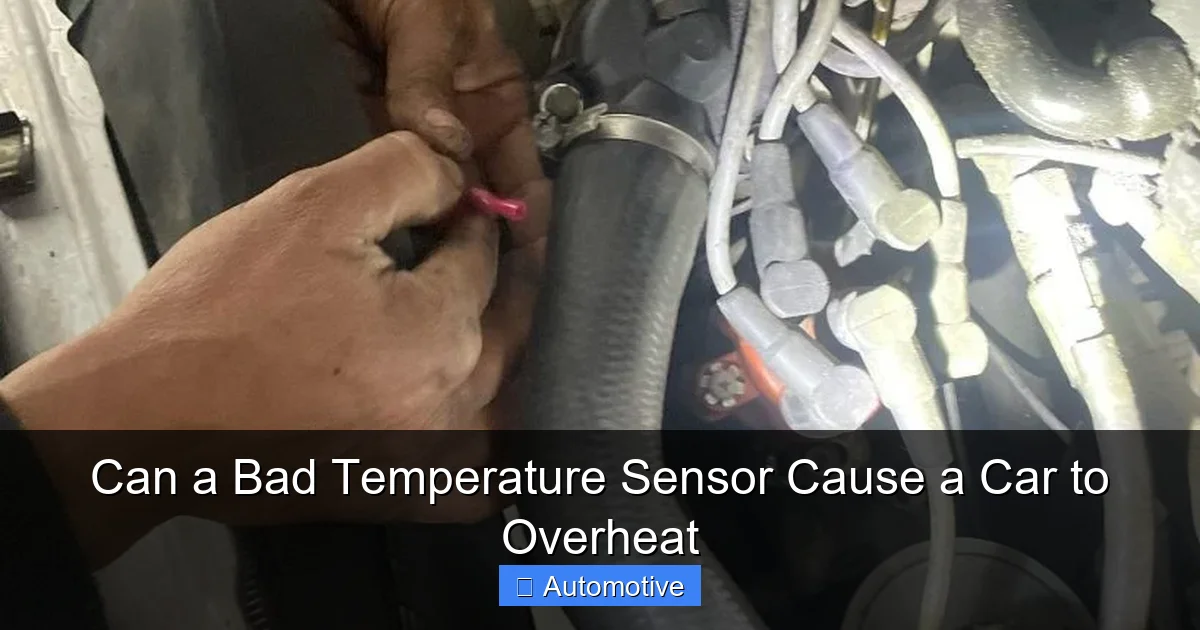
Visual guide about Can a Bad Temperature Sensor Cause a Car to Overheat
Image source: carcaresite.com
Now for the million-dollar question: can a bad temperature sensor *cause* a car to overheat? The short answer is: not directly, but it can definitely contribute to it.
To understand why, let’s break it down. The temperature sensor itself doesn’t cool the engine—that’s the job of the radiator, water pump, thermostat, and cooling fan. However, the sensor acts as the “thermostat” for the electronic systems that manage cooling. If it gives false readings, those systems may not activate when they should.
The Chain Reaction of Failure
Imagine this scenario: You’re driving in heavy traffic on a 95°F day. The engine is working hard, and coolant temperatures begin to rise. Normally, the temperature sensor would detect this increase and signal the ECU to turn on the cooling fan. But if the sensor is faulty and reports a lower temperature, the ECU ignores the warning. The fan stays off. Coolant continues to heat up. Eventually, the engine overheats—even though every mechanical part is functioning.
In this case, the sensor didn’t *cause* the overheating, but it *enabled* it by failing to trigger a necessary response. It’s like a fire alarm that doesn’t go off during a blaze—the alarm didn’t start the fire, but its failure made the situation much worse.
When the Sensor Is the Culprit
There are situations where a bad sensor is the primary reason for overheating. For example:
– The sensor is stuck in a “cold” position, preventing the fan from ever turning on.
– The sensor sends intermittent signals, causing the fan to cycle on and off unpredictably.
– The sensor fails completely, causing the ECU to default to a “safe” mode that may not provide adequate cooling.
In these cases, replacing the sensor often resolves the overheating issue immediately. Mechanics frequently encounter vehicles that overheat only because the cooling fan isn’t activating—and the root cause is a $20 sensor.
When It’s a Symptom, Not the Cause
On the other hand, a bad sensor can also be a *symptom* of a larger problem. For instance, if the engine is overheating due to a clogged radiator or failing water pump, the excessive heat can damage the temperature sensor over time. In this case, replacing the sensor without fixing the underlying issue will only provide a temporary fix.
That’s why it’s important to diagnose the full picture. If your car is overheating and you suspect a sensor issue, have a mechanic check the entire cooling system—not just the sensor.
Real-World Example
Take the case of a 2015 Honda Accord that began overheating during summer commutes. The owner noticed the temperature gauge spiking, but the cooling fan wasn’t running. A diagnostic scan revealed a P0117 code (low input from the coolant temperature sensor). Upon inspection, the sensor was found to be corroded and sending erratic signals. After replacing it, the fan activated normally, and the overheating stopped. The sensor was the culprit.
In contrast, a 2012 Ford F-150 with similar symptoms was found to have a failing water pump and low coolant. The temperature sensor was working fine, but the engine was overheating due to poor circulation. Replacing the sensor didn’t help—only fixing the pump resolved the issue.
These examples show that while a bad sensor can cause overheating, it’s not always the root cause. Proper diagnosis is key.
How to Diagnose and Fix a Bad Temperature Sensor
If you suspect your temperature sensor is faulty, don’t panic. Diagnosing and replacing it is usually straightforward and affordable. Here’s how to approach it.
Step 1: Check for Warning Signs
Start by noting any symptoms: erratic gauge readings, check engine light, poor fuel economy, or overheating. These clues can help narrow down the issue.
Step 2: Scan for Diagnostic Trouble Codes
Use an OBD-II scanner to check for codes related to the coolant temperature sensor. Most auto parts stores offer free scans, or you can buy an inexpensive scanner for home use. If you see codes like P0115–P0118, the sensor is a likely suspect.
Step 3: Inspect the Sensor and Wiring
Locate the sensor—usually near the thermostat housing or cylinder head. Check for visible damage, corrosion, or loose connections. Damaged wiring or a corroded connector can mimic sensor failure.
Step 4: Test the Sensor
A multimeter can be used to test the sensor’s resistance at different temperatures. Compare the readings to the manufacturer’s specifications. If the resistance doesn’t change as expected, the sensor is likely bad.
Alternatively, some mechanics use a scan tool to monitor live data from the sensor. If the temperature reading doesn’t match the actual engine temperature (e.g., it says 140°F when the engine is clearly hot), the sensor is faulty.
Step 5: Replace the Sensor
Replacing a coolant temperature sensor is typically a 15–30 minute job. Here’s how:
1. Let the engine cool completely.
2. Drain a small amount of coolant to prevent spills.
3. Disconnect the electrical connector.
4. Unscrew the old sensor using a socket or wrench.
5. Install the new sensor and reconnect the wiring.
6. Refill coolant if needed and bleed air from the system.
Always use a sensor recommended by your vehicle’s manufacturer. Cheap aftermarket sensors may not provide accurate readings.
Step 6: Clear Codes and Test Drive
After replacement, clear the diagnostic codes with your scanner and take the car for a test drive. Monitor the temperature gauge and ensure the cooling fan activates when needed.
Preventing Overheating and Sensor Failure
While you can’t always prevent sensor failure, you can reduce the risk and catch problems early.
Regular Maintenance
Follow your vehicle’s maintenance schedule, including coolant flushes every 30,000 to 50,000 miles. Old, contaminated coolant can corrode sensors and damage the cooling system.
Inspect Cooling Components
During oil changes or tire rotations, have a mechanic inspect the radiator, hoses, water pump, and thermostat. Catching issues early prevents overheating and sensor damage.
Monitor Dashboard Warnings
Don’t ignore the check engine light or temperature gauge. Early intervention can save you from a blown head gasket or warped cylinder head.
Use Quality Parts
When replacing sensors or cooling components, choose OEM or high-quality aftermarket parts. Cheap sensors may fail prematurely.
Drive Smart
Avoid overloading your vehicle, especially in hot weather. Give the engine time to cool after heavy use, and consider using a block heater in cold climates to reduce strain on the sensor during startup.
Conclusion
So, can a bad temperature sensor cause a car to overheat? The answer is nuanced. While the sensor itself doesn’t generate heat or block coolant flow, it plays a critical role in ensuring the cooling system responds appropriately. A faulty sensor can delay fan activation, disrupt fuel mixture, and prevent the ECU from taking protective measures—all of which can lead to overheating.
The good news? Diagnosing and replacing a bad temperature sensor is usually quick and inexpensive. By staying alert to warning signs and performing regular maintenance, you can keep your engine cool and running smoothly.
Remember, your car’s sensors are like its senses—they tell the computer what’s happening under the hood. When one goes bad, the whole system can be misled. Don’t ignore the signs. A small sensor today could prevent a big repair tomorrow.
Frequently Asked Questions
Can a bad temperature sensor cause the engine to overheat immediately?
Not immediately, but it can lead to overheating over time—especially under load or in hot weather. The sensor doesn’t cool the engine, but it controls when the cooling fan turns on. If it fails, the fan may not activate when needed.
Will a faulty temperature sensor always trigger the check engine light?
Not always, but it often does. Most modern vehicles will detect abnormal sensor signals and store a diagnostic trouble code. However, intermittent failures or minor inaccuracies might not trigger the light right away.
Can I drive with a bad coolant temperature sensor?
It’s not recommended. While the car may still run, you risk overheating, poor fuel economy, and engine damage. Replace the sensor as soon as possible to avoid bigger problems.
How much does it cost to replace a temperature sensor?
The sensor itself typically costs $10 to $50, and labor adds $50 to $100 depending on accessibility. In most cases, the total repair is under $150.
Can a bad sensor cause the cooling fan to run all the time?
Yes. If the sensor is stuck in a “hot” state, it may signal the ECU to keep the fan running continuously, even when the engine is cold. This can drain the battery and wear out the fan motor.
Is the temperature sensor the same as the thermostat?
No. The thermostat is a mechanical valve that regulates coolant flow, while the temperature sensor is an electronic device that measures coolant temperature. They work together but serve different functions.
