BMW 7 Series vs Mercedes S Class: 7 Facts

Contents
- 1 Key Takeaways
- 2 The Ultimate Luxury Sedan Showdown
- 3 Fact 1: Design Philosophy – Aggressive Sportiness vs. Timeless Elegance
- 4 Fact 2: Interior Experience – Driver-Focused Tech Hub vs. Opulent Lounge
- 5 Fact 3: Powertrain Options – Performance Blending vs. Electrified Dominance
- 6 Fact 4: Driving Dynamics – Engaging and Agile vs. Smooth and Serene
- 7 Fact 5: Technology and Innovation – Cutting-Edge Driver Aids vs. Intuitive, Seamless Integration
- 8 Fact 6: Rear Seat Experience – Business Class with a Focus on Comfort vs. First-Class Lounge Paradise
- 9 Fact 7: Brand Heritage and Prestige – Dynamic Luxury vs. Established Automotive Powerhouse
- 10 Making Your Choice: Which Luxury Sedan is Right for You?
- 11 Frequently Asked Questions About BMW 7 Series vs Mercedes S Class
- 12 Conclusion

Car Tire Inflator

Tire Pressure Monitoring System (TPMS)

Car Wireless Charger Mount

Pressure Washer for Car
BMW 7 Series vs Mercedes S Class: 7 Exciting Comparison Facts Unveiled for USA Drivers.
When it comes to the pinnacle of automotive luxury and engineering, two names consistently rise to the top: the BMW 7 Series and the Mercedes-Benz S-Class. For years, these German titans have battled for supremacy, each offering an unparalleled blend of performance, comfort, and cutting-edge technology. Navigating the nuances between them can be a delightful challenge for any automotive enthusiast or discerning buyer in the USA. Understanding their key distinctions will help you make an informed choice. Let’s explore seven compelling facts comparing the BMW 7 Series and the Mercedes S-Class, guiding you through their unique strengths.
Key Takeaways
- Discover performance and luxury leadership.
- Compare advanced technology and driver aids.
- Evaluate interior design and comfort features.
- Understand powertrains and efficiency options.
- Analyze driving dynamics and handling.
- Consider brand heritage and prestige.
The Ultimate Luxury Sedan Showdown

Choosing between the BMW 7 Series and the Mercedes-Benz S-Class is like picking a favorite star in the constellation of automotive excellence. Both represent the zenith of what sedan design and engineering can achieve. As a discerning driver in the USA, you’re likely seeking more than just transportation; you’re looking for an experience. This comparison will highlight specific areas where each model shines, making your decision process clearer. We’ll delve into seven crucial facts that set these iconic vehicles apart, ensuring you feel confident in recognizing their unique appeal.
Fact 1: Design Philosophy – Aggressive Sportiness vs. Timeless Elegance
The exterior styling of a luxury vehicle speaks volumes about its character. BMW often emphasizes a more dynamic and athletic presence, while Mercedes-Benz leans towards an understated opulence. This divergence is clearly visible when comparing the 7 Series and the S-Class.
The BMW 7 Series, particularly in its recent generations, has adopted a bolder, more assertive design language. This often includes a more prominent kidney grille, sharper body lines, and a generally more aggressive stance. It projects an image of forward-thinking dynamism and performance, appealing to those who want their luxury car to feel as invigorating as it looks. The design aims to convey power and a sporting pedigree, even in its most luxurious form. This can be seen in the sculpted hood and the assertive front fascia that commands attention on American roadways.
Conversely, the Mercedes-Benz S-Class typically embodies a more classic and timeless approach to luxury. Its design is characterized by flowing lines, a more restrained grille, and an overall sense of refined elegance. The S-Class aims for an aura of prestige and sophisticated comfort, projecting an image of established luxury and serenity. It’s a design that has often been emulated but rarely matched in its ability to convey sheer class and gravitas. The smooth surfaces and balanced proportions contribute to its enduring appeal, making it a consistent symbol of success.
| Attribute | BMW 7 Series | Mercedes-Benz S-Class |
|---|---|---|
| Overall Impression | Dynamic, Athletic, Bold | Elegant, Timeless, Sophisticated |
| Front Grille | Prominent, Assertive | Refined, Understated |
| Body Lines | Sharper, More Sculpted | Softer, Flowing |
| Target Appeal | Performance-oriented luxury | Serene, prestigious comfort |
Fact 2: Interior Experience – Driver-Focused Tech Hub vs. Opulent Lounge

Step inside, and the fundamental differences between the 7 Series and S-Class become even more apparent. Both offer exceptional materials and craftsmanship, but their priorities differ.
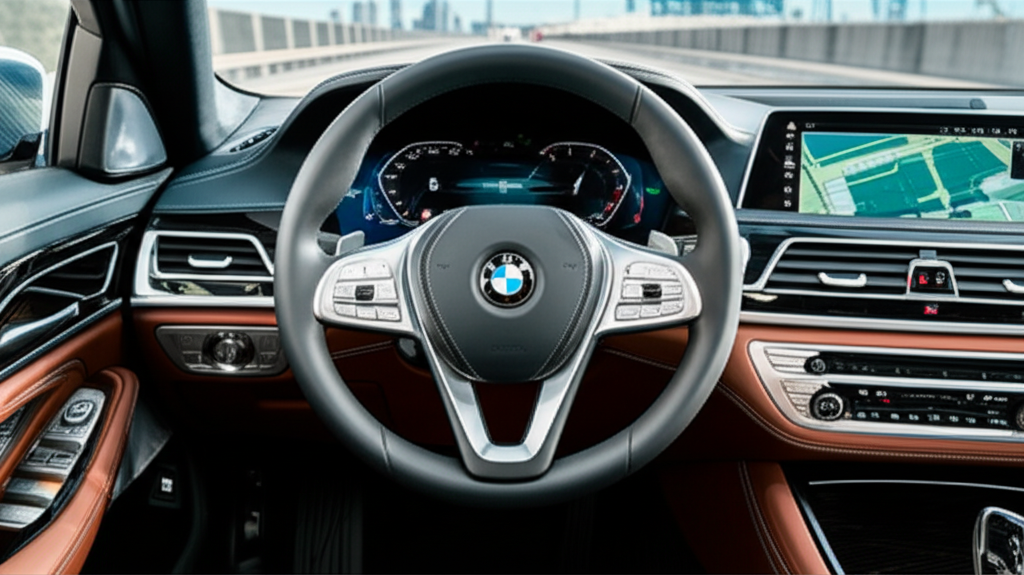
The BMW 7 Series interior is designed with a strong emphasis on the driver, even while pampering passengers. It features a sophisticated, high-tech cockpit that feels intuitive and engaging. The driver’s focus is paramount, with digital displays and controls arranged ergonomically. While rear-seat occupants are certainly not forgotten, the overall ambiance often feels more oriented towards the person behind the wheel. Expect advanced infotainment systems, like BMW’s iDrive, known for its responsiveness and comprehensive features, and driver-assistance technologies that feel seamlessly integrated into the driving experience. This is a cabin built for those who enjoy the act of driving, even in a large luxury sedan.
The Mercedes-Benz S-Class, on the other hand, aims to create an unparalleled sanctuary for all occupants, with a particular focus on rear-seat passengers. The interior is often described as a “mobile first-class lounge.” Ambient lighting, exceptionally comfortable seating with extensive adjustment and massage functions, and a serene cabin environment create an atmosphere of pure relaxation. While the S-Class is also packed with technology, it’s often presented in a way that enhances comfort and tranquility rather than outright performance. The infotainment system, MBUX, is known for its intuitive voice control and often stunning visual interfaces, contributing to the overall luxurious and calming feel. This is the perfect environment for long journeys or for business executives who need a peaceful space to work or unwind.
- BMW 7 Series Interior Strengths:
- Driver-centric cockpit design.
- Intuitive and performance-oriented infotainment.
- Advanced driver-assistance integration.
- Mercedes-Benz S-Class Interior Strengths:
- Rear-seat focused luxury lounge.
- Exceptional comfort and massage seats.
- Serene and tranquil cabin ambiance.
Fact 3: Powertrain Options – Performance Blending vs. Electrified Dominance
Under the hood, both sedans offer a range of potent powertrains, but their approaches to performance and electrification are evolving differently.
The BMW 7 Series has historically offered a broad spectrum of engines, from powerful inline-sixes and V8s to potent M-tuned variants. In recent years, BMW has also embraced hybrid technology, offering plug-in hybrid (PHEV) options that provide both impressive performance and improved efficiency for urban driving or short commutes. The focus remains on delivering a stirring driving experience, whether powered by gasoline or a combination of electricity and fuel. For those in the USA looking for a luxury sedan that doesn’t compromise on performance feel, the 7 Series often delivers a more visceral connection to the road.
Mercedes-Benz has been particularly aggressive in its electrification strategy. The S-Class lineup heavily features mild-hybrid and plug-in hybrid variants, with a clear roadmap towards fully electric models. While powerful V8 engines are still available, the emphasis is increasingly on smooth, refined, and efficient electric or electrified propulsion. The goal is to offer hushed, effortless acceleration and a supremely comfortable ride. Mercedes-Benz often prioritizes a feeling of effortless gliding, where power is delivered smoothly and silently, making it ideal for long-distance cruising and a refined urban presence. The integration of electric power aims to enhance the S-Class’s reputation for serene luxury.
External Link: For more on the latest powertrain technologies and emissions standards in the USA, you can refer to the Environmental Protection Agency (EPA) website for fuel economy and emissions information.
Fact 4: Driving Dynamics – Engaging and Agile vs. Smooth and Serene
The way a luxury sedan handles and responds to driver input is a critical differentiator.
BMW has long cultivated a reputation for creating cars that are “the ultimate driving machine,” and the 7 Series embodies this ethos. Despite its size and luxury appointments, the 7 Series typically offers a more engaging and agile driving experience. Steering is often more communicative, the suspension is tuned for a balance of comfort and sporty handling, and the car feels more inclined to carve corners. This makes the 7 Series an excellent choice for drivers who appreciate a responsive feel and enjoy dynamic driving, even in a full-size luxury sedan. Technologies like adaptive suspension and rear-wheel steering (optional) further enhance its agility.
The Mercedes-Benz S-Class prioritizes a supremely comfortable and serene driving experience. Its suspension system is designed to isolate occupants from road imperfections, delivering a plush and exceptionally smooth ride. While it handles competently and safely, the focus is on effortless cruising and reducing driver fatigue. The steering is typically lighter and less direct than in the 7 Series, contributing to the relaxed driving demeanor. This makes the S-Class the perfect companion for long journeys across the USA, where the priority is arriving refreshed and relaxed, rather than feeling the thrill of the drive itself. Innovation like AI-driven active suspension systems (e.g., E-Active Body Control on some models) aims to create an almost magically smooth ride.
Pro Tip: When test driving either vehicle, pay close attention to how the steering feels and how the car handles bumps and uneven road surfaces. This will give you a true sense of their differing driving dynamics.
Fact 5: Technology and Innovation – Cutting-Edge Driver Aids vs. Intuitive, Seamless Integration
Both the BMW 7 Series and Mercedes-Benz S-Class are technological marvels, pushing the boundaries of automotive innovation. However, their approach to integrating these technologies can differ.
The BMW 7 Series is a showcase for BMW’s latest advancements in driver assistance systems, connectivity, and infotainment. It often features sophisticated parking assistants, advanced adaptive cruise control, and large, high-resolution displays. BMW’s iDrive system is a prime example of their tech focus, offering deep customization and connectivity options. The integration aims to enhance the driving experience and safety, providing drivers with a wealth of information and control at their fingertips. Expect features that support autonomous driving capabilities and seamless smartphone integration for the connected American driver.
The Mercedes-Benz S-Class, through its MBUX (Mercedes-Benz User Experience) system, aims for a more intuitive and user-friendly technological integration. Voice control is a prominent feature, allowing drivers to control climate, navigation, and entertainment with natural speech commands. The S-Class also boasts advanced driver-assistance systems that are designed to work seamlessly and unobtrusively, enhancing safety and comfort. The focus is on making the technology accessible and enhancing the overall sense of luxury and ease, rather than overwhelming the driver with complex menus. Features like augmented reality navigation and advanced interior ambient lighting systems contribute to a futuristic yet comfortable cabin experience.
| Feature Area | BMW 7 Series | Mercedes-Benz S-Class |
|---|---|---|
| Infotainment System | iDrive (Performance-oriented, customizable) | MBUX (Intuitive, voice-controlled, visually rich) |
| Driver Assistance | Advanced, comprehensive suite with deep integration | Seamless, comfort-focused, and safety-enhancing |
| Connectivity | Strong smartphone integration, app support | Effortless voice commands, smart home integration (optional) |
| User Interaction | Touchscreen, rotary dial, voice commands, gesture control | Voice commands, touchscreen, haptic controls |
Fact 6: Rear Seat Experience – Business Class with a Focus on Comfort vs. First-Class Lounge Paradise
For many buyers of these flagship sedans, the rear seat experience is paramount. Both excel, but with different emphases.
The BMW 7 Series offers a luxurious rear cabin that is comfortable and well-appointed. Passengers have ample legroom, often with options for executive seating packages that include features like reclining seats and individual climate control zones. The focus here is on providing a comfortable and functional space, suitable for business travel or relaxed journeys. While luxurious, it often retains a connection to the driver-oriented nature of the car, with controls and displays that might appeal to a business executive who also enjoys driving.
The Mercedes-Benz S-Class, however, defines what it means to be chauffeured in ultimate luxury. The rear seats are often the stars of the show, offering an experience akin to first class on an airline. Features like supremely comfortable, multi-contour seats with heating, ventilation, and massage functions are standard or readily available. The optional Executive Rear Seat package can include features like a rear-seat entertainment system, a small refrigerator, and even a fold-out table, transforming the back into a truly mobile office or sanctuary. The S-Class prioritizes unparalleled comfort, quietness, and an opulent atmosphere for its rear occupants, making it the benchmark for chauffeured luxury.
- BMW 7 Series Rear Seat Perks:
- Ample legroom and comfort.
- Optional executive seating packages.
- Functional and connected space.
- Mercedes-Benz S-Class Rear Seat Perks:
- First-class lounge experience.
- Extensive massage, heating, and ventilation.
- Ultimate in quietness and opulence.
Fact 7: Brand Heritage and Prestige – Dynamic Luxury vs. Established Automotive Powerhouse
The badges on luxury vehicles carry weight, and both BMW and Mercedes-Benz boast rich histories and distinct brand identities.
BMW’s heritage is deeply rooted in performance and dynamic driving. The “Ultimate Driving Machine” slogan isn’t just marketing; it’s a philosophy that has guided the brand for decades. Owning a 7 Series often signifies an appreciation for engineering prowess, sportiness, and a sophisticated, modern luxury that still prioritizes the driving experience. It appeals to those who are successful and enjoy the fruits of their labor, but who also have a passion for how a car performs.
Mercedes-Benz, on the other hand, has long been synonymous with automotive excellence, comfort, and unparalleled prestige. The three-pointed star is recognized globally as a symbol of ultimate luxury, safety, and engineering integrity. The S-Class, in particular, has consistently set the standard for luxury sedans for generations. Owning an S-Class conveys a sense of established success, timeless elegance, and an unwavering commitment to the finest in automotive refinement and comfort. It’s often seen as the definitive statement of luxury automotive ownership.
External Link: Learn more about the history and brand development of these iconic German automakers through resources like the official BMW Group Classic website or the Mercedes-Benz Museum archives (accessible online).
Making Your Choice: Which Luxury Sedan is Right for You?
The BMW 7Series and the Mercedes-Benz S-Class represent the pinnacle of luxury sedan engineering, each offering a distinct flavor of automotive excellence. Your decision will hinge on your personal priorities and driving preferences.
If you seek a luxury sedan that combines opulent comfort with a truly engaging and dynamic driving experience, the BMW 7 Series is likely your ideal choice. Its driver-focused cockpit, athletic handling, and potent powertrain options cater to those who appreciate the art of driving. It’s a statement of modern luxury that doesn’t shy away from performance.
Conversely, if your ultimate goal is unparalleled comfort, serene tranquility, and a chauffeured-like experience, the Mercedes-Benz S-Class stands as the benchmark. Its focus on creating a mobile sanctuary, with its plush interior, exceptionally smooth ride, and sophisticated amenities, makes it the ultimate expression of automotive indulgence for both driver and passengers. It embodies timeless elegance and established prestige.
Both vehicles offer cutting-edge technology, superior comfort, and exceptional build quality. Consider what aspects are most important to you: the thrill of the drive or the serenity of the journey. We encourage you to test drive both models extensively to truly feel the difference and discover which one resonates most with your lifestyle and expectations as a discerning vehicle owner in the USA.
Frequently Asked Questions About BMW 7 Series vs Mercedes S Class
Q1: Which car is generally more expensive, the BMW 7 Series or the Mercedes S-Class?
Both are flagship luxury sedans, and their pricing is very competitive, often starting in a similar range. However, depending on the specific model year, trim levels, and optional packages, either the BMW 7 Series or the Mercedes-Benz S-Class can be more expensive than the other. The uppermost trims and highly optioned models of both can easily exceed $150,000 or more in the USA.
Q2: Which sedan offers better fuel economy?
This varies significantly based on the specific engine and powertrain chosen. Generally, both brands offer efficient engines and hybrid options. Mercedes-Benz has been very proactive with electrification across its S-Class lineup, so many of its hybrid and plug-in hybrid variants might offer competitive or better fuel economy, especially for city driving compared to equivalent gasoline-only 7 Series models. Always check the EPA’s official fuel economy ratings for the specific models you are considering.
Q3: Which luxury sedan is more reliable?
Reliability can fluctuate between model years and specific implementations. Historically, both BMW and Mercedes-Benz have strong reputations for building durable luxury vehicles. Consumer reports and owner surveys often show them performing similarly, with some years or specific models excelling over others. Regular maintenance and timely servicing, as recommended by the manufacturer, are crucial for maintaining reliability in both vehicles.
Q4: Is the BMW 7 Series or Mercedes S-Class better for a chauffeured driver?
The Mercedes-Benz S-Class is widely considered the benchmark for chauffeured driving. Its rear seating experience is designed to be supremely comfortable and luxurious, offering more amenities and a more serene environment for passengers. While the 7 Series is also very comfortable in the rear, the S-Class typically offers a more opulent and dedicated chauffeur experience.
Q5: Which car has more advanced driving assistance systems?
Both the BMW 7 Series and the Mercedes-Benz S-Class are at the forefront of automotive technology and offer highly advanced driver assistance systems (ADAS). The specific systems available and their implementation can differ. BMW often focuses on integrating these systems deeply into the driving experience for enhanced control and performance feel, while Mercedes-Benz emphasizes their seamless and comfort-enhancing operation. It’s best to compare the specific ADAS packages available on the models you are interested in.
Q6: Which brand offers a more sporty driving experience?
BMW, with its long-standing reputation as “the ultimate driving machine,” generally offers a sportier and more engaging driving experience in its 7 Series. The steering tends to be more direct, and the suspension is tuned for a better balance between comfort and agility. While the S-Class handles competently, its primary focus is on a smooth, serene, and effortless ride.
Q7: Are there fully electric versions of these cars available in the USA?
Yes, both brands are rapidly expanding their electric vehicle offerings. BMW has introduced the i7 as a fully electric variant of the 7 Series. Mercedes-Benz offers the EQS, which is their all-electric flagship sedan, often considered the electric counterpart to the S-Class, and there are also electric variants within the S-Class line (e.g., S 580 e Plug-in Hybrid which has significant electric range). It’s important to check the latest model year offerings for the most up-to-date availability in the USA.
Conclusion
The BMW 7 Series and Mercedes-Benz S-Class stand as titans in the luxury sedan segment within the USA, each offering a distinct yet equally compelling vision of automotive excellence. Whether you prioritize the dynamic driving engagement and athletic prowess of the 7 Series or the unparalleled serene comfort and timeless elegance of the S-Class, both vehicles promise an extraordinary ownership experience. By understanding these seven key differences in design, interior philosophy, powertrains, driving dynamics, technology, rear-seat luxury, and brand heritage, you are now better equipped to make an informed decision that perfectly aligns with your personal preferences and lifestyle. Both represent the pinnacle of German engineering and are worthy contenders for any discerning driver.