
Best Narrow Car Seat Reviews and Buying Guide for Small Vehicles 2026

Narrow car seats help families fit an extra passenger or make better use of tight back seats. These seats are slimmer than standard models but still aim to meet the same safety and comfort needs for infants and toddlers. They often suit small cars, families with three-across seating, or parents who need easier access to the center seat.
Choosing the right narrow car seat comes down to safety standards, correct fit in your vehicle, and ease of installation and harnessing. We focus on seats that balance a slim profile with high crash protection, simple LATCH or seatbelt installs, and comfortable padding that won’t crowd adjacent passengers. We tested and compared models to find the best narrow seats for different budgets and car types, so you can pick one that fits your vehicle and keeps your child secure.
Best Narrow Car Seats
Below is our full list of the best narrow car seats for tighter vehicle spaces and third-row seating. We tested options for fit, safety features, and ease of installation to help you find a slim seat that still protects and comforts your child.
Diono Radian 3R (Slim Fit)

We recommend this seat if you need a slim, long-lasting car seat that lets three across fit in many cars while keeping kids rear-facing longer.
Pros
- Very narrow — fits three across in tighter back seats.
- Strong steel frame — feels solid and secure.
- Rolls from infant to booster — one seat for many years.
Cons
- Heavy and bulky to carry despite folding.
- Installation can be tricky in some vehicles.
- Some vehicles limit rear-facing tether use.
We used the Radian 3R across several cars and noticed right away how slim it sits between other seats. Getting three seats across in our compact SUV felt possible for the first time. The harness and padding felt sturdy and comfortable for a long drive.
Putting it in the car took patience. The latch and belt routing worked, but in a few vehicles we had to tweak the angle and the tether options. Once installed, the seat did not shift and the steel core gave a reassuring, rigid feel.
Kids climbed in and out with little fuss and the memory foam kept them comfy. The cover unzipped for washing without a fight. Moving the seat between cars was doable, though we rarely wanted to lift its 23-pound weight.
Overall, we liked the safety-first design and slim profile for multi-seat setups. If you need a durable seat that grows with your child and frees up space, this one earned a spot in our rotation.
Graco SlimFit3

We recommend this seat if you need a slim, reliable car seat that really does fit three across without giving up safety.
Pros
- Fits three across in many cars, freeing up rear-seat space.
- Easy one-hand headrest and harness adjustment as kids grow.
- Lightweight, breathable, and the cover comes off quickly for washing.
Cons
- Narrow fit may feel snug for larger kids over time.
- Cup holders sit close to the door and can be tight in some cars.
- Some functions trim down comfort features compared with bulkier models.
We used the SlimFit3 on a long drive and noticed right away how much more room it left for the middle seat. Installing it with the InRight LATCH felt secure and fast, and the audible click reassured us the first time we snapped it in.
Adjusting the headrest and harness took one smooth motion. That saved time when switching between kids. The seat felt sturdy under a squirmy toddler and the EPS foam gave a reassuring firmness during quick stops.
Cleaning the cover was simple — it really does pop off in under a minute. Breathable mesh kept our child cooler on a summer trip, though the slim shell made the cup holder area feel a bit cramped when we packed snacks.
We appreciated the three-in-one lifespan from rear-facing infant to highback booster. If you need something that conserves space and grows with your child, this one works well for most family cars.
Graco Contender Slim

We recommend this seat if you need a slim, travel-ready convertible car seat that’s easy to move between cars and planes.
Pros
- Slim profile saves back-seat space.
- Lightweight and easy to carry for travel.
- Simple one-motion headrest and harness adjustment.
Cons
- Limited recline options can make leveling tricky.
- Tightening the seatbelt or LATCH can feel hard at first.
- Padding feels thin for long naps on the road.
We tested this seat in our family car and on a short flight. It slid into tighter back-seat spots better than bulkier models, so we could fit a booster beside it. Moving it between vehicles felt quick thanks to the low weight.
Adjusting the harness and headrest together was a real time-saver during feed-and-sleep transitions. The belt routing and level indicator helped with installation, but we had to wrestle a bit to get the straps razor-tight.
Comfort is fine for short drives; the pad is soft but not deep. For long road trips we noticed our child shifted more than in a plusher seat. Still, the FAA approval and slim fit make this a useful pick for families who travel or need to maximize seat space.
Ellaris Slim Convertible Seat

We recommend this seat if you need a slim, travel-ready convertible car seat that grows with your child.
Pros
- Slim profile saves space in tighter back seats.
- Easy hook-style LATCH and light weight make installation and moves simple.
- Machine-washable pad and removable cup holders make cleanup quick.
Cons
- Top harness can be hard to tighten fully for a snug fit.
- Some very small or older cars may still feel a tight fit.
- Padding is good but not as plush as higher-end models.
We used this seat in our minivan and an older sedan during a week of family travel. It fit between two other seats without crowding, and the narrow shell let us carry three across in the back row more easily than bulkier seats. Moving it between cars felt quick because it is lighter than many convertible seats.
Installing with the hook-style LATCH was straightforward. We liked the clear adjust of the 5-position headrest and the harness; it took moments to change as our child grew. The airplane-ready compact shape made navigating the airport and folding into overhead bins less stressful.
Tightening the top straps required more effort than we expected, and we felt the harness could cinch closer at the shoulder on larger toddlers. Still, the seat met safety standards and gave us confidence on longer drives. Cleanup was painless thanks to the machine-washable cover and the removable cup holders that fit in the dishwasher.
If you want a practical, travel-friendly convertible seat that saves space and is easy to move, this is a solid, budget-conscious choice.
Diono Radian 3R

We recommend this seat if you need a slim, long-lasting car seat that fits three across and grows with your child.
Pros
- Slim profile fits three across in many cars.
- Converts from rear-facing infant to booster, so you use it for years.
- Solid build feels very sturdy and protective.
Cons
- Heavy and awkward to move between vehicles.
- Cup holders are fragile and can break if handled roughly.
- Installation can be tricky without a video or extra help.
We installed the Radian 3R in our small SUV and were impressed by how narrow it sits while still feeling roomy for our child. The metal-reinforced shell gives a confident sense of safety, and the seat felt firm and well-made when we buckled in.
Keeping a child rear-facing up to 50 lb made rides feel safer for longer. We liked the comfort kit and extra padding; it calmed our toddler on longer drives. The straps adjust smoothly and our kid could manage them by age four.
Moving the seat between cars proved tiring because it’s heavy, even though it’s not bulky. We had to watch a video to get the latch install right; the manual left us guessing at a few steps. Cup holders came off a bit too easily and felt flimsy compared with the rest of the seat.
Overall, this is a great pick for families who want one durable seat to last years and fit three across, as long as you can handle the extra weight and take care with the cup holders.
Trooper Slim (Baby Trend)
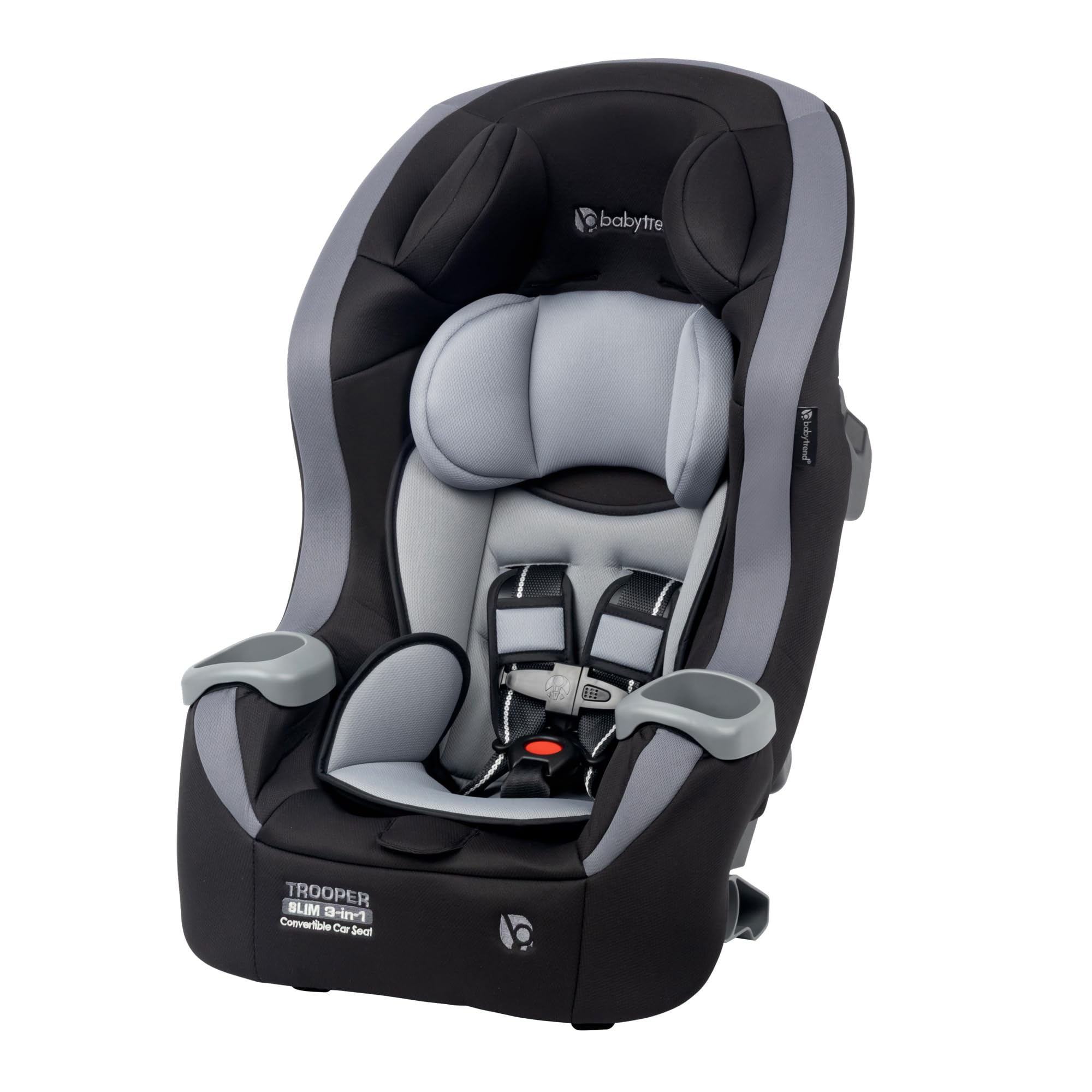
We recommend this seat if you need a slim, lightweight convertible that saves back-seat space and is easy to move between cars.
Pros
- Slim profile fits better in tight back seats and next to other seats.
- Lightweight—easy to lift and carry for travel or swapping cars.
- Adjustable headrest and harness let the seat grow with your child.
Cons
- Padding feels thin for some toddlers and long rides.
- Some users report harness or installation fiddliness.
- Rear-facing fit varies by vehicle; check seat shape and angle first.
We used the Trooper Slim for a few weeks and liked how compact it felt in our SUV. Getting it in and out was simple because it’s light, and it didn’t crowd the middle seat when we ran errands with three child seats.
Strapping a child in was usually straightforward, and the adjustable headrest made quick comfort changes as our kiddo grew. On longer drives we noticed the cushioning was not very plush, so we added a thin liner for naps.
Installing rear-facing in a smaller car proved tight, and we had to try multiple positions to get a solid feel. We also found the harness took a moment to thread and adjust correctly on one unit, so inspect the straps before you head out.
If you want something space-saving and easy to move, the Trooper Slim works well for everyday use and travel; just be mindful of your vehicle’s rear seat shape and consider extra padding for long trips.
Graco Tranzitions 3‑in‑1 Booster
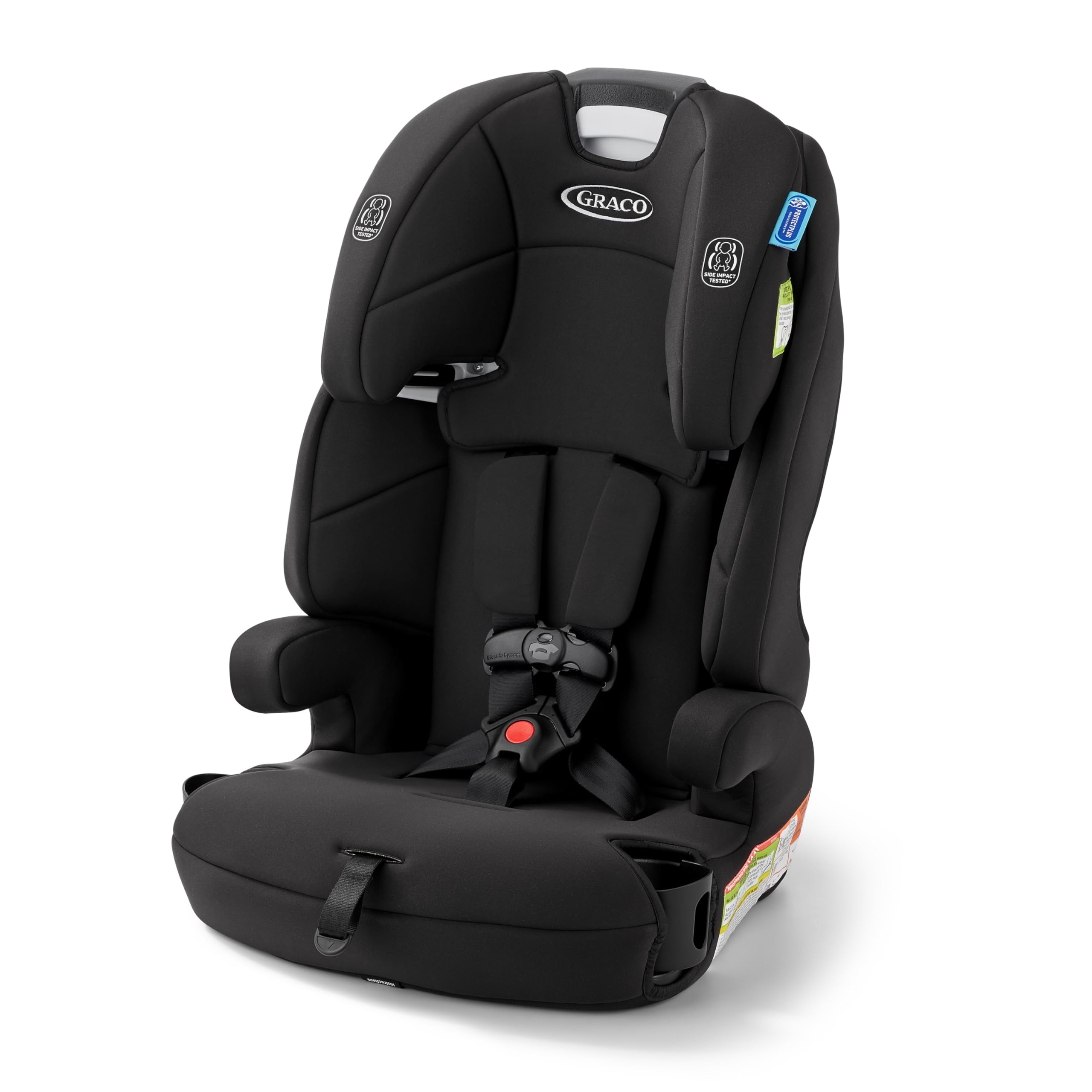
We recommend this if you want a slim, lightweight seat that grows with your child and is easy to move between cars.
Pros
- Grows from harnessed seat to highback and backless booster.
- Lightweight and narrow — fits well in tight back seats.
- Easy one‑hand headrest and washable cover make daily life simpler.
Cons
- Less lateral padding than bulkier seats.
- Not the plushest fabric — feels thin to the touch.
- Cup holders can jut out in very tight rows.
We used this seat across three cars for several weeks and liked how easy it was to lift and carry. Swapping from harness mode to booster mode took only a few minutes and no rethreading, which saved time during a busy day.
Installing it felt straightforward. The open-loop belt guides and latch made placement quick, and it sat slim so we could fit another seat beside it without crowding our child.
Our kid stayed comfortable on short and medium trips, and the rotating cup holders were handy for snacks. We noticed the side padding was a bit less substantial than some larger seats, so we would watch for fit in rougher rides.
Overall, this is a practical choice for parents who need a narrow, versatile seat that moves between vehicles and ages without fuss.
Safety 1st Grow & Go Booster

We recommend this booster if you want a slim, easy-to-move seat that grows with your child and stays simple to use.
Pros
- Slim, 19″ wide design frees up space in the back seat.
- Lightweight and foldable — easy to move between cars.
- ComfortWings and adjustable headrest give a comfortable fit as kids grow.
Cons
- Feels like basic plastic build, not premium.
- Might unfold when carried if not secured.
- Limited extra padding compared with bulkier boosters.
We used this booster on trips between our two cars and liked how light it felt when grabbing it from the trunk. It snaps into place with the vehicle seat belt and the belt guides make it easy for kids to buckle themselves.
The ComfortWings adjust as the headrest rises, and our child said the seat felt cozy on longer rides. The foldable design saved space during visits and made switching cars quick.
Cleaning was simple — the pad went into the washer and the cup holders popped out for the dishwasher. Overall, it performed well for everyday family use without any complicated steps.
RideSafer XS Vest
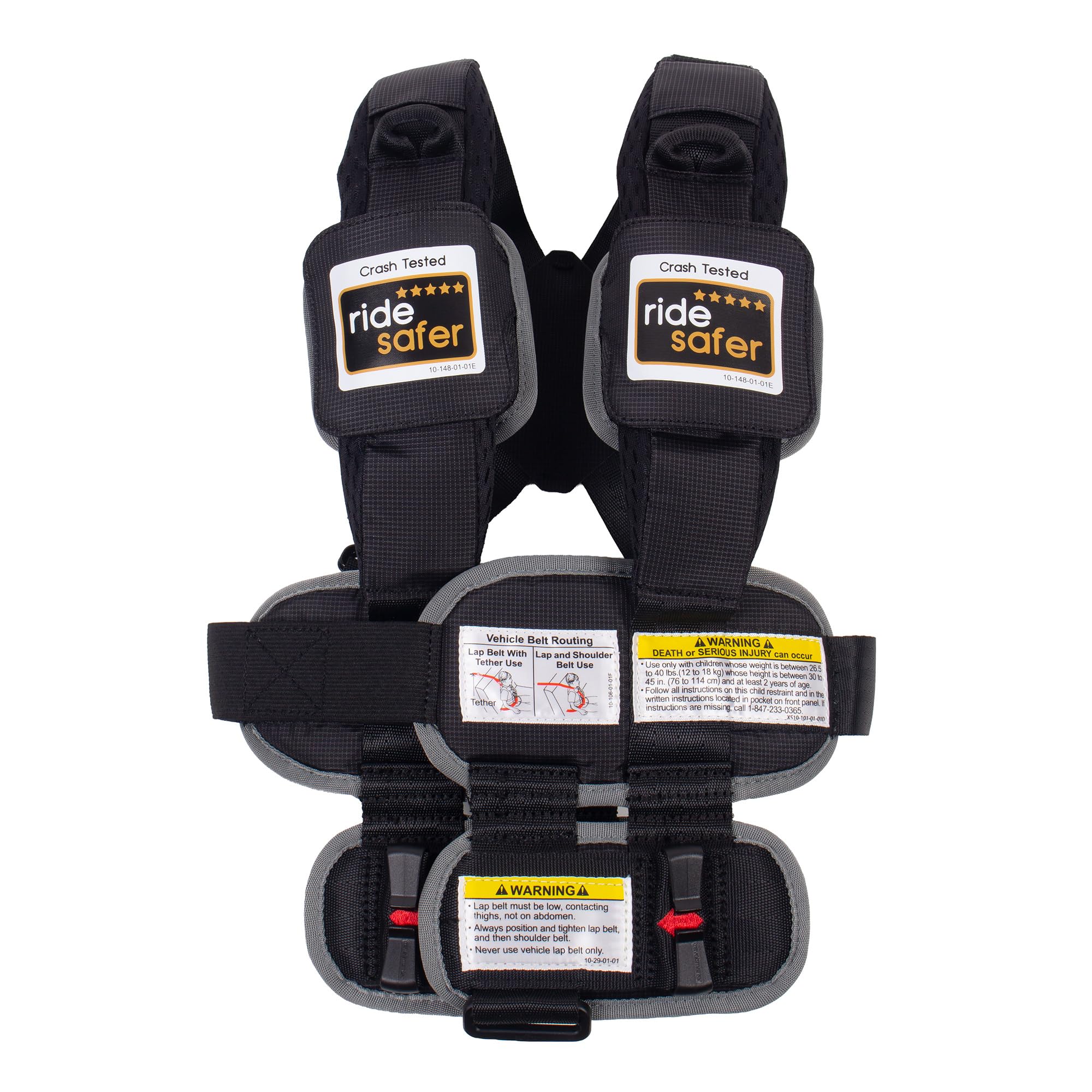
We recommend this for travel and ride-share use when you need a lightweight, legal child restraint that packs small and installs fast.
Pros
- Very portable and light — easy to carry in a backpack or suitcase.
- Simple to install once you practice — saves time in taxis and rentals.
- Feels secure for short trips when used exactly as directed.
Cons
- Not FAA approved, so you cannot use it on airplanes.
- Takes practice to size and tension correctly for a snug fit.
- Not a full substitute for a regular car seat for daily long rides.
We used the RideSafer vest on several short trips and carpool runs. It folded into our bag and took under a minute to put on once we remembered the sequence of straps and the tether anchor. Our child sat comfortably and moved less than usual because the vest keeps the adult seat belt positioned better across the torso.
At first, we fumbled with adjustments and needed a quick video demo to get the right fit. After that, installation became fast and predictable. The vest felt much easier to handle than hauling a booster or convertible seat through airports and hotel transfers.
We noticed the vest works best for 2–4 year olds who match the size range. We would not use it for everyday full-time car seat replacement, but it has become our go-to when we need a portable, certified option for short rides, taxis, or rental cars.
Diono Everett NXT Booster

We recommend this seat if you need a slim, long‑lasting booster that fits tight car seats and grows with your child.
Pros
- Slim profile fits narrow and bucket seats.
- Easy to move and install with rigid LATCH.
- Adjustable headrest and good side protection.
Cons
- Padding can feel thin for some kids.
- Heavier than it looks when carrying.
- Cup holders are basic and removable.
We used this booster in two different cars and found it slides into tight spaces better than wider models. Installing with the rigid LATCH felt secure, and moving the seat between vehicles was quick once we got the hang of it.
Our kids liked the high back and headrest positions; the seven‑position adjuster really helps as they grow. The fabric is soft and comes off for washing, which saved us after a few snacks and spills.
On the downside, one child said the seat could use more cushion for long drives. We also noticed the seat isn’t featherlight when carrying it in and out, though it still handled better than many heavy boosters.
Overall, the Everett NXT works well for families who need a narrow, durable booster that lasts through several years of use.
Buying Guide
We look for the right balance of safety, fit, and ease of use when choosing a narrow car seat. Safety features matter most: check crash-test ratings, a sturdy shell, and a reliable harness or anchor system. These reduce risk in a crash.
We measure the seat and our vehicle before buying. Narrow seats save space, but we must confirm width, depth, and how the seat fits across our car’s seat cushion. Don’t forget headroom for taller children.
We focus on installation methods. LATCH and seat belt installation should both be straightforward. A seat with clear belt paths and simple recline adjustments makes installation faster and safer.
We consider weight and age limits for the child. Look for seats that cover the child’s current size and allow growth. Adjustable harnesses and multiple recline positions help the seat remain usable longer.
We value padding and breathability for comfort on long rides. Removable, machine-washable covers help with cleanup. Also check for easy-to-adjust straps and buckles.
We weigh trade-offs between extra features and bulk. Narrow seats may have fewer cup holders or padding. Prioritize features that improve safety and fit over extras.
| Feature to check | Why it matters |
|---|---|
| Width & fit | Ensures seat fits vehicle and other seats |
| Safety ratings | Indicates crash protection level |
| Installation ease | Reduces chance of incorrect install |
| Weight/height limits | Matches child’s growth |
| Comfort & fabric | Affects ride comfort and cleaning |
| Adjustability | Extends usable life of the seat |
Editor’s Choice
We picked the Graco SlimFit Pro as our Editor’s Choice for narrow car seats. It balances a slim profile with strong safety features and easy installation.
We liked its width: about 15 inches at the base, which fits well across most back seats. It still offers side-impact protection and a 5-point harness for younger children.
Installation is quick with lower anchors or a seat belt. The recline settings and clear belt path make it simple to get a secure fit even in tight cars.
Key features:
- Width: ~15 inches
- Ages: Rear- and forward-facing modes, convertible for toddlers to school-age
- Safety: 5-point harness, side-impact protection
- Ease: LATCH + belt installation, removable cover for cleaning
We tested comfort and found the padding supportive without being bulky. The harness adjusts smoothly and the cover comes off easily for washing.
We also considered long-term value. The SlimFit Pro grows with the child, reducing the need for early replacement. That makes it a smart pick for families with limited vehicle space.
Conclusion
We focused on narrow car seats that fit tight backseats and shared practical pros and cons for each model. We prioritized safety, fit, and ease of use to help you pick a seat that matches your needs.
We recommend measuring your vehicle before buying. That step saves time and ensures the seat will fit alongside other passengers or seats.
We favor seats with good crash-test ratings and clear installation systems. These features reduce guesswork and improve everyday use.
We suggest trying seats in person when possible. Hands-on checks give the best sense of fit, harness routing, and how easy the seat is to adjust.
We kept comfort and longevity in mind. Some narrow seats trade padding for compactness, while others balance both.
Key checklist:
- Measure your vehicle seat width and depth
- Confirm harness and belt routing work for your child
- Check installation method (LATCH vs. seat belt)
- Read current safety ratings and recalls
We believe a well-chosen narrow car seat can make travel safer and more comfortable for your child and family.
FAQS
What defines a “narrow” car seat?
We call a car seat narrow when its base or shell is slimmer than standard models. This helps fit three seats across or fit in small cars.
Are narrow car seats safe?
Yes, many narrow seats meet the same safety standards as regular seats. We recommend checking crash test ratings and correct installation.
Can a narrow seat fit my child?
Measure your vehicle’s seat width and your child’s shoulder width first. We also advise reading manufacturer size charts and weight limits.
Do narrow seats sacrifice comfort?
Some models use contoured padding to keep comfort while saving space. We suggest testing a seat in person if possible.
How about installation—are narrow seats harder to install?
Installation is similar to regular seats: use LATCH or the seat belt and follow the manual. We find narrow seats can be easier when space is tight.
Which types are available?
- Infant carriers (rear-facing only)
- Convertible seats (rear- and forward-facing)
- Booster seats (high-back and backless)
We pick types based on child age and size.
What should we check before buying?
Look at width, safety ratings, installation method, and harness height. We also check return policies in case it doesn’t fit.
Can narrow seats fit in planes?
Some do, but airline policies vary. We recommend contacting the airline before travel.
