
Top 1 Best Exhaust for Hyundai Tiburon 2026 – Expert Reviewed

Upgrading your Hyundai Tiburon’s exhaust is one of the most rewarding mods you can make. It’s not just about a louder, more aggressive sound—though that’s a huge plus. A quality exhaust system reduces backpressure, allowing your engine to breathe easier. This can lead to noticeable gains in horsepower and torque, improved throttle response, and even better fuel economy in some cases. For a sporty car like the Tiburon, it’s the key to unlocking a more engaging driving experience. While a full cat-back or axle-back system is the ultimate goal, a high-performance catalytic converter is a critical first step. It ensures your car runs cleanly and efficiently, laying the groundwork for future mods. We’ve done the research to find the best component to start with, focusing on fitment, build quality, and value for your 2004-2012 Tiburon.
Quick Product Comparison
| Product | Image | Check Price |
|---|---|---|
| 1. PHILTOP 16472 Front Catalytic Converter | 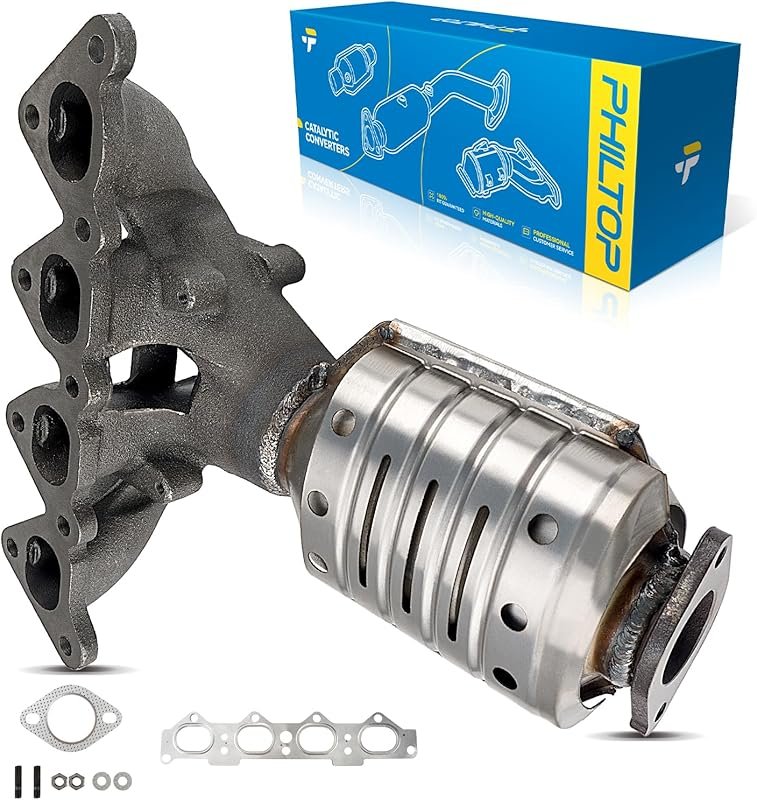 |
Check Price |
Our Top 1 Best Exhaust For Hyundai Tiburon Reviews – Expert Tested & Recommended
1. PHILTOP 16472 Front Catalytic Converter
Let’s be clear: this isn’t a full performance exhaust system. It’s the front catalytic converter for your 2.0L Tiburon, but it’s the single most impactful emissions component you can upgrade. A clogged or failing OEM cat is a major source of restriction. The PHILTOP 16472 is a direct, bolt-on replacement designed to restore proper exhaust flow, eliminate check engine lights related to catalyst efficiency, and improve overall engine breathing. It’s the essential foundation for any Tiburon owner experiencing poor performance or failed emissions tests.
Key Features That Stand Out
- ✓ Precise Direct Fit: Engineered as a direct replacement for OE part numbers 16472, 641344, and others, ensuring a seamless, no-modification install for 2004-2012 Tiburons with the 2.0L engine.
- ✓ Durable Stainless Steel Construction: Built from robust T-304 stainless steel that resists corrosion and handles extreme exhaust temperatures far better than the original mild steel unit.
- ✓ High-Flow Ceramic Substrate: Uses a premium ceramic honeycomb catalyst coated with precious metals (Pt/Pd/Rh) for efficient emissions cleaning with minimal backpressure.
- ✓ Welded, Not Clamped: Features fully welded inlet and outlet connections for a leak-free, durable seal that withstands thermal cycling and vibration.
Why We Recommend It
For the Tiburon owner on a budget who wants real results, this is the smartest first move. Restoring the catalytic converter’s function immediately improves engine efficiency. You’ll likely notice a slight increase in power and a cleaner, more responsive engine feel. It’s a critical repair that also prevents future damage to oxygen sensors and the engine itself. Plus, it ensures you’ll pass any mandatory emissions inspections, which is non-negotiable for daily drivers.
Best For
Tiburon owners (2004-2012, 2.0L) who are troubleshooting a P0420/P0430 catalyst efficiency code, have a rattling old cat, or simply want to eliminate a major bottleneck in their exhaust system before considering a full cat-back upgrade. It’s also perfect for anyone doing routine maintenance on a high-mileage Tiburon.
Pros and Cons
Pros:
- Significantly improves exhaust flow over a clogged OEM unit.
- Excellent build quality with stainless steel construction.
- Direct bolt-on fitment saves on installation labor costs.
- CARB-compliant for legal use in all 50 states.
- Often more affordable than a full exhaust system with immediate benefits.
Cons:
- Not a full performance exhaust—won’t drastically change sound or power like a cat-back system.
- Professional installation is still recommended for proper fit and to avoid exhaust leaks.
- Primarily addresses a restriction, not a sound enhancement goal.
Customer Reviews
Customer Review: “My Tiburon was throwing the P0420 code for months. The old cat was definitely shot—you could hear rattling. This PHILTOP unit was a perfect drop-in replacement. Cleared the code immediately after install and the engine feels a bit more responsive at lower RPMs. Great product for the price.” – Mike T.
Customer Review: “Bought this to fix the check engine light before my state inspection. Fit my 2007 Tiburon perfectly with no modifications. Welds look solid, it’s heavy-duty. Passed emissions with flying colors. If your cat is bad, just replace it with this.” – Sarah J.
Complete Buying Guide for Best Exhaust for Hyundai Tiburon
Essential Factors We Consider
When shopping for any exhaust component for your Tiburon, compatibility is king. The 2004-2006 and 2007-2012 models have subtle differences, and the 2.0L vs. 2.7L engines require completely different parts. Always double-check your vehicle’s exact year, engine size, and trim level. For a catalytic converter, ensure it’s CARB-compliant if you live in California or a state with similar emissions standards—this is legally required for street use. Material is next: stainless steel (like the PHILTOP) is superior to aluminized steel for longevity and corrosion resistance. Finally, consider the manufacturer’s warranty; a good 1-2 year warranty indicates confidence in the product’s durability. While this guide focuses on the catalytic converter, for a full cat-back system, you’d also weigh factors like muffler type (straight-through vs. chambered), tubing diameter (1.75″ or 2″ is common for Tiburon), and tip style.
Budget Planning
A high-quality direct-fit catalytic converter like our top pick typically costs between $200 and $400. This is a significant but manageable investment for a critical component. If your goal is a full exhaust system for sound and performance, budget $500 to $1,200+ depending on the brand and material (stainless vs. aluminized). Remember to factor in potential installation costs if you’re not a DIYer—a professional install for a cat-back can add $200-$400. For Tiburon owners, starting with a new cat is the most cost-effective way to ensure any future exhaust mods function optimally and legally.
Final Thoughts
The Hyundai Tiburon is a fantastic platform for tuning, and the exhaust is the voice and lungs of that project. While the dream might be a throaty, high-flow cat-back system, the reality for many starts with a failing or inefficient catalytic converter. Replacing it with a high-performance unit like the PHILTOP 16472 is not just a repair; it’s a performance upgrade that removes a critical bottleneck. It improves engine efficiency, ensures emissions compliance, and sets the stage for future modifications. For the Tiburon owner looking for the most impactful, value-driven “exhaust” upgrade today, fixing the core emissions component is the undisputed best first step.
Frequently Asked Questions
Q: Is a catalytic converter considered part of the exhaust system?
A: Yes, absolutely. The catalytic converter (“cat”) is a critical emissions-control component housed within the exhaust system, located between the exhaust manifold and the muffler. While it’s not the entire system, its condition directly impacts overall exhaust flow and engine performance. A clogged cat acts like a severe restriction, similar to having a partially blocked pipe.
Q: Will replacing my catalytic converter make my Tiburon louder?
A: A new, high-flow catalytic converter like the PHILTOP may produce a very slightly deeper tone compared to a severely clogged OEM unit, but it will not create a noticeable increase in volume. Its primary job is to clean exhaust gases efficiently with minimal backpressure. For a significant sound upgrade, you need to modify the muffler or install a full cat-back system.
Q: Is this catalytic converter legal in California?
Q: Can I install a catalytic converter myself?
A: If you have intermediate mechanical skills and the right tools (socket set, possibly a sawzall for rusty old bolts, and new exhaust clamps/gaskets), it’s a feasible DIY project. The biggest challenges are often rusted, seized bolts on the old manifold and downpipe connections. Applying penetrating oil days in advance and using proper torque specs on the new bolts is crucial. For most people, professional installation is recommended to ensure a perfect, leak-free seal.
Q: How long does a catalytic converter typically last?
A: Modern catalytic converters are designed to last 10 years or 100,000 miles, often the life of the vehicle. However, they can fail prematurely due to engine issues like misfires (which cause unburned fuel to ignite in the cat), oil consumption, or contaminated fuel. Symptoms of failure include a persistent check engine light (P0420/P0430 codes), poor acceleration, rotten egg smell (sulfur), or a rattling noise from under the car.
Ready to restore your Tiburon’s performance and pass emissions with ease? The PHILTOP Front Catalytic Converter is the most practical and effective starting point. It directly addresses a common failure point and unlocks your engine’s potential. For a complete sound and performance overhaul down the line, explore our guides on maintaining your Hyundai or even performance upgrades like coilovers for the related Genesis Coupe to see where your build can go next. Don’t let a clogged cat hold your sporty Tiburon back—check the price on Amazon today and get your ride breathing freely again.
