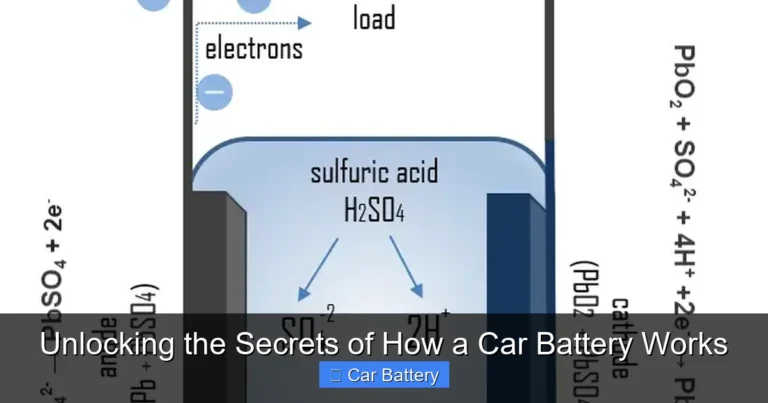
Battery Is Good but Car Won’t Start
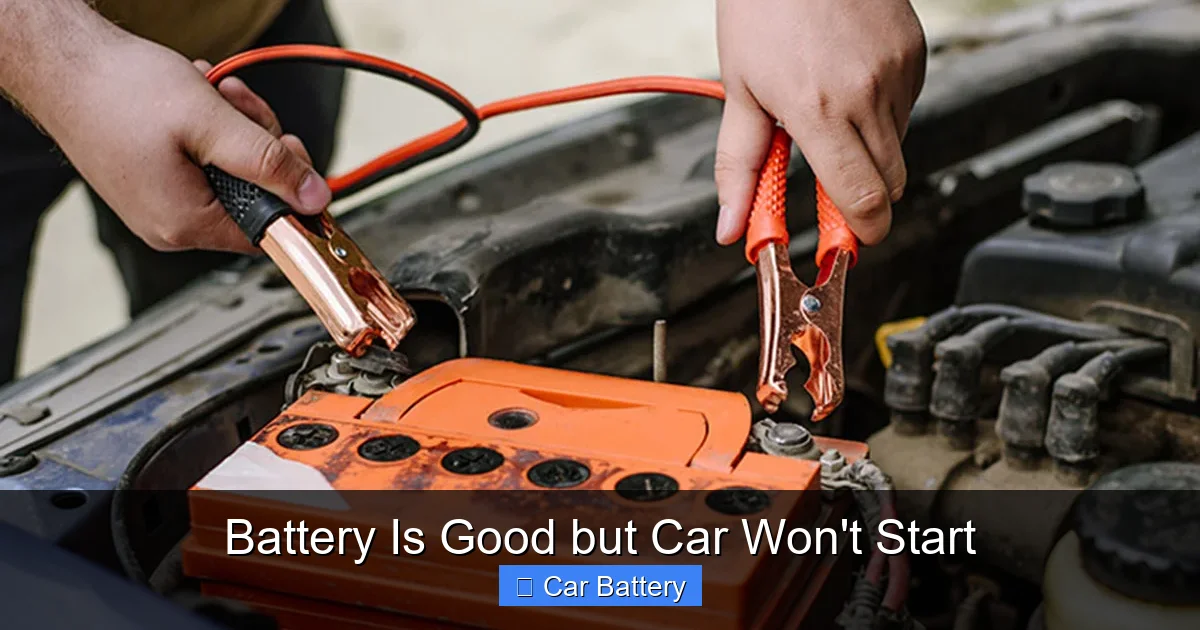
Even with a fully charged battery, your car might refuse to start due to issues like faulty starters, bad connections, or fuel system problems. This guide walks you through the most common reasons and how to troubleshoot them safely at home.
In This Article
- 1 Key Takeaways
- 2 📑 Table of Contents
- 3 Introduction: When Your Battery Is Fine—But Your Car Still Won’t Start
- 4 Why a Good Battery Isn’t Enough to Start Your Car
- 5 Top Causes When the Battery Is Good but Car Won’t Start
- 6 How to Diagnose the Problem Step by Step
- 7 When to Call a Mechanic
- 8 Prevention Tips to Avoid Future No-Starts
- 9 Conclusion: Don’t Blame the Battery—Look Deeper
- 10 Frequently Asked Questions
- 10.1 Can a car start with a bad battery but not with a good one?
- 10.2 Why does my car click but not start even with a full battery?
- 10.3 How can I tell if my fuel pump is bad?
- 10.4 Will a dead key fob prevent my car from starting?
- 10.5 Can cold weather cause a no-start even with a good battery?
- 10.6 Should I replace my battery if it tests good but the car won’t start?
Key Takeaways
- A good battery doesn’t guarantee a start: Electrical power alone isn’t enough—other components must work together.
- Check battery terminals first: Corrosion or loose cables can prevent power from reaching the starter.
- The starter motor may be faulty: A clicking sound often points to a failed starter even with a strong battery.
- Fuel delivery issues are common: No fuel pressure or a bad fuel pump can leave your engine cranking but not starting.
- Ignition system failures matter: Worn spark plugs or a failed ignition coil can stop combustion despite a healthy battery.
- Security systems can interfere: Anti-theft features may disable starting if the key fob isn’t recognized.
- Always test systematically: Rule out simple fixes before assuming major mechanical failure.
📑 Table of Contents
- Introduction: When Your Battery Is Fine—But Your Car Still Won’t Start
- Why a Good Battery Isn’t Enough to Start Your Car
- Top Causes When the Battery Is Good but Car Won’t Start
- How to Diagnose the Problem Step by Step
- When to Call a Mechanic
- Prevention Tips to Avoid Future No-Starts
- Conclusion: Don’t Blame the Battery—Look Deeper
Introduction: When Your Battery Is Fine—But Your Car Still Won’t Start
You turn the key, hear a solid *click*, and maybe even see the dashboard lights brighten—but the engine just won’t turn over. You’ve already tested the battery, and it’s showing 12.6 volts. So why won’t your car start?
It’s a frustrating scenario that leaves many drivers scratching their heads. After all, if the battery is good, shouldn’t everything else just work? Unfortunately, modern vehicles rely on a complex web of electrical, mechanical, and computerized systems—and a healthy battery is only the first piece of the puzzle.
Think of your car’s starting system like a relay race. The battery hands off power to the starter motor, which cranks the engine. But if any runner drops the baton—whether it’s a corroded cable, a failing ignition switch, or a clogged fuel filter—the race stalls before it even begins.
Why a Good Battery Isn’t Enough to Start Your Car
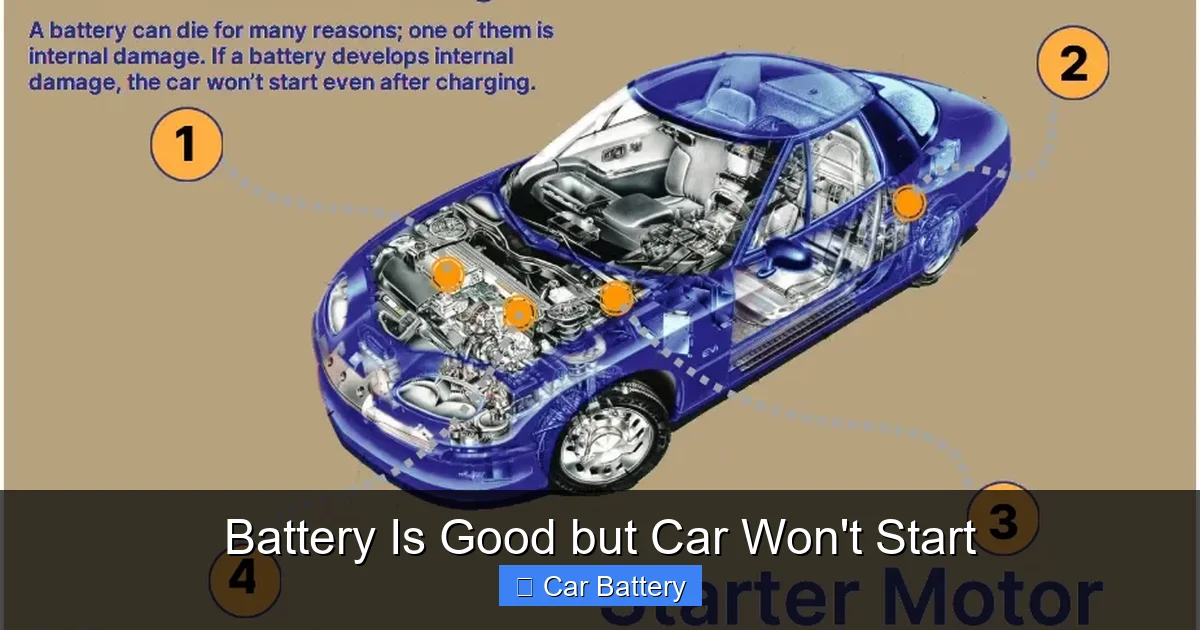
Visual guide about Battery Is Good but Car Won’t Start
Image source: autotechiq.com
Many people assume that if their battery has voltage, their car should start. But that’s a common misconception. A battery can show 12.4–12.6 volts on a multimeter and still be unable to deliver the high amperage needed to crank a cold engine—especially in winter. More importantly, even a perfect battery can’t overcome mechanical or electrical failures elsewhere in the system.
Your car’s starting process involves several critical steps:
– The ignition switch sends a signal to the starter relay.
– The relay activates the starter motor.
– The starter engages the flywheel to rotate the engine.
– Fuel injectors deliver gasoline (or diesel) into the cylinders.
– Spark plugs ignite the fuel-air mixture.
If any of these steps fail, your engine won’t start—no matter how strong your battery is. And because modern cars are packed with sensors and computers, diagnosing the issue requires more than just checking voltage.
Understanding Voltage vs. Cranking Power
Voltage measures electrical potential—like water pressure in a hose. But amperage (current) is the actual flow rate. A battery might read 12.6 volts at rest, but under load (like when cranking), that voltage can drop dramatically if the battery is weak or the connections are poor.
For example, a healthy battery should maintain at least 9.6 volts while cranking. If it drops below 8 volts, the starter may not get enough power to turn the engine over—even if the battery “tests good” on a simple voltmeter.
That’s why professional mechanics use a load tester. It simulates the real-world demand of starting and reveals hidden weaknesses. If you’re troubleshooting at home, try this quick test: turn on your headlights and attempt to start the car. If the lights dim significantly or go out, your battery may not be delivering enough current—despite showing good voltage.
Top Causes When the Battery Is Good but Car Won’t Start
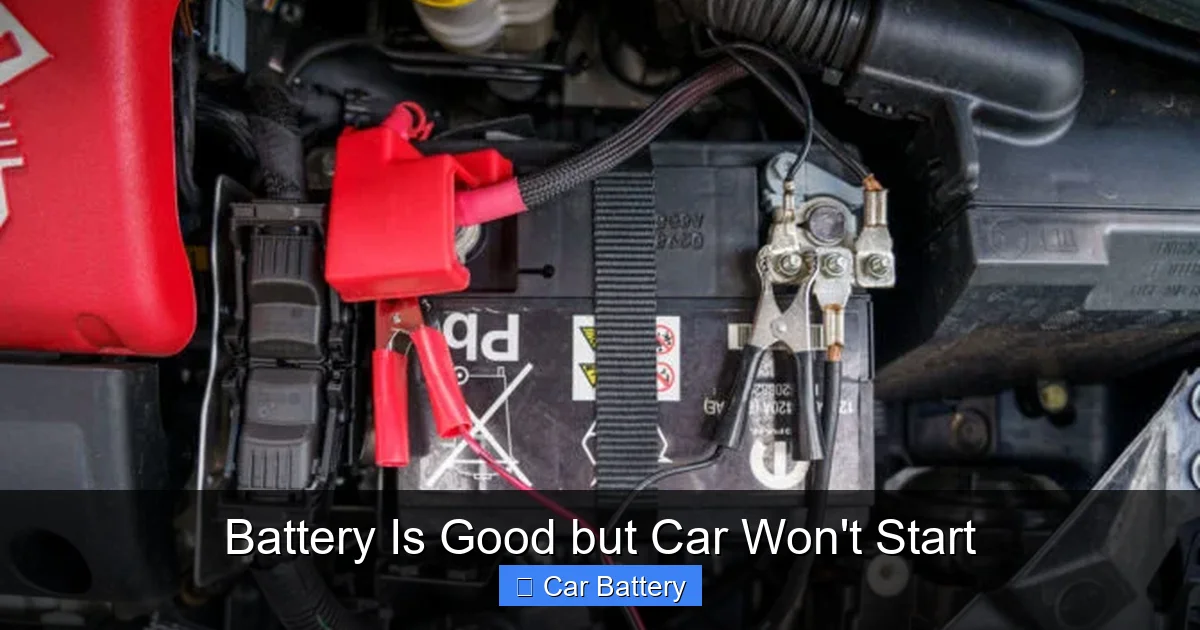
Visual guide about Battery Is Good but Car Won’t Start
Image source: motorverso.com
Let’s dive into the most common culprits behind this frustrating problem. We’ll go from simplest to most complex, so you can troubleshoot efficiently.
1. Corroded or Loose Battery Terminals
This is the #1 overlooked issue. Over time, battery terminals accumulate white, green, or blue corrosion—a mix of sulfuric acid and moisture. This crust acts like insulation, blocking the flow of electricity.
Even if your battery is fully charged, corroded terminals can prevent power from reaching the starter. The same goes for loose or wobbly connections. A terminal that looks tight might still have internal corrosion or a broken cable strand.
**How to fix it:**
– Turn off the engine and remove the key.
– Disconnect the negative (black) cable first, then the positive (red).
– Clean the terminals and cable ends with a wire brush or baking soda and water solution.
– Reconnect tightly, starting with the positive cable.
– Apply a thin layer of dielectric grease to prevent future corrosion.
Pro tip: If your terminals are heavily corroded or the cables feel brittle, consider replacing them. Damaged cables can’t carry the high current needed for starting.
2. Faulty Starter Motor or Solenoid
If you hear a single loud *click* when you turn the key—but the engine doesn’t crank—the starter is likely the problem. The solenoid (the part that engages the starter gear) may be receiving power but failing to move, or the motor itself could be burned out.
Sometimes, the starter will work intermittently. It might start one day and fail the next. This is often due to worn brushes or a failing armature inside the motor.
**How to test it:**
– Tap the starter gently with a hammer while someone tries to start the car. If it starts, the starter is likely failing.
– Use a multimeter to check for voltage at the starter when the key is turned. If voltage is present but the starter doesn’t spin, it’s probably bad.
Note: Never tap the starter while the engine is running—this can cause serious injury.
3. Bad Ignition Switch
The ignition switch doesn’t just send power to the starter—it also activates the fuel pump, ignition system, and accessories. If it’s worn or damaged, it may not complete the circuit needed to start the engine.
Symptoms include:
– Dashboard lights flickering or going out when turning the key.
– No sound at all when turning the key (not even a click).
– Accessories working but engine not cranking.
**How to check:**
– Try jiggling the key while turning it. If the car starts after wiggling, the ignition switch may be loose or worn.
– Use a test light to check for power at the starter relay when the key is turned to “start.” No power? The switch could be the issue.
Replacing an ignition switch varies by vehicle, but it’s often located behind the steering column. If you’re not comfortable with electrical work, consult a mechanic.
4. Fuel System Problems
Even with a strong battery and working starter, your engine needs fuel to run. If the fuel pump, filter, or injectors aren’t working, the engine will crank but not start.
Common signs:
– Engine cranks normally but doesn’t fire.
– You hear a whining noise from the fuel tank (indicating a struggling pump).
– The car starts briefly then dies.
**How to diagnose:**
– Listen for the fuel pump priming when you turn the key to “on” (before starting). You should hear a faint hum from the rear of the car for 2–3 seconds.
– Check fuel pressure with a gauge (requires a mechanic or DIY kit).
– Inspect the fuel filter—clogged filters restrict flow and can prevent starting.
If your car has over 60,000 miles and you’ve never replaced the fuel filter, it’s worth checking. A clogged filter starves the engine of fuel, especially under load.
5. Ignition System Failures
Spark plugs, ignition coils, and wires deliver the spark needed to ignite the fuel. If any of these components fail, combustion won’t happen—even with a perfect battery and strong cranking.
Symptoms:
– Engine cranks but doesn’t start.
– Misfires or rough running if it does start.
– Check Engine Light may be on.
**How to check:**
– Remove a spark plug and inspect it. Look for fouling, cracks, or excessive wear.
– Use a spark tester to see if the plug is firing when cranking.
– Swap ignition coils between cylinders (if your car has coil-on-plug) to see if the problem moves.
Worn spark plugs are a common issue after 30,000–100,000 miles, depending on the type. Platinum and iridium plugs last longer but can still fail.
6. Security or Immobilizer System Issues
Modern cars have anti-theft systems that prevent starting unless the correct key is detected. If the immobilizer doesn’t recognize your key fob, it will disable the fuel pump or ignition system—even if the battery is fine.
Symptoms:
– Dashboard shows a flashing security light.
– Car cranks but doesn’t start.
– Key fob battery is dead or weak.
**How to fix:**
– Replace the key fob battery (usually a small coin cell like CR2032).
– Try the spare key if you have one.
– Some cars have a manual override—check your owner’s manual for a “valet mode” or reset procedure.
If the immobilizer is malfunctioning, a professional scan tool may be needed to reset or reprogram the system.
How to Diagnose the Problem Step by Step
Visual guide about Battery Is Good but Car Won’t Start
Image source: rxmechanic.com
When your battery is good but the car won’t start, a systematic approach saves time and money. Follow this checklist:
1. **Listen carefully:**
– No sound? Could be ignition switch or battery connection.
– Clicking? Likely starter or solenoid.
– Cranking but no start? Check fuel, spark, or immobilizer.
2. **Check battery connections:**
Clean and tighten terminals. Look for corrosion or frayed cables.
3. **Test the starter:**
Tap it gently. Check for voltage at the starter terminal when cranking.
4. **Listen for the fuel pump:**
Turn the key to “on” and listen for a hum from the rear.
5. **Inspect spark plugs:**
Remove one and check for spark while cranking.
6. **Check the immobilizer light:**
A flashing security icon means the system may be blocking start.
7. **Scan for trouble codes:**
Even if the Check Engine Light isn’t on, a code reader can reveal hidden issues.
DIY Tools You’ll Need
You don’t need a full garage to diagnose these issues. Here are a few affordable tools:
– **Multimeter:** Tests voltage, continuity, and resistance.
– **Test light:** Quick way to check for power at connectors.
– **Spark tester:** Confirms if spark plugs are firing.
– **OBD2 scanner:** Reads diagnostic codes from your car’s computer.
Many auto parts stores lend or rent these tools for free with a deposit.
When to Call a Mechanic
While many of these issues can be fixed at home, some require professional help. Call a mechanic if:
– You’ve ruled out battery, connections, and starter, but the car still won’t start.
– You suspect an immobilizer or ECU (engine control unit) problem.
– You’re uncomfortable working with electrical systems or fuel lines.
– The car starts intermittently or stalls after starting.
Modern vehicles are complex, and misdiagnosis can lead to unnecessary repairs. A professional scan tool can pinpoint issues that basic tests miss.
Prevention Tips to Avoid Future No-Starts
An ounce of prevention is worth a pound of cure. Here’s how to keep your car starting reliably:
– **Clean battery terminals every 6–12 months.**
– **Replace the battery every 4–6 years**, even if it seems fine.
– **Use a battery tender** if you don’t drive often.
– **Replace spark plugs and fuel filter** according to your maintenance schedule.
– **Keep spare key fob batteries** in your glove box.
– **Park in a garage or use a block heater** in cold climates.
Regular maintenance reduces the chance of surprise breakdowns and extends the life of your vehicle.
Conclusion: Don’t Blame the Battery—Look Deeper
Just because your battery is good doesn’t mean your car will start. From corroded terminals to failed starters and fuel pumps, many components must work together for a successful ignition. By understanding the full starting system and troubleshooting methodically, you can often solve the problem yourself—or at least know what to tell your mechanic.
Remember: a strong battery is essential, but it’s only the beginning. The real magic happens when power flows smoothly through clean connections, a healthy starter, and a properly functioning engine. So next time your car refuses to start, don’t assume the battery is at fault. Look deeper—you might be surprised what you find.
Frequently Asked Questions
Can a car start with a bad battery but not with a good one?
No—if the battery is truly good (holding voltage and delivering current), it should support starting. However, intermittent issues like loose cables or a failing starter can make it seem like the battery is the problem when it’s not.
Why does my car click but not start even with a full battery?
A single loud click usually means the starter solenoid is receiving power but the motor isn’t engaging. This points to a faulty starter, bad ground connection, or internal starter failure.
How can I tell if my fuel pump is bad?
Listen for a humming sound from the fuel tank when you turn the key to “on.” No sound? The pump may be dead. Also, check fuel pressure with a gauge or scan for related trouble codes.
Will a dead key fob prevent my car from starting?
Yes, especially in cars with push-button start. A weak fob battery can prevent the immobilizer from recognizing the key, blocking fuel or ignition even if the car battery is strong.
Can cold weather cause a no-start even with a good battery?
Absolutely. Cold thickens engine oil and reduces battery efficiency. Even a healthy battery may struggle to deliver enough cranking amps in freezing temperatures.
Should I replace my battery if it tests good but the car won’t start?
Not necessarily. Only replace the battery if a load test confirms it can’t hold voltage under cranking demand. Most no-starts with a “good” battery are due to other components.