At What Speed Does the Toyota Pre-collision System Work?

Contents
- 1 Key Takeaways
- 2 📑 Table of Contents
- 3 Understanding the Toyota Pre-Collision System: More Than Just a Brake
- 4 The Critical Question: At What Speed Does It Work?
- 5 Factors That Influence PCS Performance at Different Speeds
- 6 Comparing Toyota PCS with Other Manufacturers’ Systems
- 7 Practical Tips for Drivers: Maximizing PCS Effectiveness
- 8 The Future of Collision Avoidance: What’s Next for Toyota?
- 9 Conclusion: A Powerful Ally, Not a Replacement
- 10 Frequently Asked Questions



The Toyota Pre-Collision System (PCS) is designed to operate across a wide speed range, typically from very low speeds up to approximately 85 mph, but its effectiveness and the type of interventions it provides change significantly depending on your velocity. At lower city speeds, it can often prevent collisions entirely with automatic braking, while at higher highway speeds, its primary role shifts to mitigating the severity of an impact. Understanding these speed-dependent behaviors is crucial for using the system as a helpful aid, not a replacement for attentive driving.
Key Takeaways
- PCS has a broad operational speed range: The system is generally active from a few miles per hour up to the vehicle’s maximum speed, often around 85 mph, but its capabilities differ greatly between low and high speeds.
- Low-speed focus is collision prevention: At city speeds (typically under 30-40 mph), PCS can detect stationary or slow-moving objects and apply full automatic braking to avoid or significantly reduce a crash.
- High-speed focus is impact mitigation: At highway speeds, the system’s automatic braking may not always prevent a collision due to physics and reaction times, but it will always activate to reduce the force of impact and improve occupant safety.
- Relative speed is the critical factor: PCS reacts to the *closing speed* between your vehicle and a detected object, not just your speedometer reading. A slower-moving car ahead at 70 mph presents a different challenge than a stopped car.
- Performance is environment-dependent: Heavy rain, fog, snow, or a dirty front grille/camera can severely limit the system’s detection range and effectiveness at any speed, making clean sensors and cautious driving essential.
- Driver monitoring is always required: The system is a “collision *mitigation*” aid, not an autopilot. You must remain alert, keep your hands on the wheel, and be prepared to intervene at all times, especially at higher speeds.
📑 Table of Contents
- Understanding the Toyota Pre-Collision System: More Than Just a Brake
- The Critical Question: At What Speed Does It Work?
- Factors That Influence PCS Performance at Different Speeds
- Comparing Toyota PCS with Other Manufacturers’ Systems
- Practical Tips for Drivers: Maximizing PCS Effectiveness
- The Future of Collision Avoidance: What’s Next for Toyota?
- Conclusion: A Powerful Ally, Not a Replacement
Understanding the Toyota Pre-Collision System: More Than Just a Brake
Let’s talk about one of the most important safety features in your Toyota. It’s not airbags or seatbelts—though those are vital—it’s the Pre-Collision System, or PCS. This tech acts like an extra set of alert eyes on the road. Its main job? To warn you of a potential crash and, if you don’t react in time, to hit the brakes itself. But a question we get all the time is: at what speed does this life-saving system actually work? The answer isn’t a single number, and understanding the “why” behind it is key to using it wisely and staying safe.
Think of PCS as a smart, attentive co-pilot who’s always watching the road ahead. It uses a combination of radar (usually mounted behind the front grille) and a camera (typically behind the rearview mirror) to scan the environment. This duo can detect vehicles, pedestrians, and in some newer models, even bicyclists. The system’s computer constantly calculates the distance to these objects and your vehicle’s speed to determine if a collision is likely. If it senses you’re getting too close too fast, it takes action in stages. But here’s the crucial part: the physics of stopping a car change dramatically as your speed increases. A system that can stop your Corolla from hitting a stopped car at 25 mph might not be able to prevent a crash at 65 mph, simply because the distance needed to stop is much, much longer. This fundamental law of physics shapes exactly how and when PCS intervenes.
The Role of Sensors and Algorithms
To grasp the speed limits, you need to know what the system is “seeing.” The radar is great at measuring distance and relative speed, even in poor weather. The camera identifies shapes and classifies objects (car vs. person). They work together, feeding data to a processor that runs incredibly complex algorithms. These algorithms predict where objects will be in the next few seconds based on their current path and speed. At 20 mph, your car covers about 30 feet per second. The system has maybe 1.5 seconds to decide and act. At 70 mph, you’re covering over 100 feet per second. The decision window shrinks, and the required braking force skyrockets. This is why the system’s behavior is tailored to different speed zones.
How the System Processes Information
The process is a rapid cascade. First, a visual alert (like a flashing icon on the dash or heads-up display) and an audible chime get your attention. If you don’t begin braking, the system may apply light brake pressure to prompt a response—this is the “pre-crash brake assist.” Finally, if a collision is still imminent, it applies maximum automatic braking. The timing and intensity of each step are calibrated for your current speed. At low speeds, the system might have time for multiple warnings before full braking. At high speeds, the progression from warning to full brake can happen in a fraction of a second because there’s less time to spare.
The Critical Question: At What Speed Does It Work?
So, let’s get to the numbers. Toyota doesn’t publish one universal “operational speed” because it varies by model year and specific system generation (Toyota Safety Sense 2.0, 3.0, etc.). However, we can define clear operational ranges and, more importantly, explain what the system *does* within those ranges.
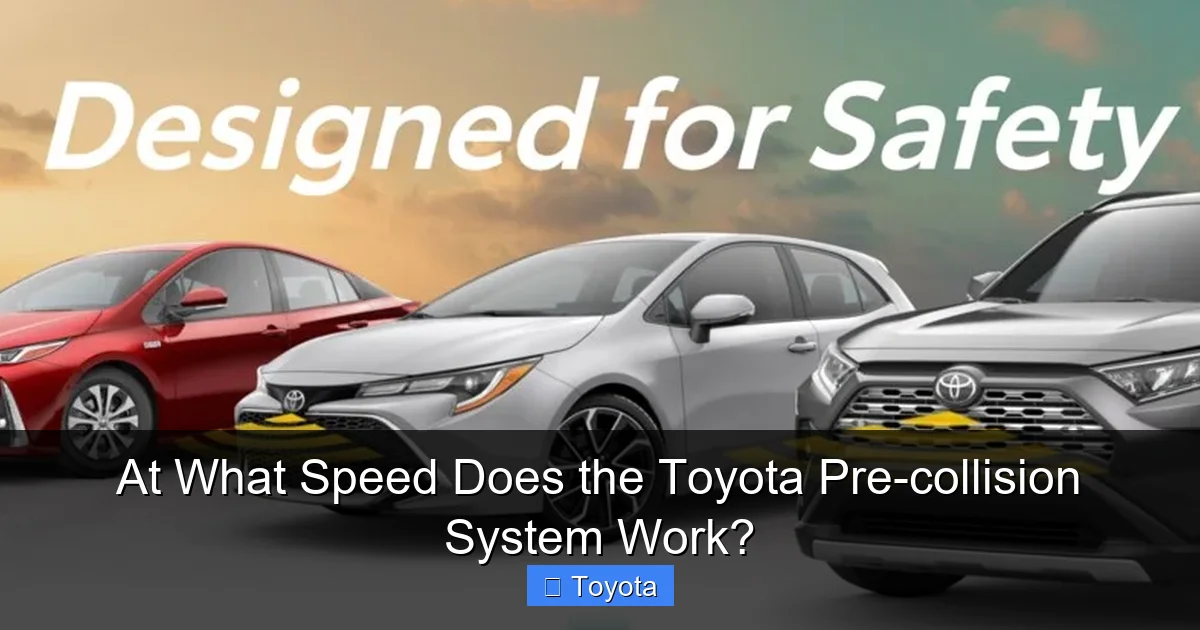
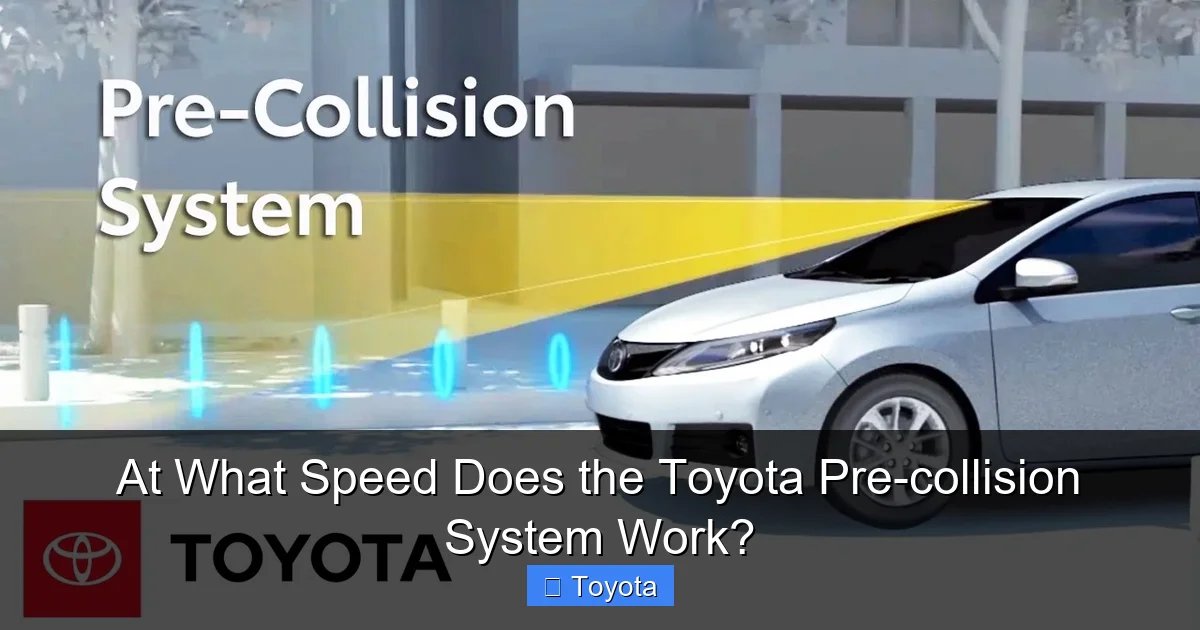
Visual guide about At What Speed Does the Toyota Pre-collision System Work?
Image source: pictures.dealer.com
Low-Speed Operations (Typically Under 30-40 mph)
This is where PCS truly shines as a collision *prevention* system. In city traffic, stop-and-go situations, or parking lots, the system is optimized to stop the car completely if you’re not paying attention. For example, if you’re following a car at 25 mph and it suddenly brakes for a stalled vehicle, PCS can detect the stopped car ahead and apply full braking before you even react. The closing speed is manageable, and the vehicle’s braking system has the physical capability to halt the car in the available distance. In many real-world tests, PCS has successfully avoided low-speed rear-end collisions that are so common in urban driving. It’s here that the system can feel almost like magic, preventing a fender-bender you didn’t see coming.
Medium-Speed Range (30 mph to 60 mph)
As speeds increase, the system’s primary goal subtly shifts from “avoid” to “mitigate.” In the 30-60 mph band—think suburban roads or the slower lanes of a highway—PCS is still very active. It will warn you and brake automatically. Whether it can *prevent* a collision depends on several factors: the speed of the object ahead, the road surface (dry asphalt vs. wet pavement), and the precise timing. If a car 100 feet ahead slams on its brakes at 50 mph, PCS has a fighting chance to reduce speed enough to avoid a crash or at least drastically lessen its severity. The automatic braking in this range is firm and immediate, designed to maximize deceleration.
High-Speed Capabilities (60 mph and Above)
On the open highway, the laws of physics become the system’s biggest challenge. At 70 mph, your vehicle travels over 100 feet every second. If a tractor-trailer swerves into your lane 150 feet ahead, even a human’s best reaction time and a powerful braking system might not stop you in time. This is where PCS transitions fully into an “impact mitigation” system. It will absolutely activate with maximum braking force. However, its main benefit at these velocities is not necessarily preventing the collision entirely, but reducing your speed *at the moment of impact*. Hitting a stalled car at 50 mph is far less severe than hitting it at 70 mph. The system’s automatic braking can shave crucial miles per hour off your speed, which directly translates to a significant reduction in the force of the crash and a better chance for safety systems like seatbelts and airbags to do their job effectively. You can learn more about the core technology behind these decisions by reading our detailed explanation of how the Toyota Pre-Collision System works.
The Importance of Relative Speed
This is a key nuance. Your speedometer isn’t the only number that matters. PCS cares about the *closing speed*—how fast you are approaching the object in front of you. If you’re cruising at 75 mph and the car you’re following is also going 75 mph, your relative speed is near zero, and PCS will likely stay quiet. If that lead car suddenly slows to 50 mph, your closing speed jumps to 25 mph, and that’s what triggers the system. Conversely, if you’re going 30 mph and approach a stopped car, your closing speed is 30 mph, which is a very different scenario than the highway example, even though your speedometer shows the same number. The system is engineered to understand this dynamic.
Factors That Influence PCS Performance at Different Speeds
Knowing the speed ranges is just the start. The system’s real-world effectiveness at any speed is influenced by a host of other conditions. A clean, well-calibrated system in ideal weather on a dry road will perform at its peak. Introduce variables, and its detection range and reaction time can degrade.
Visual guide about At What Speed Does the Toyota Pre-collision System Work?
Image source: pictures.dealer.com
Weather and Environmental Conditions
Radar waves can penetrate light rain and fog better than camera images, but heavy precipitation can still scatter signals. The camera, which relies on visual contrast, is most vulnerable. A dirty front grille can block radar. A muddy or snow-covered front camera lens is essentially blind. In a downpour or thick fog, the system’s effective detection range might shrink from, say, 300 feet to under 100 feet. At highway speeds, that lost 200 feet is the difference between a safe stop and a collision. This is why you should regularly clean the area around your front emblem and windshield camera. For insights into how specific Toyota models handle challenging conditions, such as engaging snow mode on a Highlander, you can explore our guide on what the snow button does on a Toyota Highlander.
Road Surface and Visibility
Black ice, standing water, or loose gravel don’t just affect your tires; they affect the system’s assumptions. The algorithms are tuned for typical friction levels. On a slippery surface, the maximum braking force the system can safely apply is less than on dry pavement. Therefore, at a given speed on ice, the system might not be able to stop in the same distance as on dry road, potentially leading to a collision it could have otherwise avoided. Sharp curves or hills can also temporarily obscure the camera’s view of the road ahead, creating a momentary blind spot.
Vehicle Maintenance and Sensor Calibration
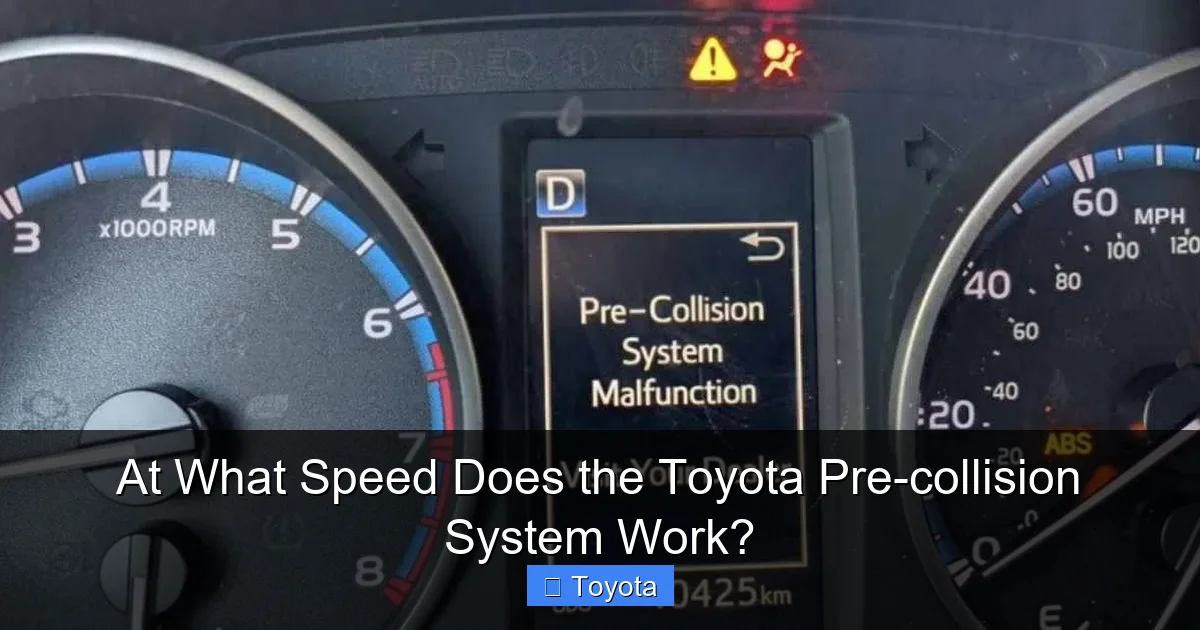
Your PCS is a precision instrument. A misaligned front bumper from even a minor fender-bender can throw off the radar’s aim. A windshield replacement must be done with a camera-compatible glass and often requires recalibration by a Toyota technician. If your system warning light is on, it means a sensor is malfunctioning or misaligned, and the system may be disabled. Regular service checks that include a diagnostic of safety systems are crucial. You should also be aware of how to manage the system; for instance, there are valid reasons to temporarily disable it, which you can read about in our article on how to turn off the Toyota Pre-Collision System.
Comparing Toyota PCS with Other Manufacturers’ Systems
While every major automaker has a version of this technology, their implementations and performance envelopes can differ. Toyota’s system is known for being conservative and reliable, but it’s useful to see the landscape.
Visual guide about At What Speed Does the Toyota Pre-collision System Work?
Image source: trucksauthority.com
Honda Sensing vs. Toyota PCS
Honda’s suite, called Honda Sensing, uses a similar radar-and-camera combo. In many independent tests, their systems perform comparably to Toyota’s in low- and medium-speed scenarios. Some reviewers note Honda’s system can be slightly more aggressive in its braking interventions at higher speeds, but the fundamental physics mean both systems face the same mitigation-vs.-prevention challenge above 60 mph. The user interface and warning chimes are different, but the core function is analogous.
Subaru EyeSight: A Different Approach
Subaru’s EyeSight system famously relies on a dual-camera stereo vision setup, much like human binocular vision, without a forward-facing radar (on most models). This gives it excellent depth perception for identifying objects and their relative speed, which some tests show provides very accurate braking in stop-and-go traffic. However, its performance in very poor weather (heavy fog, blizzard) can be more impacted than a radar-aided system because cameras struggle more with obscured visibility. Toyota’s hybrid sensor approach aims to balance the strengths of both technologies.
Practical Tips for Drivers: Maximizing PCS Effectiveness
Knowing the tech is one thing; using it correctly is another. The Pre-Collision System is a tool, and like any tool, it works best when used properly.
Knowing When to Rely on PCS (and When Not To)
The golden rule: Never test the system. Do not assume it will stop the car for you. Use it as a backup. At low speeds, you might be tempted to zone out in traffic, thinking PCS has your back. This is dangerous because the system has limitations—it may not detect small children, certain roadside objects, or a vehicle that is partially obscured. At high speeds, your primary focus should always be on scanning the road far ahead, anticipating hazards, and maintaining a safe following distance using the “three-second rule” (or four seconds in bad weather). The PCS is your last line of defense, not your primary one.
Regular Maintenance for Optimal Performance
Treat your front grille and windshield like your own eyes. Keep them clean. During car washes, pay attention to the area behind the front Toyota emblem and the upper part of the windshield where the camera sits. If you notice the “Pre-Collision System” indicator light on your dash is yellow or red, or if you get a message that the system is unavailable, get it checked immediately. This often means a sensor is dirty or needs alignment. Don’t ignore these warnings; your safety margin is reduced.
Understanding System Limitations and Alerts
The system is not omnipotent. It is primarily designed for detecting vehicles and large pedestrians directly in your lane. It may not work as well:
- When making sharp turns.
- On winding roads where the road ahead is not visible.
- With certain low-riding or unusual-shaped vehicles.
- In very low light conditions (though many systems have some night capability).
- If the radar is obstructed by large bumper stickers, metal license plate frames, or damage.
Your owner’s manual will have the most complete list for your specific model year. Familiarize yourself with the audible and visual warnings so you know exactly what the system is telling you in a critical moment.
The Future of Collision Avoidance: What’s Next for Toyota?
The systems in today’s Toyotas are remarkable, but they are just the beginning. The next evolution is already on the horizon.
Next-Generation Sensors and AI
Future systems will use higher-resolution cameras, more powerful radar, and even lidar (light detection and ranging) in some prototypes. The fusion of this sensor data will create a more detailed, 360-degree “mental map” of the vehicle’s surroundings. Artificial intelligence will play a bigger role, allowing the system to better predict the *intent* of other road users—like a pedestrian stepping off the curb or a car making an un-signaled lane change—much earlier.
Integration with Autonomous Driving Technologies
PCS is a foundational component of Toyota’s “Guardian” approach to autonomy, where the car’s systems act as a co-pilot to protect the driver. As Toyota moves toward more advanced driver-assist features, the Pre-Collision System will become even more seamless, potentially combining with steering and acceleration control to not just brake, but also steer around an obstacle if possible, all while keeping the driver fully in the loop. The ultimate goal is a “zero casualty” future, and PCS is a critical step on that path.
Conclusion: A Powerful Ally, Not a Replacement
So, at what speed does the Toyota Pre-Collision System work? The practical answer is: from a crawl up to highway speeds and beyond. But the more important answer is that its *method* changes with speed. In the city, it’s a collision avoider. On the highway, it’s a crash mitigator. It is a sophisticated, speed-sensitive guardian that uses physics and technology to give you a vital edge. However, it is not infallible. Its performance can be hampered by weather, road conditions, and sensor cleanliness. Its most critical limitation is that it cannot replace an alert, engaged human driver. Your eyes, your judgment, and your hands on the wheel are the primary safety systems. Treat the Pre-Collision System as the brilliant backup singer to your lead vocals—it can harmonize and save the show if you falter, but the performance is always on you. Stay aware, maintain your vehicle, and drive safely.
Frequently Asked Questions
Does the Toyota Pre-Collision System work at night?
Yes, the system is designed to function at night. The camera component uses a special lens and processing to enhance visibility in low light. However, its performance can be reduced in very dark conditions, especially if there are no streetlights or headlights from other vehicles to illuminate objects. The radar is unaffected by darkness.
What happens if the Pre-Collision System activates at high speed and brakes hard?
If the system applies maximum automatic braking at high speed, you will feel a very firm, rapid deceleration. The brake lights will flash, and you may hear the ABS (Anti-lock Braking System) pulsing. The seatbelts may tighten. This is the system doing its job to mitigate the crash. You should immediately steer if possible and safe, and be prepared for a potential impact.
Can the system mistake a shadow or a bridge for a stopped vehicle?
Modern systems are very good at filtering out false targets, but it can happen, especially in unusual lighting conditions (e.g., a strong shadow cast by an overpass that looks like a dark object on the road). If the system applies brakes for a perceived hazard you cannot see, you should take control and gently accelerate to disengage the braking, as the system will release if you press the gas pedal.
Will PCS work if I’m not wearing my seatbelt?
The Pre-Collision System will still activate and brake regardless of seatbelt status. However, for the system to be fully effective and for your safety, you must always wear your seatbelt. The system’s braking is only one part of crash protection; the seatbelt is essential for keeping you in position for airbags and preventing ejection.
Does the system detect motorcycles and bicycles?
Yes, newer generations of Toyota Safety Sense (specifically TSS 3.0) are designed to detect motorcycles and bicycles in certain situations. Detection capability can vary by model year and region. It generally works best when the two-wheeler is in your direct path and is of a standard size. Always remain extra vigilant for motorcycles and bicycles, as they can be more difficult to see.
What should I do if the Pre-Collision System warning light stays on?
A persistent warning light (usually a car icon with an exclamation mark or the words “PCS”) indicates a system malfunction or that a sensor is blocked. First, safely pull over and check the front grille and windshield camera area for dirt, snow, ice, or damage. Clean them carefully. If the light remains on after cleaning, or if you suspect damage, you should have the system diagnosed by a Toyota dealer or certified technician as soon as possible. Do not rely on the system until it is repaired.