At What Mileage Should a Timing Belt Be Replaced on a Toyota Camry?

Contents
- 1 Key Takeaways
- 2 📑 Table of Contents
- 3 The Critical Role of the Timing Belt in Your Toyota Camry
- 4 Timing Belt vs. Timing Chain: What’s Under Your Camry’s Hood?
- 5 Official Toyota Recommendations: When to Replace the Timing Belt
- 6 Symptoms of a Failing Timing Belt: Don’t Ignore the Warnings
- 7 The Domino Effect: What Happens When a Timing Belt Fails
- 8 Timing Belt Replacement: Process, Cost, and What to Expect
- 9 Pro Tips to Maximize Your Timing Belt’s Lifespan
- 10 Conclusion: Peace of Mind Through Proactive Maintenance
- 11 Frequently Asked Questions



The timing belt in your Toyota Camry is a critical component that synchronizes engine valves and pistons. Most Camry models with 4-cylinder engines require replacement every 60,000 to 100,000 miles, while some V6 models use timing chains that last the engine’s lifetime. Ignoring this maintenance can lead to catastrophic engine failure, especially in interference engines where pistons and valves collide. Always check your owner’s manual and watch for symptoms like ticking noises or poor performance.
Key Takeaways
- Mileage intervals vary by model year and engine type: 4-cylinder Camrys typically need a belt replacement every 60,000-100,000 miles, while many V6 models use a timing chain that often lasts the engine’s life.
- Interference vs. non-interference engines: Most Toyota Camry 4-cylinder engines are interference designs, meaning a broken belt causes severe piston and valve collision, leading to total engine failure.
- Replace related parts simultaneously: When replacing the timing belt, also change the water pump, tensioners, and pulleys to save on future labor costs and prevent related breakdowns.
- Warning signs are often subtle: Listen for ticking noises, watch for engine misfires, oil leaks near the timing cover, or poor performance—these can indicate belt wear before it fails.
- Professional replacement is strongly recommended: This is a complex, labor-intensive job. Incorrect installation can destroy your engine. Expect costs between $500 and $1,000+ depending on your model and location.
- Your owner’s manual is the ultimate authority: While general guidelines exist, always defer to the specific maintenance schedule for your exact Camry model year and trim.
- Preventive maintenance is key: Adhering to the replacement schedule is one of the most important things you can do to ensure your Camry’s longevity and avoid a costly engine rebuild.
📑 Table of Contents
- The Critical Role of the Timing Belt in Your Toyota Camry
- Timing Belt vs. Timing Chain: What’s Under Your Camry’s Hood?
- Official Toyota Recommendations: When to Replace the Timing Belt
- Symptoms of a Failing Timing Belt: Don’t Ignore the Warnings
- The Domino Effect: What Happens When a Timing Belt Fails
- Timing Belt Replacement: Process, Cost, and What to Expect
- Pro Tips to Maximize Your Timing Belt’s Lifespan
- Conclusion: Peace of Mind Through Proactive Maintenance
The Critical Role of the Timing Belt in Your Toyota Camry
Let’s talk about one of the most important, yet often overlooked, pieces of maintenance for your Toyota Camry: the timing belt. Think of it as the maestro of your engine’s internal orchestra. This notched rubber belt synchronizes the rotation of the crankshaft (which controls the pistons) and the camshaft (which controls the intake and exhaust valves). This precise timing is absolutely non-negotiable for your engine to run smoothly and efficiently.
In your Camry, this happens inside the engine cover, away from casual view. Because you can’t see it, it’s easy to forget it’s there—until it fails. When a timing belt is in good condition, it’s a silent workhorse. But when it wears out, stretches, or snaps, the results can be disastrous, especially in an interference engine design, which most Camry 4-cylinders are. In these engines, the pistons and valves share the same space in the cylinder. If the belt breaks, the valves stop moving while the pistons keep going, leading to a violent, expensive collision.
This article is your definitive guide. We’ll cut through the confusion about exactly when that belt needs to go, based on your specific Camry model. We’ll cover the differences between belts and chains, the telltale signs of a failing belt, the grim aftermath of a break, and what a proper replacement entails. Knowing this information isn’t just car care; it’s protecting your investment and avoiding a financial nightmare.
Timing Belt vs. Timing Chain: What’s Under Your Camry’s Hood?
Before we dive into mileage numbers, we must clarify a fundamental point: not all Toyota Camrys use a timing belt. The type of timing system depends heavily on the engine and model year. This is the first place people get confused.
Visual guide about At What Mileage Should a Timing Belt Be Replaced on a Toyota Camry?
Image source: i.ytimg.com
The Basics: Belt vs. Chain
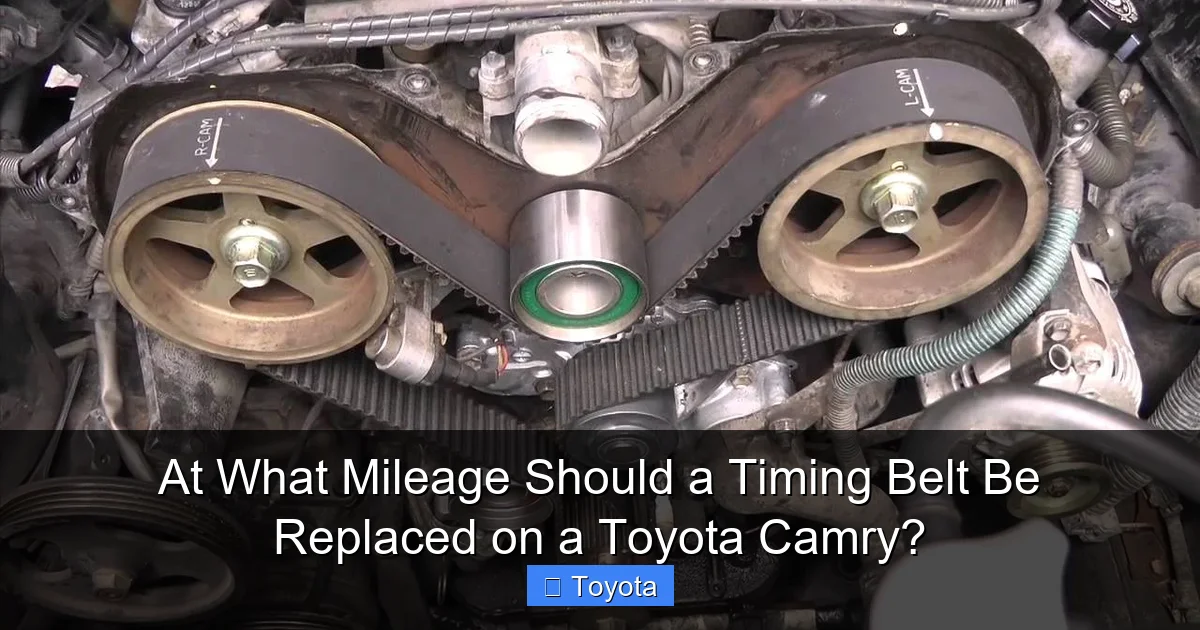
A timing belt is typically made of reinforced rubber with teeth that mesh with gears. It’s quieter and cheaper to produce but is a wear item that must be replaced at regular intervals. A timing chain, as the name suggests, is a metal chain, similar to a bicycle chain but much stronger. It’s designed to last the lifetime of the engine in most applications, though it can still stretch or wear over extremely high miles and may require attention.
Camry Engine History: A Breakdown by Generation
Here’s the practical breakdown for U.S.-market Toyota Camrys:
- 4-Cylinder Engines (Most Common): For decades, the 2.2L, 2.4L, and 2.5L 4-cylinder engines in the Camry used a timing belt. This changed significantly for the 2012 model year onward. Starting with the all-new seventh-generation Camry (2012-2017), Toyota switched the 2.5L 4-cylinder to a timing chain. Therefore, if you own a Camry from 2012 to 2017 with the standard 2.5L 4-cylinder, you likely have a chain, not a belt. The current eighth-generation Camry (2018+) continues with a timing chain for its 2.5L and 3.5L V6 engines.
- V6 Engines: The story is different here. Many V6 Camry models, particularly the 3.0L and 3.3L engines from the 1990s and early 2000s, used timing chains. However, some earlier V6 models did use belts. For the 3.5L V6 that became common in the 2000s and 2010s, Toyota almost universally used a timing chain. So, if your Camry has a V6, there’s a very high probability it has a timing chain that does not have a scheduled replacement interval.
Practical Example: A 2010 Toyota Camry with the 2.5L 4-cylinder engine has a timing belt. A 2015 Camry with the same 2.5L engine has a timing chain. A 2008 Camry with the 3.5L V6 has a timing chain. Always confirm for your specific vehicle.
So, how do you find out for sure? The simplest way is to open your owner’s manual. It will explicitly state the maintenance schedule for the timing belt or chain. You can also ask your Toyota dealer or a trusted mechanic to look at your engine. Visually, a chain is usually hidden behind a cover and you might see it if you remove the oil cap, while a belt is behind a separate, often plastic, timing cover. For comparison, many Toyota trucks like the Tundra have long used timing chains on their V8 engines; you can read more about which Toyota Tundra years have timing chains to see the broader trend in Toyota’s engineering choices.
Official Toyota Recommendations: When to Replace the Timing Belt
Now for the core question: at what mileage should you replace the timing belt on your Toyota Camry? The answer is not a single number. It’s a range based on your specific model year and engine. Toyota’s official recommendations have evolved slightly over the years, but the general principle holds.

Visual guide about At What Mileage Should a Timing Belt Be Replaced on a Toyota Camry?
Image source: autoowa.com
The Standard Interval: 60,000 to 100,000 Miles
For the vast majority of Camry models that use a timing belt (primarily 4-cylinder models from the mid-1990s through 2011), the manufacturer’s recommended replacement interval is every 60,000 miles or 5 years, whichever comes first. In later years, particularly for some 2002-2006 models with the 2.4L engine, Toyota extended this to every 90,000 miles or 6-7 years. For the 2007-2011 models with the 2.4L/2.5L, the interval is often every 100,000 miles or 7-10 years.
This “mileage or time” rule is crucial. Rubber degrades over time due to heat, oil contamination, and environmental factors, even if the car isn’t driven much. A 10-year-old belt with only 30,000 miles on it is still at risk of cracking and failure. Always adhere to the time component of the interval.
Model Year Guide (General Guidelines)
Here is a simplified reference. Your owner’s manual supersedes this information.
- 1992-2001 Camry (4-Cylinder): Replace every 60,000 miles / 5 years.
- 2002-2006 Camry (2.4L 4-Cylinder): Replace every 90,000 miles / 6 years.
- 2007-2011 Camry (2.4L/2.5L 4-Cylinder): Replace every 100,000 miles / 7-10 years.
- 2012+ Camry (2.5L 4-Cylinder & 3.5L V6): Uses a timing chain. No scheduled replacement. Inspect chain and components during major services.
- V6 Models (Pre-2012): Most use a timing chain. Verify with your manual, but typically no scheduled replacement.
If you’ve purchased a used Camry and don’t have the service history, treating a belt as overdue at 100,000 miles (for the later belt engines) is a very safe and common practice. It’s a classic case of “pay me now or pay me (a lot) more later.”
Symptoms of a Failing Timing Belt: Don’t Ignore the Warnings
A timing belt rarely fails completely without some advance warning. Catching these symptoms early can save you from a breakdown and a destroyed engine. Be proactive and listen to what your Camry is telling you.
Visual guide about At What Mileage Should a Timing Belt Be Replaced on a Toyota Camry?
Image source: i.ytimg.com
Auditory Clues: Ticking or Tapping Noises
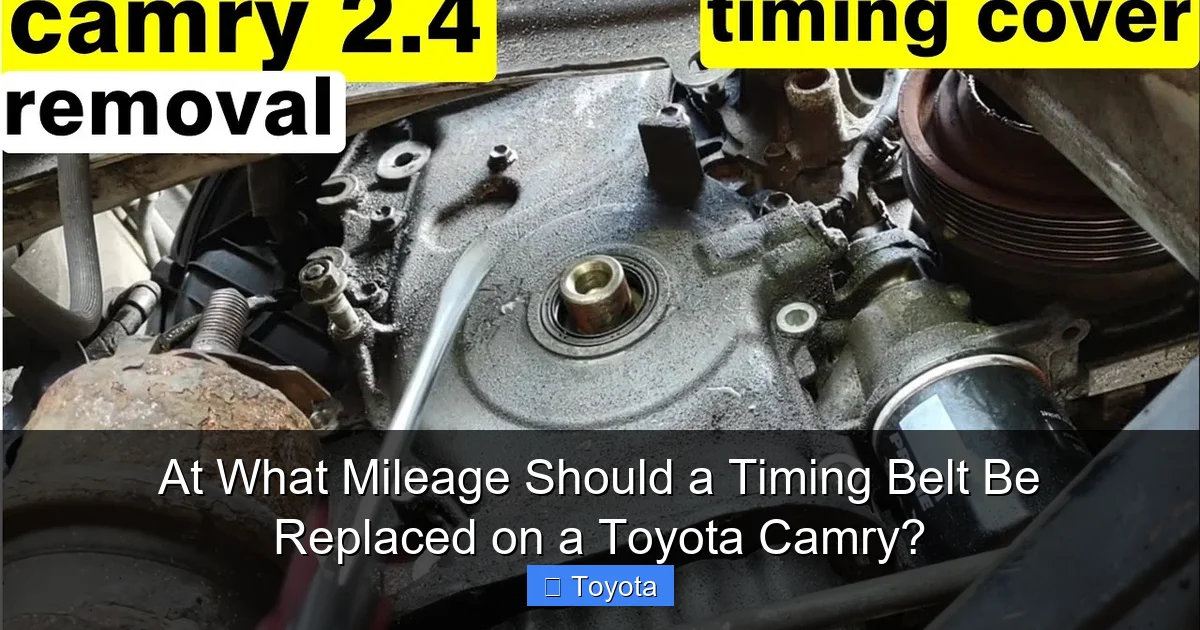
The most common early sign is a rhythmic ticking or tapping noise coming from the front of the engine (the timing cover area). This sound is often more pronounced when the engine is cold and may change with engine speed (RPM). It’s the sound of the belt’s teeth wearing down or a tensioner bearing starting to fail. If you hear this, get it inspected immediately. A similar sound can also come from a valve train issue, so a professional diagnosis is key.
Performance Issues and Misfires
As the belt stretches or the teeth wear, the precise timing between the crankshaft and camshaft becomes off—this is called “timing drift.” The engine’s computer (ECU) will detect this as misfires because the valves aren’t opening and closing at the exact right moment relative to the piston’s position. You might experience:
- Rough idle or engine vibration
- Loss of power, especially under acceleration
- Difficulty starting the engine
- Check engine light illumination (often with codes P0300-P0304 for random/multiple cylinder misfires)
While misfires can have many causes (spark plugs, coils), a worn timing belt is a serious possibility on high-mileage belt-driven engines.
Visual Inspection Findings
During a routine service, a mechanic should inspect the timing belt if accessible. Look for:
- Cracks: Visible cracks in the rubber, especially between the teeth.
- Worn or Missing Teeth: The teeth that grip the gears appear shrunken, rounded, or are completely missing.
- Glazing: The belt surface appears shiny and smooth, indicating it’s slipping.
- Oil or Coolant Contamination: Leaks from a nearby seal (like the camshaft seal) can degrade the belt material quickly.
- Fraying Edges: The belt’s reinforced cords are starting to show.
Any of these signs mean replacement is needed immediately, regardless of mileage. While you’re under there, it’s also a great time to check on other maintenance items. For instance, ensuring your Camry has the correct tire size and pressure is part of holistic vehicle care, but it’s unrelated to the timing belt itself.
The Domino Effect: What Happens When a Timing Belt Fails
This is the section that should motivate you to act. The consequences of a timing belt failure range from inconvenient to utterly catastrophic, and the difference hinges on one key factor: is your Camry’s engine an interference or non-interference design?
Interference Engine Failure: The Worst-Case Scenario
The vast majority of Toyota Camry 4-cylinder engines are interference engines. In this design, the pistons and valves occupy the same physical space in the cylinder at different times. The timing belt ensures they never meet. If the belt snaps, the camshaft stops instantly. The pistons, driven by the crankshaft’s momentum, continue moving up and down. At least one piston will slam into an open valve. The result is bent valves, broken valve stems, damaged pistons, and potentially a holed cylinder head or block. This is not a repair; it’s an engine rebuild or replacement. The cost can easily exceed $3,000-$5,000 or more, often making the car a total loss. This is the grim reality we must avoid.
Non-Interference Engine: A Softer Landing
In a non-interference (or “free-wheeling”) engine, the pistons and valves are designed so that even if the belt breaks, they cannot physically collide. The damage is typically limited to the belt itself and possibly the tensioner. The engine will simply stall and refuse to restart. While still a major inconvenience and requiring a belt replacement, it does not guarantee internal engine destruction. To our knowledge, most Camry 4-cylinders are not non-interference engines. Always verify your specific engine code. The V6 models with chains obviously cannot have this belt-break scenario.
Other Immediate Dangers
Even in a non-interference scenario, a broken belt while driving at highway speed creates an immediate loss of power steering and power brakes (both are engine-driven), making vehicle control extremely difficult and dangerous. You could be stranded in a hazardous location. The sudden stop can also cause other components to fail.
The bottom line is stark: for a belt-driven Camry 4-cylinder, timing belt failure is not an “if” but a “when.” The scheduled replacement is not optional maintenance; it’s mandatory insurance against a totaled engine. To understand the full scope of this failure, you can read our detailed explanation of what happens when a Toyota timing belt breaks, which covers the mechanical domino effect in greater detail.
Timing Belt Replacement: Process, Cost, and What to Expect
So you’ve determined your Camry needs a new timing belt. What’s next? This is one of the most labor-intensive repairs on a car, which drives the cost. It’s not a simple part swap.
The Labor-Intensive Reality
To access the timing belt, a mechanic must remove numerous engine components. This typically includes:
- Serpentine belt and accessories (alternator, power steering pump, A/C compressor)
- Timing belt cover(s)
- Often the harmonic balancer (crankshaft pulley)
- Coolant pump (if it’s driven by the timing belt—very common in Camrys)
- Various sensors and hoses in the way
The mechanic must then carefully align the crankshaft and camshaft using alignment pins or marks. This is the critical step. Getting the timing even a single tooth off will cause severe engine damage. They then replace the belt, tensioner, and idler pulleys, and often the water pump (since it’s right there and labor is already being paid). Everything is then reassembled and meticulously checked.
Because of this complexity, this is not a recommended DIY job for 99% of people. A mistake is catastrophic. Professional installation is a must.
Cost Breakdown: Parts and Labor
For a Toyota Camry timing belt replacement, you can expect the following cost ranges at a reputable independent shop or dealership:
- Total Cost: $500 – $1,200+
- Parts (OEM or quality aftermarket): $150 – $400. This includes the belt, tensioner, idler pulley(s), and often the water pump. Using genuine Toyota parts is recommended for durability.
- Labor: $350 – $800. This is the bulk of the cost, reflecting 4-8 hours of skilled work. Labor rates vary dramatically by region and shop type (dealer vs. independent).
If your water pump is driven by the timing belt (which it is on almost all belt-driven Camrys), you must replace it at the same time. The labor to do it separately later would be nearly the same cost as doing it now, so it’s a classic “pay a little more now to save a lot later” scenario.
DIY Considerations: A Word of Extreme Caution
If you are an expert mechanic with years of experience and the specific service manual for your Camry, you might consider this DIY. For everyone else, the risk is far too high. The tools required (torque wrenches, alignment tools, pulley holders) are specialized. The process has zero room for error. One missed torque specification or a misaligned mark can mean the difference between a successful repair and a $4,000 engine replacement. The potential savings are not worth the gamble.
Pro Tips to Maximize Your Timing Belt’s Lifespan
While you’ll eventually need to replace the belt on a schedule, there are things you can do to help it last as long as possible and avoid premature failure.
Stick to the Schedule, No Matter What
This cannot be stressed enough. The 60k/90k/100k mile intervals are maximums. If your manual says 90,000 miles, don’t push it to 110,000. Replace it at or before the interval. Also, obey the time limit (e.g., 7 years). Rubber degrades.
Address Oil and Coolant Leaks Immediately
Oil and coolant are the enemies of rubber. If you notice any leaks around the valve cover gasket, camshaft seals, or water pump (all common in aging Camrys), get them repaired. These fluids can contaminate the timing belt, causing it to soften, swell, and degrade prematurely.
Ensure Proper Engine Cooling
An overheating engine creates excessive heat in the timing cover area, accelerating belt deterioration. Maintain your cooling system: replace coolant on schedule, ensure the thermostat works, and keep the radiator clear of debris. A failing water pump (which is often replaced with the belt) can also cause overheating.
Use Quality Parts for Replacement
When the time comes, don’t cheap out. Use a high-quality belt from a reputable brand (Gates, Aisin, Continental, or OEM Toyota). The same goes for the tensioner and idler pulleys—these are wear items that can fail even if the belt is new. A cheap tensioner can fail in a year and take the new belt with it. This is a place where investing in quality parts saves money and heartache long-term.
Consider Your Driving Conditions
If your Camry is subjected to extreme conditions—very hot climates, frequent short trips where the engine never fully warms up (causing condensation), or dusty environments—the belt may age faster. In such cases, consider replacing it at the lower end of the mileage interval (e.g., 60k miles for a 90k interval car). Regular, comprehensive maintenance is your best defense. While you’re focusing on the engine, don’t forget other critical systems. For example, knowing how long brakes should last on your Toyota helps you budget for all upcoming maintenance, not just the timing belt.
Conclusion: Peace of Mind Through Proactive Maintenance
Your Toyota Camry is renowned for its reliability, but that reputation is built on consistent, proper maintenance. The timing belt is the linchpin of your engine’s health. For belt-equipped 4-cylinder models, respecting the 60,000 to 100,000-mile replacement interval (and the time limit) is the single most important thing you can do to prevent a $5,000+ disaster. It’s a scheduled expense, not a surprise one. For chain-equipped models (mostly 2012+ 4-cylinders and most V6s), you have one less major worry, but you should still listen for unusual noises and have the chain system inspected during major services.
Don’t guess. Open your owner’s manual today and find the exact recommendation for your specific VIN. If the history is unknown, treat it as overdue. Get quotes from a couple of trusted shops. Budget for the $500-$1,000 expense as a necessary part of long-term ownership. By taking care of this critical component, you ensure your Camry will continue to provide safe, reliable transportation for hundreds of thousands of miles, turning a potential financial sinkhole into just another line item in your maintenance log. That’s the true value of knowing your mileage and acting accordingly.
Frequently Asked Questions
What happens if I don’t replace the timing belt on my Camry?
On a 4-cylinder Camry with an interference engine (most are), the belt will eventually break, causing the pistons to collide with open valves. This destroys the engine, requiring a costly rebuild or replacement that often exceeds the car’s value.
Can I replace the timing belt myself to save money?
We strongly advise against it unless you are a professional mechanic. The job requires specialized tools and precise alignment. A single mistake can destroy your engine, making the potential savings negligible compared to the risk of catastrophic failure.
How long does a timing belt replacement take?
A professional mechanic will typically need between 4 and 8 hours to complete the job properly, as it involves removing many components to access the belt and often includes replacing the water pump and tensioners.
Is my Toyota Camry an interference engine?
Yes, almost all 4-cylinder Toyota Camry engines (those with timing belts) are interference engines. This is why belt failure is so devastating. You can confirm your specific engine code in your owner’s manual or by consulting a dealer.
Should I replace the water pump at the same time?
Absolutely, if your water pump is driven by the timing timing belt (which it is on nearly all Camry models). The labor to access it is already being done, so replacing it now saves you over $1,000 in future labor costs if it fails later.
What is the average cost to replace a timing belt on a Camry?
The total cost typically ranges from $500 to $1,200 or more, depending on your location, whether you use OEM or aftermarket parts, and if you go to a dealership or independent shop. This includes both parts and labor.