
Are Toyota Corollas Good in Snow?

The Toyota Corolla can handle light to moderate snow, especially with front-wheel drive and modern safety tech. While not a winter warrior, it performs well with proper tires and cautious driving.
Key Takeaways
- Front-Wheel Drive Advantage: The Corolla’s front-wheel drive system provides better traction in snow compared to rear-wheel drive vehicles, helping it grip the road more effectively.
- Standard Safety Features: Toyota Safety Sense (TSS) includes traction control, stability control, and anti-lock brakes—all crucial for maintaining control on slippery roads.
- Tire Choice Matters Most: Switching to winter or all-weather tires dramatically improves the Corolla’s snow performance, often more than any mechanical upgrade.
- Not Ideal for Deep Snow or Steep Hills: With low ground clearance and no all-wheel drive option, the Corolla struggles in heavy snowfall or off-road winter conditions.
- Fuel Efficiency Remains High: Even in winter, the Corolla maintains excellent fuel economy, making it a practical choice for daily winter commuting.
- Driver Skill Is Key: Smooth acceleration, gentle braking, and anticipation are essential—no car is immune to icy roads without careful driving.
📑 Table of Contents
- Are Toyota Corollas Good in Snow?
- Understanding the Toyota Corolla’s Winter Capabilities
- Toyota Safety Sense: Your Winter Driving Co-Pilot
- The Role of Tires: The Real Game-Changer
- Driving Tips for Snowy Conditions
- Real-World Performance: Owner Experiences
- Alternatives and Upgrades
- Conclusion: Is the Toyota Corolla Right for Snow?
Are Toyota Corollas Good in Snow?
If you’re living in a region where snow blankets the streets every winter, you’ve probably asked yourself: “Can my Toyota Corolla really handle this?” It’s a fair question. The Corolla is one of the most popular compact sedans in the world—known for its reliability, fuel efficiency, and affordability. But when it comes to snowy roads, does it hold up?
Let’s be honest: the Toyota Corolla isn’t built like a rugged SUV or a heavy-duty truck. It doesn’t have all-wheel drive, high ground clearance, or massive torque. But that doesn’t mean it’s useless in winter weather. In fact, millions of Corolla owners drive safely through snow every year. The key lies in understanding the car’s strengths, knowing its limitations, and preparing properly for winter driving.
So, are Toyota Corollas good in snow? The short answer is: yes, with the right setup and mindset. They’re not the best winter cars on the market, but they’re far from the worst. With front-wheel drive, modern safety technology, and the right tires, a Corolla can be a dependable companion through light to moderate snow. It won’t plow through a foot of fresh powder, but it can get you to work, school, or the grocery store when the roads are treated and conditions are manageable.
In this guide, we’ll break down everything you need to know about driving a Toyota Corolla in snowy conditions. From mechanical advantages to practical tips, we’ll help you decide if the Corolla is the right winter car for you—and how to make the most of it when the snow starts falling.
Understanding the Toyota Corolla’s Winter Capabilities
Visual guide about Are Toyota Corollas Good in Snow?
Image source: autozonic.com
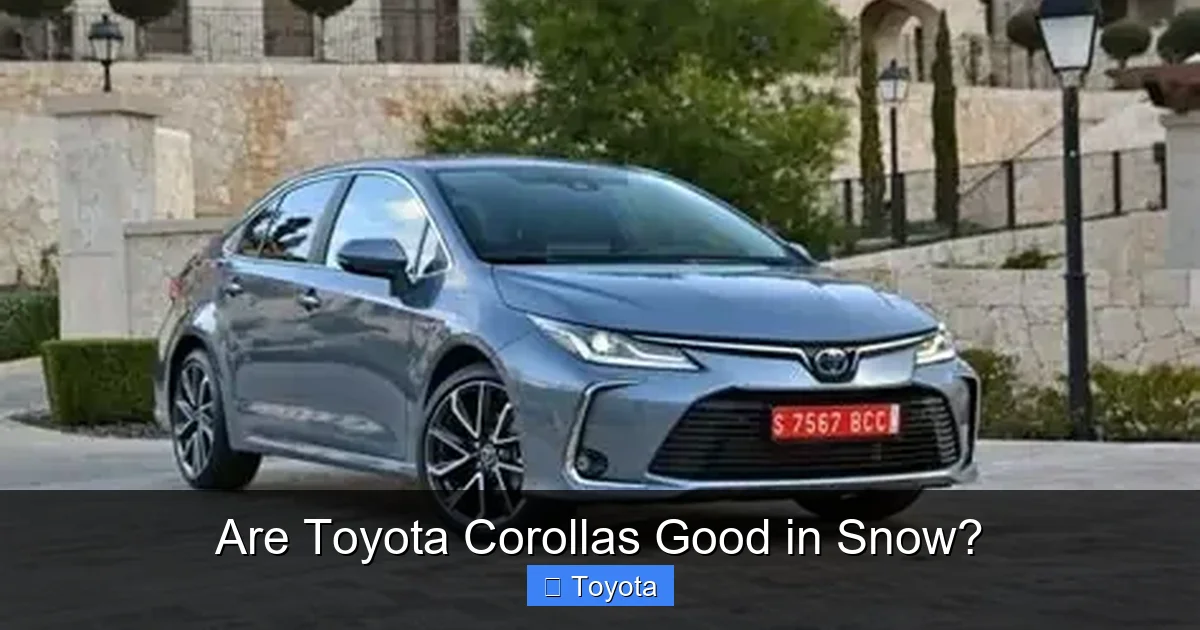
To assess how well a Toyota Corolla handles snow, it’s important to look under the hood—literally and figuratively. The Corolla’s design, drivetrain, and technology all play a role in its winter performance.
Front-Wheel Drive: A Winter Advantage
One of the Corolla’s biggest strengths in snow is its front-wheel drive (FWD) system. Unlike rear-wheel drive (RWD) cars, which can lose traction more easily when accelerating on slippery surfaces, FWD vehicles place the engine’s power to the front wheels—the same wheels that steer the car. This weight distribution helps improve grip, especially when starting from a stop on snow or ice.
Imagine trying to push a shopping cart with the wheels in front versus behind you. It’s easier to control when the driving force is up front. The same principle applies to FWD cars. The engine’s weight over the front axle increases traction, reducing the chance of wheel spin when you hit the gas after stopping at a light or pulling out of a driveway.
Of course, FWD isn’t perfect. It can lead to understeer—where the car continues straight instead of turning—on icy curves. But for everyday city and highway driving in snow, FWD gives the Corolla a solid foundation.
Ground Clearance and Body Design
The Toyota Corolla sits relatively low to the ground, with about 5.5 to 6 inches of clearance depending on the model year and trim. That’s standard for a compact sedan, but it does mean the car isn’t built for deep snow or off-road winter adventures.
If you live in an area with frequent heavy snowfall or unplowed rural roads, this could be a limitation. The Corolla might bottom out or get stuck in snowdrifts that a higher-clearance vehicle could easily pass. However, on plowed city streets or well-maintained highways, this isn’t usually an issue.
The Corolla’s aerodynamic design also helps in windy winter conditions. Its low profile reduces the risk of being pushed around by strong gusts, which can be a problem for taller vehicles like SUVs or trucks.
Engine and Transmission Performance
Most modern Toyota Corollas come with a 1.8L or 2.0L four-cylinder engine, paired with either a continuously variable transmission (CVT) or a manual (in select trims). These engines are tuned for efficiency, not raw power, which actually works in their favor during winter driving.
High torque at low RPMs—common in larger engines—can cause wheels to spin on ice. The Corolla’s modest power output means it’s less likely to break traction when accelerating gently. The CVT also helps by smoothly delivering power without sudden shifts, which can upset the car’s balance on slippery roads.
That said, the Corolla won’t win any drag races in the snow. If you need to merge quickly onto a highway or climb a steep, icy hill, you’ll need to plan ahead and give yourself extra space.
Toyota Safety Sense: Your Winter Driving Co-Pilot
Visual guide about Are Toyota Corollas Good in Snow?
Image source: eduautos.com
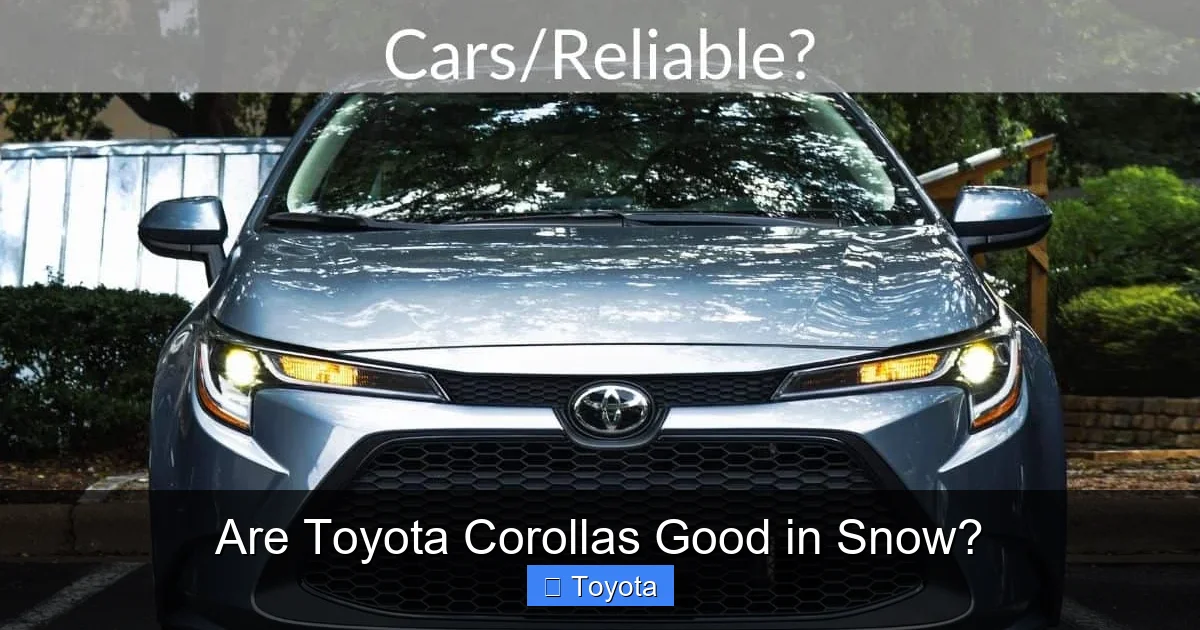
One of the biggest reasons the Toyota Corolla performs well in snow is its suite of advanced safety features, collectively known as Toyota Safety Sense (TSS). Standard on nearly all new Corollas since 2017, TSS is like having a cautious co-pilot who’s always watching the road.
Traction Control and Stability Control
Traction control is a system that prevents wheel spin by reducing engine power or applying the brakes to individual wheels when it detects slippage. On a snowy road, this means if one of your front wheels starts to lose grip, the system will step in to keep you moving forward smoothly.
Stability control (also called electronic stability control or ESC) goes a step further. It monitors the car’s direction and compares it to your steering input. If the car begins to slide—say, during a sharp turn on ice—ESC applies brakes to specific wheels and may reduce engine power to help bring the vehicle back in line.
These two systems work together to keep the Corolla stable and predictable, even when the road turns into a skating rink. They won’t prevent every skid, but they significantly reduce the risk of losing control.
Anti-Lock Brakes (ABS)
ABS prevents the wheels from locking up during hard braking, which is crucial on snow and ice. Without ABS, slamming on the brakes could cause the tires to skid, making steering impossible. With ABS, the system pulses the brakes rapidly, allowing you to maintain steering control while slowing down.
In a Corolla, ABS is standard and works seamlessly with the other safety systems. If you ever need to brake suddenly on a snowy road, you can press the pedal firmly and let the car do the rest.
Pre-Collision System and Lane Departure Alert
While not directly related to snow traction, features like the Pre-Collision System (PCS) and Lane Departure Alert (LDA) add an extra layer of safety in winter conditions.
PCS uses a camera and radar to detect vehicles, pedestrians, or cyclists ahead. If a collision seems likely, it warns the driver and can even apply the brakes automatically. In snowy weather—when visibility is low and stopping distances are longer—this can be a lifesaver.
LDA monitors lane markings and alerts you if you begin to drift out of your lane without signaling. On snow-covered roads, lane markings can be hard to see, so this feature helps keep you on track.
Adaptive Cruise Control
Available on higher trims, adaptive cruise control (ACC) maintains a set speed and distance from the car ahead. In winter traffic, this can reduce driver fatigue and help maintain a safe following distance, even when roads are slick.
Just remember: no system is perfect. Always stay alert and keep your hands on the wheel, even with these advanced features.
The Role of Tires: The Real Game-Changer
Visual guide about Are Toyota Corollas Good in Snow?
Image source: eduautos.com
If there’s one thing that can make or break your Corolla’s snow performance, it’s the tires. No matter how good the car’s safety systems are, they can’t overcome poor traction. And in snow, traction starts and ends with your tires.
All-Season vs. Winter Tires
Most new Corollas come equipped with all-season tires. These are designed to perform reasonably well in a variety of conditions—dry, wet, light snow, and mild temperatures. But “reasonably well” isn’t the same as “excellent.”
All-season tires use a harder rubber compound that stays durable in warm weather but stiffens in cold temperatures. When it drops below 45°F (7°C), this rubber loses flexibility, reducing grip on snow and ice.
Winter tires, on the other hand, are made with softer rubber that stays pliable in freezing conditions. They also have deeper tread patterns and special siping (tiny slits in the tread blocks) that bite into snow and expel slush. The result? Significantly better traction, shorter stopping distances, and improved handling.
Studies show that winter tires can reduce braking distance on snow by up to 30% compared to all-season tires. That’s the difference between stopping safely and sliding into the car ahead.
All-Weather Tires: A Compromise
If you don’t want to swap tires twice a year, all-weather tires are a great middle ground. These are rated for severe snow conditions (look for the three-peak mountain snowflake symbol) and perform better in winter than standard all-season tires, while still being usable in warmer months.
They’re not as good as dedicated winter tires, but they’re a solid choice for drivers in areas with mild to moderate winters.
Tire Pressure and Maintenance
Cold weather causes tire pressure to drop—about 1 PSI for every 10°F drop in temperature. Underinflated tires reduce fuel efficiency, increase wear, and hurt handling.
Check your tire pressure monthly in winter and keep it at the recommended level (found on the driver’s door jamb or in the owner’s manual). Also, inspect tread depth regularly. The legal minimum is 2/32 of an inch, but for snow driving, aim for at least 6/32.
Snow Chains and Cables
In extreme conditions—like mountain passes or unplowed roads—snow chains or cables may be required. The Corolla can use them, but installation can be tricky due to its low clearance and tight wheel wells. Always check your owner’s manual for compatibility and practice installing them before you need them.
Driving Tips for Snowy Conditions
Even with the right car and tires, winter driving requires skill and caution. Here are some practical tips to help you stay safe in your Toyota Corolla when the snow starts falling.
Smooth and Gentle Inputs
The golden rule of winter driving: be smooth. Avoid sudden acceleration, hard braking, or sharp turns. These actions can easily break traction and cause a skid.
Instead, accelerate slowly from a stop. Use gentle pressure on the gas and allow the car to build speed gradually. When turning, slow down before the corner and steer smoothly through it.
Increase Following Distance
On snow or ice, stopping distances can be 10 times longer than on dry pavement. Increase your following distance to at least 6–8 seconds behind the car ahead. This gives you more time to react and stop safely.
Brake Early and Gently
Start braking earlier than usual, and apply the brakes gently. If you feel the ABS kicking in, don’t panic—it’s working. Keep steady pressure and steer around obstacles if possible.
Avoid using the parking brake in winter, as it can freeze and become stuck.
Watch for Black Ice
Black ice is nearly invisible and forms on shaded areas, bridges, and overpasses. It’s especially dangerous because it looks like wet pavement. If the road feels slippery or your car starts to drift slightly, ease off the gas and avoid sudden movements.
Clear Snow and Ice Completely
Before driving, clear all snow and ice from your windows, mirrors, lights, and roof. Snow on the roof can slide onto your windshield while driving, blocking your view. Ice on the mirrors or lights can reduce visibility and create hazards for other drivers.
Use Lower Gears on Hills
If your Corolla has a manual mode or paddle shifters (on some CVT models), use a lower gear when climbing or descending snowy hills. This helps control speed without relying too much on the brakes, which can cause skidding.
Keep an Emergency Kit
Even the best-prepared drivers can get stuck. Keep a winter emergency kit in your trunk, including:
– Ice scraper and snow brush
– Jumper cables
– Blanket and warm clothing
– Flashlight and extra batteries
– Non-perishable snacks and water
– Shovel and sand or cat litter (for traction)
– First aid kit
Real-World Performance: Owner Experiences
To get a sense of how the Corolla actually performs in snow, it helps to hear from real owners. Across online forums, reviews, and social media, Corolla drivers share consistent themes.
Many owners in the Midwest, Northeast, and Canada report that their Corollas handle well in light to moderate snow, especially with winter tires. One driver from Minnesota said, “I’ve driven my Corolla through three winters with snow tires, and it’s been reliable. It’s not a tank, but it gets the job done.”
Others note that the car struggles on steep, unplowed driveways or during heavy snowstorms. “It’s fine on city streets,” said a driver from upstate New York, “but I wouldn’t take it up a mountain road after a blizzard.”
Fuel efficiency remains a highlight. Even in cold weather, Corolla owners report getting 30–35 MPG in winter, especially with the hybrid model, which performs even better in stop-and-go traffic.
The consensus? The Corolla is a capable winter car for most drivers—but it’s not invincible. Preparation and caution are key.
Alternatives and Upgrades
If you love the Corolla but need more winter capability, consider these options.
Toyota Corolla Cross
The Corolla Cross is a compact SUV based on the Corolla platform. It offers higher ground clearance (8.1 inches) and available all-wheel drive (AWD), making it a better choice for snowy regions. It retains the Corolla’s reliability and fuel efficiency while adding more versatility.
Hybrid Models
The Corolla Hybrid uses an electric motor and gasoline engine, providing instant torque and smooth power delivery. The regenerative braking system also helps with control on slippery roads. Plus, it gets up to 50 MPG in the city—perfect for winter commuting.
Aftermarket Upgrades
While you can’t add AWD to a Corolla, you can improve its winter performance with:
– Winter tire packages
– Heated seats and steering wheel (available on higher trims)
– Remote start (to warm up the car before driving)
– Mud flaps and underbody protection (to reduce snow and salt damage)
Conclusion: Is the Toyota Corolla Right for Snow?
So, are Toyota Corollas good in snow? The answer is a qualified yes. They’re not the most capable winter vehicles, but they’re far from inadequate. With front-wheel drive, advanced safety features, and the right tires, a Corolla can handle light to moderate snow with confidence.
It won’t conquer deep snowdrifts or icy mountain passes, but for daily commuting, school runs, and errands in winter weather, it’s a reliable and efficient choice. The key is preparation: invest in winter tires, maintain your car, and drive with care.
If you live in a region with harsh winters and frequent heavy snowfall, you might want to consider a vehicle with AWD or higher clearance. But for millions of drivers, the Corolla proves that you don’t need a big, expensive SUV to stay safe on snowy roads.
Ultimately, the best winter car is the one you drive safely. And with the right mindset, your Toyota Corolla can be a trusted companion all winter long.
Frequently Asked Questions
Can a Toyota Corolla handle heavy snow?
The Corolla can handle light to moderate snow, especially with winter tires and cautious driving. However, it’s not ideal for heavy snowfall, deep snowdrifts, or steep, unplowed hills due to its low ground clearance and lack of all-wheel drive.
Do I need winter tires on my Corolla?
Yes, winter tires significantly improve traction, braking, and handling in snow and ice. All-season tires are acceptable for mild winters, but winter or all-weather tires are recommended for better safety and performance.
Does the Corolla have all-wheel drive?
No, the Toyota Corolla does not offer all-wheel drive. It comes standard with front-wheel drive, which provides decent traction in snow but is less capable than AWD in severe conditions.
Is the Corolla Hybrid better in snow?
The Corolla Hybrid performs well in snow, thanks to its smooth power delivery and regenerative braking. It’s not inherently better in traction, but its efficiency and control make it a strong winter commuter.
How do I prepare my Corolla for winter?
Install winter tires, check tire pressure regularly, keep the gas tank at least half full, use winter windshield washer fluid, and carry an emergency kit. Also, clear snow and ice from all surfaces before driving.
Can I use snow chains on a Toyota Corolla?
Yes, snow chains can be used on a Corolla, but they must be compatible with your tire size and installed correctly. Due to low ground clearance, practice installation before winter and avoid driving fast with chains on.