
Are Toyota 4runners All-wheel Drive?

Not all Toyota 4Runners are all-wheel drive (AWD)—many come with part-time four-wheel drive (4WD) instead. Understanding the difference between AWD and 4WD is key to choosing the right 4Runner for your driving needs, whether you’re tackling trails or city streets.
Key Takeaways
- Most 4Runners use 4WD, not AWD: The majority of 4Runner models are equipped with a part-time four-wheel drive system, which is different from all-wheel drive.
- AWD is rare on 4Runners: Only certain trims or older models may offer full-time AWD, but it’s not standard across the lineup.
- 4WD excels off-road: The 4Runner’s 4WD system is designed for rugged terrain, making it a favorite among off-road enthusiasts.
- AWD is better for light conditions: All-wheel drive provides better traction in rain or snow but isn’t ideal for serious off-roading.
- Choose based on your needs: If you prioritize off-road capability, go for 4WD. For daily driving in variable weather, AWD might be more suitable.
- Fuel economy varies: 4WD systems typically consume more fuel than AWD due to added weight and mechanical complexity.
- Always check the trim and year: Drivetrain options depend on the model year and trim level—never assume all 4Runners are the same.
📑 Table of Contents
- Are Toyota 4Runners All-Wheel Drive? The Real Answer
- Understanding AWD vs. 4WD: What’s the Difference?
- What Drivetrain Options Do Toyota 4Runners Offer?
- Why Doesn’t the 4Runner Use AWD as Standard?
- Real-World Performance: AWD vs. 4WD on the 4Runner
- Which 4Runner Trim Has AWD?
- Fuel Economy and Maintenance: AWD vs. 4WD
- Conclusion: Should You Choose AWD or 4WD on a 4Runner?
Are Toyota 4Runners All-Wheel Drive? The Real Answer
If you’re in the market for a rugged, reliable SUV that can handle everything from daily commutes to weekend adventures, the Toyota 4Runner is likely on your shortlist. Known for its boxy design, durable build, and legendary off-road capability, the 4Runner has been a favorite among outdoor enthusiasts and families alike for decades. But one question keeps popping up: Are Toyota 4Runners all-wheel drive?
The short answer? Not exactly. While many people assume that all 4Runners come with all-wheel drive (AWD), the reality is a bit more nuanced. In fact, most 4Runners are equipped with a part-time four-wheel drive (4WD) system, which is different from AWD in both design and function. Understanding this distinction is crucial if you want to make an informed decision about which 4Runner model is right for you.
So, what’s the difference between AWD and 4WD? And why does it matter when choosing a 4Runner? Let’s break it down in simple terms. All-wheel drive systems automatically send power to all four wheels as needed, typically for improved traction in wet, snowy, or slippery conditions. They’re great for everyday driving and light off-roading. Four-wheel drive, on the other hand, is a more robust system designed for serious off-road use. It allows the driver to manually engage all four wheels, providing maximum grip and control on uneven, muddy, or rocky terrain.
The 4Runner’s reputation as a go-anywhere vehicle is largely built on its 4WD capabilities. But that doesn’t mean AWD isn’t available—just that it’s not the standard. Depending on the model year and trim level, you might find a 4Runner with full-time AWD, but these are less common. To truly understand whether a 4Runner is right for your needs, you need to look beyond the badge and dig into the specifics of its drivetrain.
Understanding AWD vs. 4WD: What’s the Difference?
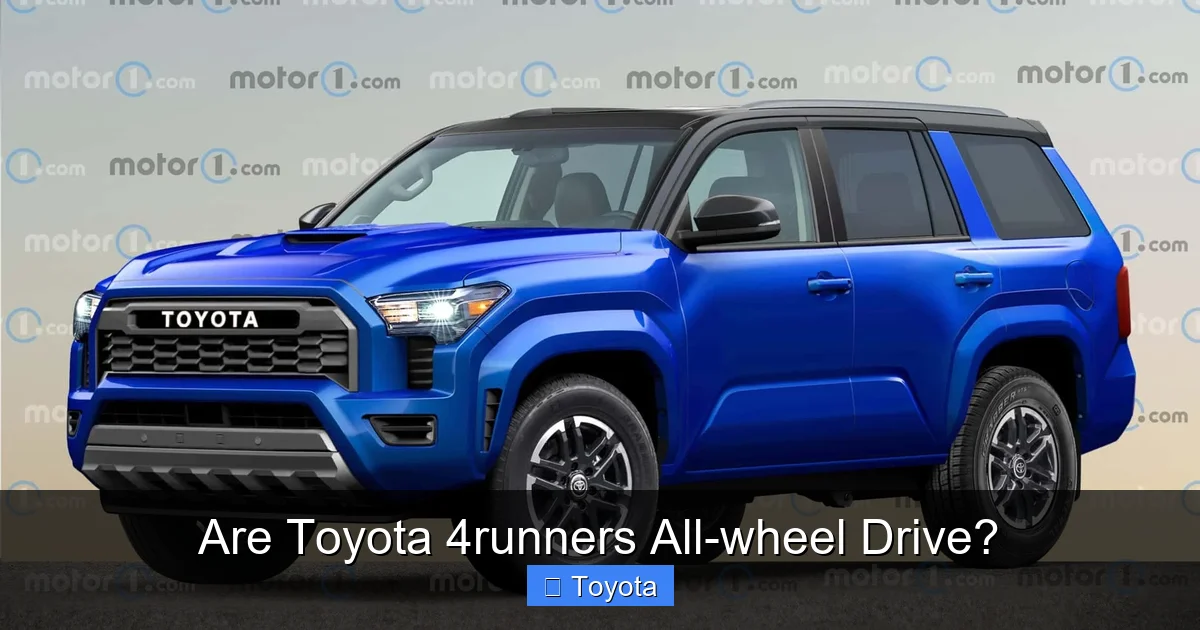
Visual guide about Are Toyota 4runners All-wheel Drive?
Image source: ixbt.com
Before we dive deeper into the 4Runner’s drivetrain options, it’s important to clarify the difference between all-wheel drive (AWD) and four-wheel drive (4WD). These terms are often used interchangeably, but they refer to very different systems with distinct purposes.
All-wheel drive is a fully automatic system that continuously monitors wheel slip and distributes power to the wheels with the most traction. It’s typically found on cars and crossovers designed for on-road performance and comfort. AWD systems are great for handling rain, snow, and light gravel roads, but they’re not built for serious off-roading. They usually can’t be manually controlled, and they don’t offer low-range gearing for crawling over rocks or climbing steep inclines.
Four-wheel drive, by contrast, is a more rugged and mechanical system. It allows the driver to manually engage all four wheels, often via a lever or button. Most 4WD systems include a transfer case with high and low ranges—low range provides extra torque for slow, controlled off-road driving. This makes 4WD ideal for rock crawling, mudding, and traversing steep trails. However, 4WD is not meant to be used on dry pavement, as it can cause drivetrain binding and damage.
So, which is better? It depends on your driving needs. If you live in a snowy area and want better traction during winter commutes, AWD might be the way to go. But if you plan to hit the trails, go camping in remote areas, or tow heavy loads, 4WD is the clear winner. The 4Runner leans heavily into the 4WD camp, which is part of what makes it such a capable off-roader.
What Drivetrain Options Do Toyota 4Runners Offer?
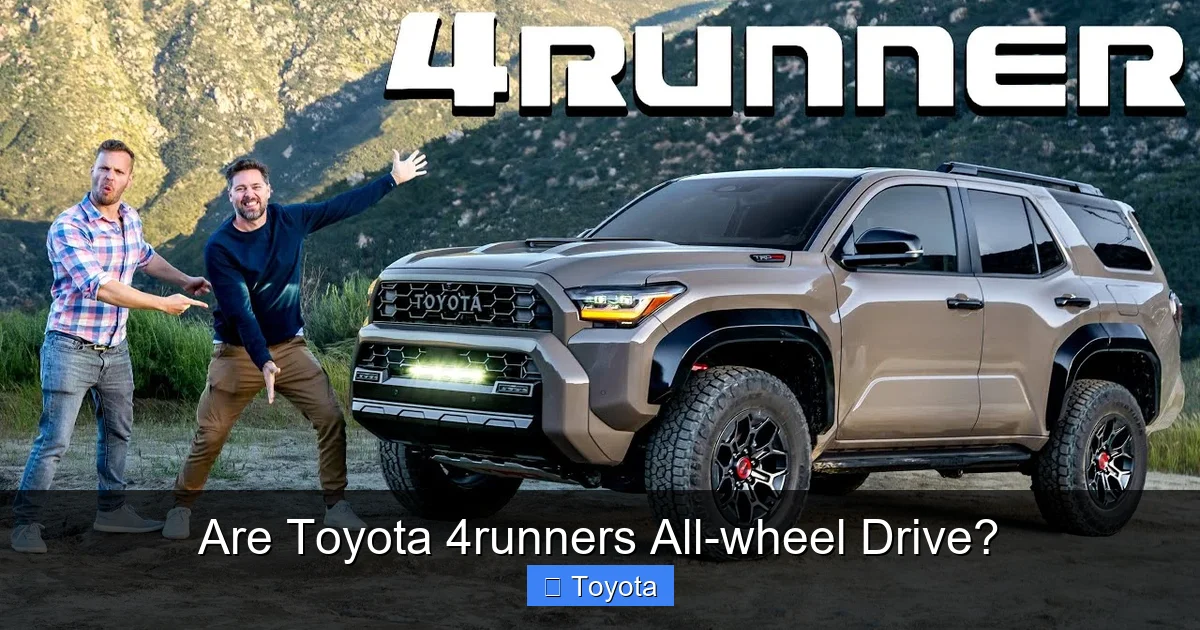
Visual guide about Are Toyota 4runners All-wheel Drive?
Image source: i.ytimg.com
Now that we’ve clarified the difference between AWD and 4WD, let’s look at what drivetrain options are actually available on the Toyota 4Runner. The answer depends on the model year and trim level, so it’s important to do your homework before buying.
Starting with the most recent models (2020–2024), the 4Runner is offered in several trims, including SR5, TRD Off-Road, TRD Pro, Limited, and Venture Edition. The majority of these trims come standard with a part-time 4WD system. This means you can switch between two-wheel drive (2WD) and four-wheel drive (4WD) depending on the conditions. In 2WD mode, power is sent to the rear wheels only, which improves fuel efficiency during normal driving. When you need extra traction—like when driving on snow, mud, or dirt—you can engage 4WD via a dial on the dashboard.
The TRD Off-Road and TRD Pro trims take things a step further with additional off-road features like crawl control, multi-terrain select, and locking rear differentials. These enhancements make the 4Runner even more capable on challenging terrain. However, even these high-end trims use a part-time 4WD system, not AWD.
That said, there are exceptions. Earlier model years, particularly from the late 1990s and early 2000s, did offer full-time AWD on certain 4Runner trims. For example, the 1996–2002 4Runner Limited trim came with a full-time AWD system that automatically distributed power to all four wheels without driver input. This system was more similar to what you’d find on a modern crossover, offering better on-road stability and light off-road capability.
But even in those years, the AWD option was limited to specific trims and wasn’t available on the more rugged, off-road-focused models. Today, Toyota has largely phased out full-time AWD on the 4Runner in favor of the more capable part-time 4WD system. This shift reflects the 4Runner’s identity as a true off-road SUV rather than a family hauler.
Why Doesn’t the 4Runner Use AWD as Standard?
Given that many modern SUVs and crossovers come standard with AWD, you might wonder why Toyota hasn’t made AWD the default on the 4Runner. The answer lies in the vehicle’s design philosophy and target audience.
The 4Runner was built from the ground up as a body-on-frame SUV, meaning it uses a separate chassis and body—similar to a truck. This construction gives it exceptional durability and off-road strength, but it also makes it heavier and less fuel-efficient than unibody crossovers. Toyota’s goal with the 4Runner has always been to deliver maximum capability, not maximum comfort or fuel economy.
By equipping most 4Runners with a part-time 4WD system, Toyota ensures that drivers have the tools they need to tackle serious off-road challenges. The 4WD system provides better torque multiplication, especially in low-range mode, which is essential for crawling over rocks or climbing steep hills. It also allows for manual control, so drivers can choose when to engage all four wheels—something AWD systems don’t offer.
Additionally, 4WD systems are generally more robust and easier to maintain than AWD systems. They have fewer electronic components and rely more on mechanical linkages, which means they’re less likely to fail in remote areas where service might be hard to come by. For adventurers who rely on their vehicle to get them in—and out—of the wilderness, this reliability is priceless.
That’s not to say AWD has no place in the 4Runner lineup. For drivers who prioritize on-road comfort and occasional light off-roading, AWD can be a good fit. But for the majority of 4Runner buyers—especially those drawn to its rugged reputation—4WD is the preferred choice.
Real-World Performance: AWD vs. 4WD on the 4Runner
To truly understand the difference between AWD and 4WD on the 4Runner, it helps to look at real-world performance. Let’s imagine two scenarios: one where a driver is navigating a snowy mountain road, and another where they’re tackling a rocky trail in the desert.
In the first scenario, a 4Runner with full-time AWD would perform admirably. The system would automatically send power to the wheels with the most grip, helping the vehicle maintain traction on icy or snow-covered pavement. The driver wouldn’t need to do anything—just point the vehicle in the right direction and go. This kind of system is ideal for daily driving in variable weather conditions, especially if you live in an area with frequent rain or snow.
Now, consider the second scenario. A 4Runner with part-time 4WD is in its element here. The driver can engage 4WD high range for improved traction on loose gravel or muddy trails. If the terrain gets even more challenging—say, a steep rock face or deep ruts—the driver can shift into 4WD low range, which provides maximum torque at low speeds. Features like crawl control and locking differentials further enhance the vehicle’s ability to navigate obstacles without getting stuck.
In this case, the 4WD system outperforms AWD by a wide margin. AWD simply isn’t designed for such extreme conditions. It lacks the low-range gearing and mechanical robustness needed to handle serious off-roading. Trying to use an AWD 4Runner on a technical trail could result in damage to the drivetrain or getting stranded.
That said, AWD does have its advantages in certain situations. For example, if you frequently drive on wet roads or light gravel, AWD can provide a smoother, more confident driving experience. It’s also more fuel-efficient than 4WD when used in 2WD mode, which can save you money at the pump over time.
Ultimately, the best drivetrain for you depends on how you plan to use your 4Runner. If you’re mostly commuting and running errands, AWD might be sufficient. But if you’re planning weekend adventures, overlanding trips, or off-road excursions, 4WD is the way to go.
Which 4Runner Trim Has AWD?
If you’re set on getting a 4Runner with AWD, your options are limited—but not nonexistent. As mentioned earlier, full-time AWD was available on certain trims in older model years, particularly the 4Runner Limited from 1996 to 2002. These models came equipped with a sophisticated AWD system that automatically distributed power to all four wheels without driver input.
In more recent years, Toyota has not offered AWD as a standard or optional feature on the 4Runner. The current lineup (2020–2024) is dominated by part-time 4WD, with no AWD option available. This means that if you want a new 4Runner with AWD, you’re out of luck—unless you’re willing to look at used models from the early 2000s.
That said, there are a few things to keep in mind if you’re considering an older AWD 4Runner. First, these vehicles are now over 20 years old, so they may require more maintenance and repairs. Second, the AWD system on these models is different from modern AWD systems—it’s more mechanical and less electronic, which can be both a strength and a weakness. Finally, resale value may be lower than for newer 4Runners with 4WD, especially if you’re looking to sell in the future.
If you’re not tied to AWD, the current 4Runner lineup offers plenty of capable options. The TRD Off-Road and TRD Pro trims, in particular, are designed for serious off-roading and come with advanced 4WD features. Even the base SR5 trim offers 4WD as an option, making it a versatile choice for drivers who want capability without breaking the bank.
Fuel Economy and Maintenance: AWD vs. 4WD
Another important factor to consider when choosing between AWD and 4WD is fuel economy and maintenance. These systems have different impacts on both, so it’s worth understanding the trade-offs.
In general, AWD systems are lighter and more efficient than 4WD systems. Because they don’t require a transfer case or low-range gears, AWD vehicles tend to have better gas mileage. For example, a 4Runner with AWD might get around 17–18 miles per gallon (mpg) in combined driving, while a 4WD model might average 15–16 mpg. That difference may seem small, but over thousands of miles, it can add up.
Maintenance is another consideration. AWD systems are typically simpler and have fewer moving parts than 4WD systems, which can mean lower repair costs over time. However, when AWD systems do fail, they can be expensive to fix—especially if they involve complex electronics or sensors.
4WD systems, on the other hand, are built to last. They’re designed for heavy use and can withstand the rigors of off-road driving. But they do require more maintenance, particularly if you frequently engage 4WD. It’s important to regularly inspect the transfer case, differentials, and driveshafts for wear and tear. You should also avoid using 4WD on dry pavement, as this can cause damage to the drivetrain.
In terms of long-term reliability, both systems can last for hundreds of thousands of miles with proper care. But if you’re planning to take your 4Runner off-road regularly, the 4WD system is better suited to the task.
Conclusion: Should You Choose AWD or 4WD on a 4Runner?
So, are Toyota 4Runners all-wheel drive? The answer is no—not by default. Most 4Runners come with a part-time four-wheel drive system, which is better suited for off-road adventures and rugged terrain. While AWD was available on certain older models, it’s not a standard feature on current 4Runners.
Choosing between AWD and 4WD ultimately comes down to your driving needs. If you prioritize off-road capability, towing power, and durability, go with 4WD. It’s the heart and soul of what makes the 4Runner special. But if you mostly drive on paved roads and want better traction in rain or snow, AWD might be a better fit—though your options will be limited to older models.
No matter which drivetrain you choose, the 4Runner remains one of the most capable and reliable SUVs on the market. Its rugged design, proven performance, and Toyota’s reputation for quality make it a standout choice for adventurers and families alike. Just remember to check the trim and model year carefully, and don’t assume all 4Runners are created equal when it comes to drivetrain.
Frequently Asked Questions
Are all Toyota 4Runners four-wheel drive?
No, not all 4Runners are four-wheel drive. While most models come with part-time 4WD as an option or standard on certain trims, some older models offered full-time AWD instead. Always check the specific model year and trim to confirm the drivetrain.
Can you drive a 4WD 4Runner on the highway?
Yes, you can drive a 4WD 4Runner on the highway, but only in 2WD or 4WD high range. Never use 4WD low range on paved roads, as it can damage the drivetrain.
Is the 4Runner good in snow?
Yes, the 4Runner performs well in snow, especially with 4WD engaged. Its high ground clearance and robust suspension help it handle snowy and icy conditions better than many other SUVs.
What’s the difference between TRD Off-Road and TRD Pro?
The TRD Off-Road trim includes 4WD, crawl control, and multi-terrain select. The TRD Pro adds upgraded suspension, skid plates, and exclusive styling, making it more capable for extreme off-roading.
Can you convert a 2WD 4Runner to 4WD?
Technically yes, but it’s extremely difficult and expensive. The conversion requires replacing the chassis, drivetrain, and suspension components, so it’s not practical for most owners.
Which 4Runner trim is best for off-roading?
The TRD Pro is the best 4Runner for off-roading, thanks to its upgraded suspension, locking rear differential, and specialized off-road features. The TRD Off-Road is also a strong contender for serious trail use.