Are Lexus Parts Expensive?

Contents
- 1 Key Takeaways
- 2 📑 Table of Contents
- 3 Are Lexus Parts Expensive?
- 4 Understanding Why Lexus Parts Cost What They Do
- 5 Comparing Lexus Parts Costs to Other Brands
- 6 OEM vs. Aftermarket: Making Smart Choices
- 7 Tips to Save Money on Lexus Parts and Repairs
- 8 Long-Term Cost of Ownership: Is It Worth It?
- 9 Final Thoughts: Balancing Cost and Quality
- 10 Frequently Asked Questions



Lexus parts are generally more expensive than those of non-luxury brands due to their premium quality, precision engineering, and brand positioning. While maintenance and repairs can cost more, the durability and performance of genuine Lexus components often justify the higher price, especially for long-term reliability. However, aftermarket and refurbished options can offer more budget-friendly alternatives without significantly compromising quality.
Key Takeaways
- Lexus parts are generally pricier than non-luxury brands due to premium materials and engineering standards.
- OEM parts cost more but ensure reliability and maintain vehicle performance and warranty coverage.
- Aftermarket parts offer budget-friendly alternatives but vary in quality—research brands before purchasing.
- Routine maintenance is less expensive than average thanks to high reliability and longevity of components.
- DIY repairs can save labor costs if you have the tools and mechanical knowledge.
- Extended warranties may offset future part expenses—consider coverage for major components.
📑 Table of Contents
Are Lexus Parts Expensive?
So, you’ve got a Lexus—maybe it’s a smooth-riding RX, a sleek ES sedan, or even a sporty IS. You love how it glides down the highway, how quiet the cabin is, and how it just feels… premium. But lately, you’ve started wondering: Are Lexus parts expensive? Maybe you’ve gotten a repair estimate that made your jaw drop, or you’ve heard horror stories from other luxury car owners about sky-high maintenance costs. You’re not alone. It’s a question that pops up in online forums, at the coffee shop, and even during casual car washes.
Let’s be honest—owning a luxury vehicle like a Lexus comes with certain expectations. You expect top-tier performance, advanced safety features, and a level of refinement that budget brands simply can’t match. But with that prestige often comes a price tag that extends beyond the showroom floor. The real question isn’t just whether Lexus parts are expensive—it’s how expensive, why they cost what they do, and whether the investment is worth it in the long run. In this post, we’ll break down the real costs of Lexus parts, compare them to other brands, and give you practical tips to keep your wallet happy without sacrificing quality.
Understanding Why Lexus Parts Cost What They Do
Before we dive into price comparisons and real-world examples, it’s important to understand why Lexus parts tend to be pricier than those for mainstream brands like Toyota, Honda, or Hyundai. It’s not just about branding—there are real engineering, material, and manufacturing factors at play.
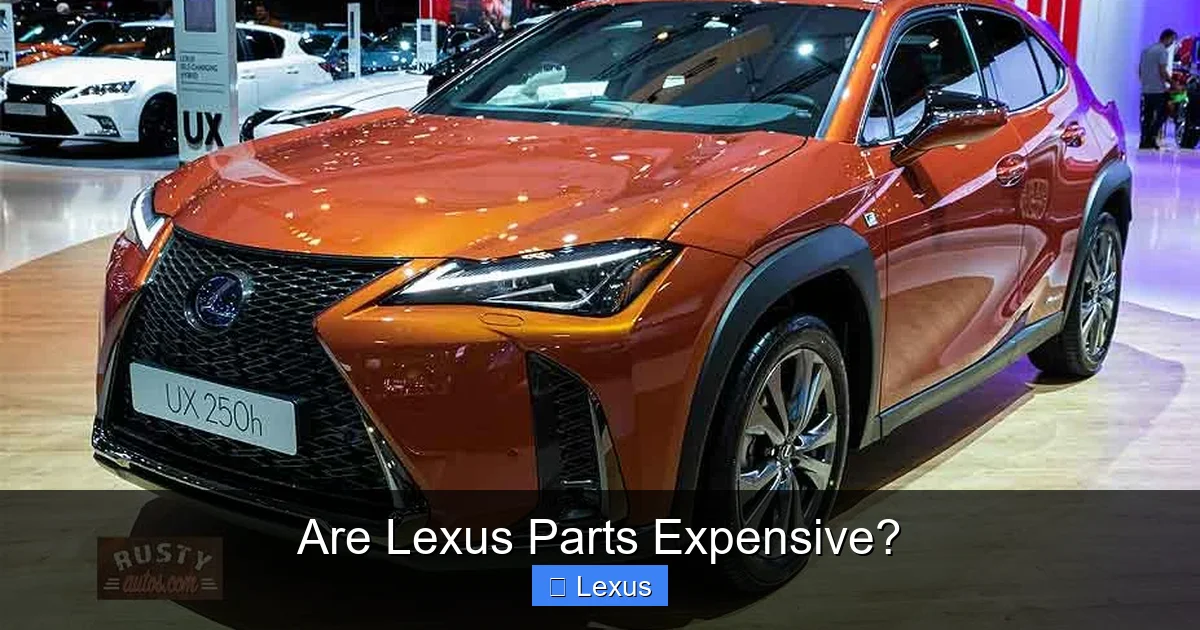
Visual guide about Are Lexus Parts Expensive?
Image source: rustyautos.com
Premium Materials and Engineering
Lexus doesn’t cut corners when it comes to materials. From high-strength steel in the chassis to noise-dampening insulation and leather-wrapped interiors, every component is designed for durability, comfort, and performance. Take brake pads, for example. A set of OEM (Original Equipment Manufacturer) Lexus brake pads might use ceramic compounds that reduce dust, last longer, and perform better under high heat—especially important if you drive aggressively or live in a hilly area. These advanced materials cost more to produce, and that cost gets passed on to you.
Then there’s the engineering. Lexus parts are often designed to work in harmony with sophisticated systems like adaptive suspension, all-wheel drive, and advanced driver-assistance features. A replacement air filter isn’t just a piece of paper—it’s calibrated to maintain optimal airflow for the engine’s performance and emissions systems. That precision engineering adds to the cost.
Brand Positioning and Dealer Markups
Lexus is Toyota’s luxury division, and with that comes a certain level of exclusivity. Dealerships know their customers expect top-tier service, and that includes access to genuine parts. But that convenience comes at a price. OEM parts from a Lexus dealership are often marked up significantly compared to aftermarket alternatives. Why? Because you’re paying for the assurance that the part is 100% compatible, backed by warranty, and installed by certified technicians.
For example, a genuine Lexus alternator might cost $600–$800 at the dealer, while a high-quality aftermarket version could be found for $300–$450. The difference isn’t just in the part—it’s in the service, the warranty, and the peace of mind. But if you’re on a tight budget, that markup can feel steep.
Low Production Volume Compared to Mainstream Brands
Here’s a little-known fact: Lexus sells far fewer vehicles than Toyota. In 2023, Toyota sold over 2 million vehicles in the U.S. alone, while Lexus sold around 300,000. Lower production volume means fewer parts are manufactured, which drives up per-unit costs. It’s basic economics—when you’re not producing parts at scale, each one costs more to make.
This also affects availability. If a part is rare or specific to a certain model year, you might face longer wait times and higher prices due to limited supply. For older Lexus models, this can be especially challenging.
Comparing Lexus Parts Costs to Other Brands
Now that we understand the “why,” let’s look at the “how much.” How do Lexus parts stack up against other luxury and non-luxury brands? The answer might surprise you.
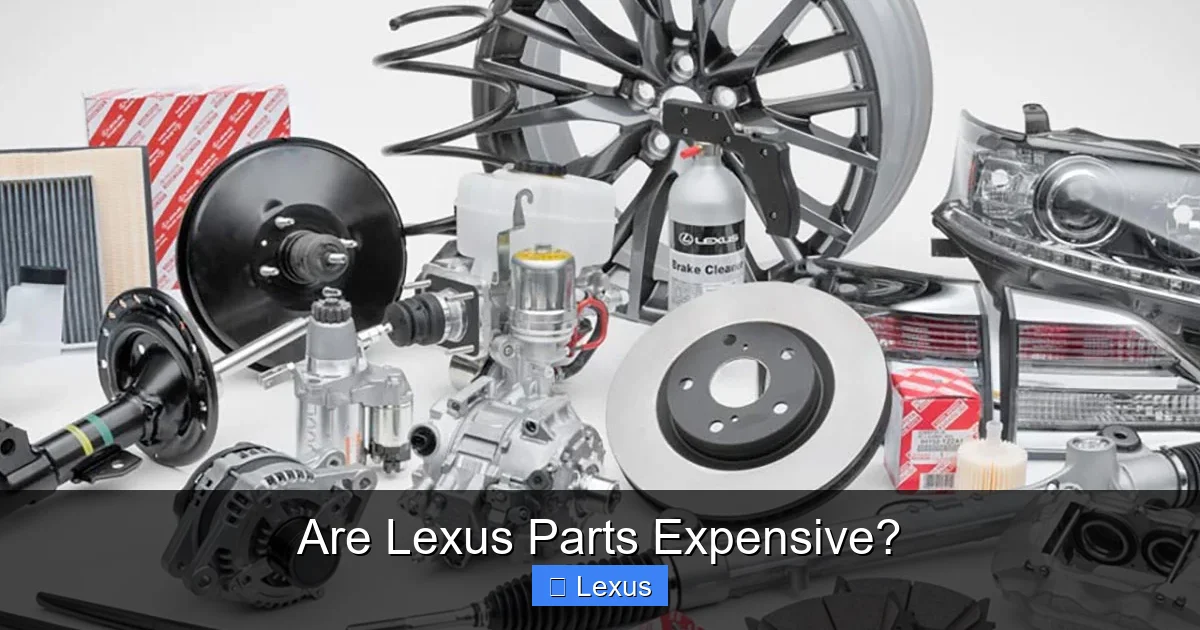
Visual guide about Are Lexus Parts Expensive?
Image source: fixedopsdigital.s3.amazonaws.com
Lexus vs. Other Luxury Brands (BMW, Mercedes, Audi)
If you’re comparing Lexus to German luxury brands like BMW, Mercedes-Benz, or Audi, the good news is: Lexus parts are generally less expensive. Let’s look at a few common repairs:
- Brake Pads: A set of OEM brake pads for a Lexus RX might cost $180–$250. For a BMW X5, expect $250–$350. For a Mercedes GLE, it could be $300–$400.
- Alternator: As mentioned earlier, a Lexus alternator runs $600–$800 at the dealer. A BMW alternator? $900–$1,200. Mercedes? $1,000–$1,300.
- Timing Belt Kit: For a Lexus ES 350, a full timing belt kit (including water pump and tensioners) might cost $400–$600. For an Audi A6, that same job could run $700–$900.
Why the difference? German brands often use more complex engineering, proprietary parts, and have higher labor rates at dealerships. Lexus, while luxurious, is designed with reliability and cost-efficiency in mind—even at the luxury level.
Lexus vs. Mainstream Brands (Toyota, Honda, Hyundai)
Here’s where things get interesting. Since Lexus is built on Toyota platforms, many parts are shared—but not all. For example, the Lexus ES and Toyota Camry share a platform, but the ES has upgraded suspension, sound insulation, and interior materials. That means some parts are unique to Lexus and cost more.
Let’s compare a few parts:
- Front Struts: A set for a Toyota Camry might cost $300–$400. For a Lexus ES, it’s $500–$700.
Radiator: A Toyota RAV4 radiator could be $200–$300. A Lexus NX radiator? $400–$600. - Headlight Assembly: A Toyota headlight might run $250–$350. A Lexus headlight with adaptive LED features? $800–$1,200.
The takeaway? Lexus parts are more expensive than their Toyota counterparts—but not always dramatically so. The premium is justified by enhanced materials, technology, and design.
Real-World Example: Replacing a Lexus RX 350 Water Pump
Let’s say your 2016 Lexus RX 350 starts overheating. The mechanic diagnoses a failing water pump. Here’s what you might face:
- OEM Lexus Water Pump: $220–$280 (part only)
- Labor (4–5 hours): $400–$600
- Total Cost at Dealer: $620–$880
Now, compare that to a Toyota Highlander (same platform):
- OEM Toyota Water Pump: $150–$200
- Labor: $350–$500
- Total Cost: $500–$700
The Lexus job costs about $120–$180 more—mostly due to the part markup and slightly higher labor rates at luxury dealerships.
OEM vs. Aftermarket: Making Smart Choices
One of the biggest decisions you’ll face when replacing Lexus parts is whether to go with OEM (Original Equipment Manufacturer) or aftermarket parts. Both have pros and cons, and the right choice depends on your budget, driving habits, and long-term plans for the vehicle.
Visual guide about Are Lexus Parts Expensive?
Image source: birchwoodlexus.ca
OEM Parts: The Gold Standard
OEM parts are made by the same manufacturer that supplied the original part to Lexus. They’re designed to exact specifications, ensuring perfect fit, performance, and longevity. If you’re someone who values reliability and plans to keep your Lexus for 10+ years, OEM is often the best choice.
Pros:
- Perfect fit and function
- Backed by Lexus warranty (usually 1 year/unlimited miles)
- Maintains resale value
- No compatibility issues
Cons:
- Higher cost
- Only available through dealers or authorized suppliers
- Longer wait times for rare parts
Aftermarket Parts: Budget-Friendly Alternatives
Aftermarket parts are made by third-party companies and can vary widely in quality. Some are excellent—equal to or better than OEM—while others are cheap knockoffs that fail quickly. The key is knowing which brands to trust.
Top Aftermarket Brands for Lexus:
- ACDelco: Known for reliable brake pads, filters, and electrical components.
- Bosch: High-quality oxygen sensors, fuel pumps, and ignition coils.
- KYB: Excellent suspension parts like shocks and struts.
- Denso: OEM supplier for many Toyota/Lexus parts—great for alternators, starters, and radiators.
Pros:
- Lower cost (often 30–50% less than OEM)
- Wider availability
- Some brands offer longer warranties than OEM
Cons:
- Quality varies—buyer beware
- May not maintain resale value as well
- Potential compatibility issues
When to Choose OEM vs. Aftermarket
Here’s a simple guide:
- Choose OEM for: Critical safety systems (brakes, airbags, steering), complex electronics (ECU, sensors), and parts covered under warranty.
- Choose Aftermarket for: Wear items (filters, wiper blades, belts), non-critical suspension parts, and cosmetic components (grilles, trim).
Pro Tip: Always ask your mechanic for a parts breakdown. Many shops offer both OEM and aftermarket options and can help you decide based on your budget and needs.
Tips to Save Money on Lexus Parts and Repairs
Yes, Lexus parts can be expensive—but that doesn’t mean you have to break the bank. With a little planning and smart shopping, you can keep your Lexus running smoothly without draining your savings.
1. Use Independent Lexus Specialists
Dealerships charge premium labor rates—often $150–$200 per hour. Independent shops that specialize in Lexus and Toyota vehicles can offer the same expertise at lower rates—typically $100–$140 per hour. These shops often have access to OEM parts at wholesale prices and can save you hundreds on labor.
Example: A timing belt replacement at a Lexus dealer might cost $1,200. At an independent specialist? $800–$900.
2. Buy Parts Online
Websites like OEMPartsSource.com, BuyAutoParts.com, and RockAuto.com sell genuine Lexus parts at discounted prices—often 20–40% off dealer prices. Just make sure you’re buying from a reputable seller with good reviews.
Tip: Always check the part number against your vehicle’s VIN to ensure compatibility.
3. Consider Used or Reconditioned Parts
For non-critical components like mirrors, door handles, or interior trim, used parts from salvage yards can be a lifesaver. Websites like Car-Part.com or LKQ Online let you search for used Lexus parts by year, model, and mileage.
Reconditioned parts (like alternators or starters) are another great option. These are used parts that have been rebuilt to like-new condition and often come with a 1–2 year warranty.
4. Maintain Your Lexus Regularly
The best way to avoid expensive repairs is to prevent them. Follow the manufacturer’s maintenance schedule—oil changes every 5,000–7,500 miles, brake fluid flushes every 2 years, and timing belt replacements at 90,000–100,000 miles.
Example: Replacing a timing belt preventively costs $600–$800. If it fails and damages the engine? That repair could cost $5,000+.
5. Join a Lexus Owner Community
Online forums like LexusDriver.com or Reddit’s r/Lexus are goldmines of information. Owners share repair experiences, recommend trusted mechanics, and even sell used parts. You might find someone nearby selling a barely-used set of brake rotors for half the price of new ones.
Long-Term Cost of Ownership: Is It Worth It?
So, are Lexus parts expensive? Yes—but they’re not the most expensive in the luxury segment, and the long-term value often justifies the cost.
Lexus vehicles are known for their reliability. According to J.D. Power and Consumer Reports, Lexus consistently ranks among the most reliable brands. That means fewer breakdowns, lower repair frequency, and higher resale value.
Let’s look at a 10-year cost comparison:
| Brand | Avg. Annual Repair Cost (Years 6–10) | Resale Value (After 5 Years) |
|---|---|---|
| Lexus | $450 | 55–60% |
| BMW | $750 | 45–50% |
| Mercedes | $800 | 40–45% |
| Toyota | $350 | 60–65% |
As you can see, Lexus strikes a balance between luxury and cost-efficiency. While parts are pricier than Toyota, the lower repair frequency and strong resale value make it a smart long-term investment.
Final Thoughts: Balancing Cost and Quality
So, are Lexus parts expensive? The short answer is yes—but not unreasonably so, especially when you consider the brand’s reputation for quality, reliability, and luxury. Compared to other premium brands, Lexus parts are often more affordable, and the long-term ownership costs are manageable with proper maintenance and smart purchasing decisions.
The key is to be informed. Don’t automatically assume the dealer quote is your only option. Explore aftermarket parts, shop online, and consider independent specialists. And most importantly—take care of your Lexus. A well-maintained vehicle will reward you with years of smooth, trouble-free driving.
At the end of the day, owning a Lexus isn’t just about the car—it’s about the experience. And if that means paying a little more for parts that keep your ride quiet, comfortable, and dependable, many owners would say it’s worth every penny.
Frequently Asked Questions
Are Lexus parts more expensive than other luxury brands?
Lexus parts can be pricier than mainstream brands but are often more affordable than other luxury automakers like BMW or Mercedes-Benz. This balance of quality and cost contributes to Lexus’s reputation for value in the luxury segment.
Why are Lexus parts so expensive?
Lexus parts are expensive due to high-quality materials, precision engineering, and rigorous testing standards. Additionally, genuine OEM parts ensure optimal performance and longevity, which can justify the higher price.
Can I use aftermarket parts to save money on Lexus repairs?
Yes, aftermarket parts are often cheaper and can work well for certain repairs, especially non-critical components. However, they may not match the exact quality or fit of genuine Lexus parts, potentially affecting performance or warranty coverage.
Do Lexus parts cost more because they’re imported?
While many Lexus vehicles and parts are manufactured in Japan, some components are produced locally in the U.S. or other regions. Import costs can influence pricing, but brand reputation and engineering standards play a larger role in part expenses.
Are Lexus maintenance and replacement parts worth the cost?
Yes, investing in genuine Lexus parts helps maintain the vehicle’s reliability, resale value, and safety. Though more expensive upfront, they often lead to fewer repairs and longer service life compared to cheaper alternatives.
How can I find affordable Lexus parts without sacrificing quality?
You can save by purchasing genuine Lexus parts from certified online retailers or during dealer promotions. Certified pre-owned or refurbished parts are also reliable, cost-effective options for certain repairs.