
Are All Toyota Tpms Sensors the Same?

Not all Toyota TPMS sensors are the same—compatibility varies by model, year, and trim level. Understanding the differences ensures accurate tire pressure monitoring and safe driving.
Key Takeaways
- TPMS sensors vary by model and year: Different Toyota vehicles use different sensor types based on manufacturing year and trim.
- Direct vs. indirect TPMS systems: Some Toyotas use direct sensors in each tire, while others rely on wheel speed sensors (indirect).
- Sensor frequency matters: Most modern Toyotas use 315 MHz or 433 MHz sensors—using the wrong frequency can cause system failure.
- OEM vs. aftermarket sensors: Original Equipment Manufacturer (OEM) sensors are guaranteed to match, but high-quality aftermarket options exist.
- Reprogramming is often required: Replacing sensors usually requires a reset or reprogramming using a TPMS tool or dealership service.
- Check your owner’s manual: Always verify your vehicle’s TPMS type and specifications before purchasing replacements.
- Professional installation recommended: Incorrect installation can lead to leaks, sensor damage, or inaccurate readings.
📑 Table of Contents
- Are All Toyota TPMS Sensors the Same?
- What Is TPMS and Why Does It Matter?
- Why Toyota TPMS Sensors Aren’t All the Same
- How to Identify Your Toyota’s TPMS Sensor
- Replacing Toyota TPMS Sensors: What You Need to Know
- Common Myths About Toyota TPMS Sensors
- Tips for Maintaining Your Toyota’s TPMS
- Conclusion
Are All Toyota TPMS Sensors the Same?
If you’ve ever had a tire pressure warning light pop up on your Toyota’s dashboard, you’ve likely wondered what’s going on under the hood—or rather, under the wheels. The Tire Pressure Monitoring System (TPMS) is a critical safety feature designed to alert you when one or more of your tires are significantly underinflated. But here’s a question many Toyota owners ask: Are all Toyota TPMS sensors the same?
The short answer? No, they’re not. While Toyota uses TPMS across most of its lineup, the sensors themselves can differ significantly depending on the vehicle model, model year, trim level, and even the region where the car was sold. Understanding these differences is essential if you’re replacing a faulty sensor, upgrading your wheels, or simply trying to keep your Toyota running safely and efficiently.
In this guide, we’ll break down everything you need to know about Toyota TPMS sensors—from how they work to why they’re not one-size-fits-all. Whether you drive a RAV4, Camry, Tacoma, or Prius, this information will help you make informed decisions about maintenance, repairs, and replacements.
What Is TPMS and Why Does It Matter?
Visual guide about Are All Toyota Tpms Sensors the Same?
Image source: themegavehicle.com
Before diving into whether all Toyota TPMS sensors are the same, it’s important to understand what TPMS actually does and why it’s so important.
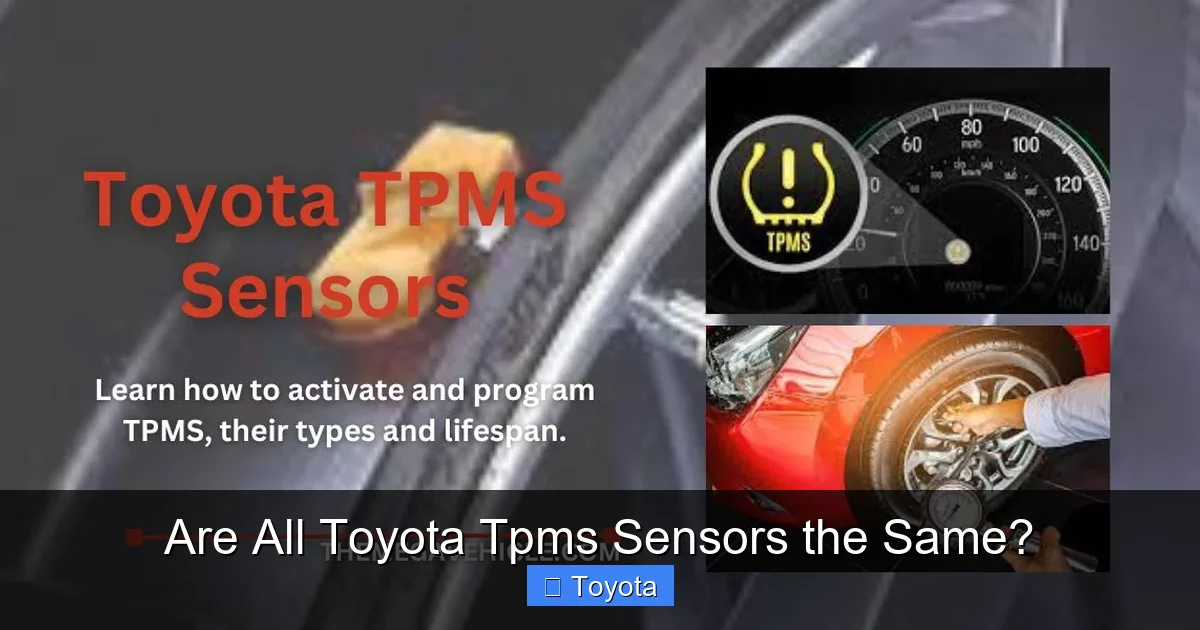
TPMS stands for Tire Pressure Monitoring System. It’s an electronic system that monitors the air pressure inside your vehicle’s tires and alerts the driver when pressure drops below a safe threshold—typically 25% below the recommended level. This warning usually appears as a yellow or amber light on your dashboard that looks like a flat tire with an exclamation point.
Why is this important? Underinflated tires can lead to a host of problems: reduced fuel efficiency, uneven tire wear, poor handling, and even blowouts at high speeds. According to the National Highway Traffic Safety Administration (NHTSA), underinflated tires contribute to thousands of accidents each year. TPMS helps prevent these issues by giving you real-time feedback on your tire health.
There are two main types of TPMS systems used in vehicles today: direct and indirect.
Direct TPMS
Direct TPMS uses physical sensors mounted inside each tire (usually attached to the valve stem or wheel rim) to measure air pressure directly. These sensors transmit real-time data wirelessly to the vehicle’s onboard computer. Most modern Toyotas—especially those made after 2008—use direct TPMS because it’s more accurate and provides immediate feedback.
Each sensor has a unique ID and sends data at a specific radio frequency (commonly 315 MHz in the U.S. or 433 MHz in Europe and Asia). The system can pinpoint which tire is low, making it easier to diagnose and fix the issue.
Indirect TPMS
Indirect TPMS, on the other hand, doesn’t use physical pressure sensors. Instead, it relies on the vehicle’s Anti-lock Braking System (ABS) wheel speed sensors to detect differences in rotational speed between tires. A underinflated tire has a slightly smaller diameter and rotates faster than a properly inflated one. The system interprets this as low pressure.
While indirect TPMS is less expensive to manufacture, it’s also less accurate and can’t tell you the exact pressure in each tire. It also requires a reset after every tire rotation or inflation adjustment. Most older Toyotas (pre-2008) and some base-trim models may still use indirect systems, but direct TPMS is now the standard.
Why Toyota TPMS Sensors Aren’t All the Same

Visual guide about Are All Toyota Tpms Sensors the Same?
Image source: partsavatar.ca
Now that we understand how TPMS works, let’s address the core question: Are all Toyota TPMS sensors the same? The answer is a clear no—and here’s why.
Model and Year Variations
Toyota produces dozens of vehicle models, from compact cars like the Corolla to full-size trucks like the Tundra. Each model may have different TPMS requirements based on its design, weight, and intended use. Additionally, Toyota has updated its TPMS technology over the years.
For example:
– A 2010 Toyota Camry might use 315 MHz sensors with a specific valve stem design.
– A 2020 Toyota RAV4 Hybrid could use updated sensors with enhanced battery life and improved signal strength.
– A 2023 Toyota Tacoma TRD Pro might come with reinforced sensors designed for off-road conditions.
Even within the same model, different trim levels can have different TPMS setups. A base model might use standard sensors, while a higher trim with advanced safety features could include sensors with additional data capabilities.
Sensor Frequency Differences
One of the most critical factors in TPMS compatibility is the radio frequency at which the sensors transmit data. In the United States, most Toyota vehicles use 315 MHz sensors. However, in Europe and other regions, 433 MHz is more common.
Using a sensor with the wrong frequency is like trying to tune into a radio station that doesn’t exist—your car won’t receive the signal, and the TPMS warning light will stay on. This is why it’s crucial to verify the correct frequency for your specific vehicle before purchasing replacement sensors.
Valve Stem and Mounting Style
TPMS sensors are typically mounted either to the valve stem or directly to the wheel rim. The design can vary between models and years:
– Some use a rubber valve stem with an integrated sensor.
– Others use a metal valve stem for durability, especially in performance or off-road vehicles.
– Certain aftermarket wheels may require specific sensor types or adapters.
For instance, a 2015 Toyota 4Runner might use a metal valve stem sensor, while a 2018 Toyota Prius uses a lighter, rubber-style sensor. Swapping them could lead to leaks or improper fitment.
Battery Life and Sensor Lifespan
TPMS sensors are powered by small lithium batteries that typically last 5 to 10 years. As the battery dies, the sensor stops transmitting data, triggering a warning light. However, not all sensors have the same battery life or replacement options.
Some OEM (Original Equipment Manufacturer) sensors are sealed units—meaning the entire sensor must be replaced when the battery dies. Others, particularly certain aftermarket models, allow for battery replacement, extending the sensor’s lifespan.
Toyota’s OEM sensors are designed to last the life of the vehicle under normal conditions, but real-world factors like extreme temperatures, road salt, and physical damage can shorten their lifespan.
OEM vs. Aftermarket Sensors
Another reason Toyota TPMS sensors aren’t all the same is the choice between OEM and aftermarket options.
OEM sensors are made by Toyota or its authorized suppliers and are guaranteed to match your vehicle’s specifications. They’re reliable, but often more expensive.
Aftermarket sensors are produced by third-party companies and can vary widely in quality. Some are direct replacements that work just as well as OEM, while others may have compatibility issues or shorter lifespans.
When choosing aftermarket sensors, look for brands that are TPMS-certified and compatible with your Toyota’s make, model, and year. Popular brands like Schrader, Huf, and Denso offer high-quality alternatives.
How to Identify Your Toyota’s TPMS Sensor
Visual guide about Are All Toyota Tpms Sensors the Same?
Image source: toyotatpms.com
So, how do you know which TPMS sensor your Toyota uses? Here’s a step-by-step guide to help you identify the correct sensor.
Check Your Owner’s Manual
The easiest place to start is your vehicle’s owner’s manual. Toyota includes detailed information about the TPMS system, including the type of sensors used, recommended tire pressures, and reset procedures.
Look for sections titled “Tire Pressure Monitoring System,” “TPMS,” or “Tire Care.” The manual will often specify whether your vehicle uses direct or indirect TPMS and may even list the sensor frequency.
Use a TPMS Diagnostic Tool
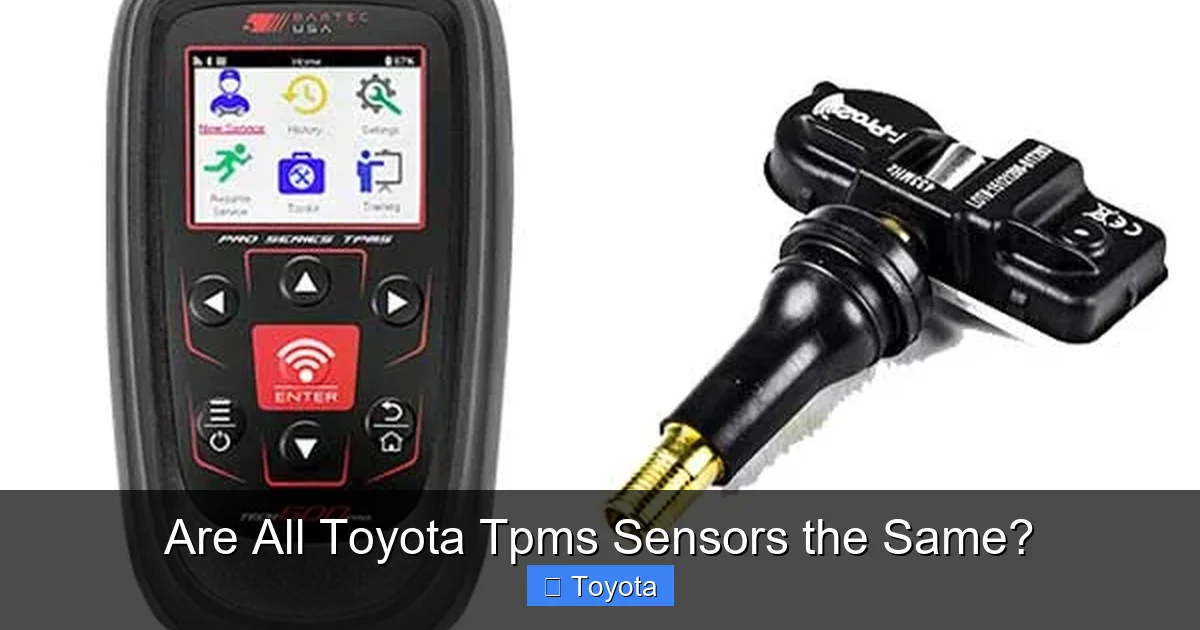
If you have access to a TPMS diagnostic tool (available at auto parts stores or from a mechanic), you can scan your vehicle’s system to read the sensor IDs and frequencies. This is the most accurate way to confirm compatibility.
These tools can also help you reprogram new sensors or reset the system after a tire rotation.
Look Up Your VIN
Your Vehicle Identification Number (VIN) contains a wealth of information about your Toyota, including its original equipment. Many online TPMS retailers allow you to enter your VIN to find compatible sensors.
Websites like TireRack, Amazon, or OEM parts suppliers often have VIN lookup tools that show exact matches for your vehicle.
Consult a Toyota Dealer or Tire Shop
If you’re unsure, visit a Toyota dealership or a trusted tire shop. They can quickly identify your TPMS type and recommend the correct replacement sensors.
Dealerships have access to Toyota’s technical databases and can ensure you get the right part the first time.
Replacing Toyota TPMS Sensors: What You Need to Know
Replacing a faulty TPMS sensor isn’t as simple as swapping out a tire valve. It requires attention to detail and, in many cases, specialized tools.
When to Replace a Sensor
You may need to replace a TPMS sensor if:
– The TPMS warning light stays on even after inflating all tires.
– The sensor stops transmitting data (common after 5–10 years).
– The sensor is physically damaged (e.g., cracked housing, broken valve).
– You’re installing new wheels that require new sensors.
DIY vs. Professional Installation
Some Toyota owners attempt to replace TPMS sensors themselves, but it’s not always straightforward.
DIY replacement involves:
– Removing the tire from the wheel.
– Extracting the old sensor.
– Installing the new sensor.
– Reassembling the tire and wheel.
– Reprogramming the sensor to the vehicle.
The reprogramming step is critical. Without it, your car won’t recognize the new sensor, and the warning light will remain on.
Most DIYers need a TPMS reset tool or access to a professional-grade scanner. Some newer Toyotas allow for a manual reset procedure (e.g., pressing a button sequence), but this varies by model.
For these reasons, many experts recommend professional installation—especially if you’re not experienced with tire work or electronics.
Reprogramming the System
After installing new sensors, the vehicle’s computer must “learn” the new sensor IDs. This process is called reprogramming or relearning.
Methods vary by Toyota model:
– **Auto relearn:** Some vehicles automatically detect new sensors after driving for a few minutes.
– **Manual relearn:** Others require a specific sequence (e.g., turning the ignition on/off, pressing the TPMS button).
– **Tool-based relearn:** Many require a TPMS scan tool to initiate the process.
Always refer to your owner’s manual or consult a technician to ensure the relearn procedure is done correctly.
Common Myths About Toyota TPMS Sensors
There are several misconceptions about TPMS sensors that can lead to confusion or costly mistakes.
Myth 1: All TPMS Sensors Are Interchangeable
This is false. As we’ve discussed, sensors vary by frequency, design, and compatibility. Using the wrong sensor can result in no signal, inaccurate readings, or system failure.
Myth 2: You Can Ignore the TPMS Light
Some drivers assume the light is a minor issue or a glitch. In reality, it’s a safety warning. Ignoring it can lead to poor fuel economy, tire damage, or even a blowout.
Myth 3: Aftermarket Sensors Don’t Work
While low-quality aftermarket sensors can be problematic, many reputable brands offer reliable, cost-effective alternatives to OEM parts. The key is choosing a compatible, high-quality product.
Myth 4: TPMS Sensors Last Forever
TPMS sensors have a finite lifespan due to their internal batteries. Most last 5–10 years, so replacement is often necessary—even if the sensor appears intact.
Myth 5: You Don’t Need to Reset After Tire Rotation
On vehicles with direct TPMS, the system may need to be reset after tire rotation so it can relearn which sensor is in which position. Skipping this step can cause confusion in the system.
Tips for Maintaining Your Toyota’s TPMS
To keep your TPMS working properly and avoid unnecessary replacements, follow these maintenance tips:
– **Check tire pressure monthly:** Use a reliable gauge to ensure tires are inflated to the recommended PSI (found on the driver’s door jamb or in the manual).
– **Inspect sensors during tire service:** Ask your technician to check for damage or corrosion during rotations or replacements.
– **Avoid extreme temperatures:** Prolonged exposure to heat or cold can shorten sensor battery life.
– **Use proper valve caps:** Metal or sealed valve caps can help prevent moisture and dirt from entering the sensor.
– **Keep records:** Note when sensors were last replaced or serviced to anticipate future needs.
Conclusion
So, are all Toyota TPMS sensors the same? The answer is a definitive no. While Toyota uses TPMS across its fleet for safety and compliance, the sensors themselves vary by model, year, frequency, design, and functionality. Understanding these differences is key to maintaining your vehicle’s safety, performance, and efficiency.
Whether you’re replacing a dead sensor, upgrading your wheels, or simply staying informed, always verify compatibility before making a purchase. Use your owner’s manual, VIN, or a diagnostic tool to ensure you’re getting the right part. And when in doubt, consult a professional.
Your Toyota’s TPMS is more than just a warning light—it’s a vital part of your vehicle’s safety system. Treat it with care, and it will help keep you safe on the road for years to come.
Frequently Asked Questions
Can I use any TPMS sensor in my Toyota?
No, you cannot use any TPMS sensor. Sensors must match your Toyota’s model, year, and frequency (usually 315 MHz or 433 MHz). Using the wrong sensor will result in no signal or inaccurate readings.
How long do Toyota TPMS sensors last?
Most Toyota TPMS sensors last between 5 and 10 years, depending on usage and environmental conditions. The internal battery eventually dies, requiring replacement of the entire sensor.
Do I need to reprogram my Toyota after replacing TPMS sensors?
Yes, in most cases. New sensors must be reprogrammed so your vehicle can recognize them. This usually requires a TPMS tool or a specific reset procedure outlined in your owner’s manual.
Can I replace a TPMS sensor myself?
It’s possible, but not recommended unless you have experience with tire work and TPMS tools. Improper installation can cause leaks or system errors. Professional installation is safer and more reliable.
Are aftermarket TPMS sensors safe for Toyota vehicles?
High-quality aftermarket sensors from reputable brands are generally safe and effective. However, always verify compatibility with your specific Toyota model and year before purchasing.
Why does my TPMS light stay on after inflating the tires?
This could indicate a faulty sensor, low battery, or a system that needs reprogramming. It may also be a sign of a slow leak or sensor damage. Have it checked by a technician.
