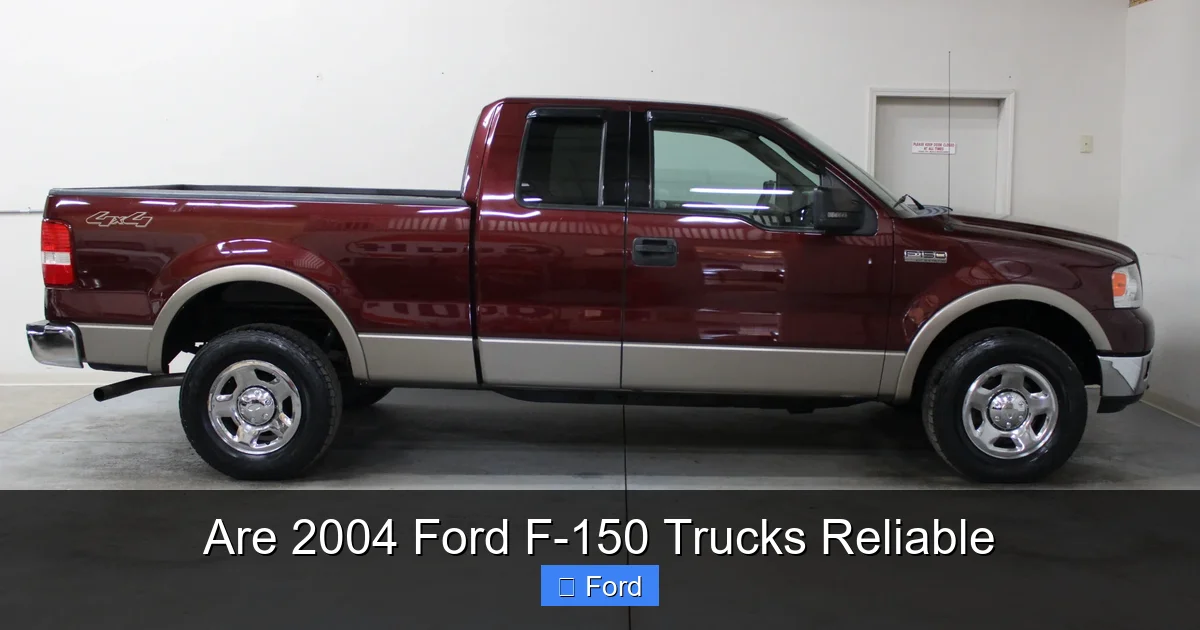
Are 2004 Ford F-150 Trucks Reliable

Contents
- 1 Key Takeaways
- 2 📑 Table of Contents
- 3 The 2004 F-150: A Pivotal, Flawed Workhorse
- 4 Powertrain: The Heart of the Beast (and Its Ailments)
- 5 Common Problems & Pain Points: What Will Break?
- 6 Real-World Owner Experiences: The Verdict from the Trenches
- 7 Buying a Used 2004 F-150 Today: Your Inspection Checklist
- 8 Maintenance for Longevity: How to Keep It Alive
- 9 Frequently Asked Questions



The 2004 Ford F-150 presents a mixed reliability picture. Its legendary 5.4L Triton V8 engine is robust, but the model year has known, costly issues like spark plug failures and transmission concerns. A well-maintained example with documented service history can be a workhorse, but a neglected one is a risky purchase. Thorough pre-purchase inspection is absolutely critical.
Key Takeaways
- The 5.4L Triton V8 is generally strong: This engine, when cared for, is durable and powerful, but has a critical, well-known flaw with its spark plugs that requires careful attention.
- Transmission vigilance is key: The 4R75E automatic transmission is adequate but can be a weak point in high-mileage or heavily loaded trucks, often requiring rebuilds.
- Suspension and brakes wear out: As a 20-year-old truck, expect to replace ball joints, wheel bearings, and brake components. These are normal wear items but add significant cost.
- Electrical gremlins are common: Issues with alternators, starters, and interior modules are frequently reported and can be frustrating to diagnose.
- Rust is the silent killer: Frame, brake lines, and body panels, especially in northern states or coastal areas, can suffer from severe corrosion.
- Service history is everything: A truck with comprehensive, consistent maintenance records is a far better bet than a cheap one with a mysterious past.
- It’s a truck, not a luxury car: Expect road noise, a rough ride when unloaded, and interior wear. Its value is in capability, not comfort.
📑 Table of Contents
- The 2004 F-150: A Pivotal, Flawed Workhorse
- Powertrain: The Heart of the Beast (and Its Ailments)
- Common Problems & Pain Points: What Will Break?
- Real-World Owner Experiences: The Verdict from the Trenches
- Buying a Used 2004 F-150 Today: Your Inspection Checklist
- Maintenance for Longevity: How to Keep It Alive
The 2004 F-150: A Pivotal, Flawed Workhorse
So, you’re eyeing a used 2004 Ford F-150. Maybe you need a capable hauler for weekend projects, a reliable work truck, or just a solid, full-size pickup that won’t break the bank. The 11th generation F-150, which ran from 2004 to 2008, is everywhere on the used market. It’s iconic, it’s American, and it’s often priced attractively. But that low price tag can be a siren song, masking potential headaches. The big question, “Are 2004 Ford F-150 trucks reliable?” doesn’t have a simple yes or no answer. It’s a qualified “it depends,” and that “depends” hinges almost entirely on one thing: the specific truck’s maintenance and repair history.
This was the first year of a completely redesigned F-150. Ford went all-in with a new, more modern look, a fully boxed frame for improved rigidity, and an updated interior. Under the hood, they carried over their trusted powertrains. This combination of new-body-old-guts is a classic recipe for both proven performance and unforeseen problems. The 2004 model year is essentially a beta test for the new generation, and some of the bugs hadn’t been worked out yet. To truly understand its reliability, we need to dissect what makes it tick, what makes it sick, and what you, as a potential buyer, must look for.
Powertrain: The Heart of the Beast (and Its Ailments)
When discussing F-150 reliability, the engine and transmission are the stars of the show. For 2004, you had three primary gasoline choices and a diesel option. Let’s break them down.
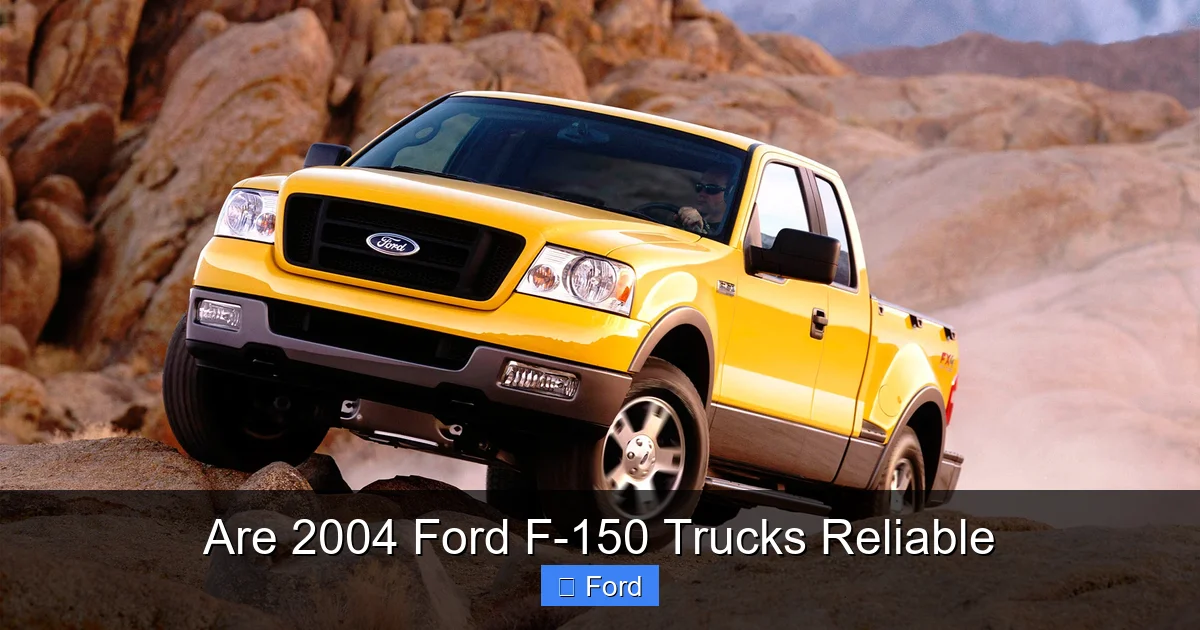
Visual guide about Are 2004 Ford F-150 Trucks Reliable
Image source: motortrend.com
The Mighty 5.4L Triton V8: Brilliant, But with a Catch
The 5.4-liter three-valve-per-cylinder Triton V8 was the hero engine for this generation. It made a healthy 300 horsepower and 365 lb-ft of torque, plenty for most tasks. In terms of core reliability—the block, heads, camshafts, timing chain—it’s a tank. These engines can easily surpass 250,000 miles if not abused. However, it has one infamous, design-related flaw that casts a long shadow: the spark plugs.
The 5.4L uses aluminum cylinder heads with steel threaded inserts for the spark plugs. Over time, due to thermal cycling and installation torque issues, these inserts can strip out of the aluminum head. The result? A spark plug that either won’t come out (breaking off in the hole) or, worse, doesn’t seal properly, causing massive compression loss and misfires. A proper fix involves removing the head and installing new, oversized inserts (the “Timesert” repair), which is an expensive, labor-intensive job costing $1,500-$3,000. A simple plug change should never be this hard or risky. If you’re looking at a 2004 with a 5.4L, you must ask: Has the spark plug issue been addressed? Look for records of this repair. If the plugs have never been removed since new, it’s a ticking time bomb. Some owners get lucky and never have a problem, but the risk is statistically significant. For maintenance tips on this engine, checking resources like the guide on best spark plugs for Ford F-150 5.0 (which covers the related 5.0L and Triton family issues) is wise, though the 2004 5.4L is the specific concern.
The 4.6L Triton V8: The Under-Powered, Under-Stressed Workhorse
The 4.6-liter two-valve V8 (231 hp, 293 lb-ft) was the base engine. It’s not as powerful, but it’s also not burdened by the severe spark plug design flaw of the 5.4L. Its spark plugs are in a much more accessible location and don’t suffer from the same insert-stripping issue. This makes the 4.6L arguably more reliable in the long term for a buyer who doesn’t need maximum towing power. Its main weakness is the plastic intake manifold, which can crack, causing vacuum leaks and poor performance. This is a much cheaper fix ($500-$1,000) than the 5.4L’s plug issue. If you find a 2004 with the 4.6L and a clean title, it’s often a more straightforward, less anxiety-inducing ownership proposition, provided you’re okay with modest power.
The 5.4L Supercharged V8 (Harrier): A Niche Beast
The supercharged 5.4L in the SVT Lightning and rare Harley-Davidson edition is a different animal. It’s more powerful (380-450 hp) but also more complex and stressed. Reliability here depends heavily on how it was driven and maintained. The supercharger itself is robust, but the engine runs higher compression and boost, so oil changes and cooling system upkeep are paramount. These are collector’s items now, and parts are pricier. They are not “reliable” in the same sense as a work truck; they are high-performance machines with higher operating costs.
The 6.0L PowerStroke V8 Turbo Diesel: A Different Universe
The 6.0L PowerStroke diesel is a story unto itself. It’s powerful, torquey, and can be very reliable. However, it is also infamous for catastrophic failures like cracked cylinder heads, failed EGR coolers, and injector issues. The 2004 model year was the first for the 6.0L in the F-150, and while some early bugs were worked out, it still requires meticulous maintenance, especially with fuel filtration and coolant monitoring. It is not a simple, worry-free diesel. It’s a complex machine that demands a knowledgeable owner. A well-maintained 6.0L can be a great asset; a neglected one is a $15,000 paperweight waiting to happen.
The Transmission: The 4R75E Automatic
Paired with all these engines was the 4R75E 4-speed automatic. It’s a heavy-duty unit derived from the previous generation. In stock form, with a stock engine and moderate use, it’s generally adequate. However, it is not a bulletproof unit. Its common failure points are the torque converter (clutch failure) and the valve body. Symptoms include harsh shifts, slipping, or failure to engage gears. A rebuild costs $2,000-$3,500. The transmission’s longevity is directly tied to how the truck was used. One that regularly towed near its max capacity or had fluid neglected will be at high risk. When checking a truck, a clean transmission pan (no excessive metal shavings) and a history of fluid changes are positive signs.
Common Problems & Pain Points: What Will Break?
Beyond the powertrain’s core issues, the 2004 F-150 suffers from a suite of age-related and design-specific problems that any prospective buyer must anticipate. Think of these as the “cost of entry” for a truck of this vintage.
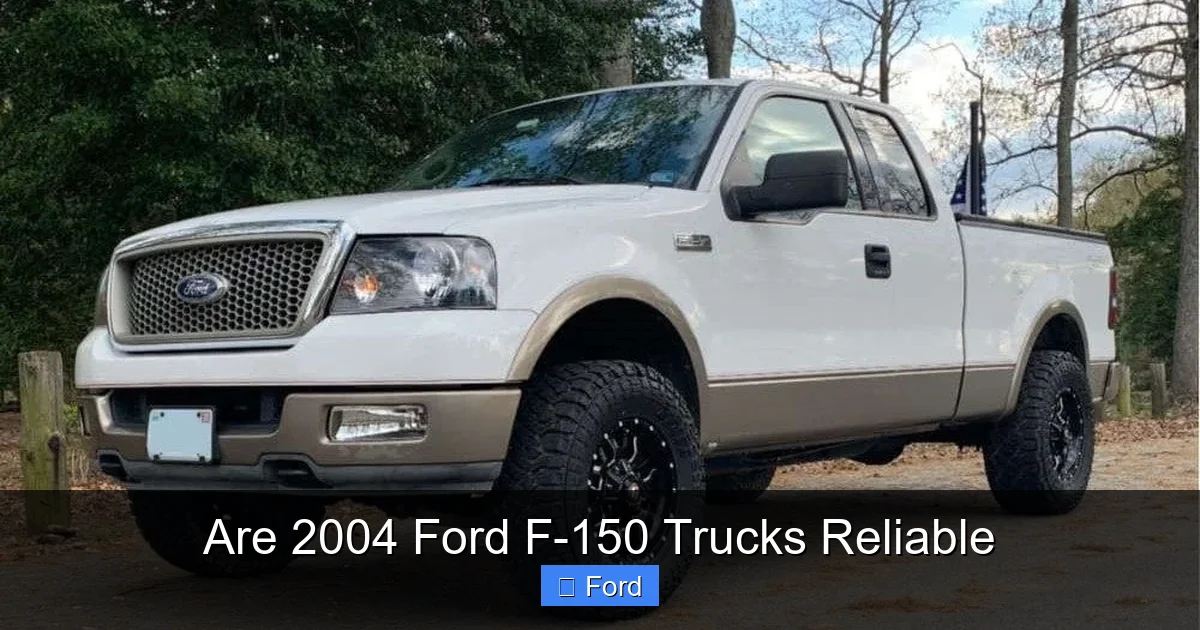
Visual guide about Are 2004 Ford F-150 Trucks Reliable
Image source: mcgaughys.com
Spark Plugs (Again) and Ignition Coils
We must stress the spark plug issue for the 5.4L. It’s that important. Additionally, ignition coils (one per cylinder) fail regularly on all Triton engines. A misfire code is often a bad coil. These are relatively cheap and easy to replace, but on the 5.4L, accessing the rear plugs is a nightmare even when they’re not stuck.
Suspension and Steering Wear
This is a universal truth for any 20-year-old full-size truck. The 2004 F-150’s front suspension is a twin-I-beam setup (a Ford staple), which is strong but has many wear points. Ball joints, tie rod ends, wheel bearings, and upper/lower control arm bushings all wear out. Symptoms include clunking noises over bumps, vague steering, and uneven tire wear. A full front-end inspection is non-negotiable. Budget $1,500-$3,000 for a complete refresh if it hasn’t been done recently. The rear leaf springs also sag and their bushings wear out, affecting ride quality and axle location.
Brake System Concerns
Rotor warping is common, especially on heavier trucks. The rubber brake lines (especially the rear axle line) age and can crack, leading to fluid leaks and brake failure. This is a major safety item. All rubber brake components should be replaced with steel-braided lines during a major service. Calipers can also seize. A thorough brake inspection is a must.
Rust: The Unstoppable Force
This is often the most expensive and irreversible problem. The 2004 F-150’s frame, especially around the rear axle, cab mounts, and front crossmember, is notorious for rusting through. Check the frame rails with a magnet—if the magnet doesn’t stick, the metal is gone. Also, inspect the brake lines (which are often steel) for rust. Surface rust is normal; holes in the frame are a total loss. Also, check the rocker panels and wheel arches for bubbling paint.
Electrical Gremlins
You’ll encounter tales of flickering dash lights, failed windows, malfunctioning door locks, and dead batteries. The 2004 introduced a more complex CAN bus electrical system. Common culprits are the alternator (which often fails without warning) and the starter (especially on the 5.4L). Interior modules like the instrument cluster or body control module can also fail. A weak or failing battery is a frequent cause of many “electrical” complaints, so always start there. For a reliable electrical system, a quality battery is crucial; guides on the best battery for a 2004 Ford F-150 can help you choose a unit that handles the truck’s high electrical demands.
Exhaust Manifold Cracks
The cast-iron exhaust manifolds on the 5.4L V8 are known to crack, causing a loud ticking or tapping noise, especially when cold. They are expensive to replace as they are difficult to access. Aftermarket headers are a common fix but can cause other issues like check engine lights due to oxygen sensor placement.
Real-World Owner Experiences: The Verdict from the Trenches
Forums, consumer reports, and owner surveys paint a clear picture. The 2004 F-150 is not a “reliable” truck in the sense of a Toyota Camry. It’s a complex, heavy-duty machine with known weaknesses. Owners who treat their trucks with respect—changing fluids on schedule, addressing small problems before they become big ones, and not constantly maxing out the tow rating—often report happy, hundreds-of-thousands-of-miles service.

Visual guide about Are 2004 Ford F-150 Trucks Reliable
Image source: automanager.blob.core.windows.net
However, the forums are also filled with horror stories: trucks that needed a $3,000 spark plug job at 80,000 miles, transmissions that failed at 100,000, and frames that rusted in half. The common thread in the negative stories is deferred maintenance or buying a truck with an unknown history. The positive stories almost always include phrases like “I’ve had all the scheduled maintenance done” or “I replaced the transmission at 150k and it’s been perfect since.”
Consumer Reports and J.D. Power ratings for the 2004 F-150 are mediocre, reflecting these known issues. It scores below average for predicted reliability compared to its rivals from that era. This isn’t a death sentence, but it’s a strong signal to proceed with caution and a sharp eye.
Buying a Used 2004 F-150 Today: Your Inspection Checklist
If you’re still in the market, your purchase decision must be based on a rigorous pre-purchase inspection (PPI) by a trusted, Ford-savvy mechanic. Do not buy without one. Here’s what that mechanic should be looking for, and what you should look for yourself.
The Non-Negotiables
- Spark Plug History on 5.4L Trucks: This is priority #1. Has the repair been done? Were the proper Timeserts installed? If the plugs have never been removed, assume it will need to be done and factor $2,500 into your budget.
- Frame Rust: Get underneath with a flashlight and a magnet. Probe suspicious areas with a screwdriver. If the magnet doesn’t stick to the frame where it should, walk away.
- Transmission Health: Check fluid condition (should be red, not brown or black, and not smell burnt). Ask for a transmission pan drop for inspection. A clean pan with minimal fine dust is good; large metal shavings are bad. Test drive for firm, timely shifts. Any slipping, hesitation, or harsh engagement is a red flag.
- Full Service Records: Look for consistent oil changes (every 5,000 miles max), transmission service, and cooling system maintenance. Gaps in history are warning signs.
Other Critical Checks
- Cold Start and Drive: Start the truck when it’s been sitting overnight. Listen for excessive cranking, smoke (blue = burning oil, white = coolant), or rough idle. Drive it on various roads. Listen for clunks over bumps (suspension), whining (wheel bearings), or exhaust leaks.
- Electronics and Accessories: Test every switch, window, lock, and light. Check the operation of the 4WD system if equipped (if it’s a 4×4). A malfunctioning transfer case motor is a common failure.
- Oil and Coolant: Check for milky residue under the oil cap (sign of a blown head gasket) or in the coolant reservoir. The 5.4L is generally good here, but it’s a must-check on any used vehicle.
- Tires and Wheels: Uneven wear points to suspension issues. Check for aftermarket wheels that may not have the correct offset, causing added stress on wheel bearings.
Price Reality Check
A running, driving 2004 F-150 with a clean title might sell for $4,000-$8,000 depending on trim, bed length, and engine. That’s the “base” price. If the spark plug job is needed, add $2,500. If the transmission is weak, add $3,000. If the frame is rusted, subtract $2,000 (because it’s nearly worthless). A $5,000 truck that needs $5,000 in immediate repairs is a $10,000 truck. Be ruthless with your math. It’s often smarter to pay more upfront for a truck with a known, recent major service history than to save money on a project.
Maintenance for Longevity: How to Keep It Alive
If you buy a good one, or get a fixer-upper, a strict maintenance regimen is your best friend.
- Oil Changes: Every 5,000 miles, without fail. Use a high-quality oil and filter. The 5.4L is sensitive to oil consumption; keep it topped up between changes.
- Spark Plugs (5.4L):strong> If they haven’t been done, do them. Use the correct torque wrench and anti-seize compound. Consider having a professional do it due to the risk of breakage.
- Transmission: Service the transmission every 60,000 miles. Use the correct Mercon fluid. For the 4R75E, a fluid and filter change is cheap insurance.
- Cooling System: Replace the thermostat, water pump, and radiator cap every 80,000-100,000 miles. The 5.4L is prone to intake manifold coolant leaks if the intake gaskets fail.
- Suspension: Inspect ball joints, tie rods, and bushings annually. Replace in pairs as needed. Don’t ignore a clunk.
- Brakes: Replace pads and rotors before they’re completely gone. Replace all rubber brake lines with stainless steel braided lines.
- Battery: These trucks have high electrical demands. Replace the battery every 4-5 years with a high-CCA (cold cranking amps) unit. Don’t cheap out here.
Following this schedule won’t make the truck immune to its design flaws, but it will maximize the odds of reaching 200,000+ miles. For a truck of this age, having a reliable battery that can handle the cold cranking needs of the 5.4L is a simple but critical part of that plan.
Frequently Asked Questions
Is the 2004 Ford F-150 a good first truck?
It can be, with major caveats. The 4.6L V8 is simpler and cheaper to maintain than the 5.4L. However, the high cost of potential repairs (spark plugs, transmission, suspension) means a buyer must have a solid emergency fund and be prepared to do research or find a trusted mechanic. It’s not a low-risk, cheap-to-own first vehicle.
What is the most reliable engine in the 2004 F-150?
The 4.6L Triton V8 is generally considered the most reliable of the gasoline options for this year. It lacks the severe spark plug design flaw of the 5.4L and is less stressed. The 5.4L is powerful but carries the significant risk of the plug issue. The diesel 6.0L is powerful but complex and has its own set of expensive potential problems.
How many miles is too many for a 2004 F-150?
Mileage is less important than condition and history. A 2004 with 300,000 miles that has had the transmission rebuilt, spark plugs properly serviced, and the frame inspected/treated for rust could be a better buy than a 150,000-mile truck with no records and a rusting frame. However, expect to see mostly trucks with 150,000-250,000 miles. High mileage itself isn’t a deal-breaker if the major components have been addressed.
What should I immediately replace on a 2004 F-150?
Upon purchase of any used 2004 F-150, especially if history is unknown, you should immediately: 1) Change all fluids (oil, transmission, differential, coolant). 2) Replace all belts and hoses. 3) Replace the battery. 4) Perform a complete brake system inspection and replace any rubber lines. 5) Have the spark plugs inspected on any 5.4L (be prepared for them to be stuck). This “reset” can cost $1,500-$2,500 but is essential for reliability.
Does the 2004 F-150 have transmission problems?
Yes, the 4R75E transmission is a known weak point, especially in trucks that towed regularly or had neglected fluid. Failure is not guaranteed, but the risk increases significantly after 120,000 miles. A transmission that shifts firmly and has a clean service history is a good sign. Any symptoms of slipping, delayed engagement, or harsh shifts require immediate diagnosis.
How much does it cost to fix the spark plugs on a 5.4L 2004 F-150?
If the plugs are simply being changed and come out easily, it’s a standard job. However, the real cost comes if they break. The proper repair, which involves removing the cylinder head and installing Timesert inserts, typically costs between $1,500 and $3,000 per side (there are 8 plugs total, with 4 on each side). This is the single most expensive and common repair specific to this engine and year.