
Where Is the Tpms Reset Button on a 2015 Toyota Sienna

The TPMS reset button on a 2015 Toyota Sienna is located inside the glovebox, typically on the lower left side near the fuse panel. You’ll need to turn the ignition to the “ON” position (without starting) and press and hold the button for about 3 seconds until the TPMS light blinks three times. Note that some 2015 Sienna models may use an automatic reset system without a physical button, requiring a drive cycle after adjusting tire pressure. Always ensure all tires are properly inflated to the manufacturer’s specs before attempting a reset.
Key Takeaways
- Button Location: The reset button is inside the glovebox, on the lower left panel near the fuse box cover.
- No Universal Button: Some 2015 Sienna trims use an automatic reset system and may not have a dedicated button.
- Prerequisite: All four tires must be inflated to the exact pressure listed on the driver’s door jamb sticker before resetting.
- Process: Ignition to “ON” (not start), press and hold the button for ~3 seconds until the dash light blinks 3 times.
- Recalibration Drive: After resetting, drive at speeds above 50 mph for 10-15 minutes to allow sensors to recalibrate.
- Persistent Light: If the light returns, check for a dead sensor battery, damaged sensor, or tire pressure leak.
- Professional Help: Dealerships or tire shops can diagnose sensor issues and perform resets with specialized tools if needed.
Understanding TPMS in Your 2015 Toyota Sienna
Let’s talk about your 2015 Toyota Sienna’s Tire Pressure Monitoring System, or TPMS. This is a safety feature mandated by law that keeps an eye on the air pressure inside your tires. If the pressure in any tire drops significantly below the recommended level, a small icon of a cross-section of a tire with an exclamation point lights up on your dashboard. It’s that little yellow light that looks like a horseshoe with an exclamation mark in the middle. Its job is to warn you of underinflation, which can lead to poor fuel economy, uneven tire wear, and even dangerous handling issues.
In your Sienna, the TPMS uses small electronic sensors mounted inside each wheel valve stem. These sensors are powered by long-life batteries and transmit pressure data to the vehicle’s computer. When you inflate or deflate your tires, or when the system detects a problem, it often needs to be manually reset to recognize the new “normal” pressure. This reset tells the computer, “Hey, the tires are now at the correct pressure, please stop warning me.” Knowing how to do this yourself saves you a trip to the dealer and gives you more control over your vehicle’s maintenance.
What Is TPMS and Why It Matters
Think of TPMS as your tire’s personal health monitor. Proper tire pressure is critical. Underinflated tires have more flex in the sidewall, which generates excess heat. This heat can degrade the tire’s structure and, in extreme cases, lead to a blowout. They also create more rolling resistance, hurting your fuel economy—sometimes by as much as 3% or more. On the flip side, overinflated tires have less contact patch with the road, leading to a harsh ride, premature wear in the center of the tread, and reduced traction. The TPMS light is your first alert that something is amiss. Resetting it after correcting the pressure is the final step in the repair process, silencing the warning and restoring your peace of mind.
Direct vs. Indirect TPMS: Which Does Your Sienna Have?
There are two main types of TPMS. Your 2015 Sienna uses a direct system. This means each wheel has its own physical sensor. These sensors are more accurate because they measure the actual pressure and temperature inside the tire. They also transmit a unique ID code to the vehicle, so the system knows which specific tire is low. The alternative is an indirect system, which uses the wheel speed sensors from the anti-lock brake system (ABS) to estimate pressure based on rotational differences. Indirect systems don’t have a reset button; they recalibrate automatically after you drive for a while. Since your Sienna has direct sensors, it requires a manual reset procedure, which we’re here to locate and explain.
Where Is the TPMS Reset Button on a 2015 Toyota Sienna?
Here’s the answer you’ve been searching for. On most 2015 Toyota Sienna models equipped with the direct TPMS, the physical reset button is located inside the passenger glovebox. But don’t just open the glovebox and start feeling around blindly. Let’s get specific.
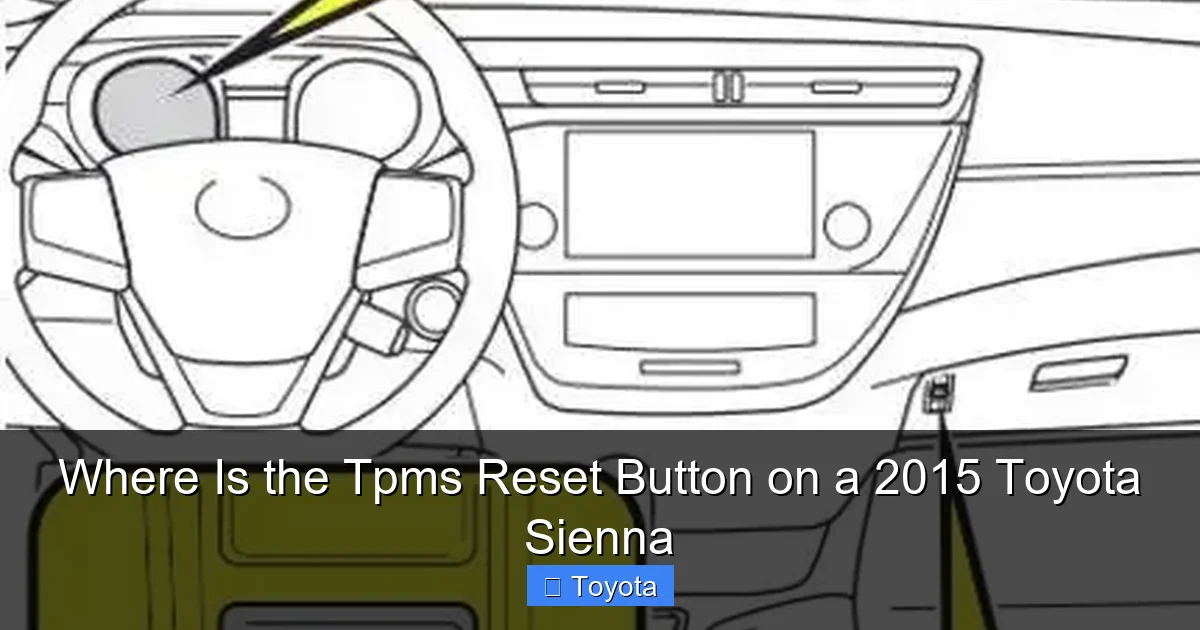
Visual guide about Where Is the Tpms Reset Button on a 2015 Toyota Sienna
Image source: i2.wp.com
Exact Location and Identification
Open your glovebox all the way. Look at the lower portion of the interior left-side wall (the side closest to the center of the van). You are looking for a small, black, rectangular or square button. It’s usually near the fuse panel access cover. On many models, it’s mounted on a small bracket or directly on the plastic panel. The button itself might be labeled with the letters “TPMS” or have a symbol that resembles the TPMS warning light on your dash. It’s a simple, unassuming button. You may need to use a flashlight to see it clearly. If you have a glovebox light, turn it on first.
Sometimes, the fuse panel cover needs to be removed to access the button. The fuse panel is on that same lower left side. Gently pry off the plastic cover (it usually just snaps on). Behind it, you should see a bank of fuses and, very often, the TPMS reset button right there. It’s designed to be accessible but somewhat hidden to prevent accidental resets.
Why Your Sienna Might Not Have a Dedicated Button
This is a crucial point. Not all 2015 Sienna trims have a physical reset button. The presence of the button can depend on the vehicle’s specific trim level (LE, SE, XLE, Limited) and the exact combination of options. Some models use what’s called an “automatic” or “learn” mode. In these systems, there is no button. Instead, the system resets itself after you drive the vehicle for a certain period at a sustained speed (usually over 50 mph) after the tires have been properly inflated. The computer recognizes the consistent pressure signal and turns the light off on its own.
How can you tell if you have a button? The most reliable way is to physically check the glovebox area as described above. If you find a button labeled TPMS, you have the manual reset system. If you find nothing, your Sienna likely uses the automatic drive-cycle reset. You can also consult your owner’s manual—it will have the definitive procedure for your specific VIN. For owners of models without a button, the process is simply: correct tire pressure, drive normally for 20-30 minutes, and the light should extinguish on its own. If it doesn’t, there may be a faulty sensor or other issue requiring a professional scan tool.
For comparison, other Toyota models like the Camry often have the button in a similar location under the dash near the steering column, while some trucks may have it in different spots. But for your Sienna, the glovebox is the primary zone.
Step-by-Step: Resetting the TPMS on Your Sienna
Assuming you’ve located the button inside the glovebox, here is the precise, step-by-step procedure to reset your TPMS. It’s important to follow these in order for success.
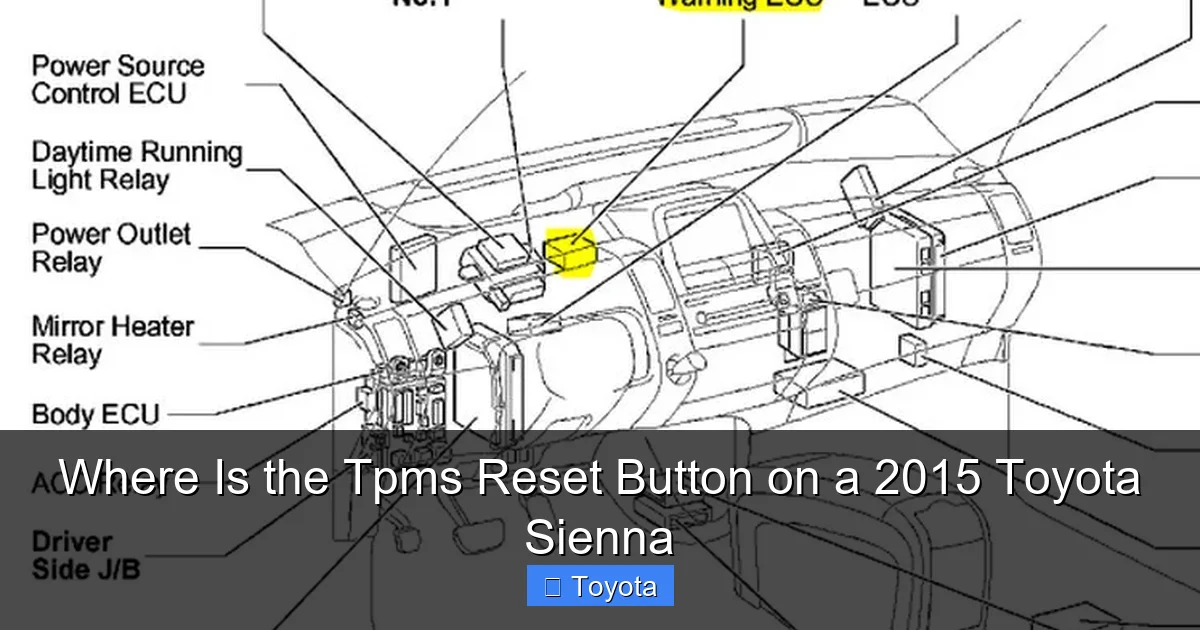
Visual guide about Where Is the Tpms Reset Button on a 2015 Toyota Sienna
Image source: 2carpros.com
Preparation Before You Begin
This is the most important step. Do not attempt a reset if your tire pressures are not correct. The reset will fail, and the light will come back on. First, check the pressure in all four tires and the spare (if it has a sensor, which some do). Use a reliable handheld tire pressure gauge. The correct pressure for your specific 2015 Sienna is found on a sticker located on the driver’s side door jamb (the metal edge of the door frame when you open the driver’s door). It will say something like “Tire Placard” and list pressures for front and rear tires, often at different loads (e.g., normal load vs. maximum load). Inflate or deflate each tire to match that specification exactly. Do not use the pressure printed on the tire’s sidewall; that is the maximum pressure, not the recommended operating pressure for your Sienna.
Once all tires are at the correct pressure, replace any valve stem caps securely. Now you’re ready to reset the system.
The Reset Process
- Turn the ignition ON. Get into the driver’s seat. Insert your key and turn it to the “ON” or “ACC” position. This is the position where all your dashboard lights come on, but the engine is not started. Do not start the engine.
- Locate and press the button. With the ignition on, reach into the glovebox and find the TPMS reset button. Press and hold it firmly.
- Watch the TPMS indicator light. While you are holding the button, look at your dashboard. The TPMS warning light should illuminate, then after about 2-3 seconds, it will begin to blink. It will blink slowly at first, then faster. The reset is complete when the light blinks three times.
- Release the button. Once you’ve seen three blinks, you can let go of the reset button.
- Turn the ignition OFF. Turn the key back to the “LOCK” position and remove it. Wait about 10 seconds.
- Start the engine. Turn the key to start the engine. The TPMS light may come on briefly as the system initializes, but it should turn off within a few seconds. If it stays on steadily or continues to blink, the reset was not successful, or there is still a problem (like a low tire or a faulty sensor).
What to Expect After Resetting
If the reset was successful and all tire pressures are correct, the TPMS light will be off. However, the system’s learning process might not be 100% complete until you drive the vehicle. This is normal. You should drive your Sienna at highway speeds (above 50 mph) for about 10-15 minutes. This allows the sensors to transmit consistent signals that the computer can lock in as the new baseline. During this drive, the light might briefly flash once or twice but should remain off at the end. If it comes back on solidly after driving, re-check all tire pressures for any slow leaks and ensure they are still perfect.
It’s also worth noting that if you have recently rotated your tires, some systems require a reset or a specific “relearn” procedure so the computer knows which sensor is at which wheel position. The standard button press described above usually handles this on the Sienna, but if the light persists after a rotation, a visit to a tire shop with a TPMS scan tool might be necessary to reprogram the sensor positions. This is a common issue across many brands; for example, certain GMC Sierra models also require a relearn after rotation.
Troubleshooting: When the TPMS Light Won’t Go Off
You followed all the steps, the pressures are perfect, but that stubborn TPMS light is still glaring at you from the dash. Don’t panic. Here are the most common reasons and what to do about them.
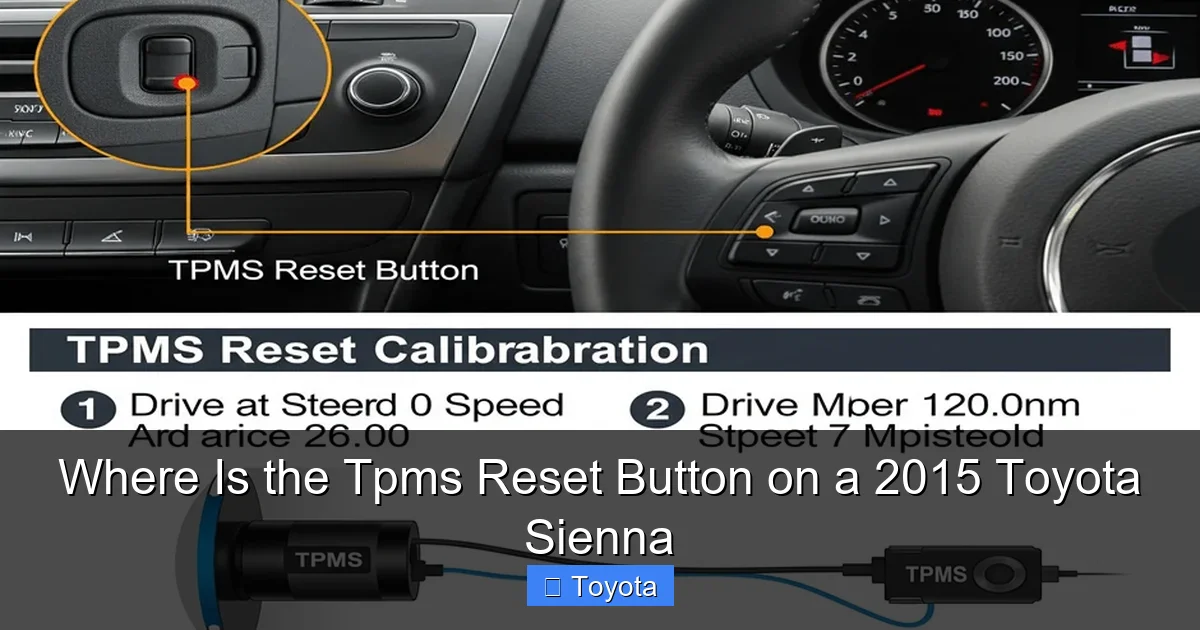
Visual guide about Where Is the Tpms Reset Button on a 2015 Toyota Sienna
Image source: tireandwheelco.com
Common Reasons for Reset Failure
- Incorrect Pressure: Double-check your gauge. Even being off by 1-2 PSI can cause the system to reject the reset. Use the door jamb sticker values.
- Dead Sensor Battery: TPMS sensor batteries last roughly 7-10 years. Your 2015 Sienna is reaching that age. A dead battery means the sensor stops transmitting, triggering the light. The system can’t reset a sensor that isn’t talking.
- Damaged or Faulty Sensor: Sensors can be damaged during tire service, by road debris, or by corrosion on the valve stem. A damaged sensor will fail to communicate.
- Spare Tire Issue: If your full-size spare has a TPMS sensor (some do), and its pressure is low, it will trigger the light. Check it! If your temporary “donut” spare does not have a sensor, that’s fine.
- System Glitch: Rarely, the vehicle’s TPMS control module might have a temporary software hiccup. A full power cycle (disconnecting the negative battery terminal for 10 minutes) can sometimes clear this, but this is an advanced step.
When to Seek Professional Help
If you’ve verified perfect pressures, attempted the reset correctly multiple times, and the light persists, it’s time to call in the pros. A reputable tire shop or your Toyota dealership has a TPMS scan tool. This tool can do two critical things: First, it can check the signal and battery status of each individual sensor, identifying a dead or weak one. Second, it can perform a “relearn” procedure, which forces the car’s computer to recognize and pair with each sensor’s unique ID code. This is often necessary after replacing a sensor or sometimes after a battery disconnect. They can also physically inspect the sensors for damage. Diagnosing a faulty sensor yourself without the proper tool is nearly impossible. If a sensor needs replacement, it’s a quick job for them, though the part cost can be $50-$100 per sensor. Remember, ignoring a persistent TPMS light is not safe; it means your primary tire pressure warning system is compromised.
Pro Tips for TPMS Maintenance and Care
Now that you’ve mastered the reset, let’s talk about keeping your TPMS happy for the long haul. A little proactive care goes a long way.
Seasonal Tire Pressure Adjustments
This is the #1 reason TPMS lights come on. Tire pressure changes with temperature. For every 10°F (5.5°C) drop in outside temperature, tire pressure decreases by about 1-2 PSI. In the fall and winter, your tires will naturally lose pressure. You’ll need to add air to compensate. Conversely, in the hot summer, pressure can increase. It’s a good practice to check your tire pressures at least once a month and with every significant seasonal change. Always adjust them when the tires are “cold,” meaning the vehicle hasn’t been driven for at least three hours or driven less than a mile. Driving heats the tires and gives a falsely high reading. This simple habit prevents unnecessary TPMS activations and ensures optimal tire wear and fuel economy.
Tools and Accessories That Help
Invest in a good quality digital tire pressure gauge. The ones at gas stations are often inaccurate and abused. A digital gauge from a reputable auto parts store is cheap and gives precise readings. Keep it in your glovebox. Also, consider a portable air compressor that plugs into your 12V socket. These are invaluable for adding air at home or on the road without needing to find a gas station air pump. For the ultimate in convenience, some owners install a permanent, hardwired air compressor in their garage. If you frequently have TPMS issues, it might be worth asking a tire shop about TPMS valve stem caps. These are special caps with a small seal that can help prevent slow leaks at the valve stem, a common failure point.
Protecting Your Sensors During Tire Service
Whenever you have your tires rotated, balanced, or replaced, tell the technician your Sienna has TPMS sensors. This is critical. Standard tire machines can damage sensors if the operator isn’t careful. The machine’s beak (the part that grips the tire) should be positioned carefully to avoid the sensor area on the wheel. A good shop will know this, but it never hurts to remind them. Also, if you ever need to replace a sensor, insist on a high-quality, OEM (Toyota) or OEM-equivalent sensor. Cheap aftermarket sensors can be unreliable and have shorter battery lives. This is a lesson learned the hard way by many. For more on general Toyota maintenance, you might read about what ECT Power does on your Sienna, as understanding your vehicle’s features helps you care for it better.
Conclusion
So, there you have it. The TPMS reset button on your 2015 Toyota Sienna is most likely hiding in plain sight inside the passenger glovebox, on the lower left panel near the fuse box. The process itself is wonderfully simple: correct pressures, ignition ON, press and hold the button until the dash light blinks three times, and then drive to let the system settle. However, the real key to success is ensuring your tire pressures are exactly to spec beforehand and understanding that some models may not have a button at all, relying on an automatic drive-cycle reset instead.
Your TPMS is a vital safety and maintenance system. By understanding how to reset it, you empower yourself to handle a common alert quickly and confidently. Remember to check pressures monthly, especially with temperature swings, and protect those sensors during any tire work. If the light persists after a proper reset and pressure check, don’t guess—take it to a professional with the right scan tool. Keeping your tires properly inflated isn’t just about avoiding a dashboard light; it’s about safety, saving money on fuel and tire replacements, and ensuring your Sienna is ready to handle everything from the school run to a cross-country road trip with confidence and comfort.
Frequently Asked Questions
What if I can’t find the TPMS reset button in my glovebox?
First, confirm your specific 2015 Sienna has a manual reset system by checking your owner’s manual. If the manual indicates an automatic system, there is no button. If it should have a button but you can’t find it, look very carefully on the lower left side of the glovebox interior, often behind or near the fuse panel cover. It’s a small black button, sometimes labeled “TPMS.” If it’s truly missing, a previous owner may have removed it, or your trim may not be equipped with one.
Can I reset the TPMS without starting the engine?
Yes, absolutely. The correct procedure requires the ignition to be in the “ON” or “ACC” position (dashboard lights on), but the engine must not be running. Starting the engine during the reset process can interrupt the signal. Make sure you turn the key to the position just before “START,” hold the button as described, and then turn the key off before restarting the engine.
How often should I reset my TPMS?
You should only reset the TPMS after you have corrected the underlying issue that caused the light to come on—usually, this is adjusting the tire pressure to the correct level. You should not need to reset it regularly as a form of maintenance. If the TPMS light is coming on frequently without an obvious cause (like a seasonal temperature drop), it indicates a slow leak in a tire or a failing sensor that needs diagnosis.
What tire pressure should I use before resetting?
Always use the manufacturer’s recommended pressure, not the maximum pressure on the tire’s sidewall. Find the exact specifications on the yellow and white sticker on the driver’s side door jamb. It will list pressures for front and rear tires, often for different load conditions. For normal everyday driving with typical loads, use the “normal load” pressure values. Inflate all four tires to match these numbers precisely.
My TPMS light is blinking, not solid. What does that mean?
A solid TPMS light typically indicates a low pressure in one or more tires. A blinking TPMS light, however, usually indicates a system malfunction. This could be a dead sensor battery, a damaged sensor, or a fault in the vehicle’s TPMS control module. If your light is blinking (not just blinking once during the reset procedure), you should have the system scanned by a professional. Do not attempt a simple reset; it won’t fix a hardware or communication failure.
Do I need to reset the TPMS after rotating my tires?
On your 2015 Sienna with a direct TPMS, a tire rotation should trigger the TPMS light because the system learns which sensor is at which wheel position. After a proper rotation, you will almost certainly need to perform a reset procedure (using the glovebox button) to teach the car the new sensor locations. If the light doesn’t come on after a rotation, it’s still a good idea to perform a reset to ensure the system is fully synchronized. If the light remains on after resetting post-rotation, a professional relearn with a scan tool may be required.
Read More: Best Lead Acid Car Batteries
