What Is the Vsc Warning Light on a 2011 Toyota Corolla

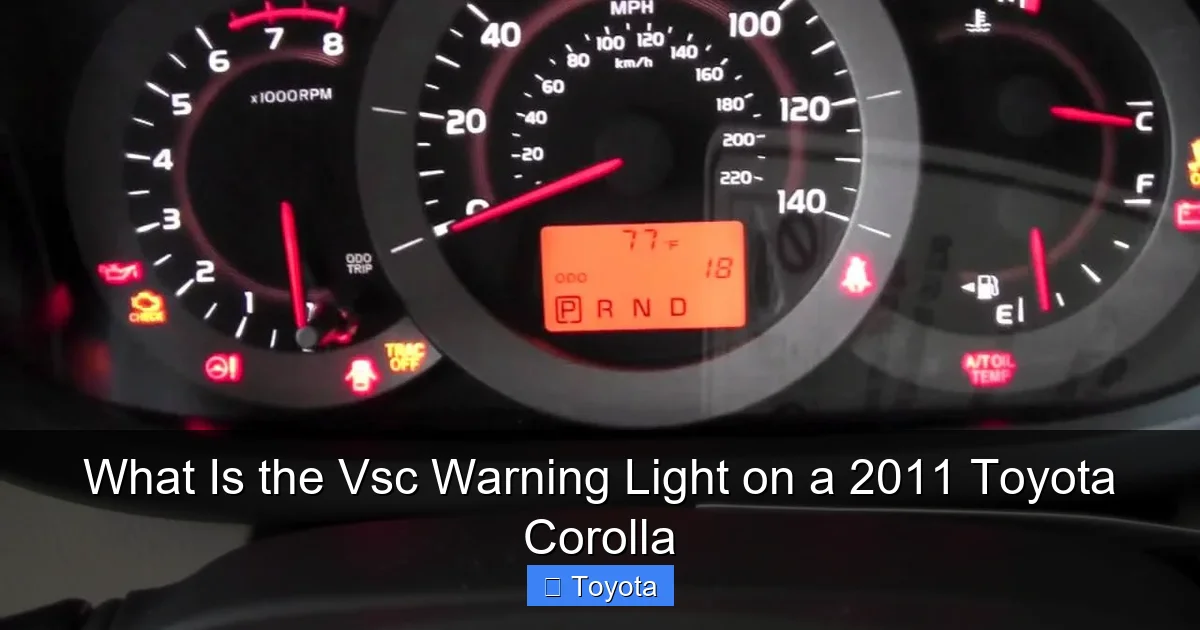
The VSC warning light on a 2011 Toyota Corolla indicates a problem with the Vehicle Stability Control system, a critical safety feature that helps prevent skids and loss of traction. When this light illuminates, the system is disabled, meaning your car’s ability to automatically correct for sliding or swerving is offline. While you can still drive the vehicle, you must exercise much greater caution, especially in wet or slippery conditions, as the car will not assist in maintaining stability.
Key Takeaways
- VSC is a safety system: The VSC (Vehicle Stability Control) system in your 2011 Corolla automatically applies brakes to individual wheels and reduces engine power to help correct oversteer or understeer, keeping you on your intended path.
- The light means it’s disabled: A steady VSC warning light means the computer has detected a fault and turned the system off for your protection. It does not indicate an immediate danger but a loss of an important safety net.
- Common causes are often sensor-related: The most frequent triggers are faulty wheel speed sensors, a malfunctioning steering angle sensor, or issues with the yaw rate/accelerometer sensor that tells the car how it’s moving.
- Simple fixes are possible: Sometimes, a temporary glitch can be resolved by a simple system reset. Other times, cleaning a dirty sensor or addressing a related issue like a weak battery can turn the light off.
- Diagnosis requires a professional tool: To find the exact cause, a mechanic needs to read the specific diagnostic trouble codes (DTCs) stored in the car’s computer, which requires a specialized scan tool beyond basic OBD-II readers.
- Do not ignore it for long: While not an emergency, driving for extended periods with the VSC light on means you’re without a key safety feature. It’s best to have it diagnosed and repaired promptly to restore full vehicle stability.
- It may be linked to other lights: A VSC light often appears alongside the TRAC (Traction Control) or check engine light because these systems share sensors and modules. An issue in one can trigger the others.
📑 Table of Contents
- Understanding Your 2011 Toyota Corolla’s VSC Warning Light
- What Exactly is VSC? More Than Just a Light
- Why is the VSC Light On? The Usual Suspects
- What Should You Do When the Light Comes On? A Step-by-Step Guide
- Common Repairs and Their Costs
- VSC vs. TRAC vs. ABS: Understanding the Relationship
- Can You Drive With the VSC Light On? The Safety Verdict
- How to Reset the VSC Light: The Right Way
- Conclusion: Knowledge is Your Best Co-Pilot
Understanding Your 2011 Toyota Corolla’s VSC Warning Light
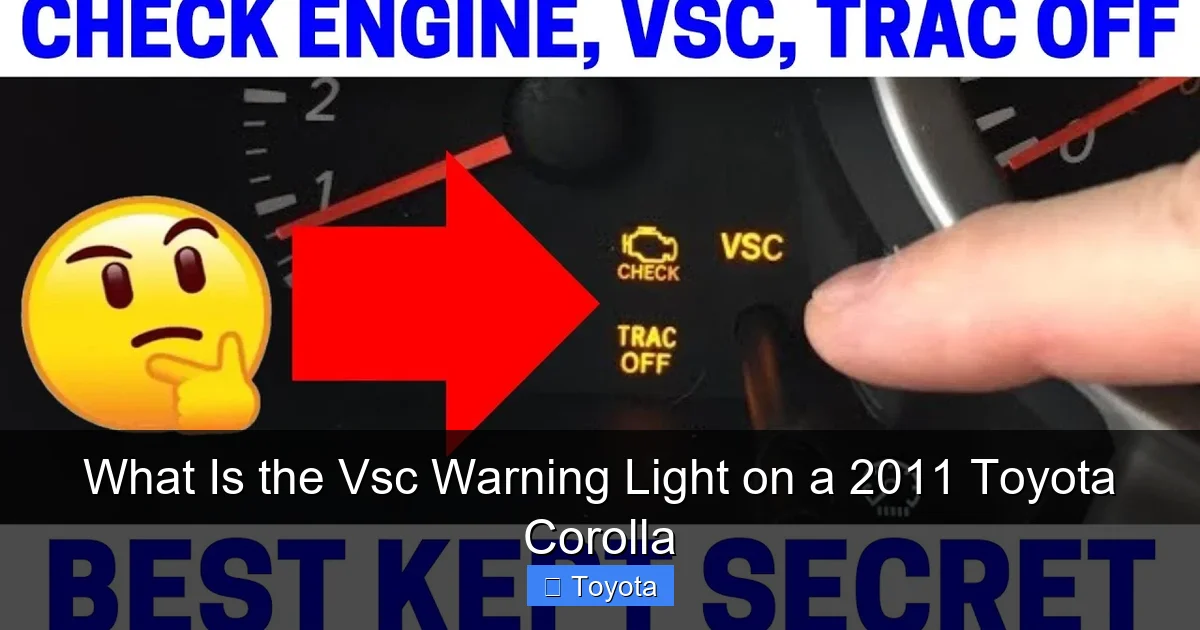
You’re driving your trusty 2011 Toyota Corolla, a car known for its reliability, when suddenly a small icon of a car with squiggly lines beneath it lights up on your dashboard. It’s the VSC warning light. For many drivers, this little symbol sparks immediate confusion and a touch of anxiety. What does it mean? Is your car safe to drive? Should you pull over right now? These are all common and valid questions. Think of this light as your car’s way of saying, “Hey, my anti-skid system is taking a nap. You’ll need to be extra alert out there.” This comprehensive guide will unpack everything you need to know about the VSC warning light on a 2011 Toyota Corolla, from what the system actually does to what causes the light to come on and what your next steps should be.
We’ll break it down in simple, friendly terms. No need for a mechanical engineering degree here. Our goal is to turn that moment of dashboard confusion into a moment of informed understanding. By the end, you’ll know exactly how to respond, what not to worry about, and when it’s time to call in a professional. Your 2011 Corolla is a fantastic vehicle, and part of keeping it that way is understanding its language—and that starts with the VSC light.
What Exactly is VSC? More Than Just a Light
Before we talk about the warning light, let’s talk about the system it represents: VSC, or Vehicle Stability Control. Imagine you’re driving on a rainy road and you take a curve a bit too fast. Without VSC, your car might start to slide wide (understeer) or spin out (oversteer). With VSC, the car’s computer constantly monitors your steering input, wheel speeds, and body motion. If it detects you’re beginning to lose control, it springs into action. It can individually brake the wheels that are slipping and momentarily reduce engine power to help you regain traction and stay pointed where you want to go. It’s like having a super-smart, split-second co-pilot.
Visual guide about What Is the Vsc Warning Light on a 2011 Toyota Corolla
Image source: i.ytimg.com
The Brain and Senses of VSC
For VSC to work its magic, it needs a network of sensors and a central computer (the ECU). The key players are the wheel speed sensors (which tell the computer how fast each wheel is spinning), the steering angle sensor (which tells it which direction you’re trying to turn), and the yaw rate sensor (which detects if the car is rotating more than it should). These sensors feed a constant stream of data to the computer. If the data doesn’t match what the computer expects based on your steering and speed, it assumes a loss of traction and activates VSC. The warning light on your dash is simply the status indicator for this entire system. When it’s off, the system is on and monitoring. When it’s on, the system is off because it has detected a problem it can’t ignore.
Why is the VSC Light On? The Usual Suspects
So, why has your 2011 Corolla’s VSC system decided to clock out? The light is a general warning, not a specific diagnosis. It means “something is wrong with the VSC circuit or its data.” The cause can range from incredibly simple to moderately complex. Here are the most common reasons, starting with the simplest.
Visual guide about What Is the Vsc Warning Light on a 2011 Toyota Corolla
Image source: i.ytimg.com
1. A Temporary Glitch or System Reset
Sometimes, the car’s computer can get a false reading—maybe from driving over a massive pothole or a temporary electrical hiccup. In many cases, the light will turn off on its own after you’ve driven for a few minutes and the system re-synchronizes. If the light comes on and then disappears after a restart or short drive, it might have been a one-time fluke. However, if it returns, there’s a persistent issue.
2. Faulty or Dirty Wheel Speed Sensors
This is the number one culprit. Your Corolla has a wheel speed sensor at each wheel. These sensors are exposed to the elements—road salt, grime, brake dust, and moisture. Over time, they can become dirty or damaged, sending erroneous signals to the computer. If one sensor reports a wheel speed that doesn’t make sense compared to the others, the VSC system gets confused and disables itself. Cleaning or replacing a faulty sensor is a common and often affordable fix.
3. Steering Angle Sensor Calibration or Failure
The steering angle sensor tells the VSC computer how far and which way you’re turning the wheel. If this sensor fails, or if its “zero point” gets out of calibration (which can happen after a wheel alignment or if the steering wheel was removed/recently), it sends bad data. The VSC light will illuminate because the system can’t trust the steering input. A simple recalibration with a professional scan tool can often solve this without any part replacement.
4. Issues with the Yaw Rate/Accelerometer Sensor
This sensor, usually located under the front seats, measures the car’s side-to-side rotation (yaw) and lateral acceleration. It’s crucial for detecting a skid. It’s a sensitive electronic component that can fail due to age, moisture, or vibration. Failure here will definitely trigger the VSC light. Diagnosing this sensor usually requires a professional with the right tools to test its output.
5. Low Battery Voltage or Electrical Problems
The VSC system is powered by your car’s electrical system. An old, weak, or failing battery that can’t hold a steady charge can cause voltage drops that confuse sensitive electronic modules. Similarly, corroded battery terminals or loose ground straps can create intermittent electrical gremlins. Before you spend money on sensors, it’s wise to have the battery and charging system tested.
6. A Problem in the ABS Module
VSC and ABS (Anti-lock Braking System) are closely linked; they share the wheel speed sensors and often the same control module. A fault within the ABS pump motor, its solenoids, or the module itself can set a code that disables both systems. In this case, you might see both the VSC/TRAC light and the ABS warning light illuminated simultaneously.
What Should You Do When the Light Comes On? A Step-by-Step Guide
Seeing that light pop up can be unsettling, but don’t panic. Follow these logical steps to assess the situation and decide on your next move.
Visual guide about What Is the Vsc Warning Light on a 2011 Toyota Corolla
Image source: i.ytimg.com
Step 1: Perform a Basic System Reset
The easiest first step is to try resetting the system. Safely pull over and turn off your engine. Wait about 30 seconds. Then, restart the car. If the light goes out and stays out, it was likely a transient error. However, if it comes back on within a few drive cycles (starting and driving the car), there is a persistent fault that needs diagnosis. Some drivers also try a more deliberate reset by turning the ignition to the “ON” position (without starting the engine), pressing and holding the VSC OFF button (usually near the gear shifter or on the dash) for about 3 seconds until you see “VSC OFF” in the trip meter display, then releasing it. Press it again to re-enable VSC. This won’t fix a hardware problem, but it can clear a temporary flag.
Step 2: Check for Other Warning Lights
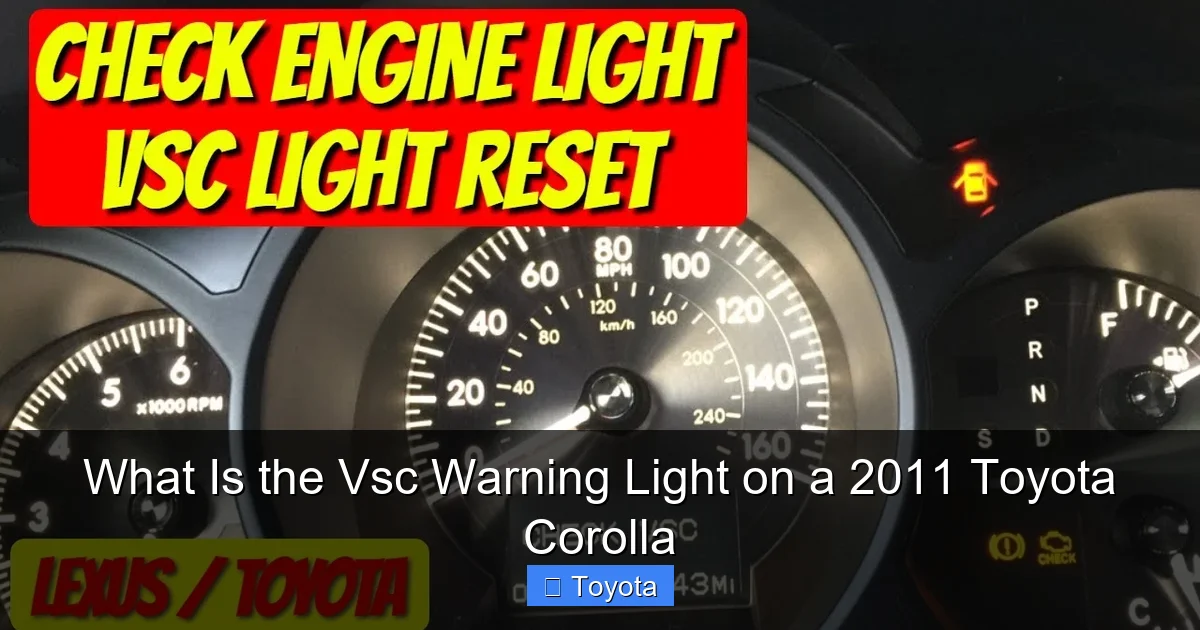
Glance at your entire dashboard. Is the check engine light on? Is the TRAC OFF light (a car with squiggly lines and “OFF” underneath) illuminated alongside the VSC light? Is the ABS light on? The combination of lights is a big clue. If the check engine light is on, the issue might be an engine performance problem (like a misfire) that the VSC system is interpreting as a traction issue. If both VSC and TRAC are on, it’s almost certainly a sensor shared between the two systems. If only VSC is on, the fault is likely specific to the stability control logic or a sensor not directly used by TRAC.
Step 3: Drive with Extreme Caution (If You Must)
If the light is steady and you have no other warning lights (like red brake or oil pressure), your car is mechanically safe to drive *short distances* to a repair shop or home. However, you must adjust your driving. The car will feel more “loose” in corners because it lacks the computer-assisted stability. Avoid sudden steering, hard acceleration, and braking. Be extra gentle in wet, icy, or gravelly conditions. Treat every curve as if the road is slick. Remember, you are now solely responsible for maintaining control.
Step 4: Get a Professional Diagnostic Scan
This is the most important step. You need to know the specific Diagnostic Trouble Code (DTC) stored in the car’s computer. A basic auto parts store scan tool might read check engine codes, but it often cannot access the ABS/VSC module where the VSC codes live. You need a mechanic with a more advanced scan tool (like a Toyota-specific diagnostic computer or a high-end professional scanner). They will plug in, pull the exact code (e.g., C0200 – Right Front Wheel Speed Sensor Circuit), and that code points directly to the faulty component or circuit. Guessing and replacing parts without a code is a waste of money.
Common Repairs and Their Costs
Once you have the diagnostic code, the repair path becomes clear. Here’s a look at common fixes and their typical price ranges for a 2011 Corolla, keeping in mind that labor rates vary widely by region and shop.
Wheel Speed Sensor Replacement
If a sensor is bad, it needs replacing. The part itself for a Corolla is relatively inexpensive, usually between $30 and $80 for an aftermarket or OEM part. Labor involves removing the wheel, brake caliper, and the old sensor, then installing the new one. Total cost for one sensor is typically in the $150 – $250 range. Sometimes, just cleaning the sensor and its tone ring (the toothed ring on the axle) can solve the problem if it’s just caked with brake dust and rust.
Steering Angle Sensor Calibration/Replacement
If the sensor is just out of calibration, a technician can reset it using the scan tool. This is a software procedure and might cost $50 – $100 in labor. If the sensor itself is failed, replacement is needed. The part can cost $100 – $200, and labor involves removing the steering column covers to access it, bringing the total to $200 – $400.
Yaw Rate/Accelerometer Sensor Replacement
This is a less common but more expensive fix. The sensor module itself is pricier, often $200 – $400 for the part. Labor is moderate as it’s usually under the front seats or center console. Total cost can range from $400 to $700+. Sometimes, these sensors are integrated into the airbag module, which drastically increases cost and complexity.
Electrical Work (Battery, Grounds, Wiring)
If the issue is a weak battery or corroded connections, the fix is much cheaper. A new battery is $100 – $200 installed. Cleaning terminals and grounds might be $50 – $100. Repairing damaged wiring to a sensor can vary based on accessibility but is usually less than replacing the sensor itself.
ABS Module Repair/Replacement
This is the most expensive scenario. If the fault is in the ABS hydraulic control unit or its internal module, the part alone can be $500 – $1500+. Often, the solution is to replace it with a rebuilt or new unit and have it programmed to the vehicle, leading to a total bill that can exceed $1500. However, this is statistically the least likely cause for a standalone VSC light.
VSC vs. TRAC vs. ABS: Understanding the Relationship
It’s easy to confuse these dashboard lights because they all involve car control and often look similar. Understanding how they interconnect is key to diagnosing your 2011 Corolla’s issue.
Traction Control (TRAC)
TRAC is the system that prevents wheel spin during acceleration. If your drive wheels start spinning on ice or loose gravel, TRAC applies brake pressure to the spinning wheel(s) and/or reduces engine power to transfer torque to the wheel with grip. Its primary domain is straight-line acceleration. The TRAC light looks like a car with squiggly lines and the word “OFF” underneath it. On your Corolla, the VSC and TRAC systems are integrated and often use the same “off” button. A fault in a shared sensor (like a wheel speed sensor) will typically disable both systems, so you’ll see both the VSC and TRAC lights on. If you only see the TRAC OFF light (without the VSC icon), it usually means you manually turned TRAC off using the button. You can read more about the specifics of Toyota’s traction systems in our detailed guide on what TRAC is on a Toyota.
Anti-lock Braking System (ABS)
ABS prevents your wheels from locking up during hard braking, allowing you to steer while stopping. It uses the same wheel speed sensors as VSC and TRAC. An ABS fault will illuminate the ABS warning light (usually labeled “ABS”). Since VSC relies on the ABS system to brake individual wheels during a stability event, a failed ABS system will also disable VSC. So, if you see both the ABS light and the VSC light, your primary suspect is the ABS circuit or module.
The Check Engine Light (MIL)
The check engine light monitors engine and emissions performance. However, severe engine issues like a major misfire can cause rapid fluctuations in wheel speed that the VSC system interprets as a loss of traction. In this case, the computer might set a VSC code and illuminate its light, in addition to the check engine light. Always check for a check engine code first, as an underlying engine problem must be fixed before the VSC light will stay off. Our article on how to reset the check engine light on a Toyota Corolla explains that process, but stresses that resetting is only the final step after repairs.
Can You Drive With the VSC Light On? The Safety Verdict
This is the most critical question for any driver. The short answer is: Yes, but with significantly reduced safety margins and only for a limited time.
Your 2011 Corolla’s fundamental brakes, steering, and acceleration remain fully functional. You are not driving a dangerously broken car. However, you are driving a car that has lost one of its most advanced electronic safety nets. VSC is a proactive system that can catch a slide before it becomes a spin. Without it, you are entirely dependent on your own reaction time and skill to correct a skid. This increases the risk of an accident, especially in adverse weather conditions (rain, snow, ice) or during sudden evasive maneuvers (like swerving to avoid a deer or debris).
Think of it like this: driving without VSC is like playing a video game without the assistive steering correction. You have full control, but one wrong input can have more severe consequences. Therefore, the light should be treated as a “repair soon” warning, not a “repair eventually” one. Limit driving with the light on to essential trips (like getting to a trusted mechanic) and always drive more defensively. Avoid highways with high speeds and tight curves until the system is fixed. If the light is flashing (which is rare for VSC, more common for TRAC during active intervention), it means the system is currently working to correct a skid—this is normal during aggressive driving on slippery surfaces. A steady light is the fault indicator.
How to Reset the VSC Light: The Right Way
Many people’s first instinct is to “reset” the light to make it go away. While possible, this is often pointless and sometimes harmful if done incorrectly.
The Simple Reset (For Transient Errors)
As mentioned earlier, a full power cycle—turning the car off, removing the key (or pressing the stop button twice in a push-start), waiting 30+ seconds, and restarting—can clear temporary, non-persistent faults. If the underlying issue is gone, the light will stay off. This is a perfectly fine first step after noticing the light.
The Scan Tool Reset (The Only Proper Method)
If the fault is still present, the light will return immediately. The only way to permanently extinguish the VSC light is to repair the underlying problem and then use a professional scan tool to clear the stored diagnostic trouble code from the VSC/ABS module. Simply disconnecting the battery to clear the code is not recommended. It can cause other systems (like the radio or power windows) to require resetting, and it does not address the root cause. The light will simply come back on as soon as the system’s self-test detects the fault again. Therefore, “resetting” is not a fix—it’s the final step after a successful repair. If you repair a wheel speed sensor, the mechanic will use their scan tool to clear the code and then test-drive the car to confirm the light stays off and the system functions.
Conclusion: Knowledge is Your Best Co-Pilot
The VSC warning light on your 2011 Toyota Corolla is not a reason to panic, but it is a clear signal that one of your car’s most important safety systems is offline. Understanding that it points to a fault in the network of sensors and computers responsible for stability control is the first step. The most common causes are wheel speed sensors, steering angle sensor issues, or electrical gremlins. While you can cautiously drive to a repair shop, the only long-term solution is a professional diagnosis using the correct scan tools to read the specific fault code.
Don’t guess and throw parts at the problem. A $50 diagnostic fee can save you hundreds in unnecessary replacements. Once the faulty component is identified—be it a dirty sensor needing a cleaning or a failed sensor needing replacement—the repair is usually straightforward. By addressing the issue promptly, you restore your Corolla’s full suite of electronic safety aids, giving you and your passengers that extra layer of protection and peace of mind on every journey. Your reliable Corolla deserves the best care, and that starts with listening to what its dashboard is trying to tell you.
Frequently Asked Questions
Can I reset the VSC light on my 2011 Toyota Corolla myself?
You can attempt a basic reset by turning the car off, waiting 30 seconds, and restarting. However, if the underlying fault remains, the light will return. A permanent reset requires a professional scan tool to clear the diagnostic code after the repair is made. Disconnecting the battery is not advised as it may cause other system resets without fixing the problem.
Is it safe to drive my Corolla with the VSC light on?
It is mechanically safe for short distances to a repair shop, but you must drive with extreme caution. The car will not have its stability assist, making it more prone to skids in slippery conditions or during sudden maneuvers. Avoid aggressive driving and poor weather until the system is fixed. Do not consider it safe for normal, long-distance driving.
How much does it typically cost to fix the VSC light on a 2011 Corolla?
The cost varies dramatically by cause. A simple wheel speed sensor cleaning or replacement is often $150-$250. A steering angle sensor calibration is $50-$100, while replacement is $200-$400. More complex issues like a faulty yaw rate sensor or ABS module can range from $400 to over $1500. Getting a specific diagnostic code is essential for an accurate quote.
Will the VSC light go off if I fix the check engine light?
Often, yes. A severe engine problem (like a misfire) can trigger the VSC light because the system senses abnormal wheel speed variations. If you repair the engine issue and clear the check engine code, the VSC code may also clear, turning off its light. However, if there is a separate, dedicated VSC sensor fault, both lights will need individual attention.
Why is my VSC light on but my TRAC light is off?
This indicates a fault that is specific to the Vehicle Stability Control function and not necessarily the shared components with Traction Control. It could point to an issue with the yaw rate sensor, steering angle sensor, or a fault in the VSC logic within the computer that doesn’t affect the basic TRAC function. A diagnostic scan is needed to pinpoint the exact code.
Could a weak battery cause the VSC light to come on?
Yes. The VSC and ABS modules are sensitive to voltage. A weak, failing battery or poor battery connections can cause low voltage conditions that make these modules malfunction and set fault codes. Before spending on sensors, it’s a smart and inexpensive step to have your battery and charging system tested.