
What Year Ford F150 to Avoid

Not all Ford F150s are created equal. Our research points to clear problem areas: the 2004-2008 models suffer from notorious engine and electrical issues, while the 2013 model year is plagued by transmission failures. Avoid these specific years to dodge major repair bills and headaches. Always get a pre-purchase inspection, regardless of the year.
Key Takeaways
- Avoid the 2004-2008 F150s: This generation is infamous for the 5.4L 3-valve Triton V8’s spark plug issues and widespread electrical gremlins.
- Steer clear of the 2013 model year: The 6-speed 6R80 automatic transmission in these trucks has a high failure rate, leading to expensive repairs.
- Prioritize post-2017 models: The 13th generation (2015+) saw significant reliability improvements, with 2017+ being the most recommended for used buyers.
- Always get a pre-purchase inspection (PPI): A thorough PPI by a trusted mechanic is non-negotiable for any used F150, especially the risky years.
- Check for rust and frame recalls: The 2004-2008 models are prone to severe frame rust; verify recall repairs were completed.
- Engine choice matters: If considering a 2004-2008, the 4.6L V8 or 5.0L Coyote (in later years) are far more reliable than the problematic 5.4L Triton.
- Review vehicle history reports: A clean title and full service history are critical; watch for prior transmission or engine work.
📑 Table of Contents
- Introduction: America’s Truck With a Few Dark Spots
- The Most Problematic Ford F150 Model Years: A Clear Pattern
- The 5.4L Triton V8: A Legendary Misstep
- Transmission Nightmares: The 2013 F150’s Weak Link
- Electrical Gremlins and Rust: The 2004-2008 Generation’s Other Demons
- How to Shop Smart: Your Action Plan for a Used F150
- Conclusion: Knowledge is Your Best Defense
Introduction: America’s Truck With a Few Dark Spots
The Ford F150 isn’t just a truck; it’s an icon. It’s consistently the best-selling vehicle in the United States for a reason—its capability, range of configurations, and general toughness. But “general toughness” doesn’t mean every single model year is a winner. Ford, like all manufacturers, has had its missteps, and the F150 has a few notable model years that are widely recognized by mechanics, owners, and industry data as being best avoided.
Buying a used F150 can be a fantastic value, but landing in the wrong year can turn that value into a money pit. Our goal here is to shine a light on those specific years, explain why they’re problematic, and give you the practical knowledge to separate a reliable workhorse from a costly mistake. We’re focusing on hard data, common owner complaints, and expensive, recurring failures.
The Most Problematic Ford F150 Model Years: A Clear Pattern
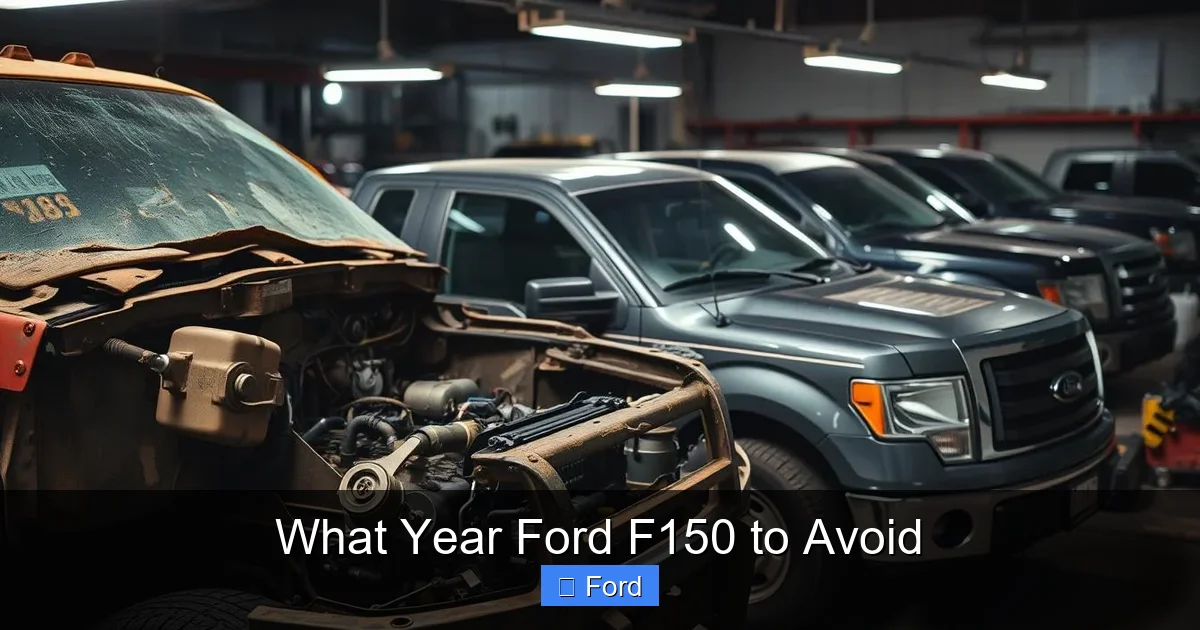
When you sift through National Highway Traffic Safety Administration (NHTSA) complaints, Consumer Reports reliability data, and countless owner forums like F150Gen14.com and Ford-Trucks.com, two distinct periods of concern emerge with striking clarity. These aren’t just minor quirks; they are systemic, expensive failures that define entire generations.
Visual guide about What Year Ford F150 to Avoid
Image source: vehiclerides.com
The 2004-2008 “Super Duty” Generation (11th Gen)
This era, often called the 11th generation, is arguably the most problematic in modern F150 history. It introduced the controversial “three-valve” cylinder head design on its top V8 engine and struggled with electronics that haven’t aged well. The issues are so pervasive that these years are consistently flagged by mechanics as high-risk used purchases.
The 2013 Model Year (12th Gen)
The 2013 F150 sits in the first year of the 12th generation (2013-2014). While the redesign was generally well-received, the 2013 model specifically suffered from “first-year” bugs, most critically with its standard 6-speed automatic transmission. It’s a classic case of a single model year being an outlier in an otherwise decent generation.
It’s crucial to understand that not every truck from these years is a disaster. Many were well-maintained and will run forever. However, the statistical probability of encountering a major, costly problem is significantly higher in these model years. That increased risk is why you should approach them with extreme caution or avoid them entirely if your budget is tight for repairs.
The 5.4L Triton V8: A Legendary Misstep
To understand the 2004-2008 F150’s reputation, you must understand the 5.4L 3-valve Triton V8. This engine powered a huge portion of these trucks and is at the heart of their problems. The issues are twofold and both are expensive.
Visual guide about What Year Ford F150 to Avoid
Image source: vehiclerides.com
The Infamous Spark Plug Problem
The 5.4L 3-valve uses aluminum cylinder heads with steel thread inserts for the spark plugs. Over time, due to thermal expansion differences and installation torque issues, the threads in the aluminum head can strip out. This means the spark plug either won’t come out (breaking off in the hole) or won’t seal properly, causing massive misfires and loss of compression. The repair is not a simple spark plug change; it often requires removing the cylinder head to install new thread inserts (Heli-Coils) or, in severe cases, replacing the entire head. This is a $3,000-$5,000 job.
Many owners report this happening between 80,000 and 120,000 miles. If a used 2004-2008 F150 with a 5.4L V8 hasn’t had this documented repair, it’s a ticking time bomb. Always ask for proof the work was completed.
Other 5.4L Triton Woes
Beyond spark plugs, this engine is also prone to:
- Oil Pump Driver (OPD) failure: A plastic gear that drives the oil pump can break, leading to catastrophic engine failure due to oil starvation. This often happens without warning.
- Phased Camshaft (PHM) failure: The variable cam timing system can fail, causing severe performance loss and check engine lights. Repair involves expensive internal engine work.
- Cooling system issues: Plastic water pumps and thermostat housings are common failure points, leading to overheating.
If you’re looking at a 2004-2008 F150, your safest engine choices are the 4.6L V8 (less power, but more proven) or, in the 2007-2008 models, the new 5.0L Coyote V8, which is a world apart in reliability.
Transmission Nightmares: The 2013 F150’s Weak Link
While the 2004-2008 generation suffered from engine and electrical issues, the 2013 F150’s primary weakness is its transmission. Ford introduced the 6-speed 6R80 automatic for the 2013 redesign. For most trucks, it’s a capable unit. But in the 2013 model year, a significant number of these transmissions experienced premature failure.
Visual guide about What Year Ford F150 to Avoid
Image source: vehiclerides.com
Symptoms of a Failing 6R80
The failure often starts subtly:
- Harsh or delayed shifts: Especially between 2nd and 3rd gear, or when downshifting.
- Transmission slippage: The engine revs but the truck doesn’t accelerate as it should.
- Check engine light with codes: P0700 (Transmission Control System), P0730 (Incorrect Gear Ratio), or solenoid-related codes are common red flags.
Left unchecked, this progresses to a complete loss of drive or reverse, requiring a full rebuild or replacement. The cost? Typically $3,500 to $6,000. This failure often occurs well before 100,000 miles, which is unacceptable for a heavy-duty truck transmission.
Why Just 2013?
Ford addressed many of the 2013’s teething problems in the 2014 model year with updated valve body solenoids, improved clutch materials, and revised software calibrations. While 2014s can still have issues, the failure rate drops dramatically. This makes the 2013 a clear outlier to avoid. If you’re looking at a 2013-2014 F150, a comprehensive transmission scan and a road test that feels for any shift quality issues are absolutely essential.
Electrical Gremlins and Rust: The 2004-2008 Generation’s Other Demons
Even if you find a 2004-2008 F150 with a good 4.6L engine, you’re not out of the woods. This generation is a playground for electrical problems and corrosion.
Wiring Harness and PCM Issues
The wiring harnesses in these trucks, particularly those running to the transmission and under the hood, are notorious for deteriorating insulation. This leads to shorts, intermittent failures, and bizarre symptoms like lights flickering, gauges dying, or the truck going into “limp mode.” The Powertrain Control Module (PCM) itself is also known to fail, requiring a costly reprogrammed replacement.
The Rust Epidemic
This is a critical safety issue. The 2004-2008 F150 frames (and some 2009-2010 models) were susceptible to severe, structural rust. NHTSA investigated and Ford issued recalls and extended warranties for frame corrosion that could compromise the vehicle’s integrity. You must check the frame rails, especially behind the front wheels and along the length of the truck, for large, flaky rust holes. If the recall repairs (which involve coating or section replacement) were not performed, the truck is unsafe and should be avoided.
For practical maintenance tips on older F150s, our guide on how to easily replace brakes on a Ford F150 is a good resource, but for these rusty years, a frame inspection is a higher priority.
How to Shop Smart: Your Action Plan for a Used F150
Knowing what years to avoid is only half the battle. Here’s your step-by-step checklist for finding a reliable used F150, regardless of the year on the title.
1. Start with the Right Years
Based on our research, here’s a quick reliability hierarchy:
- Best (Highly Recommended): 2015-2023 (13th Gen). The 2017+ models are especially refined. The 3.5L EcoBoost V6 (post-2017) and 5.0L Coyote V8 are both excellent. The 10-speed automatic (2018+) is a major improvement over the 6-speed.
- Good (With Inspection): 2009-2012 (12th Gen, pre-2013). These avoided the 2013’s transmission bugs and the 2004-2008’s engine/electrical nightmares. Still get a PPI.
- Acceptable (If Well-Maintained & PPI Clear): 1997-2003 (10th Gen) and 2009-2014 (but avoid 2013). These are older but simpler. The 5.4L 2-valve (1997-2004) is a tank, and the 4.6L is reliable.
- Avoid: 2004-2008 (11th Gen) and 2013 (12th Gen).
2. The Non-Negotiable Pre-Purchase Inspection (PPI)
Spend $150-$250 on a PPI from an independent Ford specialist or a trusted independent mechanic. Do not skip this. Tell them specifically: “Check for the 5.4L spark plug issue, transmission health (especially if a 2013), frame rust, and any electrical codes.” A good mechanic will put the truck on a lift, scan for history and current codes, and road test it.
3. Decode the Vehicle History Report
Use Carfax or AutoCheck. Look for:
- Title problems: Salvage, rebuilt, flood damage.
- Accident history.
- Service records: Are there regular oil changes? Is there any record of transmission or major engine work?
- Number of owners: Fewer is generally better, but not if they neglected maintenance.
4. The Test Drive: Listen and Feel
Drive it on various roads. Test every gear, including manual mode if equipped. Listen for:
- Engine noises: Ticking (could be PHM), knocking.
- Transmission behavior: Hesitation, harsh clunks, slipping.
- Electrical: Any warning lights that come on and go off?
- Rust: Tap the frame with a screwdriver (if you can) or visually inspect through the wheels.
For those considering an EcoBoost model, be aware of carbon buildup on the intake valves, which requires a costly walnut blasting service around 60-80k miles. Our article on how to fix Ford F150 air conditioning covers another common issue, but it’s less model-year specific.
Conclusion: Knowledge is Your Best Defense
The Ford F150’s legacy is built on reliability and capability, but it’s not flawless. The 2004-2008 and 2013 model years stand out as statistical landmines due to the 5.4L Triton engine’s design flaws and the 2013’s transmission issues. By focusing your search on safer years like 2015 and newer, or even the pre-2013 2009-2012 models with a clean history, you dramatically increase your chances of buying an F150 that will serve you well for years.
Remember, a great used truck is defined by its maintenance history, not just its odometer reading. A well-kept 2007 with a 4.6L can be a better buy than a neglected 2018. But a neglected 2005 with a 5.4L is a recipe for disaster. Arm yourself with this knowledge, insist on a professional inspection, and you’ll find an F150 that lives up to its “Built Ford Tough” promise. For comparison, the same principle applies when researching other vehicles—you can see our analysis of what year Dodge Charger models to avoid to understand how different brands have their own problematic periods.
Frequently Asked Questions
What year Ford F150 has the worst transmission?
The 2013 model year has the most notorious transmission problems with its 6-speed 6R80 unit. Failure rates were high, leading to expensive rebuilds. The 2014 model improved significantly, and the 10-speed introduced in 2018 is much more robust.
Is the 2004 Ford F150 a good truck to buy?
Generally, no. The 2004-2008 F150s are plagued by the 5.4L Triton V8’s spark plug issues, electrical problems, and frame rust. If you must consider one, only look at models with the 4.6L V8, get a thorough PPI focusing on the engine and frame, and ensure all rust recalls were fixed.
What is the most reliable Ford F150 engine?
The 5.0L “Coyote” V8 (introduced in 2011) and the 3.5L EcoBoost V6 (especially post-2017) are the most reliable modern engines. For older trucks, the 4.6L V8 (1997-2010) and the 5.4L 2-valve V8 (1997-2004) are known for durability, avoiding the 3-valve’s problems.
Should I avoid all Ford F150s with the 5.4L engine?
Yes, but with a crucial caveat. You must avoid the 5.4L 3-valve (2004-2010). The earlier 5.4L 2-valve (1997-2004) is a completely different, very reliable engine. Always check the engine code or specific year to know which version you’re looking at.
What year F150 should I buy for the best reliability?
For the best balance of modern features and proven reliability, aim for a 2017-2023 model. The 2015-2016 are also good. If you’re on a tighter budget, a well-maintained 2009-2012 with a 4.6L or 5.0L engine and a clean history report can be a solid choice.
How much does it cost to fix the 5.4L spark plug problem?
The repair is expensive because it often requires removing the cylinder head. Expect to pay between $3,000 and $5,000 at a dealership or reputable shop. Some shops can sometimes do a less invasive “thread repair” without removing the head, but this is riskier and not always possible depending on the damage.
