
Why Is the Ford F150 So Popular

The Ford F150 isn’t just a truck; it’s a cultural phenomenon and the best-selling vehicle in America for over 40 years. Its popularity stems from a perfect storm of legendary durability, immense configurability, powerful yet efficient engines, and a value proposition that’s tough to beat. From a bare-bones workhorse to a luxury family hauler, the F150 adapts to nearly any need, building a loyal community and unmatched resale value along the way.
Let’s be honest. Drive down any highway in America, and within minutes, you’ll see one. It’s the Ford F150. It’s not just common; it’s ubiquitous. For over 40 years, this blue oval badge has sat at the very top of the sales charts, a crown it rarely, if ever, relinquishes. But why? In a market packed with excellent competitors from GM and Ram, what makes the F150 the undisputed king? It’s not one single thing. It’s a powerful combination of history, engineering pragmatism, business savvy, and a deep, almost instinctual understanding of what its customers—a vast and varied group—actually need and want. This isn’t just about hauling a boat or a pallet of bricks. It’s about trust, adaptability, and a vehicle that has evolved from a simple tool into a multi-faceted icon.
The story of the F150’s popularity is the story of America’s evolving relationship with the pickup truck. It transformed from a purely utilitarian instrument for farmers and construction crews into a mainstream family vehicle and luxury statement. Ford didn’t just follow this trend; it actively shaped it. They listened. They built trucks that could be a contractor’s office on wheels, a family’s safe adventure mobile, a weekend warrior’s off-road beast, and a status symbol all at once. This article dives deep into the core reasons behind the Ford F150’s legendary status, exploring the engineering, the marketing, the practicality, and the pure cultural resonance that keeps it at the top.
Key Takeaways
- Unmatched Sales Dominance: The F150 has been America’s best-selling truck and vehicle for over four decades, a feat built on consistent innovation and meeting diverse customer needs.
- Extreme Versatility: With multiple cab styles, bed lengths, and trim levels—from work-focused XL to off-road Raptor and luxury King Ranch—there’s an F150 configuration for virtually every buyer and budget.
- Powertrain Leadership: A wide range of proven gas and diesel engines, including the powerful EcoBoost turbocharged V6s and the legendary Power Stroke V8 diesel, offer a blend of power, torque, and surprising efficiency.
- Technology & Innovation: The F150 often leads its class with advanced tech, from the revolutionary aluminum-intensive body to the advanced IWE (Intake Manifold Runner Control) system that optimizes power and fuel economy.
- Exceptional Value & Resale: Strong initial value and industry-leading resale values mean an F150 is a smart financial decision, holding its worth better than nearly all competitors over time.
- Deep Cultural Roots: It’s more than a vehicle; it’s a part of American life, with a massive aftermarket, strong community, and a reputation for being a reliable, go-anywhere partner.
📑 Table of Contents
A Legacy Forged in Steel and Innovation
To understand the present, you must look at the past. The F-Series truck line dates back to 1948, but the “F150” nameplate specifically arrived in 1975. It was created to skirt U.S. emissions and fuel economy regulations that applied to “light trucks” over a certain weight. By making the F150 slightly heavier, Ford could offer more capability without being held to the stricter standards of the F100. This clever bit of regulatory engineering birthed a legend. The F150 quickly became the go-to for those needing serious payload and towing capacity without the commercial vehicle tax.
The Evolution of a Workhorse
Over the generations, the F150 has constantly evolved. It moved from a purely body-on-frame, carbureted, rear-wheel-drive work truck to a sophisticated, aluminum-intensive, turbocharged, high-tech command center. Key milestones define its journey. The 1990s brought the powerful and reliable Power Stroke diesel. The 2000s saw the introduction of the SuperCrew cab, fundamentally changing the truck from a 2- or 3-person vehicle to a true 5- or 6-passenger family hauler. The 2015 redesign was revolutionary—using high-strength, military-grade aluminum for the body to shed weight, boost fuel economy, and increase payload without sacrificing durability. This willingness to invest billions in R&D and sometimes bet against convention (like moving away from steel) has kept the F150 technologically ahead of the curve.
Building a Reputation for Durability
Generations of farmers, ranchers, contractors, and everyday drivers have subjected F150s to brutal conditions—mud, snow, salt, heavy loads, and endless miles. The ones that survived built a reputation. “It’ll run forever” is a common refrain about older F150s. This reputation for longevity and reliability is a powerful marketing tool Ford never had to buy; it was earned on job sites and back roads across the country. That trust transfers to new models. Buyers believe, often correctly, that the new F150 will be just as tough as the one their dad or grandpa drove. This intergenerational loyalty is a cornerstone of its popularity.
The Unrivaled Art of Versatility
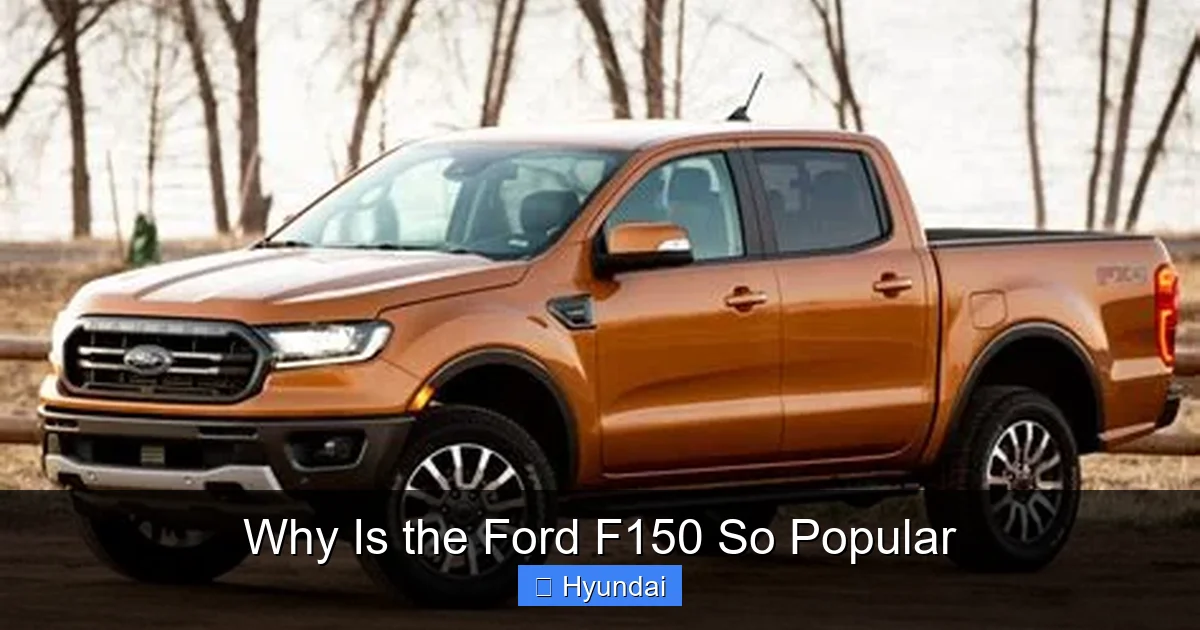
This is arguably the single biggest reason for the F150’s dominance. Ford offers an astonishing array of choices. Want a basic, no-frills truck with a regular cab, 8-foot bed, and a vinyl floor? They make it (the XL). Want a luxurious, quiet, tech-filled mobile office with heated and cooled leather seats, a panoramic sunroof, and a 12-inch touchscreen? They make that too (the Limited or Platinum). Want the ultimate off-road performer with a lifted suspension, knobby tires, and a locking rear differential? The Raptor is your answer. This “something for everyone” strategy means a customer doesn’t have to compromise or look elsewhere. The competition offers variety, but Ford’s matrix of trims (XL, XLT, Lariat, King Ranch, Platinum, Limited, Raptor), cab styles (Regular, SuperCab, SuperCrew), bed lengths (5.5′, 6.5′, 8′), and drivetrain options (2WD, 4WD) is simply more comprehensive.
Visual guide about Why Is the Ford F150 So Popular
Image source: autozonic.com
From Jobsite to Soccer Practice
The modern F150 excels at being two (or more) vehicles in one. A construction manager can have a practical, rugged XLT with a spray-in bedliner and trailer brake controller for the week, and a comfortable, feature-packed Lariat for family duties on the weekend. The SuperCrew cab with its full-sized rear doors and spacious back seat makes it a viable alternative to a 3-row SUV for many families. The fold-flat rear seats and large, lockable tailgate add utility for tailgating, camping, or hauling dirty gear. This dual-purpose capability is a massive selling point in a market where many households are down to one or two vehicles. You don’t need a separate truck for work and an SUV for the family; the F150 can legally and comfortably be both.
The Aftermarket Universe
The F150’s popularity has created a self-reinforcing cycle. Because so many are sold, the aftermarket industry produces a mind-boggling array of parts and accessories. Want to lift it, lower it, add a massive grille guard, a tonneau cover, a custom suspension, or a high-performance exhaust? It exists, and it’s relatively affordable due to economies of scale. This means owners can easily personalize their truck to match their exact vision, further deepening their emotional connection to the vehicle. A thriving aftermarket is a sign of a truly iconic product.
Powertrain: Power, Torque, and (Surprising) Efficiency
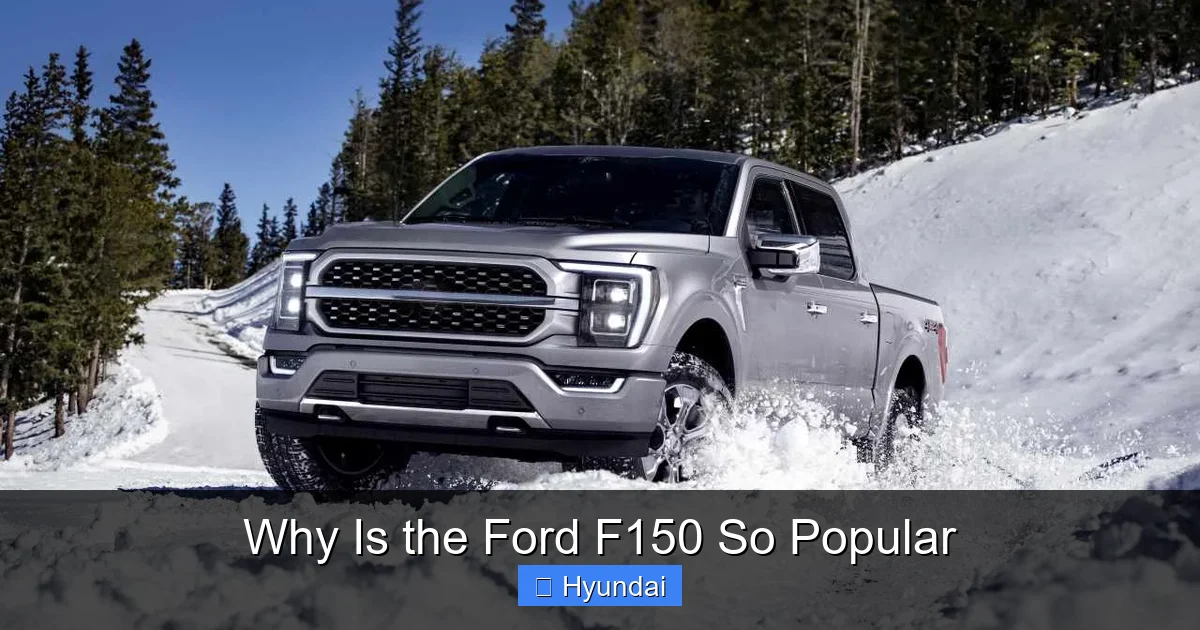
For truck buyers, the heart of the matter is under the hood. Ford has consistently delivered a class-leading portfolio of engines. The standard V8 is a torquey, reliable workhorse. But the real innovation came with the widespread adoption of turbocharging. The 3.5L EcoBoost V6, now in its second generation, produces more horsepower and vastly more torque than the old 5.0L V8 while getting significantly better fuel economy. It changed the game. For those needing maximum pulling power, the 3.0L Power Stroke V6 diesel offers immense low-end grunt and excellent highway MPG for heavy towing. The reintroduction of the 5.0L V8 in the current generation, paired with a 10-speed transmission, ensures there’s a gas engine for every preference.
Visual guide about Why Is the Ford F150 So Popular
Image source: cdn.shopify.com
The Transmission: The Unsung Hero
All this power is managed by transmissions that are as important as the engines themselves. Ford’s partnership with General Motors on the 10-speed automatic (used in the F150 and others) was a masterstroke. This transmission has incredibly close gear ratios, allowing the engine to stay in its power band for rapid acceleration and smooth, quiet highway cruising. It also provides a very low first gear for getting heavy loads moving and a tall top gear for reducing RPMs and fuel consumption at speed. This sophisticated gearbox is a key reason the F150 feels both powerful and refined.
Towing and Payload Leadership
Numbers matter in the truck world. Ford consistently publishes the highest max towing and payload ratings in its class, often by a significant margin. While real-world numbers vary with configuration, the headline figures are powerful marketing tools. For the buyer who needs to pull a large fifth-wheel trailer or a heavy piece of equipment, the perception (and often the reality) is that the F150 can do more. This “capability leadership” is a fundamental pillar of its appeal. It’s the truck you buy when you absolutely, positively must get the job done.
Technology and Smart Engineering
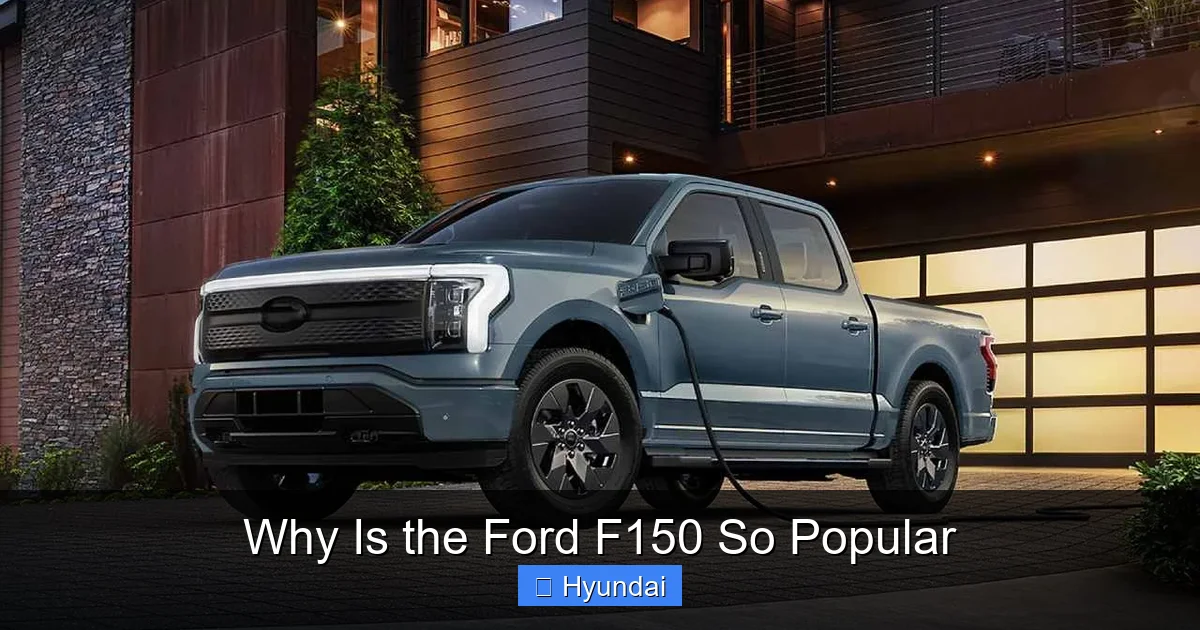
The F150 isn’t a dinosaur; it’s a tech hub on wheels. The move to an aluminum body in 2015 was a monumental engineering risk that paid off. It saved up to 700 pounds, which Ford reinvested into more payload, better towing, and improved fuel economy without sacrificing strength. The truck’s frame remains high-strength steel. This combination is a key part of its efficiency story.
Visual guide about Why Is the Ford F150 So Popular
Image source: cdn.shopify.com
IWE and Advanced Engine Management
Within those advanced engines lies clever tech like the Intake Manifold Runner Control (IWE) system, especially prominent in the EcoBoost engines. This system uses vacuum-operated valves to switch between short and long intake runner paths at different RPMs. At low RPMs, the longer path creates a swirling effect in the air charge, improving torque and fuel economy. At high RPMs, it switches to the shorter path for maximum airflow and power. It’s a sophisticated, cost-effective way to broaden the engine’s powerband. Understanding this kind of engineering helps explain how the F150 delivers both strong low-end grunt for towing and good highway MPG. You can learn more about the specifics of this system in our detailed guide on What Is IWE On Ford F150.
Class-Leading Cabin Tech
The interior of a modern F150, especially in the higher trims, rivals luxury cars. The available 12-inch or larger vertical touchscreen runs Ford’s SYNC 4 system, with crisp graphics, wireless Apple CarPlay/Android Auto, and a built-in 4G LTE Wi-Fi hotspot (with subscription). Pro Power Onboard is a game-changer, turning the F150 into a mobile generator with up to 7.2 kW of exportable power to run tools, lights, or a small camper on a job site or at a tailgate. This kind of useful, integrated technology directly addresses the needs of its core user base.
Value That Goes the Distance
Sticker price is one thing; true cost of ownership is another. The F150 has long been praised for its strong initial value—you often get more standard features and capability for the money compared to rivals. But the real story is its resale value. Kelley Blue Book and other analysts consistently rank the F150 at or near the top of all vehicles for best resale value after 3 and 5 years. This means when you sell or trade it in, you’ll get a much larger percentage of your original investment back than you would with many other trucks or SUVs. A vehicle that depreciates less is, in the long run, a cheaper vehicle to own. This financial practicalism is a huge, often decisive, factor for buyers making a major purchase.
This robust value proposition extends to the used market. A well-maintained F150 from any recent decade is a safe, smart buy. For instance, a 2007 model, properly cared for, can still be a formidable and reliable work truck today, often commanding a fair price due to its enduring reputation. Exploring the specifics of older model values, like what you should expect for a 2007 Ford F150, highlights how this model line retains its worth over decades.
More Than a Truck: A Cultural Institution
You can’t talk about the F150’s popularity without talking about culture. It has transcended its utilitarian origins to become a symbol. It represents hard work, self-reliance, adventure, and capability. This image is burnished by decades of advertising that shows trucks conquering rugged terrain, hauling heavy loads, and enabling an active lifestyle. It’s reinforced by its sheer numbers—being the most common vehicle means it’s the default, the norm. There’s a comfort in that. Parts are everywhere. Mechanics know it inside and out. There’s a massive community of owners, clubs, and forums sharing tips, modifications, and stories.
This cultural status also feeds into a sense of pride of ownership. People accessorize their F150s not just for function but for expression. Lift kits, custom wheels, unique paint schemes, and aftermarket bumpers are statements. The truck becomes an extension of the owner’s personality. Furthermore, its durability and simple, rugged design mean that with basic maintenance, it can last for hundreds of thousands of miles. This builds a legacy of stories—the truck that survived the blizzard, the one that pulled the neighbor’s car out of the ditch, the one that carried the first child home from the hospital. These stories are the real marketing.
Conclusion: The Perfect Storm of Appeal
So, why is the Ford F150 so popular? It’s the perfect storm. It’s the result of a company that understands its audience at a fundamental level and has the engineering prowess and capital to execute. They built a truck that is incredibly capable when you need it to be, surprisingly comfortable and refined when you don’t, and adaptable enough to morph into whatever the owner’s life demands. It offers a range of choices so wide that it cannibalizes the competition simply by covering every possible niche itself. It’s backed by a reputation for durability built over generations and a resale value that makes financial sense.
It is, in essence, the ultimate no-compromise vehicle for a huge segment of the population. You don’t have to choose between power and efficiency, or between a work truck and a family truck. You don’t have to settle for less capability or fewer features. The F150 promises—and delivers—on all fronts. It’s not the fastest, nor is it the most luxurious in its top trims compared to a dedicated luxury SUV. But as a complete package, as a do-it-all, go-anywhere, last-forever icon, its blend of qualities is simply unmatched. That is why, for the foreseeable future, the Ford F150 will continue to wear the crown as America’s favorite vehicle.
Frequently Asked Questions
Is the Ford F150 reliable?
Yes, overall the Ford F150 has a strong reputation for reliability, especially with its well-established powertrains like the 5.0L V8 and the 2.7L/3.5L EcoBoost V6 engines. Regular maintenance is key to long-term reliability, and many models from the past decade are known to surpass 200,000 miles with proper care.
What is the best year for a used Ford F150?
Many experts point to the 2015-2020 models as excellent used buys. The 2015 redesign introduced the durable aluminum body and advanced engines. Models from 2018 onward often have more refined interiors and additional safety tech. For older, budget-friendly options, the 2009-2014 trucks with the reliable 5.4L or 5.0L V8 are also very popular.
How does the Ford F150 compare to the Ram 1500 and Chevy Silverado?
The F150 typically leads in maximum towing/payload ratings and offers the widest range of configurations. The Ram 1500 is often praised for its exceptionally smooth and luxurious ride, especially in higher trims. The Chevy Silverado is a strong all-rounder with very good V8 engine options. The “best” often comes down to personal preference for styling, specific feature needs, and driving feel.
Is an F150 good on gas?
Modern F150s are surprisingly efficient for their size. The 2.7L EcoBoost V6 and the 3.5L EcoBoost V6 offer the best combined fuel economy, often achieving 20-25 MPG on the highway. The 5.0L V8 and the 3.0L Power Stroke diesel have their own efficiency strengths, with the diesel excelling on long hauls. Real-world MPG depends heavily on drivetrain, configuration, and driving style.
Why is the F150 so expensive to insureure?
Insurance costs for an F150 can be higher due to its high repair costs (especially for the aluminum body and advanced tech), its status as a high-theft vehicle in some areas, and the fact that it’s often used for towing or commercial purposes which can increase risk. Your personal driving record, location, and specific coverage choices have a larger impact than the model alone. For more general info on high insurance costs, see our article on Why Is My Car Insurance So High?.
What are the most common problems with a Ford F150?
While generally reliable, common issues can vary by generation. Earlier models with the 5.4L 3-valve V8 could have problems with spark plug breakage. Some EcoBoost engines have had reports of carbon buildup over very high mileage. Electrical gremlins with door handles or infotainment systems can occur. Regular maintenance with quality parts is the best defense against major problems.
