
What Does Maintenance Required Mean on a Toyota Sienna

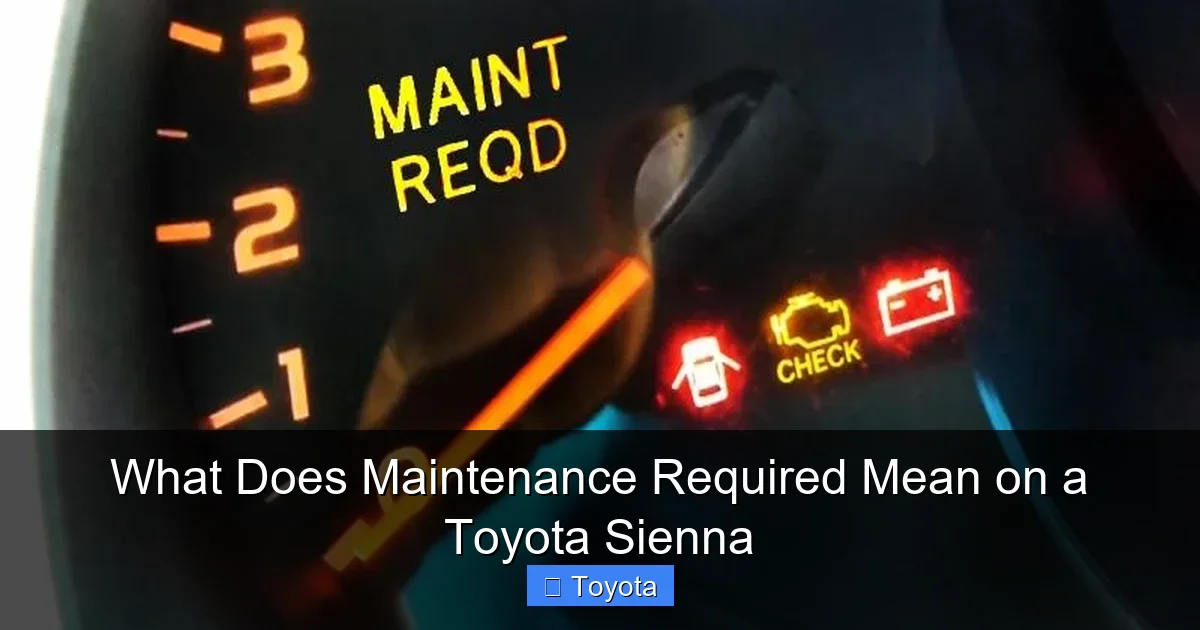
The “Maintenance Required” light on a Toyota Sienna is a friendly reminder from your vehicle’s computer that it’s time for routine, scheduled maintenance based on mileage or time intervals. It is not an emergency warning like a check engine light, but a proactive alert to keep your Sienna in top shape. Ignoring it can lead to decreased performance, poor fuel economy, and potentially costly repairs down the road. Always address the light by consulting your owner’s manual and scheduling the necessary service with a qualified technician.
You’re cruising down the highway in your trusty Toyota Sienna, the kids are entertained in the back, and everything feels perfect. Then, a small, unfamiliar icon illuminates on your dashboard—a little wrench or the words “MAINTENANCE REQUIRED.” Your heart might skip a beat. Is this serious? Is the van broken? Should you pull over right now? Take a deep breath. For Toyota owners, this light is one of the least threatening and most helpful signals your vehicle can give you. It’s not a cry for help; it’s a gentle nudge, a digital post-it note from your car’s computer saying, “Hey, it’s about that time. Let’s take care of some routine stuff so I can keep being your reliable family hauler.” This article is your complete guide to understanding exactly what “Maintenance Required” means on a Toyota Sienna, why it’s so important to heed its advice, and exactly what steps you should take when you see it.
We’ll demystify the technology behind the light, walk through the typical services it’s reminding you about, and provide clear, actionable steps for both addressing the alert and resetting it afterward. Whether you’re a first-time minivan owner or a seasoned Sienna veteran, this information will empower you to make smart decisions for your vehicle’s health and your family’s safety. Let’s turn that worrying wrench into a symbol of proactive care.
Key Takeaways
- It’s a reminder, not an emergency: The light indicates scheduled maintenance is due, not an immediate danger or system failure.
- It’s based on a preset algorithm: The system tracks mileage and time since the last reset, triggering the light at factory-specified intervals.
- Common triggers include oil changes, tire rotations, and inspections: The light often comes on for multiple service items at once.
- You must reset it manually after service: The light will not turn off on its own; a technician or you must reset the system.
- Driving conditions affect the schedule: “Severe” driving (short trips, extreme temps, heavy loads) may require more frequent service.
- Ignoring it risks your investment: Neglecting routine maintenance can void parts of your warranty and lead to premature wear.
- Your owner’s manual is the ultimate guide: It contains the exact maintenance schedule and specifications for your specific model year.
📑 Table of Contents
- Decoding the “Maintenance Required” Light: It’s Not a Check Engine Light
- How the Toyota Sienna’s Maintenance Reminder System Works
- Common Triggers for the Maintenance Required Light
- What to Do When the Light Comes On: A Step-by-Step Guide
- Resetting the Maintenance Required Light (After Service)
- Your Toyota Sienna’s Maintenance Schedule at a Glance
- Conclusion: Your Wrench is Your Friend
Decoding the “Maintenance Required” Light: It’s Not a Check Engine Light
First, let’s establish the most critical distinction. The “Maintenance Required” light (often depicted as a wrench or the phrase itself) is fundamentally different from the ominous “Check Engine” light (which looks like an engine block). This is the cornerstone of understanding your Sienna’s health.
It’s a Proactive Reminder, Not a Reactive Alarm
The Check Engine light illuminates when the engine’s computer (ECU) detects a problem—something is malfunctioning, out of spec, or failing. It’s a reactive signal that something has already gone wrong or is operating outside its normal parameters. You should diagnose it promptly, but it doesn’t always mean you need to stop driving immediately (though some codes are urgent).
Conversely, the “Maintenance Required” light is purely proactive. It’s a calendar and mileage counter combined. Toyota’s engineers programmed it to light up at predetermined intervals—say, every 5,000 miles or 6 months—to remind you that a set of preventative maintenance tasks is due. It has no idea about the actual condition of your oil, brakes, or tires. It simply knows that, according to the schedule, it’s time to check on those things. Think of it as your car’s built-in service planner, not its doctor diagnosing an illness.
The History Behind the System
This system has been a staple in Toyota vehicles for decades, evolving from simple mileage-based reminders to more sophisticated algorithms. In older Siennas, the light might have been tied strictly to mileage. In modern models (typically 2004 and newer), the system is more intelligent. It still uses mileage and time as its primary triggers but can also factor in driving patterns to some extent within its programming parameters. However, it does not “sense” oil life or brake pad thickness like some advanced systems from other manufacturers. It’s a fixed-interval reminder system, which makes it wonderfully predictable and easy to understand.
This predictability is a good thing! It means you can look up your exact model year’s maintenance schedule in your owner’s manual and know precisely what services are associated with that light coming on. For example, the first “Maintenance Required” light at 5,000 miles might simply mean “oil change and tire rotation,” while the one at 30,000 miles might include cabin air filter replacement, spark plug inspection, and more. Understanding other Toyota dashboard lights and terms, like “ET” (which relates to engine temperature in some contexts), can also help you become more familiar with your vehicle’s communication system, but the wrench is specifically for scheduled care.
How the Toyota Sienna’s Maintenance Reminder System Works
Now that we know what the light *isn’t*, let’s explore what it *is* and how it functions. The system is elegantly simple, which is part of its reliability.
Visual guide about What Does Maintenance Required Mean on a Toyota Sienna
Image source: carfromjapan.com
The Algorithm Behind the Alert
Buried within your Sienna’s central computer is a small program. When your vehicle was manufactured, Toyota programmed this program with a series of mileage and time intervals. Common intervals for the Sienna are 5,000 miles (or 6 months), 10,000 miles (or 12 months), 15,000 miles, and so on, often aligning with the factory maintenance schedule. The system continuously monitors the odometer and the internal clock.
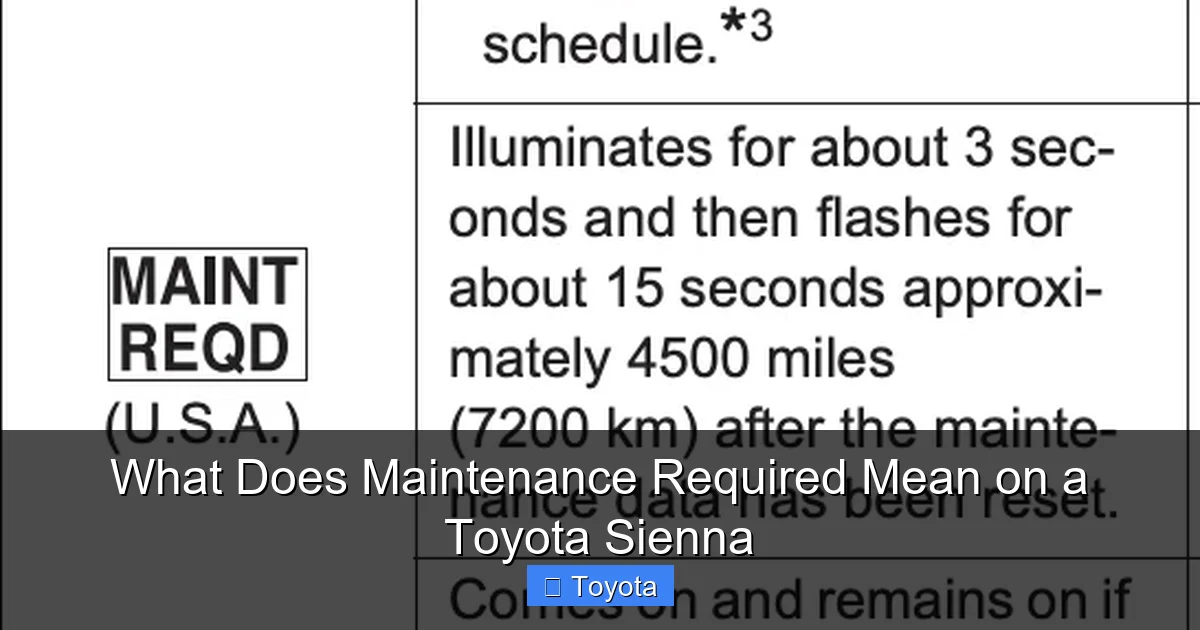
Once the vehicle accumulates the preset number of miles *or* the preset amount of time passes since the last reset, the system triggers the “Maintenance Required” light. It will typically illuminate steadily once you start the car after the interval has been met. The key word here is reset. The system does not know when you actually perform the service. It only knows when you tell it you have. This is why the light will continue to stay on, every time you start the engine, until a technician or you manually reset the counter. This manual reset is a crucial step that ensures the reminder is tied to a completed service event, not just the passage of time.
Factors That Influence the Schedule
While the core intervals are fixed, your driving habits can influence how *urgent* the services are, even if the light comes on at the same mileage. Your owner’s manual will define two schedules: “Normal” and “Severe” driving conditions. Most people think their driving is “normal,” but the “Severe” schedule is actually quite common and applies if you frequently:
- Make short trips: Driving less than 5-10 miles in normal temperatures, especially in stop-and-go traffic. The engine and oil don’t fully warm up, leading to moisture buildup and fuel dilution in the oil.
- Operate in extreme temperatures: Consistently driving in very hot (above 90°F/32°C) or very cold (below 10°F/-12°C) conditions.
- Drive in dusty, sandy, or off-road conditions: Even occasional unpaved roads can increase contaminant load on the engine and filters.
- Carry heavy loads or tow: Regularly maxing out the Sienna’s cargo or towing capacity puts extra stress on the engine, transmission, and brakes.
- Experience prolonged idling: If your job or lifestyle involves lots of engine-on but vehicle-stationary time.
If your lifestyle fits any of these descriptions, you should follow the “Severe” maintenance schedule in your manual, which typically calls for services like oil changes and tire rotations at about half the interval of the “Normal” schedule. The “Maintenance Required” light will still come on at the standard interval, but you may choose to service the van *before* the light even appears. Features like the Snow Button on a Highlander are designed for specific conditions, but they don’t alter the fundamental maintenance schedule—it’s your driving pattern that does.
Common Triggers for the Maintenance Required Light
So, you see the wrench. What exactly is your Sienna asking for? The specific services depend entirely on your model year and the number of times the light has been reset. Here’s a breakdown of the most common triggers, typically grouped by the major service intervals.
Visual guide about What Does Maintenance Required Mean on a Toyota Sienna
Image source: jbtools.com
Oil Change and Tire Rotation (The 5,000/6-Month Interval)
This is the most frequent and fundamental reason the light will come on. For the vast majority of Sienna owners, the first alert means it’s time for:
- Oil and Filter Change: This is non-negotiable. Fresh oil is the lifeblood of your engine. It lubricates moving parts, cools the engine, carries away contaminants, and prevents corrosion. Using the correct oil viscosity (e.g., 0W-20 for many newer models) is critical. Check your manual or oil cap for specification.
- Tire Rotation: Siennas, like all vehicles, experience uneven tire wear. Front tires wear differently than rear tires, and left vs. right can also differ due to road crown and turning. Rotating them (typically in a specific pattern like front-to-rear) promotes even wear, extends tire life, improves ride quality, and maintains optimal traction. This is the perfect time to also check tire pressure and tread depth.
- Multi-Point Inspection: A good mechanic will perform a visual and tactile check of key components: brake pads/shoes/rotors, fluid levels (coolant, brake fluid, power steering, washer fluid), belts, hoses, battery terminals, and lights. They’ll note anything that looks worn or is outside the recommended level.
Intermediate Services (10,000, 15,000, 30,000 Miles)
As the miles add up, the maintenance bundle expands. At these intervals, you’ll likely get all the items from the basic service plus:
- Cabin Air Filter Replacement: This filter cleans the air entering your HVAC system from pollen, dust, and pollutants. A clogged filter reduces airflow, strains the blower motor, and lets contaminants into the cabin. It’s an easy, inexpensive fix that makes a huge difference in air quality, especially for allergy sufferers.
- Engine Air Filter Inspection/Replacement: This filter prevents dust and debris from entering your engine. A dirty air filter restricts airflow, reducing fuel efficiency and power. It’s cheap and easy to replace.
- Brake System Inspection: Beyond just looking at pads, a thorough inspection checks calipers, rotors for scoring or warping, brake lines for leaks, and the quality/level of the brake fluid.
- Fluid Checks and Top-Offs: All vital fluids are checked and topped off as needed.
- 30,000-Mile Major Service: This is a bigger milestone. It often includes spark plug inspection/replacement (if not done earlier), fuel filter replacement (if applicable), throttle body cleaning, and a more in-depth inspection of suspension and drivetrain components.
Long-Term Milestone Services (60,000, 90,000, 100,000+ Miles)
These are the major overhaul points. The “Maintenance Required” light at these intervals is signaling that it’s time for comprehensive care to ensure long-term reliability:
- Timing Belt/Chain Inspection: This is the most critical item. The timing belt (or chain) synchronizes the engine’s valves and pistons. If it fails on an interference engine (many Sienna engines are), it causes catastrophic engine damage. Your manual will state the replacement interval (e.g., 90,000-100,000 miles). Never ignore this. Understanding drivetrain warnings, like those for AWD systems, is also important at high mileage as components age.
- Differential/Transfer Case Service: If your Sienna has AWD, the transfer case and rear differential need fluid changes at specified intervals.
- Major Fluid Flushes: This includes transmission fluid, engine coolant (which also lubricates the water pump), and possibly power steering fluid. These services are vital for longevity.
- Comprehensive Suspension & Steering Inspection: Checking ball joints, tie rod ends, struts/shocks, and CV joints for wear.
- Battery Test: A professional battery load test to ensure it holds a charge, especially before winter.
What to Do When the Light Comes On: A Step-by-Step Guide
You’ve seen the light. Don’t panic. Follow these logical steps to address it properly.
Visual guide about What Does Maintenance Required Mean on a Toyota Sienna
Image source: oilreset.com
Immediate Steps: Don’t Ignore, But Don’t Freak Out
1. Check Your Owner’s Manual: This is your single most important resource. Find the section titled “Maintenance/Service” or “Maintenance Required Light.” It will have a chart broken down by mileage intervals for your specific model year and engine. This chart tells you exactly what services are due at that specific mileage. It might say “5,000 Miles: Change oil & filter, rotate tires.”
2. Note Your Current Mileage: Compare your current odometer reading to the last service you can remember. Did you just have an oil change at 48,000 miles and now the light is on at 50,000? That’s normal. The system is set for a 5,000-mile interval. If your mileage seems way off (e.g., light on at 2,000 miles), there could be a system glitch, but this is rare.
3. Perform a Basic Visual Check: Before you even call the shop, take a quick look under the hood and around the van. Check your oil level with the dipstick (engine cold, on level ground). Is it very low or pitch black? Check your tire pressures with a gauge. Are they all within the recommended PSI (found on a sticker inside the driver’s door jamb)? Look for any obvious leaks under the vehicle. This quick check gives you useful information to share with your mechanic.
4. Plan Your Service: The light means you should schedule service within the next few hundred miles. It’s not an emergency that requires you to pull over, but you shouldn’t put it off for months. Use this as an opportunity to choose a reputable shop—a Toyota dealership, a trusted independent mechanic, or a high-quality quick-lube center if it’s just an oil change and rotation. For complex services at higher mileage intervals, a specialist is best.
Scheduling Your Service: Be an Informed Customer
When you call to make an appointment, tell them exactly what you see: “My 2018 Toyota Sienna’s Maintenance Required light is on, and I’m at 52,000 miles.” This immediately tells them what they’re likely dealing with. You can also reference the specific service from your manual’s chart.
Ask questions! A good shop will be happy to explain what they’ll do. You might ask: “Will you be inspecting the brakes and suspension?” “Is the cabin air filter included in this service?” “Can you show me the old parts after?” This transparency builds trust. Also, get an estimate before work begins. For a standard oil change/rotation, it’s straightforward. For a 60,000-mile service, get a detailed breakdown of all labor and parts.
If you’re the DIY type, you can perform many of the basic services yourself (oil change, tire rotation, filter changes) if you have the knowledge and tools. However, for anything involving brakes, timing belts, or major fluid flushes, professional installation is strongly recommended due to safety and precision requirements.
Resetting the Maintenance Required Light (After Service)
This is a step many people forget. The light will stay on until it is manually reset. Resetting it tells the car’s computer, “The service for this interval has been completed. Start counting for the next one.” Here’s how to do it.
The Standard Reset Procedure (For Most 2004-2020 Siennas)
The method is almost always the same and does not require any tools. You do it using the odometer/trip meter button on the dashboard. Important: Only perform this reset after the required maintenance has been fully completed.
- Turn the ignition ON. Do not start the engine. Just press the “Start” button without your foot on the brake (or turn the key to “ON” position).
- Locate the “ODO/TRIP” button. This is usually the stick or button you press to toggle between the odometer and trip meter A/B readings on the instrument cluster.
- Turn the ignition OFF. Press the start button again to turn the car fully off.
- Press and hold the “ODO/TRIP” button. While holding it down, press the start button (or turn the key) to turn the ignition back ON (but don’t start the engine).
- Continue holding the button. The odometer display will change. It may show a series of dashes “—–” or the word “DISP” or simply start counting down. Keep holding the button until you see the “MAINTENANCE REQUIRED” light blink a few times and then go out, and the odometer returns to its normal reading.
- Release the button. The light should now be off. Start the engine to confirm. If it comes back on, repeat the procedure.
Note: For some very new models (2021+), the process might be done through the multimedia screen in the vehicle settings menu. Always consult your owner’s manual for the exact procedure for your specific year.
When NOT to Reset It
This bears repeating: Only reset the light after the service is truly complete. Resetting it before an oil change or brake inspection is fraudulent and dangerous. You are essentially lying to your car’s computer, and you will lose track of when the next service is genuinely due. It also defeats the entire purpose of the system—preventative maintenance. If you perform the service yourself, take pride in resetting the light correctly as the final step. If a shop forgets to reset it, don’t be shy about asking them to do it before you leave. It’s a standard part of the service.
Your Toyota Sienna’s Maintenance Schedule at a Glance
While the exact schedule varies by model year and engine (3.5L V6 vs. 2.5L Hybrid), here is a generalized, representative timeline for a conventional gasoline Sienna. Your owner’s manual is the only definitive source.
Severe vs. Normal Driving Conditions
As mentioned, Toyota defines “Severe” service conditions as those that place extra stress on the vehicle. If you fall into the severe category, you should typically halve the “Normal” interval for oil changes and rotate tires more frequently. For example:
- Normal Oil Change Interval: 5,000 – 10,000 miles (depending on oil type and year).
- Severe Oil Change Interval: 3,000 – 5,000 miles (especially for older models or if using conventional oil).
Modern synthetic oils allow for longer intervals, but the “Maintenance Required” light is programmed for a conservative, safe interval (often 5,000 miles for older models, 10,000 for newer ones with synthetic). You can always service the vehicle before the light comes on if your driving is severe.
Sample Maintenance Timeline (Illustrative – Verify for Your Year)
- Every 5,000 Miles / 6 Months: Oil & filter change, tire rotation, multi-point inspection. (This is the most common first trigger).
- Every 10,000 Miles / 12 Months: Inspect cabin air filter, engine air filter. Possibly replace wiper blades.
- Every 15,000 Miles: Inspect brakes, fluids, and suspension components more thoroughly.
- Every 30,000 Miles: Replace cabin air filter, inspect/possibly replace engine air filter, inspect spark plugs, fuel filter (if applicable), perform transmission fluid check (service interval may be longer).
- Every 60,000 Miles: Major service. Replace spark plugs if not done, inspect/replace timing belt or chain (CRITICAL at 90k-100k for belts), change transmission fluid, change engine coolant, inspect/replace all major belts and hoses, inspect and possibly service differential (AWD models).
- Every 100,000 Miles: Timing belt replacement (if applicable), comprehensive inspection of all major systems, potential spark plug replacement, major fluid flushes.
Features like ECT Power mode on the Sienna are for performance driving and don’t change this schedule, but they do highlight how your driving style interacts with the vehicle’s needs.
Conclusion: Your Wrench is Your Friend
The “Maintenance Required” light on your Toyota Sienna is one of the simplest and most user-friendly systems in your vehicle. It’s a direct line of communication from the factory to you, the owner, designed to take the guesswork out of upkeep. Unlike cryptic dashboard symbols that require immediate diagnosis, this one comes with a clear, pre-defined action plan: consult your manual, schedule the listed services, and reset the light. By treating this light as a helpful reminder rather than an annoyance, you are making one of the smartest investments possible in your Sienna’s longevity, reliability, and safety.
Your Toyota Sienna is built to be a durable, family-friendly workhorse. It will repay your attention to its needs with hundreds of thousands of miles of dependable service. Keeping up with its maintenance schedule protects your investment, maintains your warranty coverage, ensures optimal fuel economy, and—most importantly—keeps you and your loved ones safe on the road. So the next time that little wrench illuminates, smile. It’s not a problem; it’s a solution, waiting for you to take action. Follow the steps in this guide, partner with a trusted mechanic, and enjoy the peace of mind that comes with a well-cared-for Sienna.
Frequently Asked Questions
Can I keep driving my Sienna with the Maintenance Required light on?
Yes, you can. The light is not an emergency. It means routine service is due. You should plan to have it serviced within the next few hundred miles, but it does not indicate an immediate danger that requires you to stop driving right away. However, if you notice any strange noises, smells, or performance issues alongside the light, get checked immediately.
How long can I realistically drive after the light comes on before getting service?
You have some buffer. The light is a reminder for a scheduled interval, not a countdown to failure. It’s safe to drive 300-500 miles to complete your current trip or to find a convenient time for service. But don’t delay for months. Prolonged driving without the recommended oil change or inspection increases wear and risk.
Will resetting the light without doing the service damage my van?
It won’t cause immediate damage, but it’s a very bad practice. You are erasing the service interval reminder, meaning you will lose track of when critical maintenance like oil changes or timing belt replacements are actually due. This can lead to severely neglected maintenance, which absolutely can cause engine damage, poor performance, and void warranty coverage for related components.
What happens if I change my own oil? How do I reset the light?
If you perform the maintenance yourself, you should also reset the light. Follow the standard reset procedure (usually using the odometer button with the ignition on/off) immediately after you finish the service and before you start the engine. This ensures your personal maintenance log and the car’s computer are in sync.
Does the type of oil I use affect when the light comes on?
Not directly. The “Maintenance Required” light is triggered by a preset mileage/time interval programmed into the computer, not by oil life sensors. It does not “know” what type of oil you put in. However, using the correct oil specification (e.g., 0W-20) as listed in your manual is crucial for engine health. If you use a lower-quality oil or the wrong viscosity, you may need to change it more frequently than the light suggests, following the “Severe” schedule.
Is there any way to temporarily turn off the light without doing the service?
Technically, yes, by performing the manual reset procedure described above. However, this is strongly discouraged. The light is there for your benefit. Turning it off without performing the work is like erasing a calendar reminder for a dentist appointment—you’ll simply forget and miss the appointment, leading to bigger problems later. Always complete the service first.
