
Will Dodge 5 Lug Wheels Fit Ford

No, Dodge 5-lug wheels will not reliably or safely fit most Ford vehicles. While both brands commonly use 5-lug patterns, the critical bolt circle diameter (BCD) is almost always different—Dodge typically uses 5x115mm, while Ford uses 5×114.3mm. This 0.7mm difference prevents proper seating. Even if they physically bolt on, incorrect offset and center bore can cause dangerous vibration, brake caliper interference, and improper wheel nut torque. Always verify your specific vehicle’s specifications rather than assuming brand compatibility.
You’re staring at a set of used Dodge wheels, or maybe you found a killer deal on a Dodge Ram wheel package. They look great, they’re the right size, and they have five lugs just like your Ford F-150 or Ranger. The logical question pops up: Will Dodge 5 lug wheels fit Ford? It’s a common train of thought. After all, aren’t all truck wheels basically the same? Unfortunately, the world of automotive wheel fitment is a landscape of tiny, critical measurements. Assuming brand compatibility is one of the fastest paths to a vibrating, unsafe, and potentially dangerous ride. Let’s break down exactly why that Dodge 5-lug almost certainly won’t fit your Ford, and what your actual options are.
Key Takeaways
- BCD is King: The bolt circle diameter (5x115mm vs. 5×114.3mm) is the primary reason Dodge 5-lug wheels don’t fit Ford. A 0.7mm difference means the wheel studs won’t align with the wheel holes.
- Offset & Backspacing Matter: Even with a matching BCD, Dodge and Ford trucks have different suspension designs. Wrong offset can cause wheels to rub on fenders, brakes, or suspension components.
- Center Bore Must Match: The hole in the wheel’s center must match the vehicle’s hub size. A mismatch requires a hub-centric wheel adapter, which introduces safety risks if not installed perfectly.
- Never Force It: If lug nuts don’t thread on smoothly by hand, the pattern is wrong. Forcing bolts can strip threads, warp brake rotors, and lead to catastrophic wheel failure.
- Year & Model Specific: “Ford” and “Dodge” are too broad. A 2005 Ford F-150 and a 2020 Ford Ranger have different specs. You must check for your exact year, model, and trim.
- Use a Wheel Fitment Guide: The only sure way to know is to consult a factory service manual, a reputable wheel retailer’s fitment database, or measure your vehicle’s hubs yourself.
- Safety Over Savings: Using incompatible wheels risks accidents, voided insurance, and damage to expensive wheel bearings, ABS sensors, and braking systems. The cost of proper wheels is cheaper than the repair bill.
📑 Table of Contents
- The Golden Rule of Wheel Fitment: It’s All in the Numbers
- Dodge 5-Lug vs. Ford 5-Lug: The Fundamental Incompatibility
- What About the Exceptions? A Deep Dive into Specific Models
- How to Be 100% Sure: A Step-by-Step Verification Guide
- Practical Examples: Common Ford Trucks vs. Dodge Wheels
- The Safe Path Forward: Your Actual Options
- Conclusion: Don’t Gamble with Your Wheels
The Golden Rule of Wheel Fitment: It’s All in the Numbers
Before we dive into Dodge vs. Ford, we need to speak the language. Wheel fitment isn’t about the number of lug nuts. It’s about a precise set of measurements that must align perfectly between the wheel and the vehicle’s hub. Think of it like a key and a lock. You might have a key with five teeth (the lug holes), but if the spacing between those teeth (the bolt pattern) is off even a little, it won’t turn. The three most critical numbers are:
1. Bolt Pattern (Bolt Circle Diameter – BCD)
This is the non-negotiable starting point. It’s expressed as “5x” (number of lug holes) followed by a measurement in millimeters. This measurement is the diameter of the imaginary circle that runs through the center of each lug hole. A wheel’s bolt pattern must exactly match the vehicle’s hub stud pattern. If it doesn’t, the wheel simply cannot bolt on. This is the most common point of failure in cross-brand compatibility.
2. Wheel Offset
Offset is the distance in millimeters from the wheel’s centerline to its mounting surface (the part that sits against the brake hub). It determines how far the wheel “sticks out” or “tucks in” relative to the fender. A positive offset tucks the wheel in; negative pushes it out. The wrong offset causes rubbing on fenders, brake calipers, or suspension parts, and affects steering geometry and bearing wear.
3. Center Bore
This is the large hole in the center of the wheel that slides over the vehicle’s hub. It must be either exactly the same size as the hub (hub-centric) or larger (lug-centric). A hub-centric fitment is ideal for minimizing vibration. If the wheel’s center bore is larger than the hub, the wheel is centered only by the lug nuts, which can cause high-speed vibration. If it’s smaller, it won’t fit at all.
Dodge 5-Lug vs. Ford 5-Lug: The Fundamental Incompatibility
Now, to the heart of your question. Both Dodge and Ford use 5-lug patterns extensively on their trucks and SUVs. But here’s the crucial detail: they use different standard bolt patterns.
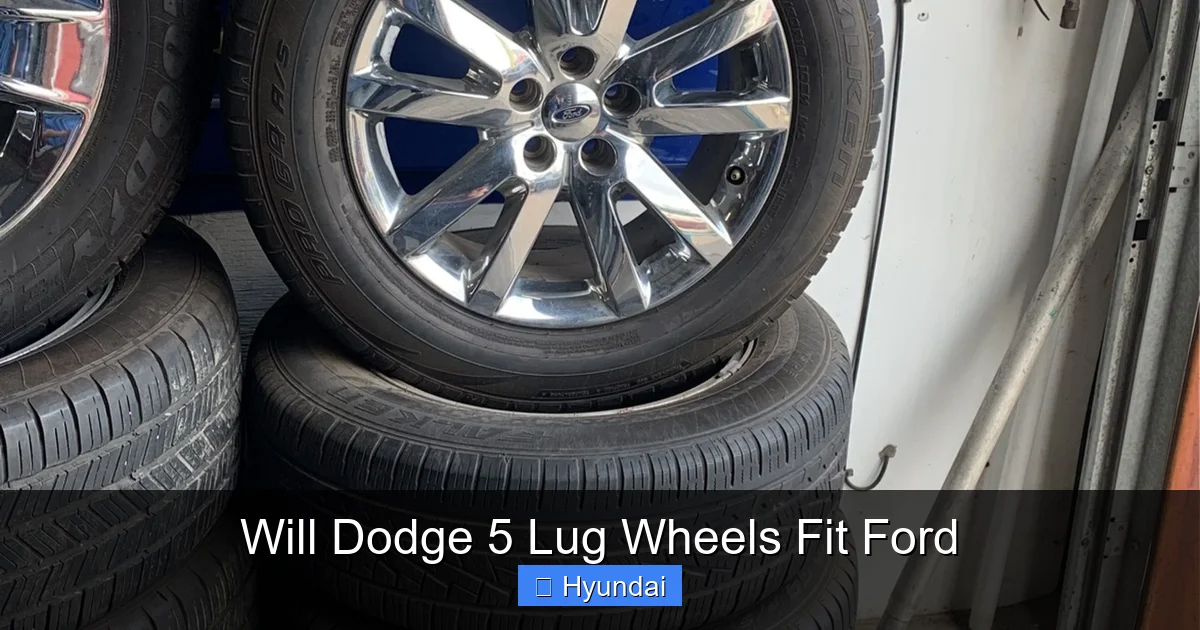
Visual guide about Will Dodge 5 Lug Wheels Fit Ford
Image source: images.offerup.com
Dodge’s Standard: 5x115mm
For decades, Dodge and Ram light-duty trucks (1500, 2500 under certain years) and many SUVs (Durango, older Dakotas) have used the 5x115mm bolt pattern. This is their signature 5-lug measurement.
Ford’s Standard: 5×114.3mm
Ford has almost universally used the 5×114.3mm bolt pattern for its ½-ton and many ¾-ton trucks (F-150, Ranger, Explorer, etc.). This is sometimes called the “small Ford” pattern, but it’s the standard for a vast range of models.
So, what’s the difference? 0.7 millimeters. That’s less than 1/32nd of an inch. To the naked eye, the holes look identical. But that tiny difference means the studs on a Ford hub will not align with the holes on a Dodge 5x115mm wheel. You will not be able to get more than one or two lug nuts on, if any. They are physically incompatible at the most fundamental level.
This is the single biggest reason Dodge 5 lug wheels will not fit Ford vehicles. It’s not an opinion; it’s a mechanical fact. You cannot change the BCD of a wheel or a hub. Forcing this fit is impossible and attempting it will damage threads immediately.
What About the Exceptions? A Deep Dive into Specific Models
Automotive history is full of quirks and exceptions. While the 5×115 vs. 5×114.3 rule covers 95% of cases, we must acknowledge the outliers to be completely accurate.
Visual guide about Will Dodge 5 Lug Wheels Fit Ford
Image source: adventurejeep.com
Heavy-Duty Dodge Rams (2003+ 2500/3500)
This is a major exception. Starting in 2003, the Dodge Ram 2500 and 3500 pickups switched from the 5-lug 5x115mm pattern to a 6-lug pattern (6x135mm) for the front and rear. So, a modern Ram 2500/3500 does not even have 5-lug wheels; it uses 6-lug. The older 5-lug Rams (1994-2002 2500/3500) did use 5x115mm. Therefore, a 5-lug wheel from an older Ram 1500 or early 2500 will still be 5x115mm and face the same Ford incompatibility.
Ford’s 6-Lug and 8-Lug Patterns
Ford’s heavy-duty trucks (F-250, F-350, F-450) use 6-lug or 8-lug patterns. A Dodge 5-lug wheel is obviously incompatible with these. Conversely, a Ford 6-lug wheel won’t fit a Dodge 5-lug hub. These are separate universes.
The “Close but No Cigar” Scenario: Adapters
This is where things get dangerous and expensive. Because the BCDs are so close (114.3mm vs. 115mm), you might find online “wheel adapters” or “spacers” that claim to make them fit. These are thin plates (usually 5mm-10mm thick) that bolt to your Ford’s hub with one set of lug nuts and have a new set of holes for the Dodge wheel’s 5x115mm pattern.
- Why They Are a Bad Idea: Adapters change your wheel’s effective offset, often pushing the wheel out significantly. This can cause severe fender and suspension rubbing. More critically, they introduce a new set of parts that must be perfectly torqued and are now a potential failure point. They also reduce the number of threads engaging the studs, increasing the risk of a wheel coming off. For a difference of 0.7mm, using a 5mm adapter is a massive over-correction that creates far more problems than it solves. We strongly advise against this route for daily driving.
What About Hub Rings?
Hub rings (or hub centric rings) are plastic or aluminum rings that fill the gap between a wheel’s center bore and the vehicle’s hub if the wheel’s bore is larger. They only solve the center bore fitment issue. They do nothing for a mismatched bolt pattern. If your Dodge wheel’s center bore is larger than your Ford’s hub, you’d need a hub ring in addition to an adapter—compounding the safety risks. This is not a viable solution.
How to Be 100% Sure: A Step-by-Step Verification Guide
Never guess. Here is how to definitively answer “will Dodge 5 lug wheels fit Ford” for your specific vehicle.
Visual guide about Will Dodge 5 Lug Wheels Fit Ford
Image source: d3j17a2r8lnfte.cloudfront.net
Step 1: Identify Your Vehicle’s Exact Bolt Pattern
Do not rely on “it’s a 2018 Ford F-150, so it’s 5×135.” That’s wrong; the F-150 is 5×114.3. The 2500+ is 6×135. You must know your exact specs.
- Best Method: Look in your vehicle’s owner’s manual under “Wheel and Tire Data” or “Specifications.”
- Reliable Online Method: Use a trusted wheel retailer’s website (like Tire Rack, Discount Tire) and input your exact year, make, model, and trim. They list the factory bolt pattern, offset range, and center bore.
- Physical Measurement: If you have the wheel, measure the BCD. For a 5-lug, measure from the center of one lug hole to the center of the *skip* hole (the one two away). This is the BCD. For the hub, you can use a precision ruler or a bolt pattern gauge. For accuracy, this is best left to a tire shop.
Step 2: Identify the Dodge Wheel’s Specifications
Find the stamped or molded numbers on the back of the Dodge wheel. It will list the size (e.g., 17×8), the bolt pattern (e.g., 5×115), and the offset (e.g., +25). You must have this data.
Step 3: Compare the Critical Dimensions
Create a simple chart:
- Your Ford’s Bolt Pattern: ______
- Dodge Wheel’s Bolt Pattern: ______
- Verdict: Must be identical. (If Ford is 5×114.3 and Dodge is 5×115, verdict is NO).
- Your Ford’s Offset Range: (e.g., +20 to +44)
- Dodge Wheel’s Offset: ______
- Verdict: Should be within factory range. A large difference (+60 vs +20) will cause problems.
- Your Ford’s Center Bore: (e.g., 67.1mm)
- Dodge Wheel’s Center Bore: ______
- Verdict: Must be equal or wheel bore larger (then use hub ring). Never smaller.
If the bolt pattern fails, the answer is a definitive no. Stop there.
Practical Examples: Common Ford Trucks vs. Dodge Wheels
Let’s make this concrete with real-world examples.
Ford F-150 (1997-2023)
Almost all F-150s use a 5×114.3mm bolt pattern. Center bore is typically 67.1mm or 70.3mm depending on year. Offset varies by generation but is usually positive (+20 to +44). A Dodge Ram 1500 wheel (5x115mm) will not fit. Period.
Ford Ranger (1998-2023)
All Rangers use 5×114.3mm. Same story as the F-150. Dodge 5×115 wheels are incompatible.
Ford Expedition / Lincoln Navigator
These full-size SUVs also use 5×114.3mm. Dodge 5×115 wheels will not fit.
Ford E-Series Van
Most use 5x135mm (the same as Ford’s ¾-ton trucks). This is a completely different pattern from Dodge’s 5-lug. Incompatible.
What About a Dodge Dakota or Durango?
These Dodge/Jeep vehicles also typically use 5x115mm. Their wheels will have the same incompatibility with Ford’s 5×114.3 pattern. The only potential exception would be finding a very specific aftermarket Dodge-branded wheel that was intentionally manufactured in a 5×114.3mm version, but that would be rare and explicitly marked.
The Safe Path Forward: Your Actual Options
So you can’t use those Dodge wheels. What do you do?
Option 1: Sell/Trade the Dodge Wheels and Buy Ford-Spec Wheels
This is the simplest and safest solution. The used wheel market is huge. Sell your Dodge 5×115 wheels and use the proceeds to buy a set of wheels with the correct 5×114.3mm bolt pattern for your Ford. You’ll get proper fitment, safety, and peace of mind.
Option 2: Use Wheel Adapters (With Extreme Caution)
We must reiterate: this is a compromise. If you proceed, you must:
- Use only high-quality, hub-centric adapters from a reputable brand (not cheap eBay flanges).
- Have them professionally installed with a torque wrench.
- Retorque all lug nuts after driving 50-100 miles.
- Be prepared for potential rubbing and the need for minor fender modifications or different offset wheels.
- Understand this may affect your insurance coverage in an accident.
- Accept reduced load capacity and increased stress on wheel bearings.
For a 0.7mm BCD difference, the adapter thickness needed will likely create significant offset changes. This is rarely a good idea for a daily-driven truck.
Option 3: Find Ford-Compliant Aftermarket Wheels
This is the best performance and aesthetic option. Thousands of aftermarket wheels are available in the correct 5×114.3mm pattern. You can choose style, finish, size, and offset to perfectly match your Ford’s specs and your vision. A local wheel shop or online retailer can filter options for your exact vehicle.
Option 4: Stick with Factory Ford Wheels
There is a huge market for used OEM Ford wheels. They are guaranteed to fit, are often affordable, and maintain factory safety ratings. Search for “OEM Ford F-150 wheels” or your specific model. This is a foolproof, economical choice.
Conclusion: Don’t Gamble with Your Wheels
The short, clear answer to will Dodge 5 lug wheels fit Ford is almost always no. The fundamental incompatibility between Dodge’s 5x115mm and Ford’s 5×114.3mm bolt patterns is a hard barrier. While the automotive world has exceptions, this is not one of them. The temptation to try and make them fit with adapters is strong, but the risks—vibration, component damage, and potential wheel failure—are severe and not worth taking. Your truck’s wheels are its only connection to the road. That connection must be perfect. Take the time to identify your Ford’s exact specifications, compare them honestly to the Dodge wheel’s stamped numbers, and make a safe, informed decision. Sell the Dodge wheels, buy the correct Ford-spec wheels, and enjoy a smooth, safe, and worry-free ride. Your future self, your truck, and everyone on the road will thank you.
Frequently Asked Questions
Can I use a 5x115mm Dodge wheel on a 5×114.3mm Ford with just different lug nuts?
No. Lug nuts cannot change the bolt pattern. The wheel’s holes are in the wrong positions relative to the hub’s studs. The studs will not go through the holes, regardless of the nut style.
What if my Ford is a model year that uses 5x115mm? Is that possible?
It is exceptionally rare for a modern Ford truck/SUV to use 5x115mm. Some older Ford cars (like the Ford Five Hundred) used it, but not trucks. You must verify your specific vehicle’s bolt pattern. For any Ford F-Series truck (F-150, F-250), Ranger, Explorer, Expedition, or Escape, the pattern is 5×114.3mm (or 6-lug for HD).
Are there any Dodge vehicles that share Ford’s 5×114.3mm pattern?
Not in the truck/SUV line. Dodge/Chrysler/Jeep used 5×114.3mm on some front-wheel-drive cars (like the Chrysler Sebring, Dodge Avenger), but these are not compatible with truck wheels due to vastly different offsets, center bores, and load ratings. Their wheels are not designed for truck applications.
My friend says his Dodge Ram wheels fit his Ford F-150. Is he lying?
He might be mistaken. He could be using a different wheel than he thinks, or his F-150 might have an aftermarket adapter we discussed. It’s also possible he has a very early 1990s Ford that used a 5×135 pattern (which still wouldn’t match a Dodge 5×115). The most likely explanation is a misunderstanding of the bolt pattern. Ask to see the wheel’s stamped markings.
What is the most common mistake people make when checking wheel fitment?
The biggest mistake is assuming all “5-lug” wheels are the same. They focus on the number of holes and ignore the bolt circle diameter (BCD). The second biggest mistake is not checking offset, which can cause wheels to rub even if the bolt pattern matches. Always check all three dimensions: BCD, offset, and center bore.
If I get a wheel that has the correct 5×114.3mm pattern for my Ford, can I use it on any Ford with 5 lugs?
No. While the bolt pattern will match, you must still verify the wheel’s size (diameter and width), offset, and center bore are appropriate for your specific Ford model and year. A wheel for a 2020 F-150 may not fit a 2005 Ranger due to brake caliper clearance or offset requirements. Always use a fitment guide for your exact vehicle.
