
What Year Hyundai Elantra to Avoid?

Not all Hyundai Elantra years are created equal. Our research points to the 2011-2016 model years as the most problematic, primarily due to widespread engine and transmission issues. While later models (2017+) are significantly improved, always get a pre-purchase inspection. Focus on well-maintained examples with complete service histories to find a reliable Elantra.
So, you’re in the market for a used Hyundai Elantra. Smart choice. For years, the Elantra has been a cornerstone of Hyundai’s lineup, offering a compelling blend of value, fuel efficiency, and features that often outclassed rivals. It’s no wonder it’s one of the best-selling sedans in America. But here’s the critical question that separates a savvy buyer from someone facing a wallet-draining nightmare: What year Hyundai Elantra to avoid?
The truth is, like any long-running model, the Elantra has had its ups and downs. Some model years are paragons of reliability, while others carry the heavy burden of design flaws, faulty components, and costly repairs. Knowing the difference isn’t just about saving money on repairs; it’s about ensuring your daily drive is safe, dependable, and actually enjoyable. In this comprehensive guide, we’re diving deep into the Elantra’s history, wading through recall databases, owner forums, and mechanic reports to give you a clear, actionable answer. We’ll highlight the years to approach with extreme caution, explain exactly why, and arm you with the knowledge to pick a golden gem instead of a rusty grenade.
Key Takeaways
- The 2011-2016 models are the highest risk: This generation is plagued by known engine (Theta II) and transmission problems, leading to expensive repairs and multiple recalls.
- The 2017 redesign marked a major improvement: Hyundai addressed many prior issues with a new platform, engine, and transmission, making post-2016 models much more reliable.
- Pre-2011 models have their own concerns: Earlier Elantras (2000s) can suffer from age-related issues like rust, worn suspensions, and outdated parts availability, requiring careful inspection.
- Maintenance history is everything: A well-documented service record can mitigate risks even on a problematic year, while a neglected “good” year can be a disaster.
- Recalls are a red flag, not a death sentence: The high number of recalls for 2011-2016 models indicates systemic issues. Verify all recalls have been completed before purchase.
- Always get a professional pre-purchase inspection (PPI):strong> This is non-negotiable. A mechanic can spot hidden problems, check for updated parts, and test for the specific issues common to certain years.
- Check for technical service bulletins (TSBs):strong> These are manufacturer-recommended fixes for known non-safety defects. A high number of TSBs for a specific year/model is a major warning sign.
📑 Table of Contents
- The Hyundai Elantra Evolution: A Brief History
- Problematic Model Years Deep Dive: The 2011-2016 Generation
- The 2017 Redesign: A New Era of Reliability
- What About Earlier Models? (Pre-2011)
- Later Models (2020+): Are There Any Concerns?
- Smart Buying Strategies for a Used Hyundai Elantra
- Conclusion: Your Clear Path to a Reliable Elantra
The Hyundai Elantra Evolution: A Brief History
Before we point fingers at specific years, let’s set the stage. The Hyundai Elantra first debuted in the U.S. for the 1991 model year. It started as a humble, budget-friendly compact. Over the next three decades, it transformed. The early 2000s saw it grow in size and sophistication. The mid-2000s introduced the sleek, award-winning “Fluidic Sculpture” design language. Then came the major inflection point: the complete redesign for the 2011 model year.
The Pivotal (and Problematic) 2011 Redesign
The 2011 Elantra was a huge deal. It was Hyundai’s bold entry into the competitive compact sedan wars, boasting a striking coupe-like profile, a premium interior feel, and impressive fuel economy for the time. Hyundai’s ambition was sky-high, and so were initial sales. However, this generation (coded internally as the “HD” or “G4” platform, produced from 2010-2016) would later become infamous for two major, interconnected problems that define the “years to avoid” conversation. It represented a period where Hyundai’s rapid growth arguably outpaced its quality control and engineering validation for some critical systems.
After the 2016 model year, Hyundai took a step back, completely re-engineering the Elantra for 2017. This next generation addressed the previous model’s core weaknesses and set a new, higher standard for reliability. Understanding this 2011-2016 “danger zone” is the key to answering our main question.
Problematic Model Years Deep Dive: The 2011-2016 Generation
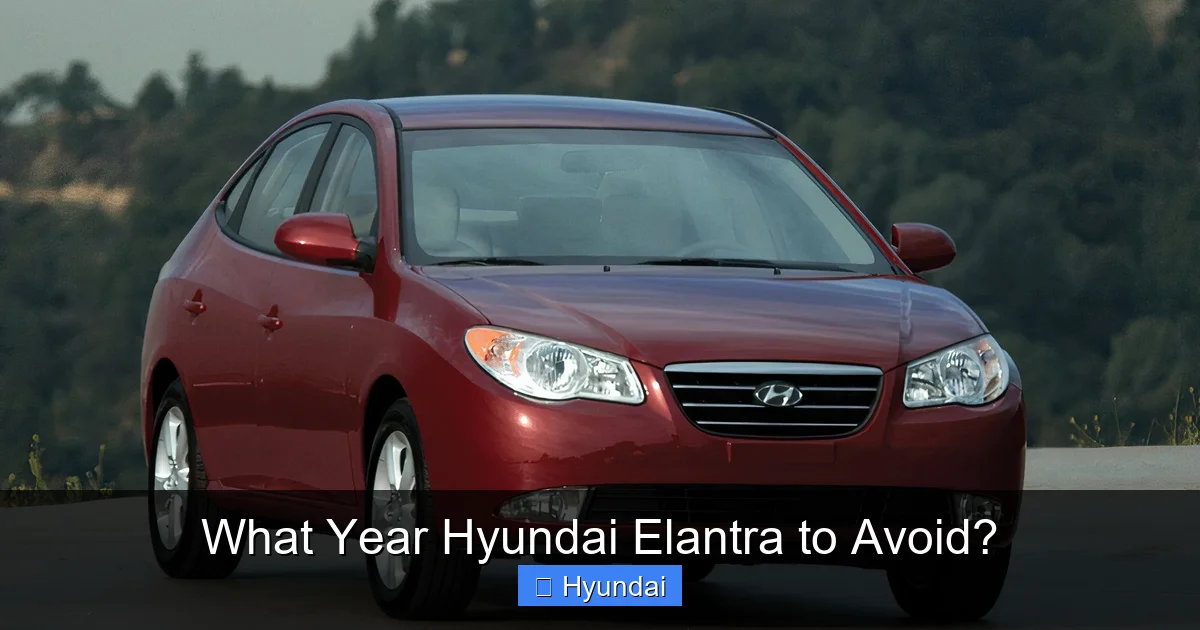
If you only remember one thing from this article, let it be this: exercise extreme caution with any Hyundai Elantra from the 2011 through 2016 model years. This isn’t based on a few isolated complaints. It’s backed by a mountain of evidence from the National Highway Traffic Safety Administration (NHTSA), widespread class-action lawsuits, and countless mechanic anecdotes. The issues primarily cluster around two critical components: the engine and the transmission.

Visual guide about What Year Hyundai Elantra to Avoid?
Image source: i.infocar.ua
The Theta II Engine Debacle
The poster child for Elantra problems is the 1.8L and 2.0L “Theta II” gasoline engine. This engine family was used across numerous Hyundai and Kia models from roughly 2009-2019. The core issue? A design flaw in the connecting rod bearings and oil flow passages. Under certain driving conditions (often short trips, stop-and-go traffic), the bearings could wear prematurely, leading to catastrophic engine failure. Symptoms included loud knocking noises, loss of power, and eventually, a seized engine that required a complete replacement or rebuild—a job costing $4,000 to $8,000 or more.
Hyundai eventually acknowledged the problem and issued multiple recalls and extended warranties. For example, recall 20V-023 (covering 2011-2013 Elantras) and 21V-015 (covering 2011-2014 Elantras) addressed the issue by updating engine control logic and, in some cases, providing a lifetime warranty extension for the affected components to the original owner. However, this only applies if the work was properly documented and the vehicle was maintained. For a used car buyer, this history is a giant red flag. You could be buying a car with a ticking time bomb under the hood, even if a previous owner had a repair done. Always verify the engine’s history and check for any related service bulletins. If you’re considering a model from this era, you must also budget for potential future reliability concerns, which might influence your decision on best spark plugs for Hyundai Elantra or other engine components, as the design’s vulnerabilities can affect related parts.
Transmission Woes: The 6-Speed Automatic
Paired with the Theta II engine in most models was Hyundai’s in-house 6-speed automatic transmission (the A6LF1). This transmission developed its own notorious reputation for harsh shifting, delayed engagement, slipping, and complete failure. Common complaints included a severe “shift shock” or “bang” when changing gears, especially from 1st to 2nd, and the transmission getting stuck in “limp mode.” The root causes were often related to faulty solenoid packs, worn clutch packs, or software issues. While not every 2011-2016 Elantra had a transmission die, the failure rate was statistically significant and well-documented in owner forums like ElantraSport.net and Edmunds. Repairing or replacing this transmission is another $3,000-$5,000 hit. The combination of a potentially weak engine and a questionable transmission makes this generation a particularly risky proposition.
Other Notable Issues & Recalls
Beyond the powertrain, this generation suffered from a cascade of other problems:
- Electrical Gremlins: Numerous complaints about malfunctioning infotainment systems, faulty power window switches, and intermittent issues with the instrument cluster.
- Premature Brake Wear: Many owners reported needing brake pads and rotors far more frequently than expected, sometimes under 30,000 miles.
- Excessive Oil Consumption: Some models, particularly the 2.0L, were found to burn oil at an alarming rate between changes, a symptom often linked to the engine’s piston ring design.
- Rust: While not as catastrophic as some older domestic cars, body rust on wheel arches and undercarriage components began appearing on higher-mileage examples of this generation.
The NHTSA database lists dozens of recalls for these years, covering everything from fuel leaks and faulty seat belt pretensioners to the aforementioned engine and transmission issues. The sheer volume is a clear indicator of a model that was rushed or had unresolved engineering challenges.
The 2017 Redesign: A New Era of Reliability
For the 2017 model year, Hyundai didn’t just give the Elantra a facelift. They tore it down to the frame and rebuilt it on an all-new platform. This was a clean-sheet design that directly addressed the criticisms of the previous generation. The result? A car that is objectively better in almost every measurable way and, crucially, far more reliable.
Visual guide about What Year Hyundai Elantra to Avoid?
Image source: yearstoavoidnow.com
What Changed?
The 2017+ Elantra (coded “AD” or “G6” platform) got an entirely new engine lineup. The most common, the 2.0L MPI (Multi-Point Injection) engine, is a different, more robust design from the Theta II. It’s paired with a much-improved 6-speed automatic transmission (or a smooth CVT in some trims) that has none of the historical failure patterns of its predecessor. The chassis is stiffer, the interior quality is upgraded, and standard safety features like Hyundai’s “SmartSense” suite (automatic emergency braking, lane keep assist, etc.) became available.
Owner satisfaction scores and reliability ratings from sources like J.D. Power and Consumer Reports jump significantly starting with the 2017 model. While no car is perfect—some later models have minor issues with infotainment or paint—the systemic, costly powertrain failures of the previous generation are largely absent. If your budget allows for a 2017 or newer Elantra, you are intelligently avoiding the worst of the known problems. The improvement is so stark that it fundamentally reshapes the answer to “what year to avoid.” The line is clearly drawn at the 2016 model year.
What About Earlier Models? (Pre-2011)
If you’re on an extremely tight budget and looking at Elantras from the 2000s (2001-2010), the calculus changes. These are now 14-23 years old. The Theta II engine problems don’t apply here, but you’re trading one set of risks for another: the universal risks of age and high mileage.
The Age vs. Mileage Dilemma
An early 2000s Elantra with 150,000+ miles will inevitably need work. Common issues include:
- Suspension Wear: Control arm bushings, struts, and sway bar links are wear items that will likely need replacement.
- Cooling System: Thermostats, water pumps, and radiators fail with age. Ensuring the best coolant for Hyundai Elantra has been used and changed regularly is important for these older systems.
- Oil Leaks: Valve cover gaskets and oil seals are common leak points on engines of this vintage.
- Parts Availability: While generally good, some specific body or interior parts for these older models can become scarce or expensive.
The key with pre-2011 models is to find one that has been meticulously maintained with a rich paper trail. A $3,000 Elantra that needs $2,000 in suspension work is a bad deal. A $5,000 Elantra with a full service history is a better bet. Also, be vigilant for rust, especially if the car spent its life in a snowy, salt-covered region.
Later Models (2020+): Are There Any Concerns?
If you can stretch to a 2020 or newer Elantra, you’re entering the current generation (the “CN7” or “G7” platform). This car is a major leap forward again, featuring a sleek, aerodynamic design, a vastly improved interior with a large standard touchscreen, and the latest iteration of Hyundai’s SmartSense safety tech as standard on all trims.
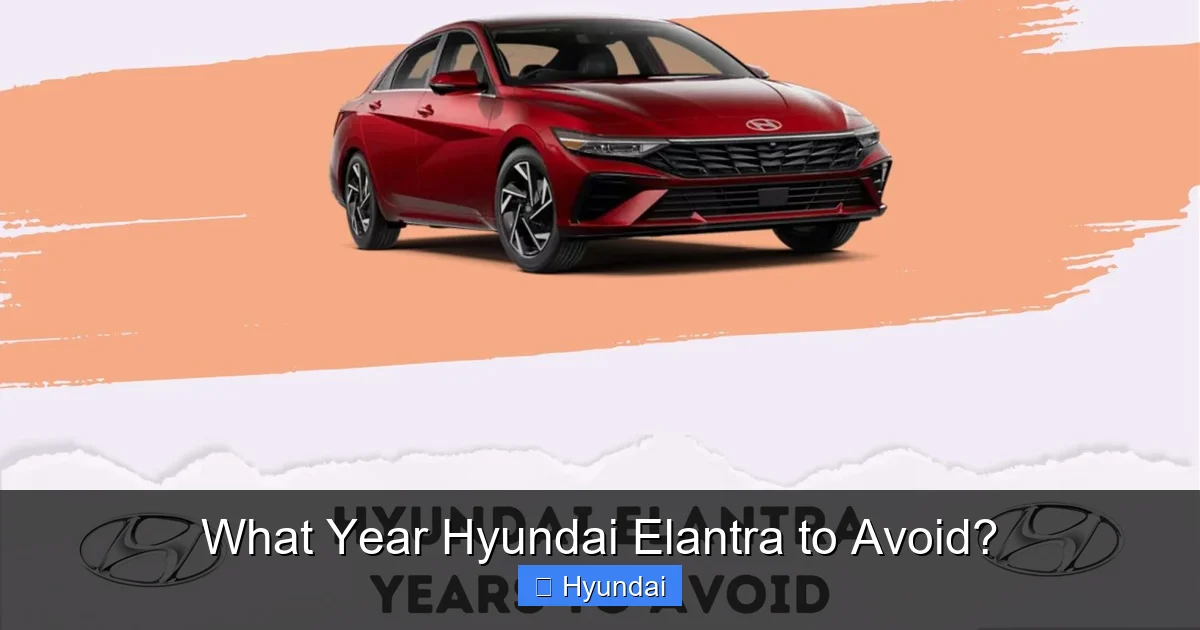
Visual guide about What Year Hyundai Elantra to Avoid?
Image source: carscounsel.com
Reliability for these models is excellent so far, with few widespread reports of catastrophic failures. Some owners note minor quirks: the infotainment system can be occasionally buggy, and the standard “clutch-by-wire” manual transmission (on the sole manual trim) has a reputation for a notchy, unforgiving shift pattern that some drivers dislike. The continuously variable transmission (CVT) in the base models is tuned for efficiency and can feel unresponsive under hard acceleration, but it’s not known for breakdowns. The primary “avoid” factor here is not reliability but value: you’re paying near the top of the market for a compact sedan. Ensure the price reflects the car’s condition and optional features. For these newer models, proper maintenance of fluids and filters, including using the best oil filter for Hyundai Elantra, is key to long-term health.
Smart Buying Strategies for a Used Hyundai Elantra
Armed with the knowledge that 2011-2016 is the trouble zone, how do you actually buy a good one, regardless of the year? Here is your actionable checklist.
The Non-Negotiable Pre-Purchase Inspection (PPI)
Do not buy a used Elantra (or any used car) without a thorough, third-party pre-purchase inspection by a trusted mechanic. This is your single best defense. Instruct the mechanic to:
- Check for the specific Theta II engine issues (listen for knocks, check oil pressure, scan for codes related to the engine’s long-term fuel trim and knock sensors).
- Perform a rigorous transmission test, feeling for harsh shifts, slippage, or delayed engagement in all gears and under load (up a hill).
- Verify all open recalls have been addressed by checking the VIN on the NHTSA website.
- Look for signs of poor maintenance, accidents, or rust.
Spending $150 on a PPI could save you $5,000. It’s the best insurance policy you can buy.
Decode the Vehicle History Report
Get a Carfax or AutoCheck report. Look beyond accidents. Scrutinize the service history. Are oil changes documented at regular intervals? Are there any major repairs, especially to the engine or transmission? A gap in service records is a yellow flag. A record of a major engine repair under warranty on a 2012 Elantra is a massive red flag—it means the engine already failed once.
Know the Trims and Engines
Within the problematic 2011-2016 years, some trims are slightly better than others. The base 1.8L engine (in GLS and SE trims) is generally considered slightly more durable than the turbocharged 1.6L or the 2.0L, though all share the Theta II’s fundamental bearing design flaw. The sporty “Elantra GT” (hatchback) and “Elantra Sport” sedans from this era often have the 2.0L and sometimes stiffer suspensions that can exacerbate transmission harshness. If you must buy from this generation, the absolute best candidates are:
- A 2016 model (the last year of the generation, with the most updated software and parts).
- A model with impeccable, complete service records from a single owner.
- A model where you can verify the engine and transmission have been replaced or updated per all relevant recalls and TSBs.
But honestly, if you can afford a 2017 or newer, the stress and risk simply aren’t worth it.
Conclusion: Your Clear Path to a Reliable Elantra
So, what year Hyundai Elantra to avoid? The answer is clear and data-driven: prioritize avoiding the 2011 through 2016 model years. The combination of the flawed Theta II engine and the problematic 6-speed automatic transmission creates a perfect storm of expensive, reliability-destroying problems that have been well-documented for over a decade. While a pristine, fully documented example from this period might exist, it’s the exception that proves the rule.
Your money and peace of mind are better spent on a slightly newer, 2017 or later model. The redesign fixed the core issues and elevated the Elantra to a class leader. If your budget forces you to consider older models, target pre-2011 examples (2007-2010) but only with a flawless service history and a thorough PPI, understanding you’re buying an aging car. Always, always get that inspection. Check the best tires for a 2015 Hyundai Elantra if you end up with that year, as worn suspension components can accelerate tire wear on these models. By following this guide, you can navigate the used Elantra market with confidence and drive home in a reliable, efficient, and enjoyable sedan.
Frequently Asked Questions
Is the Hyundai Elantra a reliable car overall?
Yes, Hyundai Elantra has a generally good reliability reputation, but it varies drastically by generation. The 2017+ models are very reliable, while the 2011-2016 generation has major, well-known reliability issues. Always check the specific model year.
What is the most common problem with Hyundai Elantras?
The most common and costly problems are with the 2011-2016 models: engine failure (premature bearing wear in the Theta II engine) and transmission failure (harsh shifting and slipping in the 6-speed automatic). These are not simple fixes.
Should I buy a used Hyundai Elantra with over 100,000 miles?
It depends entirely on the year and maintenance history. A 2017+ Elantra with 100k miles that has been serviced regularly can be an excellent value. A 2012 Elantra with 100k miles from the problematic generation is a very high-risk purchase due to the approaching end-of-life for its engine and transmission.
How can I check if a specific Elantra has had its recalls fixed?
Use the NHTSA’s free recall lookup tool (nhtsa.gov/recalls). Enter the vehicle’s 17-digit VIN. It will show all open recalls for that specific vehicle. A reputable dealer can also run this check. Never buy a car with open, critical safety recalls.
Are 2012 Hyundai Elantras really that bad?
Yes, the 2012 model is considered one of the worst in the already problematic 2011-2016 generation. It uses the flawed Theta II 2.0L engine and the problematic 6-speed transmission. It was subject to multiple major recalls and class-action lawsuits. It should be at the very top of your “avoid” list.
What is the best year Hyundai Elantra to buy used?
The best balance of value, features, and reliability is found in the 2017-2020 model years. They represent the first generation after the major redesign that fixed the prior era’s flaws. They are modern, safe, and have a proven track record of reliability. If you can find a well-cared-for example, it’s the smartest used Elantra purchase.
