
Why a 2017 Hyundai Elantra Is Shaking

A shaking 2017 Hyundai Elantra is almost always a symptom of an underlying mechanical or maintenance issue. The most common culprits are engine misfires from faulty spark plugs or ignition coils, tire and wheel problems like imbalance or damage, and brake system faults such as warped rotors. Suspension and steering component wear can also cause unsettling vibrations. Diagnosing the exact cause requires noting when the shake occurs—at idle, during acceleration, or at specific speeds—and seeking professional inspection if basic checks don’t resolve it.
Key Takeaways
- Engine misfires are the #1 suspect: Worn spark plugs, failing ignition coils, or dirty fuel injectors in your Elantra’s 2.0L or 1.6L engine often cause a rough idle and shaking that improves with acceleration.
- Tire issues cause speed-specific vibrations: An out-of-balance tire, damaged sidewall, or uneven wear will typically cause a shake that intensifies at higher highway speeds, usually felt in the steering wheel or floor.
- Brake problems reveal themselves when stopping: Warped brake rotors or stuck calipers create a pulsating brake pedal and steering wheel shake specifically when you apply the brakes, not during normal driving.
- Worn suspension/steering parts lead to general instability: Loose or damaged tie rod ends, ball joints, or wheel bearings often cause a shaking that is felt through the steering wheel and may be accompanied by clunking noises.
- Simple maintenance can solve many issues: Regularly scheduled oil changes, tire rotations, and spark plug replacements per your owner’s manual are the first line of defense against preventable shaking.
- Never ignore a persistent shake: Driving with a significant vibration can cause catastrophic damage to expensive components like the transmission, catalytic converter, or engine mounts, leading to costly repairs.
- Diagnosis requires a methodical approach: Pay attention to *when* the shake happens (idle, acceleration, braking, constant speed) and *where* you feel it (steering wheel, seat, pedals) to give your technician the best clues.
📑 Table of Contents
That Unsettling Feeling: Your Trusted Elantra Is Shaking
You’re driving your 2017 Hyundai Elantra, a car known for its reliability and smooth, comfortable ride. Then it happens—a distinct vibration, a shake, a shudder that wasn’t there before. It might be a subtle tremor at a stoplight or a violent judder at highway speed. Whatever its character, it’s unnerving. Your first thought is likely, “Why is my 2017 Hyundai Elantra shaking?”
First, don’t panic. A shaking car is almost always a symptom, not a disease in itself. It’s your vehicle’s way of telling you something is out of balance, out of round, or out of proper working order. The good news is that many common causes are well-known, diagnosable, and often fixable without breaking the bank. The key is understanding the language of the vibration. This guide will walk you through the most likely reasons your Elantra is shaking, how to describe the problem to a mechanic, and what basic checks you can perform yourself.
The Usual Suspects: Top Causes of Vibration in a 2017 Elantra
To diagnose a shake, we need to think like detectives. The “where” and “when” of the vibration are our biggest clues. Is it in the steering wheel? The driver’s seat? The brake pedal? Does it happen only when you accelerate? Only at 65 mph? Only at a complete stop? Let’s break down the most common criminal categories.
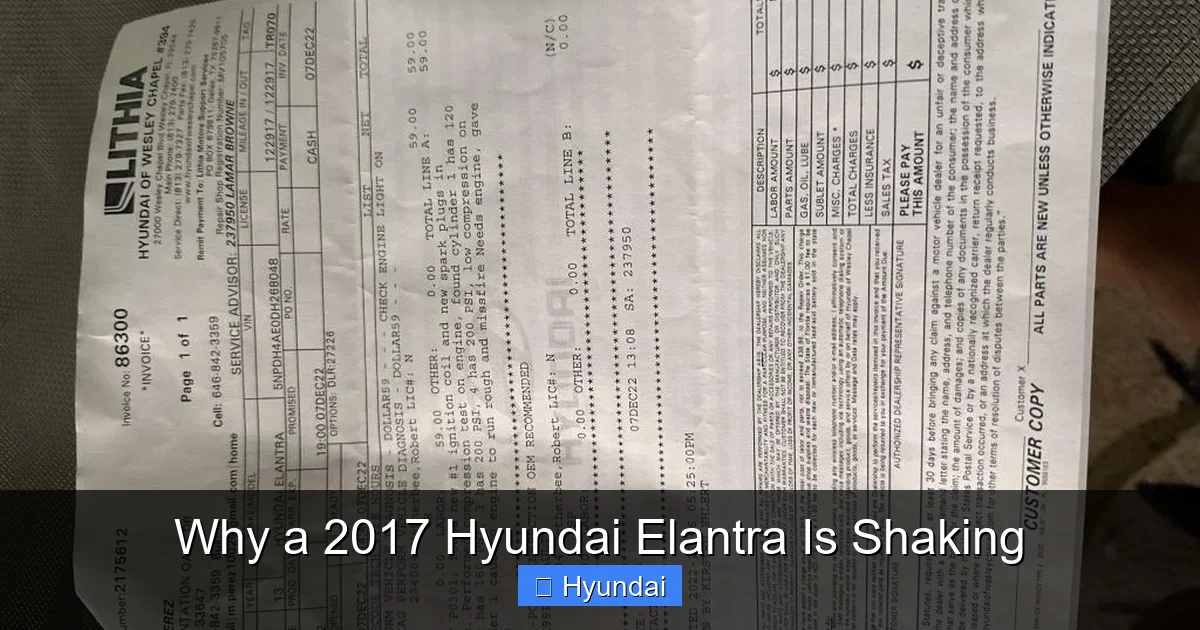
Visual guide about Why a 2017 Hyundai Elantra Is Shaking
Image source: cdn.carcomplaints.com
1. The Engine & Ignition System: The Heart of the Shake
If your Elantra shakes violently at a stoplight or when idling, but smooths out as you press the gas pedal, your focus should immediately land on the engine’s ability to fire smoothly. The 2017 Elantra comes with either a 2.0L 4-cylinder (147 hp) or a 1.6L turbocharged 4-cylinder (128 hp). Both rely on precise timing of spark and fuel to run smoothly.
- Faulty Spark Plugs: These are the most common and affordable fix. Worn, gapped, or fouled spark plugs can’t ignite the air/fuel mixture properly, causing one or more cylinders to misfire. The engine runs rough, shakes, and your check engine light will likely flash. Replacing them is a standard maintenance item; consult your owner’s manual or a trusted resource like how much oil a Hyundai Elantra takes for other routine service intervals.
- Bad Ignition Coils: These little components take the battery’s low voltage and transform it into the high voltage needed for spark plugs. A failing coil pack for a specific cylinder will cause a misfire identical to a bad spark plug. Coils can fail individually. A mechanic can often swap coils between cylinders to see if the misfire moves, diagnosing the bad part.
- Dirty or Faulty Fuel Injectors: If an injector is clogged or not spraying properly, that cylinder runs lean and misfires. This can cause a shake, especially under load. Using a quality fuel injector cleaner might help, but severely clogged injectors may need professional cleaning or replacement.
- Vacuum Leaks: A cracked or disconnected vacuum hose lets extra air into the engine, leaning out the fuel mixture and causing rough idling and shaking. A hissing sound at idle is a classic sign.
- Worn Engine Mounts: The engine is bolted to the car’s frame with rubber and hydraulic mounts designed to absorb vibration. If these mounts break down or collapse, the engine’s normal vibrations are transmitted directly to the chassis, causing a pronounced shake, especially at idle. You might also feel a clunk when shifting into drive or reverse.
2. Tires & Wheels: The Most Common Highway Shaker
If your vibration is speed-related—starting around 45-50 mph and getting worse as you go faster, and you feel it mostly in the steering wheel or floorboard—the tires and wheels are the prime suspects. This is a very, very common issue.
- Wheel/Tire Imbalance: This is the #1 cause of a speed-specific vibration. Over time, weights can fall off a wheel, or tire wear can create an imbalance. The fix is simple and inexpensive: a professional tire balancing procedure. If your Elantra has had new tires mounted without proper balancing, or if it’s been a long time since the last balance, this is your first check.
- Bent or Damaged Wheel: Hitting a deep pothole or curb can bend a steel or alloy wheel. A bent wheel will cause a rhythmic shake that corresponds to its rotational speed. A tire shop can usually spot a bend on a spin-balance machine.
- Tire Damage: A sidewall bubble (from an impact), a separated belt, or severe uneven wear (often from poor alignment or worn suspension parts) will cause a vibration. A visual inspection of all four tires is crucial. For tire-related questions, you might also look into how much is a tire for a Hyundai Elantra for budgeting purposes.
- Uneven Tire Wear: This is often a symptom of another problem (like bad alignment or worn suspension) but the worn tires themselves will cause vibration. “Cupping” or choppy wear is a dead giveaway.
3. The Brake System: The Stop-and-Go Shudder
This one is easy to identify because it only happens when you’re braking. If your steering wheel or entire car shakes *only* when you apply the brake pedal, your brakes are talking to you.
- Warped Brake Rotors: This is the classic cause. The brake rotor (the metal disc the brake pad clamps onto) should be perfectly flat. Excessive heat from aggressive braking or just normal wear can cause it to warp or develop high spots. When the pads hit these high spots, they create a pulsating pressure that you feel as a shake in the pedal and steering wheel. The fix is to have the rotors resurfaced (turned) or replaced.
- Stuck Brake Caliper: If a caliper piston doesn’t retract properly, one brake pad is always slightly dragging on the rotor. This causes uneven wear, overheating, and a warp. It can also cause a pull to one side when driving. You might also smell a burning odor from that wheel.
- Worn Brake Pads: While less common, severely worn pads with uneven material transfer can also cause a pulsation.
4. Suspension & Steering Components: The Clunk and Wander
Worn parts in your Elantra’s suspension and steering linkage don’t just cause a shake; they often cause clunking noises, loose steering feel, and uneven tire wear. These parts connect your wheels to the car’s body and keep them tracking straight.
- Worn Tie Rod Ends: These connect the steering rack to the steering knuckle. A worn inner or outer tie rod end has play, which translates to a vague, shimmying feeling in the steering wheel, especially over bumps or at certain speeds.
- Bad Ball Joints: These pivotal joints allow the wheel to move up and down and turn. Excessive wear causes clunking over bumps and can lead to a wandering or shaking sensation.
- Worn Wheel Bearings: A failing wheel bearing typically makes a growling or humming noise that changes pitch with speed. However, a severely damaged bearing can also cause a gritty, vibrating sensation. The noise usually gets louder when turning (loading the bearing).
- Worn Control Arm Bushings: The rubber bushings that isolate control arms from the frame wear out, allowing metal-on-metal contact and a host of alignment and vibration issues.
5. Drivetrain & Other Factors: Less Common, But Serious
While less frequent than the above, these issues can cause major vibrations and should not be ignored.
- Transmission Issues: For automatic transmission Elantras, low or dirty transmission fluid can cause shuddering or slipping, especially when shifting gears. A failing torque converter (which connects the engine to the transmission) can cause a violent shudder at certain speeds (often 40-60 mph) that feels like driving over rumble strips. This is a serious and expensive problem.
- Axle/CV Joint Problems: A damaged or worn Constant Velocity (CV) joint (especially on front-wheel-drive Elantras) can cause a vibration that changes with acceleration. You’ll often hear a loud clicking or popping noise when turning sharply.
- Exhaust System Damage: A bent, broken, or loose exhaust pipe or muffler can rattle against the car’s underbody, creating a vibration that might be felt in the pedals or seat.
Your Action Plan: How to Diagnose Before You Repair
Before you rush to a mechanic, you can do some basic detective work. This information will save you time and money by pointing the technician in the right direction.

Visual guide about Why a 2017 Hyundai Elantra Is Shaking
Image source: thumbs.dreamstime.com
Be a Vibration Detective: Ask Yourself These Questions
- When does it shake? At a stop (engine), during acceleration (engine/drivetrain), at a specific speed range (tires/wheels), only when braking (brakes), or constantly (worn mounts/suspension)?
- Where do you feel it? Steering wheel (front tires/wheels/brakes), seat (rear tires/drivetrain), or pedals (engine/brakes/drivetrain)?
- Does the Check Engine Light flash? A flashing light indicates a severe misfire that can damage the catalytic converter. Stop driving and get it checked immediately.
- Any noises? Clunks (suspension), hums/growls (wheel bearings), hissing (vacuum leak), or squeals (belt)?
Simple At-Home Checks You Can Perform
With the car safely parked and engine off:
- Visual Tire Inspection: Look for bulges, cuts, or uneven wear on all four tires. Check tire pressure against the placard on the driver’s door jamb.
- Engine Bay Check: Look for disconnected or cracked vacuum hoses. Check for oil leaks around spark plug wells (if accessible) and valve cover gasket.
- Feel for Play: With the car lifted, or by grasping the top and bottom of each wheel at the 12 and 6 o’clock positions, try to rock it. Excessive play can indicate worn wheel bearings or ball joints.
- Listen During a Cold Start: Does the shake happen only when the engine is cold? This can point to an engine-related issue that clears up as the engine warms.
The Professional Fix: What to Expect at the Shop
Once you’ve gathered your clues, it’s time for a professional diagnosis. A reputable mechanic will start with a road test to replicate the vibration. Then, they’ll use their tools and expertise.

Visual guide about Why a 2017 Hyundai Elantra Is Shaking
Image source: lockorunlock.com
The Diagnostic Process
They will likely:
- Scan for Codes: Plug a diagnostic computer into your Elantra’s OBD-II port. Any stored trouble codes (like P0300 for random misfire, or a specific cylinder misfire code P0301-P0304) are the best starting point for engine issues.
- Perform a Physical Inspection: They’ll put the car on a lift and inspect tires, wheels, brakes, suspension, and engine components visually and by hand for play or damage.
- Spin-Balance the Wheels: Even if you suspect tires, a spin-balance machine is the definitive test. It will also reveal bent wheels or tire runout.
- Use Specialized Tools: For engine misfires, they may use a cylinder isolation test (swapping coils/plugs) or a fuel pressure test. For drivetrain issues, they may use vibration analyzers.
Be wary of shops that immediately want to replace expensive parts without a clear diagnostic process. A good technician will explain their findings and show you the worn or damaged parts.
Prevention is Key: Keeping Your Elantra Smooth
The best way to deal with a shaking Elantra is to prevent it from happening. Sticking to a rigorous maintenance schedule based on your owner’s manual is non-negotiable for a reliable car.
- Follow the Service Schedule: This includes timely oil changes, air filter replacements, and spark plug changes (typically every 60,000-100,000 miles on modern platinum/iridium plugs).
- Rotate and Balance Tires Regularly: Every 5,000 to 7,000 miles. This promotes even wear and prevents imbalance.
- Get Annual Alignment Checks: Hitting potholes can knock your alignment out of spec, leading to rapid tire wear and potential suspension stress.
- Address Small Problems Fast: That slight vibration at 70 mph won’t fix itself. It will likely get worse and damage other parts. A small repair now prevents a huge bill later. For battery-related electrical issues that can sometimes cause rough running, you might research the best 2017 Hyundai Elantra batteries when it’s time for a replacement.
Frequently Asked Questions
Could a bad alignment cause my Elantra to shake?
Poor alignment itself usually doesn’t cause a direct shake; it causes rapid, uneven tire wear. The worn, uneven tires that result from bad alignment are what then cause the vibration. So, always fix alignment issues and replace severely worn tires.
My Elantra shakes when I accelerate. What is it?
Acceleration-specific shaking most often points to an engine misfire (bad spark plug/coil) or a drivetrain issue like a failing CV joint or axle. If it feels like the car is “bucking” or “stumbling,” focus on the ignition and fuel system first.
Is it safe to drive my Elantra if it’s shaking?
It depends on the severity and cause. A minor shake from slightly unbalanced tires is generally safe for short periods. However, a violent shake, especially with a flashing check engine light, or one accompanied by strange noises, is unsafe. It can lead to loss of control or catastrophic component failure. Get it diagnosed immediately.
How much will it cost to fix a shaking Elantra?
The cost varies wildly. A tire balance is $20-$50. Spark plugs and coils might be $200-$400. Warped rotors (resurfaced) are $150-$300 per axle. Worn suspension components can range from $100 for a single bushing to $800+ for major control arm replacement. A torque converter replacement can exceed $2,000. Diagnosis is key to an accurate quote.
Can low oil cause a car to shake?
Severely low oil can cause engine damage and rough running, but a mild shake is not a typical first symptom of low oil. You’d likely see oil pressure warnings first. However, an engine that is badly in need of its scheduled oil change can develop sludge and running issues over time. Always check your oil level.
My steering wheel shakes only when I brake. For sure it’s the rotors?
While warped brake rotors are the most common cause of brake-specific pedal and steering wheel pulsation, it’s not the only one. You must also have the brake calipers inspected for sticking pistons or slides, and the wheel bearings checked for play. A complete brake system inspection is necessary.