
Why Is the Tire Light Blinking on My 2010 Toyota Camry

A blinking tire pressure light on your 2010 Toyota Camry indicates an issue with the Tire Pressure Monitoring System (TPMS). This usually means one or more tires are significantly underinflated, but it can also signal a faulty sensor or system malfunction. Immediately check your tire pressures with a gauge and inflate them to the manufacturer’s specifications. If the light continues blinking after proper inflation, the system may need a manual reset or a professional diagnosis for a bad sensor.
That little yellow exclamation point inside a tire tread on your dashboard has started to flash. Your heart sinks a little. It’s not just an annoying light; it’s your 2010 Toyota Camry’s way of urgently communicating a problem with its Tire Pressure Monitoring System, or TPMS. Unlike a steady light, a blinking tire pressure light is a more serious alert, often indicating a direct fault within the system itself, not just low pressure. But don’t panic. This comprehensive guide will walk you through exactly what that blinking light means, the step-by-step actions you need to take right now, and how to solve the problem for good. We’ll break down the technology, common causes, and provide clear, actionable advice so you can drive with confidence again.
Key Takeaways
- Safety First: A blinking TPMS light is a warning. Immediately pull over safely to check tire pressures with a manual gauge, as the system can be inaccurate.
- Common Cause: The most frequent reason is low tire pressure, often due to temperature changes, a slow leak, or physical damage.
- Sensor Failure: If pressures are correct, a faulty TPMS sensor (which has its own battery) or damaged wiring is likely the culprit.
- Reset Required: After fixing the pressure issue, the light often needs a manual reset procedure specific to your 2010 Camry model.
- Professional Help: For persistent blinking, sensor replacement or complex diagnostics should be handled by a qualified tire shop or mechanic.
- Regular Maintenance: Check tire pressures monthly and before long trips to prevent TPMS warnings and ensure optimal safety and fuel economy.
📑 Table of Contents
- Understanding Your Camry’s TPMS: More Than Just a Light
- The Most Common Reasons Your 2010 Camry’s Tire Light is Blinking
- What to Do IMMEDIATELY: A Step-by-Step Safety Protocol
- When the Reset Doesn’t Work: Diagnosing a Faulty Sensor
- Preventive Maintenance: Keeping the Light Off for Good
- Conclusion: Knowledge is Your Best Tool
Understanding Your Camry’s TPMS: More Than Just a Light
Before we dive into why it’s blinking, let’s understand what the TPMS is and how it works in your 2010 Camry. This system is a critical safety feature mandated by law. Its sole job is to monitor the air pressure inside your pneumatic tires and alert you when it falls 25% or more below the manufacturer’s recommended cold inflation pressure.
How the 2010 Camry’s Direct TPMS Works
Your 2010 Camry uses a “direct” TPMS. This means each wheel has a small, sophisticated sensor mounted on the valve stem inside the tire. These sensors have a unique ID and a tiny, long-life battery (usually lasting 7-10 years). They constantly radio pressure and temperature data to the vehicle’s computer. When the computer receives a low-pressure signal from any sensor, it illuminates the tire pressure warning light on your dash. A blinking light, which often lasts for 60-90 seconds when you start the car before going solid, typically means the system has detected a fault—like a dead sensor battery, a broken sensor, or a communication error—and is in a “malfunction” mode. It’s essentially the TPMS saying, “I can’t do my job right now.”
The Difference Between Blinking and Solid
This distinction is crucial for diagnosis. A solidly illuminated tire pressure light after startup usually means one or more tires are simply underinflated. You can often fix this by adding air. A blinking light that then stays solid is a two-stage warning: first, the system fault; second, the low-pressure condition. However, if the light only blinks intermittently while driving, without going solid, it’s a stronger indicator of an electronic fault—a bad sensor, a weak battery in a sensor, or damaged wiring to the antenna. For a deeper dive into what different dashboard lights mean, including other warnings like the check engine light, our article on why a Toyota Camry’s check engine light comes on explains similar diagnostic principles.
The Most Common Reasons Your 2010 Camry’s Tire Light is Blinking
Now, let’s troubleshoot. Here are the most likely culprits, ranked from simplest to most complex.
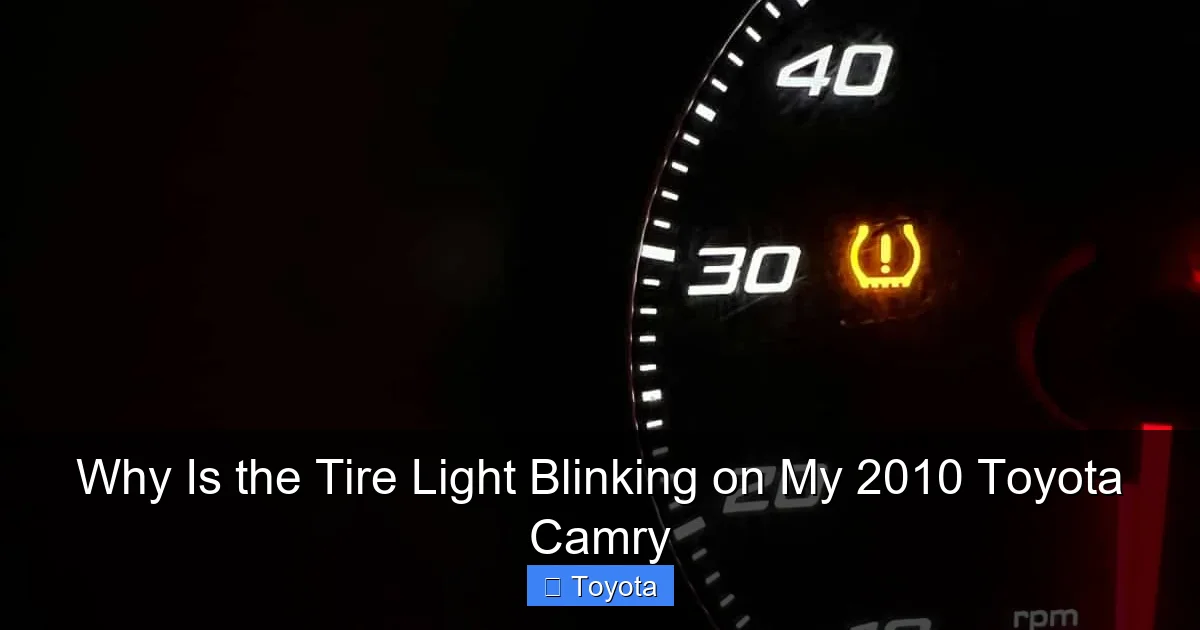
Visual guide about Why Is the Tire Light Blinking on My 2010 Toyota Camry
Image source: mechanicbase.com
1. Significantly Low Tire Pressure (The Obvious One)
This is still the number one cause. A slow leak from a nail, a puncture, or simply forgetting to check pressures can cause a tire to drop more than 25%. Cold weather is a major trigger; for every 10°F drop in temperature, tire pressure decreases by about 1-2 PSI. The system may interpret this rapid drop as a fault, causing a blink. Always rule this out first.
2. A Faulty or Dead TPMS Sensor
Your 2010 Camry’s sensors are now 14+ years old. The internal lithium-ion batteries are reaching or have exceeded their lifespan. A dead battery will cause the sensor to stop transmitting, leading the system to flag a “missing” sensor and blink. Physical damage during tire service (like using a tire lever that cracks the sensor housing) or corrosion on the valve stem can also kill a sensor.
3. Damage to the Sensor or Valve Stem
Impact with a curb, pothole, or road debris can bend or break the sensor’s antenna or damage the valve stem itself. Even a slow leak from the valve core (the tiny piece inside the valve stem) can trigger the light. Sometimes, the sensor is perfectly fine, but the rubber valve stem it’s attached to has deteriorated and cracked, causing an air leak.
4. Recent Tire Service or Rotation
If you just had your tires rotated, changed, or repaired, the TPMS system might be “confused.” In many vehicles, the system needs to relearn the position of each sensor. On a 2010 Camry, this often requires a specific reset procedure using the steering wheel buttons or a scan tool. If the tire shop didn’t perform this relearn procedure, the light will blink. It’s also possible a sensor was damaged during the service. A related issue is if you installed a temporary spare tire; the system will detect its different pressure and may blink until the regular tire is reinstalled.
5. Extreme Temperature Fluctuations
Moving your car from a heated garage into extreme cold, or vice versa, can cause a rapid pressure change. The TPMS might interpret this sudden shift as a system error or a rapid leak, resulting in a blinking light. Once the tires warm up or cool down to ambient temperature, the pressure may normalize, and the light might go out on its own after a drive. However, if it persists, you must check pressures.
6. Electrical or Antenna Issues
Less common, but possible, is a problem with the vehicle’s TPMS receiver antenna (often located near the wheel wells) or its wiring. A loose connection, corrosion, or damaged wire can prevent the car from hearing the sensor signals, causing a system fault blink.
What to Do IMMEDIATELY: A Step-by-Step Safety Protocol
Seeing that light blink can be unsettling, but a methodical approach is key. Do not ignore it.
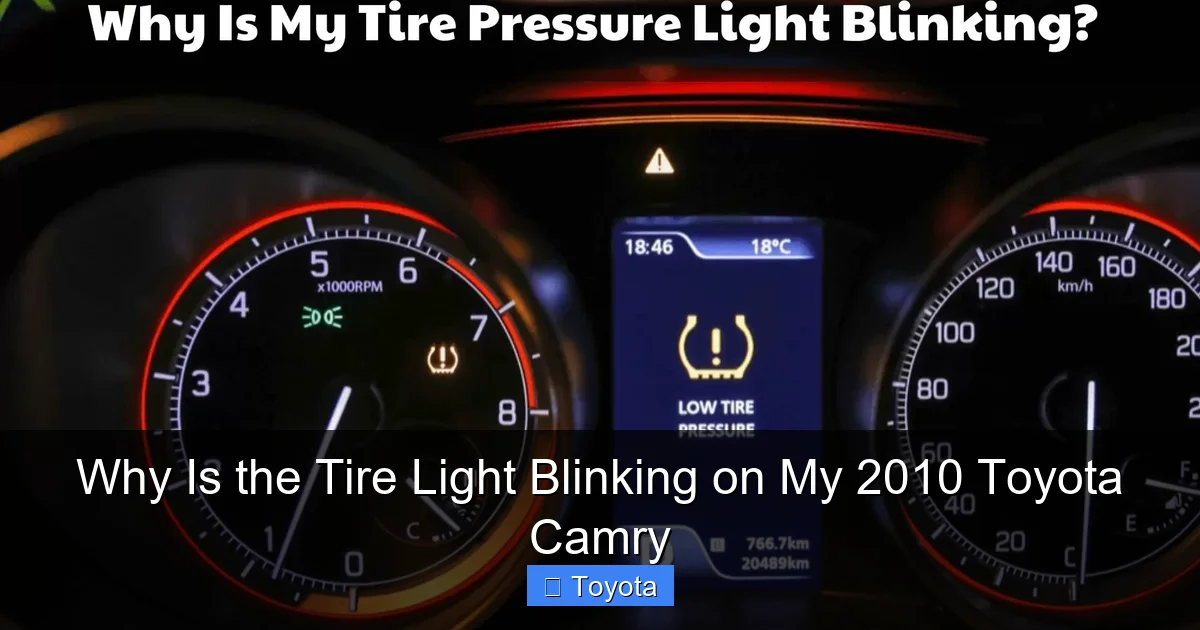
Visual guide about Why Is the Tire Light Blinking on My 2010 Toyota Camry
Image source: bradscartunes.com
Step 1: Safely Pull Over and Inspect
As soon as it is safe, signal and pull over to a level area. Turn on your hazard lights. Do not continue driving at high speeds with a potentially severely underinflated tire—it can overheat and fail catastrophically. Visually inspect all four tires. Do any look obviously flat, bulging, or low on tread? If a tire is visibly damaged or flat, do not drive on it. Call for roadside assistance.
Step 2: Check Pressures Manually – Trust Your Gauge, Not the Light
This is the most critical step. The TPMS can be delayed or inaccurate. You need a reliable, high-quality tire pressure gauge (digital is best). Remove the valve cap, press the gauge on firmly, and note the reading. Do this for all four tires and the spare, if equipped. Compare your readings to the manufacturer’s recommended cold inflation pressure. This number is found on a sticker posted on the driver’s side door jamb (B-pillar) or in your owner’s manual. Do not use the pressure on the tire sidewall; that’s the maximum, not the recommended.
- If any tire is 25% or more below the recommended PSI: Inflate it to the correct pressure immediately. Use a portable air compressor or drive slowly (under 50 mph) to the nearest gas station. Recheck all pressures after driving a few miles, as the act of driving warms the tires and increases pressure.
- If all pressures are within the recommended range (usually 32-35 PSI for a 2010 Camry): The problem is likely a faulty sensor or system glitch. Proceed to the reset steps below.
Remember, maintaining correct tire pressure is vital for handling, braking, fuel economy, and tire lifespan. For tips on how to properly check and maintain your tires, resources like how to check tire pressure using manufacturer apps can be helpful, though the 2010 Camry predates full app integration for this function.
Step 3: Perform a System Reset (The “Turn It Off and On Again” for Your TPMS)
After correcting any low pressure, the light may go out on its own after a few minutes of driving. If it doesn’t, or if it’s still blinking, you need to manually reset the system. Your 2010 Camry has a specific procedure. Ensure all tires are inflated to the correct cold pressure first.
- Turn the ignition to the “ON” position (do not start the engine).
- Using the “Mode” or “Trip” button on your steering wheel, navigate to the tire pressure settings screen on the multi-information display (MID). The exact steps vary slightly by trim (LE, SE, XLE). You’re looking for a menu that says “TPMS” or shows tire pressure values.
- Once in the TPMS menu, press and hold the “Set” button (or sometimes the “Disp” or “Mode” button) for about 3 seconds. You should see a message like “TPMS Reset” or a blinking indicator.
- Turn the ignition off. The system is now in reset/learn mode.
- Start the engine and drive the car at a speed above 25 mph for about 20-30 minutes. The sensors will transmit their IDs, and the system will relearn their positions. The light should go solid and then extinguish once the process is complete.
If this process seems daunting, a detailed guide on where the TPMS reset button is on a Toyota Camry can provide model-specific visuals and instructions.
When the Reset Doesn’t Work: Diagnosing a Faulty Sensor
If the light returns after a successful reset, or if it continues to blink despite correct pressures, a hardware failure is almost certain. This is where professional diagnosis comes in.
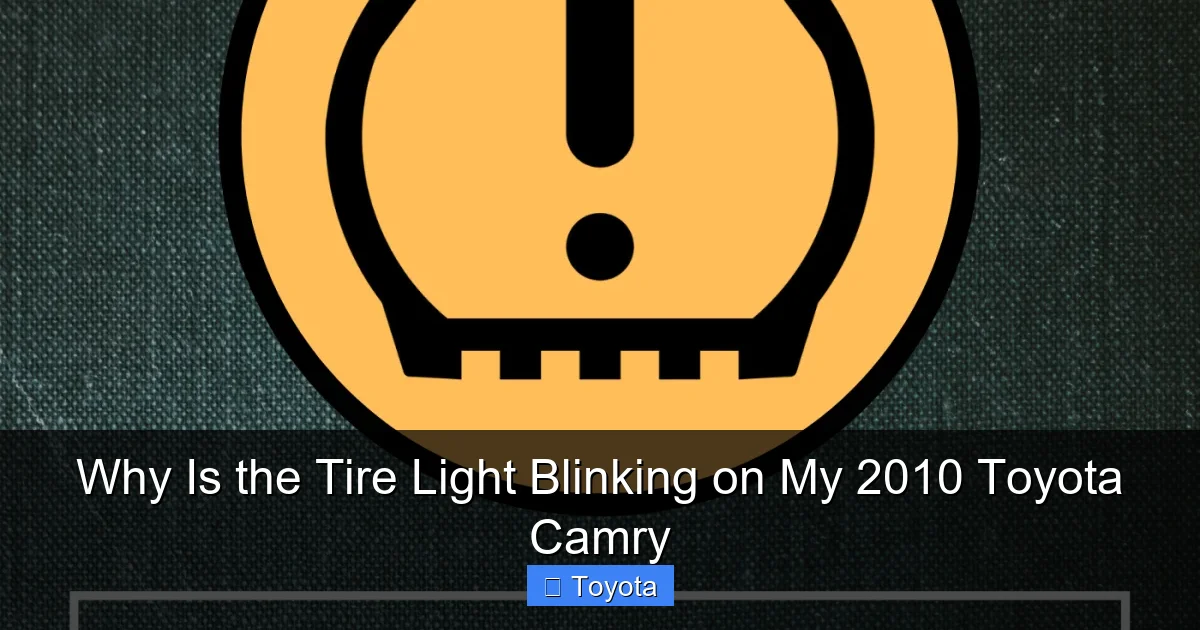
Visual guide about Why Is the Tire Light Blinking on My 2010 Toyota Camry
Image source: images.saymedia-content.com
The Role of the TPMS Scan Tool
Auto shops and tire centers use a specialized TPMS scan tool. This tool can do two vital things: first, it can read the diagnostic trouble codes (DTCs) stored in your Camry’s TPMS control module. A code like “C1235” (Left Front Sensor Fault) or “C1241” (Sensor ID Not Recognized) points directly to the problematic wheel. Second, the tool can activate each sensor individually to see if it responds. A sensor that doesn’t transmit or shows a low battery warning is dead and needs replacement.
Replacing a TPMS Sensor on a 2010 Camry
Replacing a sensor is not a simple DIY valve stem replacement. It requires:
- Special Tools: A TPMS valve core tool, a sensor hold-down tool, and often a programmable sensor tool to match the new sensor’s ID to your vehicle’s computer.
- Tire Demount/Mount: The tire must be professionally broken down from the wheel to access and replace the sensor inside.
- Relearn Procedure: After replacement, the new sensor’s ID must be programmed into the car’s computer, followed by the drive-cycle relearn procedure described above.
Because of this complexity and the cost of the sensors ($50-$150 each for the part, plus labor), it’s typically handled by tire shops. They often sell “programmable” or “cloning” sensors that can be set to match your old sensor’s ID, simplifying the process. It’s also a good time to consider if you need new valve stems or a tire service package.
Preventive Maintenance: Keeping the Light Off for Good
An ounce of prevention is worth a pound of cure. Here’s how to avoid TPMS headaches.
Monthly Pressure Checks are Non-Negotiable
Get in the habit of checking all tire pressures, including the spare, at least once a month and before any long trip. Use your own gauge. This catches slow leaks early and ensures optimal performance. Proper inflation improves fuel efficiency by up to 3%, extends tire life, and ensures safe handling.
Be Mindful During Tire Service
When you get tires rotated, balanced, or repaired, ask the technician to inspect the TPMS sensors for damage and corrosion. A good shop will do this automatically. If a sensor is damaged during service, they should replace it. Also, if you buy new tires, you may need new valve stems (which include the sensor on a direct system) as a precaution.
Understand Sensor Lifespan
The batteries in your 2010 Camry’s original TPMS sensors are likely nearing the end of their life. They are not serviceable; when the battery dies, the entire sensor must be replaced. If you’re replacing one or more tires, it’s often cost-effective to replace all four sensors at once to avoid future breakdowns and multiple shop visits. This is a common recommendation for vehicles over 10 years old.
Don’t Forget the Spare!
If your full-size spare is mounted on the wheel, it has a sensor too! If you ever use the spare, its pressure will be different from your other tires and will likely trigger the TPMS light. You’ll need to either inflate the spare to match the others or, if it’s a temporary “donut” spare, accept that the light will be on until the regular tire is remounted and pressures are reset.
Conclusion: Knowledge is Your Best Tool
A blinking tire pressure light on your 2010 Toyota Camry is more than a nuisance; it’s a vital safety alert from a sophisticated system. By understanding that it can mean either a critical pressure loss or a system malfunction, you empower yourself to take the correct immediate action: safely stop and check pressures with a manual gauge. If low pressure is the issue, inflating the tires is the fix. If pressures are good, a system reset is your next step. When those measures fail, you now know that a failing TPMS sensor—likely at the end of its 10+ year battery life—is the probable villain, requiring professional replacement and reprogramming. Regular, proactive tire pressure checks remain your single best defense against unexpected warnings. Treat that blinking light not as an inconvenience, but as your car’s friendly reminder to keep you and your passengers safe on the road. Addressing TPMS issues promptly ensures your Camry continues to deliver the reliable, comfortable, and secure ride it’s known for.
Frequently Asked Questions
Why is my tire light blinking and not solid?
A blinking light typically indicates a system malfunction, such as a dead TPMS sensor battery, damaged sensor, or communication error, rather than just low pressure. It’s a more urgent fault code from the computer.
Can I drive with a blinking tire pressure light?
You can drive a short distance at reduced speed to a safe location to check pressures, but you should not ignore it. If the blinking is due to low pressure, driving on an underinflated tire is dangerous and can cause a blowout. If it’s a sensor fault, the system is disabled, leaving you unaware of future pressure issues.
How do I permanently reset the tire pressure light on my 2010 Camry?
After ensuring all tires are inflated to the correct cold pressure, use the steering wheel controls to access the TPMS menu and hold the “Set” button until the reset message appears. Then, drive above 25 mph for 20-30 minutes to allow the system to relearn sensor positions.
Will the light go out on its own?
If the cause was a temporary pressure drop due to cold weather, the light may go out after driving and warming the tires. However, for a persistent blink or a light that comes on after pressures are corrected, a manual reset is required. It will not fix itself if a sensor is faulty.
How much does it cost to fix a blinking TPMS light?
Cost varies widely. If it’s just low pressure, it’s free (aside from air). A sensor replacement, including parts and labor, typically costs $100-$250 per wheel. A system-wide relearn by a shop might be $30-$60. A full set of four new sensors with programming can be $400-$800.
Do I have to replace all TPMS sensors at once?
Legally, you only need to replace the faulty one. However, given that all sensors on a 2010 model are the same age, it’s highly cost-effective to replace all four at once. This prevents future breakdowns, saves on multiple labor charges for mounting/dismounting, and ensures system consistency. When replacing sensors, always have them programmed to your vehicle’s computer.
