
What Is Smart Mode on a Hyundai Elantra?

Smart Mode in the Hyundai Elantra is an intelligent, all-encompassing driving setting that automatically adjusts the car’s throttle response, steering weight, transmission shifts, and even climate control to provide a balanced, confident driving experience for varying conditions. It’s designed to be the perfect “set-it-and-forget-it” mode for daily driving, seamlessly blending efficiency with responsiveness without you having to choose between Sport or Eco. Think of it as your car’s built-in co-pilot for everyday roads and weather.
Key Takeaways
- Smart Mode is an adaptive, all-rounder setting: It intelligently combines traits from Eco, Normal, and Sport modes based on real-time driving data and conditions.
- It adjusts multiple systems simultaneously: Smart Mode modifies engine throttle response, electric power steering feel, transmission shift logic, and HVAC fan speed for a cohesive drive.
- It prioritizes safety and stability: The system is programmed to enhance vehicle stability and driver confidence, especially in wet or slippery conditions.
- It’s not a separate “weather” mode: While it adapts to conditions, it’s distinct from dedicated Snow or Mud modes found on some SUVs; it’s a daily-driver optimizer.
- Activation is simple and intuitive: Drivers engage Smart Mode via a dedicated button or drive mode selector on the center console or steering wheel.
- It reflects Hyundai’s philosophy of intuitive tech: Smart Mode exemplifies Hyundai’s focus on creating user-friendly technology that works seamlessly in the background.
📑 Table of Contents
- Introduction: The “Set-It-and-Forget-It” Genius of Your Elantra
- The Core Philosophy: What Does “Smart” Really Mean?
- What Exactly Does Smart Mode Change? The Four Pillars of Adaptation
- Smart Mode vs. The Others: When and Why to Use Each
- The “Smart” in Different Conditions: How It Handles the Real World
- Is Smart Mode Available on All Elantras? A Model Year Breakdown
- Maximizing Your Smart Mode Experience: Practical Tips and Owner Insights
- Conclusion: The Future of Driving is (Intelligently) Here
Introduction: The “Set-It-and-Forget-It” Genius of Your Elantra
So, you’ve just slid into the driver’s seat of your Hyundai Elantra. Your hands find the wheel, your eyes scan the familiar, sleek dashboard, and your finger hovers over the drive mode selector. You see the usual suspects: Eco, Normal, Sport. But there’s another button, often marked with a sleek, modern icon that looks a bit like a brain or a network node: Smart Mode. What in the world is this for? Is it a gimmick, or is there real engineering magic happening behind that little button?
Let’s cut to the chase: Smart Mode is arguably the most intelligent and thoughtful drive mode in your Elantra’s arsenal. It’s not just another preset. It’s a dynamic, real-time system that acts like a silent co-pilot, constantly analyzing how you’re driving and the conditions outside to fine-tune your car’s behavior. If Eco is for penny-pinching and Sport is for back-road fun, Smart Mode is for everything else—the daily commute, the grocery run, the impromptu highway merge. It’s Hyundai’s answer to the question, “Can’t I just have one mode that’s always pretty good?” And the answer is a resounding yes.
In this deep dive, we’re going to peel back the layers of Smart Mode. We’ll explore what it actually does under the hood (and under your fingertips), how it differs from the other modes, when you should use it, and why it represents a significant step forward in making advanced vehicle technology genuinely useful for the average driver. By the end, you won’t just know what the button does—you’ll understand how to leverage it for a safer, smoother, and more enjoyable ride every single day.
The Core Philosophy: What Does “Smart” Really Mean?
To understand Smart Mode, we first need to dismantle the traditional drive mode concept. For years, we’ve had simple choices: Eco for fuel economy (sluggish throttle, early shifts), Normal for a balance (the default “do-everything” setting), and Sport for responsiveness (sharper throttle, delayed shifts, heavier steering). You picked one, and the car behaved that way, consistently, until you changed it again.
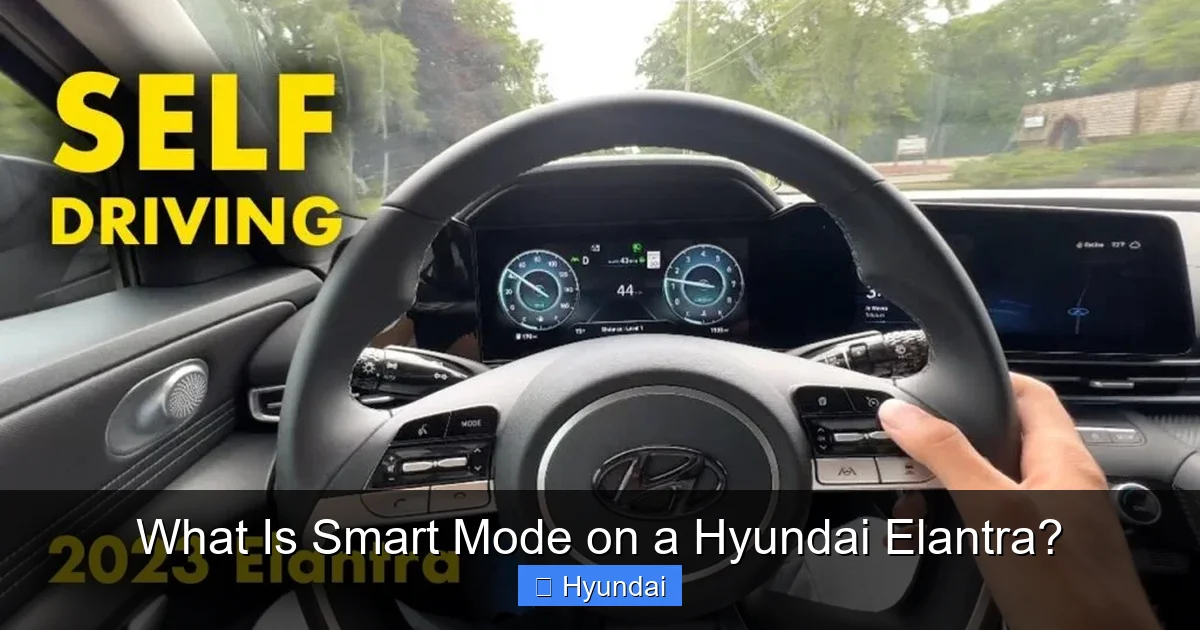
Visual guide about What Is Smart Mode on a Hyundai Elantra?
Image source: thecarhow.com
Smart Mode throws a wrench into that static system. Its core philosophy is context-awareness. It recognizes that your driving needs aren’t constant. The aggressive, quick-throttle response you need to safely merge onto a busy interstate is not the same relaxed, predictable feel you want while navigating a rainy suburban neighborhood. A “one-size-fits-all” mode is actually a compromise that’s rarely perfect for any one situation.
The Brain Behind the Button: The ECU and Sensor Network
Smart Mode is made possible by your Elantra’s Engine Control Unit (ECU) and its vast network of sensors. This isn’t a separate piece of hardware; it’s a sophisticated software layer that sits on top of the existing drive mode algorithms. It’s constantly listening to a chorus of data:
- Your right foot: How aggressively are you pressing the accelerator? A slow, steady press vs. a quick stab tells the system very different stories about your intent.
- Steering input: Are you making gentle corrections or winding the wheel quickly? Sudden, large steering inputs suggest a need for more responsiveness.
- Vehicle speed: The system knows the difference between 25 mph in a school zone and 70 mph on the highway.
- G-force and lateral acceleration: Sensors detect if you’re cornering with more enthusiasm.
- External conditions (indirectly): While it doesn’t have a built-in rain sensor for drive modes, it can infer slippery conditions from wheel slip data from the traction control system (ESC).
This data stream is processed in milliseconds. The ECU then decides: “Right now, the driver is being a bit sporty. I’ll hold the transmission in a lower gear for a second, give the steering a touch more weight, and sharpen the throttle response.” Or, “The driver is being very gentle, and the wipers are on (if the car is so equipped and data is shared). I’ll lean toward a more efficient, calm calibration.” It’s a continuous, invisible negotiation between your inputs and the car’s available personalities.
What Exactly Does Smart Mode Change? The Four Pillars of Adaptation
Smart Mode’s magic isn’t in changing one thing; it’s in the holistic, synchronized adjustment of several key vehicle systems. This creates a driving feel that is coherent and intentional, not disjointed. Let’s break down the four main pillars it tweaks.
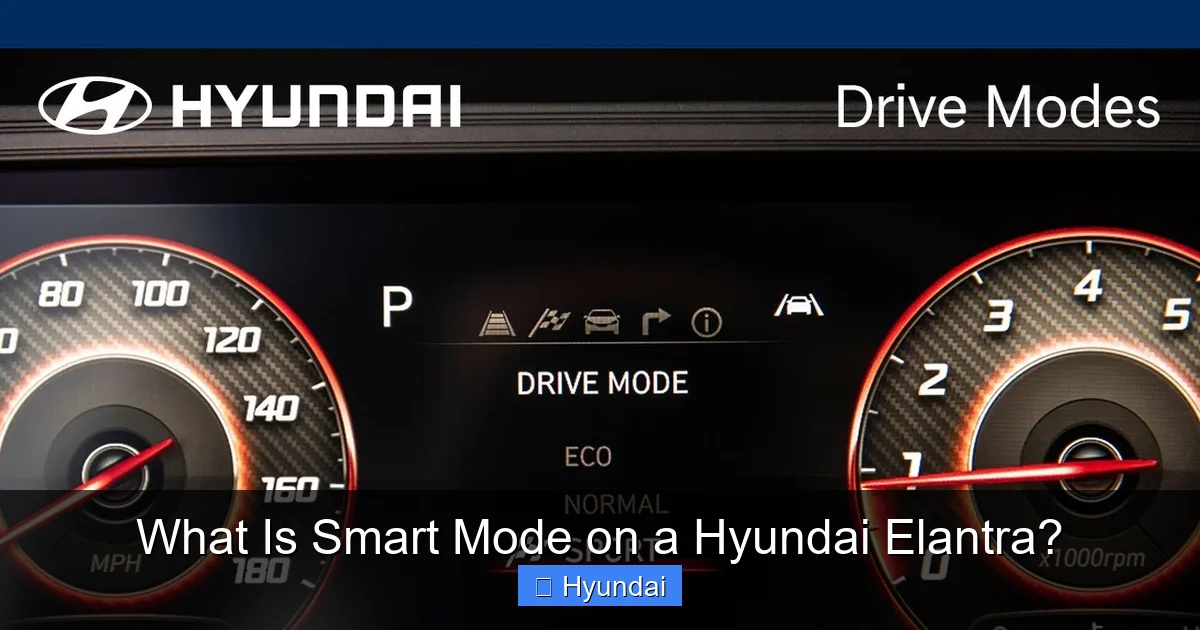
Visual guide about What Is Smart Mode on a Hyundai Elantra?
Image source: i.ytimg.com
1. Throttle Response: The “Go” Pedal Reimagined
This is the most noticeable change. In a standard Normal mode, there’s often a slight delay or “dead zone” at the top of the accelerator pedal to promote smoothness and efficiency. Smart Mode dynamically adjusts this mapping.
When it leans “Sporty”: If you press the pedal quickly and firmly, Smart Mode will use a more aggressive throttle map, similar to Sport mode. The engine responds more immediately to your command, giving you that burst of power for a pass or a merge. The “dead zone” shrinks or disappears.
When it leans “Eco”: If you’re gently modulating the pedal in stop-and-go traffic, it will adopt a smoother, more progressive response to maximize efficiency and comfort, preventing jerky motions.
Practical Example: You’re at a red light on a slight hill. In Normal mode, you might need to press the pedal a bit more to overcome the hill and avoid rollback. In Smart Mode, sensing your quick pedal press and the hill-start situation (detected via grade sensor and foot-on-brake release), it will give you a more immediate, willing response, making the launch feel confident and controlled.
2. Steering Weight: The Feel of the Road
Modern cars like the Elantra use Electric Power Steering (EPS). This means the “heaviness” or “lightness” of the steering wheel is not fixed; it’s a software setting. Smart Mode adjusts the steering assist level.
At higher speeds or with spirited inputs: It increases steering weight (more assist at low speeds, less at high speeds) to provide better stability and a more planted, connected feel. This is the “Sport” steering characteristic.
At low speeds or with gentle inputs: It reduces weight, making parking and tight maneuvers easier and less fatiguing, leaning toward the “Eco/Normal” feel.
This subtle change has a huge psychological impact. A heavier steering feel at highway speed inspires more confidence during fast lane changes. A lighter feel in the parking lot is simply nicer.
3. Transmission Shift Logic: The Brain of the Powertrain
This is where Smart Mode truly shines as a synthesizer. The automatic transmission (whether a conventional 6-speed or CVT) has its own shift maps. Smart Mode doesn’t create new maps; it intelligently biases the transmission’s decision-making between the existing Eco, Normal, and Sport maps.
For quick acceleration: It will command the transmission to downshift more readily and hold gears longer, mimicking Sport mode to deliver power when you need it.
For gentle cruising: It will allow the transmission to upshift early and often, keeping the engine in its most efficient RPM range, mimicking Eco mode.
The key difference from selecting Sport: In pure Sport mode, the transmission is locked into that aggressive logic. In Smart Mode, it’s fluid. You might be in a “Sport-biased” state for a few seconds after a hard acceleration, but as you settle back to gentle cruising, it will seamlessly transition back toward an efficient, Normal-like pattern without you ever needing to touch the selector again.
4. Climate Control Fan Speed: The Unsung Hero
This is a subtle but brilliant touch. Have you ever noticed that when you’re driving energetically, the climate control fan seems to get louder? That’s because engine and road noise increase. Smart Mode can automatically raise the HVAC fan speed in response to increased cabin noise (detected by a microphone) to maintain your set temperature more effectively. Conversely, in quiet, gentle driving, it might lower the fan speed to reduce noise and improve efficiency. It’s a small detail that contributes to a more seamless, “the car just gets it” experience.
Smart Mode vs. The Others: When and Why to Use Each
Now that we know what Smart Mode does, let’s put it in context against your Elantra’s other drive modes. This isn’t about which is “best,” but which is right for the job.
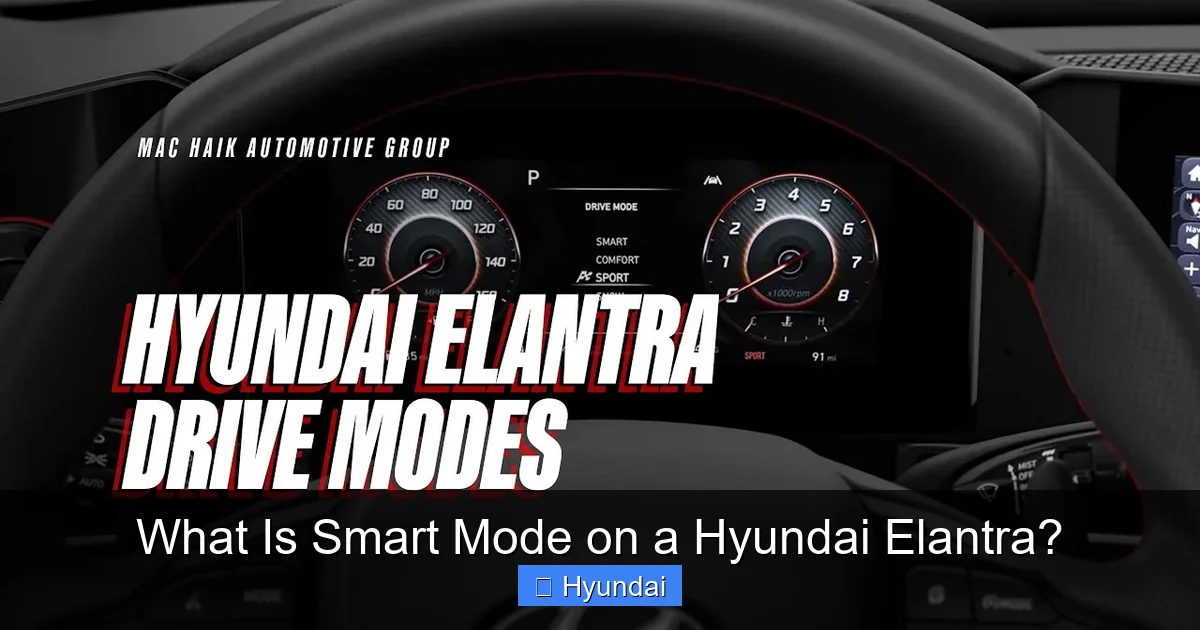
Visual guide about What Is Smart Mode on a Hyundai Elantra?
Image source: i.ytimg.com
Smart Mode: The Intelligent Default
Best for: 80% of your daily driving. Mixed city/highway commutes, variable traffic conditions, drizzly days, or when you simply don’t want to think about it. It’s the mode that gives you a little bit of everything: reasonable efficiency, decent responsiveness, and stable handling. If you’re unsure, start with Smart Mode and see how it feels. It’s Hyundai’s recommendation for the everyday driver who values adaptability.
Eco Mode: The Efficiency Zealot
Best for: Maximizing fuel economy on long, steady highway cruises or in heavy, predictable traffic where you know you’ll be driving gently for an extended period. It softens the throttle, promotes early upshifts, and may adjust the HVAC system. It can feel sluggish when you need a quick response, so it’s less ideal for roads with lots of merging or hills. Use it when your sole priority is the lowest possible MPG number.
Sport Mode: The Enthusiast’s Tool
Best for: Spirited driving on winding roads, track days (if your Elantra is so inclined), or when you know you’ll be demanding performance for a sustained period. It holds gears, sharpens throttle, and firms up steering. The downside? It’s less efficient and can be a bit too sharp for relaxed commuting, making the car feel jittery in stop-and-go traffic. Use it when fun is the primary goal, not efficiency.
Normal Mode: The True Baseline
Best for: It’s the “no-frills” calibration. It’s a competent, balanced setting that serves as the reference point for the other modes. Some drivers simply prefer its predictable, untuned character. It doesn’t try to be sporty or efficient; it just drives. It’s a good choice if you find Smart Mode’s adaptations too subtle or unpredictable for your taste.
Pro Tip: Try this experiment: Drive a familiar 10-mile stretch in Normal mode. Then reset your trip odometer and drive the same stretch in Smart Mode. You’ll likely notice Smart Mode holding gears a bit longer on inclines and feeling a touch more responsive to your inputs. The difference is nuanced but present.
The “Smart” in Different Conditions: How It Handles the Real World
The true test of any drive mode is how it behaves when the weather turns or the road gets twisty. Smart Mode’s sensor-based approach gives it a unique advantage here.
Rain, Sleet, and Slush: An Invisible Co-Pilot
This is where Smart Mode potentially shines brightest. When your windshield wipers are on (a key data point the system can access), or more directly, when the traction control system (ESC) detects wheel slip, Smart Mode will automatically bias its settings toward stability and control.
It will:
- Soften the throttle response to prevent abrupt power application that could break traction.
- Allow the transmission to upshift more readily to keep engine RPMs lower and torque delivery smoother.
- Often, it will increase steering weight slightly to provide more feedback and reduce over-correction.
The result is a car that feels more planted and forgiving. You’re less likely to spin the tires when pulling out of a wet parking lot, and the steering feels more precise during sudden evasive maneuvers on a slick surface. It’s not a substitute for cautious driving, but it’s a valuable electronic nanny that works in harmony with your existing stability control systems. For drivers in regions with frequent precipitation, this is a major, often overlooked, benefit. You can learn more about Hyundai’s suite of stability and control features in our article on Panic Alert and other Hyundai safety systems.
Mountain Roads and Winding Curves
On a scenic byway, Smart Mode will detect your steering and throttle inputs. As you turn into a corner and press the accelerator, it will downshift to keep the engine in its powerband and sharpen throttle response for a smooth exit. The steering weight will increase to give you better feedback through the twisties. It won’t be as razor-sharp as a dedicated Sport mode, but it provides a surprisingly engaging and competent feel without you having to manually select Sport. It’s the perfect mode for a “fun” drive when you don’t want to sacrifice all comfort and efficiency.
City Traffic and Stop-and-Go
In bumper-to-bumper traffic, Smart Mode recognizes the pattern of gentle acceleration from a stop and slow, steady cruising. It will favor smooth, early upshifts and a soft throttle map, making the car feel calm and relaxed. This reduces driver fatigue and helps maximize fuel economy in conditions where Sport mode would be frustratingly jumpy. The adaptive climate control fan adjustment is also welcome here, keeping the cabin quiet.
Is Smart Mode Available on All Elantras? A Model Year Breakdown
This is a crucial question. The availability of Smart Mode is tied to the Elantra’s generation and trim level.
- Seventh Generation (2021-Present): Smart Mode is a standard feature on most Elantra trims, especially those equipped with the 2.0L MPI engine and IVT (Intelligent Variable Transmission) or the 1.6L Turbo with 7DCT. It’s typically accessed via a button on the center console or steering wheel-mounted drive mode controls. On higher trims with a digital instrument cluster, selecting it will often change the theme and display on the screen.
- Sixth Generation (2017-2020): Availability is more limited. Many models in this generation offered Eco, Normal, and Sport modes, but Smart Mode was often reserved for higher trims (like the Limited) or specific packages. You’ll need to check your owner’s manual or look for the dedicated “Smart” button/icon on your selector.
- Fifth Generation and Earlier: These models predate the widespread implementation of Hyundai’s Smart Mode technology. They typically have only Eco and Sport modes, if any selectable modes at all.
How to Check: The simplest way is to look at your drive mode selector. If you see icons for Eco, Normal, Sport, and a fourth icon (often a stylized “S” with a network symbol or a leaf with a plus), you have Smart Mode. Press that button and observe any changes in the instrument cluster display or the driving feel. Your owner’s manual will have the definitive section on “Drive Mode Selection.”
Maximizing Your Smart Mode Experience: Practical Tips and Owner Insights
Having Smart Mode is one thing; using it effectively is another. Here’s how to get the most out of this intelligent feature.
1. Let It Learn (In a Manner of Speaking)
Smart Mode doesn’t have a “learning” function that remembers your personal preferences over weeks. Its “intelligence” is reactive and situational. However, if you consistently drive in a certain way in a certain context, it will consistently react in that way. So, be mindful of your own driving. If you want a more engaging feel on your favorite backroad, you’ll need to drive it with a bit more spirit to trigger the Sport-biased response. If you want maximum smoothness, drive smoothly.
2. Use It as Your Baseline, Not a Crutch
Don’t forget the other modes exist for a reason. For a long, fuel-saving highway cruise, manually selecting Eco might eke out an extra 0.5-1 MPG by locking in the most efficient calibrations. For a track day or a canyon run where you need the most aggressive, predictable response, Sport is still king because its settings are fixed and uncompromising. Smart Mode is your adaptable everyday companion; Eco and Sport are your specialized tools.
3. Understand Its Limits
Smart Mode is a brilliant calibrator, but it is not a miracle worker. It cannot change the fundamental characteristics of your Elantra’s engine or suspension. It won’t make a base model with a small engine feel like a turbocharged sports sedan. Its adaptations are within the existing envelope of the car’s performance. It makes the good better, but it doesn’t create new good.
4. Pair It with Good Habits
The system works best when you drive proactively. If you’re constantly making last-second, panic-induced inputs, no drive mode can make you a smooth driver. Smart Mode rewards smooth, deliberate inputs with a smooth, composed ride. Use your turn signals early, brake progressively, and steer smoothly. You and the car’s computer will be in sync.
5. It’s Part of a Bigger Picture
Smart Mode is one piece of Hyundai’s broader “Smart” ecosystem. This philosophy extends to other features like Smart Cruise Control (with stop-and-go), SmartSense safety features, and even connected car services. It all points to a vehicle that’s designed to anticipate your needs. If you appreciate the intuitive nature of Smart Mode, you’ll likely enjoy exploring these other integrated technologies that make the modern Hyundai experience so cohesive.
Conclusion: The Future of Driving is (Intelligently) Here
So, what is Smart Mode on a Hyundai Elantra? It’s more than just a button. It’s a philosophy made manifest: the idea that your car should adapt to you, not the other way around. It’s the culmination of decades of engineering aimed at making complex technology invisible and beneficial. In a world of ever-increasing vehicle complexity, with a dozen buttons and screens vying for your attention, Smart Mode is a welcome relief. It’s a single, simple choice that delivers a sophisticated outcome.
For the daily driver who faces changing traffic, weather, and moods, Smart Mode removes the mental overhead of constant mode-switching. It provides a consistently confident and composed driving experience that feels neither too sleepy nor too aggressive. It’s the intelligent default that many drivers didn’t know they needed until they tried it and then never looked back.
The next time you get in your Elantra, give Smart Mode a try. Drive your normal route. Feel the subtle yet deliberate way the car responds to your inputs. Notice how it feels just a bit more stable in the rain, just a bit more willing on the highway on-ramp. That’s not magic—that’s Hyundai’s Smart Mode, working quietly in the background to make every drive a little bit better. It’s not about choosing a personality for your car; it’s about giving your car the intelligence to choose the right personality for the moment. And that, in a nutshell, is true smart driving.
Frequently Asked Questions
Is Smart Mode the same as Sport Mode?
No. Sport Mode locks the car into a consistently aggressive calibration (sharp throttle, firm steering, fast shifts). Smart Mode is dynamic and fluid, blending Sport, Normal, and Eco traits based on your real-time driving inputs and conditions. It’s more adaptable and less extreme than a fixed Sport setting.
Does using Smart Mode save fuel compared to Sport Mode?
Yes, generally. Since Smart Mode will default to more efficient shift patterns and throttle responses during gentle driving, it will typically achieve better fuel economy than a constantly aggressive Sport Mode. However, it may not be as efficient as a manually selected Eco Mode for hyper-miling on a long, steady cruise.
Can I manually override Smart Mode’s decisions?
Not directly. Smart Mode is a self-contained system. If you want a specific, fixed behavior (like full Sport or full Eco), you must select that mode manually using the drive mode selector. Smart Mode’s “decisions” are its entire purpose.
Does Smart Mode affect the car’s handling or suspension?
On most Hyundai Elantras, Smart Mode does not adjust the physical suspension (dampers). Its effects are on throttle, steering assist, transmission, and HVAC. However, on higher-trim Elantras equipped with an adaptive suspension (if available), it’s possible Smart Mode could influence damping firmness as part of its holistic adjustment, but this is not a common feature in this segment.
Will Smart Mode work if my check engine light is on?
If your vehicle has a significant fault that triggers a diagnostic trouble code (DTC) and a check engine light, the ECU may go into a default or “limp home” mode. In this state, selectable drive modes like Smart, Sport, and Eco are often disabled or ignored to protect the powertrain. The car will operate on a fixed, safe calibration until the issue is repaired.
Is Smart Mode available on hybrid or plug-in hybrid Elantras?
Yes, but its function is integrated with the hybrid powertrain management. On Hyundai Hybrid models (like the Elantra Hybrid), Smart Mode will still adjust steering feel and may influence the blend of electric motor vs. gasoline engine usage, as well as transmission behavior (the hybrid transmission is different). The goal remains the same: to provide an optimized, context-aware driving feel. The specific calibrations are tailored for the hybrid system’s unique characteristics.
