
What Does Xtr Mean on a Ford F-150?

The XTR on a Ford F-150 denotes a premium trim level offering enhanced luxury and capability, not a dashboard warning. Positioned between the Lariat and Platinum, it features unique exterior styling, an upscale interior, and advanced technology. Understanding the XTR helps buyers choose the right F-150 for their needs, balancing comfort with legendary Ford truck capability.
You’re washing your trusty Ford F-150, or maybe you’re scrolling through online listings, and you see it: a badge that reads “XTR.” Your first thought might be, “What does XTR mean on a Ford F-150?” Is it a warning? A special feature? A code for something? It’s a common point of curiosity, and the answer is actually quite exciting for truck shoppers. Unlike mysterious dashboard lights that signal a problem—such as the wrench light on a Honda Civic—the XTR badge is a proud declaration of your truck’s place in the lineup. It’s not a problem to solve; it’s a feature to celebrate. This badge identifies a specific, premium trim level, a version of the F-150 that’s loaded with luxury, technology, and style, all while retaining the rugged capability you expect from Ford’s flagship truck. In this complete guide, we’ll unpack everything the XTR badge means, from its history and features to who it’s for and how it stacks up against other trims. By the end, you’ll be an expert on what makes the F-150 XTR special.
Key Takeaways
- XTR is a premium trim level: It signifies a specific, upmarket version of the F-150 with added features, not an error code or warning light on the dashboard.
- It’s a relatively new addition: The XTR trim debuted on the Super Duty years ago but became available on the F-150 starting with the 2024 model year.
- Positioned in the upper-mid range: The XTR sits above the popular Lariat trim but below the range-topping Platinum and Limited trims in the F-150 hierarchy.
- Focus on luxury and technology: Key upgrades include exclusive exterior styling, premium interior materials (like leather), and advanced tech such as a large touchscreen and digital gauge cluster.
- Targets discerning buyers: It’s designed for customers who want a luxurious, comfortable daily driver that still has serious towing and hauling capability, without the full price of the Platinum.
- Not available on all models or years: You will only find the XTR badge on new, specific F-150 configurations; it is not a feature on older used models unless they are 2024 or newer.
- Resale value advantage: Trims like the XTR often hold their value well due to their desirable blend of features and capability.
📑 Table of Contents
- The Origin Story: Where Did the XTR Come From?
- Inside the XTR: Features, Amenities, and What You Actually Get
- XTR in the F-150 Lineup: How It Stacks Up Against Lariat, Platinum, and More
- Who is the Ford F-150 XTR For? The Ideal Owner Profile
- Practical Ownership: Costs, Maintenance, and Resale Value
- Debunking Myths: Common Misconceptions About the XTR
- The Verdict: Is the Ford F-150 XTR Worth It?
The Origin Story: Where Did the XTR Come From?
To truly understand what XTR means on a Ford F-150 today, we need to take a quick trip back in time. The “XTR” nameplate didn’t start with the F-150. Its history is deeply rooted in Ford’s Super Duty lineup—the F-250, F-350, and F-450—which are the heavy-duty workhorses built for maximum towing and payload. Ford introduced the XTR as a premium trim for the Super Duty trucks many years ago. It was positioned as a high-end, feature-rich option for buyers who needed a Super Duty’s brute strength but also wanted a cabin that felt more like a luxury SUV than a worksite truck. It offered unique styling, premium materials, and advanced features that set it apart from the base XL and mid-level XLT trims.
For years, the XTR remained a Super Duty exclusive. F-150 buyers looking for a similar premium experience typically gravitated toward the Lariat, King Ranch, Platinum, or Limited trims. However, for the 2024 model year, Ford made a significant shift. They expanded the XTR badge to the F-150 lineup for the first time. This move was strategic. It created a new, compelling option in the upper-mid tier of the F-150 range, offering a distinct blend of features and styling that bridges the gap between the very popular Lariat and the top-tier Platinum. So, when you see an XTR on a modern F-150, you’re seeing the fruition of a decades-old premium trim philosophy, now applied to America’s best-selling truck. It tells you this is no ordinary F-150; it’s a specially appointed model from Ford’s premium playbook.
A Trim, Not a Trouble Code: The Most Important Distinction
Before we go any further, let’s hammer home the most critical point: XTR is not a warning light or a diagnostic trouble code. It does not mean your truck is sick or needs immediate service. If you see “XTR” illuminated on your instrument cluster or infotainment screen, it’s simply identifying the trim level of your vehicle, often in the startup graphics. This is a fundamental difference from messages like “Check Gauges” on a Dodge Ram, which indicates a potential issue with your vehicle’s monitoring systems. The XTR badge is a permanent part of the truck’s identity, stamped on the tailgate and sometimes on the front fenders. It’s a badge of honor, not a cry for help. This distinction saves you from unnecessary trips to the mechanic and helps you appreciate your truck for the well-equipped machine it is.
Inside the XTR: Features, Amenities, and What You Actually Get
So, what does all that premium positioning actually buy you? The F-150 XTR is about curated luxury and convenience. It’s not just about adding more stuff; it’s about adding the right stuff to create a refined, comfortable, and connected experience. Think of it as the Lariat trim taken up a noticeable notch. The upgrades are tangible both inside and out, making every drive—whether to the job site or the grocery store—more enjoyable.
Visual guide about What Does Xtr Mean on a Ford F-150?
Image source: vehiclesauthority.com
Exterior Distinction: Making a Statement
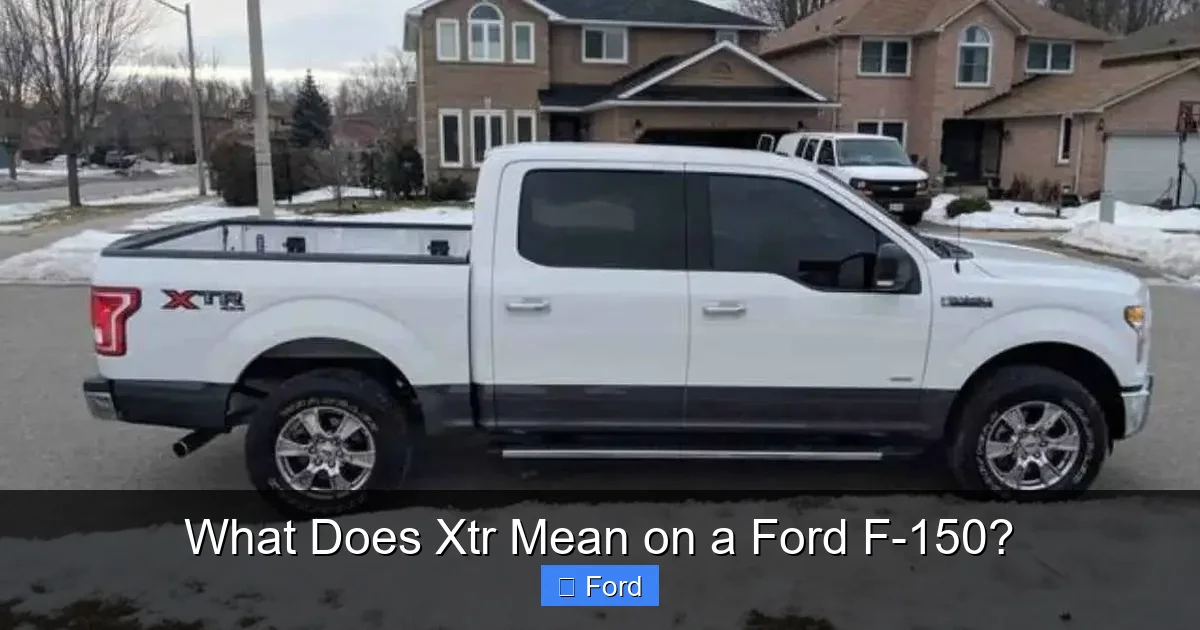
The XTR makes its presence known first with unique exterior styling elements that set it apart from its siblings. The most prominent feature is the exclusive “XTR” grille. It typically features a distinctive mesh pattern with the XTR nameplate prominently displayed, giving the front end a bold, upscale look. It’s often paired with 20-inch or 22-inch machined-face aluminum wheels (depending on the year and package), which are larger and more elaborate than the standard wheels on lower trims. You’ll also find unique LED signature lighting in the headlights and taillights, sometimes with a specific design pattern. Body side moldings, door handles, and tailgate accents are often finished in a bright chrome or blacked-out look, adding to the premium aesthetic. Some XTR packages also include running boards or deployable running steps for easier entry, and a tailgate step with a rubber mat. The overall effect is a truck that looks powerful and sophisticated, clearly belonging to a higher tier.
The Cabin Experience: Where Luxury Meets Utility
Open the door of an XTR, and the upgrade story continues. The interior is where the “premium” part of the trim truly shines. The seats are a major highlight. Expect genuine leather upholstery (often with a unique stitch pattern and color scheme, like a two-tone combination), which feels far more luxurious than the cloth or vinyl found on XL and XLT models. The front seats are almost always power-adjustable with multiple lumbar support and memory settings for the driver. Heating and ventilation are common, making the cabin comfortable in any weather. The dashboard and door panels are wrapped in soft-touch materials and feature real or simulated metal or woodgrain accents. The steering wheel is leather-wrapped and heated, with intuitive cruise and audio controls.
Technology is another key XTR forte. The infotainment system is typically Ford’s large SYNC 4A touchscreen, measuring 12 inches or more. This system offers seamless smartphone integration via Apple CarPlay and Android Auto, a built-in navigation system, and a crisp, responsive interface. A premium B&O Sound System (Bang & Olufsen) is usually standard, delivering concert-quality audio throughout the cabin. The instrument cluster is often a fully digital, 12-inch configurable display that provides clear, customizable information about the truck’s performance, navigation, and driver aids. These tech features transform the F-150’s cab into a connected command center, rivaling many luxury SUVs.
Performance and Capability: Not Just a Pretty Face
Don’t let the luxury cues fool you; the XTR is a true workhorse at heart. It’s built on the same robust platform as any other F-150. This means it can be equipped with the full range of Ford’s powerful engine options. You’ll commonly find the twin-turbocharged 3.5L V6 EcoBoost® engine, the potent 5.0L V8, or even the hybrid PowerBoost® V6. Towing and payload capacities depend on the engine, cab, and bed configuration you choose, but they are on par with other similarly equipped F-150s. The XTR doesn’t sacrifice capability for comfort. In fact, it often comes standard or optionally with features that enhance that capability, such as a 10-speed SelectShift® automatic transmission, an electronic locking rear differential, and Ford’s advanced Trailer Tow Assist and Pro Trailer Backup Assist® systems. These technologies make hitching up and maneuvering a trailer significantly easier, a huge plus for owners who tow boats, RVs, or heavy equipment. The XTR is proof that you can have your cake and eat it too: a luxurious ride that can still haul and tow with the best of them.
XTR in the F-150 Lineup: How It Stacks Up Against Lariat, Platinum, and More
Understanding the XTR is easier when you see exactly where it fits in the F-150’s vast trim hierarchy. Ford organizes its trims in a clear ladder of increasing price, features, and luxury. For the 2024 model year and beyond, the lineup (from base to top) generally looks like this: XL, XLT, Lariat, XTR, Platinum, and Limited. The King Ranch and Raptor are special variants that sit alongside this core ladder. Let’s break down the key comparisons.
Visual guide about What Does Xtr Mean on a Ford F-150?
Image source: roadmomentum.com
XTR vs. Lariat: The Sweet Spot Upgrade
The Lariat has long been the sweet spot for many F-150 buyers, offering a great balance of comfort and value. The XTR is positioned directly above it. Think of the XTR as a “Lariat Plus.” You get all the Lariat’s core features—like cloth or optional leather seats, an 8-inch touchscreen, and key safety tech—but the XTR upgrades the materials (full genuine leather vs. partial), adds the massive 12-inch SYNC 4A screen as standard, includes the premium B&O sound system, and adds the exclusive XTR grille and larger wheels. If you love the Lariat’s capability but crave a more opulent interior and standout exterior, the XTR is your logical next step. The price jump is significant but justified for the bundle of premium features you receive.
XTR vs. Platinum: The Near-Top Experience
The Platinum has traditionally been Ford’s pinnacle of luxury for the F-150 (before theLimited). The XTR narrows the gap considerably. Both share many high-end features: premium leather, massive touchscreens, advanced driver aids, and sophisticated styling. The differences are often in the details and materials. The Platinum may offer more exotic leather options (like Java or Dark Agate), unique interior trim pieces (like real wood), and sometimes slightly different wheel designs. The Platinum badge itself carries a certain cachet. Functionally, the capability is identical. Choosing between XTR and Platinum often comes down to personal preference for interior color/trim and the prestige of the Platinum name. For many, the XTR offers 90% of the Platinum experience at a slightly lower price point.
XTR vs. Limited: The Absolute Apex
The Limited trim is the absolute top of the F-150 pyramid. It’s the most expensive non-Raptor model. While the XTR is lavish, the Limited pulls out all the stops. Expect the most powerful engine options standard (like the 5.0L V8 or PowerBoost), the most exclusive interior colors and materials, every available driver-assist feature as standard, and sometimes unique badging and wheels. The Limited is for the buyer who wants no compromises and is willing to pay a premium for the absolute best. The XTR is for the buyer who wants an exceptional, near-top-tier experience but may not need every single last feature or the highest price tag.
- Lariat: Excellent value, great comfort, standard features. The practical choice.
- XTR: The new premium benchmark. Significant luxury and tech upgrades over Lariat.
- Platinum: The classic top-tier luxury. Slightly more exclusive materials and details than XTR.
- Limited: The undisputed king. Maximum features, power, and prestige.
Who is the Ford F-150 XTR For? The Ideal Owner Profile
The XTR isn’t for everyone, and that’s by design. So, who is this truck built for? It’s for a specific buyer who has clear priorities.
Visual guide about What Does Xtr Mean on a Ford F-150?
Image source: roadmomentum.com
First, it’s for the professional who needs capability but wants a serene, comfortable cabin. This could be a contractor who tows a heavy trailer to job sites but also uses the truck as a daily driver and wants a quiet, plush space to decompress after a long day. The premium seats and advanced noise insulation are a huge plus. Second, it’s for the family adventurer. A family that tow a camper or a boat on weekends, hauls sports equipment, and values safety tech and a premium infotainment system for back-seat entertainment. The XTR’s spacious, quiet, and tech-loaded cabin is perfect for road trips. Third, it’s for the enthusiast who appreciates subtle distinction. They want a truck that stands out from the sea of common Lariats and XLTs but may not want the flashiness (or cost) of a Raptor or the ultra-luxury of a Limited. The XTR’s unique grille and wheels offer a sophisticated, upscale look that is recognizable to those in the know.
It is not for the budget-conscious buyer who sees the truck purely as a tool. An XL or XLT with the same engine will tow and haul just as much for less money. It’s also not for the off-road extremist; that’s the Raptor’s domain. The ideal XTR buyer values a combination of luxury, technology, and uncompromised capability. They see their truck as an extension of their personal style and a critical part of their lifestyle, not just a utility vehicle. If you find yourself nodding along to that description, the XTR is undoubtedly worth a serious look.
Practical Ownership: Costs, Maintenance, and Resale Value
Choosing a trim level has long-term financial implications. Let’s talk practical ownership of the F-150 XTR.
Purchase Price and Cost of Ownership
There’s no way around it: the XTR costs more upfront than the Lariat or XLT. You’re paying a premium for the luxury upgrades. However, it’s important to compare it to the Platinum and Limited to see the value proposition. Often, the XTR offers a better “bang for your buck” in terms of features per dollar than the Platinum, which commands a higher price for incremental refinements. When it comes to cost of ownership, the XTR’s maintenance schedule is identical to any other F-150 with the same engine. Oil changes, tire rotations, and brake pads cost the same. Where you might see a slight increase is in the cost of premium components—like the larger, more complex wheels and tires, or the advanced electronic systems in the cabin. Repairs to the high-tech infotainment or digital gauge cluster, if out of warranty, could be pricier than fixing a basic radio. But overall, the core mechanical reliability is shared across the entire F-150 family.
Resale Value and Market Demand
Good news for XTR owners: trucks with premium trims tend to hold their value exceptionally well. The F-150 already has strong resale value, and adding a desirable, feature-packed trim like the XTR only enhances that. In the used market, an XTR will command a higher price than a similarly conditioned Lariat with the same mileage and engine. Buyers in the used market are always looking for deals on higher-trim trucks, as they get more luxury for their money. The XTR, being a newer addition, may take a few years to establish a strong used-car reputation, but based on the performance of similar trims (Platinum, King Ranch), it’s a safe bet that it will be a sought-after model. Its combination of capability and luxury hits a sweet spot for a wide range of used truck shoppers.
Debunking Myths: Common Misconceptions About the XTR
With any new or niche designation, myths and misunderstandings arise. Let’s clear the air about the F-150 XTR.
Myth 1: “XTR is a special off-road package.” This is a big one. While the XTR is capable, it is not an off-road performance package like the FX4 or the Raptor. It does not come with upgraded off-road suspension, skid plates, or all-terrain tires as standard. Its focus is on on-road luxury and refinement. You can certainly option it with 4×4 and all-terrain tires, but that’s not its core identity.
Myth 2: “It’s available on every F-150, any year.” Absolutely false. As of now, the XTR is a 2024-and-newer F-150 exclusive. You will not find it on 2023 or older models. Ford introduced it to fill a specific gap in the current generation’s lineup. Always check the model year and window sticker when shopping.
Myth 3: “XTR means the truck has a special engine.” No. The XTR can be paired with any of the F-150’s standard engine options (V6, V8, Hybrid). The trim level does not dictate the powertrain. You choose your engine separately. The value is in the interior and exterior upgrades, not in a unique motor.
Myth 4: “It’s just a badge; the interior is the same as a Lariat.” This is easily disproven by sitting in one. The leap from Lariat to XTR in terms of material quality (full leather vs. partial), screen size, and sound system is very noticeable. The XTR interior is in a different league.
Myth 5: “XTR stands for something technical like ‘Extra Traction’ or ‘Xtreme Rig.’” While it sounds cool, “XTR” doesn’t officially stand for a specific phrase in the F-150 context. It’s a nameplate from Ford’s premium trim lexicon, used across different truck lines to denote a high-content, luxurious specification. It’s a brand within a brand, not an acronym for a feature.
The Verdict: Is the Ford F-150 XTR Worth It?
So, after all this, we come to the million-dollar question: is the XTR trim worth the extra money compared to, say, a well-loaded Lariat? The answer is a resounding yes, but only if your priorities align. The XTR’s value proposition is brilliant in its focus. It delivers a genuinely premium, car-like cabin experience—with superb seats, a massive and intuitive touchscreen, and a quiet, refined environment—without forcing you to jump all the way to the Platinum or Limited price point. The exterior styling is distinctive and handsome, ensuring your truck doesn’t look like every other one on the road. Critically, it does all this while offering the same legendary F-150 capability, whether that’s towing 10,000+ pounds or carrying a full bed of gear.
It represents the best of both worlds for a significant segment of buyers. You’re not sacrificing toughness for luxury; you’re getting luxury enhanced by toughness. If you plan to spend hours in your truck every week, the investment in the XTR’s comfort and tech pays daily dividends in reduced fatigue and increased enjoyment. The XTR isn’t the most basic truck, and it’s not the most extreme. It’s the most complete for the buyer who wants a no-compromise, all-around exceptional vehicle. For that person, the XTR isn’t just a good choice; it’s the perfect one.
Frequently Asked Questions
Is the XTR trim available on the Ford F-150 for all model years?
No. The XTR is a new addition to the F-150 lineup, starting with the 2024 model year. It was previously exclusive to the Super Duty trucks (F-250/F-350). You will not find a 2023 or older F-150 with an XTR badge from the factory.
What’s the main difference between an F-150 XTR and a Lariat?
The XTR is a significant step up from the Lariat. Key differences include standard genuine leather upholstery (vs. cloth/partial leather), a larger 12-inch SYNC 4A touchscreen (vs. 8-inch), a premium B&O sound system, exclusive XTR grille and wheel designs, and often more advanced standard driver-assist features. It’s essentially a Lariat with a full luxury package.
Does the F-150 XTR have more towing capacity than a XLT or Lariat?
No. Towing and payload capacity are determined by the engine, rear axle ratio, cab style, bed length, and whether the truck has the Max Trailer Tow Package. An XTR with the same engine and configuration as a XLT or Lariat will have identical towing capacities. The XTR’s upgrades are for comfort and style, not raw mechanical capability.
Is the XTR trim available with the hybrid PowerBoost engine?
Yes. The XTR trim can be ordered with Ford’s PowerBoost® Hybrid V6 engine, which combines a twin-turbo V6 with an electric motor for impressive power and fuel efficiency. The availability of specific engines can vary by model year and region, so it’s best to check with a dealer for current configurations.
How does the XTR compare to the Platinum trim? Should I just buy a Platinum?
The Platinum is the traditional top luxury trim. The XTR offers a very similar experience at a slightly lower starting price. The Platinum may have slightly more exclusive interior materials (like different leather grades or wood trim) and carries the top-level nameplate badge. For most buyers, the XTR provides nearly all the Platinum’s luxury and tech for less money, making it a smarter value. Choose Platinum only if you desire the absolute pinnacle of Ford’s F-150 luxury and the associated prestige.
Can I get an XTR with a regular cab and 8-foot bed?
Availability varies. Ford typically prioritizes the most popular configurations for premium trims, which are SuperCrew (4-door) cabs with either the 5.5-foot or 6.5-foot bed. A regular cab (2-door) with an 8-foot bed in an XTR trim is a rare combination, often not produced in large numbers or at all. Your best bet is to use Ford’s online build-and-price tool or speak directly with a dealer to see which specific body styles are offered with the XTR package for the current model year.
