
Is Mazda Made in Japan

The short answer is: it depends. While Mazda is a proud Japanese company headquartered in Hiroshima, not every Mazda vehicle sold globally is manufactured in Japan. Since the 1990s, Mazda has established a vast international manufacturing network to serve local markets efficiently. Your Mazda’s country of origin is determined by its specific model, production year, and the region where it was purchased. In 2026, Mazda operates major assembly plants in Japan, the United States, Mexico, China, Thailand, and Vietnam, among others, making it a truly global automaker with deep Japanese roots.
So, you’re looking at a sleek, zoom-zoom Mazda and you find yourself asking that very common question: “Is Mazda made in Japan?” It’s a fair question! After all, Mazda is right up there with Toyota, Honda, and Nissan in the “Japanese automaker” category. You see the Hiroshima headquarters in the commercials, you read about the SkyActiv technology developed by Japanese engineers, and it feels natural to assume your Mazda rolled off an assembly line somewhere in the Japanese archipelago. But here’s the twist—in today’s globalized automotive world, the answer isn’t a simple yes or no. The story of where a Mazda is made is a fascinating tale of international business, trade logistics, and smart manufacturing strategy. By 2026, Mazda’s production map is a web of factories spanning several continents. Let’s unravel it together.
Think of Mazda as a chef who perfected a famous recipe (the engineering and design) in their home kitchen (Japan). But if everyone in the neighborhood (the global market) wants to taste it, the chef has two choices: ship the finished dish from home, which is slow and expensive, or open up satellite kitchens in different neighborhoods to serve fresh, local food quickly and cheaply. Mazda has chosen the satellite kitchen route. This means the soul of the car—its design, its core engineering, its brand identity—is undeniably Japanese. But the physical act of bolting it all together happens all over the world. Your specific Mazda’s birthplace is a data point on its window sticker, hidden in its VIN, and determined by which market it was intended for. Let’s dive into the details.
Key Takeaways
- Mazda is a Japanese company: Mazda Motor Corporation was founded in 1920 in Hiroshima, Japan, and its global headquarters remain there today. The brand’s engineering leadership and core R&D are centralized in Japan.
- Not all Mazdas are built in Japan: To reduce costs, avoid tariffs, and respond quickly to local demand, Mazda manufactures vehicles in numerous countries worldwide. A “Japanese” brand does not guarantee a “Made in Japan” car.
- Your car’s VIN reveals its birthplace: The first character of the Vehicle Identification Number (VIN) indicates the country of manufacture. A “J” means Japan, while “1” or “4” often indicates the USA, “3” for Mexico, and “L” for China.
- North American models are largely local: For the US and Canadian markets, popular models like the CX-5, CX-50, and MX-5 Miata are primarily produced at Mazda’s plant in Huntsville, Alabama (USA). The CX-30 is built in Mexico.
- Japanese-made Mazdas still exist: Certain models, especially those for the Japanese domestic market (JDM) and some global models like the current MX-5, are still manufactured exclusively in Japan at plants like Hiroshima and Hofu.
- Parts sourcing is global: Even if a Mazda is assembled in Mexico or the USA, many components (engines, transmissions, electronics) may be manufactured in Japan or other countries, creating a complex global supply chain.
- The “Made in Japan” badge has value: For enthusiasts and some buyers, vehicles assembled in Japan carry a reputation for exceptionally high build quality and meticulous attention to detail, influencing used car prices and desirability.
📑 Table of Contents
The Heart of Mazda: Engineering and Headquarters in Japan
Before we talk about assembly lines abroad, we must establish the undeniable truth: Mazda is, at its core, a Japanese company. This isn’t just about geography; it’s about philosophy, engineering ethos, and corporate culture.
The Hiroshima Spirit
Mazda’s story begins in Hiroshima in 1920 as Toyo Cork Kogyo Co., Ltd. The city’s rebirth after the atomic bombing profoundly shaped the company’s resilient “never give up” attitude, famously embodied in its “Zoom-Zoom” spirit. This cultural DNA is infused in every vehicle. The decision-making, the design language (Kodo – Soul of Motion), and the relentless pursuit of driving pleasure (jinba ittai – horse and rider as one) all originate from Hiroshima. While local factories adapt processes, the fundamental blueprint—the soul of the car—is Japanese.
The R&D Powerhouse
All major research and development for Mazda’s core platforms, powertrains like the SkyActiv-G and SkyActiv-D engines, and future technologies like the upcoming SkyActiv-EV dedicated electric vehicle platform, is led from Japan. The Mazda Proving Grounds in Mine, Yamaguchi Prefecture, is where the final handling and durability tuning happens. An engineer in Alabama or Mexico might assemble the car, but the specifications, the tolerances, and the performance targets come from Japan. This centralization ensures that whether a CX-5 is built in Hiroshima or Huntsville, it should drive and feel fundamentally like a Mazda.
Mazda’s Global Manufacturing Footprint
This is where the “it depends” comes from. Mazda has strategically located assembly plants to serve key markets without the burden of long-distance shipping and import tariffs. Here’s a breakdown of the major production regions as of 2026.

Visual guide about Is Mazda Made in Japan
Image source: mazda-qatar.com
Japan: The Original Source
Japan remains a critical production hub, primarily for the domestic market and for specific global models where “Made in Japan” is a key selling point. The two main plants are:
- Hiroshima Plant (Miyoshi): This is the historic home. It produces the iconic MX-5 Miata (for most global markets), the Mazda2 (Demio), and some powertrain components. If you buy a new Miata in Europe or Japan, it’s almost certainly from here.
- Hofu Plant (Yamaguchi): This plant handles larger vehicles like the Mazda6 (Atenza) and the CX-8 SUV. It also produces many engines and transmissions that are shipped to other assembly plants worldwide.
For a buyer, a VIN starting with “J” is the gold standard for Japanese assembly. You’ll find these on JDM-spec cars and some limited-import models.
North America: Serving the Largest Market
The United States is Mazda’s most important market outside Japan. To compete effectively, local production is essential.
- Mazda Toyota Manufacturing U.S.A. (MTMUS), Huntsville, Alabama: This is the crown jewel of Mazda’s North American strategy. This joint venture plant (with Toyota) produces the CX-50 (since 2022) and the CX-5. It also manufactures the Toyota-badged Corolla Cross. For American and Canadian buyers, your CX-50 and most CX-5s come from Alabama. VINs start with “1” or “4”.
- Salinas, California (SMT): The former AutoAlliance plant. This facility historically produced the Mazda3 and Mazda6 for North America. Its current role has shifted, but it remains a key parts and potential future production site.
- Mexico: Mazda de México Vehicle Operation (MMVO) in Salamanca, Guanajuato, is crucial. It produces the Mazda3 (sedan and hatchback) and the CX-30 for the Americas and other export markets. A significant portion of Mazda3s sold in the US are built here (VIN starts with “3”). This plant allows Mazda to serve the Americas cost-effectively.
Practical Tip: If you’re shopping for a used Mazda3 in the US from the 2014 model year onward, there’s a high chance it was built in Mexico, not Japan. The earlier generations (pre-2014) were often built in Japan or the USA.
China and Asia: The Growth Engines
China is the world’s largest auto market, and Mazda has a significant partnership with Changan Mazda.
- Nanjing & Changsha Plants (China): These facilities produce a wide range of models specifically for the Chinese market, including the CX-5, CX-8, CX-30, and Mazda3. Some vehicles from these plants are also exported to other Asian and Russian markets. VINs start with “L”.
- Thailand: Mazda’s plant in Rayong is a major export hub for right-hand drive markets like Australia, Southeast Asia, and the Middle East. It produces the CX-3, CX-30, and CX-5 for these regions.
- Vietnam: A newer plant, focusing on models for the domestic Southeast Asian market and exports.
This regionalization means a Mazda CX-5 sold in Sydney, Australia, is very likely Thai-made, while the same model in London, UK, could be Japanese or Thai-built depending on the production year and engine variant.
Where Is YOUR Mazda Made? Decoding the VIN and Sticker
This is the most practical part of the puzzle. How do you, as an owner or buyer, find out where your specific car was assembled?
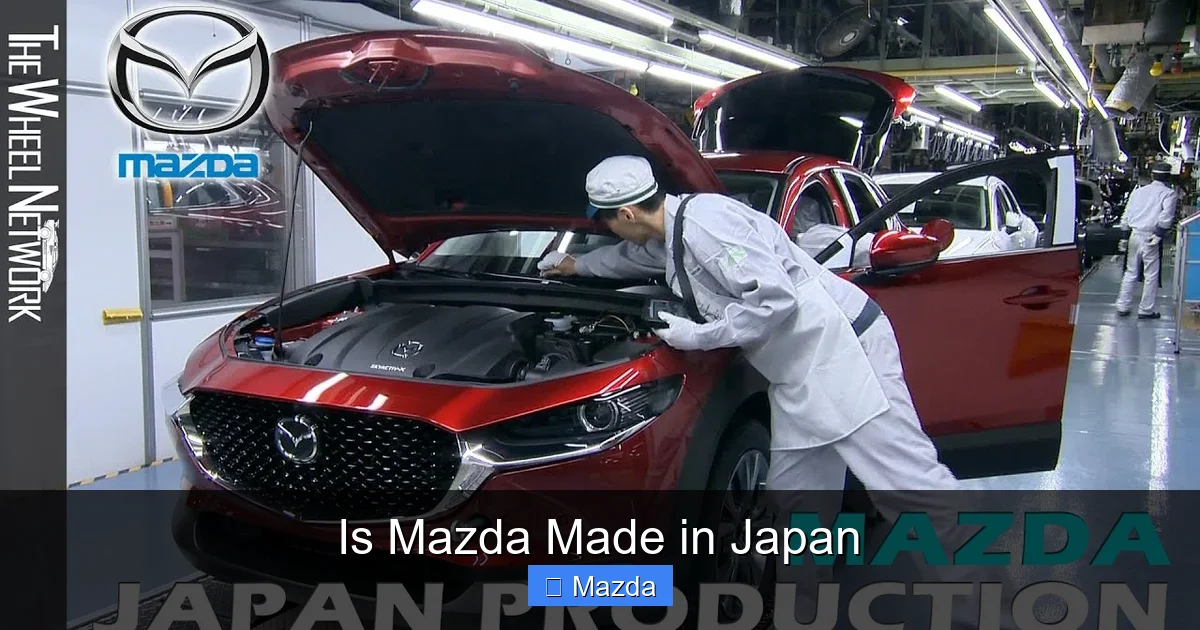
Visual guide about Is Mazda Made in Japan
Image source: i.ytimg.com
The Vehicle Identification Number (VIN) Decoder
The VIN is your car’s social security number. It’s a 17-digit code packed with information. The very first character is the “World Manufacturer Identifier” (WMI) country code.
- J: Japan
- 1, 4, 5: United States (1=USA, 4=USA, 5=USA for some trucks)
- 3: Mexico
- L: China
- M: Thailand
- V: Austria (for some former Ford-based models, rare)
So, if your VIN starts with “JM1” (common for MX-5), it’s Japanese. If it starts with “3MM” (common for Mazda3), it’s Mexican. “4F” (CX-5) is from Alabama. You can use any online VIN decoder to confirm the exact plant.
The Window Sticker (Monroney Label)
For new cars sold in the US and Canada, the Monroney sticker must list the “Place of Final Assembly.” This is the most unambiguous source. It will say “Huntsville, AL, USA” or “Salamanca, Guanajuato, MEXICO” or “Hiroshima, JAPAN.” Always check this sticker when buying new.
Model-Specific Production Maps (2026)
Here’s a quick-reference guide for where major 2026 models are typically built for key markets:
- Mazda CX-50: Primarily Huntsville, AL, USA (for Americas, Europe). Some for Japan market may be imported from USA.
- Mazda CX-5: Huntsville, AL, USA (for Americas); Hiroshima or Hofu, Japan (for Japan, Europe, some global); Nanjing, China (for China).
- Mazda CX-30: Salamanca, Mexico (for Americas); Hiroshima, Japan (for Japan, some global); Rayong, Thailand (for Asia-Pacific, Australia).
- Mazda3: Salamanca, Mexico (sedan/hatchback for Americas); Hiroshima, Japan (for Japan, Europe); Nanjing, China (for China).
- Mazda MX-5 Miata: Hiroshima, Japan (for all global markets). This is the flagship model that remains exclusively Japanese-built.
- Mazda CX-90: Hofu, Japan. The new large SUV is a Japan-only production model for all markets, emphasizing its flagship status.
- Mazda CX-8: Hofu, Japan (for Japan, Australia); Nanjing, China (for China).
Example: A friend of mine bought a used 2021 Mazda CX-5 in Texas. The VIN started with “4F,” confirming it was built in Alabama. He was initially disappointed, thinking he wanted a “true” Japanese car. But after driving it, he realized the build quality and driving feel were identical to the Japanese-spec CX-5 he’d rented in Tokyo. This is the modern Mazda reality.
The “Made in Japan” Premium: Perception vs. Reality
There’s a long-held global perception that “Made in Japan” equates to superior build quality, tighter panel gaps, and more meticulous craftsmanship. Does this hold true for Mazda in 2026?
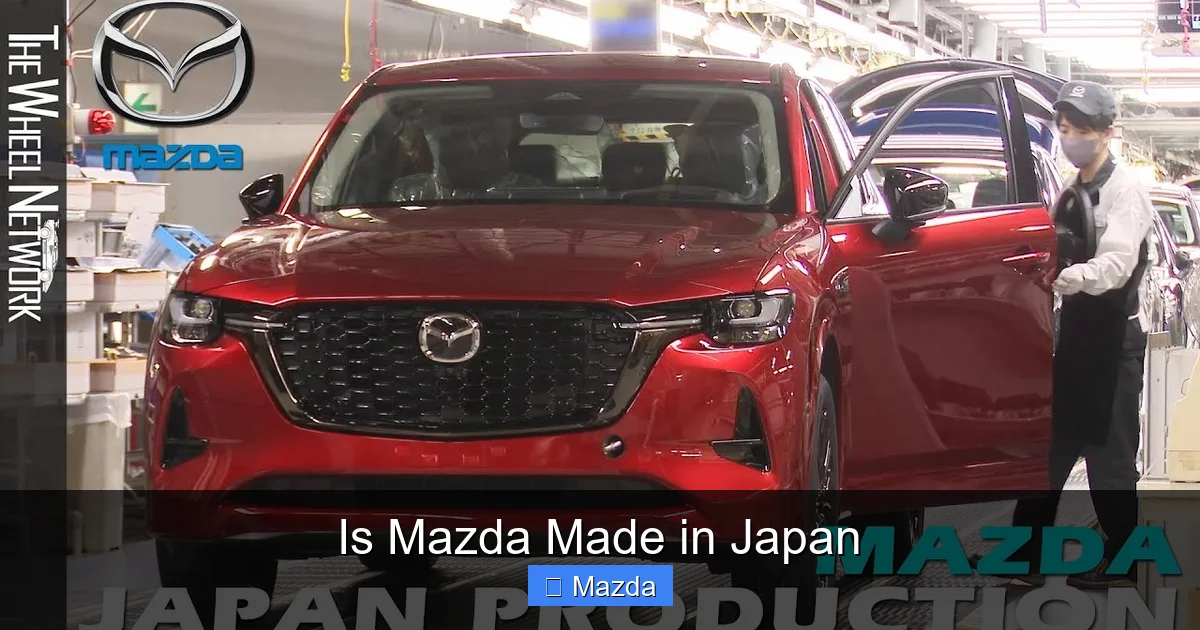
Visual guide about Is Mazda Made in Japan
Image source: i.ytimg.com
Quality Control is a Global Standard
Mazda invests heavily in standardized training and quality assurance processes at all its global plants. The “Mazda Quality” standard is codified and replicated. The Alabama plant, for instance, has won numerous quality awards from J.D. Power and internal Mazda audits. The difference is no longer night and day. A well-built Mexican Mazda3 will have excellent paint finish and interior fitment.
Where the Nuance Lies
However, nuances can exist. Enthusiasts often note that the final detailing—the feel of interior trim pieces, the sound of door closures, the consistency of paint metallics—can sometimes be perceived as a touch more refined in the Japanese plants. This is often attributed to a deeply ingrained cultural emphasis on *monozukuri* (the art of making things) and decades of continuous improvement (*kaizen*). It’s less about major defects and more about a subjective, visceral sense of craftsmanship. For the vast majority of buyers, the difference is imperceptible in daily driving.
Impact on the Used Car Market
The “Made in Japan” badge does carry weight in the used car market. A Japanese-built MX-5 or CX-90 will often command a slightly higher price than an identical, similarly aged model from another plant, all else being equal. This is due to perceived long-term reliability and desirability among enthusiasts. When researching a used Mazda’s value, checking the VIN origin is a smart move. You might find interesting data when comparing prices for models like the 2008 Mazda3; early models were Japanese-built, while later ones were Mexican-built, which can subtly affect valuations. Resources that detail how much is a 2008 Mazda 3 worth often break down prices by trim and, implicitly, by assembly origin.
The Future: Electrification and New Frontiers
Looking ahead to the end of the decade, Mazda’s manufacturing strategy is evolving with the shift to electric vehicles.
The SkyActiv-EV Platform and Japanese Focus
Mazda has announced a dedicated EV platform, SkyActiv-EV. Initial reports suggest the first models on this platform (like a potential electric CX-5 successor) will be engineered and initially assembled in Japan, likely at the Hofu plant. This is a strategic move to leverage Japan’s advanced battery technology partnerships and to position the brand’s electric future as a premium, Japanese-engineered product. This could create a new class of “Japan-only” EVs for the global market.
Retooling Existing Plants
Plants in Alabama, Mexico, and Thailand are being prepared to produce battery-electric versions of existing models (like the CX-50 and CX-30) as part of Mazda’s multi-solution electrification strategy. These will be built alongside gasoline models. So, in the future, you might have a choice: an electric CX-50 from Alabama or a gasoline one from the same line. The origin story becomes even more layered.
Supply Chain Complexity
With EVs, the “where it’s made” question extends to the battery pack. Mazda is sourcing batteries from multiple global partners (like Panasonic, CATL). A car assembled in Mexico might have a battery pack made in China or Japan. This globalized component sourcing is the new normal and further dilutes the simple “country of origin” label, making the VIN’s final assembly point the most relevant piece of data for consumers.
Conclusion: A Global Brand with a Japanese Soul
So, is Mazda made in Japan? The definitive answer is: some are, and some aren’t. The brand’s heart, soul, and engineering leadership are irrevocably Japanese. But its physical form is assembled across the globe to meet the needs of a worldwide customer base efficiently and competitively. This is not a compromise of quality but a necessity of modern automotive business. For the average driver, the Mazda experience—the steering feel, the cabin design, the efficiency—will be consistent regardless of whether the car’s VIN starts with J, 1, or 3.
When buying a new Mazda, your primary concern should be the model, trim, and features you want. The assembly location is a secondary detail, unless you have a specific preference for Japanese-built vehicles for resale or personal satisfaction. If you’re buying used, checking the VIN is a smart habit that tells you the car’s full story, including its birthplace. In 2026 and beyond, Mazda represents a perfect case study in 21st-century manufacturing: a globally distributed process anchored by Japanese design and engineering excellence. The zoom-zoom is still very much alive, no matter which factory whistle signaled the end of its shift.
Frequently Asked Questions
Are all Mazda MX-5 Miatas made in Japan?
Yes, absolutely. The MX-5 Miata is Mazda’s halo car and a point of pride. Since its inception, every single generation has been manufactured exclusively at Mazda’s Hiroshima Plant in Japan. A VIN starting with “JM1” is a guarantee of a Japanese-built roadster.
Where is the Mazda CX-50 made for the US market?
For the US and Canadian markets, the Mazda CX-50 is solely produced at the Mazda Toyota Manufacturing U.S.A. (MTMUS) plant in Huntsville, Alabama. This plant was built specifically for this model and the related Toyota Corolla Cross. You will not find a CX-50 for sale in the US with a Japanese VIN.
Does a Mexican-built Mazda3 have the same quality as a Japanese one?
Mazda maintains identical global quality standards across all its plants. The Mazda3 built in Salamanca, Mexico, undergoes the same rigorous engineering specifications and quality control processes as one built in Hiroshima. While subtle subjective differences in finish might be noted by extreme enthusiasts, major reliability and build quality are consistent. The Mexican plant has received multiple awards for its manufacturing excellence.
How can I find out where my specific used Mazda was assembled?
The easiest way is to decode your Vehicle Identification Number (VIN). The first character tells you the country of final assembly: “J” for Japan, “1” or “4” for USA, “3” for Mexico, “L” for China, etc. You can enter your full 17-digit VIN into any free online VIN decoder for a detailed report, which should include the assembly plant city and country.
Are Mazda’s hybrid or electric vehicles made in different plants?
Currently, Mazda’s mild-hybrid systems are integrated into models built at their standard plants (e.g., CX-50 in Alabama, CX-30 in Mexico). For future dedicated electric vehicles on the SkyActiv-EV platform, initial production is planned for Japan (Hofu plant). However, as Mazda’s EV strategy expands, it’s expected that existing global plants like those in Alabama and Thailand will be retooled to produce battery-electric versions of popular models alongside their gasoline counterparts.
Why did Mazda start building cars outside of Japan?
The primary drivers were economic: to avoid import tariffs in key markets like the US and China, to reduce shipping costs and times, and to hedge against currency fluctuations. Building cars locally also allows for faster response to regional market demands and preferences. This global manufacturing strategy is standard for all major Japanese automakers (Toyota, Honda, Nissan) and is essential for competing on a global scale.
