
Why Is My Coolant Leaking in My 2017 Toyota Highlander

A coolant leak in your 2017 Toyota Highlander is a serious issue that requires immediate attention. Common causes include failing hoses, a leaking radiator, or a bad water pump. Ignoring it can lead to catastrophic engine overheating and damage. This guide explains the causes, how to diagnose the leak, and the critical steps to fix it safely.
You pop the hood of your trusty 2017 Toyota Highlander and see a telltale puddle of green, orange, or pink liquid beneath it. Your heart sinks. That’s coolant, and a leak means your engine’s lifeblood is escaping. It’s a frustrating and potentially scary problem, but don’t panic. Understanding why it’s happening is the first step to fixing it. The 2017 Highlander is a reliable SUV, but like any vehicle with a complex cooling system, parts wear out. Let’s break down the most likely reasons your coolant is leaking, how to figure out where it’s coming from, and what you absolutely must do about it.
First, a crucial warning: Do not keep driving this vehicle with a known coolant leak. Coolant (antifreeze) regulates your engine’s temperature. Without enough, your engine can overheat in minutes. Overheating can warp the cylinder head, blow the head gasket, and destroy the engine block—a repair costing thousands. Your safety and your wallet depend on addressing this immediately. Think of coolant as the vital fluid it is; a leak is a five-alarm fire for your engine.
Key Takeaways
- Coolant leaks are urgent: Driving with low coolant risks severe engine overheating and permanent damage, like a blown head gasket.
- Common culprits are wear items: The most frequent causes are degraded rubber hoses, a corroded or damaged radiator, or a failing water pump seal.
- Leak location tells the story: Where the fluid pools (front, under engine, passenger side) points to specific failed components.
- Diagnosis is key: A proper inspection, often with a pressure test, is needed to find the exact source, not just guess.
- Use the correct coolant: The 2017 Highlander requires specific Toyota-approved coolant (usually red/pink). Using the wrong type can cause damage.
- Fix it properly: Replace the failed part with a quality OEM or equivalent part and properly bleed the cooling system to avoid air locks.
- Check for related issues: A leak might coincide with other problems; for instance, if your Toyota is also showing other warnings, it could point to a larger issue.
📑 Table of Contents
The Usual Suspects: Common Causes of Coolant Leaks
Coolant travels through a closed loop: from the radiator, through the engine block, to the heater core, and back. Any connection or component in this loop can fail. For a 2017 Highlander, these are the prime suspects, ranked from most to least common.
1. Deteriorated Radiator Hoses
The rubber hoses connecting the radiator to the engine are under constant pressure and heat. Over 6-7 years, they dry out, crack, and develop soft spots. The Highlander’s V6 engine (3.5L) produces significant heat, accelerating this wear. Look for cracks, bulges, or leaks at the hose ends where they clamp onto metal pipes. A small drip here is often the culprit. These are relatively inexpensive and straightforward to replace.
2. A Leaking Radiator
The aluminum core and plastic end tanks of your radiator are susceptible to corrosion from the inside (from improper coolant or lack of change) and the outside (road salt, debris). Look for visible cracks in the plastic tank or leaks from the seams where the tank meets the core. A minor leak might just be a pinhole, while a major one will spray a steady stream. Sometimes, a bent or damaged fin from a stone chip can eventually lead to a leak.
3. Faulty Water Pump
The water pump is the heart of the cooling system, driven by the serpentine belt. It has an internal seal that can fail over time. When this seal goes, coolant leaks from a small weep hole at the bottom of the pump housing, usually dripping directly under the engine’s front. This leak often starts small and gets worse. A failing water pump might also make a grinding or whining noise from the bearing. Replacing it is more involved as it’s often buried behind components.
4. Leaking Heater Core
The heater core is a small radiator inside your dashboard that provides heat. Its hoses run through the firewall. If it corrodes or fails, coolant leaks inside the cabin. The signs are unmistakable: a sweet, syrupy smell (the coolant) inside the car, fogging of the windows, and wet carpet on the passenger-side footwell. This is a messy and labor-intensive repair, as the dashboard often needs partial removal.
5. Bad Thermostat Housing/Gasket
The thermostat, which regulates coolant flow, sits in a housing on the engine. The gasket between the housing and the engine block can fail, causing a leak. This leak will typically appear at the top-front of the engine. Sometimes the plastic housing itself cracks due to heat cycling. Replacing the thermostat and its gasket is a moderate job.
6. Intake Manifold Gasket
While more common for internal leaks (where coolant enters the oil or cylinders), the intake manifold gaskets on some V6 engines can also leak externally at the ends. This is a less frequent cause but possible. An external leak here might drip down the side of the engine.
7. Blown Head Gasket (The Nightmare Scenario)
This is not a simple leak you see on the ground. A head gasket failure can allow coolant to enter the combustion chamber or oil passages. Signs include white, sweet-smelling exhaust smoke, milky oil (check the dipstick), and consistent overheating with no external leak found. This is a catastrophic and expensive failure, often caused by prolonged overheating from an *unfixed* coolant leak. It’s the reason you act fast.
How to Diagnose: Finding the Source of the Drip
Before you buy any parts, you must find the leak. Start with a clean slate.
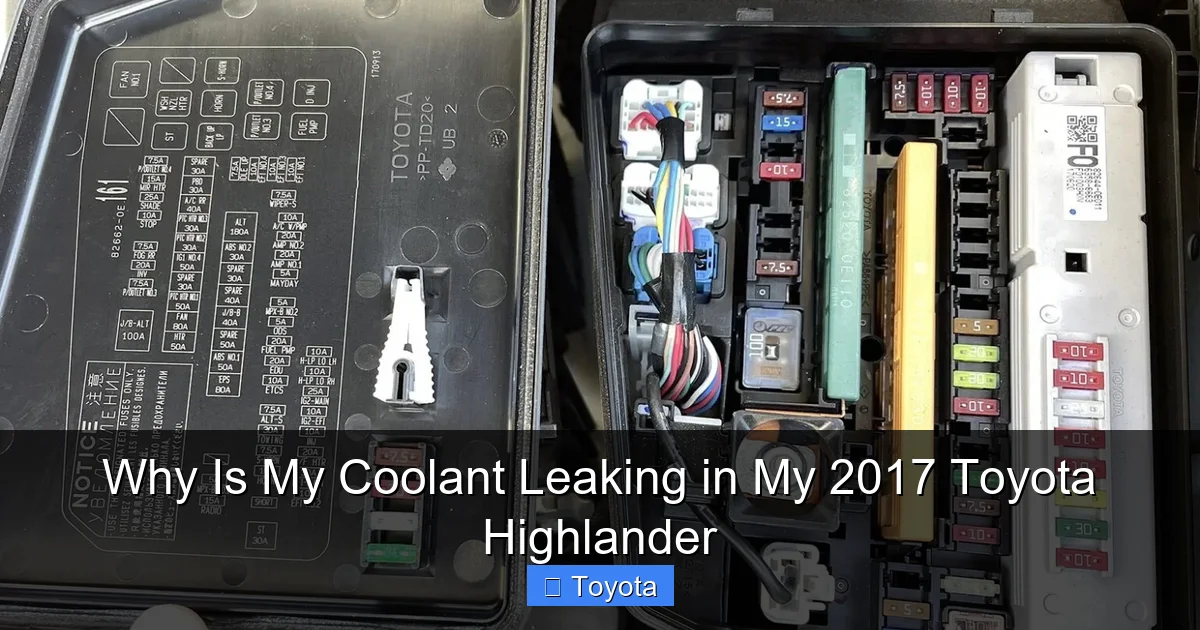
Visual guide about Why Is My Coolant Leaking in My 2017 Toyota Highlander
Image source: fuseandrelay.com
Step 1: Clean and Inspect
Pressure wash the engine bay and undercarriage with a garden hose (avoid high-pressure washers directly on electrical components). Let it dry completely. Then, run the engine with the radiator cap on (BE CAREFUL, IT’S HOT) and look for new drips or sprays. Use a flashlight. Follow any drip traces upward to their origin.
Step 2: Check the Coolant Level and Condition
When the engine is cold, open the radiator cap ( NEVER open a hot radiator cap—scalding danger!). Check the level in the radiator and the overflow reservoir. Is it low? What color is the coolant? It should be a clear red/pink (Toyota’s specification). If it’s rusty, brown, or has sludge, the system is contaminated, which accelerates corrosion and leaks.
Step 3: Perform a Cooling System Pressure Test
This is the professional method. A mechanic uses a tool that pressurizes the system with air when the engine is off, simulating operating pressure. You then watch for leaks at all the weak points listed above. You can sometimes rent a pressure tester from an auto parts store. If the system holds pressure, the leak might be internal (like a head gasket), requiring further tests like a block test.
Step 4: Inspect Common Areas Methodically
Get under the car (use jack stands for safety!). Look at:
- Radiator: Core, seams, and plastic tanks for cracks or seepage.
- Hoses: All four main hoses (upper, lower, and two heater hoses) for cracks, especially at the clamps.
- Water Pump: Look for a wet spot or drip at the pump housing, typically behind the harmonic balancer on the front of the engine.
- Heater Core Hoses: Where they enter the firewall on the passenger side.
- Thermostat Housing: At the front-top of the engine.
Why This Matters: The Risks of Ignoring a Leak
We’ve touched on this, but it bears repeating with emphasis. An overheating engine is a ticking time bomb.
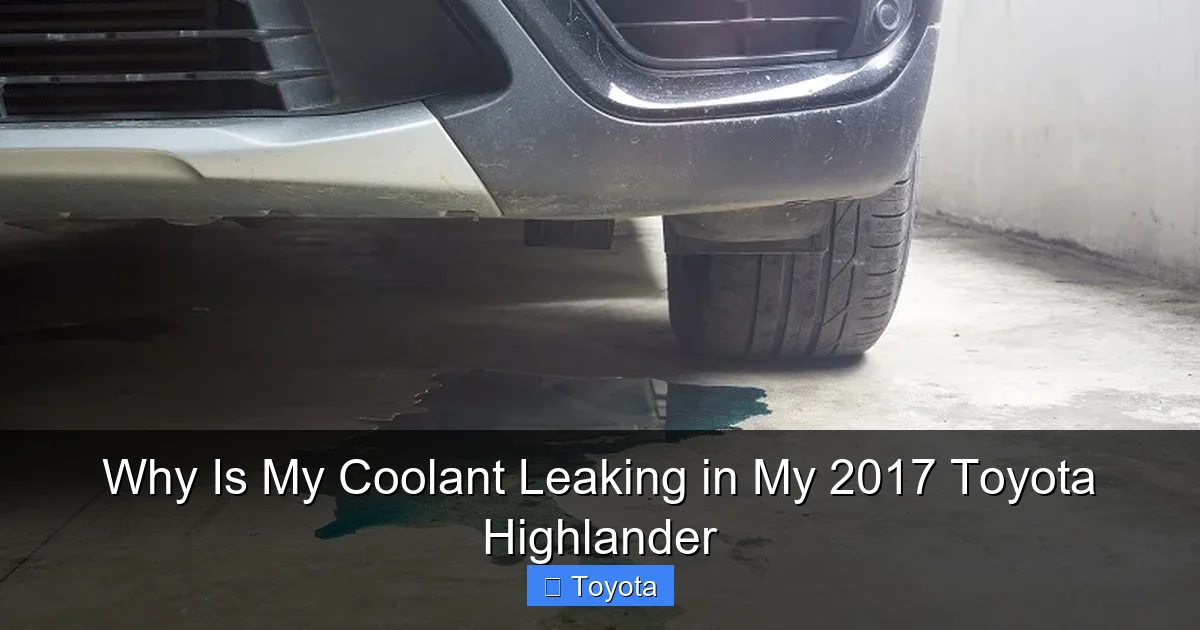
Visual guide about Why Is My Coolant Leaking in My 2017 Toyota Highlander
Image source: carx-media-prod.s3.amazonaws.com
The Domino Effect of Overheating
1. Warpped Cylinder Head: Aluminum heads warp quickly when hot. This breaks the seal with the head gasket.
2. Blown Head Gasket: The ultimate result of overheating. Compression leaks, coolant in oil, oil in coolant. Engine loses power, smokes, and will seize.
3. Damaged Pistons and Bearings: Extreme heat causes pistons to expand and seize in their cylinders. Oil breaks down, destroying bearings.
4. Failed Transmission: In some designs, the transmission fluid is cooled by the radiator. Overheating can break the internal cooler, contaminating transmission fluid with coolant, destroying the transmission.
Fixing a $150 hose is infinitely better than a $3,000+ engine rebuild or replacement. The cost of a diagnostic is cheap insurance.
Fixing the Leak: Your Path to a Healthy Cooling System
Once you know the source, the repair path is clear.
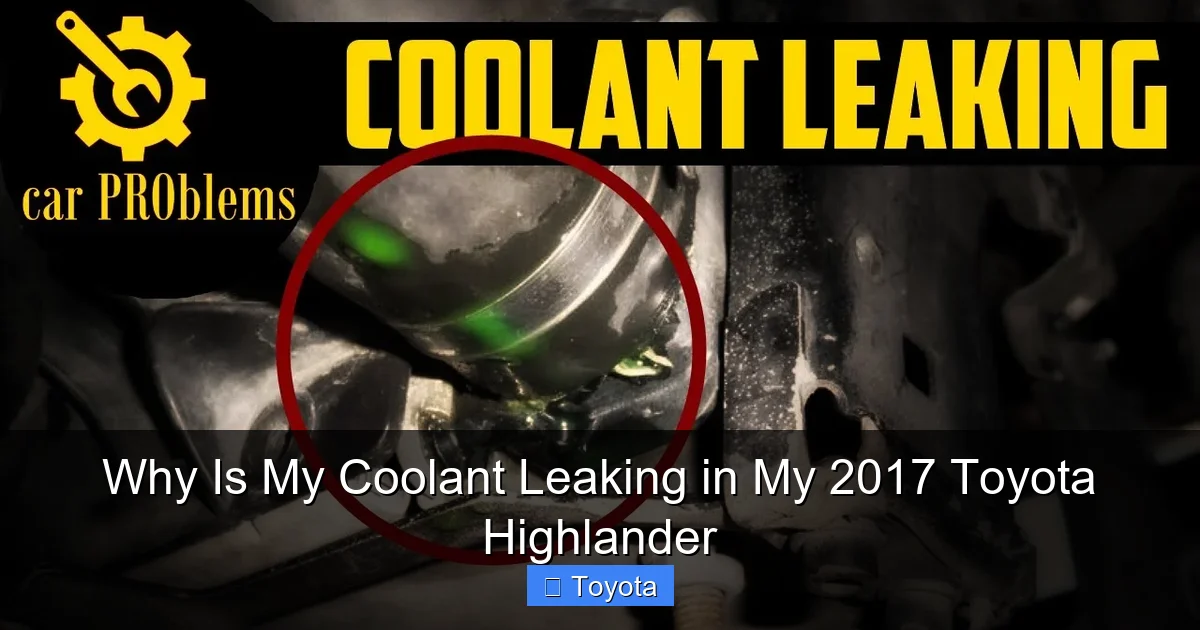
Visual guide about Why Is My Coolant Leaking in My 2017 Toyota Highlander
Image source: i.ytimg.com
Replace Worn Hoses and Clamps
Always replace hoses in pairs (upper and lower) if one is bad, as they have similar life. Use Toyota OEM or high-quality aftermarket hoses. Replace the spring clamps with new, high-torque constant-tension clamps. Don’t reuse old clamps. After replacement, you must properly bleed the cooling system to remove air pockets, which can cause overheating even with full coolant. This involves opening a bleed valve (location varies, check service manual) and running the engine with the heater on high until no more bubbles emerge.
Radiator Repair or Replacement
A small leak in a plastic tank can sometimes be repaired with a two-part epoxy designed for plastic, but this is a temporary fix at best. For a permanent solution, replace the radiator. You can often find a quality aftermarket unit that meets or exceeds OEM specs. Ensure you also replace the radiator drain plug (if equipped) and its seal.
Water Pump Replacement
This is a significant job. On the 3.5L V6, you’ll likely need to remove the timing belt cover and possibly the harmonic balancer. It’s highly recommended to replace the timing belt and water pump together as preventive maintenance, as they share the same service interval. Use a complete water pump kit that includes the gasket and sealant.
Heater Core Replacement
The most invasive repair. The dashboard must be partially disassembled to access the core. This is best left to a professional unless you are an extremely experienced DIYer. It’s also a good time to flush the entire system thoroughly.
Thermostat and Gasket
A simpler fix. Replace the thermostat with a genuine Toyota or Stant unit. Clean the housing surface perfectly and use a new gasket and specified sealant (often RTV silicone).
Pro Tip: Regardless of the repair, this is the perfect time to do a complete coolant system flush. Use distilled water to rinse, then fill with the correct Toyota Super Long Life Coolant (SLLC) or equivalent mixed 50/50 with distilled water. Never mix different colored coolants; they can react and form gel, clogging the system. For the best product specs, you can research the best coolant for Toyota Highlander models.
Prevention and Long-Term Care
Your 2017 Highlander can go years without a coolant issue with proper care.
Stick to the Service Schedule
Toyota recommends inspecting the cooling system regularly and replacing the engine coolant (SLLC) every 100,000 miles or 120 months under normal conditions. For severe service (towing, extreme temps, lots of idling), shorten this interval. Old coolant loses its anti-corrosion additives and becomes acidic, eating away at radiators and water pumps from the inside.
Visual Inspections Are Your Friend
Every few months, take a quick look under your parked Highlander. A tiny stain today is a major leak tomorrow. Also, physically squeeze the radiator hoses when the engine is cold. They should be firm, not mushy or cracked.
Address Overheating Immediately
If your temperature gauge climbs or you get a warning light, pull over safely, shut off the engine, and let it cool. Do not open the radiator cap. Call for help. Even a single overheating event can start the chain of destruction. If your Highlander is overheating and you can’t see a leak, you might be dealing with a stuck thermostat, a failing fan clutch or electric fan motor, or a clogged radiator. These issues often accompany or cause leaks due to excess pressure and heat.
Use Only the Right Coolant
Toyota’s red/pink Super Long Life Coolant is specifically formulated for its aluminum engines and components. Using generic green coolant or mixing types can cause corrosion, water pump failure, and heater core clogging. When topping up, use only pre-mixed 50/50 SLLC or the concentrate mixed with distilled water.
When to Call a Professional
Some jobs are beyond the average DIYer. Call a trusted mechanic if:
- You cannot locate the leak after a thorough inspection and pressure test.
- The leak is from the water pump, heater core, or suggests a head gasket.
- You are uncomfortable with the bleeding process after a repair.
- The engine has already overheated. You need a thorough inspection for secondary damage.
- You lack the proper tools (torque wrenches, special pullers, etc.).
For complex issues like these, professional diagnosis is worth every penny. And remember, a well-maintained Toyota is a reliable one—part of why Toyota is so reliable is adherence to factory maintenance schedules.
Conclusion
A coolant leak in your 2017 Toyota Highlander is a red flag that demands immediate action. The most common sources are aging rubber hoses, a failing radiator, or a water pump beginning to leak. Your first job is to accurately diagnose the source through cleaning, visual inspection, and a pressure test. Then, replace the faulty component with quality parts, using only the specified Toyota coolant, and meticulously bleed the system to remove air. Neglecting this problem is a direct path to a destroyed engine. By understanding these systems and committing to proactive maintenance, you can keep your Highlander’s cooling system—and its engine—running cool and reliably for years to come. Don’t wait; a small investment in a repair now saves a fortune later.
Frequently Asked Questions
Can I just add more coolant and keep driving if the leak is small?
No. Adding coolant is a temporary top-up, not a fix. The leak will worsen, and you risk sudden, severe overheating with no warning. You must repair the source immediately.
What color is the coolant in a 2017 Toyota Highlander?
It should be a clear red or pink. This is Toyota Super Long Life Coolant (SLLC). If yours is green, orange, or brown/rusty, it may be the wrong type or severely contaminated, which can cause leaks.
How much does it cost to fix a coolant leak on a Highlander?
It varies wildly. A hose replacement might cost $150-$300 in parts and labor. A radiator is $400-$800. A water pump job is $600-$1,200. A heater core can be $800-$1,500+. A head gasket repair starts around $2,000. Diagnosis is key to an accurate quote.
Why is my car overheating but I don’t see any coolant on the ground?
This is very serious. It likely means you have an internal leak, such as a blown head gasket (coolant burning in the combustion chamber) or a cracked engine block. You may also have a faulty thermostat, a broken cooling fan, or a severely clogged radiator. Get it diagnosed immediately.
Should I use a stop-leak product for my Highlander?
We strongly advise against it. Stop-leak is a temporary, unreliable fix that can clog the radiator, heater core, and small coolant passages in your engine, causing worse overheating and damage. It’s a gamble that often leads to a much more expensive repair.
How often should I change the coolant in my 2017 Highlander?
Toyota’s Super Long Life Coolant (SLLC) is rated for 100,000 miles or 120 months under normal conditions. For severe service (frequent short trips, extreme heat/cold, towing, idling), change it every 60,000 miles or 72 months. Always follow the schedule in your owner’s manual.
