
How Many People a Hyundai Santa Fe Seats

The Hyundai Santa Fe primarily offers a standard 5-seat configuration for comfortable family travel. However, select higher trims provide an optional 7-seat layout with a third row. The available space depends heavily on the model year and specific trim level you choose, making it crucial to verify your vehicle’s exact setup for your passenger needs.
Key Takeaways
- Understanding How Many People a Hyundai Santa Fe Seats: Provides essential knowledge
📑 Table of Contents
- Understanding the Basics: It’s Not Always a Simple Answer
- A Trim-by-Trim Breakdown: Where to Find 5 vs. 7 Seats
- The Third-Row Reality: Who Fits and What’s the Trade-Off?
- Maximizing Flexibility: Folding, Configuring, and Using the Space
- How the Santa Fe Stacks Up: A Look at the Competition
- Safety and Comfort Features Related to Seating
- Conclusion: Finding Your Perfect Santa Fe Fit
Understanding the Basics: It’s Not Always a Simple Answer
So, you’re looking at a Hyundai Santa Fe and you need to know one thing above all else: how many people can it actually hold? It’s the most fundamental question for a family hauler or a friend-group adventure mobile. But here’s the twist—the answer isn’t a single number locked in stone. You might hear “it seats seven” from a friend, or see “5-passenger SUV” on a website, and both could be right. The secret lies in the model year and the specific trim level. Hyundai has strategically positioned the Santa Fe to bridge the gap between a comfortable 5-seater and a necessity for a 7-seater. This flexibility is its superpower, but it also means you have to do a little homework to find the exact configuration that fits your life. Let’s break down the mystery and get you the clear, actionable information you need.
The Core Concept: Two Primary Configurations
For the vast majority of recent model years (particularly from the current generation introduced in 2021), Hyundai offers the Santa Fe in two fundamental seating layouts:
- The Standard 5-Seat Layout: This is the default, most common setup. It features two front bucket seats and a spacious second-row bench or captain’s chairs (depending on trim) for three passengers. There is no third-row seat at all. This configuration maximizes legroom for the first two rows and provides the largest possible cargo area behind the second row.
- The Optional 7-Seat Layout: This is an added feature, not standard. It includes a small, power-folding third-row seat that emerges from the cargo floor. This bumps total capacity to seven, but it comes with a trade-off: significantly reduced cargo space when the third row is in use and less legroom in the second and third rows.
Think of it this way: the Santa Fe gives you a choice between maximum comfort for five or functional capacity for seven. Which one is “right” depends entirely on your typical passenger load. If you carpool with three kids and their friends, the 7-seat is a lifesaver. If it’s usually two adults and two kids, the 5-seat is more comfortable and practical.
A Trim-by-Trim Breakdown: Where to Find 5 vs. 7 Seats
Now, let’s get specific. Which Santa Fe trims offer the coveted third row? This is the most critical piece of information. Hyundai doesn’t put the third row on every model; it’s reserved for the top tiers. For the 2023, 2024, and 2025 model years (the current generation), the breakdown looks like this:
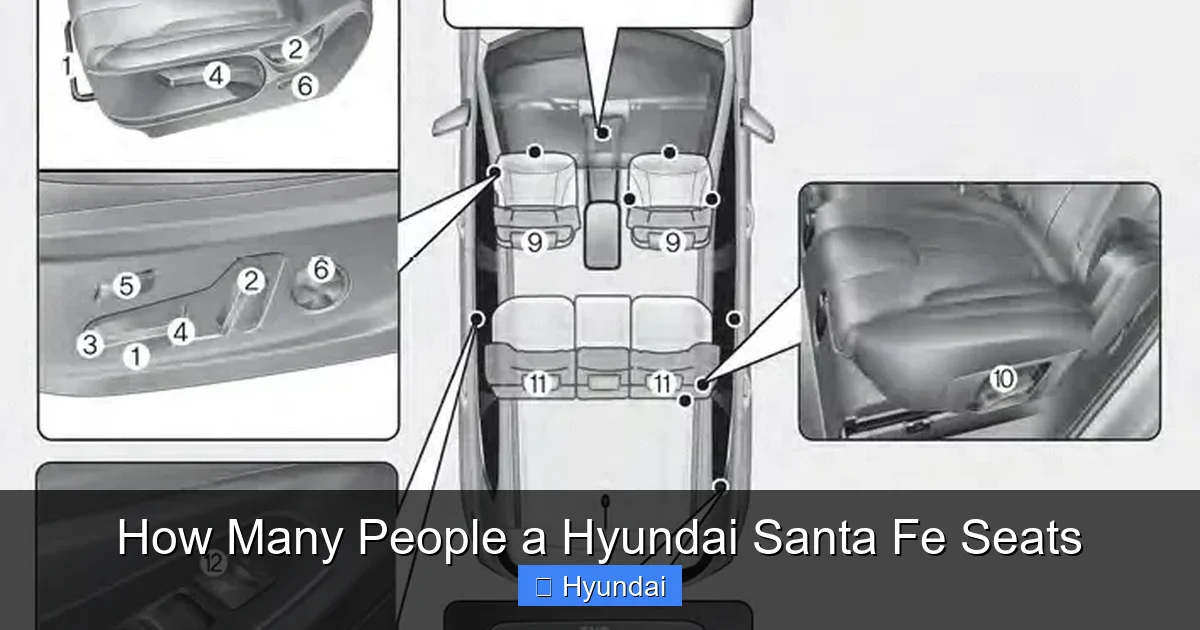
Visual guide about How Many People a Hyundai Santa Fe Seats
Image source: hsafe4.com
5-Seat Standard Trims (No Third Row Available)
These models are built for five, end of story. They prioritize space and comfort for the front and middle rows.
- SE
- SEL
- SEL Plus
- XRT (A special off-road focused trim, also 5-seat only)
If you’re shopping for a base-model Santa Fe for your family of four or five, any of these trims will give you a roomy, comfortable interior with a massive cargo hold. The XRT, while rugged, doesn’t sacrifice its 5-seat layout for a third row.
7-Seat Available Trims (Third Row Optional)
Here’s where the magic happens. To get the third row, you must step up to one of these premium trims. Importantly, even on these trims, the 7-seat configuration is often an optional package you must select at the time of purchase. You cannot simply add a third row later.
- Limited: This luxury-oriented trim offers the 7-seat option. It pairs premium features with the flexibility of an extra row.
- Calligraphy: The top-of-the-line Santa Fe. The 7-seat configuration is available here, often bundled with the highest level of interior luxury and technology.
Pro Tip: When browsing inventory online or at a dealership, you must look for the specific badge or listing that says “7-passenger” or “3rd Row.” A “Limited” or “Calligraphy” without that designation is almost certainly a 5-seater. Always open the door and check the rear of the vehicle—a visible seat or a cargo floor with a distinct split-fold pattern is the final proof.
What About Older Santa Fe Models?
If you’re looking at a used Santa Fe, the rules change. The previous generation (2019-2020) was a different story. That model was standard with 3 rows of seating for most trims, typically seating 7 or 8 passengers depending on the configuration. It was a larger, more traditional 3-row SUV. The shift to the current, larger-but-more-car-like generation saw Hyundai deliberately make the 5-seat the default and the 7-seat a premium option. So, a 2018 Santa Fe likely has a third row, while a 2022 Santa Fe might not. You must always check the specific VIN or window sticker for any used vehicle to know its exact seating.
The Third-Row Reality: Who Fits and What’s the Trade-Off?
Okay, so you’ve found a Santa Fe Limited with the 7-seat package. Before you get too excited, let’s talk about the practical reality of that third row. It’s not a lie, but it’s also not a spacious throne. Understanding its limitations is key to making a smart purchase.
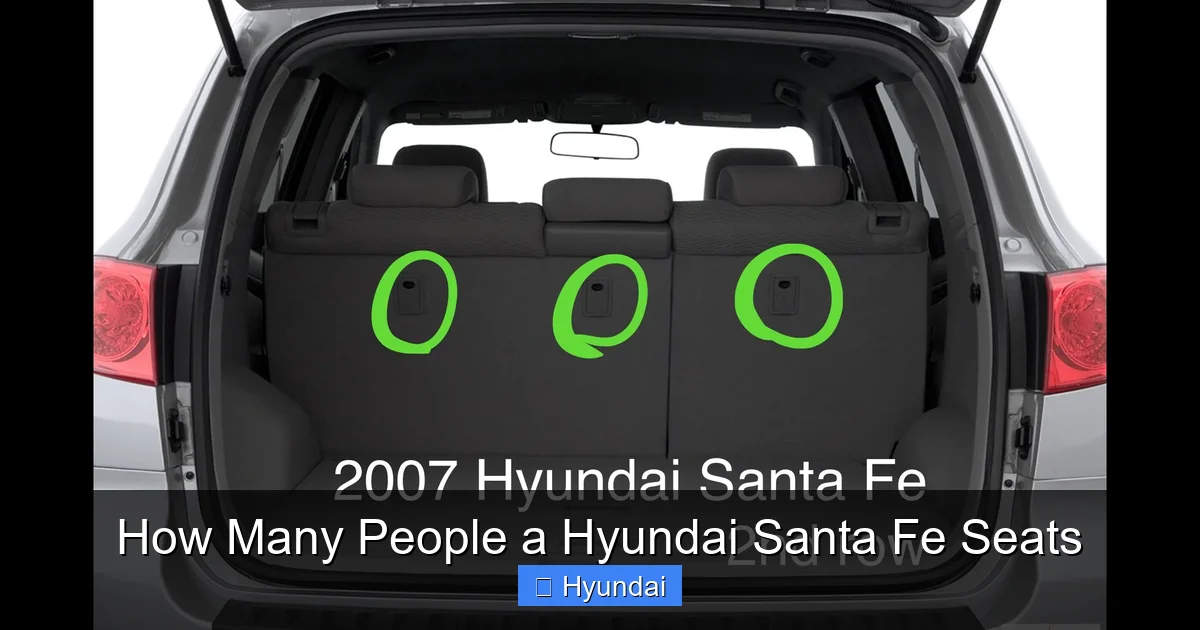
Visual guide about How Many People a Hyundai Santa Fe Seats
Image source: thecarseatlady.com
Space and Comfort: A “Kids-Only” Zone (Mostly)
The third row in the current Santa Fe is best described as a child-sized compartment. For adults, it’s a tight squeeze. Legroom is minimal, and headroom can be an issue for taller passengers. Think of it as perfect for:
- Children in booster seats or young teens.
- Short adults on very short trips (think “grandma’s house” distance).li>
- A temporary solution when you have more passengers than seats for a one-off event.
For a family with three growing kids, you’ll likely find the third row works for the youngest child, but the older two will be much more comfortable in the second row. If you regularly plan to carry adults in the third row for road trips, you should seriously consider a larger 3-row SUV like a Honda Pilot or Toyota Grand Highlander instead.
The Cargo Sacrifice: A Non-Negotiable Compromise
This is the biggest, and often most surprising, trade-off. With the third row in use, your cargo space behind it is extremely limited. We’re talking about enough room for a few grocery bags, a couple of small suitcases, or maybe a stroller if you’re clever. You cannot fit standard luggage for a family of 7 traveling in the vehicle. The moment you need to carry more than a few items, you must fold the third row flat into the floor. This action is relatively easy (usually power-operated on these trims) and creates a vast, flat load floor, but you instantly lose that 7th seat. It’s a classic either/or scenario: passengers or cargo, not both in abundance. For families who often drive to the airport or go on vacation with all seats occupied, this requires careful packing and may mean a rooftop cargo carrier is a necessary accessory.
Maximizing Flexibility: Folding, Configuring, and Using the Space
The Santa Fe’s interior flexibility is one of its strongest suits, regardless of whether you have 5 or 7 seats. Knowing how to manipulate the seating is key to getting the most from your vehicle.
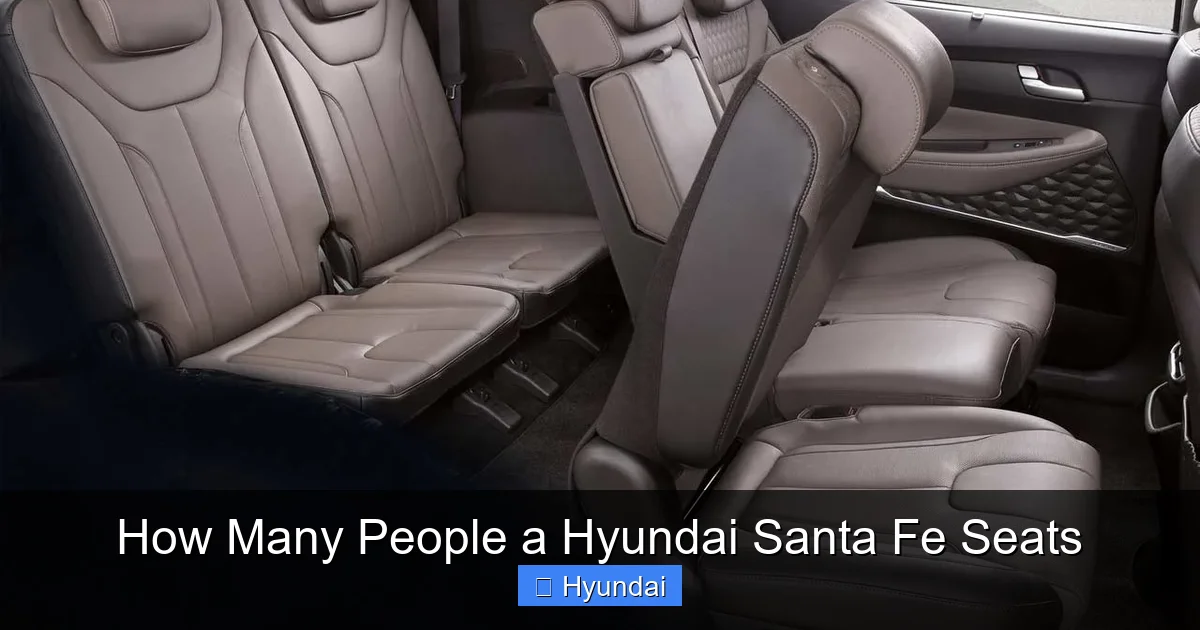
Visual guide about How Many People a Hyundai Santa Fe Seats
Image source: autobics.com
The 60/40 Split-Fold Magic
Even the 5-seat models boast a 60/40 split-folding second-row seat. This means you can fold one section down while leaving the other up, allowing you to carry long items like ladders, skis, or lumber while still having a seat for a passenger. The process is straightforward, with easy-to-reach levers in the cargo area or on the seatbacks. On 7-seat models, the third row is also typically a 50/50 split, so you can fold down one side to create a longer cargo space while still having one third-row seat available.
Creating a Flat Load Floor
When you fold both sections of the second row (and the third row, if equipped), the Santa Fe creates a nearly flat load floor from the front seats to the tailgate. This is invaluable for hauling furniture, large pets, or bulky sports equipment. The seats fold cleanly into a recessed well, so you’re not left with a significant step-up into the cargo area. Measuring the total length from the back of the front seats to the closed tailgate is a great exercise when test-driving—it will give you a real-world idea of what fits.
Practical Examples for Your Lifestyle
Let’s make this real. How does this seating play out?
- The Weekly Grocery Run (Family of 4): A 5-seat Santa Fe is perfect. All seats are up, cargo area is huge for bags. No third row to worry about.
- Carpool with 6 Kids: You need the 7-seat model. All rows are up. Cargo is minimal—think backpacks on laps. After drop-off, fold the third row for a normal-sized cargo area.
- Family Vacation (2 Adults, 3 Kids): The 5-seat model is ideal. More legroom, more cargo. If you have a 7-seat model, you’d likely keep the third row folded for luggage and have the kids all in the second row (maybe using a bench for two and a captain’s chair for one, or a bench for all three).
- Hauling a Large Dog: Fold the second-row seats (or just one side) and the third row (if you have it) to create a massive, flat, secure area for a kennel or a muddy pup.
How the Santa Fe Stacks Up: A Look at the Competition
You’re probably wondering how the Santa Fe’s seating strategy compares to other popular three-row SUVs. It’s a smart move. The Santa Fe occupies a unique niche.
- Compared to dedicated 3-row giants like the Toyota Highlander or Ford Explorer, the Santa Fe’s third row is smaller and its standard offering is 5-seats. Those rivals almost always have a standard third row across all trims.
- Compared to other midsize SUVs that offer a choice, like the Kia Sorento (its corporate cousin), the Santa Fe is very similar. Both offer 5-seat standard and 7-seat optional on higher trims. The Sorento’s third row is similarly sized for children.
- Compared to the Nissan Pathfinder, which returned to a body-on-frame inspired design and emphasizes its standard third row for adults, the Santa Fe feels more car-like and its third row is less spacious. The Pathfinder targets those who need adult-sized third-row capacity more regularly.
- Even some non-Korean rivals like the Dodge Journey (now discontinued) offered standard 3-row seating in a similar footprint, but the Santa Fe’s modern design and available features are in a different league.
The Santa Fe’s philosophy is clear: it’s a premium 5-seat SUV first, with the option to stretch to 7 seats for those who need the flexibility but don’t require a cavernous third row every single day. It’s a compromise that works for many, but you must be honest about your third-row needs.
Safety and Comfort Features Related to Seating
It’s not just about the number of seats; it’s about the experience within them. Hyundai loads the Santa Fe with features that enhance safety and comfort for all passengers.
LATCH Systems and Child Seat Compatibility
The second row (and third row, if equipped) has LATCH (Lower Anchors and Tethers for Children) systems. The ease of use is generally good, with the lower anchors being accessible in the seat bight (the crease of the seat). However, the presence of the third row can sometimes make accessing the second-row LATCH anchors a bit more cramped, especially if the third-row seat is in use. Always install your child seats before a long trip to ensure a perfect, secure fit. The wide second-row seat in the 5-seat models often makes installing three child seats (two in LATCH, one on the belt) more feasible than in the 7-seat model with a third row up.
Available Comfort Features
Higher trims offer features that make every seat more pleasant:
- Ventilated Front Seats: A must-have in hot climates.
- Heated Rear Seats: Available on some trims, a huge luxury for rear passengers in winter.
- Second-Row Captain’s Chairs: On some 5-seat trims (like the Calligraphy), you can get individual bucket seats in the second row instead of a bench. This reduces total capacity to 5 but adds a massive center console with storage and USB ports, and makes accessing the third row (if you had one) easier.
- Power Adjustments: The driver and front passenger seats are power-adjustable on most trims, with memory settings on top models.
These features don’t change the seat count, but they dramatically change the quality of the space for the people who do sit there.
Conclusion: Finding Your Perfect Santa Fe Fit
So, how many people does a Hyundai Santa Fe seat? The definitive, final answer is: it depends. The modern Santa Fe is expertly engineered as a supremely comfortable and spacious 5-passenger SUV for the majority of buyers. For those who occasionally need to haul more people, the 7-passenger option on Limited and Calligraphy trims provides that flexibility, with the clear understanding that the third row is best for children and cargo must be minimized when all seats are occupied. Your decision path is simple:
- If you need to carry 5 or fewer people most of the time and value maximum legroom and cargo space, any Santa Fe trim is perfect. You’ll get the best value and comfort from the 5-seat layout.
- If you need to carry 6 or 7 people even occasionally, you must seek out a Limited or Calligraphy trim with the 7-seat package explicitly listed. Test-fit your typical passengers in the third row before buying—bring the kids or the shorter adults who will use it.
The Hyundai Santa Fe’s seating strategy is a brilliant example of “right-sized” versatility. It doesn’t try to be a max-size passenger van. Instead, it offers a premium, car-like driving experience with the clever option to add seats when life demands it. By understanding the trim-level differences and the real-world compromises of the third row, you can confidently choose the Santa Fe that perfectly matches your family’s needs and your lifestyle.
Frequently Asked Questions
Does the Hyundai Santa Fe have a standard third-row seat?
No, for current model years (2021+), the third-row seat is not standard. It is an optional feature available only on the Limited and Calligraphy trims. Base and mid-level trims like the SE and SEL are strictly 5-seaters.
What is the cargo space behind the third row in a 7-passenger Santa Fe?
Cargo space with the third row upright is very limited, typically under 13 cubic feet. This is enough for a few small bags or a stroller but not for a full set of luggage for 7 people. The primary advantage of the third row is passenger capacity, not cargo capacity.
Can adults fit in the third row of a Hyundai Santa Fe?
While possible, it is not comfortable for most adults on any journey longer than a very short trip. The third row has minimal legroom and headroom, making it best suited for children, smaller teenagers, or adults on brief jaunts.
How does the 7-seat Santa Fe’s third row compare to the Kia Sorento’s?
They are very similar. Both are midsize SUVs where the third row is an optional upgrade on higher trims and is designed primarily for children. They represent a similar philosophy of a premium 5-seater with optional 7-seat flexibility.
If I buy a used Santa Fe, how can I be sure if it has a third row?
You must check the vehicle’s specific window sticker (Monroney label) or vehicle description from the seller. The presence of a third row is a trim-dependent option. Visually, look for a seatback that folds up from the cargo floor. The safest method is to verify via the VIN with a Hyundai dealer or a vehicle history report that lists options.
Does adding the third-row seat affect the warranty or other features?
No, the third-row seat is a factory-installed option and is covered under the vehicle’s standard warranty like any other component. It does not affect the warranty on other systems. However, it may be bundled with other feature packages (like a premium audio system or specific interior trim), so the overall feature set of a 7-seat model might differ from a 5-seat version of the same nominal trim.
