
When to Change Alfa Romeo Oil

Changing your Alfa Romeo’s oil on time is non-negotiable for preserving its high-performance engine. Always follow the factory interval in your owner’s manual, but shorten it for “severe” driving like frequent short trips or extreme temperatures. Pay close attention to your Oil Life Monitor system and classic symptoms like excessive smoke or engine noise, as they signal an overdue change. Using the correct full synthetic oil viscosity is as critical as the change itself.
When to Change Alfa Romeo Oil: The Complete Guide for Giulia, Stelvio, and Tonale Owners
You didn’t buy an Alfa Romeo for average. You bought it for the intoxicating blend of Italian style, razor-sharp handling, and a sonorous engine note that sends shivers down your spine. That passion for performance is what makes proper maintenance, especially oil changes, absolutely critical. Engine oil is the lifeblood of your Alfa’s powerplant, whether it’s the turbocharged four-cylinder in a Giulia or the thunderous V6 in a Stelvio Quadrifoglio. Using the wrong oil or changing it at the wrong time isn’t just a minor oversight—it’s a direct threat to the heart of your driving experience. This guide will cut through the confusion and give you the precise, actionable knowledge you need to keep your Alfa Romeo’s engine singing perfectly for years to come.
Key Takeaways
- Factory Schedule is Primary: Your Alfa Romeo’s recommended oil change interval (often 6,000-10,000 miles or 12 months) is the baseline, found in your owner’s manual.
- “Severe” Service Shortens Intervals: Driving conditions like stop-and-go traffic, very cold/hot climates, dusty roads, or towing require changing oil more frequently than the standard schedule.
- Trust the Oil Life Monitor (OLM): Modern Alfa Romeos use an algorithm-based system that accounts for engine revolutions, temperature, and drive time. Reset it after every professional change.
- Heed the Warning Signs: Symptoms like blue/gray exhaust smoke, metallic engine noise, poor performance, or an oil smell inside the car mean an immediate change is needed, regardless of mileage.
- Correct Oil Specification is Mandatory: Always use the full synthetic oil with the exact viscosity (e.g., 0W-20, 5W-30) and specification (often meeting Ferrari or Fiat Chrysler standards) required for your specific model and engine.
- DIY vs. Professional: While a DIY change saves money, professional service ensures proper disposal, filter selection, and a complete diagnostic check, which is wise for a complex European performance vehicle.
- Neglect Has Severe Consequences: Skipping oil changes leads to sludge, accelerated wear, catastrophic engine failure, and voids your warranty, costing far more than regular maintenance.
📑 Table of Contents
- Decoding the Factory Recommendations: Your First Stop
- The “Severe Service” Reality: Why Your Driving Matters More Than Miles
- Understanding and Resetting the Oil Life Monitor (OLM)
- Symptoms of an Overdue Oil Change: Your Car’s Cry for Help
- Choosing the Perfect Oil: It’s Not All the Same
- The Cost of an Oil Change: DIY Savings vs. Professional Peace of Mind
- Conclusion: A Simple Habit for Uncompromised Performance
Decoding the Factory Recommendations: Your First Stop
The absolute starting point for any oil change decision is your Alfa Romeo’s manufacturer guidelines. These aren’t arbitrary numbers; they’re the result of thousands of hours of dyno testing and real-world engineering by the same team that designed your engine. For modern Alfa Romeo models—the Giulia (2017+), Stelvio (2018+), and Tonale (2023+)—the standard interval under “normal” driving conditions is typically every 10,000 miles or 12 months, whichever comes first. However, this is a maximum ceiling, not a target. You must consult your specific owner’s manual, as early model years or different engine variants (like the 2.0L Turbo vs. the 2.9L V6) may have slightly different specifications. Adhering to this schedule is also a requirement for maintaining your vehicle’s warranty. Ignoring it is the fastest way to void that protection and face a massive repair bill out of pocket.
Where to Find Your Exact Interval
Open your glovebox. The physical owner’s manual is your bible. Look for the “Maintenance Schedule” or “Lubricants and Fluids” section. It will list the service intervals in a clear table. Additionally, your vehicle’s infotainment system (via the driver information display) will typically show a percentage-based “Oil Life” indicator. This system is your daily reminder, but it’s calculated based on the factory’s underlying algorithm. If you’ve lost your manual, digital copies are often available on the Alfa Romeo owner’s portal or through third-party sites. Never guess; always verify.
The “Severe Service” Reality: Why Your Driving Matters More Than Miles
Here’s the most common mistake Alfa owners make: assuming their driving is “normal.” The factory “normal” schedule is designed for consistent, highway-speed driving—think open-road cruising. The vast majority of us do not fall into that category. Alfa Romeo, like all manufacturers, defines “severe” operating conditions much more broadly than you might think. If your driving fits any of these scenarios, you must shorten your oil change interval to every 5,000 to 6,000 miles or 6 months.
Visual guide about When to Change Alfa Romeo Oil
Image source: d3s8goeblmpptu.cloudfront.net
Common Severe Driving Conditions for Alfa Romeos
- Frequent Short Trips: Driving less than 5-10 miles at a time, especially in cold weather. The engine never fully warms up, allowing fuel and water vapor to contaminate the oil.
- Extreme Temperatures: Living in consistently very hot (above 90°F/32°C) or very cold (below 10°F/-12°C) climates stresses oil viscosity and engine components.
- Stop-and-Go Traffic: City commuting with prolonged idling and constant acceleration burns more fuel and introduces more byproducts into the oil.
- Dusty or Sandy Environments: Driving on gravel roads, in construction zones, or near the coast allows abrasive particles to bypass the air filter and mix with oil.
- Towing or Heavy Loads: Using your Alfa to pull a trailer or carry significant weight increases engine load and temperature.
- Racing or Track Use: Any form of aggressive, high-RPM driving, even at occasional track days, demands immediate oil changes afterward.
Think about your last week of driving. If you’re mostly doing school runs, grocery trips, and sitting in traffic, you are almost certainly in the “severe” category. Adjusting your interval accordingly is the single most impactful thing you can do for engine longevity. It’s better to change the oil a little too soon than a mile too late. For a deeper dive into how different driving styles impact all vehicles, you can explore resources on how to know when to change oil in a car.
Understanding and Resetting the Oil Life Monitor (OLM)
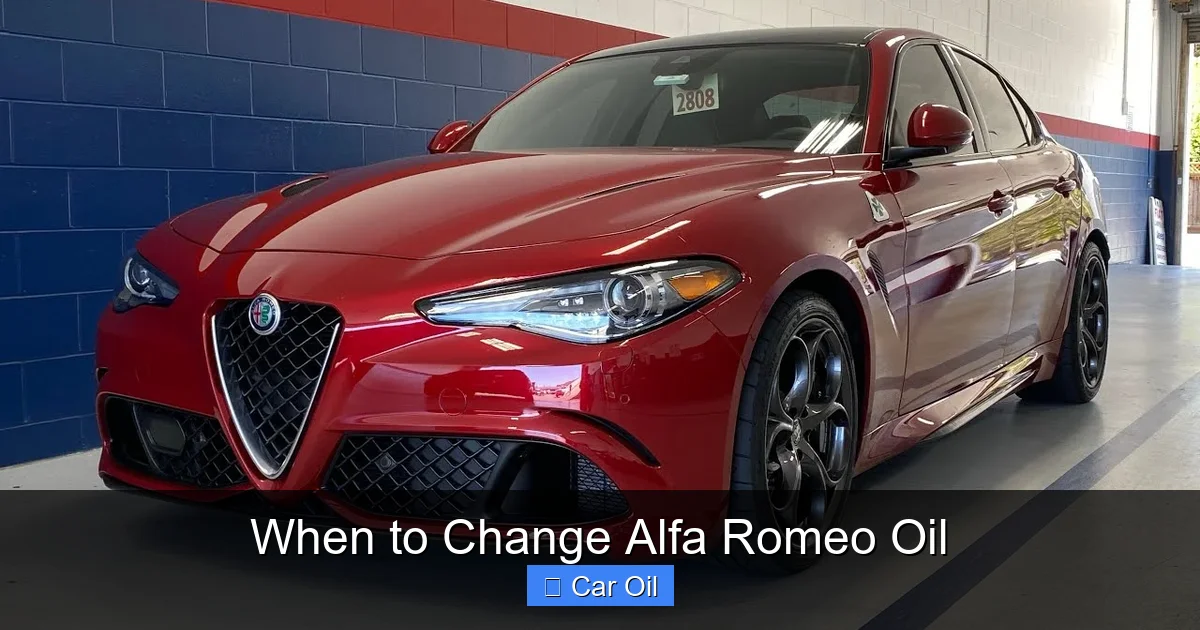
Your Alfa Romeo’s digital Oil Life Monitor is a fantastic tool, but it’s only as good as its programming and your understanding of it. This system doesn’t just count miles; it uses a complex algorithm to monitor engine revolutions, engine temperature, and drive time. It’s designed to account for both “normal” and “severe” driving patterns automatically. When the system calculates that the oil has degraded to a certain threshold (usually around 15-20% life remaining), it will display a “Service” or “Oil Change Required” message on your instrument cluster or infotainment screen.
Visual guide about When to Change Alfa Romeo Oil
Image source: i.ytimg.com
Critical Step: The Reset Procedure
Resetting the OLM after an oil change is your responsibility. If you have a professional do it, they should reset it. If you do it yourself, you must follow the exact procedure in your manual. This typically involves turning the ignition on (without starting), using the steering wheel controls or menu buttons to navigate to the “Vehicle Info” or “Service” menu, and selecting “Oil Life Reset” or “Reset Service.” Failing to reset it means your new oil will appear “old” to the system, and you’ll get a false reminder too soon, or worse, you’ll forget entirely. Never simply disconnect the battery to try and reset it; this can cause other electronic issues. For specific reset instructions on various models, general guides on how to reset a car after an oil change can provide a methodological approach, but always defer to your Alfa-specific manual first.
Symptoms of an Overdue Oil Change: Your Car’s Cry for Help
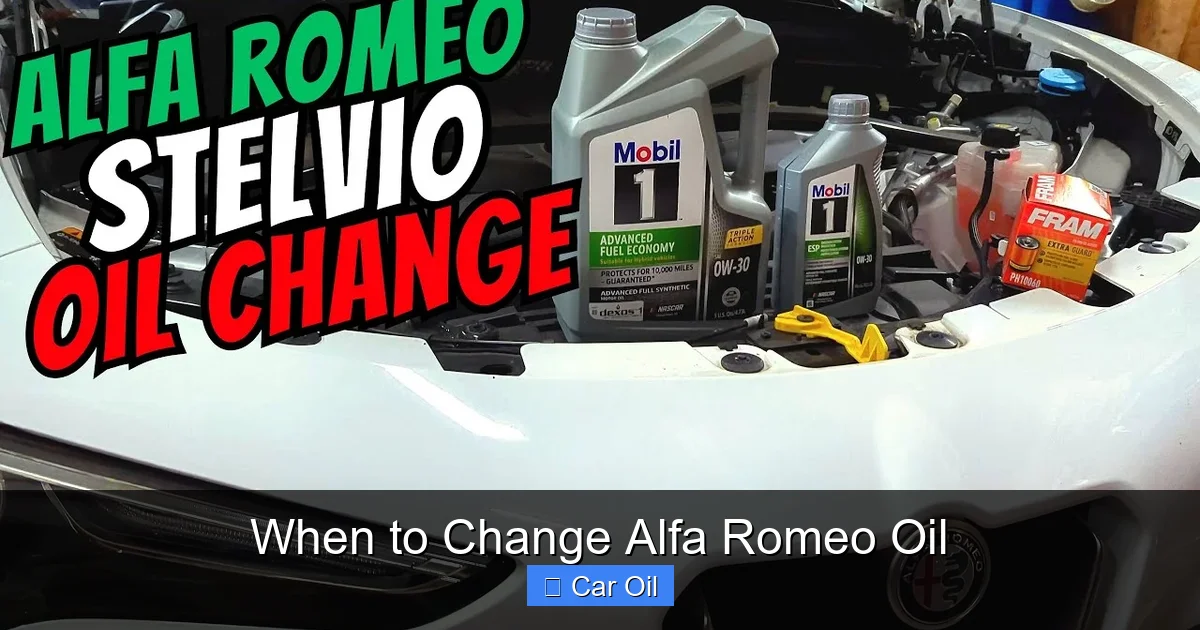
Even with a perfect schedule, it’s vital to recognize the physical signs that your oil is past its prime. These symptoms indicate immediate action is needed. If you notice any of these, change the oil and filter now, and inspect for other issues.
Visual guide about When to Change Alfa Romeo Oil
Image source: cartireinflator.com
Key Warning Signs to Never Ignore
- Exhaust Smoke: Blue or grayish smoke from the tailpipe is a classic sign of oil burning inside the combustion chambers, often due to worn seals or simply severely degraded, thin oil.
- Engine Noise: A healthy engine runs smoothly. Ticking, tapping, or a general increase in mechanical noise (especially on cold starts) can mean the oil is too thin or depleted, and metal parts are hitting each other.
- Poor Performance & Fuel Economy: Thick, sludgy oil creates drag. You might feel a lack of power, sluggish acceleration, or notice you’re filling up the gas tank more often.
- Oil Smell Inside the Car: A distinct burning oil odor inside the cabin usually points to a leak that’s dripping on hot engine parts, which is an urgent safety and maintenance issue.
- Low Oil Level Between Changes: While some consumption is normal (especially in newer, tight-tolerance engines), needing to add a quart or more every 1,000 miles is a red flag for internal wear or a leak. Signs your car needs an oil change often include this crucial check.
- Dirty Oil on the Dipstick: Fresh oil is translucent and amber. If your dipstick shows oil that’s jet black, gritty, or looks like thick sludge, it’s long overdue.
These are not “wait until your next scheduled service” signs. They are emergencies. Continuing to drive with these symptoms risks throwing a rod, blowing a head gasket, or destroying the turbocharger—repairs that can easily exceed $10,000 on an Alfa Romeo.
Choosing the Perfect Oil: It’s Not All the Same
This is where many people, even at some quick-lube shops, get it wrong. Your Alfa Romeo’s engine is a high-revving, high-stress piece of Italian engineering. It demands specific oil. Using the wrong grade or a low-quality oil can cause just as much damage as not changing it at all. The two most critical specifications are viscosity (the “0W-20” number) and certification (the API/ACEA spec).
Decoding the Oil Cap and Manual
Open your oil filler cap. It often lists the required viscosity, such as “SAE 0W-20” or “5W-30.” This is your first, most important clue. The “W” stands for winter, and the number before it indicates cold-weather flow. The second number is the viscosity at operating temperature. Newer Alfa Romeo engines, like the 2.0L turbo in the Giulia and Stelvio, almost universally require 0W-20 full synthetic oil. This thin oil improves fuel economy and protects modern tight-tolerance engines. Older models or certain markets might specify 5W-30. Never deviate from this. The owner’s manual will also specify a required performance standard, typically something like “API SN” or “ACEA C5,” and often a specific OEM specification like “Fiat 9.55535-GS1” or a Ferrari-derived standard. Using an oil that meets these exact specs ensures it has the correct additive package for your engine’s materials, turbocharger (if equipped), and emission systems.
Synthetic is Non-Negotiable
Under no circumstances should you use conventional or even synthetic-blend oil in a modern Alfa Romeo. Full synthetic oil is engineered to withstand extreme heat, resist oxidation and sludge formation for longer intervals, and provide superior wear protection. It’s more expensive per quart, but the cost of an engine rebuild is infinitely higher. Brands like Pennzoil Platinum, Mobil 1, Castrol EDGE, or Valvoline SynPower are excellent choices, provided they carry the correct viscosity and specification. When in doubt, use an online oil selector tool from a reputable brand or consult with a specialist mechanic.
The Cost of an Oil Change: DIY Savings vs. Professional Peace of Mind
Let’s talk numbers. The cost of an Alfa Romeo oil change varies significantly by model, location, and where you have it done. For a Giulia or Stelvio with a 2.0L engine, you’re looking at approximately $120 to $180 at an independent European shop or dealership for a full synthetic oil and filter change. A Quadrifoglio model with its V6 and larger oil capacity will be higher, potentially $200-$250. Doing it yourself can save you $50-$100 in labor, but it comes with important caveats.
The DIY Breakdown: What You Need
To DIY, you’ll need the correct amount of full synthetic oil (typically 5.5 to 6.5 quarts for most models, but check your manual!), the exact OEM or high-quality aftermarket oil filter (Mahle, Mann, or Alfa Romeo part), a new crush washer for the drain plug, a quality socket and wrench for the drain plug and filter, a drain pan, gloves, and ramps or jack stands. The process itself is straightforward: warm the engine, drain the old oil, replace the filter and drain plug washer, refill with new oil, and reset the OLM. The biggest DIY risks are cross-threading or over-tightening the drain plug (which can strip the oil pan threads—a $1,000+ repair), improperly seating the new filter (causing catastrophic leaks), or forgetting to reset the OLM. For a detailed walkthrough on the general process, resources on how to change oil in a car can teach the fundamental steps, but always reference your Alfa’s specific procedures.
Why Professional Service Often Wins for Alfa Romeo
Given the complexity and performance nature of these cars, professional service is highly recommended for most owners. A good independent Alfa Romeo or European specialist will: 1) Use the exact oil and filter specified, 2) Perform a complete multi-point inspection (checking brakes, suspension, coolant, etc.), 3) Properly dispose of the old oil and filter, 4) Reset all maintenance systems correctly, and 5) Provide a service record that helps with resale value. For a specific model like the Stelvio, understanding the cost of an oil change for an Alfa Romeo Stelvio helps you budget for this essential maintenance without surprise. The peace of mind knowing a trained eye looked over your entire car is often worth the premium.
Conclusion: A Simple Habit for Uncompromised Performance
Caring for your Alfa Romeo’s engine is not a mystery. It boils down to respecting the factory schedule, adjusting for your real-world driving, using the perfect oil, and acting immediately on any warning signs. Think of regular oil changes not as an expense, but as the most affordable insurance policy you can buy for a multi-thousand-dollar engine. It’s the one maintenance task that directly, daily, influences that legendary Alfa driving feel—the smooth revs, the instant throttle response, the mechanical symphony. Neglect it, and you’re trading Italian passion for a very expensive, very noisy paperweight. Stay on top of it, and your Alfa will reward you with exhilarating miles for years to come. When in doubt, open your manual, check your Oil Life Monitor, and when the time comes, choose quality parts and oil. Your future self, grinning behind the wheel of a perfectly running Giulia or Stelvio, will thank you.
Frequently Asked Questions
What is the standard oil change interval for a new Alfa Romeo?
For most modern Alfa Romeo models (Giulia, Stelvio, Tonale) under “normal” driving, the factory interval is 10,000 miles or 12 months. However, this is a maximum. If your driving is “severe” (city traffic, short trips, extreme temps), you should change it every 5,000-6,000 miles or 6 months. Always confirm in your specific owner’s manual.
What kind of oil does an Alfa Romeo need?
Your Alfa Romeo requires full synthetic oil with a specific viscosity, most commonly 0W-20 for newer models. The owner’s manual will also list an exact specification (like Fiat 9.55535-GS1). Using the correct grade and specification is critical for turbocharger protection, fuel economy, and engine longevity. The oil cap usually lists the required viscosity.
How do I reset the oil change light on my Alfa Romeo?
The reset procedure is done through the vehicle’s infotainment or driver information display menu. Typically, you turn the ignition to “ON” (without starting), go to “Vehicle Info” or “Service” in the menu, select “Oil Life” and choose “Reset.” The exact steps vary by model year. Never just disconnect the battery. Your owner’s manual provides the precise, step-by-step instructions for your vehicle.
Why is my Alfa Romeo burning oil or smoking from the exhaust?
Blue or gray exhaust smoke is a major red flag indicating oil is entering the combustion chamber. This can be caused by worn piston rings, valve seals, or a failing turbocharger. It can also occur if the oil has become excessively thin due to severe neglect or using the wrong viscosity. This symptom requires immediate diagnosis and an oil change at minimum.
Can I use a regular car oil filter on my Alfa Romeo?
You must use a filter that meets or exceeds the OEM specifications. High-quality brands like Mahle, Mann-Filter, or the genuine Alfa Romeo part are designed for the flow rates and filtration needs of your specific engine. A cheap, low-quality filter can fail, allowing debris into your engine or causing dangerous leaks. Always choose a reputable brand.
What happens if I go too long without changing my Alfa Romeo’s oil?
Oil breaks down over time, losing its ability to lubricate, cool, and clean. Going too long leads to sludge and varnish buildup, which clogs oil passages, causes excessive wear on bearings and camshafts, and can ultimately lead to catastrophic engine failure. In turbocharged engines, coked (burned) oil can destroy the turbo. The repair cost will be tens of thousands of dollars, far exceeding any savings from skipping changes.
