
What Is the Vdc Button on Infiniti

The VDC button on an Infiniti controls the Vehicle Dynamic Control system, which is the brand’s advanced stability and traction control technology. Pressing it temporarily disables these safety aids for specific driving conditions, like being stuck in deep snow or sand. It’s a crucial safety feature, not a performance mode, and should generally remain ON for everyday driving to help prevent skids and loss of control.
Key Takeaways
- VDC is Infiniti’s Stability Control: The VDC system is Infiniti’s comprehensive name for its suite of electronic stability and traction control systems designed to keep you pointed where you steer.
- The Button Disables, It Doesn’t Enable: Pressing the VDC button turns the system OFF. The system is automatically ON whenever you start the car, which is the safest default setting.
- Use it Only When Necessary: Disable VDC only when stuck in mud, snow, or sand where wheel spin is needed to gain momentum, or for specific technical checks like checking if a warning light is functioning.
- A Warning Light Confirms Status: The VDC OFF indicator light on your dashboard will illuminate when you’ve successfully turned the system off. It should go out when you restart the car or press the button again.
- It’s a Safety Net, Not a Driving Style: VDC works behind the scenes to correct oversteer and understeer. Relying on it to compensate for aggressive driving is dangerous; safe driving habits are always primary.
- Part of a Larger System: VDC works in concert with other systems like the Anti-lock Braking System (ABS) and Traction Control System (TCS) to monitor wheel speed, steering angle, and yaw rate.
📑 Table of Contents
- Introduction: That Mysterious Button on Your Infiniti’s Dashboard
- What “VDC” Actually Stands For: Vehicle Dynamic Control
- How to Operate the VDC Button: When to Press and When to Leave It Alone
- What Happens When You Turn VDC Off? The Risks Explained
- VDC vs. Other Systems: Understanding the Acronym Soup
- Troubleshooting: When the VDC Light Comes On
- VDC in the Real World: Practical Driving Scenarios
- Conclusion: Your Co-Pilot is Always Watching
Introduction: That Mysterious Button on Your Infiniti’s Dashboard
You’re sitting in your Infiniti, probably a Q50, Q60, or maybe an older G-series model, and your eyes scan the dashboard. Amid the familiar symbols, one catches your eye: a small icon that looks like a car with squiggly lines underneath it, often accompanied by the letters “VDC.” Next to it is a button. What is it? What does the VDC button on an Infiniti actually do? If you’ve ever been tempted to press it out of curiosity but hesitated, you’re not alone. This button controls one of the most important safety systems in your vehicle, and understanding its function is key to driving your Infiniti confidently and safely.
Think of the VDC system as a silent, hyper-aware co-pilot. It’s constantly watching your car’s behavior—wheel speeds, steering input, engine power—and comparing it to where you’re trying to go. If it detects the car is starting to slide or spin out, it intervenes automatically, often by braking a single wheel or reducing engine power, to help you regain control. The button is your way of telling this co-pilot, “I’ve got this for a moment,” but you should only do that in very specific situations. Let’s dive deep into what VDC is, how it works, and exactly when you should—and absolutely should not—use that button.
What “VDC” Actually Stands For: Vehicle Dynamic Control
More Than Just Traction Control
VDC stands for Vehicle Dynamic Control. While many automakers have their own names—Stability Control (SC), Electronic Stability Program (ESP), or Vehicle Stability Control (VSC)—the core function is largely the same. Infiniti’s VDC is a comprehensive, integrated system. It’s not a single component but a network of sensors and control modules that work together. It builds upon the foundational Anti-lock Braking System (ABS) and Traction Control System (TCS).
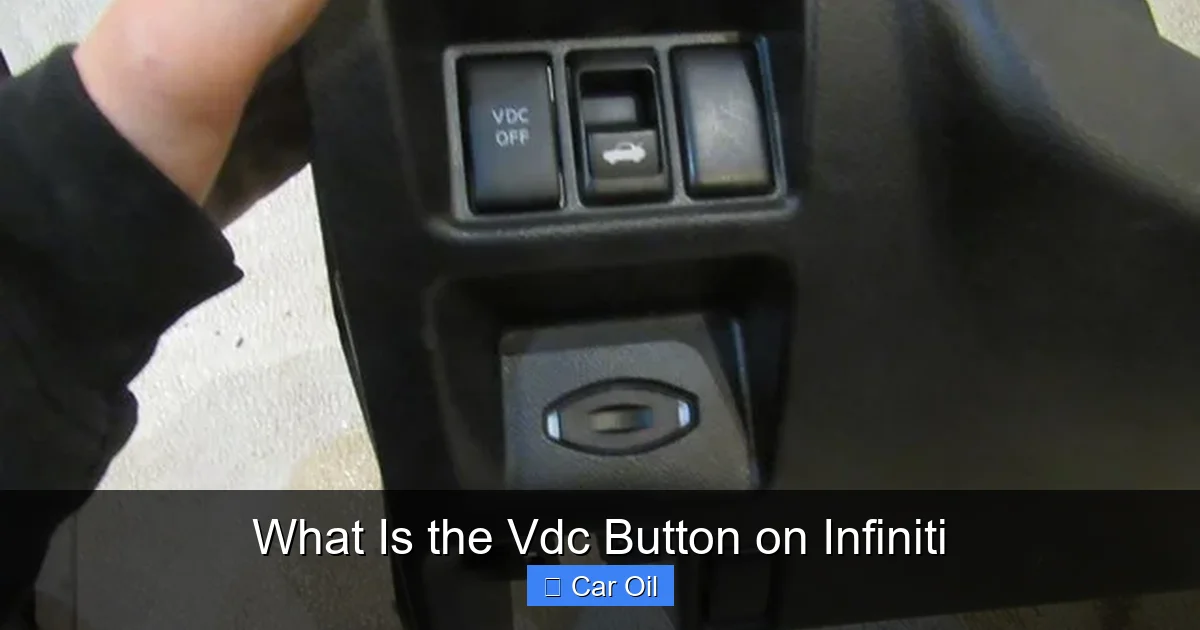
Visual guide about What Is the Vdc Button on Infiniti
Image source: s3.amazonaws.com
Here’s the simple breakdown of what it monitors and controls:
- Steering Angle Sensor: Tells the computer which direction you’re trying to turn the wheel.
- Yaw Rate Sensor: Measures the car’s actual rotation around its vertical axis (how much it’s actually turning or spinning).
- Wheel Speed Sensors: Already used by ABS and TCS, they tell the system if one or more wheels are slipping.
- Lateral G-Force Sensor: Measures side-to-side forces during cornering.
The VDC computer is always comparing your intended path (steering angle) with the car’s actual path (yaw rate). If there’s a significant mismatch—meaning the car is understeering (plowing wide) or oversteering (rear end swinging out)—the system takes corrective action. It can apply brake pressure to an individual wheel to create a stabilizing force and/or signal the engine control unit to reduce throttle. This all happens in a fraction of a second, often before the driver even realizes a loss of traction is occurring.
How to Operate the VDC Button: When to Press and When to Leave It Alone
The Default State: ALWAYS ON
Here is the single most important rule: Your Infiniti’s VDC system is designed to be ON at all times during normal driving. Every time you start the engine, the system performs a self-check and activates. The VDC OFF light on your dash will illuminate briefly as a check, then go out, confirming the system is armed and ready. You do not need to press the button to turn it on; it’s automatic. The button’s sole purpose is to disable the system.
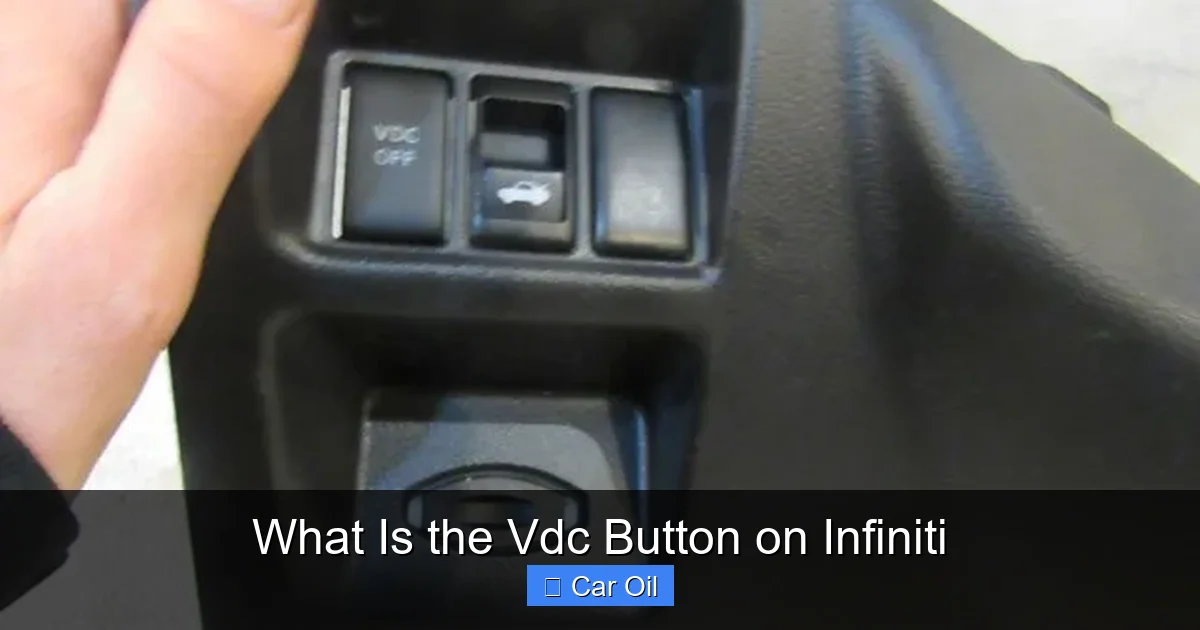
Visual guide about What Is the Vdc Button on Infiniti
Image source: s3.amazonaws.com
The Correct Reason to Disable VDC
So, if it’s always on, why does the button exist? There are a few specific, limited scenarios where turning VDC off is beneficial or necessary:
- Getting Unstuck: This is the primary reason. If your Infiniti is stuck in deep snow, mud, or loose sand, the VDC system (specifically the traction control portion) may interpret the wheel spin as a loss of traction and immediately cut engine power. This can make it impossible to “rock” the car or dig your way out. Temporarily disabling VDC allows the wheels to spin freely, which can help you build momentum to escape.
- Technical Diagnosis: If you suspect a problem with the VDC system itself (e.g., a persistent VDC OFF light, or a VDC warning light that won’t go out), a technician may ask you to turn it off and on to reset the system or to check if a fault is present.
- Specific Motorsport/Off-Road Use: In very controlled environments like a track day or serious off-roading, a skilled driver might disable stability control to allow for a higher degree of vehicle rotation (oversteer) that is part of certain driving techniques. This is not for public roads.
How to Actually Press the Button
To disable VDC, press and release the VDC button. You should see the “VDC OFF” indicator light illuminate solidly on your instrument cluster. This is your confirmation that the system is now disengaged. To re-engage it, simply press the button again. The light should go out. You can also usually re-engage it by restarting the engine.
Practical Example: You’re driving your Infiniti QX60 on a snowy backroad and get stuck in a drift. You try to accelerate, but the car feels like it’s stalling. The wheels are spinning, but the engine power is being chopped by the traction control. Press the VDC button, try to move again. With the system off, the engine power isn’t interrupted, and you might be able to rock the vehicle forward and backward to get free. Once moving on clear pavement, press the button again to re-engage VDC.
What Happens When You Turn VDC Off? The Risks Explained
When you press that button, you are taking a major electronic safety net offline. Your car will behave much like older vehicles without stability control. Here’s what you lose:
Visual guide about What Is the Vdc Button on Infiniti
Image source: i.ytimg.com
- No Correction for Skids: If you enter a corner too fast and the rear end starts to slide out (oversteer), VDC would normally apply braking to the outer front wheel to help straighten the car. Without it, you must correct the skid using steering and throttle inputs alone.
- No Help with Understeer: If you’re turning and the car refuses to turn, pushing wide (understeer), VDC can brake the inner rear wheel to help pivot the car. Without VDC, you’ll just keep going straight.
- Unrestricted Wheel Spin: On acceleration, if the driven wheels lose grip, there will be no engine power reduction. This can lead to fishtailing on rear-wheel-drive Infinitis or just wasted power on all-wheel-drive models.
- Longer Stopping Distances in Some Conditions: While ABS remains active (you cannot turn ABS off), the integrated brake-based stability interventions are gone, which can slightly increase stopping distances during evasive maneuvers on low-traction surfaces.
Critical Warning: Do not turn VDC off for normal driving, sporty driving on public roads, or in wet conditions. You are significantly increasing your risk of a loss of control accident. The system is there to compensate for driver error or unexpected hazards. Disabling it for everyday use is like taking off your seatbelt because you’re a “good driver.” Unforeseen things happen—a patch of black ice, a sudden swerve to avoid debris—and VDC is often the difference between a close call and a collision.
VDC vs. Other Systems: Understanding the Acronym Soup
How VDC Relates to ABS, TCS, and AYC
Infiniti uses a few related acronyms that can be confusing. Here’s how they fit together:
- ABS (Anti-lock Braking System): The oldest of the group. Prevents wheels from locking up during hard braking, allowing you to steer while braking. You cannot disable this.
- TCS (Traction Control System): Prevents wheel spin during acceleration by braking a spinning wheel and/or reducing engine power. This is a core component of VDC. When you disable VDC, you are also disabling TCS.
- VDC (Vehicle Dynamic Control): The umbrella system. It uses the inputs from ABS and TCS, plus the steering and yaw sensors, to manage the car’s stability in both acceleration and cornering.
- AYC (Active Yaw Control): Found on higher-performance Infiniti models like the Q50 Red Sport 400 and Q60 Red Sport 400. AYC is an advanced, torque-vectoring rear differential that can send more power to the outside rear wheel during cornering to help the car rotate. VDC works with AYC, but they are separate systems. AYC is typically always active and cannot be turned off via the VDC button.
Analogy: Think of a car’s safety systems like a team. ABS is the specialist who handles braking emergencies. TCS is the specialist who handles acceleration emergencies. VDC is the team manager who coordinates both specialists, using additional intelligence, to handle overall vehicle stability. The VDC button tells the manager to take a break.
Troubleshooting: When the VDC Light Comes On
If your VDC OFF light is on solidly and you did not press the button, or if a separate “VDC” or “SLIP” warning light illuminates on your dash, it means the system has detected a fault and has automatically disabled itself for your protection. This is a warning, not a suggestion to ignore it. Common causes include:
- Faulty Wheel Speed Sensor: The most common culprit. A bad sensor means the computer can’t accurately monitor wheel speeds, so it disables the entire system.
- Steering Angle Sensor Calibration: If the sensor gets out of alignment (sometimes after a wheel alignment or steering component work), the system can’t tell where the wheels are pointed.
- Faulty Yaw Rate Sensor: A problem with the gyroscope-like sensor that measures rotation.
- Bad Wiring or Connections: Corrosion or damage to the wiring harnesses to any of the sensors.
- Low Battery Voltage: A weak battery can sometimes cause electronic system faults.
What to Do: If the VDC warning light is on, your first step is to check for the simple things. Ensure the VDC button wasn’t accidentally pressed. If that’s not it, you need to have the vehicle scanned by a professional mechanic or an Infiniti dealer. They will read the trouble codes from the VDC/ABS control module, which will point to the specific faulty component (e.g., “Right Front Wheel Speed Sensor Circuit”). Driving with a disabled VDC system is possible but not advisable, as you’ve lost a critical layer of safety. For context on dashboard warnings, our article on the red car symbol on a Nissan dashboard explains how different manufacturers use similar iconography for critical alerts.
VDC in the Real World: Practical Driving Scenarios
Wet Roads and Hydroplaning
On a rainy day, water can build up between your tires and the road, causing hydroplaning. VDC can help slightly by braking a wheel that loses traction, but it cannot restore physical contact with the road. The best defense is slowing down and proper tire tread depth. However, if you begin to feel a slight slide, VDC’s subtle brake intervention can help you regain a sense of control better than fighting the slide without it.
Winter Driving and Ice
This is where VDC truly shines. On icy corners, the car’s tendency is to continue straight (understeer) or, in rear-wheel-drive models, have the rear end swing out (oversteer). VDC constantly works to counteract this. For most drivers on winter roads, leaving VDC ON is the safest choice. The one exception is when you’re stuck on a patch of ice and need to rock the car—then a brief disable might help.
Emergency Evasive Maneuvers
Imagine a child runs into the street. You swerve violently to avoid them. Without VDC, your car might plow wide or spin. With VDC, the system detects the rapid change in steering and yaw, and will selectively brake wheels to help you “aim” the car where you’re steering, potentially avoiding a worse collision. This is a moment where having VDC active is invaluable.
Performance Driving on Track
On a closed racetrack, expert drivers may turn VDC off (or to a “sport” mode if available) to allow for controlled slides and to feel the car’s natural balance. This is for professionals only. On the street, this is dangerous and irresponsible. The system is designed for safety, not for enabling reckless driving. For those interested in vehicle dynamics, comparing it to systems like the Super Track Pack button on a Dodge Charger shows how different brands offer varying levels of electronic intervention for spirited driving.
Conclusion: Your Co-Pilot is Always Watching
The VDC button on your Infiniti is your interface to one of the most sophisticated safety systems ever put into a consumer vehicle. Its default state—ON—is there for a reason: to act as an ever-present guardian against the physics of a loss of control. Understanding that the button disables this guardian, rather than activates it, is the fundamental takeaway. Use that knowledge wisely. Keep VDC engaged for 99% of your driving. Only consider the button when you’re truly stuck and need wheel spin to escape, or when directed by a professional for diagnostic purposes. Respect the technology, drive defensively, and let your Infiniti’s Vehicle Dynamic Control do its job of helping you arrive safely. For more on your vehicle’s specific controls, exploring resources like our guide to the Hold button on a Toyota Camry can further demystify the various functions on your car’s dash and console.
Frequently Asked Questions
Is it bad to drive with VDC off all the time?
Yes, it is significantly dangerous. Driving with VDC off removes a critical electronic stability aid that helps prevent skids and spins during emergency maneuvers or on slippery surfaces. You are solely responsible for correcting any loss of traction, which is much more difficult and increases accident risk.
Will turning off VDC save me gas?
No. The VDC system only intervenes when it detects a problem. It does not constantly sap power during normal, stable driving. Any fuel savings from disabling it would be negligible and not worth the safety trade-off. For actual fuel efficiency tips, understanding factors like what affects gas mileage on a Nissan Rogue is more relevant.
Can VDC cause my car to feel jerky or hesitant?
It can. When VDC/Traction Control intervenes to stop wheel spin during hard acceleration, you may feel a slight surge or pulsing as the system brakes the slipping wheel and reduces engine power. This is normal and indicates the system is working. If the intervention feels extreme or happens under light acceleration, a sensor may be faulty.
What’s the difference between VDC and the snow button?
They are different systems. The VDC button disables stability and traction control. A “snow” or “snow mode” button (if your Infiniti has one) typically modifies the throttle response and transmission shift points for smoother starts in low-traction conditions, but it keeps all the stability and traction control systems active.
My VDC light is on, but I didn’t press the button. What now?
A persistent VDC OFF or VDC warning light without you pressing the button indicates a system fault. The most common cause is a faulty wheel speed sensor. You should have your vehicle scanned for trouble codes by a mechanic as soon as possible. Do not ignore it, as you are driving without a key safety system.
Should I turn off VDC when using snow chains?
Generally, no. Modern stability and traction control systems work well with chains. However, in very deep, loose snow where chains are bouncing and creating inconsistent wheel speed signals, a system fault might occur. If you notice the VDC system constantly cutting power and preventing movement despite the chains, a brief disable might be necessary to get moving. Re-engage it as soon as you’re on a packed surface.
