
Can I Put Synthetic Oil in My Car?

Yes, in almost all cases, you can put synthetic oil in your car. Modern synthetic motor oils are engineered to meet or exceed the standards required by virtually all gasoline and diesel engines. The key is to use the correct viscosity grade (like 5W-30) and service specification (like API SP) that your vehicle’s manufacturer calls for. Always check your owner’s manual first, but for the vast majority of cars on the road today, synthetic oil is not only safe but offers superior protection and performance compared to conventional oil.
It’s a simple question that sparks a lot of debate in driveways and online forums: “Can I put synthetic oil in my car?” The short answer is almost always a confident yes. But the longer, more helpful answer dives into the “why,” the “how,” and the important details that ensure you’re making the best, safest choice for your specific engine. This guide will walk you through everything you need to know, from the science behind synthetic lubricants to practical tips for making the switch, so you can feel completely confident the next time you’re at the oil change counter.
Key Takeaways
- Compatibility is Key: Synthetic oil is safe for most modern cars, but you must use the viscosity (e.g., 5W-20, 10W-40) and specification (e.g., API SN, dexos1) your owner’s manual specifies.
- Superior Protection: Synthetic oil provides better extreme temperature protection, resists breakdown longer, and can improve fuel efficiency and engine cleanliness.
- Older Cars Are Usually Fine: Modern synthetic formulations are safe for classic and high-mileage engines; specialized “high-mileage” synthetics even help with seal conditioning and reducing consumption.
- Mixing Is a Short-Term No-No: While a one-time top-off with conventional oil won’t ruin a synthetic system, consistently mixing the two reduces the performance benefits of synthetic oil.
- Switching Is Simple: You can typically switch from conventional to synthetic oil at your next regular oil change with no special preparation needed.
- Viscosity Matters More Than Type: The “0W-20” or “5W-30” number is more critical to follow than whether the oil is synthetic or conventional. Use the grade your manual requires.
- Consult Your Manual First: Your owner’s manual is the ultimate authority. If it approves synthetic oil (most do), you’re good to go. Some manufacturers even require it for certain engines.
📑 Table of Contents
What Is Synthetic Oil, Anyway?
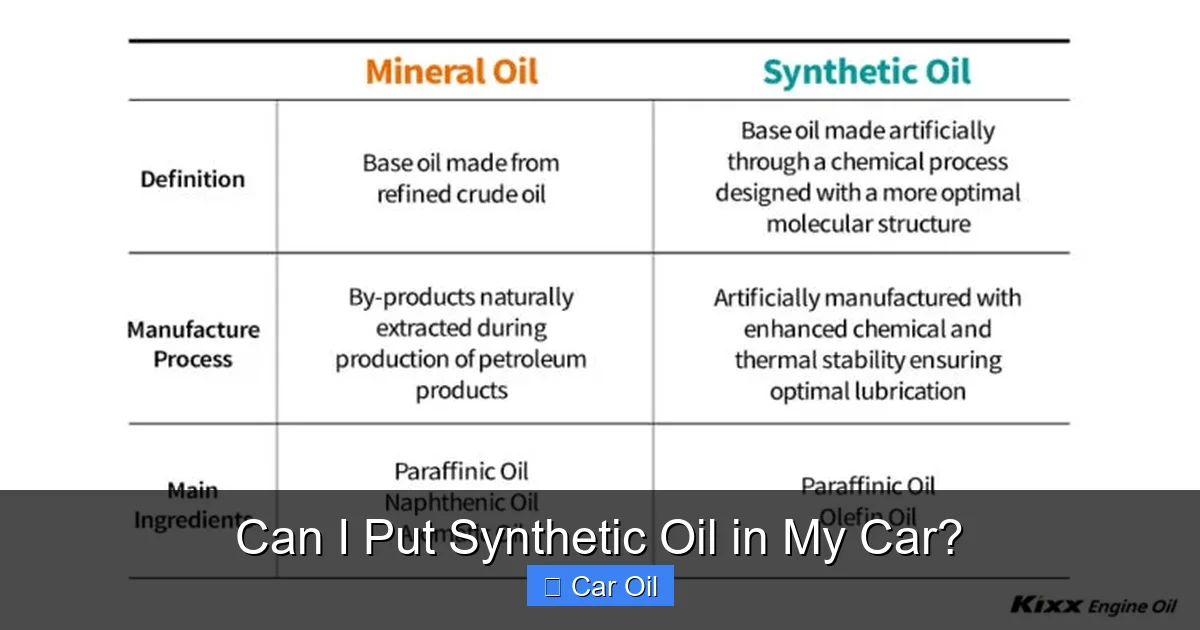
To understand if you can use it, you first need to know what it is. The name “synthetic” doesn’t mean it’s fake or unnatural. It refers to how the base oil is created. Conventional motor oil is refined from crude oil, a natural resource. This refining process separates the hydrocarbons but leaves some impurities and a mix of different molecular shapes and sizes.
The Molecular Difference
Synthetic oil is built from the ground up in a laboratory. Chemists start with a base material, like natural gas or crude oil, and use a process called the Fischer-Tropsch synthesis to create pure, uniform molecules. Think of it like building with perfectly shaped LEGO bricks versus using a pile of mixed, irregular gravel. These uniform, designer molecules can be engineered to be extremely stable, resistant to heat, and slippery—exactly the properties you want in an engine lubricant. This purity and uniformity are the source of synthetic oil’s legendary performance.
Full synthetic oil is this pure, engineered base stock plus a precise cocktail of high-performance additives. These additives include detergents to keep the engine clean, dispersants to hold sludge in suspension, anti-wear agents, and antioxidants to prevent oil breakdown. The result is a lubricant that is simply more capable than its conventional counterpart.
Is My Car Compatible with Synthetic Oil?
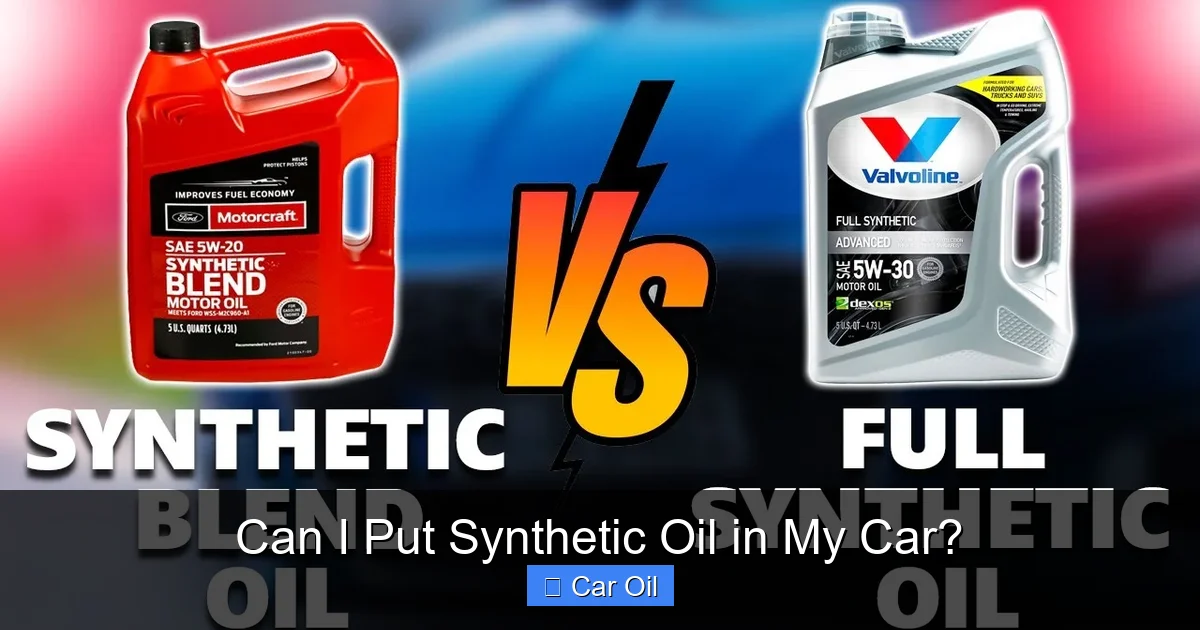
This is the heart of the matter. For vehicles built in the last 20-30 years, the answer is almost certainly yes. Modern engines, with their tighter tolerances, turbochargers, and complex emission systems, are often designed with synthetic oil in mind. Many manufacturers’ “severe service” or “premium” recommendations explicitly call for synthetic or synthetic-blend oil.
Visual guide about Can I Put Synthetic Oil in My Car?
Image source: i.ytimg.com
Check the Owner’s Manual: Your Ultimate Authority
Before you do anything, open your glove compartment and find the owner’s manual. This little book is the single most important document for your car’s care. Look for the “Lubricant Recommendations” or “Fluids” section. It will specify the required viscosity (e.g., 0W-20, 5W-30) and the API service classification (e.g., API SP, SN) or manufacturer-specific standard (e.g., dexos1 for GM, Ford WSS-M2C947-A for Ford).
If it lists a specification like “API SP,” that means any oil—conventional or synthetic—that meets that standard is acceptable. However, if it says “requires synthetic oil” or lists a specification that is only met by synthetics (like certain dexos1 gen 3 requirements), then you must use synthetic. The great news is that all major oil brands produce synthetics that meet these common standards. If you’re ever unsure about what kind of oil your specific model needs, our detailed guide on what kind of oil to put in your car can help you decode those codes and requirements.
The Myth of “Seal Swell” and Leaks
This is the most persistent myth about switching to synthetic oil in an older car. The story goes that synthetic oil is so “slippery” and has such different properties that it will cause the seals and gaskets in an older engine—which may have become a bit brittle and shrunken from years of exposure to conventional oil—to leak. This is largely false. Modern synthetic oils are formulated to be fully compatible with all engine seal materials. If an old seal is already compromised and leaking, it will eventually fail regardless of the oil type. The leak might become noticeable after a switch simply because the synthetic oil is doing a better job of cleaning out sludge that was previously plugging a small leak. The oil didn’t cause the leak; it revealed a pre-existing problem.
The Real Benefits: Why You’d Want To
Assuming compatibility isn’t an issue, why choose synthetic? The benefits are significant and tangible.

Visual guide about Can I Put Synthetic Oil in My Car?
Image source: bestsowftware.com
Longer Drain Intervals
Synthetic oil’s superior resistance to thermal and oxidative breakdown means it maintains its protective properties for much longer than conventional oil. While the traditional 3,000-mile rule still applies to conventional oil, most modern vehicles with synthetic oil can go 7,500 to 10,000 miles, or even 12 months, between changes. Some manufacturers, like those using certain GM dexos1 or Toyota/Lexus 0W oils, specify intervals up to 10,000 miles. This saves you time, money, and reduces waste oil. Always follow your manufacturer’s recommended interval, which you can find in your owner’s manual.
Superior Extreme Temperature Protection
In cold weather, a 0W-20 synthetic oil flows to critical engine parts much faster than a conventional 5W-30 at startup, reducing wear during the most damaging period of an engine’s life. In extreme heat, synthetic oil’s molecules are much more resistant to thinning out and losing their viscosity, maintaining a crucial protective film between moving metal parts when you need it most. This is a huge advantage for turbocharged engines, which generate immense heat.
Cleaner Engines & Better Fuel Economy
Synthetic oils contain more potent and longer-lasting detergent and dispersant packages. They do a vastly superior job of keeping pistons, rings, and other internal components clean by suspending combustion byproducts and preventing them from forming harmful deposits. A cleaner engine is a more efficient engine. Additionally, the reduced friction from the uniform molecular structure can lead to a modest but measurable improvement in fuel economy—often in the range of 1-2%, which adds up over thousands of miles.
Debunking Common Synthetic Oil Myths
Let’s clear the air. There are several stubborn myths that prevent some drivers from making the switch.
Visual guide about Can I Put Synthetic Oil in My Car?
Image source: news.kixxoil.com
“Synthetic Oil is Too Slippery and Will Damage My Engine”
This is the flip side of the “leak” myth. The idea is that synthetic oil’s lower friction could cause parts to wear differently or that it’s “too slippery” for a “break-in” period. This is not true for modern engines. All engines from the factory are assembled with advanced lubricants, and the break-in period is managed by the engine control unit (ECU) and the oil’s additive package, not by the base oil’s “slipperiness.” For a brand-new engine, always follow the manufacturer’s break-in procedure and oil type recommendation. For a used engine, synthetic oil provides the same or better anti-wear protection.
“I Can’t Switch Back to Conventional Oil Once I Start Using Synthetic”
This is a complete myth. There is no chemical “lock-in” that occurs. You can switch back and forth between synthetic and conventional oil at any time. The only caveat is that you will lose the performance benefits of synthetic as soon as you switch back. If you’re budgeting, using conventional oil for a few changes is fine, but don’t expect the same longevity or protection. Our article on putting regular oil in a car after using synthetic
“Synthetic Oil is a Gimmick and Not Worth the Extra Cost”
This depends on your perspective. If you only plan to keep your car for a short time and do short, cold trips, the cost difference might seem hard to justify. However, when you factor in longer drain intervals (often 2-3x longer), potential fuel savings, and the incalculable benefit of extended engine life and reduced wear, synthetic oil often pays for itself. For anyone planning to keep their car long-term, it’s one of the best investments you can make.
Synthetic Oil for Older and High-Mileage Cars
The question “Can I put synthetic oil in my old car?” is a very common one. The answer, with a caveat, is yes. The caveat is choosing the right synthetic oil.
Standard Synthetic vs. High-Mileage Synthetic
Standard full synthetic oil is perfectly safe for an older engine. However, engines with over 75,000 or 100,000 miles often have slightly worn seals and may experience minor oil consumption or leaks. This is where “High-Mileage” synthetic oil comes in. These formulations contain special seal conditioners—additives that help soften and swell dried-out rubber seals and gaskets, potentially reducing or stopping minor leaks and consumption. They also often contain extra anti-wear additives and detergents tailored for engines that may have some sludge or deposit buildup. If your older car is running well and not burning or leaking oil, standard synthetic is fine. If you notice a small drip or the oil level dropping between changes, a high-mileage synthetic is a smart choice. You can learn more about the specific pros and cons in our piece on using synthetic oil in a high-mileage car.
A Word on “Classic” or Very Old Cars
For truly classic cars (pre-1990s) with original, non-updated seals and very loose tolerances, the story can be slightly different. Some restorers prefer to use a high-quality conventional oil or a vintage-formula synthetic that mimics the properties of oils from the era. The reason is that extremely old, original seals made with different rubber compounds might not react well to modern additive packages. For a daily-driven car from the 1990s or early 2000s, modern synthetic is almost certainly fine. For a Concours d’Elegance show car with original seals, consult a specialist. For the vast majority of “older” cars on the road today, synthetic is a benefit, not a risk. Our article on putting synthetic oil in an old car covers this nuance in depth.
How to Switch to Synthetic Oil Safely
Making the switch is one of the easiest maintenance tasks you can do. There is no special “flush” or preparation required.
The Simple Process
1. Choose the Right Oil: Based on your owner’s manual, buy the correct viscosity and specification (API SP, dexos1, etc.). If you have high mileage, consider a high-mileage variant.
2. Choose the Right Filter: Use a high-quality oil filter designed for longer drain intervals. A cheap filter can negate the benefits of good oil.
3. Drain and Replace: Perform a standard oil change. Let the old oil drain completely. Replace the drain plug with a new washer if recommended.
4. Refill with Synthetic: Pour in the exact amount of new synthetic oil specified in your manual.
5. Check the Level: Start the engine, let it run for a minute, turn it off, and check the dipstick. Top off if necessary.
6. Dispose of Old Oil Properly: Take your used oil and filter to a designated recycling center or auto shop.
That’s it. Your engine is now running on synthetic oil. You do not need to change the oil again sooner than your normal interval. The next time you change it, you’ll simply repeat the process with synthetic again.
A Special Note on “Can I Put a Whole Quart of Oil in My Car?”
This is a common question for people topping off. The answer is: you should never just dump in a whole quart without checking the dipstick first. The correct procedure is to check the oil level when the engine is cool, on level ground. Add about half a quart, wait a minute, re-check, and add more only if needed to reach the “full” mark. Overfilling by a quart or more can cause aeration (foaming), which leads to serious engine damage. Always top off carefully. Our guide on adding a whole quart of oil explains the proper technique in detail.
The Bottom Line: Should You Do It?
For the overwhelming majority of drivers, putting synthetic oil in your car is not just a safe option—it’s the best option. The performance advantages in protection, cleanliness, and longevity are well-documented and significant. The initial cost difference is quickly offset by longer service intervals and the priceless benefit of a healthier, longer-lasting engine.
The only real exception would be a very old, unrestored vehicle with original, unknown seals where a conservator might recommend a specific non-synthetic oil. For your daily driver, commuter car, or family SUV, synthetic oil is a clear winner. The decision isn’t “if” you can use it, but “why wouldn’t you?” It’s a straightforward upgrade that pays dividends every time you start your engine.
Frequently Asked Questions
Can I put synthetic oil in any car?
Almost all cars can use synthetic oil, but you must always use the specific viscosity (like 5W-30) and specification (like API SP) listed in your owner’s manual. Using the wrong grade, even if synthetic, can cause damage.
Will switching to synthetic oil damage my older engine’s seals?
No. Modern synthetic oils are fully compatible with all engine seal materials. If a seal leaks after a switch, it was likely already failing; the cleaner synthetic oil simply removed sludge that was temporarily plugging the leak.
Is synthetic oil really worth the extra money?
Yes, for most drivers. The longer drain intervals (often 7,500-10,000 miles), improved fuel economy, and superior engine protection typically offset the higher per-quart cost over the life of the vehicle.
How often should I change my oil if I use synthetic?
Follow your vehicle manufacturer’s recommended interval in the owner’s manual. This is often 7,500 to 10,000 miles or 12 months for synthetic, but it varies by model and driving conditions.
Can I mix synthetic and conventional oil in an emergency?
Yes, a one-time top-off with conventional oil in a synthetic system will not harm your engine. However, to maintain the full benefits of synthetic oil, you should change back to full synthetic at your next service.
Can I use synthetic oil in my motorcycle?
This is a critical distinction. Car engine oil and motorcycle oil have different additive packages, especially for wet clutches. Never use car oil in a motorcycle with a wet clutch unless it is explicitly labeled as meeting motorcycle standards (like JASO MA/MA2). Our article on putting car oil in a motorcycle explains the important differences.
