
How Do You Know If Your Toyota Hybrid Battery Is Dying?

Your Toyota hybrid battery doesn’t fail suddenly without warning. It gives clear signs like poor fuel economy, warning lights, and unusual engine behavior. Ignoring these signs leads to a costly tow and replacement. This guide helps you recognize the symptoms early, understand your diagnostic options, and know exactly what steps to take next to protect your investment and avoid being stranded.
Key Takeaways
- Reduced Fuel Economy is the First Red Flag: A significant drop in MPG is often the earliest and most noticeable symptom of a weakening hybrid battery, as the gasoline engine works harder to compensate.
- Warning Lights Are Your Car’s Cry for Help: The check engine light, hybrid system warning, or a specific battery symbol on your dash indicates the computer has detected a problem that needs immediate professional diagnosis.
- Strange Noises and Behavior Signal Stress: Listen for the gasoline engine revving high at low speeds or running more often than usual. These are signs the hybrid system is struggling to balance power.
- Diagnostics Require Specialized Tools: You cannot properly test a high-voltage hybrid battery with a standard multimeter. A professional scan tool that reads the battery’s internal cell data is essential for an accurate assessment.
- Replacement is a Major Investment: A new Toyota hybrid battery pack is expensive, but remanufactured or used options with good warranties can offer significant savings. Always get a firm quote before proceeding.
- Prevention Through Careful Driving & Maintenance: Avoiding extreme temperatures when possible, ensuring your 12V auxiliary battery is healthy, and following Toyota’s service recommendations can extend your hybrid battery’s life.
- A Dead 12V Battery Can Mimic Hybrid Failure: A weak auxiliary battery can cause hybrid system warnings and strange behavior. Always rule out a simple 12V battery issue first, as it’s a much cheaper and easier fix.
📑 Table of Contents
- Introduction: The Silent Heart of Your Toyota Hybrid
- Section 1: The Obvious and Not-So-Obvious Symptoms of a Failing Hybrid Battery
- Section 2: Understanding Why Hybrid Batteries Die: The Science of Degradation
- Section 3: How to Diagnose a Suspected Hybrid Battery Issue
- Section 4: What Are Your Options? Repair, Rebuild, or Replace?
- Section 5: Proactive Care: How to Maximize Your Hybrid Battery’s Lifespan
- Section 6: The Bottom Line: A Decision Guide for the Toyota Hybrid Owner
- Conclusion: Knowledge is Power (and Savings)
Introduction: The Silent Heart of Your Toyota Hybrid
You love your Toyota Prius, Camry Hybrid, or RAV4 Hybrid for its smooth, quiet ride and fantastic fuel economy. That magic is powered by a sophisticated duo: a gasoline engine and a high-voltage hybrid battery pack. This battery isn’t like the simple 12-volt battery that starts your car and powers the radio. It’s a complex, high-energy system that works in constant harmony with the engine, storing and releasing electricity to maximize efficiency. When this critical component begins to fail, it doesn’t just leave you stranded like a dead 12V battery might. It slowly robs you of the very reason you bought the car: outstanding fuel economy and seamless performance. The key is knowing the early whispers of trouble before they become a roar of expensive failure.
Understanding the signs of a dying Toyota hybrid battery is crucial for any hybrid owner. Unlike a traditional car, you might not see obvious symptoms like a slow crank. Instead, the clues are subtler, woven into the car’s daily behavior and its digital messages. This guide will walk you through every telltale sign, from the subtle to the severe. We’ll explain what’s happening under the hood (or more accurately, under the rear seat or in the trunk), how to get a proper diagnosis, and what your options are when the time comes. Your hybrid battery is a significant part of your car’s value and function—knowing how to care for it and recognize its decline is one of the most important aspects of hybrid ownership.
Section 1: The Obvious and Not-So-Obvious Symptoms of a Failing Hybrid Battery
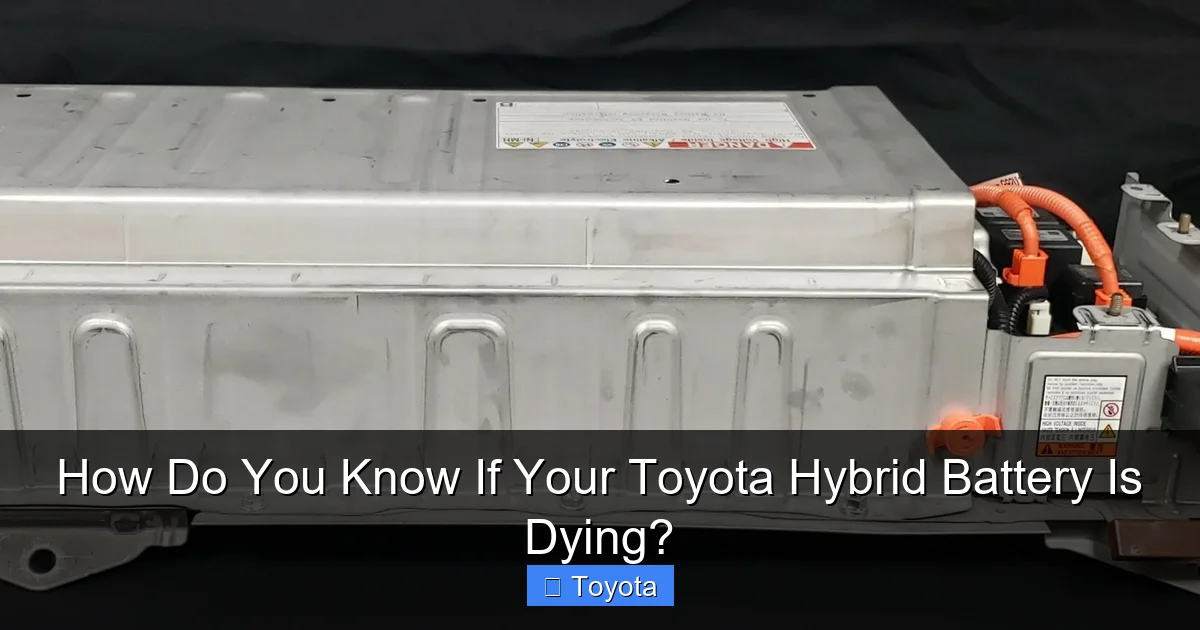
A failing hybrid battery pack often announces itself through a combination of driving dynamics, fuel economy, and electronic warnings. Your car’s computer is constantly monitoring the health and voltage of each individual cell within the pack. When it detects an imbalance or a weak cell, it tries to compensate, and you feel the results. Pay close attention to these changes.
Visual guide about How Do You Know If Your Toyota Hybrid Battery Is Dying?
Image source: exclusivelyhybrid.com
1.1. The Most Common Symptom: Drastic Drop in Fuel Economy (MPG)
This is almost always the first and most noticeable sign. You know your car’s typical MPG. If you’re suddenly making the same commute but your fuel gauge is dropping much faster, the hybrid battery is the prime suspect. A healthy battery can quickly store energy from regenerative braking and provide a strong electric boost. A weak battery cannot hold a charge effectively, so it can’t assist the engine as much. The gasoline engine has to pick up the slack, running more often and harder, which burns more fuel. If your Prius has gone from a consistent 50 MPG to 35-40 MPG without a change in driving conditions, it’s a clear cry for help from the hybrid system.
1.2. Warning Lights Illuminate the Dashboard
Your Toyota is equipped with sophisticated monitoring systems. When it detects a problem with the hybrid battery’s performance, it will alert you. The most common warnings are:
- The Check Engine Light: This is a generic warning. A specific diagnostic trouble code (DTC) related to the hybrid battery will be stored. Never ignore this light, especially if paired with other symptoms.
- The Hybrid System Warning Light: This is a more direct alert, often depicted as a battery icon or the word “HYBRID” in a warning color (yellow or red). This means the computer has detected a fault in the high-voltage system. A red light usually indicates a severe issue, and the car may default to a limited “limp mode” to protect the battery.
- The “Service Hybrid System” Message: This appears on the multi-information display. It’s a clear instruction to have the hybrid system inspected by a professional.
Any of these lights, especially when combined with poor performance, means you need a diagnostic scan immediately. It’s important to note that a failing 12V auxiliary battery can sometimes trigger these hybrid system warnings. That’s why a proper diagnosis is critical to pinpoint the true source. If you see these lights, your first step is to check the health of your standard 12V battery, as a simple issue there can sometimes cause confusing hybrid alerts.
1.3. Unusual Engine and Vehicle Behavior
Because the hybrid system’s job is to seamlessly blend electric and gasoline power, when it fails, the balance is disrupted. You’ll notice this in how the car drives:
- The Gas Engine Runs More, and at Strange Times: You’ll hear and feel the gasoline engine starting up and running even at low speeds where it would normally be silent in EV mode. It might rev higher than expected when you accelerate gently.
- Loss of Power and “Limp Mode”: In more advanced stages of failure, the car’s computer may engage a protective mode. It will restrict the use of the hybrid battery to prevent damage, resulting in very sluggish acceleration, poor performance, and the gasoline engine running almost constantly. This is the car’s way of getting you home or to a shop before complete failure.
- Strange Noises: A failing battery can cause the hybrid system’s voltage inverter or other components to work overtime, sometimes producing a whining, buzzing, or clicking sound that wasn’t there before.
- The Car Feels “Heavier”: Without the electric motor’s assist, the car simply lacks its usual peppy, responsive feel. Merging onto the highway or climbing hills becomes a laborious task for the gasoline engine alone.
1.4. Inability to Start or Charge (The Final Stage)
This is the point of complete failure. You might turn the key or push the start button and hear a rapid clicking sound from the 12V battery area (which is separate), but the hybrid system won’t activate. The “Ready” light may not come on, or the car may start the engine briefly and then shut down. In some cases, the high-voltage battery pack may have dropped so low that it cannot engage at all. This often results in a tow truck call. At this stage, the battery is typically beyond simple repair and requires replacement or a full rebuild.
Section 2: Understanding Why Hybrid Batteries Die: The Science of Degradation
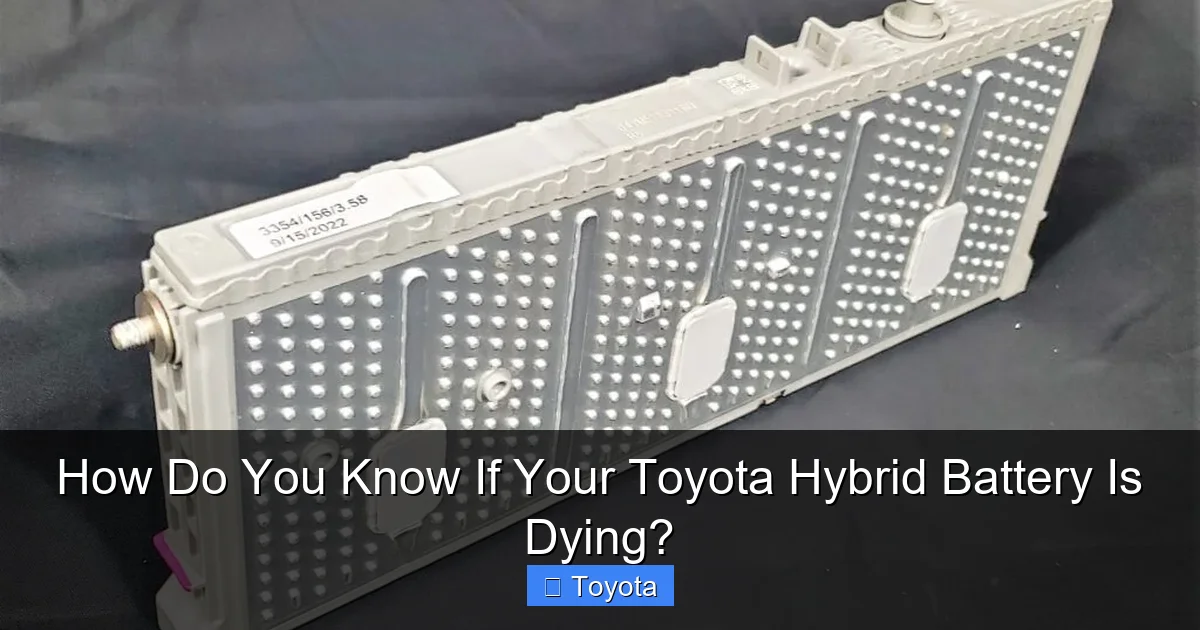
To truly understand the symptoms, it helps to know why your Toyota hybrid battery ages. It’s not a single unit that “dies” like a 12V battery. It’s a pack made of many individual battery cells (usually nickel-metal hydride or lithium-ion) wired together. The overall health of the pack is only as strong as its weakest cell. Over time, these cells degrade through normal use and environmental stress.
Visual guide about How Do You Know If Your Toyota Hybrid Battery Is Dying?
Image source: exclusivelyhybrid.com
2.1. The Culprit: Cell Imbalance
The most common cause of failure is cell imbalance. Think of the battery pack like a team of runners tied together with a rope. If one runner gets tired (loses capacity), the whole team is slowed down. The hybrid battery management system constantly works to balance the charge across all cells. As cells age at slightly different rates, the system can eventually no longer compensate. A weak cell holds less charge and reaches its voltage limits faster, forcing the system to limit the entire pack’s performance to protect that weak cell. This is what causes the reduced power and fuel economy.
3.2. Factors That Accelerate Degradation
- Heat: This is the number one enemy. Batteries generate heat during charging and discharging. Prolonged exposure to high ambient temperatures (think hot climates or a car parked in the sun daily) accelerates the chemical reactions that degrade the cells. That’s why battery packs are often located in areas with some airflow, like under the rear seat or in the trunk.
- Deep Discharges: While the system is designed to prevent the high-voltage pack from fully discharging, repeatedly running the battery to its absolute minimum state of charge (e.g., driving in mountain regions with constant heavy use) stresses the cells.
- High Charge Cycles: The more you use the battery, the more cycle life it consumes. City driving with constant stop-and-go actually uses the hybrid system more than highway driving, leading to more charge/discharge cycles over time.
- Age and Calendar Life: Even with perfect care, the chemical materials inside the cells degrade over calendar years. Most Toyota hybrid batteries are designed to last 8-10 years or 100,000-150,000 miles, which aligns with the typical warranty period.
- Faulty 12V Auxiliary Battery: A weak 12V battery can cause the hybrid system to malfunction. The computer that manages the high-voltage system needs a stable 12V power supply. If the 12V battery is sagging, it can cause erroneous readings and put the hybrid system into a protective, low-performance state. Always rule this out first.
Section 3: How to Diagnose a Suspected Hybrid Battery Issue
You’ve noticed the symptoms. Now what? Diagnosis is critical. Guessing and replacing parts is an expensive gamble. Here is the correct, step-by-step diagnostic process.
Visual guide about How Do You Know If Your Toyota Hybrid Battery Is Dying?
Image source: i.ytimg.com
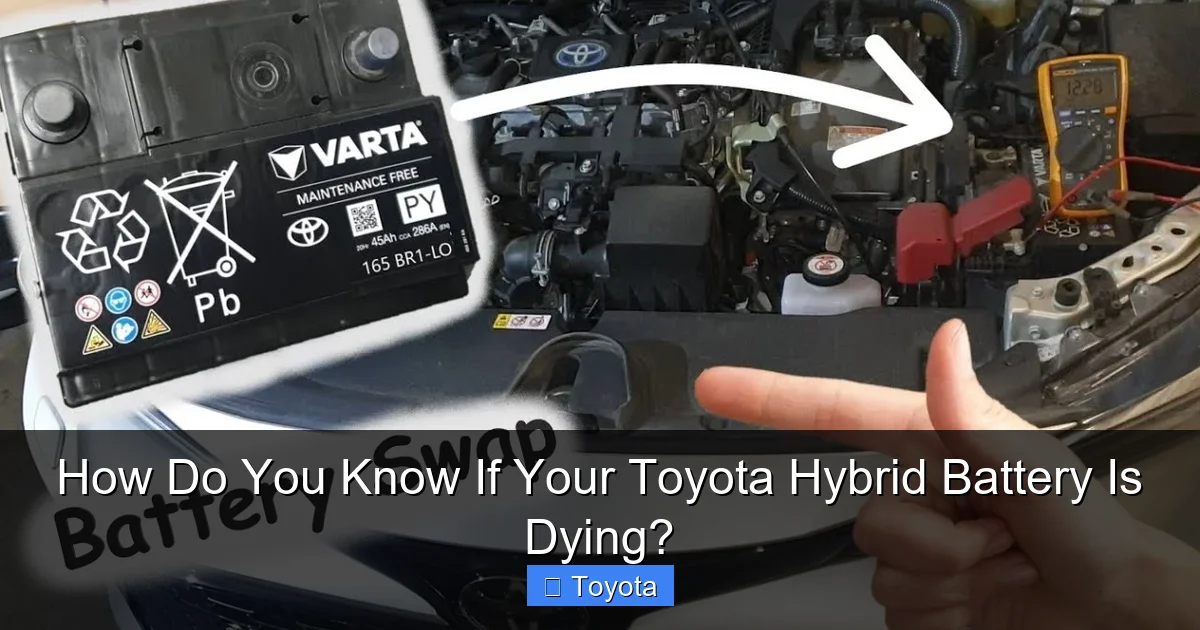
3.1. Step One: The Simple, Free 12V Battery Check
Before you spend a dime on hybrid-specific diagnostics, you must eliminate the 12V auxiliary battery as the culprit. This is the small, conventional lead-acid (or AGM) battery that powers all your car’s computers, lights, and accessories when the hybrid system is off. A weak 12V battery can cause the exact same warning lights and strange behavior as a failing high-voltage pack. Use a standard multimeter to check its voltage. A healthy, fully charged 12V battery should read about 12.6 volts. Anything below 12.4 volts is weak, and below 12.0 volts is discharged. Many auto parts stores will test your 12V battery for free. If it’s old or weak, replace it first and clear any codes. The problem may vanish. This is a crucial first step that saves thousands in unnecessary hybrid battery replacements.
3.2. Step Two: The Professional Hybrid Battery Scan
This is non-negotiable for an accurate diagnosis. You cannot properly test a high-voltage hybrid battery with a basic OBD2 scanner from an auto parts store. Those scanners read generic engine codes but cannot access the proprietary data of the hybrid battery management system. You need a professional-grade scan tool (like a Toyota Techstream, Autel, or Launch scanner with hybrid software) that can communicate with the battery’s internal computer.
A qualified technician will:
- Connect the advanced scanner and read all stored diagnostic trouble codes (DTCs) from the hybrid control module.
- Most importantly, they will perform a Battery State of Health (SOH) or Battery Capacity Test. This test actively discharges and recharges the battery pack while monitoring the voltage of individual modules or cells. The tool then calculates the overall capacity as a percentage of its original factory capacity. A healthy pack is usually >80-85% of its original capacity. Below 60-70% is considered failed and in need of replacement or rebuilding.
- They will also check the resistance and voltage of individual battery modules. A single bad module can often be replaced in a rebuild, saving significant cost.
This diagnostic report is your roadmap. It tells you not just *if* the battery is bad, but *how* it’s bad and what the repair options are.
Section 4: What Are Your Options? Repair, Rebuild, or Replace?
Once a definitive diagnosis shows a failing hybrid battery, you face three main paths. The right choice depends on your budget, the specific failure mode, and your car’s age/mileage.
4.1. Option 1: Full Replacement with a New OEM Battery
This is the guaranteed, factory-fresh solution. You purchase a brand-new hybrid battery pack directly from a Toyota dealership. It comes with a full warranty (often 8-10 years/100,000 miles, but check your specific warranty). Performance will be like new, and you have complete peace of mind. The major downside is the staggering cost. For a Toyota Camry Hybrid, a new OEM battery can range from $2,500 to $4,000+ for the part alone, plus 3-5 hours of labor at dealership rates. This can easily push a total bill to $4,000-$6,000 or more. For a Prius, it’s similarly expensive.
4.2. Option 2: Remanufactured or Rebuilt Battery
This is the most popular and cost-effective alternative. Reputable hybrid battery specialists disassemble your old pack, test every single cell/module, replace only the weak ones, and reassemble it with new components and updated balancing circuits. They then rigorously test the rebuilt pack to ensure it meets or exceeds original performance specs. A good rebuild comes with a solid warranty (often 1-3 years, sometimes longer). The cost is typically 30-50% less than a new OEM battery. For example, a quality remanufactured Toyota Camry Hybrid battery might cost $1,200 – $2,200 installed. This offers excellent value and is a sustainable choice. Be sure to choose a rebuilder with a strong reputation and a transparent warranty.
4.3. Option 3: Used Battery from a Salvage Vehicle
You can source a used hybrid battery from a salvage yard. This is the cheapest upfront cost, often $500 – $1,500. However, it carries significant risk. You have no knowledge of the battery’s history, its state of health, or how many cycles it has left. It could fail within months. There is typically no warranty, or a very short one (30-90 days). This option is a gamble and generally not recommended unless you are a skilled DIYer with a way to test the pack yourself and can absorb the cost of a potential rapid failure.
4.4. The “Core Charge” and Recycling
When you purchase a new or remanufactured hybrid battery, you will pay a “core charge” (often $200-$500). This is a deposit you get back when you return your old, defective battery pack to the supplier. Hybrid battery packs are complex and contain valuable materials. They must be professionally recycled or rebuilt. Never dispose of one in the trash. The core charge system ensures the old pack is properly handled.
Section 5: Proactive Care: How to Maximize Your Hybrid Battery’s Lifespan
While hybrid batteries are designed for longevity, you can take proactive steps to help yours reach or even exceed its expected lifespan. Think of it as sensible care for a complex component.
5.1. Drive Smart and Consistently
Your driving habits have a direct impact. Aggressive acceleration and hard braking stress the battery and its cooling systems. Aim for smooth, predictable driving. This allows the regenerative braking system to capture energy efficiently and reduces the depth of discharge cycles on the battery. While hybrid systems thrive in city traffic, try to avoid constantly running the battery to its absolute limits on long mountain climbs without allowing it to recharge.
5.2. Mind the Temperature: Park in the Shade or Garage
As stated, heat is the enemy. Whenever possible, park in a garage or in the shade. If you live in a very hot climate, this is one of the single most effective things you can do. The battery pack’s cooling system (which often uses cabin air or a dedicated fan) works harder in high temperatures. Reducing its ambient heat load reduces stress.
5.3. Never Ignore the 12V Auxiliary Battery
Maintain your 12V battery as per Toyota’s recommendations. A failing 12V battery doesn’t just leave you with a dead car; it can cause the hybrid system to malfunction and log erroneous codes, potentially leading to a misdiagnosis and an unnecessary hybrid battery replacement. Proactively replace your 12V battery every 3-5 years, or as advised.
5.4. Adhere to Toyota’s Maintenance Schedule
Follow the scheduled maintenance in your owner’s manual. This includes things like engine air filter changes, coolant flushes (the hybrid system has its own coolant circuit for the battery and power electronics), and spark plug replacements. A well-maintained gasoline engine puts less unexpected strain on the hybrid system. Some Toyota service schedules also include specific checks of the hybrid battery’s cooling system and connections.
5.5. Consider a Periodic Reconditioning (For Some Models)
For certain older models with nickel-metal hydride (NiMH) batteries, some specialists offer a “reconditioning” service. This involves a deep, controlled discharge and recharge cycle using specialized equipment to try to break up crystal formations (a common cause of NiMH degradation) and rebalance the cells. It’s not a cure-all, but for a pack that’s showing early signs of imbalance, it can sometimes restore a significant amount of capacity and buy you more years of service. This is less common for newer lithium-ion packs.
Section 6: The Bottom Line: A Decision Guide for the Toyota Hybrid Owner
So, you’ve confirmed your Toyota hybrid battery is failing. What now? Here’s a simple decision-making framework.
- If Your Car is Under Warranty: Contact your Toyota dealer immediately. This is a covered component. Have it diagnosed and replaced under warranty at no cost to you.
- If Your Car is Older and High-Mileage: A remanufactured battery is almost always the best value. It restores performance at a fraction of the new cost. Ensure the rebuilder offers a good warranty (minimum 2 years, 24-month/24,000-mile is common for reputable shops).
- If Your Car is Relatively New/Low-Mileage: A new OEM battery might be preferable to maintain maximum longevity and warranty coverage. However, a high-quality remanufactured unit with a transferable, long-term warranty can also be a smart financial choice.
- If the Repair Cost Exceeds Your Car’s Value: It’s time for a tough conversation. Compare the total cost of a hybrid battery replacement (whether new or rebuilt) to the fair market value of your running car. If the repair cost is more than 50-60% of the car’s value, it may not be financially wise to repair. You might be better off selling the car as-is (to a buyer who specializes in hybrids or repairs) or trading it in, acknowledging the needed repair in the valuation.
Finally, always get a detailed, itemized quote and understand the warranty terms before authorizing any work. A trustworthy shop will walk you through the diagnostic report and explain why they recommend a specific course of action.
Conclusion: Knowledge is Power (and Savings)
Your Toyota hybrid battery is a marvel of engineering, but it is a wear item. It will eventually degrade. The power lies in recognizing the early signs—the subtle drop in MPG, the unfamiliar warning light, the change in engine sound—and taking proactive, informed action. Never ignore these symptoms. A delayed diagnosis can turn a repairable cell imbalance into a catastrophic pack failure, increasing your costs. Remember the golden rule: always rule out the cheap 12V battery first. Then, seek a professional diagnosis with the correct hybrid-specific tools. Armed with a clear report, you can confidently choose between a full OEM replacement, a cost-effective rebuild, or, in some cases, deciding it’s time to move on from the vehicle. By understanding how your hybrid system works and what it needs to stay healthy, you protect your investment, maintain your car’s legendary efficiency, and avoid the panic and expense of a complete roadside breakdown. Your Toyota hybrid is designed to last for hundreds of thousands of miles. With this knowledge, you can help ensure it does.
Frequently Asked Questions
Can I jump-start my Toyota hybrid if the high-voltage battery is dead?
No. You cannot jump-start the high-voltage hybrid battery. However, you can safely jump-start the 12V auxiliary battery (like in a conventional car) if it’s dead, using the designated jump points in the engine bay. A dead 12V battery can prevent the hybrid system from starting. If the 12V battery is fine but the hybrid system won’t start, the high-voltage pack is the issue and requires professional service.
How long does a Toyota hybrid battery typically last?
Most Toyota hybrid batteries are designed and warrantied to last 8-10 years or 100,000-150,000 miles. With excellent care and favorable climate conditions, many last well beyond 150,000 miles. Conversely, extreme heat and harsh driving conditions can shorten its lifespan.
Is it worth replacing a hybrid battery in an older Toyota?
It depends on the car’s overall value and your attachment to it. Compare the cost of a quality remanufactured battery (often $1,200-$2,500 installed) to your car’s current market value. If the car is in good shape otherwise and you plan to keep it for several more years, a battery replacement is usually worthwhile. If the car has high mileage and other issues, it may not be economical.
Will a failing hybrid battery damage my engine or other components?
Not directly. The car’s computer will usually put the hybrid system into a protective “limp mode” to prevent damage. However, you will be driving with the gasoline engine working much harder than designed, which can lead to increased wear on the engine, transmission, and exhaust system over time due to the constant high-load operation.
Can I drive my Toyota hybrid with a bad hybrid battery?
You can often drive it for a short time in a limited “limp mode” where the gasoline engine runs constantly and power is severely reduced. This is not sustainable or safe for long distances or highway driving. It is inefficient, puts strain on the engine, and you risk complete failure that could leave you stranded. Get it diagnosed and repaired immediately.
Does the 12V battery affect the hybrid battery’s performance?
Yes, indirectly. The 12V auxiliary battery powers all the car’s computers, including the one that manages the high-voltage hybrid battery. A weak or failing 12V battery can cause voltage sags that confuse the hybrid system’s computer, leading it to log false error codes, illuminate warning lights, and even limit hybrid performance as a safety precaution. Always ensure your 12V battery is healthy first.
