
Can a Co-signer Take My Car?

A co-signer typically cannot legally take your car if you are the primary borrower and making payments, as they do not automatically have ownership rights. Their role is to guarantee the loan, not to possess the vehicle. However, if you default on the loan, the lender can repossess the car, and the co-signer may become responsible for the debt. The specific terms are dictated by your loan contract and state law, so reviewing that document is your first and most critical step.
You signed the paperwork, got the keys, and drive your car every day. But that other signature on the loan—the co-signer—has you worried. Can they just show up one day and take it? It’s a terrifying thought, and one that lands many people in a panic. The short answer is usually no, not if you’re holding up your end of the deal. But the real answer is a firm “it depends,” and it depends almost entirely on two things: the fine print in your loan contract and the laws of your state. Let’s break down exactly what a co-signer can and cannot do, so you can drive with confidence and know your rights.
First, let’s get one thing crystal clear: a co-signer is not the same as a co-owner. This is the most important distinction. A co-signer is a financial guarantor. They said, “If this person (the primary borrower) doesn’t pay, I will.” Their signature got you the loan because their credit history or income strengthened your application. But unless their name is also on the vehicle’s title (the legal document proving ownership), they do not own the car. You do. Ownership is proven by the title, not the loan document. This fundamental difference is your first and strongest line of defense. For a deeper dive into ownership rights, you can read about whether a co-owner can take a car, which outlines how title ownership grants vastly different powers.
So, if they don’t own it, can they take it? Not legally, while you’re complying with the loan. Their only official recourse is to the lender. If you miss payments, the lender will come after both you and the co-signer for the money. The lender, not the co-signer, holds the security interest in the car (the lien). That lien gives the lender the right to repossess the vehicle if you default. The co-signer, in that scenario, is just another debtor on the hook for the balance. They cannot unilaterally decide to repossess the car themselves; that power rests solely with the lienholder. Their frustration might lead them to threaten you, but those threats have no legal standing if you’re not in default.
Key Takeaways
- Cosigner vs. Owner: A co-signer is financially responsible for the loan but does not automatically have legal ownership or the right to possess the car unless their name is also on the title.
- The Loan Contract is King: Your loan agreement defines everyone’s rights. It may include clauses about possession, default, and what happens if payments are missed.
- Repossession is by the Lender: Only the lender (bank, credit union) can legally repossess the vehicle for non-payment, not the co-signer acting on their own.
- Default Triggers Action: A co-signer’s primary risk is becoming liable for the debt if you default. They cannot simply decide to take the car while you are current on the loan.
- State Laws Vary: Repossession laws and the definition of default can differ by state. Knowing your local regulations is essential for protection.
- Document Everything: Keep meticulous records of all payments, communication with the lender and co-signer, and the original loan agreement.
- Unauthorized Taking is Theft: If a co-signer tries to take the car without your permission and without a lender’s repossession order, it is likely considered theft or conversion.
📑 Table of Contents
The Loan Agreement: Your Rulebook
You must find your loan contract and read it. Seriously. This document is the single most important piece of paper in this entire situation. It outlines the terms of the loan, what constitutes a “default,” and the lender’s rights in that event. Look for sections titled “Default,” “Events of Default,” “Repossession,” or “Remedies.”
What to Look For in Your Contract
Key clauses to find: First, the definition of default. Is it simply one missed payment? Or does it require a 30-day delinquency? Second, does the contract mention anything about the co-signer’s rights to the vehicle? It almost certainly will not grant them possession rights, but it’s crucial to confirm. Third, understand the “repossession” clause. It will state that the lender may, upon default, repossess the vehicle without notice or a court order in many states (this is called “self-help” repossession). This clause applies to the lender, not your co-signer. If your contract has any unusual language about the co-signer having control over the vehicle, that is a major red flag and you should consult a lawyer immediately. Most standard auto loan agreements do not include this.
For example, a typical clause reads: “Upon the occurrence of an Event of Default, the Lender may, at its option, declare the entire unpaid balance immediately due and payable, and may, to the extent permitted by law, without notice or demand, and without judicial process, enter upon any premises where the Vehicle is located and take possession of it.” Notice who “may” take possession: the Lender. Your co-signer is not mentioned as an actor in this clause. Their obligation is to pay if you don’t, not to seize the asset.
When Repossession Actually Happens
Repossession is a legal process triggered by default, and it’s conducted by professionals hired by the lender. It is not a friendly family intervention. The repo agent must follow state laws, which generally prohibit breaching the peace. They cannot break into a locked garage or use physical force. They can, however, take the car from a public street or open driveway if it’s accessible. The moment the lender repossesses the car, your right to possess it ends. The co-signer’s financial responsibility then begins in earnest, as they are now on the hook for the full deficiency balance (what you owed minus the sale price of the repossessed car).
Visual guide about Can a Co-signer Take My Car?
Image source: watcher.guru
The Co-Signer’s Actual Power After Default
Once you default and the car is repossessed, the co-signer’s power becomes financial. The lender will pursue them for the debt. The co-signer can then choose to pay off the loan to reclaim the car (this is called “redeeming” the vehicle), or they can let the lender sell it at auction and then sue you for the deficiency. They cannot, however, walk onto your property and tow the car away themselves before the lender acts. That would be illegal. Their leverage is in their ability to harm your credit and their own by letting the loan go bad, and the potential for civil lawsuits afterward, not in physical seizure.
Think of it this way: the co-signer is like a backup payer. The lender’s contract is with the primary borrower, but the co-signer is a surety. If the primary borrower fails, the lender looks to the surety. The surety does not get the asset; they just get the bill. In some cases, after a repossession and sale, if the co-signer pays the deficiency, they might then sue you for reimbursement, but that’s a separate legal battle, not a direct taking of the car.
State Laws and Your Specific Rights
Laws governing repossession are not federal; they are state-specific. While most states allow non-judicial repossession (the lender can take the car without a court order first), the rules about what constitutes a breach of the peace vary. Some states have stricter consumer protection laws that might require a court order in certain circumstances or limit fees. More importantly, the definition of “default” can be nuanced. Some states may require a lender to send a “Notice of Default” and a “Right to Cure” period before repossessing, especially for certain types of loans. You must check your state’s specific statutes regarding vehicle repossession.
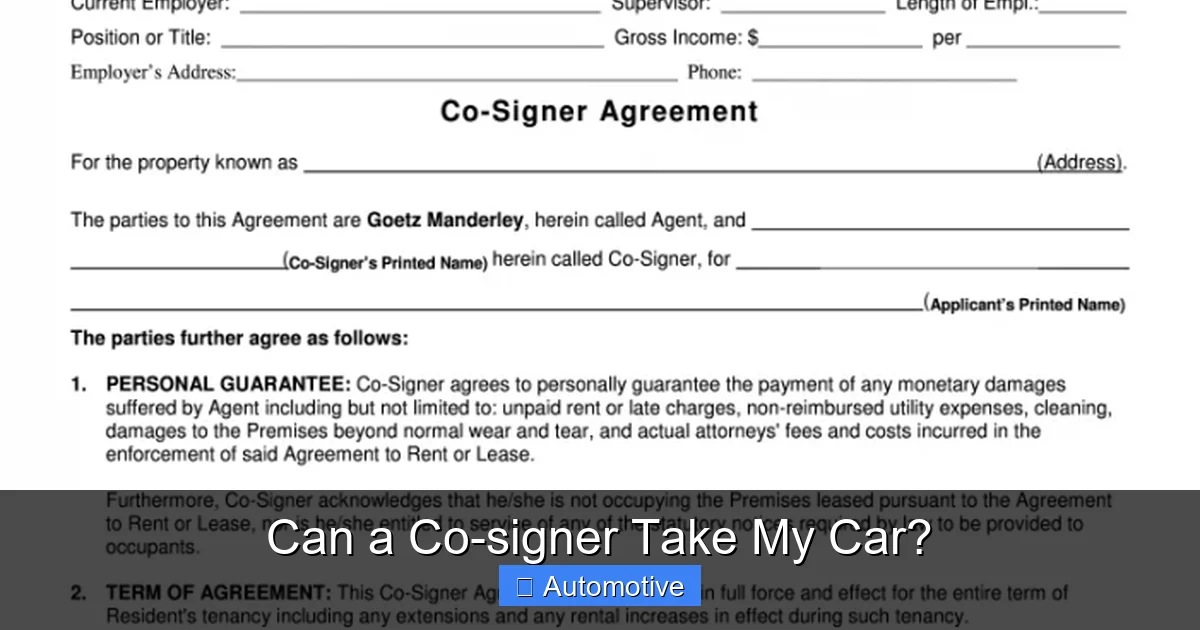
Visual guide about Can a Co-signer Take My Car?
Image source: minasinternational.org
What If the Co-Signer is Also a Co-Owner?
Here’s where things get complicated and dangerous for you. If the co-signer’s name is also on the title, they are a co-owner. This changes everything. As a co-owner, they have an ownership interest in the vehicle. In many states, co-owners have equal rights to possess and use the vehicle. This means if your name is on the title together, they may have the legal right to take the car, even if you are the primary borrower and making all payments. The ownership right on the title can supersede the loan agreement’s primary borrower designation in terms of possession. This is a messy legal situation that often ends in court, where a judge may order the vehicle sold and proceeds split. If you are in this situation, you are in a far more vulnerable position. You can learn more about the specific rights of co-owners and vehicle possession to understand this complex dynamic.
Protecting Yourself and Your Vehicle
Knowledge is your best defense. First, know what’s in your loan and title documents. Look at the title. Is the co-signer’s name on it? If not, you have the upper hand in a possession dispute. Second, never miss a payment. As long as you are not in default, the lender has no right to repossess, and the co-signer has no legal leg to stand on to take the car. Set up automatic payments if possible. Third, document everything. Keep payment receipts, bank statements showing payments, and records of any communication with the co-signer or lender. If the co-signer makes threats, save texts, emails, or write down dates/times of verbal threats.

Visual guide about Can a Co-signer Take My Car?
Image source: cdn.prod.website-files.com
What To Do If a Co-Signer Threatens to Take the Car
If your co-signer is harassing you or threatening to take the car while you are current on payments:
- Stay Calm and Document: Do not engage in an argument. Calmly state that you are making all payments as agreed and that they have no right to the vehicle. Record the interaction if legal in your state (one-party consent states).
- Contact the Lender: Inform your lender’s customer service department about the situation. Explain that a co-signer is attempting to interfere with your possession. Ask them to confirm in writing that as long as the loan is current, the account is in good standing, and the co-signer has no rights to the vehicle. This written statement from the lender is powerful evidence.
- Send a Cease-and-Desist Letter: If threats continue, consider having a lawyer draft a cease-and-desist letter to the co-signer. This formal notice states that their actions constitute attempted theft or conversion and that you will pursue legal remedies if they do not stop.
- Call the Police: If the co-signer shows up and tries to physically take the car, call the police immediately. Explain you are the legal owner (show your title and registration), you are current on the loan, and this person is attempting to steal your vehicle. The police will likely treat it as a civil matter unless there is clear theft, but their presence can de-escalate the situation and create an official record.
- Consult an Attorney: For persistent threats or if the co-signer does manage to take the car while you’re not in default, you need a lawyer. You can sue for the return of the vehicle (replevin) and for damages. This is a civil rights/property issue.
Selling the Car When a Co-Signer is Involved
Selling a car with an outstanding loan and a co-signer is complex but possible. The lender must be paid off first to release the lien. The process typically involves: 1) Getting a payoff quote from the lender. 2) The buyer’s funds (or your own) paying the lender directly. 3) The lender sends the title to you or the buyer. However, the co-signer’s role here is primarily financial. The lender will require the loan to be satisfied in full. The co-signer does not need to sign the title (unless they are on it), but they may need to sign documents releasing them from liability once the loan is paid. You cannot sell the car “free and clear” without the lender’s involvement. If you try to sell it without paying off the loan, the sale is invalid, and the lender can still repossess from the new buyer. For a step-by-step on navigating this, see our guide on selling a car with a cosigner.
What About a Title Loan?
If your loan is actually a title loan (where you borrow against your car’s equity and often the lender holds the title), the rules are even stricter. In a title loan, you temporarily sign over the title to the lender as collateral. They have physical possession of the title. If you default, they can more easily take the car. The co-signer on a title loan is similarly a guarantor. The key is still the loan contract. The power dynamic is different because the lender has a more direct claim. Understanding the specifics of selling a car with a title loan is crucial in these high-risk situations, as the window for selling without the lender taking the car is very narrow.
Conclusion: Knowledge and Communication Are Key
So, can a co-signer take your car? The definitive answer is: not if you are not in default and their name is not on the title. Their role is financial, not possessory. The only entity that can legally repossess your car for non-payment is the lender, following the terms of the loan and state law. Your co-signer’s power lies in their ability to ruin your credit if you default and their potential to sue you for any money they have to pay afterward.
Your action plan is simple: 1) Find and read your loan agreement. 2) Look at your car’s title. 3) Never miss a payment. 4) Keep perfect records. 5) Communicate with your co-signer to manage expectations. 6) If threats arise, involve the lender and, if necessary, law enforcement and a lawyer. The relationship with a co-signer is often a family or friendship one, so clear, honest communication about responsibilities can prevent most conflicts. But if that fails, the law is generally on the side of the primary borrower who is fulfilling their obligations. Protect your asset by understanding the rules of the game.
Frequently Asked Questions
What is the difference between a co-signer and a co-owner on a car?
A co-signer is financially responsible for the loan but does not have ownership rights unless their name is also on the title. A co-owner’s name is on the title, granting them legal ownership and equal rights to possess the vehicle in most states.
Can a co-signer legally take my car if I’m making all my payments on time?
No. If you are not in default as defined by your loan contract, the lender cannot repossess, and your co-signer has no legal right to take possession of the vehicle. Their signature only makes them liable for the debt, not the asset.
What can a co-signer actually do if I stop making payments?
If you default, the lender will repossess the car. The co-signer will then become responsible for the remaining loan balance (the deficiency) after the car is sold at auction. The co-signer can choose to pay the balance to keep the car or let the sale happen and may then sue you for reimbursement.
My co-signer is threatening to take my car. What should I do?
First, ensure you are current on your loan. Then, document the threats and immediately contact your lender to confirm your account status. Inform the co-signer in writing that they have no right to the vehicle. If threats escalate or they attempt to take the car, call the police and consult with an attorney about civil remedies.
Does the co-signer have to be present to sell the car?
No, the co-signer does not need to be present to sell the car, as long as the lender is paid off first to release the lien. The co-signer’s obligation is to the loan, not the sale. However, the lender must be involved to clear the title. For more details on this process, see our article on co-signer presence for selling a car.
What if my name isn’t on the title? Can the co-signer/owner take it?
If your name is not on the title, you likely do not have legal ownership of the vehicle. The person(s) on the title are the legal owners. If the co-signer is also the sole titleholder, they are the owner and generally have the right to possess the car, regardless of who makes payments. This is a risky arrangement for the person making payments. Always ensure your name is on the title if you are making payments and using the vehicle as your own.
