
What Is the Best Year to Buy a Toyota Highlander Hybrid

Finding the best year to buy a Toyota Highlander Hybrid depends on balancing budget, desired features, and long-term reliability. The 2016-2019 models offer exceptional value and proven hybrid system maturity, while the redesigned 2020+ models provide modern tech, more power, and a third-row that’s actually usable for adults. Avoid the very first 2006-2007 hybrid models due to infant technology issues and the 2023+ models for maximum used-car savings.
So, you’re in the market for a Toyota Highlander Hybrid. Smart move. It’s consistently one of the most reliable and sought-after three-row family SUVs on the planet, blending Toyota’s legendary hybrid efficiency with genuine passenger space. But with over 15 years of production and three distinct generations, the big question looms: what is the best year to buy a Toyota Highlander Hybrid? Is it the cheapest old one? The newest used model? Something in the middle? Let’s pop the hood and dig into the data, owner experiences, and value propositions to find your perfect match.
First, a quick primer. The Highlander Hybrid has had three major life cycles. The first (2006-2013) introduced the world to a family-friendly hybrid SUV. The second (2014-2019) refined the formula into a near-perfect balance of efficiency and comfort. The third and current (2020-present) brought a complete redesign, more power, and a vastly improved third row. Each has its champions and its quirks. Our goal is to navigate you through the years, highlighting the sweet spots where value, reliability, and features align perfectly for a used car buyer.
Key Takeaways
- Best Value & Proven Reliability: The 2016-2019 (XW50 generation) is the sweet spot, offering a refined, efficient hybrid system, strong resale, and lower prices than the newest models.
- Best Modern Features & Space: The 2020 redesign (XW70) fixed the cramped third row, added more power, and introduced Toyota’s latest safety tech, making it ideal if you need the space.
- Avoid the First Model Years: Steer clear of the 2006-2007 initial hybrid releases. They have known battery cooling issues and lack the refinement of later versions.
- Hybrid System Maturity is Key: The hybrid powertrain saw its most significant updates for 2016 (XW50) and 2020 (XW70). Model years just before or after these redesigns are often the best buys.
- Check for Recalls & Service History: Regardless of year, a thorough pre-purchase inspection is non-negotiable. Verify all recalls, especially for older models, are completed.
- Total Cost of Ownership Matters: Factor in potential hybrid battery replacement costs (though rare before 150k+ miles), insurance, and fuel savings when comparing model years.
- Timing Your Purchase: For the best deal on a used Highlander Hybrid, consider buying at the end of the model year or during holidays. Learn more about when the best time to buy a car is to maximize savings.
📑 Table of Contents
The Three Generations: A Roadmap
Understanding the generational shifts is the foundation of your search. Think of these as chapters in the Highlander Hybrid’s story.
Generation 1: The Pioneer (2006-2013 Model Years)
These are the trailblazers. The 2006 model launched with a 3.3L V6 hybrid system, proving a three-row hybrid could work. For its time, it was revolutionary. However, “first generation” often means “first problems.” The most significant issue to watch for is with the hybrid battery cooling system. Early models (2006-2007) have a known flaw where the battery cooling fan can fail, leading to overheating and potential battery failure. This is an expensive repair if not caught. Toyota issued extended warranties and service campaigns, but a used example must have this work documented.
What you get: Decent fuel economy for the era (mid-20s MPG), a comfortable ride, and the Toyota badge. The third row is best suited for children. Tech is very dated by today’s standards—no standard rearview camera until 2013, infotainment systems are prehistoric.
Verdict: Only consider these if you find an immaculately maintained, low-mileage example (2009-2013) with full service records showing the cooling system was addressed. The 2008-2009 models saw some refinements. For most buyers, the cost to entry isn’t worth the potential headaches. You’re buying pure nostalgia or a very cheap temporary vehicle.
Generation 2: The Refined Performer (2014-2019 Model Years)
This is where the Highlander Hybrid truly came into its own. For 2014, Toyota gave it a complete redesign (XW50). The new 3.5L V6 hybrid engine was more powerful, smoother, and significantly more efficient. The cabin was quieter, the ride more composed, and build quality jumped noticeably. This generation solidified the Highlander Hybrid’s reputation as a worry-free, family-moving machine.
The hybrid system here is rock-solid. It uses a more sophisticated power-split device and a lithium-ion battery pack (switching from nickel-metal hydride in the prior gen), which is more durable and space-efficient. Fuel economy consistently hits 28-30 MPG combined in real-world driving—impressive for a vehicle of this size.
The Sweet Spot (2016-2019): Within this excellent generation, the 2016 model year is a key inflection point. It received a minor but meaningful refresh: new front fascia, upgraded interior materials, and the addition of Toyota Safety Sense (TSS) as standard on most trims. TSS includes pre-collision braking, lane departure alert, and adaptive cruise control—massive value adds for safety and driver assistance. The 2017-2019 models are essentially carryovers with minor tweaks, making them functionally identical to the 2016 refresh.
What you get: A supremely reliable, efficient, and comfortable SUV. The third row remains small (for kids or short adults), but everything else is top-tier. Tech is good for the era (Entune 3.0 audio, optional JBL). These cars are known to easily surpass 250,000 miles with basic maintenance. Resale values remain strong.
Verdict: This generation, specifically the 2016-2019 model years, is arguably the best overall value proposition in the used Highlander Hybrid market. You get a proven, mature hybrid system, modern enough safety tech, and you avoid the premium depreciation hit of the newest models. You’re buying a near-new experience at a 35-45% discount.
Generation 3: The Modern Powerhouse (2020-Present Model Years)
For 2020, Toyota didn’t just refresh; it reinvented the Highlander Hybrid. The XW70 generation is larger, more powerful, and more tech-laden than ever. The biggest news is under the hood: a new 2.5L four-cylinder hybrid engine. While it has fewer cylinders, it produces more total system horsepower (243 vs. 200) thanks to more powerful electric motors and a revised battery. The driving feel is more responsive and less strained than the older V6 hybrid when accelerating onto the highway.
The interior is a massive leap forward. Materials are richer, the dashboard is driver-focused, and—most importantly—the third row is now genuinely usable for adults. The overall length and wheelpad increased, creating more passenger space. Standard Toyota Safety Sense 2.0 (TSS 2.0) includes more advanced features like road sign assist and enhanced lane tracing.
What you get: A near-luxury experience. Quieter cabin, more standard features (even on the LE trim), and the best infotainment system Toyota offers (with available 12.3″ touchscreen). Fuel economy is slightly better, rated at up to 36 MPG highway. The hybrid battery is also more powerful, allowing for longer electric-only driving at low speeds.
The Early adopter Note (2020-2021): As with any all-new redesign, there were minor teething issues. Some early reports mentioned software glitches with the infotainment system or minor quality control niggles. By the 2022 model year, most of these were resolved via updates. These are still exceptionally well-built vehicles.
Verdict: If your budget allows for a newer used model (2021-2023), this is the best choice for space, power, and cutting-edge features. You’re getting the latest and greatest, but you’ll pay a premium for it. The depreciation curve is still steep, so a 2021 or 2022 model can offer tremendous value over a brand-new 2024.
Head-to-Head: 2016-2019 vs. 2020+
This is the real battle for your hard-earned cash. Let’s break it down by what matters most to a family buyer.
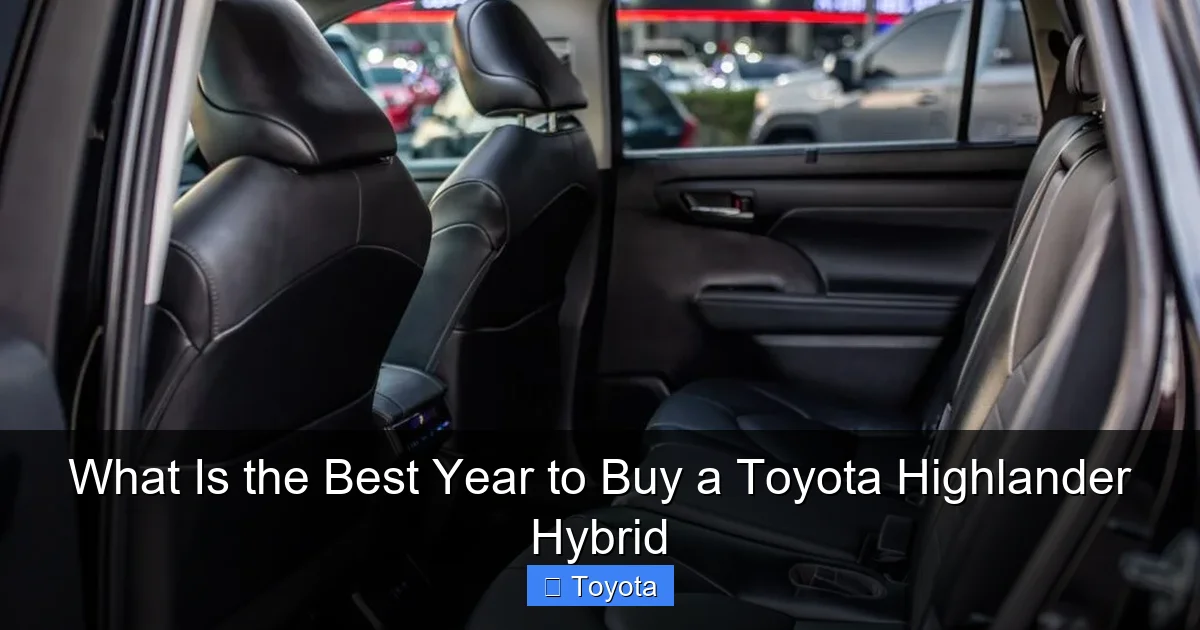
Visual guide about What Is the Best Year to Buy a Toyota Highlander Hybrid
Image source: carsooq.com
Fuel Economy & Powertrain
The 2016-2019 (XW50) model consistently delivers 28-29 MPG combined. It’s a smooth, quiet, and predictable hybrid system that’s incredibly reliable. The 2020+ (XW70) model ekes out a slight edge, with EPA ratings of 34-36 MPG highway. The real-world difference is minimal—maybe 1-2 MPG overall—but the feel is different. The four-cylinder hybrid in the new gen can feel more strained under heavy load compared to the effortless V6 torque of the older model, though it’s more powerful on paper. For pure, proven, bulletproof hybrid tech, the XW50 is legendary. For slightly better efficiency and more peak power, the XW70 wins.
Interior Space & Practicality
This is the 2020+’s knockout punch. The old third row was an occasional-use, child-only space. The new third row can accommodate adults for shorter trips. Cargo space behind the third row is also larger. The new interior design, materials, and front-seat comfort are a clear generational win. If you regularly need to seat 7-8 people, the 2020+ is the only viable Highlander Hybrid. The 2016-2019 is a 5-seat SUV with an optional small penalty box in the back.
Technology & Safety
Standard Toyota Safety Sense (TSS) on 2016+ models is excellent basic safety tech. But TSS 2.0 on 2020+ models is a significant upgrade with more active features. Infotainment is another world apart. The older Entune system is functional but slow and dated. The new system (with larger available screen) is much more responsive and feature-packed (wireless Apple CarPlay/Android Auto on newer trims). If tech integration and the latest driver aids are important, lean 2020+.
Reliability & Cost of Ownership
Here’s where the older generation shines. The 2016-2019 models have a decade of data showing exceptional reliability. The hybrid battery, the biggest potential cost, is proving to last the life of the vehicle with almost no failures reported before 150,000-200,000 miles. These cars are cheap to maintain—oil changes, brakes (which last forever due to regen), and tires are the main costs. The 2020+ models haven’t had the same test of time, but early indicators and Toyota’s track record suggest they will be equally, if not more, reliable. However, as a new design, complex electronic failures could emerge later. For the absolute lowest risk of expensive surprises, the battle-tested 2016-2019 has an edge.
Year-by-Year Breakdown & Key Issues to Watch
Let’s get specific. Here are the standout years and the red flags to investigate on any used Highlander Hybrid.
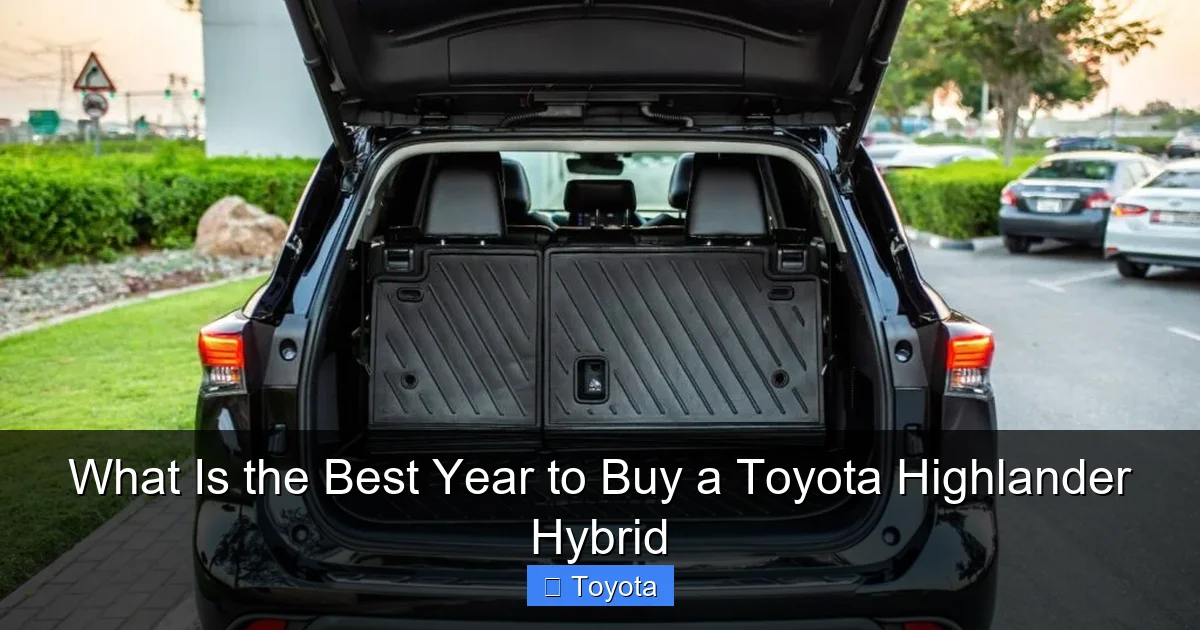
Visual guide about What Is the Best Year to Buy a Toyota Highlander Hybrid
Image source: carsooq.com
- 2006-2007: Strong Avoid. Focus on the battery cooling fan recall/service campaign. Documentation is critical. Not recommended for most buyers.
- 2009-2013: Budget Option. More refined than the first two years. Still check cooling system history. Very basic tech. Only if price is the #1 factor.
- 2014-2015: Good Value. First of the excellent XW50 gen. Lacks standard TSS. A great buy if you find one with low miles and can add aftermarket safety tech.
- 2016-2019: The Sweet Spot. Standard TSS, refined hybrid, excellent reliability. The 2016 model is the key year to target. Minimal differences between these years; buy based on condition, price, and mileage.
- 2020-2021: New Design, Early Adopter. All-new powertrain and cabin. Check for any outstanding software updates for infotainment. Ensure all recalls are done. Great if you want the new shape and power.
- 2022-2023: Refined New Gen. Minor updates, likely resolved any early bugs. Still expensive used. Best if you want a nearly-new experience with a full factory warranty (if transferable) and can afford it.
Regardless of year, a pre-purchase inspection by a trusted, Toyota-specialized mechanic is absolutely mandatory. They can check hybrid battery health, transmission condition, and look for hidden damage. Also, always pull an AutoCheck or Carfax report to verify service history and check for accidents.
How to Decide: Your Personal Checklist
Grab a pen. Answer these questions:
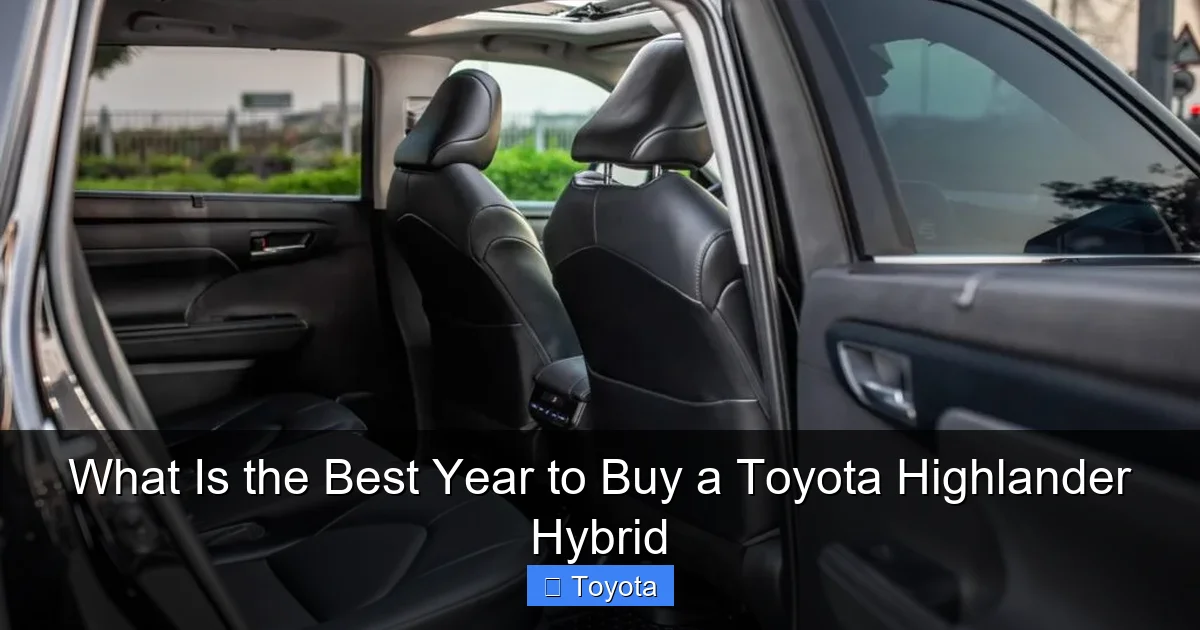
Visual guide about What Is the Best Year to Buy a Toyota Highlander Hybrid
Image source: carsooq.com
- What is your absolute maximum budget? This is the first filter. If it’s under $20,000, you’re looking at 2014-2017 models. $25,000-$30,000 opens up 2018-2020. $35,000+ gets you into 2021-2023.
- How many people do you need to seat, and how often? If 3rd row is for occasional kids (under 10), any year works. If you need to transport teens or adults regularly, 2020+ is non-negotiable.
- How important is the latest infotainment and driver-assist tech? If you want a big touchscreen, wireless connectivity, and the most advanced safety suite, target 2020+. If a basic backup camera and Bluetooth are fine, 2016+ is plenty.
- What is your long-term ownership plan? If you plan to keep this car for 10+ years and 200,000+ miles, the 2016-2019’s proven reliability gives immense peace of mind. If you plan to keep it for 5 years and then sell, the 2020+ will have a higher resale value.
- Are you mechanically inclined or risk-averse? The older, simpler design (XW50) is easier and cheaper to repair at independent shops. The newer, more integrated systems (XW70) may require more dealer-specific diagnostics.
Your answers will point you clearly toward one generation. For the ultimate blend of value, reliability, and “enough” modern features, the 2016-2019 Highlander Hybrid is the champion. For those who need the space and want the latest gadgets, the 2020+ is worth the stretch.
The Final Word: Our Recommendation
After weighing all factors—cost of entry, reliability data, feature set, and real-world ownership costs—the 2016-2019 Toyota Highlander Hybrid (XW50 generation) emerges as the best year to buy for the majority of used car shoppers.
Why? You get a hybrid system that has been proven over hundreds of thousands of miles to be incredibly durable and cheap to maintain. You get standard Toyota Safety Sense, which was a game-changer for safety. You get a comfortable, quiet, and well-appointed cabin that still feels substantial today. Most importantly, you avoid the heavy depreciation that comes with the first year or two of a brand-new model. A well-cared-for 2018 Highlander Hybrid with 60,000 miles can be had for the price of a base-model new compact SUV, and it will provide years of trouble-free, fuel-efficient service.
However, if your family’s size and your desire for the latest tech are top priorities, then shifting your search to a 2021 or 2022 model is the right call. Just be prepared to pay for that privilege. And remember, the absolute worst years are the pioneer models from 2006-2007—no matter how cheap they are, the potential for a catastrophic hybrid battery failure makes them a risky proposition.
In the end, the “best year” is the one that best fits your specific family’s needs, budget, and timeline. Use this guide as your map, get a professional inspection, and you’ll drive home in one of the most competent and satisfying family SUVs ever made.
Frequently Asked Questions
Is a Toyota Highlander Hybrid expensive to repair?
The hybrid system is very reliable, and major repairs are rare. Brakes last exceptionally long due to regenerative braking. The biggest potential cost is a hybrid battery replacement, but this is uncommon before 150,000+ miles. Routine maintenance (oil, filters, tires) is similar to a conventional Highlander.
How many miles can a Highlander Hybrid last?
With proper maintenance, 250,000-300,000 miles is very achievable. The hybrid powertrain is designed for longevity, and many examples on the road today with over 200,000 miles are still on their original battery packs. The rest of the vehicle (frame, body, interior) is built to Toyota’s high standards.
Does the Highlander Hybrid have enough power?
Yes, absolutely. The 2016-2019 V6 hybrid has 200 hp and feels smooth and adequate for merging and passing. The 2020+ four-cylinder hybrid has 243 hp and feels more responsive, though it can sound less refined under hard acceleration. Both are perfectly adequate for a heavy family hauler.
What trim level offers the best value?
For the 2016-2019 models, the XLE trim is the sweet spot, offering a good balance of features (power seats, sunroof, heated front seats) without the cost of the Limited. For the 2020+ models, the LE is surprisingly well-equipped with standard TSS 2.0 and a good infotainment system, making it the value king. Always compare specific vehicle features, as some used models may have added packages.
Should I buy a used Highlander Hybrid with over 100,000 miles?
It can be an excellent value, as long as it has a complete, consistent service history from a reputable source. The hybrid system should be fine. Have a mechanic perform a comprehensive inspection, focusing on the hybrid battery health scan, transmission fluid condition, and any suspension wear. A vehicle history report is essential to check for title issues.
What is the actual real-world fuel economy?
Don’t trust the EPA window sticker alone. For the 2016-2019 models, expect 26-28 MPG in heavy city/suburban driving and 30-32 MPG on steady highway cruises. For the 2020+ models, you might see 28-30 MPG in the city and 33-35 MPG on the highway. Driving style and climate (extreme cold reduces hybrid efficiency) have a noticeable impact.
