
What I Wish I Knew Before Buying a Jeep Wrangler

Buying a Jeep Wrangler is about trading practicality for passion. I wish I knew the real-world fuel costs, the harsh daily ride, and how quickly the aftermarket “necessities” add up. This vehicle is a lifestyle choice first, a daily driver second. Understanding these key realities upfront will prevent buyer’s remorse and help you enjoy your Wrangler for what it truly is.
You see them everywhere. The iconic, boxy silhouette cutting through traffic or conquering a rocky trail. The wave from a fellow driver. The sheer, unapologetic cool of a Jeep Wrangler. It’s not just a car; it’s a feeling, a statement, a lifestyle. And when that feeling hits, logic often takes a back seat. I know because I did exactly that. I bought my Wrangler based on the dream, not the details. There’s so much I wish someone had told me before I signed on the dotted line—not to talk me out of it, but to prepare me for the glorious, frustrating, expensive, and utterly rewarding reality. This is that conversation.
This article isn’t a condemnation. It’s a reality check. The Wrangler is, in many ways, a terrible “normal” car. But for the right person, it’s the only right car. My goal is to bridge the gap between the marketing fantasy and the ownership facts. We’ll dig into the real costs, the daily compromises, the hidden expenses, and the genuine joys. If you’re standing at the crossroads of practicality and passion, read on. Let me save you from the surprises that caught me completely off guard.
Key Takeaways
- Fuel economy is not a suggestion: Expect 15-18 MPG in real-world driving, not the window sticker numbers. Budget significantly more for gas.
- The ride is firm and noisy: The solid axles and body-on-frame design that enable off-road prowess create a bouncy, loud on-road experience you must tolerate daily.
- The “Jeep Wave” has a cost: The aftermarket ecosystem is vast. Budget for essential upgrades like proper tires, rock rails, and recovery gear, which can easily match your monthly payment.
- Reliability is a mixed bag: The powertrain (especially the V6) is robust, but electronics (T-case, infotainment) and suspension components can be costly failure points over time.
- Insurance is notably high: Wranglers consistently rank among the most expensive vehicles to insure due to theft rates, repair costs, and accident statistics.
- It’s a seasonal vehicle for many: While capable year-round, removing doors/roof in winter or extreme heat is impractical for most, making it a fair-weather fun machine for daily use.
- Resale is strong, but condition is everything: A stock, well-maintained Wrangler holds value incredibly well. A heavily modded one with poor-quality parts can scare away future buyers.
📑 Table of Contents
- The Fuel Economy Reality Check: It’s Worse Than You Think
- The On-Road Ride: Firm, Noisy, and Unforgiving
- The Aftermarket Rabbit Hole: It’s Not Optional, It’s Expected
- Reliability and Long-Term Maintenance: A Mixed Bag
- Insurance Costs: The Stealth Expense
- Seasonal and Practicality Considerations: It’s Not an All-Weather Daily
- Conclusion: Love It for What It Is, Not What It Isn’t
The Fuel Economy Reality Check: It’s Worse Than You Think
Let’s start with the most universal shock: gasoline. You see the EPA sticker on the window—maybe 22 MPG highway for a newer V6. You think, “Not great, but I can live with that.” Then you own one. The first tank feels like it vanishes in a week. The reality of Wrangler fuel economy is a harsh slap of cold water.
The Gap Between Sticker and Reality
The EPA tests are conducted in a lab under perfect, controlled conditions. The real world has wind, hills, traffic, and the irresistible urge to put the top down. In my experience, and from thousands of owner forums, a Jeep Wrangler realistically delivers 14-17 MPG in mixed driving. That number can dip into the low teens if you’re running larger tires, a heavy steel bumper, or driving with any enthusiasm. The aerodynamic brick shape and heavy weight (a subject we’ll touch on) are the primary culprits. For context, you can check out just how much that weight impacts everything here.
Let’s do quick math. At 15 MPG and $4.00/gallon, 1,000 miles costs about $266. That’s $1,066 a month for a 12,000-mile/year driver. Compare that to a 30 MPG SUV at $133 for the same distance. That’s a $1,600+ annual difference. This isn’t a minor expense; it’s a significant lifestyle budget item. I wish I had built this true cost of ownership into my spreadsheet before buying, not just the monthly payment.
The “Mod Tax” on Fuel Economy
Here’s the cruel twist: the most common modifications—bigger all-terrain tires, steel bumpers, winches, and roof racks—make the problem worse. They add weight and drag. You buy a Wrangler for its capability, then modify it for more capability, and suddenly your fuel bill jumps another 10-15%. It’s a vicious cycle. Before you even consider mods, you must accept the baseline fuel cost as a permanent, non-negotiable part of Wrangler ownership.
The On-Road Ride: Firm, Noisy, and Unforgiving
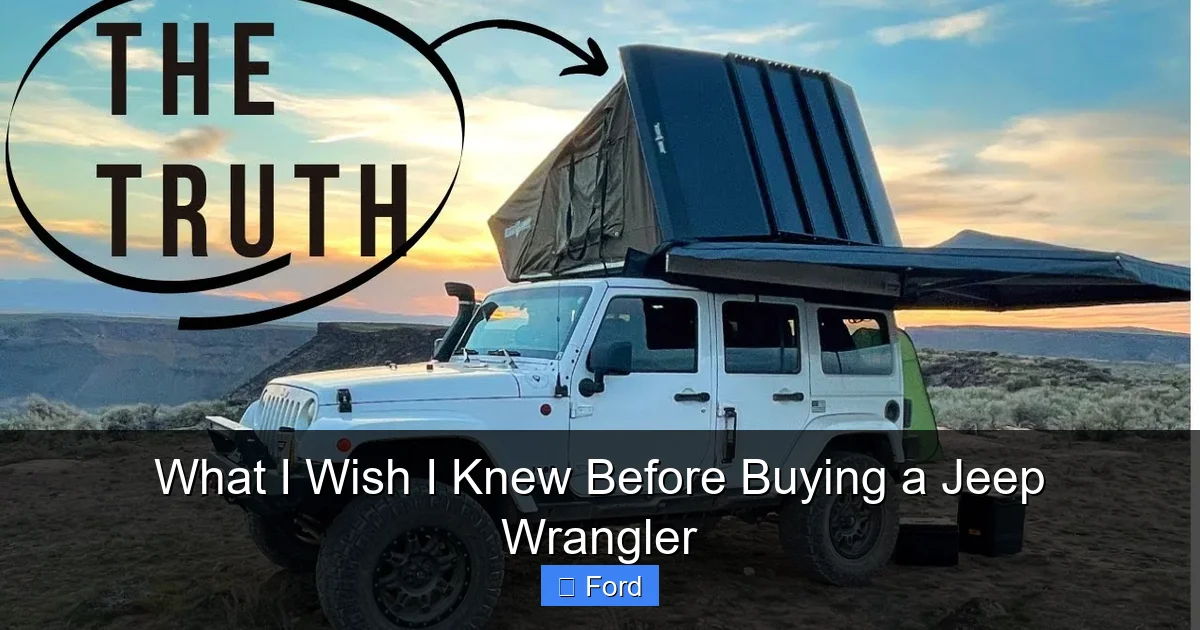
The magic of a Wrangler happens off-road. The solid front and rear axles, the short wheelbase, the high ground clearance—these are engineering features for rocks, mud, and sand. They are also the primary reasons your daily commute feels like a visit to a construction site.
Visual guide about What I Wish I Knew Before Buying a Jeep Wrangler
Image source: i.ytimg.com
The Sound of Freedom (and Wind)
Even with a hardtop, road noise is a constant companion. The large, flat glass surfaces, the door seals designed for removable doors, and the body-on-frame construction all contribute to a cabin that never truly quiets down. At highway speeds, it’s a roar. The soft top amplifies this tenfold. I wish I had test-driven one on my actual commute route, not just a quick, smooth-dealership-loop. The noise isn’t just an annoyance; it’s a fatigue factor on long drives.
Handling and Comfort: A Trade-Off
Don’t expect minivan-like plushness. The ride is firm. Bumps are felt, not absorbed. The steering is heavy and slow, designed for precision at low speeds off-road, not for nimble city weaving. The short wheelbase can feel jittery at high speeds, especially with a heavy front bumper or a full cargo load. Rear seat comfort is notoriously poor for adults on any journey over 30 minutes. This is the trade: you get world-class off-road geometry and capability in exchange for on-road refinement. You must decide if that trade is worth it for your life. For some, the compromises are part of the charm. For others, they’re deal-breakers.
The Aftermarket Rabbit Hole: It’s Not Optional, It’s Expected
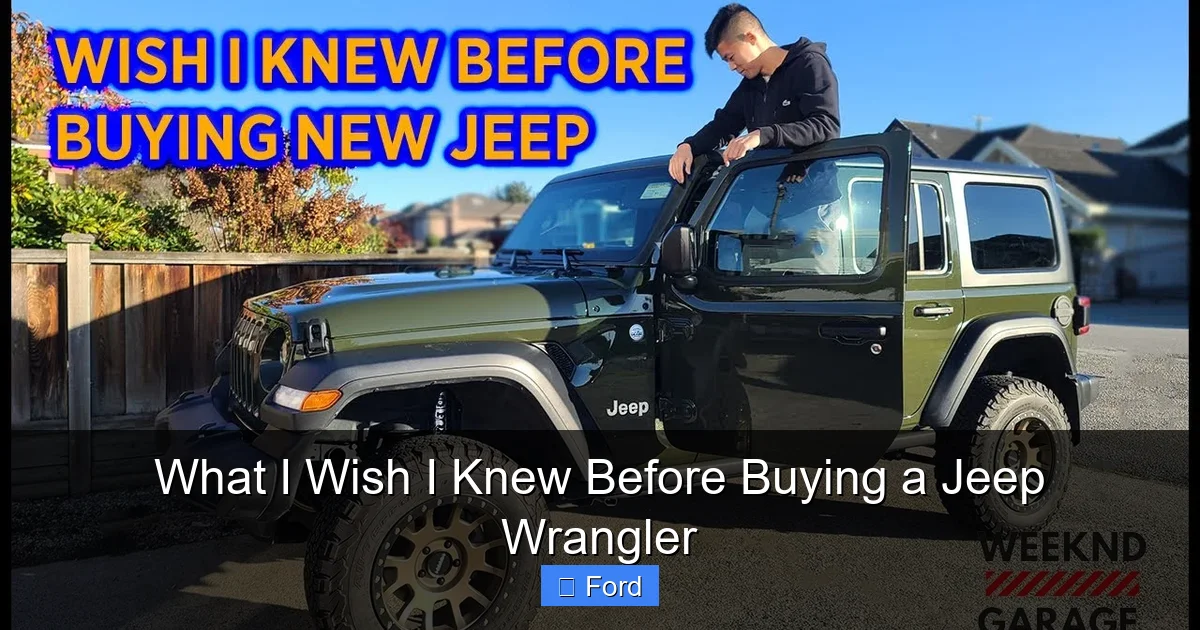
Here’s the second biggest financial shock after fuel: the aftermarket. The Wrangler is the most customizable vehicle on the planet. That’s a blessing and a curse. The moment you drive your new (or used) Wrangler off the lot, you’ll start seeing “needs.” A roof rack for storage. Better tires. Skid plates. A front bumper with a winch mount. The list is endless and culturally ingrained.
Visual guide about What I Wish I Knew Before Buying a Jeep Wrangler
Image source: adventurejeep.com
The “Jeep Tax” and Budget Reality
There’s a running joke about the “Jeep Tax”—the phenomenon where every single accessory costs more than you think it should. A simple set of rock sliders can be $500. A decent front bumper? $1,000+. A winch and mount? $2,000+. The aftermarket industry knows Wrangler owners will pay for quality, and the prices reflect that. I easily spent the equivalent of another car payment in the first six months on “essential” gear. I wish I had set a strict aftermarket budget before buying the vehicle itself, treating the base price as just the entry fee.
What’s Actually Necessary vs. Nice-to-Have
You need to separate survival from style. From a functional and protective standpoint, the first upgrades for a new Wrangler are often:
- Quality All-Terrain Tires: The single best performance mod. They improve off-road grip, on-road wet weather safety, and look the part.
- Skid Plates: The standard steel skids are thin. Aftermarket aluminum or steel plates protect your expensive transfer case, fuel tank, and differentials.
- Rock Rails/Steps: Protect the rocker panels from door dings and provide a step for entry. Crucial if you off-road or just park in a tight lot.
- Fender Flares: If you go with larger tires, you’ll need these to cover the added width and keep mud off your doors.
Everything else—LED light bars, elaborate interior upgrades, cage work—is a personal choice. But the cultural pressure to mod is real. You can find a great starting point for ideas in our guide to the best accessories for a Jeep Wrangler. My advice: drive it stock for at least a month. Learn what you actually need, not what the forums say you need.
Reliability and Long-Term Maintenance: A Mixed Bag
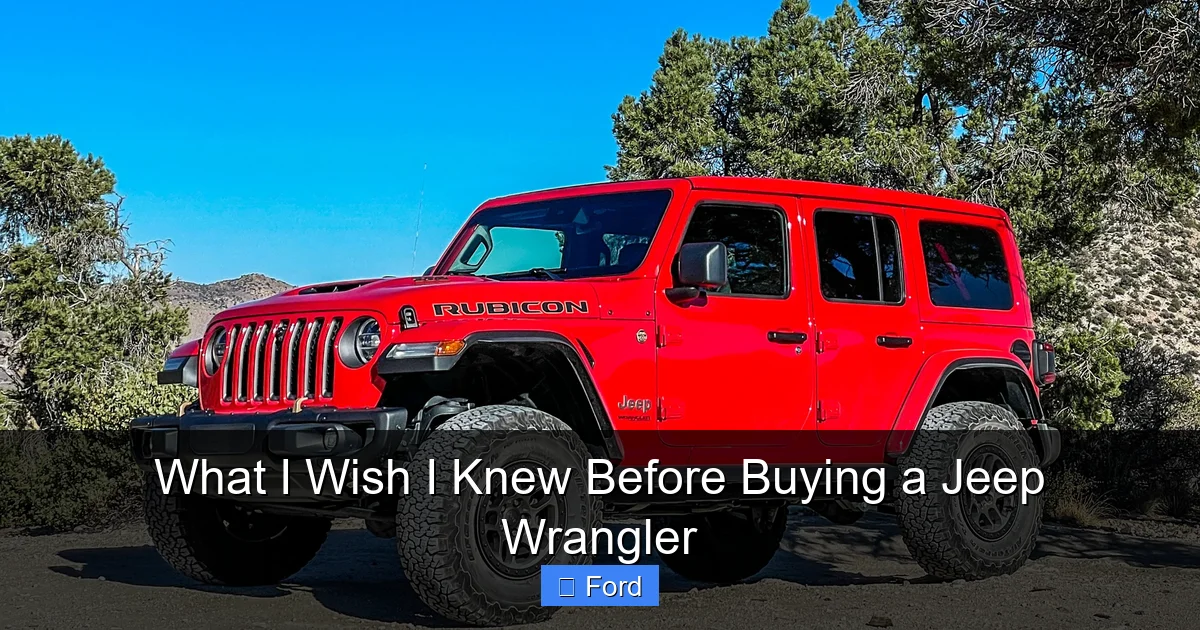
The Jeep Wrangler has a legendary reputation for durability, and in many ways, it’s deserved. The powertrain, particularly the 3.6L Pentastar V6 (in models from 2012 onward), is a workhorse. It’s simple, torquey, and can last for hundreds of thousands of miles with basic care. However, the rest of the vehicle has some known, and often expensive, weak spots.
Visual guide about What I Wish I Knew Before Buying a Jeep Wrangler
Image source: motortrend.com
The Electronics and T-Case Enigma
Where modern Wranglers (JL/JKU models, 2018+) particularly struggle is with complexity. The electronic transfer case (especially the “Rock-Trac” in Rubicons) is a marvel when it works, but a $2,000+ paperweight when it fails. Infotainment systems (Uconnect) are prone to glitches, freezes, and Bluetooth nightmares. These aren’t just minor irritants; they require dealer diagnostics and costly repairs. The simpler, manual-transmission, minimal-electronics models (like the JK Sport or older TJs) often have fewer of these issues, but they come with their own age-related concerns.
Suspension and Drivetrain Wear
The solid axles and suspension components (ball joints, tie rod ends, control arm bushings) wear out faster than in an independent suspension vehicle, especially if you run larger tires or do serious off-roading. A typical “major service” at 100,000 miles on a Wrangler can easily hit $3,000-$5,000, covering things like transmission fluid, differential fluids, transfer case service, and a full suspension inspection. It’s not that it’s unreliable, but maintenance is more frequent and specific. Using the correct fluids is critical; a mistake here can be catastrophic. For a deep dive on engine oil and fluid choices—which matter greatly in a high-stress engine like the Pentastar—see our friendly guide here.
Insurance Costs: The Stealth Expense
When you get your first insurance quote on a Wrangler, you might think there’s a mistake. It’s often significantly higher than a similarly priced SUV or crossover. This isn’t an anomaly; it’s actuarial science.
Why Wranglers Cost More to Insure
Insurance companies look at three key factors: repair costs, theft rates, and accident statistics. Wranglers score poorly on all three.
- Repair Costs: Those expensive OEM bumpers, body panels, and specialized suspension parts? Insurance adjusters cringe at them. A minor fender-bender can lead to a $5,000 bill.
- Theft Rates: Wranglers, especially older models, are frequently stolen. Their lack of sophisticated immobilizers in early years and the high value of their parts make them targets.
- Accident Data: Studies show Wrangler drivers (often young, enthusiastic, and driving with doors off) have a higher incidence of rollover and single-vehicle accidents. Right or wrong, that data drives your premium up.
I wish I had gotten insurance quotes before I fell in love with a specific model. A $50/month difference between a Wrangler and a RAV4 is a $600/year hidden cost that lasts as long as you own the vehicle.
Seasonal and Practicality Considerations: It’s Not an All-Weather Daily
The Wrangler’s genius is its versatility. You can remove the doors and roof in 20 minutes. It’ll drive through snow that strands other vehicles. But this versatility comes with daily practicality compromises that become glaring in certain seasons.
The Fair-Weather Friend
For many owners, the Wrangler becomes a fair-weather vehicle. Why? Because removing the doors and top in winter is a cold, wet, windy pain. Putting them back on when a storm hits is a 30-minute chore. Driving a topless Wrangler in a sudden downpour is a race against the elements. In summer, it’s an oven. The AC struggles to cool the vast, open interior. The point is: you won’t use the defining feature as often as you think, because it’s often impractical. It’s a fantastic second vehicle for adventures, but a demanding primary daily driver in climates with harsh winters or intense summers.
Cargo and Passenger Space: The Illusion
The Wrangler’s boxy shape suggests space. The reality is disappointing. The rear seat is best for children or very short adults. Cargo space behind the rear seat is minimal. A family of four on a weekend trip means a roof rack or cargo carrier is mandatory, adding cost, noise, and wind resistance. You quickly learn to live out of a duffel bag instead of a suitcase. The “utility” is in its off-road ability and open-air experience, not in traditional SUV practicality.
Conclusion: Love It for What It Is, Not What It Isn’t
So, what do I wish I knew? I wish I knew that buying a Jeep Wrangler isn’t about finding the most sensible, efficient, or comfortable vehicle. It’s about buying a platform for adventure, a blank canvas for expression, and a membership to a community. The high fuel costs, the jarring ride, the constant pull of the aftermarket, the expensive repairs, and the sky-high insurance are the price of admission to that world.
If you can look past those realities and still feel the pull, then you’re the right person for a Wrangler. If the compromises sound like deal-breakers, trust me, you’ll be miserable. Do your homework. Drive one for a week if you can. Get real insurance quotes. Build a budget that includes $100-$200 a month for gas and a separate fund for inevitable accessories and repairs. Go in with your eyes wide open. The Wrangler will reward you with unmatched smiles-per-mile off the beaten path and a sense of authenticity few modern cars offer. But it will punish you with poor MPG on the highway and a sore back on a long commute. Know which side you’re on. That’s the only thing I truly needed to know before I bought mine.
Frequently Asked Questions
Is a Jeep Wrangler a good daily driver?
For most people, it’s a compromise. It’s capable and fun, but its poor fuel economy, firm/noisy ride, and limited cargo/passenger space make it a suboptimal choice as a sole daily driver for families or long commutes. It shines as a fun, secondary vehicle or for those who prioritize its unique strengths over daily comfort.
Are Jeep Wranglers expensive to maintain long-term?
Yes, more so than a typical crossover or sedan. While the engine is robust, the solid axles, transfer case, and specialized suspension parts wear out and require specific, often costly, service. Major maintenance at 100k miles can be several thousand dollars. Using the correct fluids and parts is non-negotiable to avoid expensive damage.
What is the real-world fuel economy of a Jeep Wrangler?
Expect 14-17 MPG in mixed driving for most recent V6 models. The EPA highway numbers (often 22-24 MPG) are nearly impossible to replicate. Larger tires, lift kits, and added accessories will further reduce this number. For the most accurate current estimates, you can review detailed monthly cost analyses here.
Should I buy a new or used Jeep Wrangler?
Used Wranglers (especially 2012-2018 JK models) offer excellent value and avoid the steepest depreciation. Newer JL models have more refined interiors, better powertrains, and updated electronics but cost more. A certified pre-owned (CPO) from a dealer can offer a good middle ground with a warranty. Always get a pre-purchase inspection, especially for used models.
Are Jeep Wranglers good in snow and winter?
They are exceptionally capable in snow *off-road* due to 4WD and good ground clearance. However, as a *daily winter driver*, they have drawbacks: poor fuel economy, slow cabin heat, and the impracticality of driving with the top/doors off. On icy roads, the short wheelbase and solid axles can feel less stable than a car-based AWD SUV. Winter-rated all-terrain or snow tires are highly recommended.
How much does it cost to insure a Jeep Wrangler?
It is consistently one of the more expensive mainstream vehicles to insure. Annual premiums can be 20-50% higher than a standard SUV due to high repair costs, theft rates, and accident statistics. Always get quotes before purchasing. Your location, driving record, and specific model year/Rubicon vs. Sport will greatly affect the final price.
