
What Is the Maintenance Schedule for a Toyota Sienna?

Following the Toyota Sienna’s maintenance schedule is non-negotiable for keeping your family hauler reliable, safe, and cost-effective. Adherence prevents costly breakdowns, maintains fuel efficiency, and protects your investment. This guide breaks down the exact intervals and tasks, differentiating between normal and severe driving conditions to tailor care for your specific usage.
Key Takeaways
- Oil Changes are Fundamental: The cornerstone of Sienna maintenance, with intervals ranging from 5,000 to 10,000 miles depending on oil type and driving conditions.
- “Severe” vs. “Normal” is Crucial: Most Siennas operate under “severe” conditions (short trips, extreme temps, dusty roads), requiring more frequent service than the basic “normal” schedule.
- Tire Rotation is Every 5,000-7,500 Miles: Regular rotations promote even wear, extend tire life, and are often required to maintain tire warranty coverage.
- Critical Fluid Checks Happen Regularly: Engine coolant, brake fluid, transmission fluid, and windshield washer fluid have specific service intervals that must not be ignored.
- Use OEM or Equivalent Parts: For key components like filters, belts, and spark plugs, using quality parts that meet Toyota specifications ensures compatibility and longevity.
- The Maintenance Light is a Reminder, Not a Directive: The dashboard service indicator is a generic mileage counter; always consult your owner’s manual for the specific tasks due at that mileage.
- Keep Detailed Records: Save all receipts and work orders. A complete service history significantly boosts resale value and proves diligent care to future buyers.
📑 Table of Contents
- Introduction: Why a Proactive Maintenance Schedule Matters for Your Sienna
- Understanding the Official Toyota Sienna Maintenance Schedule
- The Mileage-Based Maintenance Intervals (Using the Severe Schedule)
- Monthly and Annual Owner Checks: Your First Line of Defense
- Seasonal and Driving-Condition Considerations
- Conclusion: Investing in Your Sienna’s Future
Introduction: Why a Proactive Maintenance Schedule Matters for Your Sienna
Your Toyota Sienna is more than just a vehicle; it’s a trusted member of the family, responsible for carpools, road trips, grocery runs, and countless memories. That trust is built on a foundation of reliable performance, which doesn’t happen by accident. It comes from a disciplined, proactive approach to care—specifically, following the manufacturer’s recommended maintenance schedule.
Think of this schedule as a comprehensive health plan for your minivan. Just as regular check-ups can catch small issues before they become major illnesses, scheduled maintenance identifies and addresses wear and tear before it leads to a breakdown, expensive repair, or unsafe condition. For a vehicle designed for heavy use and high mileage like the Sienna, this is especially critical. Sticking to the plan ensures your Sienna delivers the smooth, dependable, and efficient service you expect for years, often well beyond 200,000 miles. This guide will decode everything you need to know, from oil changes to major inspections, tailored for your specific driving habits.
Understanding the Official Toyota Sienna Maintenance Schedule
The definitive source for maintenance intervals is your vehicle’s owner’s manual. Toyota provides a detailed, mileage-based chart that outlines every recommended service item. It’s typically broken down into two columns: one for “Normal” driving conditions and another for “Severe” driving conditions. Understanding the difference between these two is the single most important factor in personalizing your maintenance plan.
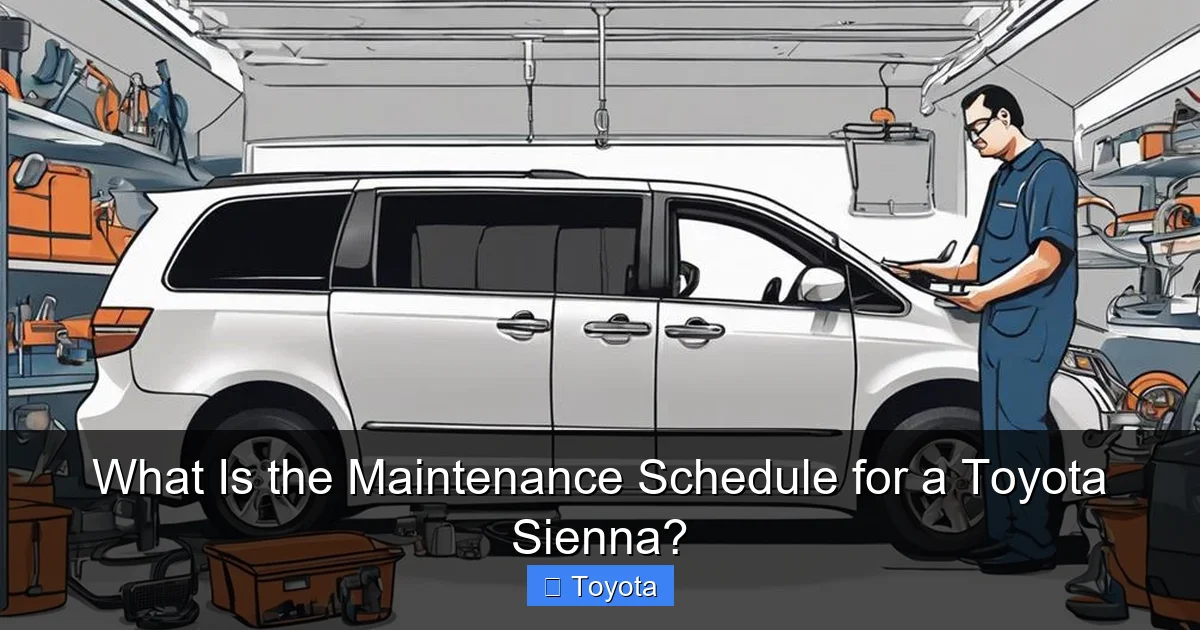
Visual guide about What Is the Maintenance Schedule for a Toyota Sienna?
Image source: lowratelocksmith.com
Normal vs. Severe Driving Conditions: Which One Are You?
Contrary to popular belief, “Normal” driving conditions are quite specific and relatively rare for most drivers. They include primarily highway driving at consistent speeds, in moderate temperatures, with minimal idling or stop-and-go traffic. If this doesn’t describe your daily routine—and for a family Sienna, it likely doesn’t—you fall into the “Severe” category.
Examples of Severe Driving Conditions include:
- Frequent Short Trips: Driving less than 5-10 miles per trip, especially in cold weather, where the engine doesn’t fully warm up, leading to excessive moisture and fuel dilution in the oil.
- Extreme Temperatures: Regular operation in very hot (over 90°F) or very cold (under 10°F) climates stresses the cooling system, battery, and fluids.
- Stop-and-Go Traffic: City commuting with constant acceleration and braking increases wear on brakes, engine deposits, and transmission components.
- Dusty or Sandy Conditions: Driving on unpaved roads or in areas with high airborne contaminants clogs air filters faster and increases abrasive wear.
- Towing or Heavy Loading: Regularly using your Sienna to tow a trailer or carry maximum cargo significantly increases strain on the engine, transmission, brakes, and suspension.
- Extreme Humidity: High humidity can affect electrical components and promote corrosion.
Practical Tip: Be honest with yourself. Most Sienna owners will use the “Severe” schedule, which typically shortens intervals for oil changes, tire rotations, and certain inspections by 30-50%. When in doubt, choose the more frequent severe schedule. It’s a small price to pay for prevention.
The Mileage-Based Maintenance Intervals (Using the Severe Schedule)
Below is a consolidated, practical breakdown of the most critical maintenance items for a Toyota Sienna operating under severe driving conditions. Intervals are presented in miles and/or time, whichever comes first.

Visual guide about What Is the Maintenance Schedule for a Toyota Sienna?
Image source: checkengine.com
Every 5,000 Miles / 6 Months
- Oil and Oil Filter Change: The absolute most important routine service. Use the oil viscosity specified in your manual (often 0W-20 for newer models). Synthetic oil is required and allows for longer intervals. Consider checking your oil level monthly.
- Tire Rotation: Essential for even tread wear and maximizing tire life. The Sienna’s front tires wear faster due to steering and braking. Rotation patterns vary (Front-to-Rear & Cross, etc.), so follow your manual’s diagram.
- Basic Inspection: Technicians will check lights, wipers, fluid levels (washer, coolant, brake), and tire pressure. Speaking of which, maintaining the correct tire pressure is vital for safety and fuel economy. You can learn the specifics for your model here.
Every 10,000 Miles / 12 Months
- Oil and Oil Filter Change: If using full synthetic oil and under ideal conditions, this may be the interval. However, under severe conditions, stick to 5,000 miles.
- Multi-Point Inspection: A more thorough look at brake pads/shoes/rotors, suspension components, steering linkage, and drive belts.
- Brake Fluid Check: Brake fluid is hygroscopic (absorbs water). It should be tested for moisture content and replaced approximately every 2-3 years, regardless of mileage.
Every 15,000 Miles / 18 Months
- Replace Cabin Air Filter: This filter cleans the air entering your HVAC system. A clogged filter reduces airflow and strains the blower motor. In dusty areas or with pets, change it more often.
- Replace Engine Air Filter: A dirty air filter chokes your engine, reducing power and fuel efficiency. This is a quick, inexpensive DIY job for many owners.
- Inspect All Fluids: Detailed check of transmission fluid (level and condition), differential fluid (if AWD), and power steering fluid (if applicable).
Every 30,000 Miles / 36 Months
- Replace Spark Plugs: Worn plugs cause misfires, poor fuel economy, and rough idling. Use the specified platinum or iridium plugs for longevity.
- Inspect/Replace Drive Belts: The serpentine belt that runs multiple accessories (alternator, power steering pump, AC compressor) should be inspected for cracks and wear. Replace as needed.
- Transmission Fluid Service: This is critical. While some modern Toyotas claim “lifetime” fluid, for a heavy-use vehicle like the Sienna, especially under severe conditions, a transmission fluid drain and refill (not just a pan drop) every 60,000-100,000 miles is highly recommended by independent mechanics to ensure long transmission life.
- Fuel System Inspection: Check fuel lines, connections, and the fuel cap seal.
Every 60,000 Miles / 72 Months
- Replace Timing Chain/Belt Tensioner & Water Pump: The Sienna uses a timing chain, which is generally “lifetime” but the hydraulic tensioner and water pump (driven by the chain) are wear items. Proactive replacement at this mileage is a wise insurance policy against a catastrophic engine failure.
- Differential Fluid Change (AWD Models):strong> If your Sienna has All-Wheel Drive, the rear differential fluid must be changed at this interval to prevent wear.
- Coolant System Flush: Engine coolant degrades over time, losing its anti-corrosive and anti-freeze properties. A complete system flush and refill is necessary to prevent overheating and internal rust.
- Brake Fluid Flush: As mentioned, this is often time-based (every 2-3 years), so it will likely coincide with this mileage marker.
- Comprehensive Suspension & Steering Inspection: Check ball joints, tie rod ends, bushings, and struts/shocks for wear and leaks.
Every 100,000 Miles / 120 Months
- Major System Audit: This is a significant milestone. Beyond repeating all the 60k items, a deep inspection of the engine, transmission, and underbody for leaks and damage is warranted.
- Spark Plug Re-check: Even if replaced at 60k, inspect them again.
- Consider Major Fluid Services: Some owners opt for another transmission fluid service and a transfer case fluid change (AWD) at this point.
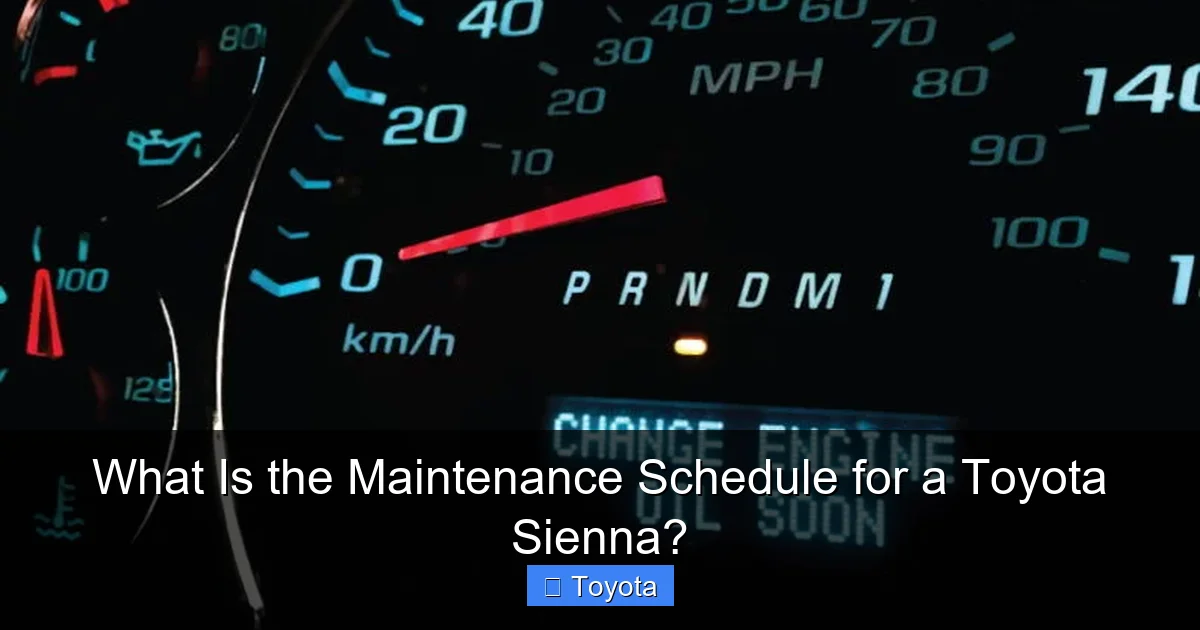
Note on the Maintenance Light: Your Sienna’s “Maintenance Required” light illuminates based on a simple mileage counter (usually after 5,000 miles from the last reset). It does not know what specific service is due. Always refer to your log in the owner’s manual or this guide to determine what tasks correspond to that mileage. Never reset the light without performing the service.
Monthly and Annual Owner Checks: Your First Line of Defense
Scheduled visits to the shop are vital, but your day-to-day attention is your minivan’s first and best line of defense. Incorporate these simple checks into your routine.
Visual guide about What Is the Maintenance Schedule for a Toyota Sienna?
Image source: checkengine.com
The Monthly Once-Over (15 Minutes)
- Tire Pressure & Tread: Use a reliable gauge when tires are cold. Inflate to the placard pressure (found on the driver’s door jamb sticker), not the max on the tire sidewall. Check tread depth with a penny—if you can see all of Lincoln’s head, it’s time for new tires.
- All Fluid Levels: Check engine oil (on level ground, after a few minutes of rest), coolant (in the translucent reservoir, never when hot), brake fluid, and windshield washer fluid. Top up as needed with the correct fluids.
- Lights: Walk around the vehicle. Check headlights (high and low beam), taillights, brake lights, turn signals, and reverse lights. Have a helper or use a wall/garage door reflection.
- Windshield Wipers: Inspect blades for cracks, tears, or streaking. Replace them at least once a year.
The Annual Deep Dive
- Battery Health: Have the battery tested. Extreme heat and cold are hard on batteries. A weak battery will leave you stranded. Clean any corrosion from terminals with a baking soda/water solution and a wire brush.
- Hose and Belt Inspection: Visually check the engine bay for cracked, bulging, or frayed hoses and belts. Look for leaks around the engine and transmission.
- Brake System: Listen for squealing or grinding. Feel for pedal pulsation. Have a professional measure pad thickness and rotor condition annually.
- Air Filter Replacement: Even if your 15k service isn’t due, visually inspect the engine air filter. If it’s dirty, change it. It’s a $15-20 DIY job that protects your engine.
Seasonal and Driving-Condition Considerations
Your Sienna’s needs shift with the seasons and your specific driving patterns. Being proactive here prevents seasonal surprises.
Pre-Summer Prep
Focus on the cooling system and air conditioning. Ensure coolant is at the proper level and mixture (typically 50/50 antifreeze/water). Have the A/C system checked for refrigerant charge and compressor operation before the heat hits. Extreme heat is the number one cause of A/C failure and overheating. Check tire pressure more frequently in summer, as heat increases pressure.
Pre-Winter Prep
Switch to winter wiper blades if you live in snowbelt regions. Check and top up windshield washer fluid with a winter formula that won’t freeze. Ensure your battery is strong—cold weather drastically reduces cranking power. Consider a set of winter tires if you face snow and ice; they are the single biggest safety upgrade for winter driving. If you often drive on slippery roads, understanding your vehicle’s traction control systems is helpful. For example, features like Toyota A-TRAC can be useful tools in low-traction situations.
After a Towing Trip
If you’ve used your Sienna to tow a trailer or a large load, give it some extra love afterward. Check the transmission fluid level and condition (hot, on level ground, engine running, in “Park” per manual). Inspect the trailer hitch and wiring. Listen for any unusual noises from the drivetrain on the next few drives.
Conclusion: Investing in Your Sienna’s Future
Viewing the Toyota Sienna maintenance schedule as a chore is the wrong mindset. It’s an investment strategy—one that pays dividends in the form of unwavering reliability, superior fuel economy, enhanced safety, and a dramatically higher resale value. A well-maintained Sienna with a complete service history is a standout in any marketplace. By understanding the difference between normal and severe driving, adhering to the mileage-based intervals, and performing your own monthly checks, you take complete control of your minivan’s health. You transform it from a depreciating asset into a trusted, long-term companion for your family’s adventures. Don’t wait for a warning light or a strange noise. Be proactive, follow the schedule, and enjoy the profound peace of mind that comes with a car that’s ready for anything, mile after mile.
Frequently Asked Questions
What is the most important maintenance item for a Toyota Sienna?
Regular oil and oil filter changes are the single most critical maintenance task. Clean oil lubricates the engine, reduces wear, removes heat, and prevents sludge buildup, directly impacting engine longevity and performance.
How often should I rotate the tires on my Sienna?
Tires should be rotated every 5,000 to 7,500 miles. This is often combined with an oil change. Regular rotation ensures even tread wear, which extends tire life, improves ride quality, and maintains optimal traction and fuel efficiency.
Does towing a trailer affect my Sienna’s maintenance schedule?
Yes, significantly. Towing is considered a “severe” driving condition. It increases engine and transmission load, generates more heat, and adds stress to brakes and suspension. This typically means more frequent oil changes, transmission fluid services, and inspections of drivetrain components.
What fluids need to be checked or changed besides engine oil?
You must regularly check engine coolant, brake fluid, windshield washer fluid, and transmission fluid. Coolant and brake fluid should be completely replaced on a schedule (coolant every 30k-60k miles, brake fluid every 2-3 years). Transmission fluid service is highly recommended every 60,000-100,000 miles for longevity.
Should I use OEM Toyota parts or aftermarket parts for maintenance?
For critical wear items like filters, belts, spark plugs, and brake pads, using OEM (Original Equipment Manufacturer) Toyota parts or high-quality equivalents that meet Toyota specifications is strongly recommended. They guarantee proper fit, material quality, and performance, protecting your warranty and vehicle reliability.
How do I reset the “Maintenance Required” light on my Sienna?
The light is a mileage reminder. After completing the due service (e.g., oil change), you can reset it using the odometer/trip meter button on the instrument cluster. The exact procedure varies by model year—consult your owner’s manual. Never reset the light without performing the actual maintenance.
