
What Does the Wrench Symbol Mean on a Toyota Dashboard?

The wrench symbol on a Toyota dashboard is a maintenance reminder, not an immediate emergency signal. It illuminates to notify you that your vehicle is due for a scheduled service, most commonly an oil change, but also for other routine checks like tire rotation or brake inspection. While you can typically drive safely for a short period, ignoring it can lead to long-term engine wear and costly repairs. The light is reset by a technician after the required service is completed, or sometimes by the owner following a specific procedure. Understanding this symbol helps you stay proactive with your Toyota’s care and avoid unexpected breakdowns.
That little wrench icon glowing on your dashboard can be a real head-scratcher. One minute you’re cruising along, the next you’re wondering if your car is about to betray you. Take a deep breath. In the world of Toyota dashboard symbols, the wrench is one of the more friendly and helpful messengers. It’s not a siren screaming for immediate attention like a red oil can or battery light. Instead, it’s a polite nudge—a digital post-it note from your car’s computer saying, “Hey, it’s been a while since our last check-up. Let’s schedule some TLC.” This article is your complete guide to demystifying that wrench. We’ll break down exactly what it means, what triggers it, how to handle it, and why listening to this little symbol is one of the smartest things you can do for your Toyota’s long-term health and your wallet.
Key Takeaways
- The wrench symbol is a maintenance reminder, not a danger warning. It’s Toyota’s way of saying it’s time for scheduled service based on mileage or time intervals.
- The most common trigger is an overdue oil change. However, it can also indicate the need for tire rotation, brake inspection, fluid top-offs, or other scheduled maintenance tasks.
- You can usually drive safely for a short distance. However, prolonged driving without addressing the reminder risks engine damage, poor fuel economy, and voiding warranty coverage for related components.
- The light is reset automatically by a technician after service. Many models also allow owners to reset it manually via the odometer or multi-information display after completing DIY maintenance.
- If the wrench light flashes or comes on with other warnings, seek help immediately. A steady light is a reminder; a flashing light or accompanying symptoms (like strange noises) indicate a more serious problem.
- Consult your owner’s manual for model-specific intervals and procedures. Maintenance schedules vary by model year, engine type, and driving conditions (severe vs. normal).
- Ignoring the wrench can harm resale value. A consistent service history, reflected by timely attention to this light, is a key selling point for used Toyotas.
📑 Table of Contents
- What the Wrench Symbol Really Means: It’s All About Schedule
- Common Triggers for the Wrench Light: What’s Actually Due?
- How to Reset the Wrench Light: A Step-by-Step Guide
- What Happens If You Ignore It? The Real Consequences
- When to See a Mechanic vs. DIY: Knowing Your Limits
- Toyota Model-Specific Nuances: It’s Not Always the Same
- Conclusion: Your Wrench is a Friend, Not a Foe
What the Wrench Symbol Really Means: It’s All About Schedule
Let’s get straight to the point. The wrench symbol, often accompanied by the words “MAINT REQD” (Maintenance Required), is Toyota’s built-in service reminder system. It’s a pre-programmed alert based on your vehicle’s mileage and, in some cases, engine operating hours or specific conditions. Think of it as your car’s personal assistant, keeping track of a complex maintenance calendar so you don’t have to. Its primary job is to notify you that your Toyota has reached a predetermined interval for a specific service item outlined in your owner’s manual.
It’s a Maintenance Reminder, Not an Emergency Signal
This is the most critical distinction. A red oil pressure warning light or a flashing check engine light signals a current, active problem that could cause damage if you keep driving. The wrench light is different. It signals a future need. It’s telling you that a service is due soon or is overdue. The car is almost certainly safe to drive for a short period to get it to your trusted mechanic or, in many cases, to complete the simple service yourself. However, “safe to drive” does not mean “ignore indefinitely.” The reminder exists for a reason—to prevent the future problem from becoming a current, expensive crisis.
How Toyota’s Maintenance System Works
Modern Toyotas are equipped with a sophisticated, self-diagnosing computer system, often accessed through the multi-information display. When you start your car, the system runs a quick bulb check. If the wrench light comes on and stays illuminated after startup (not just a quick flash), it means the internal counter has reached the preset threshold for a service interval. This counter is typically based on:
- Mileage: The most common metric. For example, an oil change might be due every 5,000 to 10,000 miles.
- Time: Some services, like coolant flush or belt inspection, are based on time (e.g., every 5 years) regardless of mileage.
- Driving Conditions: “Severe” driving (frequent short trips, extreme temperatures, dusty conditions, heavy loads) often shortens service intervals. Your Toyota’s system may not fully adjust for this, so the manual’s severe schedule is a safer guide.
The system doesn’t know what specifically is needed; it just knows the interval has passed. The actual required service for that interval is found in your maintenance schedule chart.
Differences Between Wrench and Other Warning Lights
To fully understand the wrench, you must contrast it with other dashboard symbols:
- Check Engine Light (Yellow/Orange Engine Icon): Indicates an emissions-related or engine management fault. It can range from a loose gas cap to a serious mechanical issue. Requires diagnostic scanning.
- Oil Pressure Light (Red Oil Can): Extreme danger. Means oil pressure is dangerously low. Stop driving immediately to prevent catastrophic engine failure.
- Oil Change Reminder (Often an oil can or “OIL” text): Some older or specific models use this instead of a wrench. Functionally identical to the wrench—it’s a service reminder.
- Wrench/MAINT REQD: A general schedule reminder. It’s the broadest of the service-related lights.
If you see the wrench alongside a check engine light or a red warning light, prioritize diagnosing the red/check engine issue first, as it likely represents an active fault.
Common Triggers for the Wrench Light: What’s Actually Due?
So your wrench is on. Now what? The light itself doesn’t tell you the specific problem. You have to look at the maintenance schedule for your specific model year and trim. However, some triggers are incredibly common across the Toyota lineup. Here’s a breakdown of what you’re most likely due for.
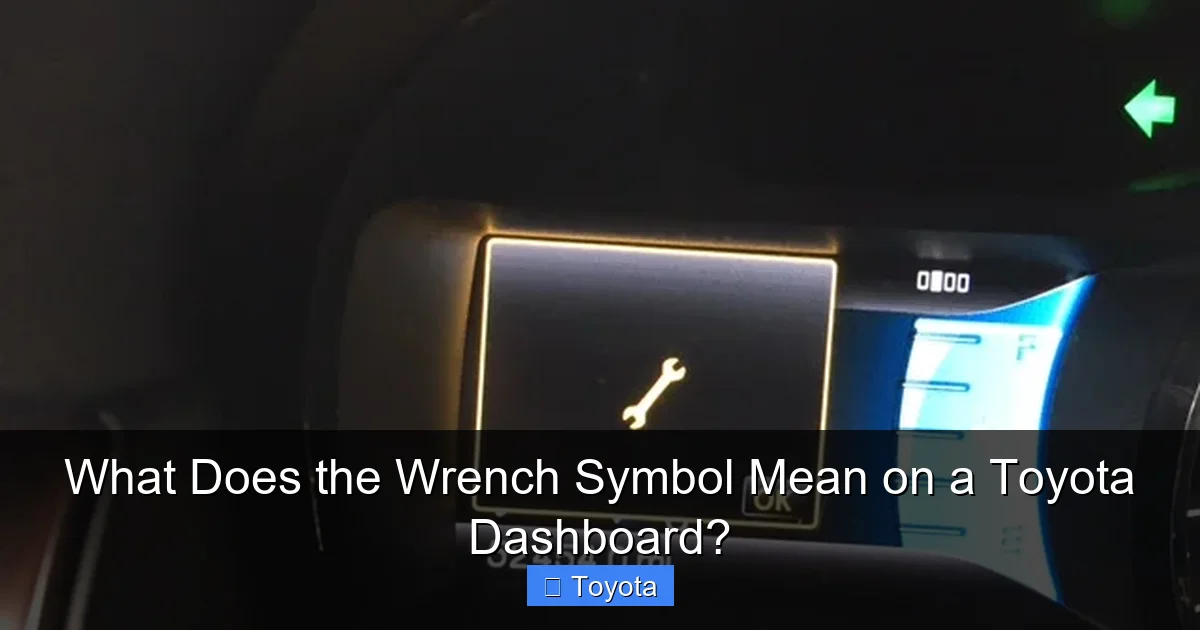
Visual guide about What Does the Wrench Symbol Mean on a Toyota Dashboard?
Image source: cdn.carcomplaints.com
Oil Change Intervals (The #1 Culprit)
This is, by far, the most frequent reason the wrench appears. Toyota’s traditional interval for conventional oil was 5,000 miles. With synthetic oil, which is now factory-fill in most new models, the interval stretches to 8,000, 10,000, or even 12,000 miles, depending on the model and year. If you’re using conventional oil or have an older Toyota (pre-~2010), that 5,000-mile mark is a classic trigger. Overdue oil changes lead to sludge buildup, increased engine wear, and poor performance. When you get an oil change, the technician must reset the maintenance light for it to turn off.
Tire Rotation and Pressure Checks
Tire rotation is typically due every 5,000 to 8,000 miles—often coinciding with oil changes. Uneven tire wear reduces traction, fuel economy, and tire lifespan. The wrench light can be tied to this interval. Additionally, the Tire Pressure Monitoring System (TPMS) may require a “relearn” or reset after rotation or inflation, which some shops do as part of the service. A separate TPMS light (a cross-section of a tire with an exclamation point) is for low pressure, but the wrench can cover the rotation schedule.
Brake Inspection and Fluid Levels
Brake service intervals vary widely. Some Toyotas have a brake wear sensor that triggers a separate brake light, but the general maintenance wrench can come on for a scheduled brake inspection, especially on models with rear drum brakes that need periodic adjustment. It also commonly reminds you to check and top off all fluid levels: engine oil, coolant, brake fluid, power steering fluid, and windshield washer fluid. Low or degraded brake fluid is a serious safety issue that the wrench might be reminding you about.
Other Scheduled Services: Filters, Fluids, and Belts
The wrench is a catch-all for the entire factory maintenance schedule. This includes:
- Engine Air Filter: Usually every 15,000-30,000 miles. A clogged filter strangles engine performance and fuel economy.
- Cabin Air Filter: Every 15,000-30,000 miles. Affects HVAC performance and air quality inside the car.
- Transmission Fluid: A critical and often overlooked service. “Lifetime” fluid in many modern automatics still benefits from a proactive change around 60,000-100,000 miles. The wrench might remind you of this.
- Spark Plugs: Typically every 30,000-120,000 miles depending on the type (iridium/platinum last longer). Worn plugs cause misfires and poor fuel economy.
- Coolant Flush: Every 30,000-50,000 miles or 3-5 years. Old coolant loses its anti-corrosion and boiling point properties.
- Timing Belt/Chain Inspection: On models with a timing belt (many pre-2010 models), replacement is crucial at 60,000-90,000 miles. A failure destroys the engine. The wrench is your reminder.
Sensor Malfunctions or Glitches
Less commonly, the wrench light might come on due to a faulty sensor or a glitch in the maintenance reminder computer itself. If you are certain you are up to date on all services according to the manual, and the light persists after a proper reset, it could indicate a problem with the system’s timer module or a communication error. This is less common but possible.
How to Reset the Wrench Light: A Step-by-Step Guide
Once the required service is performed, the light needs to be manually reset to start the countdown for the next interval. A technician will always do this. If you’re a DIY enthusiast who just changed your oil, you’ll need to know how. Important: Only reset the light after you have completed the actual service. Resetting it without doing the work is fraudulent and defeats the purpose of the system, risking engine damage.
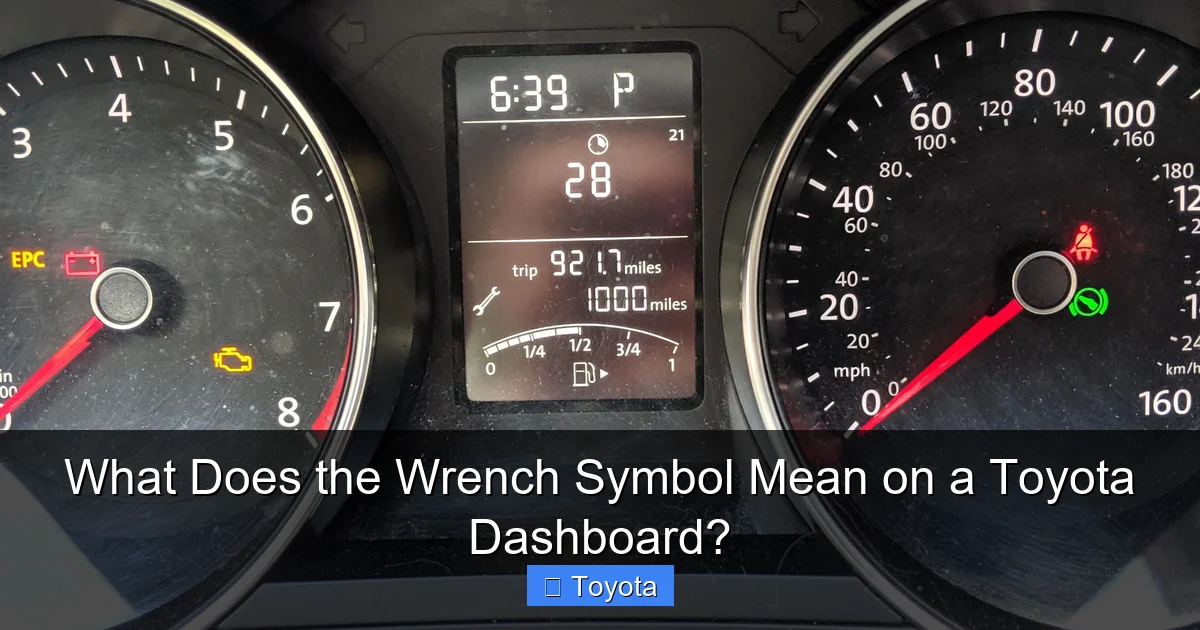
Visual guide about What Does the Wrench Symbol Mean on a Toyota Dashboard?
Image source: i.redd.it
The Standard Odometer/Reset Button Method (Most Common)
This method works for a vast majority of Toyotas from the late 1990s through the 2010s. The exact button labels may vary (“trip,” “odo,” “reset”).
- Turn the ignition ON. Do not start the engine. Press the “Start” button twice (without touching the brake) on push-button start models to put it in “ON” mode.
- Turn the odometer/trip meter display to “ODO” (Odometer). Use the buttons on the instrument cluster or stalk to cycle through until you see the total mileage, not trip A or B.
- Turn the ignition OFF.
- Press and hold the reset/odometer button. While holding it, turn the ignition back to the ON position.
- Continue holding the button. You should see the odometer display dashes or a series of zeros, then it will return to the mileage reading.
- Release the button. The wrench light should be off. Start the engine to confirm.
Tip: If this doesn’t work, consult your owner’s manual. The procedure for your specific year and model is always the final authority.
Using the Multi-Information Display (Newer Models)
For newer Toyotas (roughly 2015+) with color multi-information displays, the process is often menu-driven.
- With the car ON (engine off), use the steering wheel buttons or dash controls to navigate to the “Settings” or “Vehicle Settings” menu.
- Look for an option like “Maintenance,” “Maintenance Reset,” or “Scheduled Maintenance.”
- Select it. The system may ask you to confirm the reset or show the next service mileage. Confirm the reset.
- The wrench icon should disappear from the display.
Sometimes, you may need to scroll to the wrench icon itself on the main display and then press and hold the “Enter” or “Set” button for several seconds.
When Reset Won’t Work: Indicators of a Bigger Problem
If you’ve performed the service and followed the reset procedure perfectly, but the wrench light comes back on almost immediately or after a very short drive, it’s a red flag. This could mean:
- The reset procedure was not followed correctly.
- A sensor related to the service (e.g., oil quality sensor, service interval sensor) is faulty.
- The maintenance system’s internal timer module has failed.
- There is an underlying issue that is causing the car to think the service interval is expiring prematurely (rare).
In this case, a visit to a mechanic or a Toyota dealership is necessary. They can use specialized diagnostic tools to check the maintenance reminder module and related systems. For those interested in deeper diagnostics on other Toyota models, understanding systems like Auto LSD on a Tundra can be helpful, though it’s a separate system from the maintenance reminder.
What Happens If You Ignore It? The Real Consequences
“It’s just a light. I’ll get to it next week.” This is the most common—and costly—mistake. The wrench is a proactive warning. Ignoring it turns a planned, affordable maintenance event into an unpredictable, expensive repair. The consequences stack up over time.
Short-Term Consequences: Poor Performance and Efficiency
Even a few thousand miles past an oil change can cause engine oil to degrade into a sludge-like substance. This increases friction, causes the engine to run hotter, and reduces fuel economy. You might notice a slight drop in power, a rough idle, or hear more engine noise. An overdue air filter makes your engine work harder to breathe, similarly killing efficiency. Worn spark plugs cause misfires, which damage the catalytic converter over time and trigger the check engine light.
Long-Term Damage Risks: From Annoying to Catastrophic
The long-term risks are where the real money is lost. Severely overdue oil changes lead to bearing wear, piston ring failure, and ultimately, engine seizure—a multi-thousand-dollar engine replacement. Ignoring a timing belt replacement recommendation can result in the belt snapping while the engine is running. In an interference engine (many Toyota 4-cylinders are), this means the pistons and valves collide, destroying the engine. Overdue transmission fluid leads to slipping, harsh shifts, and eventually, transmission failure. Brake fluid absorbs moisture over time; old fluid can boil under heavy braking, leading to complete brake failure.
Resale Value and Warranty Implications
A well-documented service history, with timely attention to all reminders, is the single biggest factor in a used Toyota’s value. A buyer (or a dealership) will see a car with a history of ignored maintenance lights as a risky purchase and will discount the price heavily. Furthermore, if your Toyota is still under its original warranty, failing to adhere to the manufacturer’s prescribed maintenance schedule can give Toyota grounds to deny a warranty claim for a related component failure. For example, if your engine fails and you have no record of oil changes at the recommended intervals, they may argue the failure was due to neglect.
When to See a Mechanic vs. DIY: Knowing Your Limits
The wrench light opens the door to a decision: can I handle this, or do I need a pro? The answer depends entirely on the specific service item due and your own skill level.
DIY-Friendly Tasks (For the Capable Enthusiast)
Some services are straightforward and safe for a home mechanic with basic tools and knowledge:
- Oil and Filter Change: The classic DIY job. Requires the correct oil weight/amount, a new filter, a drain pan, wrenches, and a safe way to lift the car. Remember to properly dispose of old oil.
- Air Filter Replacement: Usually just a few clips or screws. Check your manual for location (engine bay or cabin). Inexpensive and quick.
- Cabin Air Filter: Often located behind the glovebox. May require simple tools. A very easy DIY.
- Wiper Blade Replacement: Simple clip-on styles. Know the exact blade size for your model.
- Bulb Replacement: Headlights, taillights, turn signals. Can be tricky on some modern models requiring bumper removal, but often simple.
- Basic Fluid Top-Offs: Windshield washer fluid is easy. Engine oil and coolant can be topped off if low, but this is a temporary fix, not a solution to a leak.
After any DIY service, you must reset the light using the correct procedure. Keep your own records with dates, mileage, and what was done.
Professional Services Needed (Leave It to the Experts)
These tasks require specialized knowledge, tools, lifts, or involve critical safety systems:
- Brake Jobs: While pad replacement is a common DIY, it requires proper torque, lubricant, and bedding-in. Disc brakes need caliper piston tools. Drum brakes are more complex. Mistakes are dangerous.
- Transmission Fluid Service: Often requires a professional flush machine or a complex procedure to avoid air in the system. Incorrect fluid type or level is disastrous.
- Coolant Flush: Requires proper disposal, bleeding of air from the system, and often a specific sequence to avoid overheating.
- Timing Belt/Chain Replacement: An interference engine job is not for beginners. Requires special tools, precise timing marks, and often the removal of many components. A mistake can destroy the engine.
- Major Suspension or Steering Work: Ball joints, tie rods, struts require alignment afterward and involve critical safety components.
- Any Diagnostic Work: If the wrench is accompanied by other symptoms (noises, performance issues) or if the light won’t reset, a professional diagnosis using advanced scan tools is needed.
For complex Toyota-specific systems, like the H4F mode on a 4Runner or the intricate electronics in a hybrid, professional expertise is invaluable.
Diagnostic Tools: OBD2 Scanners and Toyota Techstream
A basic OBD2 scanner (available for $20-$100) can read and clear generic check engine codes but will not reset the maintenance reminder light in most Toyotas. That requires a more advanced scan tool that can access the manufacturer-specific Body Control Module or Maintenance Module. Toyota’s proprietary software, Techstream, is the gold standard for diagnostics and resets but is expensive and complex for a casual user. For a simple reset after a known service, the manual button-press method is best. If you’re troubleshooting why the light is on prematurely, a professional with Techstream is necessary.
Toyota Model-Specific Nuances: It’s Not Always the Same
While the core meaning of the wrench is universal across the Toyota brand, its behavior and the exact services it reminds you of can vary.
Differences in Light Behavior and Display
Some older models have a simple, dedicated wrench icon on the gauge cluster. Newer models with digital displays might show the wrench icon within the multi-information screen, sometimes alongside text like “MAINT REQD” or the remaining mileage until service. On some models (like certain Corollas or Camrys), the light might flash for a few seconds upon startup every time you turn the car on until the next service is performed, serving as a constant visual reminder. On others, it may just stay solid once the interval is reached.
Hybrid Models (Prius, RAV4 Hybrid) – Any Differences?
The principle is identical. The hybrid system does not change the maintenance reminder logic. You will still have oil changes, tire rotations, and brake inspections. However, note that hybrid models often have regenerative braking, which can lead to less wear on the traditional friction brakes. This might extend the life of brake pads, but the brake fluid still needs periodic inspection and replacement due to moisture absorption. The maintenance schedule in the manual for hybrids will account for this. The wrench light will still come on for the prescribed brake service interval, even if the pads have lots of life left, because the fluid needs attention.
Older vs. Newer Models: Simplicity vs. Complexity
Pre-2010 models generally have a simpler, mileage-based system with a straightforward reset procedure involving the odometer button. Post-2015 models with full-color displays often have menu-driven resets and may incorporate more data points (like engine run-time or driving habits) into their reminder algorithms. The owner’s manual for your specific year is non-negotiable. For instance, the maintenance requirements and reset steps for a 2005 Camry will differ from those for a 2022 Camry. If you own a model with a unique feature like a Hold button on a RAV4, that’s a separate system, but the wrench reminder operates independently.
Conclusion: Your Wrench is a Friend, Not a Foe
That little wrench on your dashboard is one of the most useful tools in your car’s arsenal. It’s a direct line of communication from your Toyota’s computer, designed to keep you ahead of the maintenance curve. Unlike a sudden, frightening warning light, it gives you the gift of time and planning. When it illuminates, your action plan is simple: Check your owner’s manual. Find out what service is due at your current mileage. Then, decide if it’s a DIY project or a job for your trusted mechanic. Perform the service, reset the light, and start your next interval with a clean slate. By respecting this humble symbol, you’re not just checking a box; you’re investing in your Toyota’s reliability, safety, performance, and long-term value. You’re preventing small, affordable services from ballooning into major, budget-busting repairs. So the next time you see that wrench, smile. It’s your car saying thank you for taking good care of it.
Frequently Asked Questions
Is it safe to drive with the wrench light on?
Yes, for a limited time and distance. The wrench is a maintenance reminder, not an immediate danger signal. You can safely drive to your mechanic or, if doing the service yourself, to the parts store. However, you should address the underlying service (like an oil change) as soon as possible, typically within a few hundred miles, to avoid potential damage.
How much does a typical service cost when the wrench light comes on?
Cost varies wildly by service, model, and location. A basic oil change and filter might cost $40-$80. A more comprehensive service (oil, filter, tire rotation, fluid checks, multi-point inspection) could be $80-$150. Major services like transmission fluid change or timing belt replacement can range from $300 to over $1,000. Your owner’s manual lists the exact items for each interval, allowing you to get accurate quotes.
Can I reset the wrench light without doing the service?
Technically, yes, using the manual reset procedure. However, you should not. The light exists to protect your engine and other components. Resetting it without performing the actual maintenance is like erasing a doctor’s prescription reminder—it puts your car’s health at serious risk and can lead to costly failures. Always perform the service first.
Will the wrench light turn off by itself?
No. The maintenance reminder system is designed to stay illuminated until it is manually reset. It will not turn off on its own after you drive a certain distance or time. The only way to extinguish it is to complete the required service and then perform the reset procedure.
What if the wrench light comes back on right after I reset it?
This indicates a problem. First, double-check that you performed the correct service for your model’s required interval. If you did, the light coming back immediately suggests a faulty sensor, a glitch in the maintenance module, or that the system was not reset properly. A professional diagnosis with a Toyota-specific scan tool is needed to identify and fix the issue.
Does the wrench light affect my Toyota’s warranty?
Indirectly, yes. Failing to follow the factory-prescribed maintenance schedule (as indicated by this light) can void warranty coverage for components that fail due to lack of maintenance. For example, an engine failure with no record of oil changes at the recommended intervals could be denied as “owner neglect.” Keeping up with all wrench reminders and maintaining service records protects your warranty.