
What Is the Average Mileage Life of a Toyota Corolla?

The Toyota Corolla is renowned for its exceptional durability, with a well-maintained model often lasting between 200,000 and 300,000 miles. This impressive lifespan is not a guarantee but a common reality for owners who adhere to strict maintenance schedules and practice gentle driving habits. Factors like model year, driving conditions, and timely repairs play a critical role in reaching these high mileage milestones. Ultimately, the Corolla’s reputation for reliability is built on decades of proven engineering and owner experiences.
Key Takeaways
- Exceptional Longevity is Common: With diligent care, many Toyota Corollas surpass 200,000 miles, and reaching 300,000 miles is an achievable goal for dedicated owners.
- Maintenance is the #1 Factor: Consistent, timely oil changes, fluid flushes, and replacing wear-and-tear items (belts, brakes, tires) are non-negotiable for achieving high mileage.
- Driving Habits Matter: Gentle acceleration, avoiding short trips that don’t warm the engine fully, and preventing extreme idling significantly reduce long-term wear.
- Model Year & Engine Play a Role: Later models (2014+) with the 2ZR-FE engine are particularly robust. Older models (pre-2000s) can also last but may require more frequent attention to specific components.
- Transmission Care is Crucial: The automatic CVT (in newer models) and traditional automatics (in older models) require specific fluid service intervals. Manual transmissions are inherently simpler but need clutch maintenance.
- Corrosion is the Silent Killer: In regions with road salt, undercarriage rust can end a car’s life long before the engine fails. Regular washing and undercoating are vital defenses.
- Listen to Your Car: Addressing minor noises, vibrations, or warning lights immediately prevents small issues from becoming catastrophic, expensive failures.
📑 Table of Contents
- Understanding “Mileage Life”: What Does It Really Mean?
- Factors That Influence Your Corolla’s Lifespan
- Real-World Mileage Examples: What Owners Are Actually Getting
- Maintenance Must-Dos for High-Mileage Success
- Signs of Aging: What to Watch For
- Maximizing Your Corolla’s Life: The Proactive Owner’s Guide
- Conclusion: The Corolla Legacy is in Your Hands
Understanding “Mileage Life”: What Does It Really Mean?
When we talk about the “average mileage life” of a car like the Toyota Corolla, we’re not talking about a built-in expiration date stamped on the odometer. Instead, it’s a statistical reflection of how many miles a significant number of these vehicles typically accumulate before major, cost-prohibitive repairs make them impractical to keep on the road. It’s the point where the cost of keeping the car running begins to sharply outweigh its value.
For the Toyota Corolla, this number is famously high. It consistently tops reliability surveys from J.D. Power, Consumer Reports, and Kelley Blue Book. This isn’t accidental; it’s the result of conservative, proven engineering. Toyota prioritizes durability and long-term reliability over cutting-edge, unproven technology that might fail prematurely. The Corolla’s engines, particularly the 1.8L 2ZR-FE and 2.0L M20A-FKS in modern models, are designed with ample strength margins and simple, efficient architectures. They are not tuned for peak horsepower at the expense of engine life. This philosophy extends to the transmission, suspension, and interior components.
Think of it this way: the “average” is a bell curve. On the far left are the neglected Corollas that die at 100,000 miles due to deferred maintenance. On the far right are the meticulously cared-for examples that sail past 400,000 miles. The massive bulge in the middle—the true average—sits proudly between 200,000 and 300,000 miles. Our job is to understand what pushes a car into that right-hand side of the curve.
The Difference Between “Battery” and “Engine” Life
A common point of confusion is equating the car’s overall lifespan with the engine’s lifespan. The engine in a Corolla, if maintained with perfect oil changes and coolant flushes, can theoretically run indefinitely. It’s the surrounding systems—the transmission, the electrical system, the body structure—that usually dictate the end. A flawless engine won’t help you if the CVT transmission fails at 180,000 miles or if the frame is riddled with rust. Therefore, when discussing “mileage life,” we must consider the entire vehicle as a system of interdependent parts.
Factors That Influence Your Corolla’s Lifespan
So, what separates the 150,000-mile Corolla from the 350,000-mile one? It’s a combination of factors, some within your control and some not. Let’s break them down.
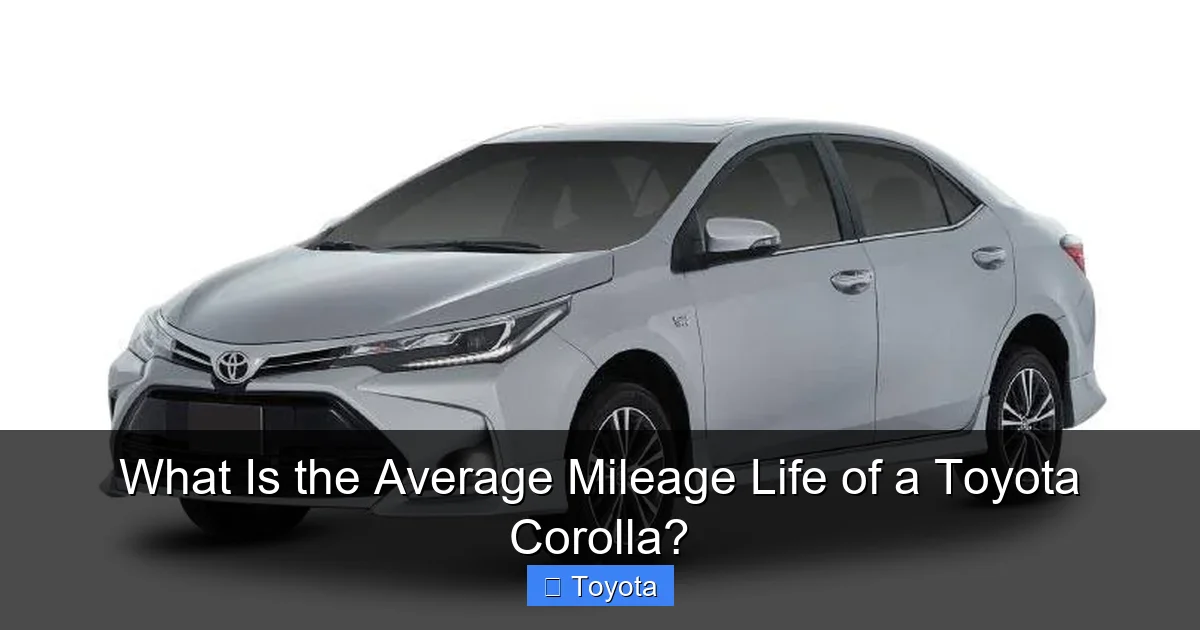
Visual guide about What Is the Average Mileage Life of a Toyota Corolla?
Image source: gari.pk
The Unbeatable Triad: Maintenance, Maintenance, Maintenance
This cannot be overstated. The single greatest predictor of a Corolla’s longevity is a complete, unwavering adherence to the maintenance schedule found in the owner’s manual. This isn’t just about oil changes every 5,000 or 10,000 miles. It’s the full regimen:
- Engine Oil & Filter: This is the lifeblood. Using the correct oil weight (e.g., 0W-16 in newer models) and changing it on time prevents sludge and wear. Skipping this is the fastest way to kill an engine.
- Transmission Fluid: For automatics, this is critical. “Lifetime” fluid in many modern manuals is a marketing term, not a service interval. Many mechanics recommend changing CVT fluid every 60,000-100,000 miles for longevity. For older conventional automatics, a 30,000-60,000 mile interval is wise. If you’re unsure about the specifics for your model year, a resource like this guide on Corolla-specific features often points to maintenance modes that can help monitor system health.
- Coolant System: Engine coolant degrades over time, losing its anti-corrosion and boiling point properties. A failed water pump or cracked radiator hose can cause catastrophic overheating. Flush the system as recommended (often every 100,000 miles for modern long-life coolant).
- Timing Chain/Components: Most modern Corolla engines use a timing chain, which is theoretically “lifetime.” However, the tensioners and guides are wear items. Listening for rattling on cold start (a “cold start chain rattle”) can indicate impending failure. Addressing this at 200,000+ miles is a wise preemptive measure.
- Spark Plugs & Ignition Coils: Regular replacement ensures efficient combustion and prevents misfires that can wash oil off cylinder walls and damage the catalytic converter.
Driving Style: The Gentle Giant vs. The Taxi Driver
How you drive is almost as important as how often you service. A Corolla driven primarily on long, steady highway miles will accumulate far less wear than one used exclusively for stop-and-go city traffic or as a constant ride-share vehicle. Short trips are particularly hard because the engine never reaches full operating temperature, leading to fuel dilution of the oil and increased moisture in the exhaust system, which can accelerate rust. If your Corolla is a commuter, occasionally take a 20-minute highway drive to let everything warm up and burn off contaminants.
Aggressive driving—hard acceleration, slamming brakes—puts immense shock load on the drivetrain, suspension, and brakes. While the Corolla can handle it, doing it consistently will wear out CV joints, brake pads, and engine mounts much sooner. The goal for longevity is smooth, predictable inputs.
Environment: The Rust Belt vs. The Sun Belt
Geography plays a huge role. In the “Sun Belt” states with little road salt, body corrosion is a minor concern. A 20-year-old Corolla in Arizona might have pristine body panels. In the “Rust Belt” (Northeast, Midwest), road salt is a relentless enemy that attacks the undercarriage, wheel wells, and behind the trim. Once structural rust compromises the frame or suspension mounting points, the car is effectively unsafe and unfixable. Regular washing, especially in winter, and applying an undercoating sealant can add a decade to a car’s life in these regions. For older models, checking for rust behind the front fender liners and under the rear seat area is a common inspection point.
Model Year and Powertrain Evolution
Not all Corollas are created equal in terms of long-term robustness. The bulletproof 4A-FE and 7A-FE engines of the 1990s are legendary for their simplicity and ability to run on minimal maintenance. The 1ZZ-FE (2000-2007) is also very durable but known for oil consumption issues in some examples, making vigilant oil level checks critical.
The 2ZR-FE (2007-2019) is arguably the pinnacle of this philosophy—a strong, efficient, and remarkably trouble-free engine when maintained. The newest M20A-FKS (2020+) continues this trend with even better efficiency. From a transmission perspective, the traditional 4-speed and 6-speed automatics are mechanically simple and rebuildable. The introduction of the CVT (Continuously Variable Transmission) in the 2014+ model year was a major shift. Early CVTs had some concerns, but Toyota’s units are generally robust. Their Achilles’ heel is heat and neglect. Regular fluid changes are arguably more important for a CVT than for a traditional automatic to prevent belt wear and shuddering.
Real-World Mileage Examples: What Owners Are Actually Getting
Statistics are one thing, but anecdotes from the road are more persuasive. Let’s look at some common scenarios for different generations.
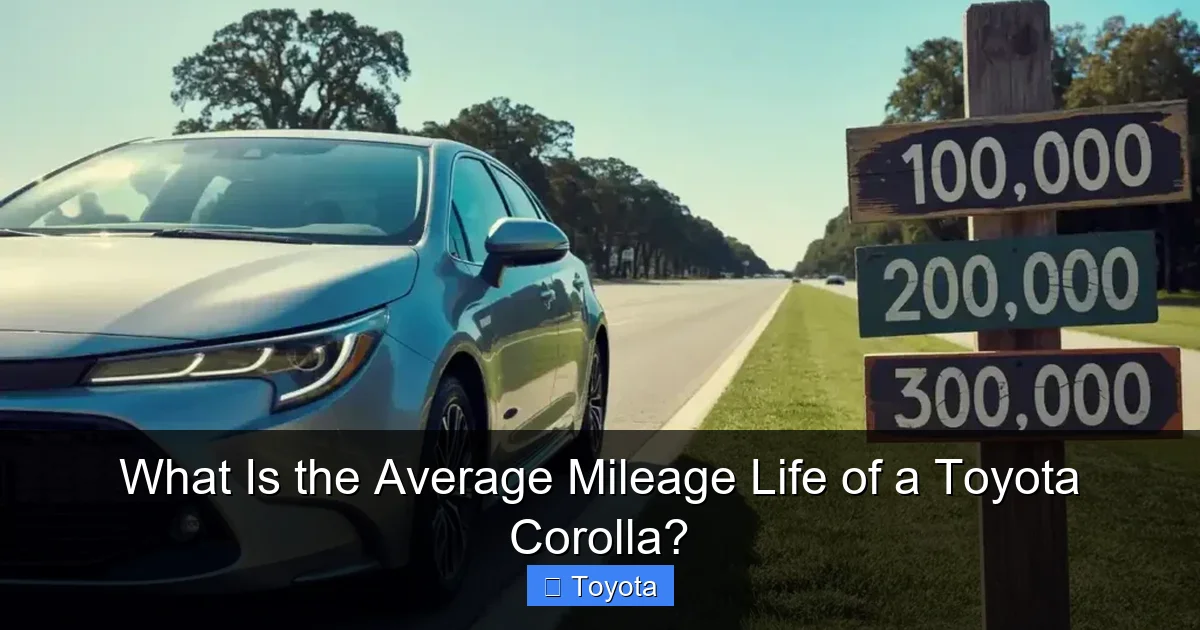
Visual guide about What Is the Average Mileage Life of a Toyota Corolla?
Image source: mtoyos.com
The Million-Mile Myth and Reality
You’ve probably heard stories of a Toyota reaching one million miles. These are real, but they are extreme outliers—the absolute pinnacle of the right-hand side of the bell curve. They usually involve a single, devoted owner who followed the maintenance schedule religiously, used only high-quality parts and fluids, and performed many repairs themselves. The famous million-mile 1996 Corolla owned by Victor Sheppard is a perfect example. It had its engine and transmission rebuilt multiple times as preventative measures. This is not the “average” life, but it proves the theoretical maximum with unlimited resources and dedication.
The 200,000 to 300,000 Mile Sweet Spot
This is where the true average Corolla lives. On forums like ToyotaNation and Reddit’s r/Toyota, it’s common to see posts from owners selling their 2008 or 2012 Corolla with 250,000 miles because “it still runs perfectly, but I wanted something new.” These cars typically have a service history showing:
- Oil changes every 5,000-7,500 miles.
- At least one transmission fluid service (for automatics).
- Replacements of the water pump, timing belt/chain components (if applicable), and all major fluids around the 150,000-200,000 mile mark.
- Regular brake, tire, and suspension component replacement.
At this stage, the car is essentially “paid off” in terms of depreciation. The cost of ownership is just fuel, insurance, and ongoing maintenance. A major repair like a transmission rebuild ($2,500-$4,000) at 220,000 miles is often a considered decision based on the car’s overall condition and the owner’s emotional attachment.
The High-Mileage Corolla on a Budget
What if you buy a used Corolla with 150,000 miles and no service history? This is the gamble. The potential is there to reach 250,000 miles, but you’re starting from behind. Your first $1,000 should be a comprehensive “major service” at a trusted mechanic: full fluid flush (engine, transmission, coolant, brake), spark plugs, inspection of belts, hoses, suspension, and brakes. Budget for a timing chain/belt service if records are unclear. From there, follow the manual to the letter. You’re essentially resetting the maintenance clock.
Maintenance Must-Dos for High-Mileage Success
Let’s get specific. Here is a practical, mileage-based checklist to transform your Corolla from a simple commuter into a high-mileage legend.
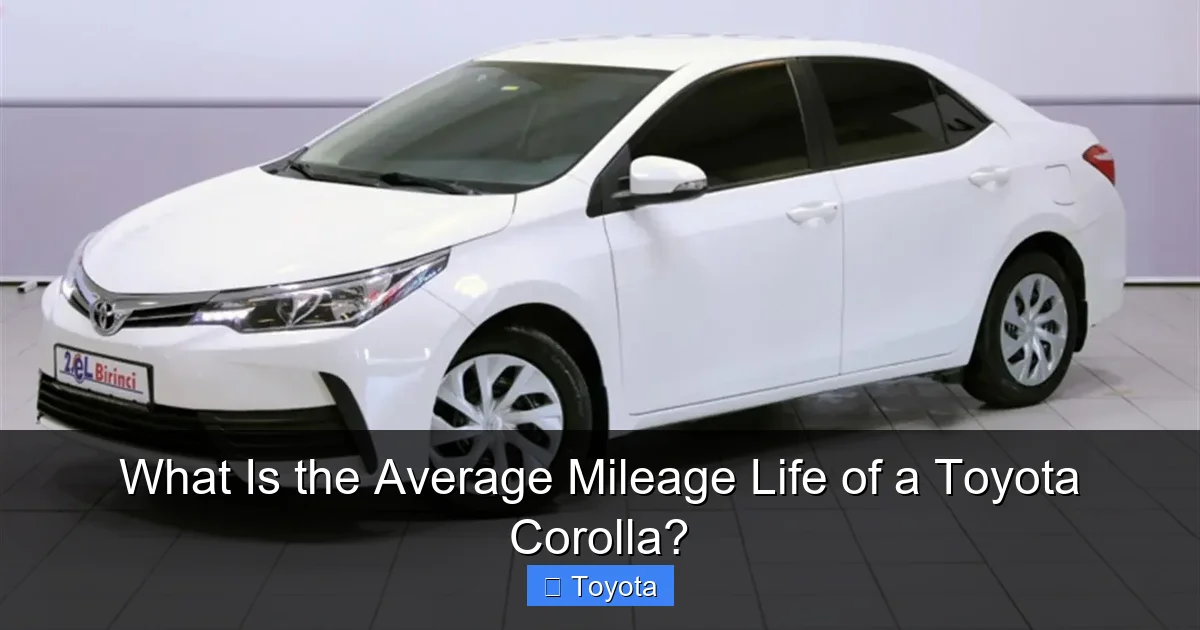
Visual guide about What Is the Average Mileage Life of a Toyota Corolla?
Image source: aracyorum.com
The 30,000/60,000/100,000 Mile Service Milestones
While your owner’s manual is gospel, these are common intervals for key services. Engine Oil & Filter: Every 5,000-10,000 miles (use synthetic). Air Filter: Every 15,000-30,000 miles. Cabin Air Filter: Every 15,000-30,000 miles (a must for HVAC health). Transmission Fluid: This is the big one. For older automatics, every 30,000-60,000 miles. For CVTs, a strong case can be made for every 60,000 miles. Don’t ignore it. Coolant Flush: Every 100,000 miles for modern long-life coolant, every 30,000-50,000 for older green coolant. Spark Plugs: Every 60,000-120,000 miles (iridium plugs last longer). Brake Fluid: Every 2 years, regardless of mileage (hygroscopic fluid absorbs moisture). Differential Fluid: (For AWD models, but also for FWD axle boots) Every 60,000-100,000 miles.
The “When Things Start to Wear” Checklist (150,000+ Miles)
At this point, preventative replacement of wear items becomes more cost-effective than waiting for failure:
- Timing Chain Tensioner/Guides: Listen for a rattling noise for a few seconds on cold starts. If present, budget for replacement.
- Water Pump: Often driven by the timing belt/chain. Replacing it during a timing service is cheap insurance.
- Engine & Transmission Mounts: These rubber components degrade, causing harsh shifting and vibrations. Replacing them improves comfort dramatically.
- Oxygen (O2) Sensors: These fail around 100,000-150,000 miles, hurting fuel economy and triggering check engine lights. Replace with OEM or high-quality aftermarket.
- Alternator & Starter: These can last the life of the car, but 200,000 miles is a common failure point. Listen for slow cranking or charging warnings.
- Exhaust System: Rust can cause leaks and noise. Inspect annually.
For specific DIY tasks like checking or replacing certain components, knowing how to safely open the hood is the first step to performing basic inspections and fluid checks yourself.
Signs of Aging: What to Watch For
Even with perfect maintenance, components age. Knowing the common failure points for high-mileage Corollas helps you diagnose issues early.
The Transmission: The Most Critical Component
For automatics, watch for:
- Delayed Engagement: A pause between “Drive” and the car moving, especially when cold.
- Harsh Shifts or Shuddering: Particularly in CVTs, a vibration or “rubber band” feeling under light acceleration.
- Fluid Condition: Transmission fluid should be bright red and smell slightly sweet. If it’s dark brown/black and smells burnt, it’s overdue for a change and the transmission may be damaged.
For manuals, watch for:
- Difficulty Shifting or Grinding Gears: Worn synchros or clutch issues.
- Clutch Slippage: Engine RPM rises without a corresponding increase in speed when accelerating.
- Coolant Loss: Without visible leaks, this often points to a failing head gasket, a known (though not universal) issue on some 1ZZ-FE engines. A sweet-smelling exhaust or milky oil are dead giveaways.
- rattling on startup: As mentioned, could be timing chain tensioner.
- Loss of Power & Poor Fuel Economy: Clogged catalytic converters (often from neglected oil changes or coolant in the exhaust) will strangle the engine. A diagnostic scan for O2 sensor and efficiency codes is the first step.
- If you need to diagnose a check engine light, understanding basic diagnostic tools or codes can be helpful, though a professional scan is best.
The Engine: Beyond the Basics
At high mileage, minor oil consumption (a quart every 1,000-1,500 miles) can be normal due to worn piston rings. But excessive smoking (blue or gray) from the exhaust is a sign of major wear. Also, watch for:
The Body and Interior
Rust is the ultimate killer. Inspect the rocker panels, behind the rear wheels, and the floor pans. Interior-wise, power window regulators, door lock actuators, and HVAC blend doors (which control the eco heat/cool mode) are common failure points after 150,000 miles. These are annoying but rarely fatal.
Maximizing Your Corolla’s Life: The Proactive Owner’s Guide
You now know the “what” and the “why.” Here is the actionable “how.”
Build a Relationship with a Trustworthy Mechanic
This is your most important asset. Find an independent shop that specializes in Toyotas or has excellent reviews. Bring them your maintenance records. A good mechanic who knows your car’s history can spot potential problems early and advise you on cost-effective repairs vs. replacement. They are your partner in achieving high mileage.
Keep Meticulous Records
Use a simple spreadsheet or a dedicated app. Log every single service: date, mileage, what was done, and where. This is invaluable when you sell the car (proving it’s been well-cared-for) and for your own reference. It also helps your mechanic.
Use Quality Parts and Fluids
Do not cheap out on engine oil, filters, or critical fluid changes. Use the oil viscosity specified in the manual. For transmission fluid, use the exact Toyota WS (for CVT) or T-IV (for conventional automatics) specification if possible. For other parts, OEM (Original Equipment Manufacturer) or high-quality OEM-equivalent brands (like Denso, Aisin, NGK) are worth the small premium for longevity.
Address Issues Immediately
The “ignore and see” approach is the enemy of longevity. A $200 coolant leak repair now becomes a $3,000 head gasket job later. A $100 oxygen sensor replacement saves you from a $1,500 catalytic converter replacement. A small coolant leak can lead to overheating and a warped head. If you smell coolant, see puddles, or get an overheating warning, stop driving and diagnose.
Consider Your Driving Environment
If you live in a harsh climate, be extra vigilant. In winter, wash the undercarriage frequently. In summer, ensure your cooling system is in top shape. If you frequently tow a small trailer or carry heavy loads, remember this adds stress. While the Corolla isn’t a dedicated tow vehicle, it can handle light loads if the transmission is healthy and you use the proper gear (often “3” or “L” for automatics to avoid constant CVT belt hunting). You can research your specific model’s limits, similar to how one might check the towing capacity of a different Toyota model for comparison.
Conclusion: The Corolla Legacy is in Your Hands
The Toyota Corolla’s average mileage life is not a mysterious number dictated solely by factory robots in Japan. It is a direct reflection of the relationship between the car and its owner. The engineering provides an incredibly robust, forgiving platform—a testament to Toyota’s philosophy of building vehicles for the long haul. But that platform requires respect in the form of attention, care, and timely investment.
The stories of 300,000-mile Corollas are not myths; they are case studies in preventative ownership. They belong to the person who changes the oil on schedule, who replaces the transmission fluid before it turns black, who washes the salt off the car in February, and who replaces the water pump at 190,000 miles as a precaution. They belong to the owner who sees a small leak not as an annoyance, but as a priority.
So, if you own a Corolla, you have one of the best foundations for automotive longevity ever built. Your mission, should you choose to accept it, is to be the proactive, informed caretitor that this reliable machine deserves. Follow the maintenance schedule religiously, drive with care, and address problems early. If you do, you will very likely find yourself joining the ranks of owners who have extracted 200,000, 300,000, and even more miles from their humble, unbreakable Corolla. The road is long, and your Toyota is built for it. The question is: are you ready to go the distance?
Frequently Asked Questions
What is considered high mileage for a Toyota Corolla?
For a Corolla, “high mileage” begins around 200,000 miles. However, this is not a warning sign—it’s an expectation. A well-maintained Corolla at 200,000 miles is often in better mechanical shape than a neglected one at 100,000 miles. The true test is the service history, not the odometer reading.
What is the most common major repair for a high-mileage Corolla?
For models with a continuously variable transmission (CVT, typically 2014+), the transmission itself is the most significant potential repair. For older models with conventional automatics or manuals, the timing chain/belt components (tensioner, guides) and the clutch (manual) are common wear items at 200,000+ miles. Rust-related body repairs are also a major factor in snowy climates.
Is it worth repairing a Corolla with over 250,000 miles?
Often, yes. The key is the cost of the repair versus the car’s value. A $2,500 transmission rebuild on a car worth $3,000 is a justifiable investment if the body is solid. A $4,000 repair on a rusted-out car worth $1,500 is not. The Corolla’s low insurance, good fuel economy, and reliability post-repair often make it economical to keep.
How often should I change the oil in a high-mileage Corolla?
Stick to the manufacturer’s recommendation, which is typically every 7,500-10,000 miles with full synthetic oil. For older engines or those with known oil consumption (like some 1ZZ-FE engines), consider changing every 5,000 miles. Never exceed the interval. Oil is the cheapest insurance for your engine.
My Corolla has 180,000 miles and the transmission feels rough. What should I do?
First, check the transmission fluid level and condition immediately. If it’s low, top it up with the correct Toyota fluid. If it’s dark and smells burnt, a fluid and filter change (if serviceable) is urgent. If the shuddering or harshness persists, have a mechanic diagnose it. For a CVT, this could be a failing solenoid or the beginning of belt wear. Early intervention is critical.
Can a Corolla with 300,000 miles still be reliable for daily driving?
Absolutely, but with conditions. The engine must be sound (good compression, no excessive smoke/coolant loss). The transmission must shift smoothly. The body must be free of structural rust. All major maintenance must be up to date. At this stage, it becomes a “known quantity” car. You understand its quirks and budget for its inevitable, smaller repairs (suspension bushings, sensors, etc.). It can be supremely reliable and cheap to run if it passes these checks.
