
Why the Bugatti Veyron’s Acceleration Time Is a Performance Highlight

The Bugatti Veyron’s acceleration time—a staggering 2.4 seconds to 60 mph—isn’t just a number. It’s the ultimate showcase of automotive engineering, where a massive W16 engine, sophisticated all-wheel drive, and revolutionary tire technology converge to create an earth-shaking experience. This feat redefined what’s possible for a production car and cemented the Veyron’s status as a performance icon.
Let’s talk about a number. Just four digits: 2.4. That’s the Bugatti Veyron’s official 0-60 mph time. On paper, it’s a statistic. In reality, it’s a full-throttle punch to the senses, a feat of engineering that makes the very concept of acceleration feel rewritten. While the Veyron is famed for its top speed—pushing past 250 mph to become the fastest production car of its era—it’s this brutal, immediate rush from a standstill that truly defines its legendary status. This article dives deep into why the Bugatti Veyron’s acceleration time is such a monumental performance highlight, unpacking the symphony of technology, physics, and sheer audacity behind those 2.4 seconds.
Key Takeaways
- The W16 Engine: The Veyron’s 8.0-liter quad-turbocharged W16 engine produces 1,001 horsepower, delivering relentless thrust that defies physics.
- All-Wheel Drive is Non-Negotiable: With that much power, a sophisticated all-wheel-drive system is essential to put the power down without spinning.
- Tires are Critical Components: Special Michelin tires, capable of sustaining over 250 mph, are the only contact point, making them a performance highlight in their own right.
- Acceleration Over Top Speed: While its 253 mph top speed is famous, the visceral, immediate rush of 0-60 mph acceleration is what leaves a lasting impression.
- Engineering a Package: Achieving this time required balancing immense power with weight, cooling, aerodynamics, and drivetrain durability.
- A Lasting Benchmark: The Veyron set a new standard for hypercar acceleration that competitors still measure against today.
- Emotional Impact: The acceleration time translates to a physical, unforgettable feeling that pure numbers can’t fully capture.
📑 Table of Contents
- The Unmatched Rush: Why 0-60 Matters More Than Top Speed
- Beneath the Hood: The W16 Engine’s Role in Explosive Acceleration
- All-Wheel Drive Magic: Putting Power to the Pavement
- Tires That Withstand 1,001 Horses: The Unsung Heroes
- Engineering the Impossible: Challenges and Innovations
- Legacy and Influence: How the Veyron Shaped Future Hypercars
- Conclusion: The Timeless Thrill of 2.4 Seconds
The Unmatched Rush: Why 0-60 Matters More Than Top Speed
Top speed is a king-of-the-hill contest. It’s about aerodynamic stability, engine endurance, and nerve. But acceleration? That’s pure, unadulterated drama. It’s the moment where potential energy becomes kinetic fury right under your seat. For the average driver, a 0-60 time is infinitely more relatable and terrifyingly experiential than a top speed most will never approach. The Veyron’s 2.4-second sprint places it in a rarefied air. To put that in context, many modern superbikes struggle to beat that number. It means the Veyron accelerates harder than you feel in a commercial jet during takeoff.
A visceral benchmark
This time isn’t just a bragging right; it’s a fundamental measure of a car’s ability to harness power. It tests everything: the engine’s torque curve, the transmission’s shift speed, the traction of the tires, and the rigidity of the chassis. The Veyron aced this test spectacularly. When you press the throttle, there’s no turbo lag, no build-up—just an instantaneous, seamless shove that pins you to the seat. It’s a feeling of being launched by a catapult, where the world outside blurs into a streak. This immediate, violent response is what makes the Bugatti Veyron’s acceleration time so iconic. It’s not a gradual surge; it’s an event.
Interestingly, achieving such a time with a car weighing over 4,400 pounds is even more absurd. Most hypercars achieving sub-2.5-second runs are significantly lighter, using carbon fiber monocoques and minimalist interiors. The Veyron, however, was also a masterpiece of grand tourer luxury, complete with sumptuous leather, climate control, and a smooth ride. That it could accelerate with the ferocity of a lightweight prototype while coddling its occupants is a paradox that highlights the genius of its engineering. For a look at how different priorities shape performance, consider the engineering philosophy behind a Rolls-Royce Wraith, where silent, effortless torque is the goal, not neck-snapping launches.
Beneath the Hood: The W16 Engine’s Role in Explosive Acceleration
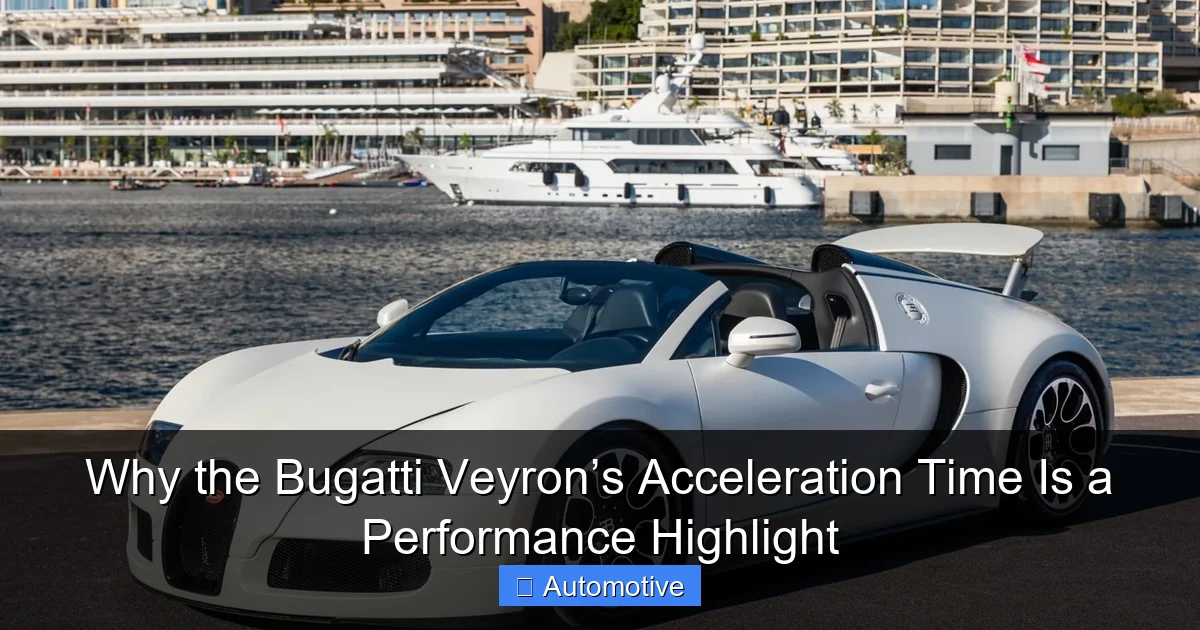
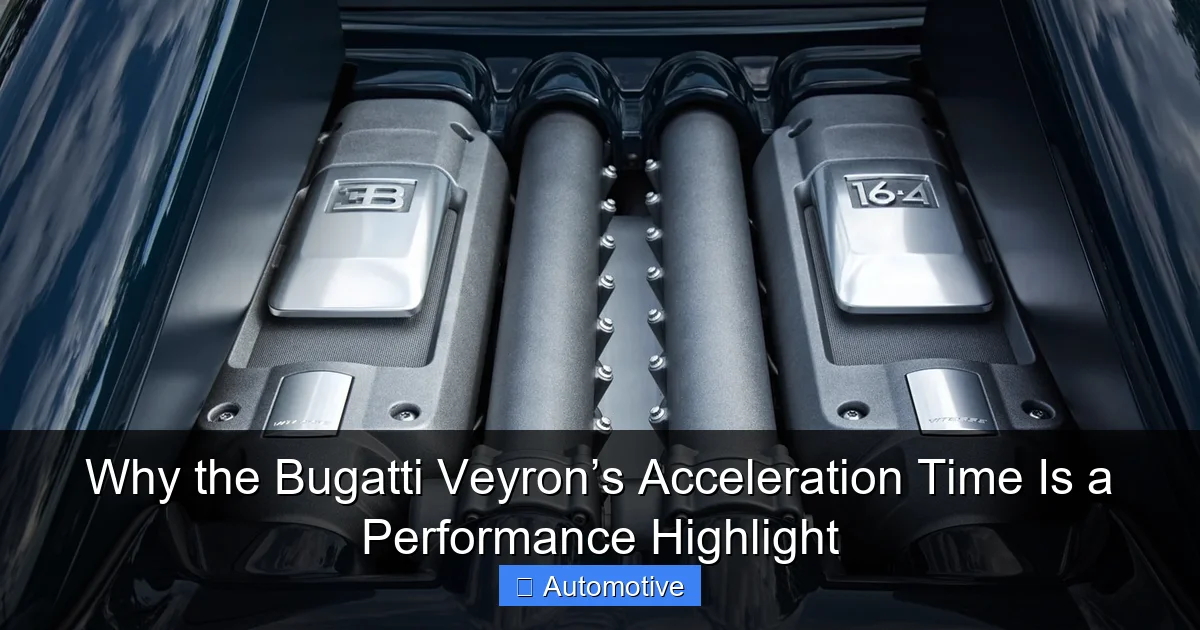
At the heart of this phenomenon is the most complex and powerful production engine of its time: the 8.0-liter quad-turbocharged W16. The “W” configuration, essentially two narrow-angle V8s mounted on a common crankshaft, allowed Bugatti to package 16 cylinders into an engine that wasn’t excessively long, fitting within the Veyron’s chassis. But the real magic is in the forced induction.
Visual guide about Why the Bugatti Veyron’s Acceleration Time Is a Performance Highlight
Image source: segond-automobiles.com
Quad-Turbocharging for Instant Thrust
Four turbochargers—two per cylinder bank—ensure immense power is available across the entire rev range. The system was designed to minimize turbo lag, a common enemy of acceleration. By using smaller, quick-spooling turbos and routing exhaust gases efficiently, the engine delivers colossal torque (922 lb-ft) from just 2,200 rpm. This means you don’t have to wait for the power to arrive; it’s there the moment you ask for it. The result is a linear, relentless surge that doesn’t peak and drop but builds steadily to the redline, making the Bugatti Veyron’s acceleration time feel consistently brutal from 0 to 120 mph and beyond.
This engineering focus on low-end torque is crucial for acceleration. Compare this to a naturally aspirated engine, which needs to rev higher to make peak power. Or even to some modern turbo engines that have a “sweet spot.” The Veyron’s W16 is like a tidal wave—it’s massive and it’s coming from the start. This philosophy of abundant, accessible torque is something explored in different contexts across the industry. For instance, the robust low-end grunt of a Nissan 3.3L V6 engine is prized for towing and daily drivability, a stark contrast to the Veyron’s high-rpm, high-horsepower focus, yet both prioritize usable power delivery.
All-Wheel Drive Magic: Putting Power to the Pavement
1,001 horsepower. That’s a number that would turn a rear-wheel-drive car into a smoke machine. To manage this, Bugatti implemented a permanent all-wheel-drive system with a sophisticated Haldex-type center differential. The system is heavily biased towards the rear (typically 70/30 split) for handling agility but can send up to 50% of power to the front wheels instantly when rear wheel slip is detected.
Visual guide about Why the Bugatti Veyron’s Acceleration Time Is a Performance Highlight
Image source: s1.cdn.autoevolution.com
The Science of Traction
This AWD system is the unsung hero of the Veyron’s acceleration. It’s not just about sending power; it’s about doing so with lightning speed and precision. During a hard launch, the system constantly monitors wheel speeds and torque, making micro-adjustments thousands of times per second. This ensures that the monumental power is translated into forward motion, not wasted as tire smoke. The Michelin Pilot Sport 2 tires, developed specifically for the Veyron, are the final link in this chain. Their unique compound and construction can withstand the forces of accelerating a 4,400+ lb car to 60 mph in 2.4 seconds without disintegrating.
This integration of powertrain and drivetrain is a lesson in systems engineering. It’s not enough to have a powerful engine; you must have the means to deploy it. This is why modern hypercars like the Koenigsegg Jesko or the Tesla Model S Plaid obsess over drivetrain efficiency and traction control software. The Veyron pioneered this holistic approach for the extreme performance segment. For a more common application of how drivetrain choice affects performance, one might examine the top speed and acceleration characteristics of a Dodge Charger, where rear-wheel-drive models with less power still achieve impressive times thanks to clever traction management.
Tires That Withstand 1,001 Horses: The Unsung Heroes
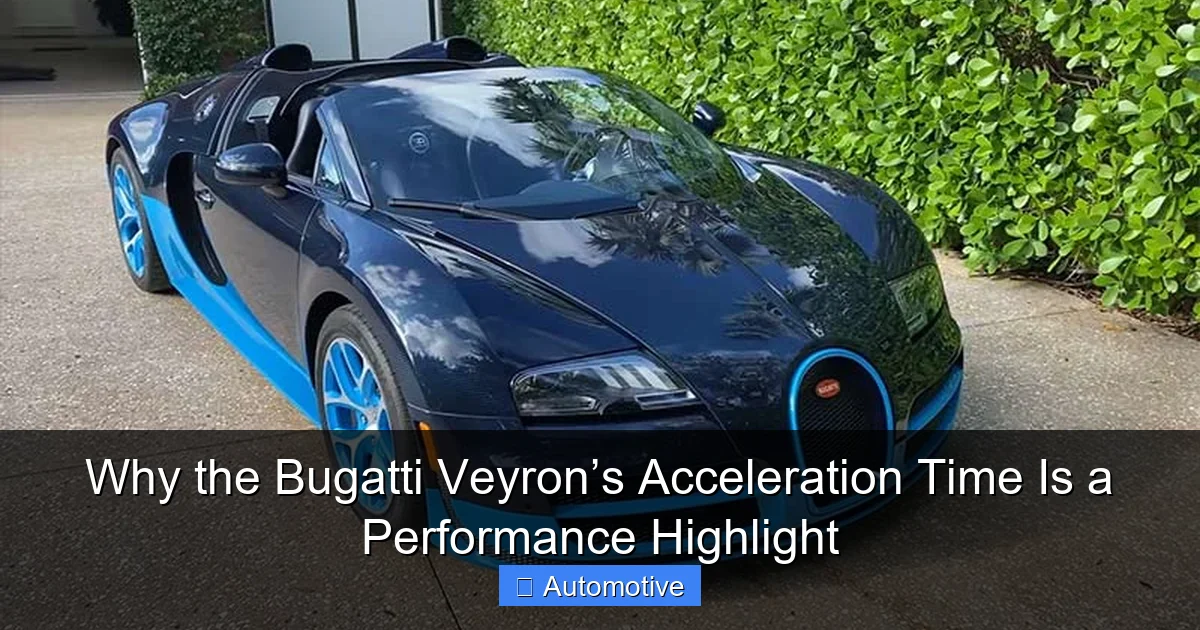
Think about this: the contact patch of each tire on the Veyron is roughly the size of your palm. Yet, it must handle the combined force of over a thousand horsepower trying to rip it from the ground. The Michelin Pilot Sport 2 (and later Pilot Sport 2+) tires are arguably one of the greatest performance components on the car. Developed in a joint program between Michelin and Bugatti, they feature a unique asymmetric tread pattern and a rubber compound capable of operating at extreme temperatures and loads.
Visual guide about Why the Bugatti Veyron’s Acceleration Time Is a Performance Highlight
Image source: metroleague.org
Engineering for Extreme Forces
These tires aren’t just sticky; they are engineered to maintain their structural integrity at the Veyron’s top speed of 253 mph, where centrifugal forces threaten to tear them apart. For acceleration, their primary job is to provide maximum initial bite and consistent grip as the car rockets forward. The tread pattern is designed to channel water away for wet performance, but on a dry surface, it’s all about maximizing the coefficient of friction. The sidewalls are reinforced to handle the massive lateral forces during cornering that follow the straight-line blast.
The collaboration between tire and car manufacturer is critical. Bugatti provided Michelin with the exact forces, speeds, and temperatures the tires would face. Michelin then built a tire from the ground up to meet those specs. This co-development is now standard in hypercar manufacturing. The tire’s role in achieving the Bugatti Veyron’s acceleration time cannot be overstated. Without a tire that could hook immediately and stay glued, all that power would be useless. It’s a perfect example of how a “consumable” component becomes a critical, high-tech element of ultimate performance.
Engineering the Impossible: Challenges and Innovations
Building a car that can accelerate this fast wasn’t just about bolging together a big engine and AWD. Every system had to be engineered to survive the punishment. The transmission, a 7-speed dual-clutch unit, had to handle immense torque shifts without breaking or overheating. The cooling system was a monumental task; the W16 generates so much heat that the Veyron has no fewer than 10 radiators. Air intakes and outlets are strategically placed all over the car to feed cool air to the engine, turbos, and intercoolers.
Weight vs. Power: The Eternal Trade-Off
One of the Veyron’s most famous statistics is its power-to-weight ratio: roughly one horsepower for every 4.4 pounds. That’s exceptional, but not record-breaking for modern hypercars. The challenge was achieving this while maintaining the luxury and build quality of a grand tourer. Extensive use of carbon fiber for the monocoque and body panels helped, but the car still weighed a lot. This makes the acceleration even more impressive—it’s not a lightweight missile, but a heavy, luxurious brick that somehow accelerates like a feather. This forced engineers to focus on drivetrain efficiency and traction above all else.
Another hurdle was durability. A one-off dragster can make 2,000 hp for a quarter-mile, but it would grenade itself after a few runs. The Veyron had to be able to do this repeatedly, on a track, in various conditions. This meant every component, from the bolts to the bearings, was over-engineered. The result is a car that feels utterly unbreakable, which adds to the confidence when exploiting its performance. For a different perspective on engineering for durability in a performance context, one might look at how Nissan’s 5.6L V8 engine is built for heavy-duty truck use, prioritizing strength and longevity over peak horsepower.
Legacy and Influence: How the Veyron Shaped Future Hypercars
The Veyron didn’t just set a benchmark; it drew the map for the modern hypercar. It proved that with enough engineering resources, you could have a car with 1,000+ horsepower that was also relatively user-friendly, reliable, and fast in a straight line. It created the “1,000 hp club” and forced every competitor to answer that challenge. The current crop of hypercars—from the Koenigsegg Jesko Absolut to the Rimac Nevera—all chase acceleration numbers in the 1.8-second realm. They stand on the shoulders of the Veyron.
More Than a Number: The Cultural Impact
The Bugatti Veyron’s acceleration time became a cultural shorthand for ultimate automotive excess and achievement. It’s the first thing people mention. It’s the star of countless YouTube videos and video games. This cultural penetration is a performance highlight in itself. It turned an engineering specification into an emotional, aspirational icon. The Veyron showed that acceleration, more than any other metric, captures the imagination. It’s simple, visceral, and measurable.
Furthermore, the technologies developed for the Veyron have trickled down. Materials science, turbocharging efficiency, and thermal management solutions pioneered in Molsheim have influenced engines and components across the automotive spectrum. The pursuit of that 2.4-second time pushed suppliers to innovate. While a Dodge Charger’s top speed or a family sedan’s 0-60 time are governed by entirely different priorities (cost, efficiency, mass-market appeal), the relentless R&D from the hypercar segment filters into improved performance for all, from hot hatches to muscle cars.
Conclusion: The Timeless Thrill of 2.4 Seconds
In the end, the Bugatti Veyron’s acceleration time is a performance highlight because it represents a perfect storm of audacious ambition and flawless execution. It’s the result of a 16-cylinder engine of mythical proportions, a brilliant all-wheel-drive system, tires that are engineering marvels, and a chassis that manages to be both a luxury liner and a projectile. That 2.4-second number is the ultimate summary of this chaos controlled. It’s a feeling that shocks the system and etches itself into memory. Decades from now, when electric hypercars are posting 1.5-second times, the Veyron’s run will still be remembered as the moment the internal combustion engine screamed its loudest, most defiant roar. It’s not just how fast it goes; it’s how ferociously it gets there. That’s why the Bugatti Veyron’s acceleration time isn’t just a highlight—it’s the heart of the legend.
Frequently Asked Questions
What is the Bugatti Veyron’s official 0-60 mph time?
The official 0-60 mph time for the standard Bugatti Veyron is 2.4 seconds. The Super Sport model, with its increased power, achieves the same time, demonstrating the effectiveness of the car’s all-wheel-drive and traction systems.
How does the Veyron’s acceleration compare to modern electric hypercars?
Modern electric hypercars like the Rimac Nevera or Tesla Model S Plaid have sub-2-second 0-60 times due to instant electric torque and all-wheel drive. The Veyron’s 2.4 seconds was revolutionary for its time with an internal combustion engine, showcasing the peak of what was mechanically possible before the electric era.
Why is the Veyron’s acceleration so impressive given its weight?
The Veyron weighs over 4,400 pounds due to its luxury features and robust engineering. Achieving a 2.4-second 0-60 time with that mass is astronomically difficult. It highlights the exceptional power-to-weight ratio of the W16 engine and the supreme effectiveness of its all-wheel-drive system in managing that power.
What specific tires does the Veyron use to achieve its acceleration?
The Veyron uses specially developed Michelin Pilot Sport 2 (and later 2+) tires. These tires are co-engineered with Bugatti to withstand the immense forces of acceleration, braking, and the car’s 253+ mph top speed, featuring unique compounds and structures.
Does the Veyron’s acceleration feel smooth or violent?
It’s phenomenally smooth yet violently fast. The power delivery is linear and uninterrupted thanks to the quad-turbo W16 and 7-speed dual-clutch transmission. There’s no shock or jerk—just a seamless, immense pressure that builds rapidly. The sensation is more of being pushed by an invisible, unstoppable force than being jarred.
Is the Veyron’s acceleration time still relevant today?
Absolutely. While newer hypercars are faster, the Veyron’s time remains a historic milestone. It was the first production car to break the 2.5-second barrier with such a heavy, luxurious package. It set the template for the modern hypercar and proved that engineering could overcome seemingly impossible physics, making it a timeless benchmark.
