
Does a 2014 Ford F-150 Have a Cabin Air Filter?

Yes, your 2014 Ford F-150 does have a cabin air filter. It’s located behind the glovebox and is crucial for trapping pollen, dust, and pollutants before they enter your cab. Neglecting this filter can harm your health, reduce HVAC efficiency, and cause unpleasant odors. Replacing it is a straightforward, inexpensive DIY task that takes about 15 minutes and can dramatically improve your driving experience.
So, you own a mighty 2014 Ford F-150. You know how to check the oil, maybe even swap a tire. But when it comes to the little things that make a big difference, like the air you breathe inside your truck’s cab, things can get fuzzy. One of the most common questions we see from F-150 owners is: “Does a 2014 Ford F-150 have a cabin air filter?” It’s a simple question with a surprisingly important answer. The short answer is a definitive yes. But understanding exactly where it is, what it does, and why you should care is the key to keeping your truck—and your lungs—in top shape. This guide will walk you through everything you need to know, turning you from a curious owner into a confident DIY maintenance pro.
Key Takeaways
- Yes, it exists: The 2014 Ford F-150 is equipped with a cabin air filter, a feature standard in this generation of the F-series.
- Location is key: You’ll find it behind the glovebox assembly, requiring a simple removal process to access.
- Replace regularly: Ford recommends changing it every 15,000-30,000 miles, or more often in dusty/polluted areas.
- DIY-friendly: No special tools or mechanical skill is needed; it’s one of the easiest maintenance items on the truck.
- Health & comfort: A clean filter is essential for allergy sufferers and prevents musty smells from your vents.
- System protection: A clogged filter strains your HVAC blower motor and can lead to costly repairs down the line.
- Affordable part: Replacement filters are inexpensive, often costing between $15 and $40 for a quality unit.
📑 Table of Contents
- The Big Question: Does My 2014 F-150 Even Have One?
- Understanding Your Cabin Air Filter: More Than Just a Piece of Felt
- Location, Location, Location: Finding the Filter in Your 2014 F-150
- Why This Little Filter is a Big Deal: Health, Comfort, and Performance
- The DIY Replacement Guide: Save Money and Time
- Troubleshooting: When Replacing Isn’t Enough
- Conclusion: Breathe Easy in Your F-150
The Big Question: Does My 2014 F-150 Even Have One?
This question comes up so often because for decades, trucks were simple machines. Many older pickups, especially work-focused models, didn’t come with cabin air filters. The idea of filtering the air inside the passenger compartment was seen as a luxury, not a necessity. However, by the time the 2014 Ford F-150 rolled off the line, the game had changed completely. The twelfth generation of the F-series (2009-2014) made cabin air filtration a standard feature across all trims, from the basic XL to the luxurious Platinum. So, if you have a 2014 model, rest assured, your truck is equipped with this critical component. It’s part of the Heating, Ventilation, and Air Conditioning (HVAC) system, sitting in the air intake path that pulls outside air into your dashboard vents. Its job is to act as a gatekeeper, catching all the nasty stuff—pollen, dust, soot, road grime, and even larger debris like leaves and bugs—before it can circulate in the cab you and your family occupy.
A Quick History Lesson on Truck Cabin Filters
To understand why this is a point of confusion, it helps to look back. In the 1990s and early 2000s, cabin air filters were primarily found in European luxury cars and some high-end Japanese models. American automakers, especially in the truck and SUV segment, were slow to adopt them. It wasn’t until the mid-to-late 2000s, driven by consumer demand for better interior air quality and increased awareness of allergens, that they became commonplace. The 2009 redesign of the F-150 was a watershed moment, introducing this feature widely. Therefore, any F-150 from 2009 onward—including your 2014—has one. This makes your truck more modern in this specific aspect than many might assume.
Understanding Your Cabin Air Filter: More Than Just a Piece of Felt
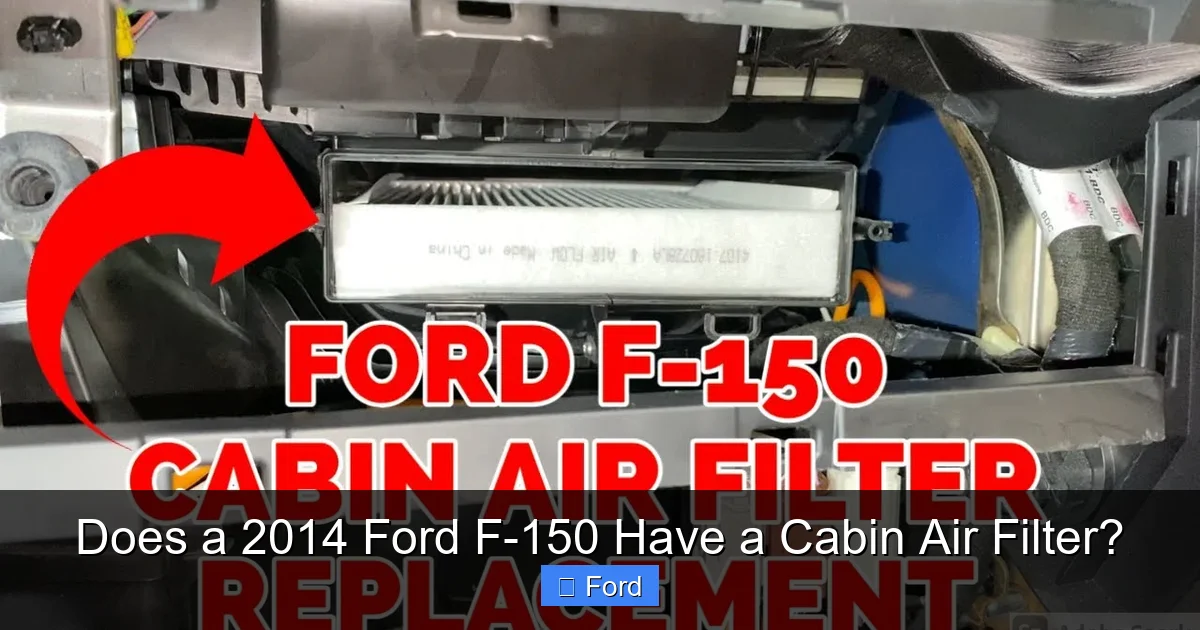
Now that we’ve established it’s there, let’s talk about what it actually is. The cabin air filter in your 2014 Ford F-150 is typically a pleated, rectangular filter made from a blend of paper and synthetic fibers. It’s designed with a specific micron rating, meaning it can trap particles of a certain tiny size. A standard filter might catch 85-95% of particles between 3-10 microns. For context, a human hair is about 70 microns wide. This filter is your first and last line of defense against airborne contaminants entering your truck.
Visual guide about Does a 2014 Ford F-150 Have a Cabin Air Filter?
Image source: i.ytimg.com
Types of Filters and What to Choose
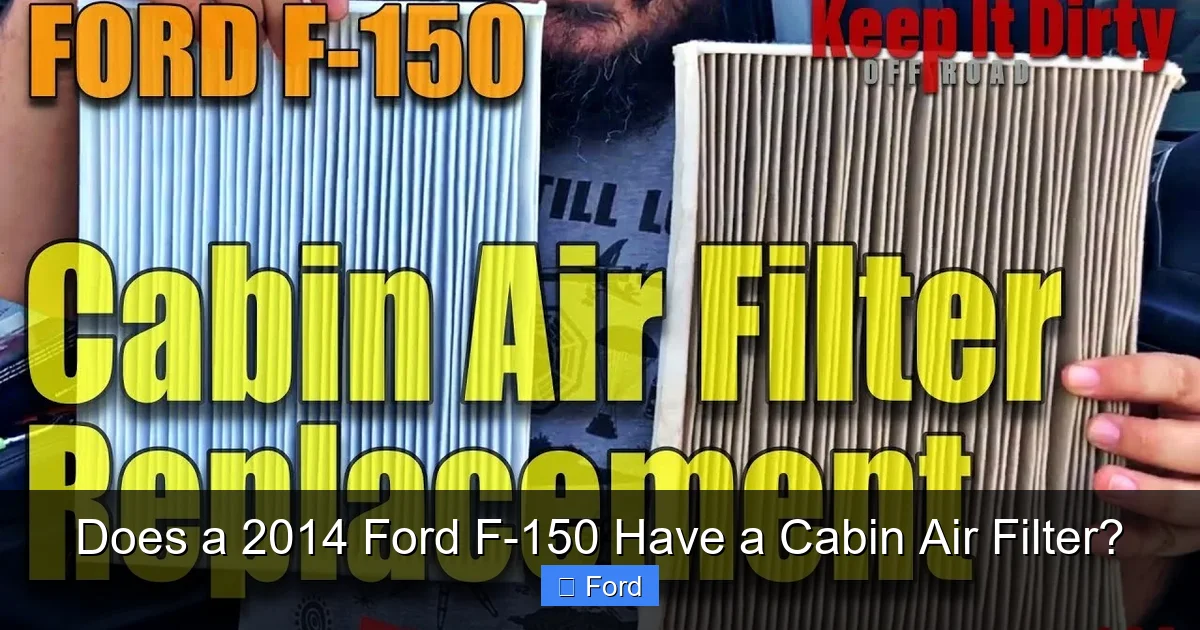
When it’s time for a replacement, you’ll encounter a few options. The most common and affordable is the standard particulate filter, which handles dust and pollen perfectly. Next, you’ll find activated carbon filters. These have a layer of charcoal impregnated into the media. The carbon adsorbs (not absorbs) gaseous pollutants, exhaust fumes, and odors, leaving your cab smelling cleaner. For most drivers, a high-quality standard filter is sufficient. However, if you frequently drive in heavy traffic, on dusty roads, or have severe allergies, the activated carbon version is a worthwhile upgrade. Always ensure the filter you purchase is specifically listed for the 2014 Ford F-150. A poorly fitting filter allows unfiltered air to bypass it entirely, rendering it useless.
Location, Location, Location: Finding the Filter in Your 2014 F-150
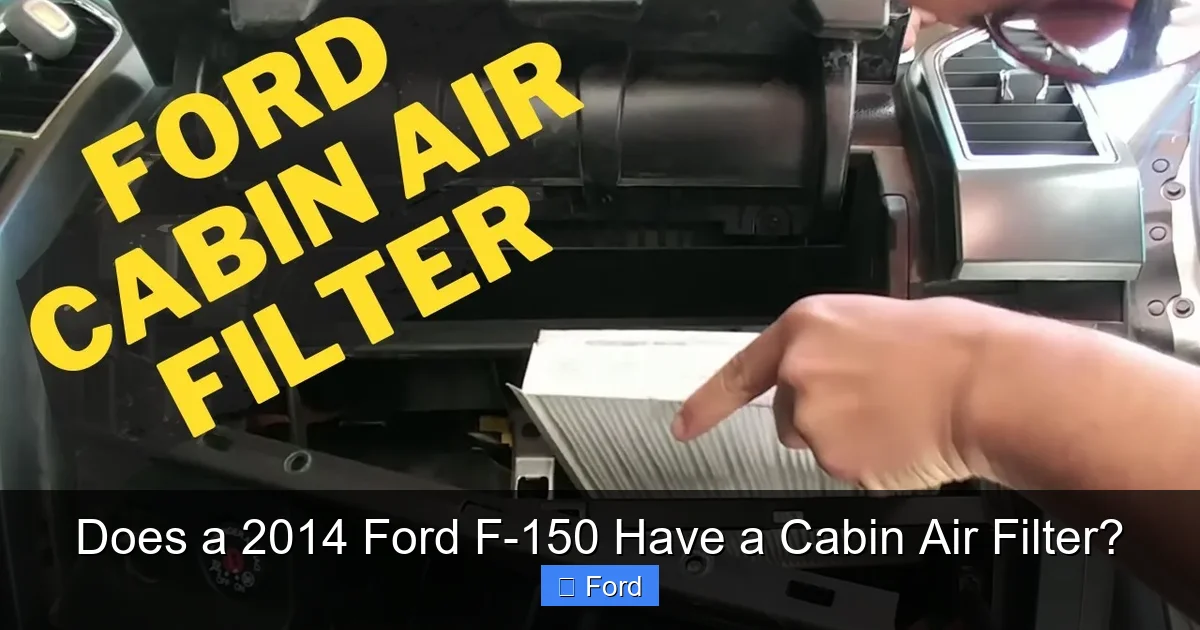
Okay, the million-dollar question: where exactly is this magical filter hiding? In your 2014 Ford F-150, the cabin air filter is located behind the glovebox. This is a common design for many Ford vehicles of this era. The glovebox must be removed to access the filter housing. Don’t panic; this is a simple clip-and-screw process that requires no tools for most trims, though a screwdriver might help on some.
Visual guide about Does a 2014 Ford F-150 Have a Cabin Air Filter?
Image source: i.ytimg.com
Step-by-Step Access Instructions
Here’s how to get to it:
- Open the glovebox fully and empty its contents.
- Look for the damper/stay rod. This is a small metal arm that prevents the glovebox from falling open. Gently unhook it from one side.
- Locate the plastic retaining clips. On the inside of the glovebox door, near the top, you’ll see two or three plastic tabs or clips. These hold the glovebox to the dashboard.
- Push the clips in. Press these clips inward (toward the center of the glovebox) to release them. The glovebox door will drop down slightly.
- Disconnect any wiring. If your glovebox has a light or an airbag sensor (less common on base models), you’ll see a small wiring harness connector. Press the tab and pull it apart.
- Lower and remove the glovebox. Carefully let the glovebox door hang down and slide it out of its lower mounting points. Set it aside.
- Find the filter housing. Directly behind where the glovebox was, you’ll see a rectangular plastic cover, usually black. This is the cabin air filter access panel.
- Open the housing. The cover is held by two or more plastic clips or a couple of screws. Release the clips or remove the screws, then pull the cover off.
- Remove the old filter. Note the orientation! There is an airflow arrow printed on the side of the filter. It must point downward (toward the floor) when reinstalled. Pull the old filter straight out.
This entire process should take less than five minutes for someone doing it for the first time. For a visual walkthrough that is nearly identical to this process, you can reference a step-by-step cabin air filter replacement guide for a similar vehicle, like a Honda Civic, as the fundamental principles of accessing a behind-glovebox filter are the same across many makes and models.
Why This Little Filter is a Big Deal: Health, Comfort, and Performance
Now that you know where it is and how to get to it, let’s drive home why you shouldn’t ignore it. The cabin air filter is not just a maintenance checkbox; it’s a critical component for your well-being and your truck’s health.
Visual guide about Does a 2014 Ford F-150 Have a Cabin Air Filter?
Image source: i.ytimg.com
Your Personal Health and Comfort
Think about what’s in the air outside: pollen in spring, dust in summer, wildfire smoke in fall, and road salt and grit in winter. Without a filter, all of that blows directly into your lungs. For anyone with allergies, asthma, or respiratory sensitivities, a clogged or dirty cabin filter can turn your truck into a sneeze-inducing, eye-watering nightmare. A clean filter dramatically reduces the amount of allergens and irritants in your cab’s air. Furthermore, a filter saturated with organic matter (leaves, bugs) can develop mold and mildew, leading to that unmistakable “dirty sock” or musty smell when you turn on the AC. Replacing the filter eliminates this odor at its source, making every drive more pleasant.
Protecting Your Truck’s HVAC System
The filter’s job is to create a barrier. When that barrier gets clogged with debris, your truck’s HVAC blower motor has to work much harder to pull air through it. This increased strain can lead to premature wear on the motor, reduced airflow from your vents (you’ll notice weak AC or heat), and in extreme cases, can cause the motor to fail—a repair that can cost several hundred dollars. A clean filter ensures optimal airflow, which means your AC cools faster, your heat warms quicker, and your defroster works more efficiently to clear the windshield. It’s a classic case of a $20 part saving you from a $400 repair.
The DIY Replacement Guide: Save Money and Time
Replacing your 2014 Ford F-150 cabin air filter is the quintessential easy DIY car repair. It requires no tools (usually), takes about 15 minutes, and costs a fraction of what a quick-lube shop or dealership would charge ($50-$100 in labor). Here’s your complete guide.
What You’ll Need
- A new cabin air filter. Check your owner’s manual for the exact part number (usually something like Ford FL-2014 or a Motorcraft number). You can also use an auto parts store lookup tool with your VIN.
- A clean rag.
- Optional: A trim removal tool to be extra gentle on plastic clips.
The Replacement Process (Recap & Pro Tips)
Follow the access steps from the previous section to remove the glovebox and filter cover. Once you have the old filter out:
- Inspect the old filter. Look at how dirty it is. This gives you a baseline for how your driving environment affects it.
- Clean the housing. Use your rag to wipe out any loose debris, leaves, or dust from the filter housing and the HVAC intake duct. This prevents any settled dirt from getting into your new filter immediately.
- Check the airflow arrow. Your new filter will have an arrow printed on its frame. This arrow must point downward (toward the floor of the cab) when installed. This is the direction the air flows. Insert the filter carefully, ensuring it sits evenly in the housing grooves.
- Reinstall the cover. Snap the plastic cover back into place, ensuring all clips are secure.
- Reinstall the glovebox. This is the reverse of removal. Reconnect any wiring harness, slide the glovebox back onto its lower pins, and snap the top clips back in. Reattach the damper rod.
- Reset the “Cabin Air Filter” Service Reminder (if equipped). Some 2014 F-150s have a maintenance reminder in the message center. To reset it: Go to Settings > Vehicle > Maintenance > Cabin Air Filter > Reset. If your truck doesn’t have this, no problem.
Start your truck, turn the fan on high, and feel the improved airflow. That’s it! You’ve successfully saved money and taken control of your truck’s maintenance. If you’re ever unsure about the process for your specific trim, watching a video tailored to the 2014 Ford F-150 is incredibly helpful. The steps are universal, but seeing the exact clip locations can provide peace of mind.
Troubleshooting: When Replacing Isn’t Enough
What if you replace the filter and the problems persist? A new filter should solve issues like weak airflow or musty smells. If it doesn’t, you might be facing a different issue.
Persistent Musty Odors
If a new filter doesn’t fix a mildew smell, the problem is likely in the HVAC evaporator case. The evaporator (the cold coil your air passes over) can accumulate moisture and grow mold. You may need an HVAC system cleaning with an antimicrobial foaming agent, which is a more involved process best left to a professional.
Very Weak Airflow from All Vents
If airflow is still poor after a filter change, the blower motor itself might be failing. Alternatively, one of the mode door actuators (which direct air to floor, dash, or defrost vents) could be stripped or broken. These are more complex diagnoses.
Unusual Noises
A new filter should be quiet. If you hear whistling, squealing, or a deep whirring sound from the dash, it could indicate a severely clogged filter you just missed (unlikely if new), a failing blower motor bearing, or an object (like a dead rodent) in the ductwork.
Conclusion: Breathe Easy in Your F-150
So, we’ve answered the core question: does a 2014 Ford F-150 have a cabin air filter? Absolutely. It’s a small but mighty component that plays a huge role in your daily driving comfort, your family’s health, and the long-term reliability of your truck’s climate control system. The beauty of this maintenance item is its simplicity. For a one-time cost of a filter and about 15 minutes of your time, you gain cleaner air, better HVAC performance, and the satisfaction of a job well done. Don’t let this task linger on your to-do list. Pop the glovebox, swap that filter, and enjoy the fresh, clean air in your capable Ford truck. Your lungs—and your F-150’s HVAC system—will thank you for it.
Frequently Asked Questions
How much does a cabin air filter cost for a 2014 Ford F-150?
A quality replacement filter typically costs between $15 and $40. You can save significant money by purchasing the part yourself and installing it, avoiding $50-$100 in professional labor fees.
How often should I change the cabin air filter in my 2014 F-150?
Ford’s general recommendation is every 15,000 to 30,000 miles. However, this depends heavily on your environment. If you drive in heavy traffic, dusty areas, or have pets that shed, change it annually or every 15,000 miles for best results.
What are the symptoms of a bad cabin air filter?
Look for reduced airflow from your vents, musty or moldy odors when the AC is on, foggy windows that are hard to defrost, and increased dust settling on your dashboard. For allergy sufferers, more frequent sneezing or congestion while driving is a key sign.
Can I damage anything by replacing the cabin air filter myself?
It’s very unlikely. The process is non-invasive. The main risks are breaking plastic clips (be gentle) or installing the filter backward (check the airflow arrow). If you’re concerned, take your time and consult a video guide specific to the 2014 F-150.
Should I use an OEM Ford filter or an aftermarket one?
Both are fine. OEM (Motorcraft) filters are guaranteed to fit perfectly and meet Ford’s specs. Reputable aftermarket brands like Fram, K&N, or WIX often offer better filtration or activated carbon options at a similar or lower price. Just ensure it’s the correct part number for your 2014 F-150.
Will a clogged cabin filter affect my air conditioning performance?
Yes, significantly. A clogged filter restricts airflow to the entire HVAC system. This means your AC will take much longer to cool the cab, may not blow as cold, and your defroster will be less effective at clearing the windshield, which is a safety issue.
