
How to Remove Spare Tire from Ford F150 Without Key

Stranded with a flat and no spare tire key? You’re not alone. This guide walks you through proven methods to safely lower and remove your Ford F150’s spare tire, even when the key is missing. From using the hidden emergency release to manual under-truck techniques, we cover every model year and emphasize safety to prevent injury or vehicle damage.
Key Takeaways
- Your F150’s spare tire system varies by model year—know which type you have before starting. Later models (2015+) often have an emergency release cable, while older trucks may require under-truck access.
- Always engage the parking brake and use jack stands; a falling truck can be fatal. Never rely solely on a hydraulic jack for support when working underneath.
- The emergency release cable (if equipped) is the easiest no-key solution, usually located in the cargo area. Pulling this cable manually lowers the tire without tools.
- If no emergency release exists, you’ll need to access the tire from underneath using basic tools like a socket and breaker bar. This method works on all F150s but requires more physical effort.
- Never guess—consult your owner’s manual for model-specific instructions. It contains diagrams and exact locations for your truck’s release mechanism.
- When in doubt, calling a professional is cheaper than repairing truck or tire damage. A mobile mechanic or roadside service can often resolve this quickly.
📑 Table of Contents
The Frustration of a Lost Spare Tire Key
Let’s be real: finding a flat tire is bad enough. But realizing your spare tire key is missing? That’s a special kind of frustration. Whether you’ve lost the key, the lock is damaged, or you’re helping someone in an emergency, knowing how to remove the spare tire from your Ford F150 without a key is a crucial skill. The good news? Ford engineers built backup systems into most F150s precisely for this scenario. You don’t need to be a mechanic to do this—just patient, prepared, and safety-conscious. In this guide, we’ll walk through every method, step-by-step, so you can get that tire down and get back on the road.
First, take a breath. This is a common issue, and you have options. The process differs slightly depending on your F150’s model year and trim, but the core principles remain the same. We’ll start by understanding your truck’s specific setup, then move into the actual removal techniques. Remember: rushing or skipping safety steps can lead to injury or costly damage. So grab your flashlight, and let’s get started.
Decoding Your Ford F150’s Spare Tire Mechanism
Before you crawl under the truck, you need to know what you’re dealing with. Ford F150s use two primary spare tire mounting systems, and identifying yours is the first step to choosing the right removal method.
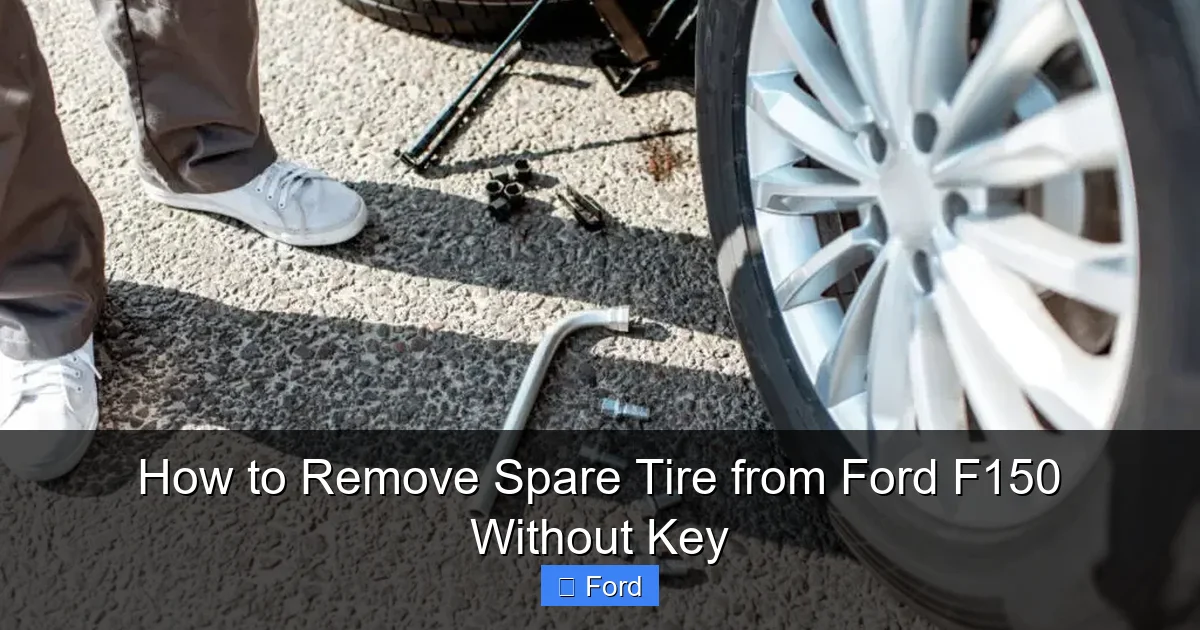
Visual guide about How to Remove Spare Tire from Ford F150 Without Key
Image source: cardeeply.com
Cable vs. Direct Mount Systems
Cable-operated systems are by far the most common, especially from the mid-2000s onward. Here, a steel cable runs from a winch mechanism inside the cargo area (or sometimes under the truck) down to the spare tire. The winch, operated by a key or a crank, winds the cable to hoist the tire up against the underside of the bed. When you need the tire, you unwind the cable, and the tire lowers.
Direct mount systems are rarer but exist on some older models (pre-2000s) or specific commercial trims. In this setup, the spare tire is bolted directly to a frame-mounted bracket. There’s no cable or winch—just nuts and bolts. Removing it requires unbolting the tire, which is straightforward but means you’ll need tools regardless of a key.
Model Year Differences
Model year plays a big role in your options:
- Pre-2015 Models: Many rely on a key-operated winch accessed through the cargo area. Some may lack a dedicated emergency release cable, meaning you’ll likely need the under-truck method.
- 2015–2020 Models: These often feature an emergency release cable as a backup. This is a secondary cable you can pull manually to lower the tire if the key won’t work. It’s usually located in the cargo area, near the main winch.
- 2021 and Newer: Ford continued the emergency release feature in most trims, but the exact location can vary. Some may have it behind a panel in the bed or integrated into the tailgate area.
Your owner’s manual is the ultimate authority here. Look for the “Spare Tire” or “Tire Changing” section. It will have diagrams showing exactly where your release mechanism lives. If you don’t have the manual, a quick online search for “Ford F150 [your year] spare tire location” often yields forum posts with photos from other owners.
Essential Prep Work Before You Begin
Skipping preparation is how accidents happen. This isn’t just about getting the tire down—it’s about doing it without hurting yourself or your truck. Here’s your pre-flight checklist.
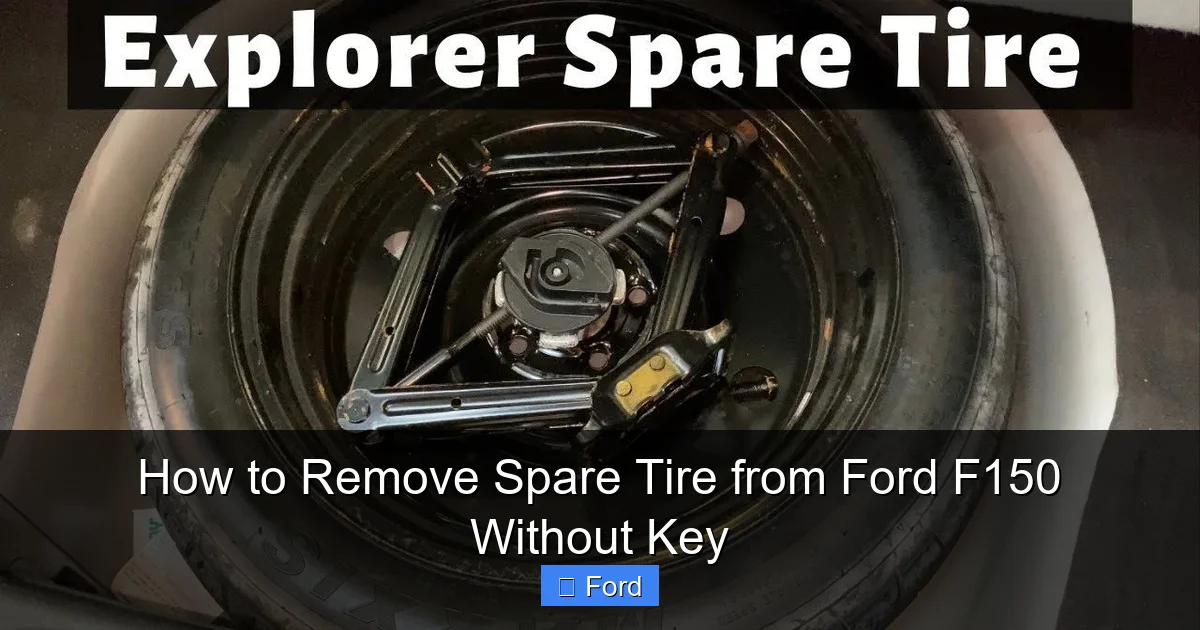
Visual guide about How to Remove Spare Tire from Ford F150 Without Key
Image source: i.pinimg.com
Safety Gear and Truck Setup
Park on level, solid ground. Avoid soft dirt or hills. Engage the parking brake firmly. If your F150 is an automatic, put it in “Park.” If it’s a manual, leave it in gear. Chock the front and rear wheels on the opposite side of where you’ll be working. For example, if you’re accessing the spare from under the rear, chock the front wheels.
Never get under a truck supported only by a jack. You must use jack stands. Place them under the factory-recommended frame rails (your manual shows these). If you’re using the under-truck method, you’ll need to jack up the rear of the truck enough to slide under and access the winch. But even then, the jack is only for lifting; the stands hold the weight.
Wear safety glasses and gloves. The spare tire and winch mechanism can have sharp edges. If you’re under the truck, a hard hat is a smart addition.
Tools You’ll Need
The tools depend on your method, but gather these basics first:
- Flashlight or headlamp: You’ll be looking into dark spaces under the truck or inside the cargo area.
- Socket set and breaker bar: For the under-truck method, you’ll typically need a 21mm or 22mm socket to turn the winch bolt. A breaker bar gives you extra leverage if it’s rusted.
- Penetrating oil (e.g., WD-40 or PB Blaster): Spray this on the winch bolt and let it sit 10–15 minutes if it’s corroded. It makes turning much easier.
- Helper: Not strictly a tool, but having a second person is invaluable. They can guide the tire as it lowers, hand you tools, and call for help if something goes wrong.
Locating the Release Mechanism
Before you jack anything up, investigate the cargo area. Remove any cargo box liner or spare tire cover. Look for a steel cable with a handle or a loop. On many F150s, the emergency release is tucked behind a plastic panel near the spare tire winch. It might be bright yellow or red. If you see a primary cable that goes to a keyhole, the secondary emergency cable is often nearby—smaller, with no keyhole.
If you can’t find it, consult your manual. For a visual reference, our comprehensive guide on removing the spare tire from a Ford F150 without tools includes photos of common locations across different model years.
Method 1: Unleash the Emergency Release Cable
This is the golden method—fast, tool-free, and low risk. But it only works if your F150 has an emergency release cable. Most 2015 and newer models do.
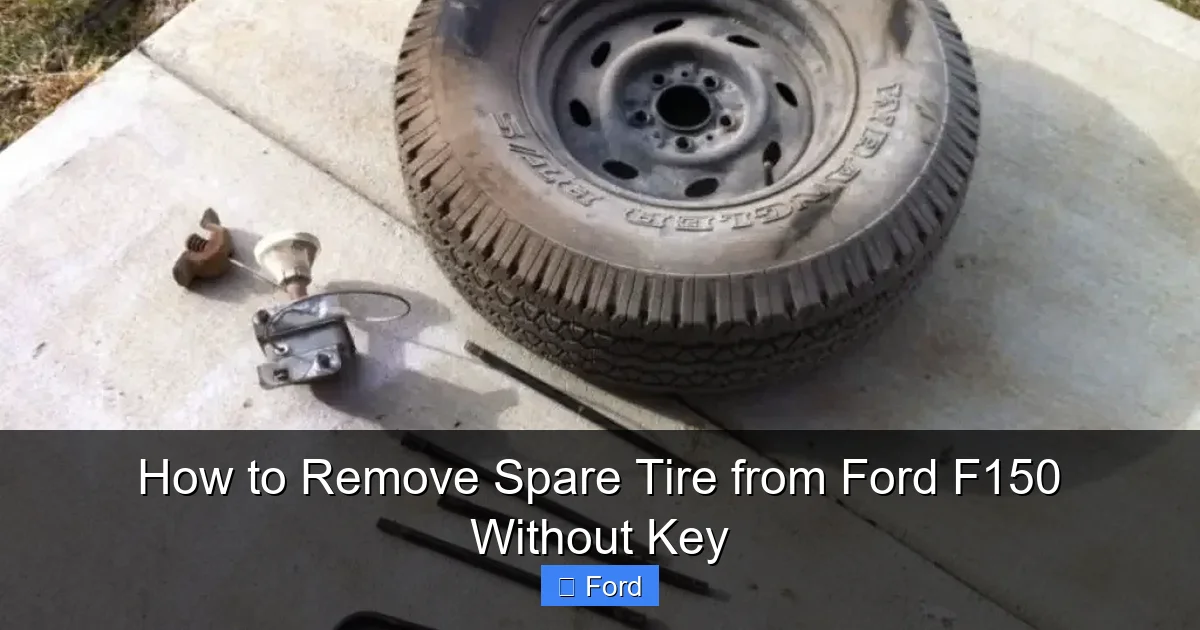
Visual guide about How to Remove Spare Tire from Ford F150 Without Key
Image source: fordmasterx.com
Locating the Emergency Cable
With the tailgate down and the cargo area empty, get inside. The emergency cable is usually attached to the main winch assembly. It’s a smaller cable, often with a T-handle or a loop. On some models, it’s hidden behind a removable plastic cover. Pry the cover off gently with a flathead screwdriver if needed. You might also find it under the spare tire itself if the tire is already partially lowered.
Operating the Cable
Once you’ve found it, pull the cable firmly and steadily. You should feel resistance as the winch mechanism disengages. Continue pulling until the tire starts to lower. It will drop slowly—this is by design to prevent a sudden fall. Once the tire is within arm’s reach, you can guide it out from under the truck.
What if the cable is stuck? Don’t yank. Wiggle it side to side while pulling. Sometimes the winch mechanism seizes due to rust or dirt. In that case, you may need to switch to Method 2. Also, if the cable breaks (rare but possible), you’ll have to go under the truck to manually turn the winch.
After the tire is down, simply unhook it from the winch cable. You’ve just saved yourself a locksmith call!
Method 2: The Direct Approach – Under-Truck Access
If your F150 lacks an emergency cable, or if it’s broken, you’ll need to access the winch directly from underneath. This method works on any F150 with a cable system, regardless of model year.
Positioning the Truck Safely
This is the most critical part. Park on a concrete or asphalt surface. Chock the front wheels securely. Engage the parking brake. Now, locate a safe lifting point under the rear of the truck. The spare tire is typically mounted near the center, behind the rear axle. You’ll need to jack up the truck enough to slide your body under and reach the winch.
Use a sturdy floor jack placed under the rear differential or a designated factory lift point (check your manual). Lift the truck until there’s at least 2–3 feet of clearance under the frame rail where the winch is mounted. Immediately place jack stands under the frame rails—these are the solid metal beams running lengthwise under the cab. Lower the truck onto the stands. Give the truck a firm shake to ensure it’s stable before crawling under.
Turning the Winch
Once under, locate the winch assembly. It’s a metal housing with a large bolt (usually 21mm or 22mm) sticking out. This bolt is what the key turns. You’ll turn it counter-clockwise to unwind the cable and lower the tire.
Slip your socket onto the bolt, attach the breaker bar for leverage, and turn slowly. If it’s rusted, spray penetrating oil and wait 10 minutes. You may need to use your body weight on the breaker bar. Turn in small increments; the cable will unwind gradually. As the tire lowers, keep an eye on it to ensure it’s coming down evenly and not dragging on the ground.
Once the tire is fully lowered, you can unhook it from the cable. To remove it completely, you may need to slide it out from under the truck—this is where your helper comes in handy to guide it.
For direct mount systems (bolted spare): You’ll see bolts securing the tire to a bracket. Use the appropriate socket (often 19mm or 21mm) to unbolt them. Support the tire as you remove the last bolt—it can be heavy.
Knowing When to Wave the White Flag
DIY is satisfying, but sometimes it’s not the smart move. Here’s when to call for help:
- The winch bolt is completely seized. If penetrating oil and brute force won’t budge it, forcing it could snap the bolt or damage the winch. A professional has impact tools and experience.
- The cable is broken or frayed. A broken cable can snap under tension, causing the tire to drop suddenly. This is dangerous. A mechanic can often rig a temporary solution or replace the cable.
- You’re uncomfortable working under the truck. If the thought of sliding under a lifted vehicle makes you nervous, that’s your instinct telling you to stop. Roadside assistance or a mobile mechanic will come to you.
- Your truck has a direct mount and the bolts are rusted solid. Cutting bolts is an option, but it requires tools and skill to avoid damaging the frame.
Calling a pro isn’t failure—it’s wisdom. A typical mobile mechanic call for this job might cost $100–$200, which is far less than a hospital bill or a damaged frame rail. Many insurance policies or roadside assistance plans cover lockout services, so check your benefits first.
Wrapping It Up: You’ve Got This!
Removing a spare tire from your Ford F150 without a key is entirely doable with the right knowledge and precautions. Start by identifying your truck’s system—check that manual! If you have an emergency release cable, that’s your best friend: pull, lower, and you’re done. If not, the under-truck method is your backup, but it demands careful lifting and steady turning. Always prioritize safety over speed. A few extra minutes setting up jack stands is worth protecting your life.
Remember, this is just one of many “without a key” challenges vehicle owners face. If you ever find yourself locked out of a different car—say, a Dodge Charger or needing to open a Honda Civic trunk—our library of guides covers those scenarios with the same detail. Keep this guide bookmarked, share it with fellow F150 owners, and drive with confidence knowing you’re prepared for the unexpected.
Frequently Asked Questions
Will using the emergency release cable damage it?
No, the emergency release is designed for this exact purpose. However, if the cable is already corroded or frayed, pulling it could cause it to break. In that case, switch to the under-truck method.
What if the winch bolt is rusted and won’t turn?
Apply penetrating oil generously and let it soak for 15–30 minutes. Use a breaker bar for extra leverage, and tap the bolt lightly with a hammer to help the oil penetrate. If it still won’t budge, call a professional—forcing it can snap the bolt.
Can I remove the spare tire by myself?
Technically yes, but it’s not recommended. The tire is heavy (often 50–80 lbs), and guiding it out from under the truck is awkward and risky. A helper can steady the tire, hand you tools, and assist in an emergency.
How long does the whole process take?
With a working emergency release, 5–10 minutes. With the under-truck method, expect 15–30 minutes, depending on rust and your tool familiarity. Adding setup time (jacking, chocking) brings the total to about 30–45 minutes for most people.
What if I can’t find the emergency release cable?
Double-check your owner’s manual—it will have an exact diagram. Also, thoroughly inspect the cargo area; some cables are behind removable plastic panels or tucked under the spare tire winch. If still missing, your truck may not have one, so proceed to the under-truck method.
Is there a real risk of the truck falling on me?
Yes, if you skip using jack stands. A hydraulic jack can fail or slip. Always use jack stands on solid frame rails, and never rely on the jack alone to support the vehicle’s weight while you’re underneath. This is non-negotiable for safety.
