
What Is the Transmission Problem on a 2013 Toyota Camry?

The 2013 Toyota Camry, while generally reliable, is known for specific transmission issues primarily affecting models with the 6-speed automatic transmission. The most common problems involve transmission solenoid failures, valve body wear, and torque converter clutch shudder, leading to harsh shifts, hesitation, and unusual noises. These issues are not universal but are prevalent enough to be a significant concern for owners and prospective buyers. Proactive maintenance, like regular fluid changes, and timely diagnosis are critical to avoiding costly repairs.
So, you’re driving your 2013 Toyota Camry, and something feels… off. Maybe it’s a hesitant lunge when you hit the gas, a harsh slam into gear, or a weird vibration that buzzes through the steering wheel at certain speeds. Your heart sinks a little. You bought a Camry for its legendary reliability, not for mysterious car troubles. You’re not alone in asking: What is the transmission problem on a 2013 Toyota Camry? It’s a valid and very common question. While the Camry name still carries a reputation for durability, the 2013 model year sits at an interesting crossroads, and its transmission has developed a documented set of quirks and failures that owners need to understand. This article will walk you through everything you need to know, from the telltale symptoms to the underlying mechanical causes and what you can do about it, all in plain English.
First, let’s set the stage. The 2013 Camry was offered with two main engine/transmission pairings: the 2.5L 4-cylinder with a 6-speed automatic, and the 3.5L V6 with a different, more heavy-duty 6-speed automatic (often the Aisin AW6F25). The transmission problems we discuss are overwhelmingly associated with the V6 model’s transmission, though some 4-cylinder models have also reported similar, often less severe, issues. It’s also crucial to remember that not every single 2013 Camry will have a transmission problem. Many owners have logged hundreds of thousands of trouble-free miles. However, the failure rate for specific components is high enough that it’s considered a known issue in automotive circles and on owner forums. Being aware of the signs is your first and best line of defense.
Key Takeaways
- Not All 2013 Camrys Are Affected: The transmission problems are most common in V6 models and those equipped with the Aisin AW6F25 6-speed automatic transmission. Many four-cylinder models with the standard transmission may never experience issues.
- Solenoid Failure is a Prime Culprit: The Transmission Control Solenoid (TCC) and shift solenoids are frequent failure points, causing harsh, delayed, or slipping shifts and triggering check engine lights.
- Torque Converter Shudder Is a Signature Symptom: A distinct vibration or shudder at low speeds (30-50 mph) under light throttle, often felt like driving over rumble strips, is a classic sign of torque converter clutch problems.
- Valve Body Wear Can Cause Erratic Behavior: Internal valve body passages can wear or become clogged with debris, leading to unpredictable shifting patterns and pressure issues.
- The Transmission Control Module (TCM) Can Be at Fault: Software glitches or, less commonly, hardware failure in the TCM can cause shifting logic errors and may require reprogramming or replacement.
- Maintenance is Your Best Defense: Strict adherence to Toyota’s fluid change intervals (often every 60,000-100,000 miles) using the correct WS fluid is the single most effective way to prolong transmission life and prevent many of these issues.
- Diagnosis Requires a Professional: Proper diagnosis involves reading transmission-specific fault codes, performing hydraulic pressure tests, and often a road test. DIY fixes are rarely successful for these complex internal problems.
📑 Table of Contents
- The Telltale Symptoms: How Your Camry’s Transmission Talks to You
- Digging Deeper: The Root Causes of 2013 Camry Transmission Woes
- Prevention and Maintenance: Your Secret Weapon
- The Diagnostic and Repair Journey: What to Expect
- Is It a Recall? The Legal and Financial Reality
- Final Thoughts: Knowledge is Power (and Saves Money)
The Telltale Symptoms: How Your Camry’s Transmission Talks to You
Your car’s transmission doesn’t have a voice, but it has a very clear language of sensations and warnings. Learning to interpret these signals is essential. The symptoms of a 2013 Camry transmission problem can range from subtly annoying to immediately alarming. They often start small and intermittent, which is why many people ignore them until the issue worsens. Don’t be that person. Here’s what to listen for and feel for.
Harsh, Delayed, or Slipping Shifts
This is the most common complaint. Instead of the smooth, almost imperceptible shifts you expect from a modern automatic, you experience a distinct clunk, bang, or jerk when the transmission changes gears, especially from 1st to 2nd and 2nd to 3rd. The shift might also be delayed; you press the accelerator, the engine revs higher than usual, and then the car lunges forward as the gear finally engages. In more serious cases, the transmission may feel like it’s “slipping”—the engine RPMs spike without a corresponding increase in speed, as if the car is in neutral for a moment. This is a clear sign the transmission is not maintaining proper hydraulic pressure or that clutch packs inside are worn.
The Dreaded Torque Converter Shudder
If you feel a persistent vibration or shudder at steady speeds between 30 and 50 mph, under light acceleration (like maintaining speed on a flat road or gentle uphill), you are likely experiencing torque converter clutch shudder. The torque converter’s job is to smoothly transfer engine power to the transmission. Inside it is a clutch that, at higher speeds, locks up to create a direct mechanical connection for efficiency. When this lock-up clutch doesn’t engage smoothly—due to worn parts, contaminated fluid, or solenoid issues—it causes a vibration that resonates through the chassis. It often feels exactly like you’re driving over a series of small rumble strips. This is one of the most characteristic and frequently reported issues for the 2013 V6 Camry.
Unusual Noises
A healthy transmission is relatively quiet. Listen for new sounds. A whining, humming, or buzzing noise that changes pitch with engine speed can indicate worn bearings or a failing pump. A clunking or banging sound during shifts points to harsh gear engagement, often from solenoid or pressure issues. Sometimes, you might hear a squealing noise, which could be related to the pump struggling with low or dirty fluid.
Check Engine Light & Transmission Warning Lights
Modern cars are full of sensors. When the Transmission Control Module (TCM) detects a problem it can’t correct, it will store a diagnostic trouble code (DTC) and illuminate the check engine light. Some Camrys also have a dedicated transmission warning light (often an exclamation point inside a gear symbol). Common codes for these models include P0700 (Transmission Control System Malfunction), P0730-P0734 (Incorrect Gear Ratio), and specific solenoid circuit codes like P0741 (Torque Converter Clutch Solenoid Performance). Never ignore these lights. They are your car’s direct electronic report of a problem.
Failure to Shift or Get Stuck in a Gear
In severe cases, the transmission may refuse to shift out of a single gear (often “limp mode” or 2nd gear) or may not shift into drive or reverse at all. This is usually a last-ditch safety effort by the TCM to prevent catastrophic damage when it senses a major internal failure. If your Camry starts in 2nd gear and won’t shift up, or won’t go into reverse, it’s a major transmission problem requiring immediate professional attention.
Digging Deeper: The Root Causes of 2013 Camry Transmission Woes
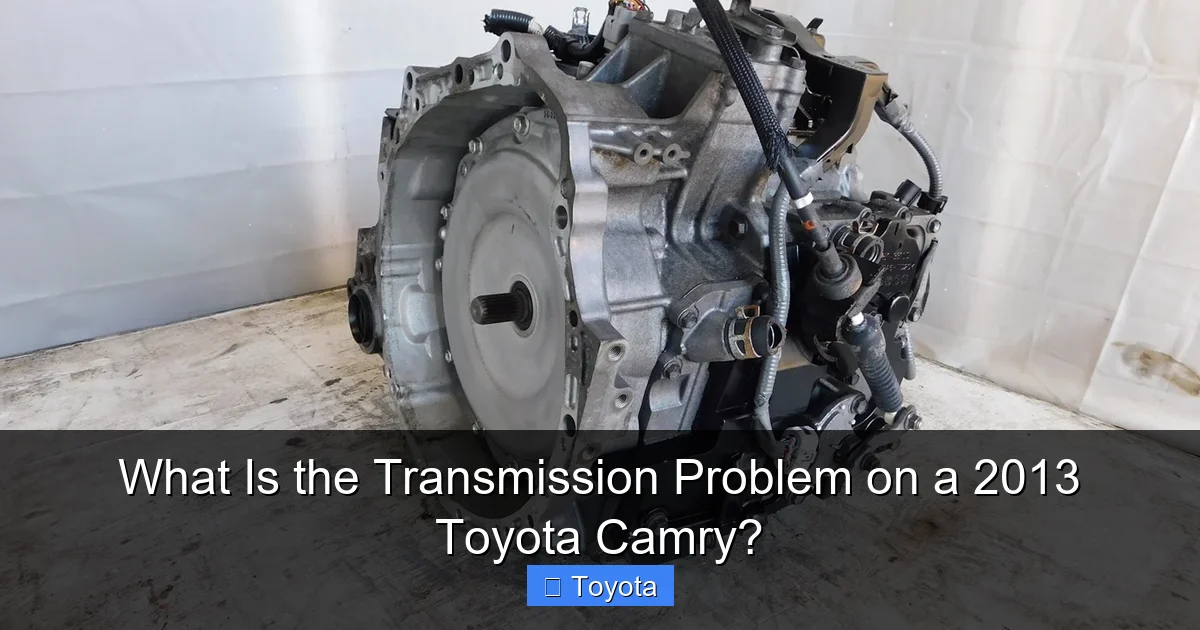
So, what’s actually breaking inside? The symptoms point to several specific, well-documented failure points within the 6-speed automatic transmission used in the 2013 V6 Camry. Understanding these helps you understand the potential repair scope and cost.
Visual guide about What Is the Transmission Problem on a 2013 Toyota Camry?
Image source: jdmofohio.com
The Solenoid Assembly: The Electric Valves That Control Everything
Think of the solenoid pack as the transmission’s nervous system. These electromechanical valves control the flow of hydraulic fluid to different clutch packs and the torque converter, telling the transmission when to shift and how firmly. The most notorious failure in the 2013 Camry is the Transmission Control Clutch (TCC) solenoid. When it fails, it can’t properly modulate the torque converter clutch lock-up, leading directly to the shudder we described. It can also cause harsh shifts or slipping. Other shift solenoids (A, B, C) can also fail, causing specific gear range problems. Solenoid failure can be due to electrical issues, debris in the fluid jamming the valve, or simply wear over time. Replacing the solenoid pack is a common and relatively less expensive repair compared to a full rebuild, but it must be done correctly and the fluid must be immaculate.
The Valve Body: The Hydraulic Brain
The valve body is a complex maze of machined passages, valves, and bores. It uses hydraulic pressure (regulated by the pump and solenoids) to direct fluid to the correct clutch packs for each gear. Over time, especially with neglected fluid changes, the fine tolerances in the valve body can be compromised. Debris from worn clutch material or oxidized fluid can clog tiny orifices. Wear can cause valves to stick or leak pressure. A worn or clogged valve body results in erratic shifting, delayed engagements, and incorrect pressure, which can damage other components. Sometimes a valve body can be cleaned and have worn sleeves installed (a “reman” job), but a failed valve body often means a full transmission rebuild or replacement.
The Torque Converter Itself
While the TCC solenoid is a frequent culprit for shudder, the torque converter’s internal clutch plates and seals can also wear out or become damaged. If the clutch material is glazed, contaminated, or the seals are leaking, the lock-up will be imperfect no matter what the solenoid commands. In some cases, the entire torque converter needs to be replaced. This is a major internal job that requires the transmission to be removed from the vehicle.
Clutch Packs and Bands: The Wearing Friction Materials
Each gear in an automatic transmission is achieved by applying a specific clutch pack (a series of friction and steel plates) or a band. These are the consumable items. They are designed to wear gradually over hundreds of thousands of miles. However, aggressive driving, chronic overheating from low fluid or a failing cooler, or driving with existing solenoid/valve body problems can cause them to wear prematurely or burn out. Worn clutch packs will slip, causing the engine to rev without power transfer, and eventually, they will wear to the metal and cause catastrophic failure, grinding metal and filling the fluid with shavings.
The Transmission Control Module (TCM)
The TCM is the computer that processes data from speed sensors, throttle position, and other inputs to command the solenoids. While less common than mechanical failures, TCM issues do occur. A software glitch might cause poor shift logic. An internal circuit failure might stop it from powering solenoids. Sometimes, a TCM from a donor vehicle or a refurbished unit with updated software is needed. Diagnosis requires a professional with advanced scan tools capable of communicating directly with the TCM.
Prevention and Maintenance: Your Secret Weapon
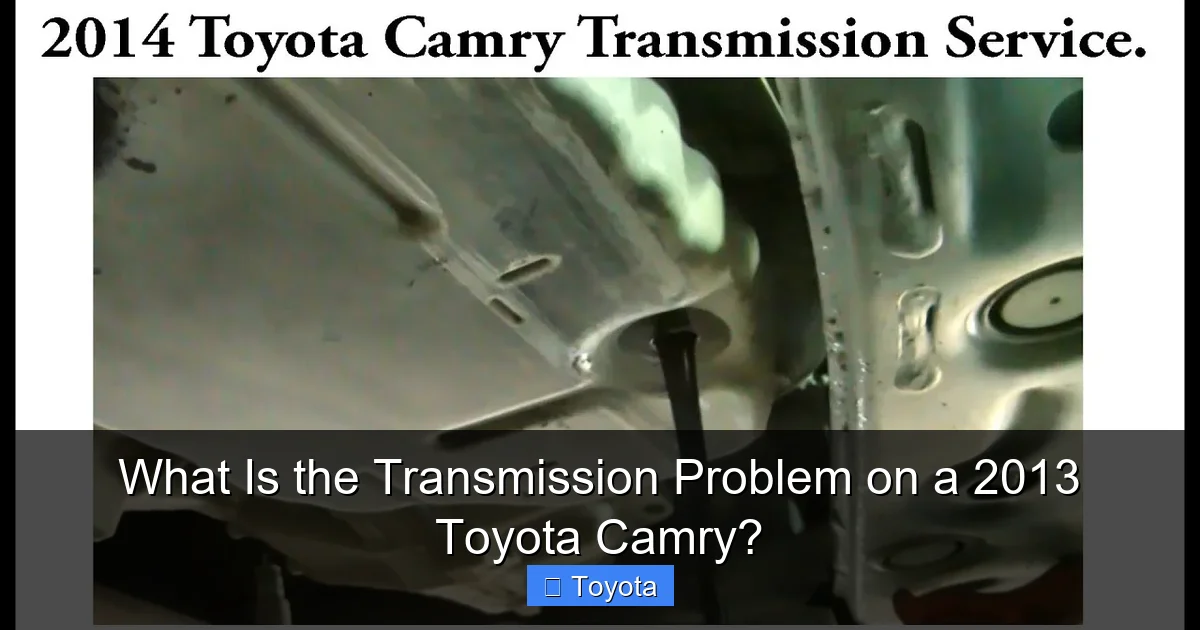
Hearing about all these failure points is scary, but the story isn’t all doom and gloom. The vast majority of these problems are either preventable or can be caught early with a rigorous maintenance regimen. The single most important thing you can do for your 2013 Camry’s transmission is to service the fluid on time, every time.
Visual guide about What Is the Transmission Problem on a 2013 Toyota Camry?
Image source: i.ytimg.com
Transmission Fluid: It’s Not “Lifetime”
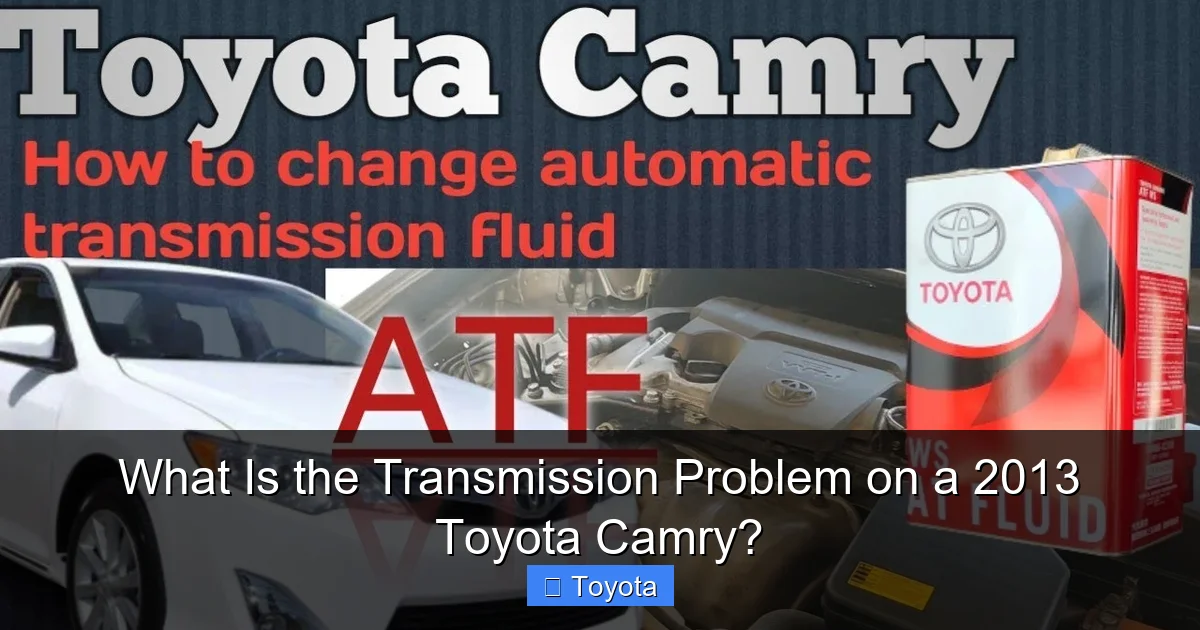
Toyota, like many manufacturers, often states that the transmission fluid is “lifetime.” This is a contentious term. In engineering contexts, “lifetime” often means the designed service life of the vehicle’s major components, not that the fluid never degrades. The fluid inside your Camry’s transmission is working under high heat and pressure. Over time, it breaks down. It loses its ability to lubricate, its friction characteristics change (affecting shift quality), and it oxidizes, turning darker and potentially forming varnish and sludge. Contaminated fluid is the primary cause of solenoid sticking and valve body clogging. Many independent mechanics and transmission specialists strongly recommend changing the fluid every 60,000 to 80,000 miles as a preventative measure. This is a drain-and-fill service (not a simple pan drop, which only removes about 40% of the fluid) that can dramatically extend transmission life. When you have it done, ensure they use only genuine Toyota WS (World Standard) fluid or a high-quality equivalent like Idemitsu. Using the wrong fluid can cause damage.
Driving Habits Matter
How you drive impacts transmission wear. Constantly flooring the accelerator, “granny shifting” (revving the engine high before shifting), or using the transmission as a brake (e.g., downshifting to slow down from high speed) increases heat and stress. Let the transmission do its job. Also, if you frequently tow a trailer or carry heavy loads, you are adding significant strain. Ensure your transmission cooler is functioning properly (if equipped) and consider more frequent fluid checks.
Regular Inspections
Have your mechanic check the transmission fluid level and condition at every oil change. It should be bright red and smell slightly sweet. If it’s dark brown or black, or smells burnt, it needs immediate attention. Also, ask them to check for any leaks around the transmission pan and cooler lines. Keeping the fluid at the correct level and in good condition is 80% of the battle. If you’re considering a used 2013 Camry, a pre-purchase inspection by a transmission specialist is an absolute must. They can perform a “stall test” and check fluid condition to give you a health report.
The Diagnostic and Repair Journey: What to Expect
So, you’ve confirmed a problem. What happens next? The repair path depends entirely on the diagnosis. This is not a DIY project for most people. You need a shop with experience on Toyota transmissions and the proper scan tools.
Visual guide about What Is the Transmission Problem on a 2013 Toyota Camry?
Image source: i.ytimg.com
Step 1: The Electronic Diagnosis
The technician will start by plugging a high-end scan tool into the OBD-II port. They will read not just generic engine codes, but specifically look for transmission-related DTCs stored in the TCM. They will also monitor live data: transmission fluid temperature, solenoid performance, gear ratio sensors, and torque converter clutch slip speed. This data can pinpoint if a solenoid circuit is weak or if the torque converter is slipping excessively. This step is crucial and should not be skipped. Guessing and replacing parts will be very expensive.
Step 2: Hydraulic and Physical Inspection
If the electronic diagnosis is inconclusive or points to internal mechanical issues, the next step often involves removing the transmission pan. This allows the mechanic to inspect the fluid for metal shavings (a very bad sign), the condition of the filter, and sometimes the valve body. They can perform a “hydraulic pressure test” by hooking gauges to specific ports in the transmission to see if the pump is generating the correct pressure. Low pressure points to a worn pump, leaking seals, or a severely worn valve body.
Step 3: The Repair Options
Based on the findings, you’ll face a few choices:
- Solenoid Pack Replacement: If the diagnosis points squarely to a faulty solenoid (especially TCC), this is the best-case scenario. Cost: $300 – $800+ depending on labor and part quality ( OEM vs. aftermarket).
- Valve Body Replacement/Replacement: A failed valve body often means a valve body replacement. You can buy a new OEM unit, a remanufactured unit, or a used one. A reman unit is usually the recommended path. Cost: $800 – $2,000+.
- Torque Converter Replacement: This requires transmission removal. Often done as part of a larger rebuild. Cost: $1,500 – $3,000+ for the part and labor.
- Full Transmission Rebuild: This is the comprehensive option. The transmission is completely disassembled, all worn parts (clutches, bands, seals, bearings, pumps) are replaced with new, and it’s reassembled to factory specs. A good rebuild should come with a warranty (often 1 year/12k miles or 3 years/36k miles). Cost: $2,500 – $4,500+.
- Used/Remanufactured Transmission Replacement: Swapping the entire unit with a used transmission from a donor car or a remanufactured one from a company like Jasper or AAMCO. This can be faster than a rebuild but carries risk (unknown history of a used unit). Cost: $2,000 – $4,000+ installed.
Important Note: If your transmission has been running with low fluid, burnt fluid, or metal shavings, a simple solenoid or valve body fix might not last, as other components like clutch packs may already be damaged. A thorough inspection is key.
Is It a Recall? The Legal and Financial Reality
Many owners wonder if there’s a recall or class-action lawsuit they can benefit from. The short answer is: there is no active, broad manufacturer recall for the 2013 Camry transmission. However, the situation is nuanced. In 2017, Toyota settled a class-action lawsuit covering certain 2012-2014 Camry V6 models (and some other vehicles) where the alleged issue was excessive shift shock and hesitation. The settlement did not admit fault but provided extended warranty coverage for the transmission control solenoid and certain other components for vehicles that met specific criteria (like having fewer than a certain number of miles and being within a certain model year range). This extended warranty program has likely expired for most 2013 models by now, as they would be beyond the original or extended coverage periods.
This means that for the vast majority of 2013 Camry owners today, transmission repairs are an out-of-pocket expense. It’s a known, chronic issue that the manufacturer’s initial warranty period has largely passed. This underscores why a pre-purchase inspection is so critical and why maintaining your own vehicle meticulously is so important. You are responsible for the longevity of the component once the factory warranty is gone. Always check the National Highway Traffic Safety Administration (NHTSA) website for any latest recalls or investigations by entering your VIN.
Final Thoughts: Knowledge is Power (and Saves Money)
The transmission problem on a 2013 Toyota Camry is a real and well-understood set of mechanical and electronic failures, primarily centered on the V6 model’s 6-speed automatic. The key symptoms—harsh shifts, shuddering, slipping, and warning lights—are your car’s plea for help. The root causes usually trace back to the solenoid pack, valve body, or torque converter, with neglected fluid being a common accelerator of the damage.
What does this mean for you as an owner or potential buyer? It means you must be proactive. If you own one, adhere strictly to a strict transmission fluid service interval. If you notice any symptom, get a professional diagnosis immediately. Catching a solenoid issue early can save you from a $4,000 rebuild. If you’re looking at a used 2013 Camry, especially a V6, budget for a thorough pre-purchase transmission inspection. Use the car’s history report to see if any transmission work has been done. A well-maintained example with service records can still be a reliable car, but an ignorantly maintained one is a ticking time bomb.
The 2013 Camry remains a comfortable, fuel-efficient, and mostly reliable sedan. Its Achilles’ heel is this specific transmission. By understanding the problem, recognizing the symptoms, and committing to diligent maintenance, you can either avoid the issue entirely or address it in its infancy, protecting your wallet and keeping your Camry on the road where it belongs. Don’t ignore the signs—your transmission is talking to you. Make sure you’re listening.
Frequently Asked Questions
How common is the transmission problem in a 2013 Toyota Camry?
It is a well-documented issue, particularly in V6 models with the 6-speed automatic transmission. It is not universal, but failure rates for components like the TCC solenoid and valve body are high enough to be a significant known concern in owner forums and repair databases.
What is the average cost to fix the transmission on a 2013 Camry?
Costs vary wildly by the required repair. A solenoid pack replacement might cost $800-$1,500. A valve body job could be $1,500-$2,500. A full rebuild or replacement typically ranges from $2,500 to over $4,500. The specific diagnosis dictates the final price.
Can I drive my 2013 Camry with a transmission shudder?
You can, but you shouldn’t. Driving with a shuddering torque converter or slipping clutch packs generates excessive heat and stress, which will accelerate the wear and likely lead to a complete failure, turning a cheaper solenoid fix into a very expensive rebuild.
What is the best maintenance to prevent Camry transmission problems?
The single best practice is to change the transmission fluid every 60,000-80,000 miles using genuine Toyota WS fluid. This prevents the varnish and debris that cause solenoid sticking and valve body clogging. Also, address any leaks immediately and avoid aggressive driving that overheats the transmission.
Should I buy a used 2013 Toyota Camry with over 100,000 miles?
You can, but only with a verified, clean service history showing regular transmission fluid changes and after a pre-purchase inspection by a transmission specialist. Without those, the high-mileage transmission is a major financial risk due to the known failure points.
Is the 2013 Camry transmission issue covered by a warranty or recall?
There is no current active recall. A previous class-action settlement provided an extended warranty for specific 2012-2014 V6 models, but that coverage period has almost certainly expired for a 2013 model. Repairs today are almost always an out-of-pocket cost for the owner.
