
How to Reset Tire Pressure Light on a 2009 Toyota Matrix

Resetting the tire pressure light on your 2009 Toyota Matrix is a simple process you can do yourself after ensuring your tires are properly inflated. First, check and adjust all four tires to the manufacturer’s recommended PSI. Then, use the vehicle’s onboard reset procedure via the multi-information display. If the light persists, a faulty sensor or other issue may require professional diagnosis.
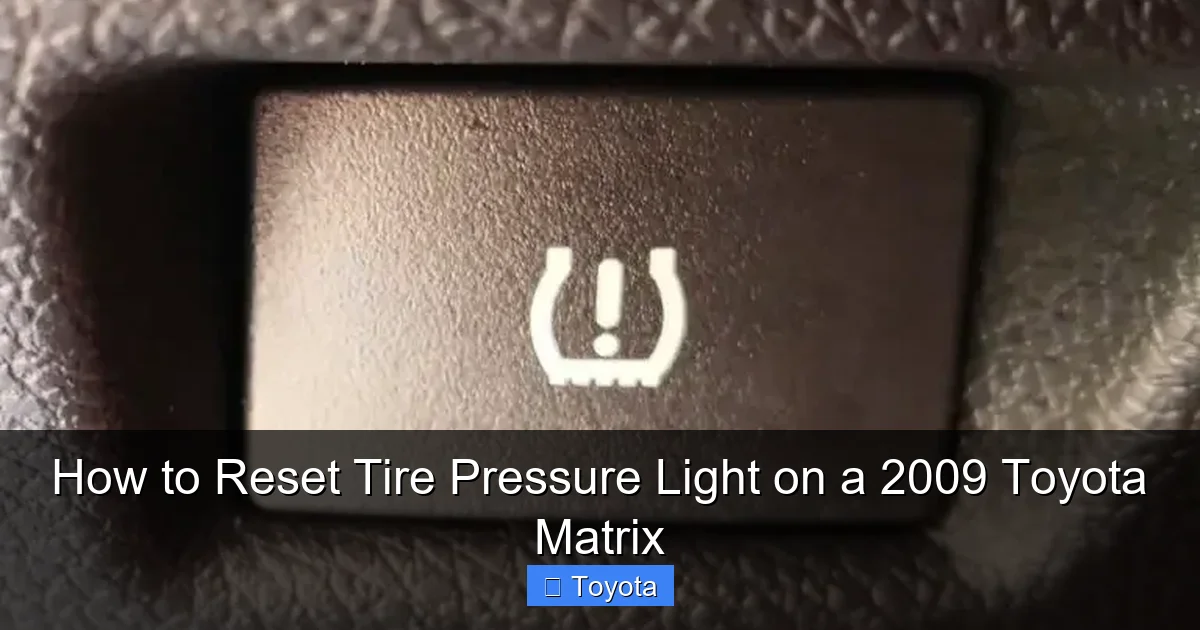
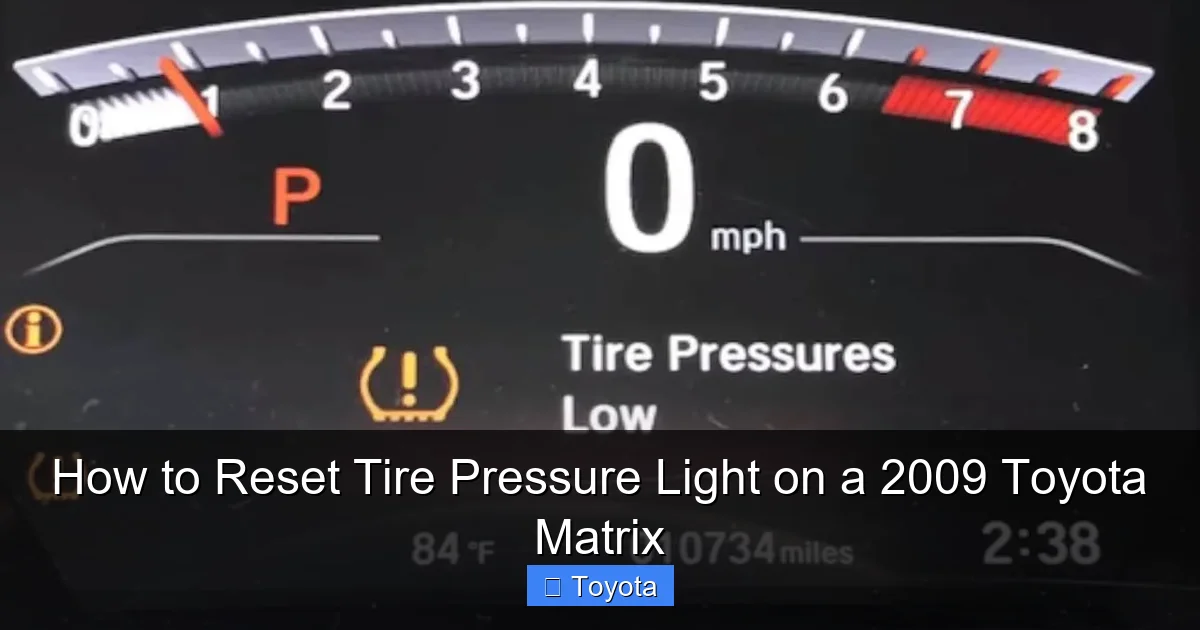
That little yellow light on your dashboard, shaped like an exclamation point inside a tire cross-section, has one job: to get your attention. When it illuminates on your 2009 Toyota Matrix, it’s the Tire Pressure Monitoring System (TPMS) telling you that one or more of your tires has fallen below the safe pressure threshold. It’s a crucial safety feature, but once you’ve addressed the cause—usually by adding air—you’re left with a nagging question: how do you turn the darn thing off? Resetting the tire pressure light on a 2009 Toyota Matrix is a straightforward, do-it-yourself task that saves you a trip to the dealer. This comprehensive guide will walk you through every step, from understanding why the light came on to executing the perfect reset. We’ll cover the manual method using your car’s buttons, what to do if that fails, and essential maintenance tips to keep your TPMS happy for years to come. Let’s get that light out of your view and back to ensuring your safety on the road.
Key Takeaways
- The TPMS light warns of low tire pressure, not necessarily a faulty sensor. Always inflate tires to the correct PSI before attempting a reset, as the system will not clear if pressure is still low.
- Your 2009 Matrix uses a direct TPMS system with individual sensors in each tire. This means each wheel has its own pressure sensor that communicates with the car’s computer.
- The reset is performed through the multi-information display on the dashboard. You do not need special tools for the basic manual reset procedure, just the correct tire pressure.
- Cold tire pressure is the standard measurement. Check and adjust tire pressure when the tires are cold (driven less than 1 mile) for an accurate reading.
- If the light flashes or won’t reset after proper inflation, a sensor may be damaged or the battery dead. Sensor batteries last about 7-10 years, so on a 2009 model, failure is possible.
- Resetting the light does not fix a physical problem like a nail in the tire. You must repair any leak before the light will stay off permanently.
- After a reset, drive for 20-30 minutes at speeds above 40 mph to allow the system to relearn sensor signals. The light may briefly flash during this learning period.
📑 Table of Contents
- Understanding Your 2009 Toyota Matrix TPMS
- Essential Preparation Before You Reset
- The Manual Reset Procedure for a 2009 Toyota Matrix
- Alternative Method: Using a TPMS Scan Tool
- Troubleshooting: When the Light Won’t Stay Off
- Proactive Maintenance to Avoid TPMS Hassles
- Conclusion: Knowledge is Power (and a Light-Free Dashboard)
Understanding Your 2009 Toyota Matrix TPMS
Before we start pushing buttons, it helps to understand what you’re dealing with. Your 2009 Matrix is equipped with a Direct TPMS. This means each wheel has a small electronic sensor mounted inside the valve stem. These sensors constantly monitor the air pressure and temperature, transmitting that data wirelessly to the car’s computer. When pressure in any tire drops 25% or more below the recommended level, the system triggers that warning light on your dash. It’s a passive system—it tells you there’s a problem but doesn’t fix it. That’s your job. Understanding this helps you realize the reset isn’t just “turning off an alarm.” It’s telling the car’s computer, “Hey, I’ve fixed the problem you reported. All pressures are now good. You can stop warning the driver.” The computer then needs to verify the new, correct pressures from all four sensors before it extinguishes the light. This verification process is what the reset procedure initiates.
Why the Light Comes On (It’s Not Always a Bad Sensor)
Many people assume a lit TPMS light means a broken sensor. While that can be true, it’s actually the least common cause. Here’s a breakdown of the usual suspects, in order of likelihood:
- Temperature Change: This is the #1 cause. Air pressure drops about 1 PSI for every 10°F drop in temperature. A cold snap can trigger the light even if your tires were fine yesterday. The fix is simply adding air.
- Physical Damage or Leak: A nail, screw, or puncture in the tire, a damaged valve stem, or a bent wheel can cause a slow leak. You must repair the leak first.
- Recent Tire Service: If you’ve recently rotated tires, changed a flat, or installed new wheels, the TPMS sensors may have been disturbed or their positions changed. The system needs to be reset to recognize the new sensor locations.
- Dead Sensor Battery: Each TPMS sensor has a non-replaceable internal battery that lasts 7-10 years. Your 2009 Matrix is now in that age range. A dead sensor will cause a constant light or a flashing light, often requiring sensor replacement.
- Faulty System Component: Rarely, the issue is with the car’s receiver module or a wiring problem.
The golden rule: Never ignore a TPMS light. Driving on significantly under-inflated tires is dangerous. It causes poor handling, increased stopping distances, uneven tire wear, and can lead to a blowout. It also reduces fuel efficiency. Always treat the light as an urgent prompt to check your tire pressures immediately.
Essential Preparation Before You Reset
You cannot reset the system if the problem isn’t fixed. Attempting a reset with low tire pressure will fail, and the light will simply come back on. This preparation phase is the most critical.
Visual guide about How to Reset Tire Pressure Light on a 2009 Toyota Matrix
Image source: tiregrades.com
Step 1: Find the Correct Tire Pressure
Do not guess or use the number on your tire’s sidewall. That’s the maximum pressure, not the recommended operating pressure for your Matrix. The correct pressure is found on a yellow and white sticker located on the driver’s side door jamb (the edge of the door frame when you open the door). It will list pressures for front and rear tires, typically something like 32 PSI for all four, but always verify for your specific trim. For a 2009 Matrix, common recommendations are 32 PSI for all tires, but your sticker is the law.
Step 2: Check and Adjust All Four Tires (and the Spare!)
You must adjust every tire, not just the one that triggered the light. The system monitors all four. For an accurate reading, check pressures when the tires are cold. “Cold” means the car has been parked for at least three hours or driven less than 1 mile. Use a high-quality, digital tire pressure gauge—the pencil-type ones are notoriously inaccurate.
- Remove the valve cap.
- Press the gauge onto the valve stem firmly until the hissing stops.
- Read the pressure.
- Add or release air as needed to match the door jamb sticker.
- Replace the valve cap securely.
Pro Tip: If you have a full-size spare tire mounted (some Matrix models do), check its pressure too! Some TPMS systems monitor the spare if it’s a full-size, same-size wheel with a sensor. Inflate it to the same pressure as the others.
Step 3: The “Drive-Off” Test
After inflating all tires to the correct cold pressure, drive the car for about 10-15 minutes at highway speeds (above 40 mph). Often, the TPMS light will turn off on its own once the system senses the correct pressures. This is the system’s automatic re-learn cycle. If the light goes out, great! No manual reset needed. If it remains on after this drive, proceed to the manual reset procedure. This step is important because it confirms the leak is fixed and pressures are stable before you tell the computer to clear the code.
The Manual Reset Procedure for a 2009 Toyota Matrix
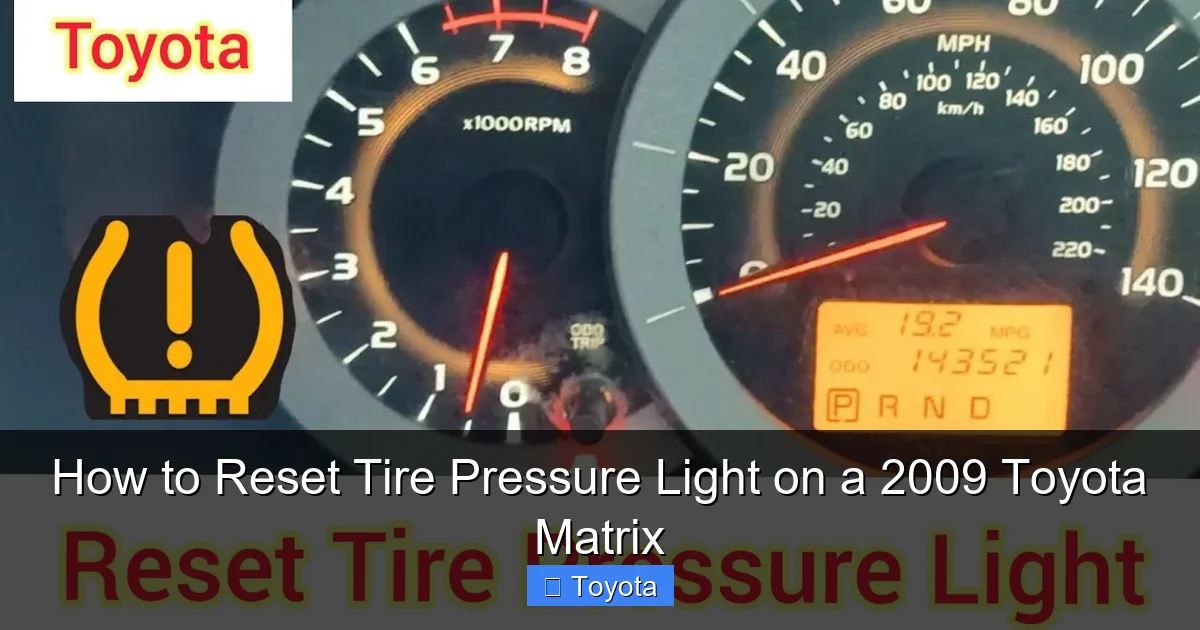
Your 2009 Matrix does not have a dedicated “TPMS reset” button. Instead, you use the trip meter/odometer button on the instrument cluster. The process is menu-driven and takes less than a minute once you know the steps. The goal is to access the “TPMS Calibration” or “Tire Pressure Reset” menu and tell the car to start listening for the correct signals again.
Visual guide about How to Reset Tire Pressure Light on a 2009 Toyota Matrix
Image source: i.ytimg.com
Step-by-Step Button Sequence
Follow these steps precisely. The car must be turned ON (ignition in position II, where dashboard lights come on) but the engine does NOT need to be running.
- Turn the ignition ON. Do not start the engine. The TPMS light should be illuminated on your dash.
- Locate the “Trip/ODO” button. This is the small button on the instrument cluster, usually to the right of the speedometer, used to toggle between trip A, trip B, and odometer. You’ll use this to navigate menus.
- Press and hold the “Trip/ODO” button. Hold it for about 3-5 seconds until you see the display change. You should see “SET” or “Menu” appear on the multi-information display.
- Release the button, then press it repeatedly. Each press will cycle through different menu options. Look for an option that says “TPMS,” “TIRE PRESS,” or “TPMS Calibration.” The exact wording can vary slightly.
- When you find the TPMS option, press and hold the button again. This should select it and initiate the reset. The display may show “Set,” “Init,” or start a countdown.
- Wait for confirmation. You should see a message like “TPMS Set Complete” or “Done” appear on the display. The TPMS light on the dash may blink a few times and then go out.
- Turn the ignition OFF. Wait about 10 seconds, then turn it back ON to verify the light is off.
Important: If you cannot find the TPMS menu, consult your owner’s manual for the exact procedure. The menu structure can differ if your car has a different cluster configuration. If the menu is missing entirely, your car may have a different system or a fault that needs scanning.
What to Do After the Reset
Once you’ve completed the reset and the light is off, you must drive the car to allow the system to communicate with all four sensors. Drive for at least 20-30 minutes at various speeds, including highway speeds. During this time, the light may flash intermittently. This is normal as the system learns the new sensor positions and confirms all signals are received. If the light comes back on solid after this drive, it means a sensor is still reporting low pressure or there’s a fault. Re-check all tire pressures with your gauge. If they are all correct and the light returns, you likely have a faulty sensor or a system issue.
Alternative Method: Using a TPMS Scan Tool
The manual method works in most cases where the issue was simply low pressure. However, if you’ve replaced a sensor, had tire work done, or the manual reset fails, you may need a dedicated TPMS scan tool. This is a device that talks directly to the car’s TPMS control module.
Visual guide about How to Reset Tire Pressure Light on a 2009 Toyota Matrix
Image source: richsautobodyshop.com
When a Scan Tool is Necessary
- After replacing a TPMS sensor. The new sensor has a unique ID. The car’s computer must be programmed to recognize this new ID. A scan tool does this.
- After rotating tires on a vehicle with different sensor IDs per wheel. Some systems store sensor location. If you move sensors to different wheels (like during a rotation), the car needs to learn the new positions.
- If the manual reset procedure does not work, and tire pressures are confirmed good. This indicates a communication fault that may require a deeper diagnostic scan.
- To read and clear TPMS fault codes. Like a Check Engine Light, a TPMS light can store specific codes (e.g., “Sensor 2 Low Battery,” “Signal Lost”). A scan tool reads these codes.
Types of Tools and Professional Help
Basic TPMS tools can cost from $100 to over $1000. They activate sensors and perform relearn procedures. For the average DIYer, buying one is rarely cost-effective unless you do this frequently. The better path is to visit a tire shop, dealership, or mechanic. They have the professional-grade tools (like the Bartec or Launch TPMS tools) to quickly diagnose and reset your system. A typical TPMS service, including a sensor replacement and reprogramming, might cost $50-$150 per wheel. For a simple reset after tire service, many shops will do it for free or a small fee if you’re a customer. If you suspect a dead sensor, a professional diagnosis is the only way to know for sure which one failed.
Troubleshooting: When the Light Won’t Stay Off
You’ve inflated the tires, followed the reset steps perfectly, and the light goes out. But a day later, it’s back on. Or it never went out at all. Here’s how to diagnose the persistent problem.
Scenario 1: The Light Flashes Then Stays On
A flashing TPMS light (usually for 30-60 seconds before staying solid) often indicates a system malfunction, not just low pressure. On many vehicles, it means a sensor battery is low or there’s a communication error. On your 2009 Matrix, a flash pattern can also signal a sensor that hasn’t been learned after replacement. Action: Use a scan tool to read the stored TPMS codes. This will point to a specific wheel or a general system fault.
Scenario 2: The Light Comes On After Driving a While
If the light is off initially but comes on after 20-30 minutes of driving, you likely have a slow leak. The pressure is fine when cold, but as you drive and the tires heat up, a small puncture or bad valve allows air to escape, dropping pressure below the threshold. Action: Perform a “soap test.” Spray a mixture of soapy water on each tire’s tread, sidewalls, and especially the valve stem. Look for bubbles. This will reveal the leak location.
Scenario 3: Reset Fails Immediately After Inflation
If you’ve inflated all tires to the correct pressure, driven, and the reset procedure fails (the light stays on or the menu option doesn’t appear), double-check these things:
- Are all pressures exactly to spec? Even being 1-2 PSI low can prevent reset.
- Is your spare tire (if equipped with a sensor) also at the correct pressure?
- Did you disconnect the battery recently? Sometimes a battery disconnect requires a full system relearn that a simple button reset won’t accomplish.
- Is there any visible damage to the wheels or tires?
If all else checks out, the fault is likely electronic—a bad sensor, damaged antenna ring (located under the wheel well), or a failed body control module. This requires professional diagnosis.
Proactive Maintenance to Avoid TPMS Hassles
The best way to deal with a TPMS light is to prevent it from coming on unnecessarily. A little routine care goes a long way.
Check Pressures Monthly and Before Long Trips
Don’t wait for the light. Get in the habit of checking all tire pressures with your own gauge once a month and before any road trip. Adjust for seasonal temperature changes. In winter, you may need to add 1-2 PSI as the air gets colder. In summer, you might need to let a little out if pressures get too high (but never below the recommended minimum).
Be Mindful During Tire Service
Whenever you have tires rotated, balanced, or repaired, ask the technician:
- Did they break any TPMS sensor seals? (Sensors are delicate; over-tightening the valve stem cap or using tire paste can damage them).
- Did they remount the tire correctly on the sensor? (A poor bead seal can damage the sensor).
- Do they need to perform a TPMS relearn after the service? (They should, if sensors were moved).
A reputable shop will handle this, but it’s good to be aware.
Replace Sensor Batteries Proactively
As mentioned, TPMS sensor batteries last 7-10 years. Your 2009 Matrix is now 15+ years old. If you haven’t replaced any sensors, they are likely on their last legs. Instead of waiting for one to die and trigger the light, consider replacing all four sensors preemptively during a tire service. The cost is mostly for the sensor and labor, but it provides peace of mind for another decade. When replacing, use high-quality OEM or OEM-equivalent sensors (like those from Schrader, Pacific, or Denso) that are compatible with your vehicle.
Use Proper Valve Stem Caps
Always use the metal or hard plastic caps that come with the sensors. They seal out moisture and dirt. Cheap, soft rubber caps can degrade, fall off, and let debris into the valve core, causing leaks. Keep the caps on at all times.
Conclusion: Knowledge is Power (and a Light-Free Dashboard)
Resetting the tire pressure light on your 2009 Toyota Matrix is a simple yet empowering skill. It reinforces the vital habit of regularly checking your tire pressure, which is one of the most important things you can do for your safety, your wallet, and your car’s longevity. Remember the core sequence: Check pressures when cold → Inflate all tires to the door jamb sticker spec → Drive to let the system verify → Perform the manual reset via the Trip/ODO button if needed. If the light returns, you now have the diagnostic roadmap to find the culprit—be it a slow leak, a dead sensor, or a system glitch. While the manual method solves the vast majority of cases caused by temperature or simple neglect, don’t hesitate to seek professional help for persistent issues. They have the advanced tools to pinpoint the exact fault. By staying proactive with your tire maintenance, you’ll keep that TPMS light serving its intended purpose—as a rare and important warning—and not as a constant nuisance on your drive. Now, go check those pressures and enjoy a clear, confident dashboard.
Frequently Asked Questions
Why does my tire pressure light keep coming back on after I reset it?
This usually means the original problem wasn’t fully fixed. Re-check all four tire pressures with a gauge to ensure they are exactly to spec. If they are, you likely have a slow leak from a nail or a damaged valve stem, or one of the TPMS sensor batteries is dead. A slow leak will cause pressure to drop again after driving and heating the tires.
How do I know the correct tire pressure for my 2009 Toyota Matrix?
Always use the manufacturer’s recommended pressure, not the number on the tire sidewall. The correct PSI is listed on a yellow and white sticker attached to the driver’s side door jamb (the edge of the door frame). It specifies pressure for front and rear tires, typically 32 PSI for all four on most Matrix models.
Can I disable or remove the TPMS light if it’s annoying?
No. The TPMS is a federally mandated safety system. Tampering with, disabling, or removing it is illegal in all 50 states and will cause your vehicle to fail safety inspections. The proper solution is to fix whatever is triggering the warning.
How long should I drive after inflating my tires before the light goes off?
After correcting tire pressures, drive at speeds above 40 mph for about 10-20 minutes. The system needs time to communicate with all four sensors and verify the new pressures. The light should extinguish on its own during this drive. If it doesn’t, a manual reset is required.
What if I don’t have the owner’s manual? Can I still reset the TPMS?
Yes. The reset for a 2009 Matrix uses the “Trip/ODO” button on the instrument cluster. Turn the ignition ON (engine off), press and hold the button until the display shows “SET,” then press it repeatedly to find the “TPMS” menu option. Press and hold again to initiate the reset. The process is the same as outlined in this guide.
Is it safe to drive with the tire pressure light on?
It is not safe to ignore a solid TPMS light. It means at least one tire is significantly under-inflated (25% or more below spec). Driving on low-pressure tires causes poor handling, increased braking distances, excessive heat buildup (leading to potential blowouts), and rapid, uneven tire wear. Check your pressures immediately and address the issue before driving. If the light is flashing, it indicates a system malfunction and should be diagnosed promptly by a professional.
