
How Do You Disengage the Parking Brake on a Toyota Camry

Disengaging the parking brake on a Toyota Camry is straightforward but varies by model year and brake type. For a traditional foot or hand brake, simply press the pedal or pull the lever while pressing the brake pedal. For an electronic parking brake (EPB), press the dedicated “P” button or use the switch. Always ensure your vehicle is in ‘Park’ (P) and your foot is on the service brake before releasing it. If the brake is stuck or the warning light stays on, consult your owner’s manual or a professional.
Key Takeaways
- Identify Your Brake Type: Know if your Camry has a foot-operated pedal, a center console hand lever, or an electronic parking brake (EPB) with a button/s switch, as the disengagement method differs.
- Always Start in ‘Park’: Your Camry must be in the ‘Park’ (P) transmission setting before you attempt to disengage the parking brake, as this is a primary safety lock.
- Press the Service Brake First: For foot and hand brakes, you must press the main brake pedal firmly to release the locking mechanism. For EPB, the ignition may need to be ‘ON’ and your foot on the brake.
- Listen and Feel for Release: You should hear a distinct click or release sound and feel the pedal/lever return to its normal position or see the dashboard parking brake indicator turn off.
- Stuck Brake Requires Diagnosis: If the brake won’t disengage, it could be due to rust, a faulty mechanism, or a low battery (for EPB). Forcing it can cause damage; seek professional help.
- Regular Use Prevents Issues: Using your parking brake regularly, especially on inclines, keeps the cables or electronic system functional and prevents seizing from disuse.
- Consult Your Manual: Your owner’s manual is the ultimate authority for your specific model year’s procedure and any unique features or warnings.
📑 Table of Contents
- Introduction: That Stuck Feeling
- Section 1: Knowing Your Camry’s Parking Brake Type
- Section 2: The Standard Disengagement Procedure (Step-by-Step)
- Section 3: What to Do When the Parking Brake Won’t Disengage
- Section 4: Safety First – Critical Precautions
- Section 5: Maintenance and Prevention
- Section 6: Troubleshooting Dashboard Warnings
Introduction: That Stuck Feeling
There you are, ready to pull out of the driveway or parking spot, and you press the gas pedal, but your Toyota Camry just doesn’t move. You look down, and the little red parking brake warning light is glaring back at you from the dashboard. Or perhaps you can hear the brake dragging. That sinking feeling is all too common. The parking brake, also known as the emergency brake or e-brake, is a critical secondary safety system. But when it’s time to go, you need to know exactly how to disengage it properly and safely.
For decades, the Toyota Camry has been synonymous with reliability, and its parking brake system is no exception. However, the method to release it has evolved. While older models rely on a simple mechanical foot pedal or hand lever, newer Camrys (typically from the late 2000s/early 2010s onward, depending on trim) feature an Electronic Parking Brake (EPB) activated by a button. This guide will walk you through every scenario, ensuring you can confidently get your Camry moving again, whether you’re driving a 2005 model or a 2024. We’ll cover the standard procedures, what to do if it’s stuck, and essential safety tips.
Section 1: Knowing Your Camry’s Parking Brake Type
The very first step is identifying which system your Camry is equipped with. You can’t disengage what you don’t know you have. Here’s how to tell:
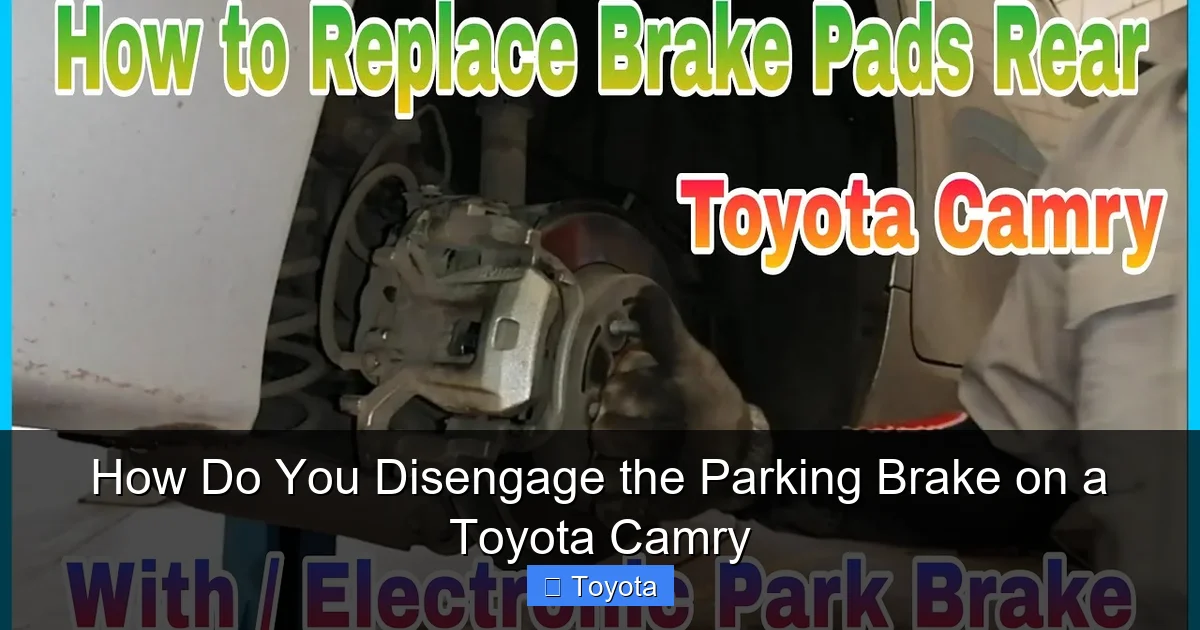
Visual guide about How Do You Disengage the Parking Brake on a Toyota Camry
Image source: i.ytimg.com
The Classic Foot Pedal
This is the most traditional setup. You’ll find a small pedal on the far left of the driver’s footwell, often with a “P” or a red/orange lever icon. Pressing down on it with your foot engages the brake. When disengaged, it pops back up to a resting position. This is a purely mechanical system using cables to activate the rear brakes.
The Center Console Hand Lever
Common in many older and some mid-2000s Camrys, this is a small lever located between the front seats, usually just behind the gear shifter. It may have a button on the end that you press while pulling it up to engage. To disengage, you press the button and push the lever all the way down. This also uses a mechanical cable system.
The Modern Electronic Parking Brake (EPB)
Starting around model years 2007-2012 and becoming standard, many Camry trims switched to an EPB. Instead of a pedal or lever, there is a small switch, usually located in the center console near the gear shifter or on the lower dashboard. It’s marked with a “P” inside a circle, often with an exclamation point. This system uses an electric motor to engage and disengage the rear brakes electronically. It’s more convenient and often integrates with other safety systems like Auto Hold. If your Camry has a button that says “P” and lights up when pressed, you have an EPB.
Pro Tip: A quick way to check is to look at your parking brake warning light on the dashboard. If it’s a simple “P” in a circle, it’s likely an EPB. If it’s a more generic brake warning symbol, it could be either, but the presence of a button or switch confirms EPB.
Section 2: The Standard Disengagement Procedure (Step-by-Step)
Once you’ve identified your system, follow these precise steps. The core principle is always the same: the vehicle must be in ‘Park’ and your foot on the service brake pedal.
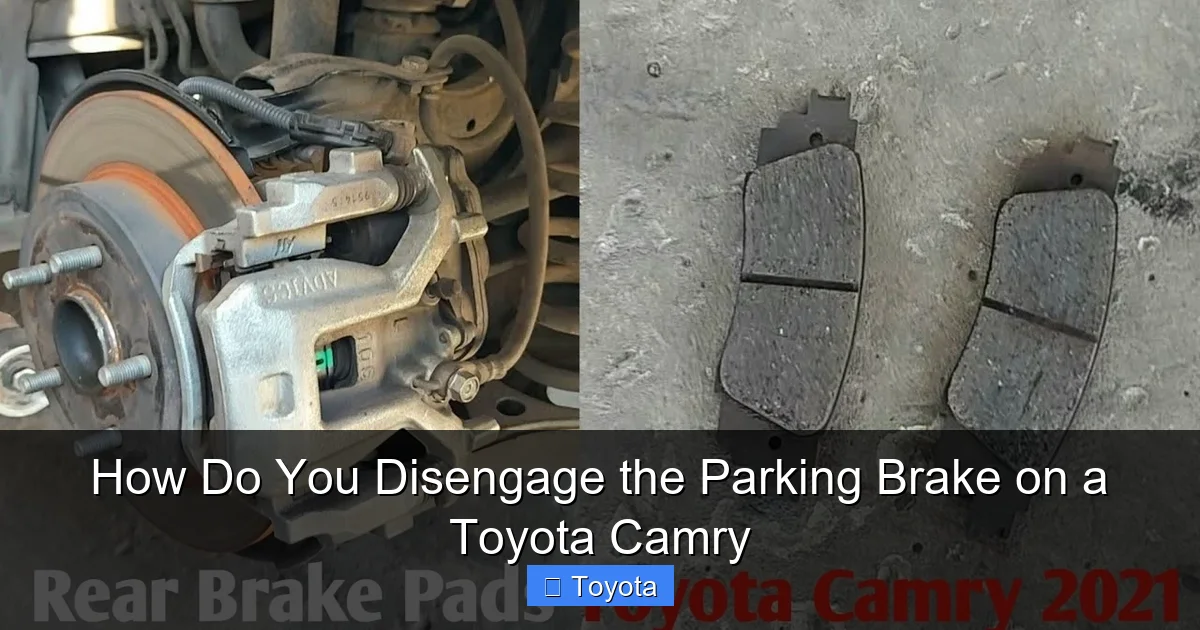
Visual guide about How Do You Disengage the Parking Brake on a Toyota Camry
Image source: i.ytimg.com
For Foot Pedal or Hand Lever Systems
1. Ensure the vehicle is completely stopped. Do not attempt to disengage the parking brake while moving, unless in a true emergency (which is extremely rare and dangerous).
2. Press the service brake pedal firmly with your right foot. Hold it down. This is a mandatory safety interlock in most modern vehicles; the parking brake mechanism is designed not to release if the vehicle thinks you’re not ready to move.
3. Disengage the parking brake:
- Foot Pedal: Press down on the parking brake pedal with your left foot. You should feel it depress fully and hear/feel a distinct “clunk” or series of clicks as the rear brakes release. The pedal will stay down but should not feel taut.
- Hand Lever: Press the button on the end of the lever (if equipped) and push the lever all the way down to the floor. You should hear the cables ratcheting back into place.
4. Check the dashboard. The red parking brake warning light should go out immediately. If it remains on, the brake may still be partially engaged, or there is another issue.
5. Gently press the accelerator to confirm the vehicle moves freely without dragging or grinding noises.
For Electronic Parking Brake (EPB) Systems
The process is simpler but has specific requirements.
1. Start the ignition. Turn the key to the “ON” position or press the start button without pressing the brake (for push-start models). The EPB system needs electrical power to operate. Note: Some models require the engine to be running. Consult your manual.
2. Press the service brake pedal firmly with your right foot and hold it.
3. Press the EPB switch. Firmly press and release the “P” button. You will typically hear a whirring or motor sound from the rear wheels as the calipers release. The switch may illuminate briefly, then go out.
4. Observe the dashboard. The parking brake warning light should extinguish. In some models, a message like “Parking Brake Released” may appear briefly on the multi-information display.
5. Verify release by gently attempting to move the vehicle.
Important EPB Note: If your Camry is equipped with Auto Hold (a feature that automatically applies the EPB when you stop), simply pressing the accelerator after coming to a complete stop will automatically disengage the EPB. The dedicated switch is primarily for manual engagement/disengagement when parked.
Section 3: What to Do When the Parking Brake Won’t Disengage
This is the frustrating scenario everyone fears. The parking brake is stuck. Don’t panic, and don’t force it aggressively. Here is a systematic troubleshooting approach.
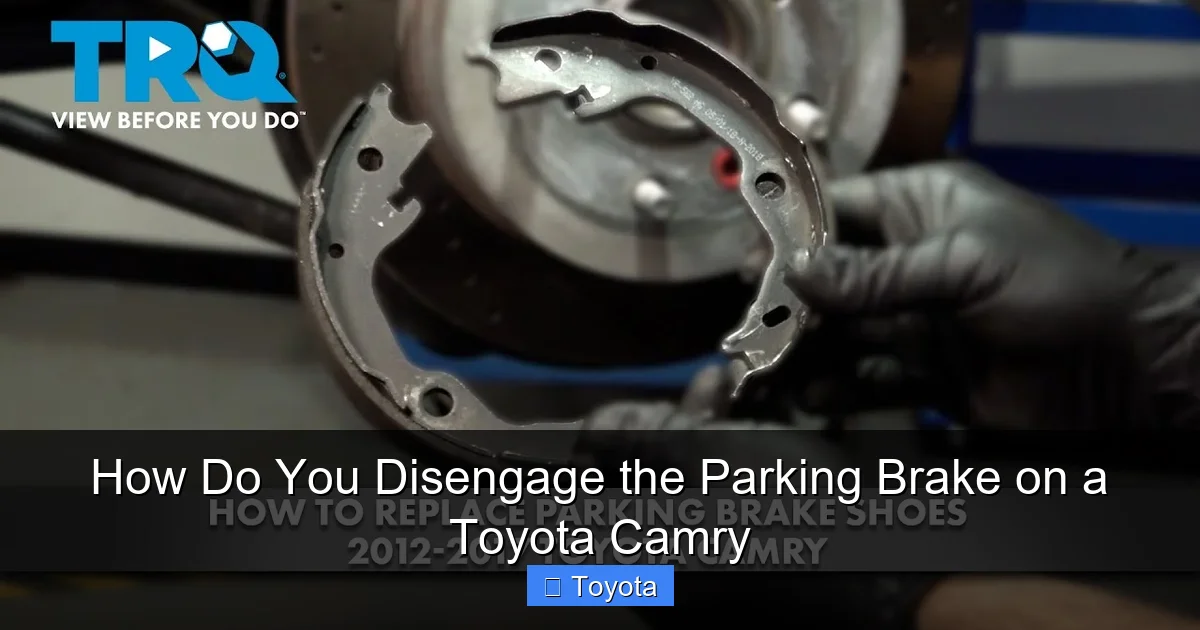
Visual guide about How Do You Disengage the Parking Brake on a Toyota Camry
Image source: s3.amazonaws.com
For Mechanical (Foot/Hand) Brakes: The “Rock and Release” Method
This is the most common fix for a slightly corroded or frozen cable system, especially in humid climates or if the brake hasn’t been used in a while.
- With the vehicle in ‘Park’ and the service brake pedal held down, try to disengage the parking brake as normal.
- If it doesn’t move, have a helper shift the transmission carefully between ‘Park’ (P) and ‘Neutral’ (N) while you apply gentle, steady pressure to the parking brake pedal/lever. The slight movement of the driveshaft can sometimes break the bond of corrosion on the cables.
- If that fails, try to very gently rock the vehicle forward and backward a few inches. Have a helper get in the driver’s seat, press the regular brake, shift to ‘Drive’ (D), then back to ‘Park’, applying a tiny amount of gas each time to rock the car. While they do this, you stand outside and attempt to disengage the parking brake pedal/lever. The tension and release on the rear wheels can free a stuck mechanism.
For Electronic Parking Brakes (EPB): System Resets and Manual Release
EPB systems have fail-safes. First, ensure the battery is sufficiently charged. A very low battery can prevent the EPB motor from operating.
- The Manual Release Procedure: Almost all EPB systems have a manual override for emergencies. This is usually a small access panel behind a cover in the trunk or rear cargo area, near the rear brakes. You’ll need a flat-head screwdriver or a special tool (sometimes included in the vehicle tool kit). Consult your owner’s manual for the exact location and procedure for your Camry’s model year. This physically releases the caliper piston.
- System Reset: Sometimes the EPB control module just needs a reset. With the ignition ON, engine OFF, foot on the brake, try pressing the EPB button firmly and holding it for 10-15 seconds. The light may blink, then go out. You can also try disconnecting the negative battery terminal for 10 minutes (this will reset other systems like radio presets and clock settings—be prepared to reset the time on your Camry). Reconnect, and the EPB may disengage.
When All Else Fails: Call for Help
If you’ve tried these methods and the brake remains engaged, or if the warning light stays on after you believe it’s released, it’s time to call a professional. Forcing it can snap cables, damage calipers, or burn out the EPB motor. A mechanic can safely diagnose if it’s a broken cable, a seized caliper piston, or a faulty EPB actuator motor. Driving with a dragging parking brake will destroy your rear brake pads/rotors and is a major safety hazard.
Section 4: Safety First – Critical Precautions
Disengaging the parking brake seems simple, but complacency leads to accidents. Always follow these non-negotiable rules:
- Always Be in ‘Park’ (P): This is your first and last line of defense. The parking pawl in the transmission is what actually prevents the car from rolling when parked. The parking brake is a backup. Never rely on the parking brake alone on an incline. Always use both: set the parking brake, then shift into ‘Park’. When leaving, shift to ‘Drive’ or ‘Reverse’ first, then disengage the parking brake.
- Your Foot on the Brake: The interlock exists for a reason. Pressing the service brake pedal ensures you are in control and ready to stop if the vehicle lurches. This is especially important on hills.
- Check Your Surroundings: Before releasing the brake, make sure the area in front and behind you is clear of obstacles, pedestrians, and other vehicles.
- Listen and Feel: Never just glance at the light. Listen for the mechanical release click or the EPB motor whir. Feel if the pedal/lever returns freely. A dragging sensation or unusual noise means it’s not fully disengaged.
- On Steep Hills: When parked on a hill, after setting the parking brake and shifting to ‘Park’, turn your wheels. Turn the front wheels away from the curb if facing downhill, and toward the curb if facing uphill. This is an additional safety measure if the parking brake fails.
Section 5: Maintenance and Prevention
The best way to avoid a stuck parking brake is through regular, proper use and maintenance.
Use It Regularly and Correctly
Don’t just use your parking brake on steep hills. Use it every single time you park, even on flat ground. This keeps the cables lubricated and the EPB system exercised. The sequence is: Come to a complete stop → Press the brake pedal firmly → Shift into ‘Park’ → Engage the parking brake → Release the service brake pedal. To leave: Press the service brake pedal → Shift to ‘Drive’ or ‘Reverse’ → Disengage parking brake → Release service brake.
Inspect and Lubricate (For Mechanical Systems)
Every year or two, have your mechanic inspect the parking brake cables for rust, fraying, and proper tension. They can be lubricated with a specific cable lubricant to prevent freezing. If you live in a region that uses road salt, this is especially important.
Be Aware of EPB Battery Health
Since the EPB is electronic, a weak or dead 12-volt battery can cause it to malfunction or become stuck engaged. If your battery is old (over 4-5 years) and you experience any EPB issues, have the battery tested. A dead battery jump-start can sometimes cause temporary EPB errors that clear after a drive cycle.
Related Maintenance: A well-maintained braking system as a whole supports parking brake function. Keeping up with routine service and knowing how long other components like struts last contributes to overall vehicle health.
Section 6: Troubleshooting Dashboard Warnings
Sometimes the issue isn’t that the brake won’t disengage, but that the warning light stays on even when you think it’s released. This indicates a system fault.
- Light Flashes or Blinks: On EPB models, a flashing light often indicates the system is actively engaging or disengaging. If it flashes continuously after a button press, it means the motor has reached its limit (likely stuck) or there’s a circuit fault.
- Light Stays On Steadily: This means the system believes the parking brake is still applied. First, verify physically that the brake is released (try to move the car). If it is released, the switch or sensor for the EPB may be faulty. For mechanical systems, it could mean the switch on the pedal/lever is broken or the cable is not fully retracting.
- Check Engine Light (CEL) On: A severely stuck parking brake can sometimes trigger a CEL due to abnormal wheel speed sensor data. Resetting the check engine light won’t fix the root mechanical problem.
- Other Related Lights: You might see the ABS light or Traction Control light. This is because those systems share sensors with the wheel speed detectors. A dragging brake creates a false signal.
Any persistent warning light requires a diagnostic scan. A mechanic can read the trouble codes from the EPB module or the main vehicle computer (ECM) to pinpoint if it’s a switch, motor, sensor, or wiring issue. Don’t ignore these warnings.
Frequently Asked Questions
Can I drive with the parking brake slightly engaged?
No. Driving with any amount of parking brake engagement will cause extreme heat, rapid wear of the rear brake pads and rotors, and can lead to total brake failure. It also puts strain on the transmission. If you suspect it’s dragging, disengage it immediately or have the car towed.
Why does my electronic parking brake make a loud noise?
A loud whirring, grinding, or clunking noise during EPB engagement/disengagement is not normal. It can indicate a seized caliper piston, debris in the mechanism, or a failing EPB actuator motor. The system should operate quietly. Have it inspected before further use.
My parking brake pedal/lever goes all the way to the floor with no resistance. Is that normal?
For a mechanical system, the pedal/lever should have firm resistance and a definite “stop” when fully engaged. If it goes to the floor with no tension, it typically means the parking brake cables have snapped or severely stretched and are no longer applying the brakes. This is a serious safety defect; do not park on an incline and get it repaired immediately.
Do I need to press the brake pedal to disengage the electronic parking brake?
Yes, on virtually all Toyota Camrys with EPB, you must have your foot firmly on the service brake pedal for the system to allow disengagement. This is a critical safety interlock to prevent accidental release. The ignition usually also needs to be in the “ON” position.
The parking brake light comes on briefly when I turn the key, but goes off. Is that okay?
Yes, that is perfectly normal. The parking brake warning light (and other warning lights) is designed to illuminate for a few seconds when you start the car as a self-test function. As long as it goes out after the test and doesn’t come back on while driving, your system is functioning correctly.
My Camry is on a hill. Do I need to do anything differently?
The procedure is the same, but the importance of using both systems is critical. Always: 1) Come to a stop, 2) Press the brake pedal, 3) Shift into ‘Park’, 4) Engage the parking brake, 5) Release the service brake. Additionally, turn your front wheels toward the curb if facing uphill, or away from the curb if facing downhill, as an extra safety measure.
