
How to Disable the Steering Wheel Lock on a Push-to-start Toyota

Facing a locked steering wheel on your push-button start Toyota? This is a common anti-theft feature that can often be resolved without a tow. The primary method involves gentle, rhythmic pressure on the steering wheel while pressing the brake and start button. Understanding your vehicle’s specific system and avoiding force is critical to preventing damage. If simple techniques fail, it may indicate a deeper electrical or mechanical issue requiring a professional.
You slide into the driver’s seat of your Toyota Camry, RAV4, or Corolla. The key fob is in your pocket or cup holder. You press the brake pedal and hit the familiar push-button start. The dashboard lights illuminate, the fuel gauge wakes up, but the engine doesn’t roar to life. Instead, you see a warning light—often a steering wheel icon with an exclamation point—and the steering column feels rigid, immovable. You’re staring at a locked steering wheel. Don’t panic. This is one of the most common, and often frustrating, quirks of modern keyless entry and push-to-start systems. It’s not necessarily a sign of a broken car; it’s usually the vehicle’s anti-theft system doing its job a little too efficiently. This comprehensive guide will walk you through exactly how to disable the steering wheel lock on your push-to-start Toyota, explaining the “why” behind the problem and providing safe, step-by-step solutions you can try yourself before calling for a tow.
The feeling of a wheel that won’t budge can range from mildly annoying to utterly immobilizing, especially if you’re in a tight parking spot or late for an appointment. But understanding this system is your first step to solving it. Unlike the old days of a physical key that turned a cylinder to unlock the wheel, today’s system is electronic and mechanical, working in concert with your key fob’s encrypted signal. A small motor or solenoid inside the steering column physically locks or unlocks a bar. When it gets confused—due to a weak fob battery, a drained car battery, or a simple timing issue—it stays locked. Our goal is to communicate with that system correctly to convince it to release. We’ll cover everything from the simplest “wiggle and press” technique to understanding when the problem is something else entirely, like a faulty anti-theft system on a Toyota Corolla, which shares similar underlying technology.
Key Takeaways
- The steering wheel lock is an anti-theft mechanism: It’s a physical bar that engages when the vehicle is turned off and the wheel is moved, designed to prevent theft by making steering impossible.
- The solution is usually gentle, rhythmic pressure: The most common fix is to apply light, wiggling pressure on the wheel in the direction it is locked while simultaneously pressing the brake and start button.
- Your key fob’s health is crucial: A weak or dead key fob battery is a frequent culprit, as the vehicle’s security system may not recognize the fob’s signal to disengage the lock.
- Never use excessive force: Forcing or jerking the wheel can break the lock mechanism, steering column components, or even the steering shaft, leading to very costly repairs.
- Diagnosis is key: If the standard method fails, the issue could be a faulty ignition/starter button, a malfunctioning steering lock actuator, or a drained 12V battery, requiring professional diagnostics.
- Accessory mode can help diagnose: If you can turn the car to “Accessory” mode (by pressing the start button twice without the brake), but the wheel remains locked, it points specifically to the steering lock mechanism.
- Safety first: Always ensure the vehicle is in “Park” (P), the parking brake is engaged, and you are in a safe location before attempting any troubleshooting.
📑 Table of Contents
Understanding Your Toyota’s Steering Wheel Lock System
Before we start yanking on the steering wheel, it helps to know what you’re dealing with. The steering wheel lock in your push-start Toyota is a passive security feature. It’s not like the steering wheel lock device you might buy as an aftermarket add-on. This is a factory-installed mechanical lock integrated into the steering column. When you turn off the engine and remove your foot from the brake (or open the door), the system is designed to automatically engage the lock if it detects any movement of the steering wheel. This is a last line of defense against hot-wiring.
How It Works Electronically
The lock is controlled by an actuator—essentially a small electric motor. When you press the brake pedal and the start button, the car’s computer (the Body Control Module or BCM) checks for a valid signal from your key fob. If the signal is authenticated, it sends power to the actuator to retract the locking pin or bar. You should hear a faint click or whir from the steering column area when it disengages. If the BCM doesn’t get a valid “key present” signal, it will keep the lock engaged, and you’ll see the steering lock warning light on the dash. This is why a dead key fob battery is the number one cause of this problem.
The Mechanical Component
Internally, there’s a steel pin or latch that slides into a hole in the steering shaft. When engaged, it physically prevents the shaft from rotating. Over time, these components can wear, or the mechanism can become misaligned. Extreme force from someone trying to turn the wheel while locked can bend this pin or damage the housing. This is why the “gentle pressure” method is so important—it allows the lock to disengage on its own terms rather than you trying to force it past its mechanical stop.
Common Situations That Trigger a Locked Steering Wheel
Knowing why your steering wheel is locked helps you choose the right fix. It’s almost never a random failure. Here are the most frequent scenarios Toyota owners encounter.
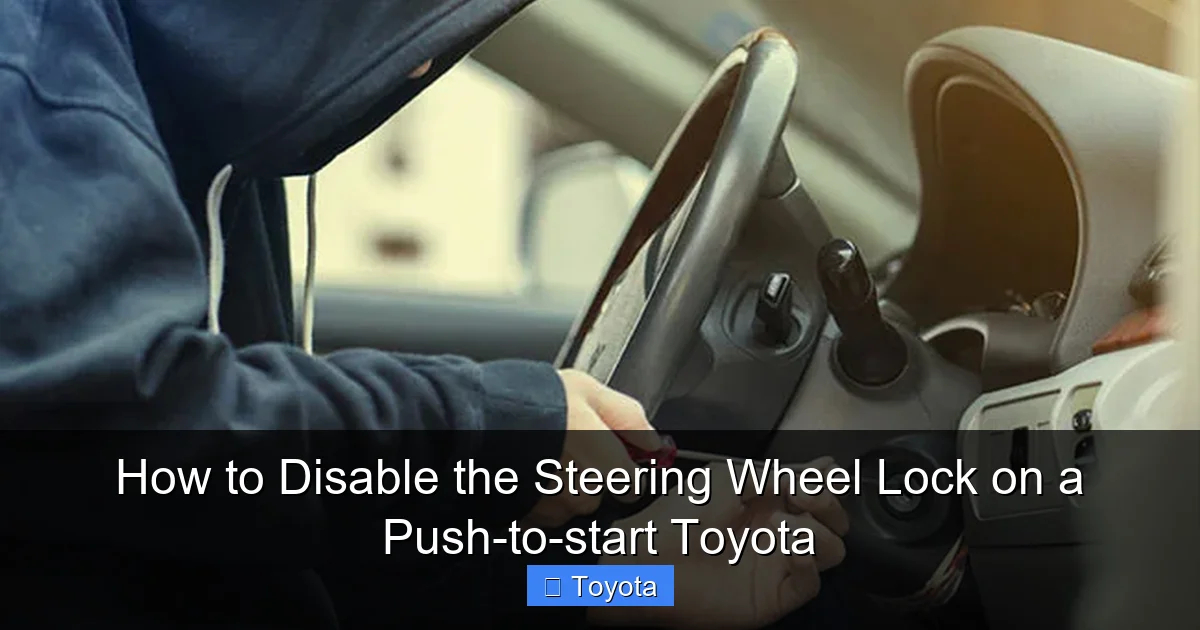
Visual guide about How to Disable the Steering Wheel Lock on a Push-to-start Toyota
Image source: d1hv7ee95zft1i.cloudfront.net
The Classic: Wheel Turned While Off
This is the #1 cause, and it’s often user-induced. You park, turn the wheel slightly to angle it for easier exit, then turn off the car. The system senses the wheel was moved after the last “accessory off” cycle and engages the lock. When you return, the wheel is turned to the side, putting tension on the lock pin. This is the scenario the rhythmic pressure method is designed for.
Key Fob Battery Failure
Your key fob has a small coin-cell battery (usually CR2032). When it gets weak, its signal range and strength diminish. The car may not “see” the fob when you’re in the driver’s seat pressing the start button. The BCM thinks no authorized key is present, so it keeps the steering lock engaged. You might also notice other quirks, like the doors not locking/unlocking reliably from the fob. Always rule this out first by replacing the key fob battery. It’s a cheap, $5-$10 fix that solves a surprising number of push-button start mysteries.
Drained 12-Volt Battery
Your Toyota’s main 12V battery powers all the vehicle’s computers and accessories, even when the engine is off. If the battery is critically low—say, from leaving a light on or an old battery—there may not be enough voltage to power the steering lock actuator fully. The system might get a partial signal, engage the lock, but then lack the power to disengage it. Jump-starting the car often resolves this, as it gives the system the jolt of power it needs. If your battery is more than 3-4 years old, this is a strong possibility. You can check this by seeing if the dashboard lights are dim or the horn sounds weak.
After an Electrical Event
Disconnecting the battery for service, jump-starting another car incorrectly, or a voltage spike from a faulty alternator can sometimes confuse the vehicle’s security systems. The BCM may need to be reset or re-initialized with the key fob. The process for this varies by model year but often involves a specific sequence with the key fob and start button. Consult your owner’s manual for a “key fob registration” or “immobilizer reset” procedure.
Step-by-Step Methods to Disable the Lock
Now for the practical part. Try these methods in order, from simplest to more involved. Always ensure the vehicle is in Park (P) and the parking brake is set.
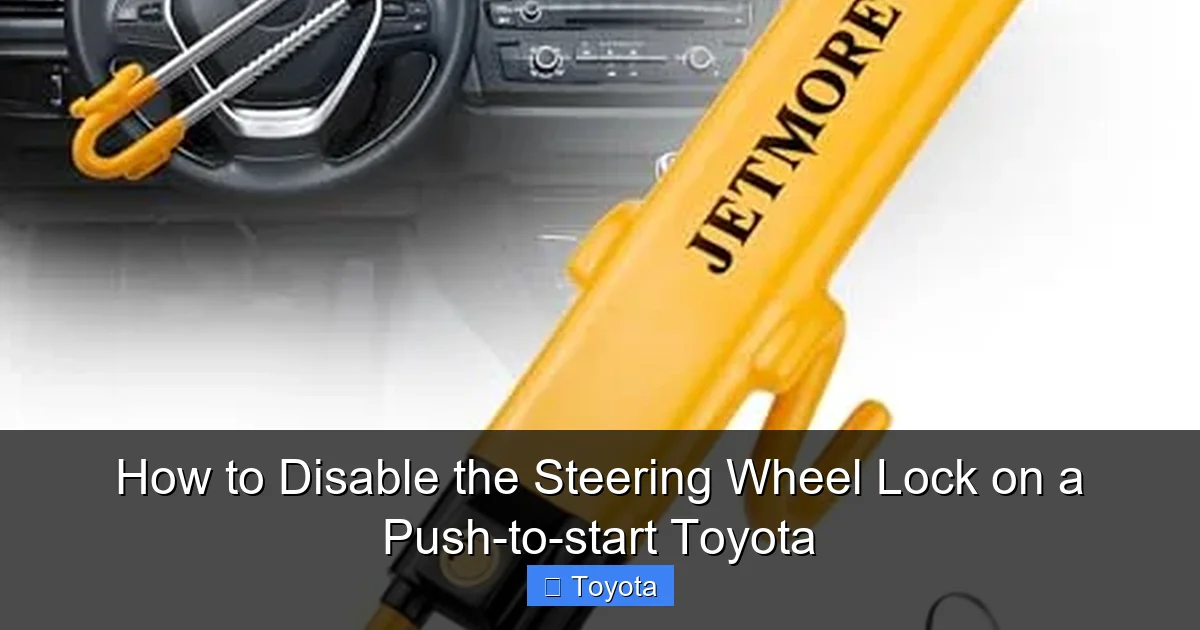
Visual guide about How to Disable the Steering Wheel Lock on a Push-to-start Toyota
Image source: m.media-amazon.com
Method 1: The Standard “Wiggle and Press” Technique
This is the go-to method for 90% of cases where the wheel is turned while locked. It uses the vehicle’s own design to your advantage.
- Get in the driver’s seat. Insert the key fob into the slot (if your model has one) or keep it in your pocket/cup holder. Some models require the fob to be in the vehicle’s interior.
- Press the brake pedal firmly. This is a safety interlock; the car won’t respond without it.
- While holding the brake, gently turn the key fob’s mechanical key (if equipped) to the “on” position or simply press the start button once. Do not try to start the engine yet. You’re just sending the “I have the key” signal.
- Now, apply very gentle pressure to the steering wheel in the direction it is currently locked. If the wheel is turned to the left, push it gently to the left. The goal is not to force it, but to take the tension off the lock pin. Think “wobble” or “jiggle,” not “heave.”
- While maintaining that gentle pressure, press the start button again (still with brake pressed). You should hear a distinct click from the steering column and feel the wheel give slightly. The dash lights may brighten, and the steering lock warning should go out.
- Once unlocked, you can start the engine normally.
Pro Tip: If it doesn’t work the first time, release everything, take a deep breath, and try again. Sometimes the system needs a few cycles to recognize the correct input. Be patient and keep the pressure light.
Method 2: The “Turn the Wheel Hard” Method (Use with Caution)
If the wheel is under significant tension (e.g., it’s jammed hard against the lock), you may need to create a tiny bit more play. This is riskier but can work.
- With the brake pressed and the start button pressed once to “Accessory” mode (dash lights on), firmly turn the steering wheel in the direction it is locked. You are trying to overcome the mechanical resistance of the lock pin itself. You should feel a solid “thunk” or a give.
- Immediately after that thunk, press the start button again to crank the engine.
- If it works, the wheel will be free. If you hear grinding or feel excessive resistance, stop immediately.
Warning: This method increases the chance of breaking the lock pin or the steering column components. Only attempt if Method 1 fails after several tries, and use as much force as you would to turn a wheel with the engine running—no more.
Method 3: Accessory Mode & Key Fob Manipulation
Sometimes the issue is purely electronic communication.
- Get in the car with the key fob.
- Without touching the brake, press the start button twice. This puts the car in “Accessory” mode (radio and dash come on, but engine is off).
- Now, press the brake and try to shift out of “Park.” If it won’t shift, the wheel is likely still locked. Try Method 1 while in Accessory mode.
- If the wheel unlocks but the engine still won’t start, the issue may be the engine immobilizer, not the steering lock. The steering lock and engine immobilizer are separate but related systems.
- You can also try placing the key fob directly on the start button (some models have a designated spot) or against the key cylinder (if present) to ensure strong signal transmission.
Tools and Techniques That Can Help
While your hands and the car’s own controls are usually enough, a few tools and tricks can assist in stubborn situations.
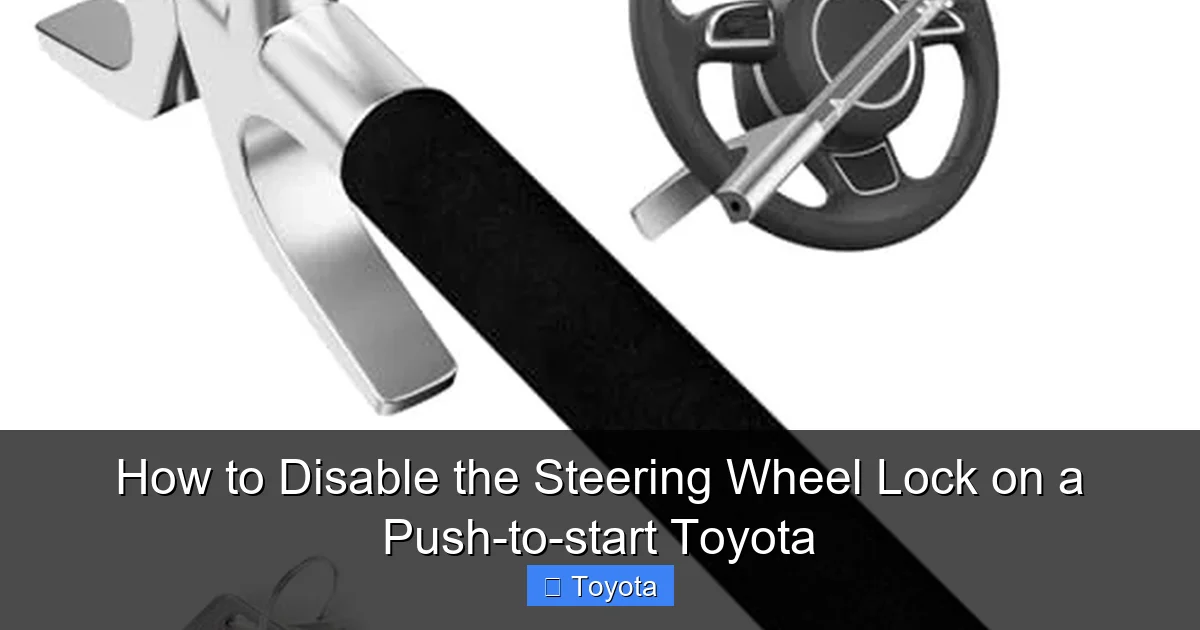
Visual guide about How to Disable the Steering Wheel Lock on a Push-to-start Toyota
Image source: m.media-amazon.com
The Spare Key Fob
If your primary key fob’s battery is weak or its internal electronics are failing, your spare fob might work perfectly. Always try the spare if you have one. This is the quickest way to diagnose a bad primary fob.
Battery Charger or Jump Starter
If you suspect a low 12V battery, connect a quality battery charger or a portable jump starter to the terminals (following proper polarity: red to positive, black to a clean metal ground on the engine block or chassis). Give it 10-15 minutes of charge, then try the standard method again. A healthy 12V system is essential for all these electronic systems to function. This is also a good time to check if your maintenance light is on, as a weak battery can trigger multiple warnings.
Consulting the Owner’s Manual
Your specific model year’s manual will have the definitive procedure. Look for sections titled “Steering Wheel Lock,” “If the Engine Will Not Start,” or “Keyless Entry System.” Toyota sometimes updates procedures via technical service bulletins (TSBs), and the manual may have the latest information. It might also show the exact location of the emergency key slot if your model has one hidden behind a cover on the start button.
Safety Precautions and Potential Risks
This is not a high-risk procedure like working on the brakes, but there are real dangers and things you can break.
Never Force the Wheel Past Its Stop
The steering wheel has mechanical stops that prevent it from turning more than about 1.5 turns in either direction. If you feel a solid, unyielding metal-on-metal stop, stop immediately. You are at the end of the steering rack’s travel, not the lock mechanism. Forcing it here can bend the tie rods or damage the rack itself. The lock pin is usually released with a click well before you reach the steering’s physical limit.
Risk of Breaking the Lock Actuator
The small electric motor that moves the lock pin can be damaged by excessive force. If you hear a grinding, buzzing, or repeated clicking from the column without movement, the motor gears may be stripped. This requires replacement of the entire steering lock assembly, which can cost several hundred dollars in parts alone, plus labor.
Airbag (SRS) Safety
The steering column houses the airbag module. While you’re not likely to set it off by wiggling the wheel, it’s a sensitive component. Avoid poking tools into the steering column shrouds or around the horn pad. If you need to remove covers, disconnect the battery first and wait 20 minutes for the airbag capacitor to discharge. For most users, this is overkill, but it’s critical if you’re taking the column apart.
Vehicle Movement
Ensure the parking brake is firmly set. On a hill, a vehicle with a failed parking brake could roll if you’re struggling with the wheel and it somehow slips out of Park. Wheel chocks are a smart addition on inclines.
When to Call a Professional: Beyond DIY
If you’ve tried the gentle pressure method for a full minute, tried the spare fob, and confirmed the car battery is charged, it’s time to call for help. Continuing to force the issue will likely turn a $0 fix into a $500+ repair.
Diagnosing the Faulty Component
A professional mechanic or dealership technician will use a diagnostic scan tool to communicate with the Body Control Module (BCM). They can check for fault codes related to the steering lock actuator, the key fob recognition system, or the ignition switch circuit. They can also manually test the actuator for power and ground when the start button is pressed. Common failures include:
- Failed Steering Lock Actuator: The motor inside burns out. Requires column disassembly and part replacement.
- Faulty Start Button/Assembly: The button itself may not be sending the signal correctly. Removing and replacing a push-start button on a Nissan is a similar process, showing the complexity involved.
- Damaged Key Fob: The internal transponder chip may be dead. The fob will need to be reprogrammed or replaced.
- Wiring Harness Damage: Wires in the steering column (from tilt mechanism movement) can fray or break, causing an open circuit.
The Dealership vs. Independent Shop
Dealerships have factory-specific diagnostic tools and access to the latest TSBs, which is invaluable for these electronic systems. They can also program new keys or fobs if needed. Independent shops with good Toyota expertise can often perform the same repairs for less labor cost. For a simple lock actuator replacement, either is fine. For complex reprogramming, the dealership might be necessary.
Roadside Assistance and Towing
If you’re stuck somewhere unsafe, your best move is to call roadside assistance. They can tow the vehicle to a trusted shop. Some advanced tow truck operators have tricks (like putting the car in neutral by accessing the shift lock release) to move it without unlocking the wheel, but this is not a fix—it’s just for transport. Getting the hood open for a jump-start might be part of their process if a dead battery is suspected.
Prevention and Long-Term Care
You can minimize the chances of this happening again.
Key Fob Battery Maintenance
Proactively replace your key fob battery every 2-3 years, even if it seems fine. It’s cheap insurance. Keep the spare fob’s battery fresh too. Store the fob away from strong magnets or other electronics that could interfere with its signal.
Proper Parking Habits
Try to park with your wheels straight. If you need to angle them for egress, do so before turning the engine off. When you return, straighten the wheel slightly (even if locked) before trying to start. This removes side-load pressure on the lock pin.
Maintain the 12V Battery
Have your battery tested annually, especially if it’s over three years old. A weak battery causes a cascade of strange electrical issues in modern cars. If you see a battery warning light or experience slow cranking, replace the battery before it leaves you stranded with a locked wheel.
System Re-Learning
After a battery disconnect or a successful repair, the system might need to “re-learn” the key fob. The manual will have a procedure, which usually involves turning the key in the lock cylinder (if equipped) or pressing the start button in a specific sequence with the doors open/closed. Following this ensures reliable operation going forward.
In conclusion, a locked steering wheel on your push-start Toyota is a solvable puzzle. Start with the simplest, safest method: gentle, rhythmic pressure on the wheel while pressing the brake and start button. Rule out the key fob battery and the main battery. Never, ever use brute force. If those steps fail, recognize that you’re dealing with a faulty component that needs professional diagnosis. By understanding this clever anti-theft feature, you empower yourself to handle the situation calmly and correctly, saving you time, money, and the stress of a tow truck bill. For more on your Toyota’s systems, explore our guides on everything from opening the gas tank to checking your AWD system.
Frequently Asked Questions
Will disabling the steering wheel lock void my Toyota’s warranty?
No. The methods described are the standard, manufacturer-approved ways to disengage the lock when it’s stuck. You are not disabling or removing the lock mechanism; you are simply operating it as intended. However, if you cause damage by using excessive force, that damage would not be covered.
What if my steering wheel is locked and my key fob battery is completely dead?
First, replace the key fob battery. If you have no spare battery, you can sometimes use the emergency mechanical key hidden inside the fob to unlock the driver’s door. Once inside, some models allow you to insert the mechanical key into a slot on the start button to start the car, which will also disengage the steering lock. Check your owner’s manual for the exact emergency start procedure for your model year.
Can I permanently disable the steering wheel lock?
Technically yes, but it is highly dangerous, illegal in many areas, and will void your insurance coverage in the event of theft. The steering wheel lock is a critical safety and anti-theft feature. Disabling it makes your vehicle an easy target and compromises your safety. Do not attempt to remove or bypass this system.
My steering wheel lock light is on, but the wheel turns freely. What’s wrong?
This usually indicates a faulty sensor or a communication glitch. The system thinks the lock is engaged when it isn’t. A diagnostic scan is needed to find the source. It could be a loose connection, a failed lock actuator that is stuck in the “unlocked” position but sending the wrong signal, or a BCM software issue. While not immediately dangerous, it should be checked to ensure the lock will engage properly when it needs to.
Is this problem common on all Toyota models with push-button start?
Yes, it is a universal characteristic of virtually all vehicles with keyless entry and push-button start, from Toyota to Honda to Ford. The system architecture is similar across the industry. You will find similar troubleshooting guides for a Nissan Sentra or a Lexus because the fundamental technology is the same.
My battery is new, the fob battery is new, and the wheel is still locked. Now what?
At this point, the failure is almost certainly within the steering lock actuator itself, the start button assembly, or the wiring between them. The lock motor has failed. This requires a professional to replace the steering lock assembly. In some cases, the entire steering column cover must be removed to access it. This is not a DIY job for most people due to the complexity and the need to handle the airbag system safely.
